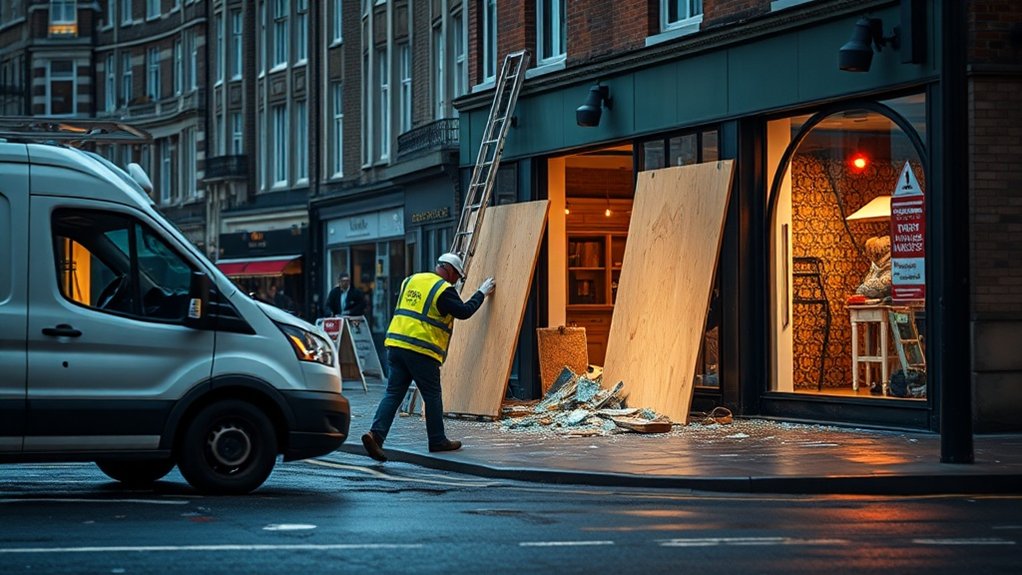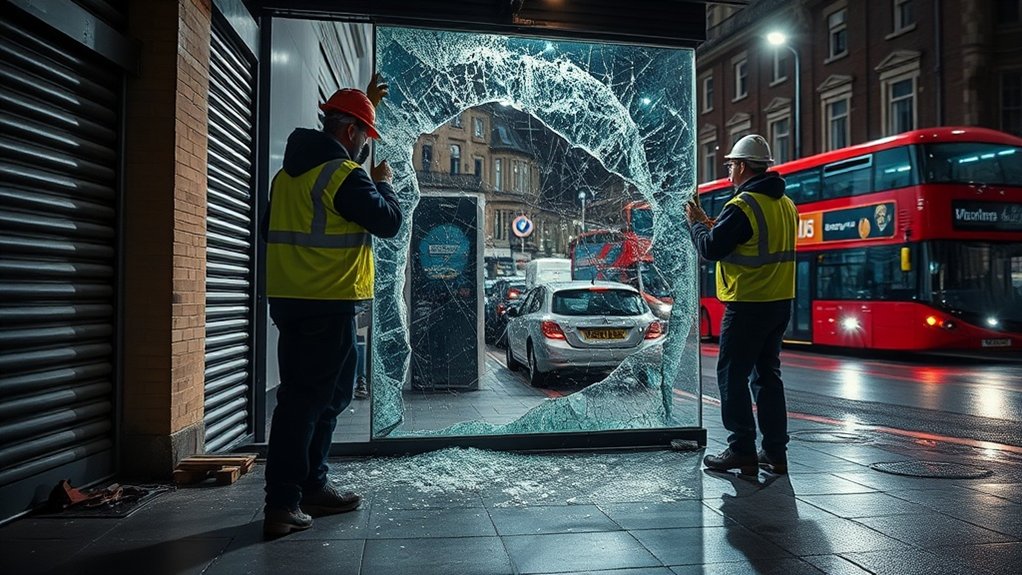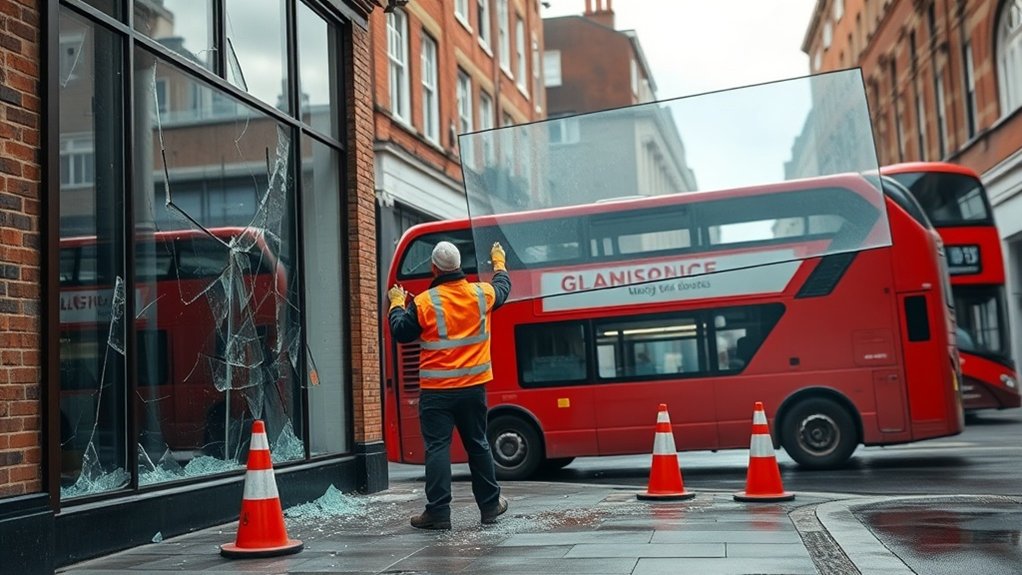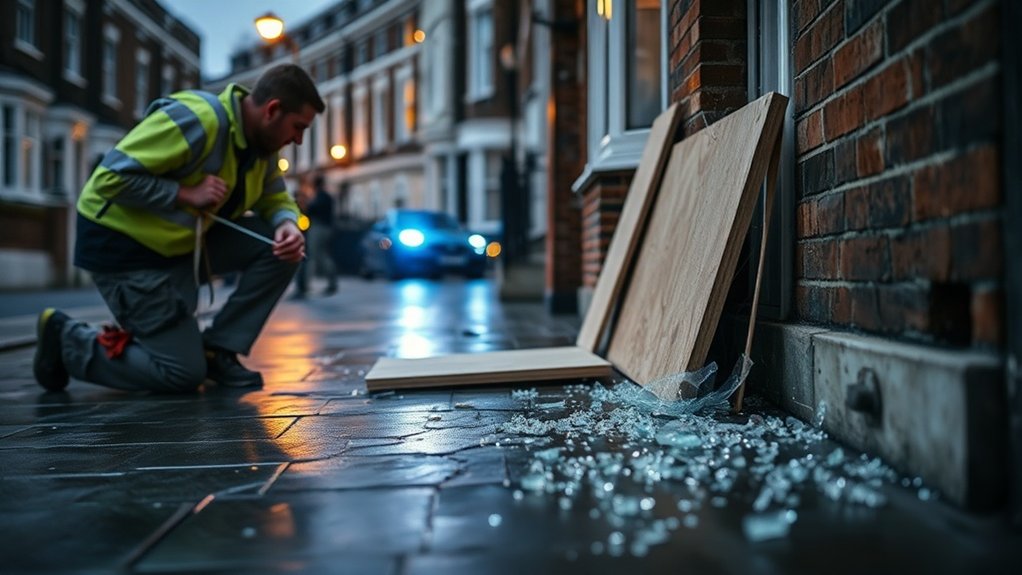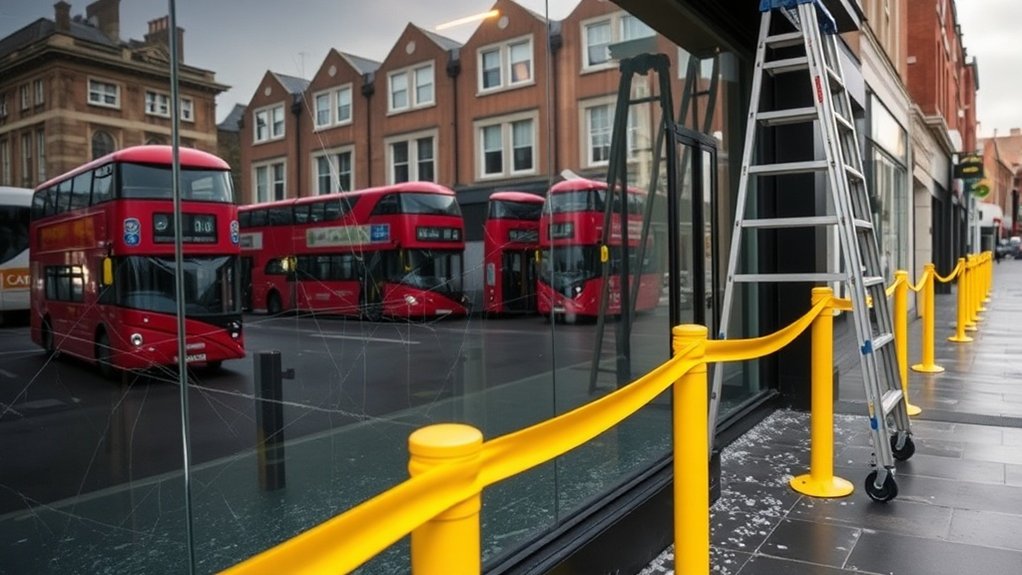
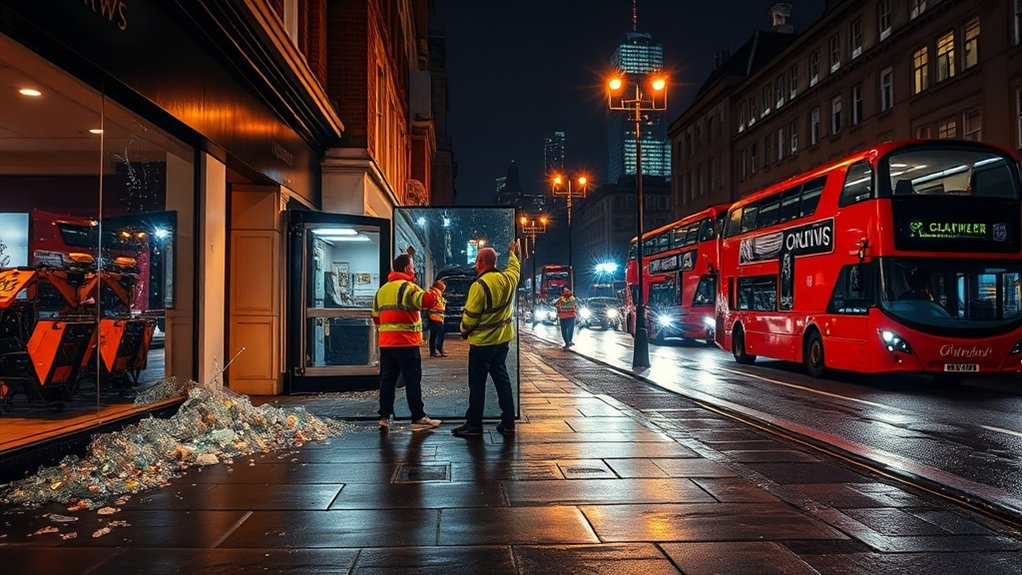
When you need emergency glazing in London, you call 24/7 specialists who secure broken windows and doors fast. They isolate hazards, remove loose shards, board up or fit temporary glass, then measure precisely for compliant replacements. You’ll get safety glass options (toughened, laminated, acoustic or energy‑efficient) that meet British Standards and London building regulations. Trusted glaziers also help with insurance evidence and long‑term security upgrades, and you can next see how the full process protects your property.
Key insights
- 24/7 emergency glazing in London secures broken windows or doors fast, with boarding-up and temporary glazing to restore safety and weather protection.
- Trained glaziers assess structural risks on-site, remove loose shards, define exclusion zones, and precisely measure openings for compliant replacement glass.
- Services cover accidental breakage, burglary damage, vandalism, and storm-related glazing failures, prioritising high-risk locations and public-facing shopfronts.
- Replacement options include toughened, laminated safety, acoustic, and energy-efficient glass, selected to meet British Standards and match existing frames and finishes.
- Costs depend on glass type, pane size, access difficulty, heritage constraints, and out-of-hours call-outs, often recoverable through building or business insurance.
What Is Emergency Glazing in London?
When a window or glass door breaks unexpectedly, emergency glazing in London provides rapid, professional boarding-up and glass replacement to restore security, weather protection, and safety. You’re getting a specialised service that stabilises the opening , assesses structural risk, and specifies suitable glazing materials for permanent repair.
Emergency glazing integrates with London’s complex built environment, from historical architecture to contemporary smart façades. Technicians measure accurately on-site , select compliant glass types—such as toughened, laminated, acoustic, or low‑emission units—and ensure compatibility with existing frames, seals, and hardware.
You benefit from a streamlined process: immediate temporary protection, coordinated manufacture of replacement units, and precision installation that aligns with thermal performance, impact resistance, and aesthetic requirements, while meeting British Standards and local conservation constraints.
When Should You Call an Emergency Glazier?
You should call an emergency glazier as soon as glass breaks accidentally and you’re facing exposed edges, loose fragments, or an open aperture. You also need rapid support when broken windows or doors compromise security, leaving your property vulnerable to forced entry or trespass. Following severe weather , an emergency glazier helps you stabilise cracked, shattered, or dislodged glazing to prevent water ingress, heat loss, and further structural issues.
After Accidental Glass Breakage
Although accidental glass breakage can feel chaotic in the moment, the key decision is whether the damage creates an immediate safety, security, or weatherproofing risk that justifies calling an emergency glazier. If shards are exposed, edges are unstable, or the opening lets in rain or strong drafts, you should call right away . A specialist will isolate the impact zone, remove loose fragments, and install robust temporary boarding or safety glass.
You shouldn’t just replace like-for-like. Use the incident to evaluate higher-spec glazing: laminated safety glass, improved acoustic performance, or low‑emissivity units. Ask about glass recycling to minimise environmental impact and explore aesthetic enhancements such as patterned, tinted, or switchable smart glass. This way, you convert a disruption into a strategic upgrade .
When Security Is Compromised
Rarely does a broken window feel more urgent than when it undermines your home or business security. The moment an entry point’s compromised—through impact, tampering, or attempted break‑in—you should call an emergency glazier . You’re not just replacing glass; you’re restoring a critical layer of your security protocols.
A specialist will rapidly assess risk, isolate the affected zone, and install temporary boarding engineered for resistance, not just coverage. They’ll then specify upgrades in glass durability, such as laminated, toughened, or security-rated glazing, integrated with modern locking and framing systems.
Following Severe Weather Damage
When high winds, driving rain , or hail leave panes cracked, frames warped, or entire sections of glazing blown out, an emergency glazier should be your next call—not an afterthought. You’re not just dealing with broken glass; you’re facing structural stress, thermal loss, and compromised weather protection.
Call immediately if you see shattered or loose panes, exposed edges, internal water ingress, or any flexing in the frame system. A 24/7 glazing team will isolate hazards, install robust temporary boards, and specify impact‑resistant, high‑performance replacements.
You can also use the visit to upgrade your window maintenance strategy: improved seals, laminated or toughened units, and smarter drainage profiles reduce future storm failures and keep your building envelope performing reliably in London’s increasingly volatile climate.
How the Emergency Glazing Call-Out Works
Once you’ve decided to call an emergency glazier in London, the response follows a clear and structured process designed to secure your property fast. You’ll typically provide core data : glass type, opening size, frame material, location, and any special factors such as decorative patterns or proximity to historical buildings.
The glazier then performs a rapid risk assessment, determining whether to stabilise, temporarily board, or immediately reglaze. You’ll receive a clear outline of required materials, safety steps, and proposed work sequence.
On arrival, the team isolates hazards, removes loose shards, and installs impact‑resistant boarding or glass to current British Standards . Throughout, they document the condition, protect surrounding finishes, and configure the opening so it’s ready for permanent glazing with minimal rework or disruption.
Emergency Glazing Response Times in London
How quickly a glazier can reach you in London depends on three main factors: time of day, location, and risk level. You’re typically looking at a faster response in high-density zones, where teams are pre-positioned based on incident data and transport links.
Specialist firms use triage-style emergency protocols. When you call, they’ll quantify risk to people, assets, and operations, then assign a response category with defined time targets. High-risk breaches near public access points move to the top of the queue.
Response planning also factors in required glass durability. If you need laminated safety glass or temporary secure boards, the dispatcher matches your job to vehicles already stocked with those materials, cutting out depot returns and compressing end-to-end arrival times.
24-Hour Emergency Glazing in London: What to Expect
Response speed only matters if you understand what actually happens in those first hours after you call. You’re not just buying time; you’re buying control. A 24‑hour emergency glazing service should immediately assess risk, secure the opening conceptually, and specify interim and long‑term solutions with quantified performance targets.
You can expect a structured process: rapid triage of the incident, questions about location, access, frame type, and security profile, plus a preliminary recommendation balancing glass durability, cost, and disruption. The team should also check how the failure affects your wider Emergency preparedness: alarm lines, fire routes, data rooms, and high‑value zones. Throughout, you should receive clear, time‑stamped expectations: when assessment happens, when temporary security is achieved, and when full restoration is scheduled.
What Emergency Glaziers Do on Arrival
When your emergency glazier arrives, they first carry out an immediate site assessment to check structural stability, identify hazards, and confirm the glazing specification. They then secure damaged areas using boards, safety film, or temporary framing so you’ve got a safe, weather-tight opening. Finally, they take precise measurements for replacement glass, ensuring the new unit matches the required thickness, finish, and performance rating.
Immediate Site Assessment
The moment an emergency glazier arrives on site, they carry out a structured assessment to stabilise risk and plan the safest, fastest route to securing your property. You’ll see them quickly map break patterns, check frame integrity , and evaluate impact zones, using calibrated lighting and measuring tools to quantify damage rather than guess.
They’ll also factor in future glass cleaning and window maintenance, ensuring today’s decisions don’t create tomorrow’s operational issues.
- Safety Matrix: They identify live hazards—loose shards, falling risks, sharp edges—and create a safe working perimeter.
- Structural Diagnostics: They test frames, seals, and fixings to see what can be retained and what must be replaced.
- Glazing Strategy: They specify glass types and configurations aligned with security, energy performance, and regulatory standards.
Securing Damaged Areas
How do emergency glaziers turn a chaotic breakage into a controlled, contained work zone within minutes of arrival? They start by defining an exclusion zone, deploying barriers and hazard tape to keep people clear of the failure line and any remaining stressed glass. Next, they remove loose shards using specialist tools and PPE, preventing secondary fractures and injuries.
They then install rigid boarding or temporary glazing systems, fixing them into existing frames or structural reveals, so you regain security and weather protection fast. Throughout, they record defects relevant to ongoing window maintenance and assess factors affecting glass durability, such as impact points, frame distortion, and thermal stress. Finally, they vacuum and magnet-sweep the area, ensuring fine fragments don’t compromise safety or operations.
Measuring For Replacement
Although the immediate priority is to make your property safe, emergency glaziers also start gathering precise measurements for the permanent replacement as soon as they arrive. They’ll record opening width, height, diagonals, and tolerances so the new unit drops in cleanly, without stress points that could cause future failure.
They’ll also evaluate your existing window framing, hardware, and fixings to determine what can be retained, upgraded, or needs full replacement. Throughout, they consider building regulations and energy‑performance goals.
- Glass thickness – They calculate ideal thickness based on span, wind load, security level, and acoustic requirements.
- System compatibility – They map measurements to suitable glazing systems and sealant technologies.
- Future upgrades – They factor in options like laminated security glass, low‑E coatings, and smart glazing.
Boarding Up vs Same-Day Glass Replacement
Faced with broken or compromised glazing , you need to decide quickly whether to board up the opening or request same-day glass replacement. Boarding up gives you an immediate physical barrier, especially valuable in high-risk zones or sensitive historical architecture where you must stabilise the frame, protect original details, and allow time for conservation-led planning.
Same-day glass replacement restores transparency, daylight, and thermal performance in a single visit, minimising disruption to occupants and operations. It’s often the smarter option for modern façades designed for rapid unit swap-out and precise tolerances.
In both cases, you should insist on processes that support glass recycling, secure fixings, weather-tight sealing, and documented risk assessments, so your emergency response is safe, future-ready, and compliant.
Types of Glass Used in Emergency Glazing
When you call an emergency glazier , you’re not just asking for “new glass”; you’re selecting from a toolkit of specific glass types engineered for safety, security, and performance under stress. You’ll balance impact resistance, Glass durability, thermal behavior, and glazing aesthetics so the replacement improves on what failed.
-
Toughened (Tempered) Glass – Heat-treated to be several times stronger than float glass and to crumble into small cubes, it suits doors, shopfronts, and high-traffic façades.
-
Laminated Safety Glass – Two or more panes bonded with PVB or EVA interlayers; it stays intact when cracked, enhancing security and acoustic control.
-
Specialist Performance Glass – Options include low‑iron, low‑E, tinted, or wired glass, optimised for energy efficiency, fire integrity, or discrete privacy.
Emergency Glazing Costs in London
Choosing between toughened, laminated, or performance glass directly affects what you’ll pay for emergency glazing in London , but material is only one part of the equation. You’re also funding rapid response, temporary securing, precise measurements, and a return visit to install the final unit.
Costs vary with pane size, access complexity (street level vs. scaffold), and whether you’re protecting historical architecture that demands custom profiles, heritage putties , or slimline double glazing. Out-of-hours call‑outs typically carry a premium because you’re buying speed and risk management.
You can control costs by specifying performance glass only where it adds measurable value, leveraging modern glazing innovations such as low‑iron or low‑E coatings selectively, and asking for itemised quotes that separate labour, materials, and follow‑up visits.
Using Insurance to Cover Emergency Glazing
Suddenly dealing with a shattered shopfront or blown‑out sash, you’ll often find your emergency glazing bill intersects directly with your buildings or contents insurance. You need to verify that accidental damage, vandalism, or storm impact fall within your policy’s coverage limits before authorising substantial works.
Structure your approach so Insurance claims become data‑driven, fast, and well‑documented:
- Capture time‑stamped photos, invoices, and incident details; log everything so your insurer can validate the loss with minimal friction.
- Call your insurer’s claims line, confirm authorisation thresholds, excess, and temporary‑works rules to avoid rejected costs.
- Ask about digital claims portals, same‑day approvals, and direct settlement options that route payment straight to you, reducing cash‑flow pressure while still keeping full audit trails.
Choosing a Reliable Emergency Glazier in London
Faced with blown glass and a vulnerable opening, you need a glazier who responds fast, works to British Standards , and documents everything for insurance and compliance. Start by checking 24/7 availability, response time SLAs, and evidence of past emergency projects in comparable London properties.
You should verify they use certified safety glass , digital measurement tools, and systemised job tracking, so you get accurate quoting, installation timestamps, and photographic records. Ask how they integrate emergency repairs with long‑term glass maintenance and potential aesthetic improvements, ensuring replacements align with your façade, branding, and daylighting strategy.
Look for technicians trained on modern glazing systems, including thermal and acoustic units. Require clear pricing, written scopes, and a single point of contact from call-out to final sign‑off.
Safety, Security and Legal Rules for London Glazing
Once you’ve identified a competent emergency glazier, you still need to guarantee every temporary board-up and permanent replacement meets London’s safety, security , and legal requirements. You must comply with Building Regulations Part K (safety glass), Part L (energy performance), and any conservation constraints for historical architecture. Your glazier should specify laminated or toughened glass, secure fixings, and certified hardware that resists forced entry.
- Risk analysis – You assess impact resistance, line‑of‑sight vulnerabilities, and escape routes, then specify glazing innovations such as laminated composites and smart films.
- Compliance mapping – You align glass type, thickness, and framing with current codes and borough planning rules.
- Documentation – You insist on written certifications, warranties, and installation records to prove long‑term safety and legal conformity.
Emergency Glazing for Homes vs Business Premises
You’ll face different glazing priorities at home and at your business, especially around security performance , access control, and compliance. For commercial premises, you typically need higher-spec glass, reinforced locking systems, and faster response times to minimise downtime and protect stock or sensitive data. At home, the focus usually shifts to restoring physical security and thermal comfort quickly while ensuring technicians can access the property safely and discreetly.
Security Needs Comparison
While both homes and business premises rely on strong glazing for protection, their security priorities and risk profiles differ considerably, and that drives how emergency glazing should be specified and installed. You’re balancing burglary resistance, impact performance, privacy, and the integrity of historical architecture, often under tight regulatory constraints and sustainability targets.
-
Homes – You’ll usually prioritise intrusion delay, child safety, and thermal performance. Laminated safety glass and discreet fixings protect occupants while minimising environmental impact through improved insulation.
-
Street‑facing shops – You need anti‑smash, anti‑grab systems with enhanced transparency for displays. Toughened laminated units and secure framing resist repeated attacks.
-
High‑risk sites – You may require advanced glazing: multi‑laminate security glass, attack‑resistant films, and sensor‑integrated systems that interface with alarms and access control for real‑time response.
Response Time And Access
How quickly an emergency glazier can reach the site – and how easily they can access the damaged area – differs sharply between homes and business premises, and that dictates how you plan for outages and temporary protection.
In homes, you typically get direct street access, allowing rapid board‑up and follow‑on glass maintenance. Technicians can quickly stabilise frames, assess sealing performance, and schedule upgrades such as window tinting to improve privacy and solar control once the pane’s replaced.
In business premises, multi‑storey elevations, loading bays, and security protocols can slow response and entry. You’ll need a provider with powered access equipment, 24/7 key‑holder coordination, and RAMS documentation ready. That infrastructure lets you restore glazing performance fast while minimising trading disruption and compliance risk.
What to Do Before the Glazier Arrives (Safety Steps)
Before a glazier reaches your property, take a few focused steps to secure the area , protect people, and limit further damage. You’re fundamentally stabilising the environment so specialist glass craftsmanship and future glazing innovations can be applied efficiently.
-
Isolate the hazard Keep children, pets, and bystanders away. Close internal doors and, if safe, switch off nearby electrics where water or condensation contacts broken glass.
-
Control loose shards Wear sturdy gloves and footwear. Don’t remove embedded glass; instead, gently collect loose pieces using cardboard or thick paper and place them in a rigid container.
-
Create a temporary barrier Use heavy-duty tape, plastic sheeting, or plywood to block drafts and rain, fixing materials to the frame —not the glass—so the glazier can access and assess the opening quickly.
Preventing Future Breakages and Break-Ins With Better Glazing
Once the immediate emergency’s under control, you can start using smarter glazing choices to reduce the risk of another breakage or a successful break-in. You’re not just replacing glass; you’re upgrading performance. Begin by specifying laminated safety glass to enhance glass durability and resist impact, forced entry, and accidental damage.
Next, evaluate frame systems. Hardened aluminium or steel-reinforced uPVC frames, securely fixed into masonry, prevent attackers from levering units out. Combine this with multi-point locking mechanisms and key-operated window locks to close typical attack paths.
For advanced security upgrades, integrate laminated units with internal glazing beads, anti-shatter films, and sensor-based alarm contacts embedded in the frames. You’ll create a layered barrier that discourages opportunists and substantially improves structural resilience.
Frequently Asked Questions
Can Emergency Glaziers Work on Listed or Conservation-Area London Properties?
Yes, they can, provided they understand listed-building regulations and conservation-area controls. You’ll work with specialists who balance Historic preservation with urgent security, using like-for-like materials , slimline glazing, and reversible fixes. They’ll pre‑consult local planning teams, document every intervention, and design around Conservation challenges such as sightlines and original frames. You get rapid protection, compliant upgrades, and scope for innovative thermal or acoustic performance without compromising architectural integrity.
Do Emergency Glazing Fixes Affect My Existing FENSA or Building Regulation Compliance?
They don’t automatically affect your FENSA or Building Regulations status, provided you match like‑for‑like performance and use compliant glass and installation methods. You should guarantee U-values, safety glazing, and ventilation stay within spec, even when adding innovative solutions like glass tinting or window decals. Always get documentation for any temporary or permanent fix, and ask the glazier to confirm written compliance to maintain your existing certification trail.
Can Landlords Recharge Emergency Glazing Costs to Tenants Under Typical London Tenancy Agreements?
You usually can’t recharge these costs unless the tenancy clearly links damage to tenant responsibilities or proven negligence. With nearly 40% of UK tenancies now using bespoke clauses, you must read your agreement first. If damage’s accidental , insurance implications matter: the landlord’s policy typically responds, sometimes with an excess you might pay. Document the incident, review your AST, then negotiate a data-backed, proportionate cost allocation.
Are There Eco-Friendly or Recycled Glass Options Available for Emergency Glazing in London?
Yes, you’ll find eco-friendly materials and recycled glass options , but availability varies by supplier and urgency. You can request laminated safety glass with recycled content, low‑iron or low‑E units to boost thermal efficiency, and sustainably sourced framing systems. When you call, specify recycled glass options and ask for documentation on embodied carbon and U‑values, so you balance rapid securing of the property with long‑term environmental performance.
How Does Emergency Glazing Interact With Smart Home Security Systems and Alarms?
You get emergency glazing talking to your tech like clockwork through smart home integration. Installers fit temporary or replacement glass while preserving sensors, magnets, and contact points, ensuring alarm system compatibility stays intact. They’ll test door/window contacts, re‑calibrate motion detectors, and confirm triggers still talk to hubs, apps, and monitoring services. If needed, they reposition hardware or add low‑profile sensors so you don’t lose automation workflows or real‑time security alerts.
Summary
You’ve seen the theory that “boarding up is enough until morning,” but in London’s dense, high-risk environment, incident data and insurance standards prove otherwise. Unsecured glazing dramatically increases repeat break-ins, water ingress, and injury risk. By calling a 24-hour emergency glazier, you’re not overreacting—you’re applying a tested risk-control measure. With compliant glass, secure fixings, and documented work, you’ll stabilise the immediate hazard and strengthen your property against the next impact.