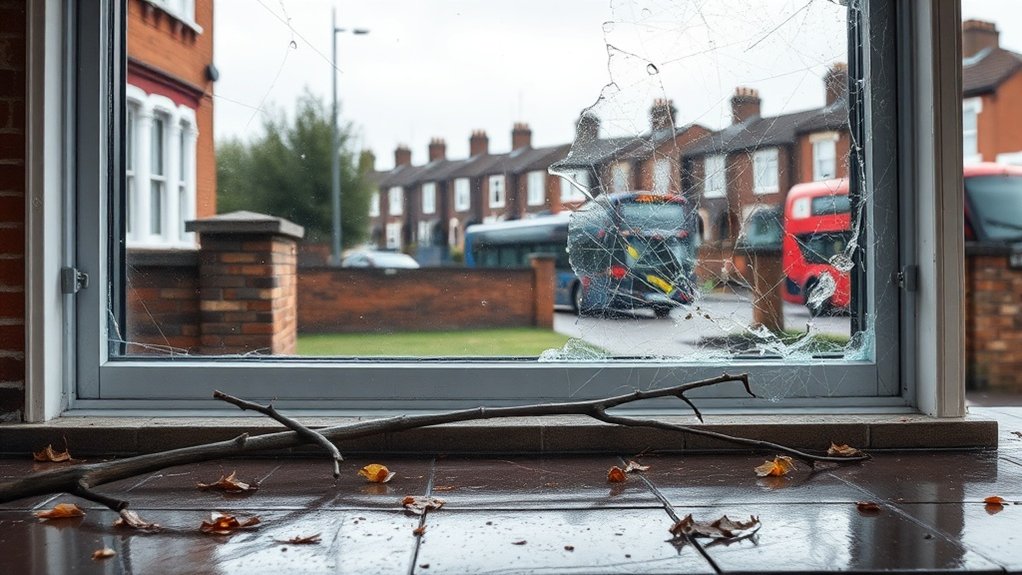
Storm damage glazing in London covers any storm-related breakage, cracking, seal failure, or frame distortion that reduces safety, weather‑tightness, or compliance with Building Regulations. You must act quickly to secure hazards, prevent water ingress, and document damage for insurers. Emergency glaziers should restore at least temporary protection within hours, then replace with BS‑compliant laminated or toughened units that meet Parts L and Q. From costs to long‑term resilience, you can address each of these points in turn.
Key insights
- Storm damage glazing in London includes cracked glass, failed seals, distorted frames, and reduced weather-tightness caused by wind, rain, and temperature fluctuations.
- After a storm, secure the area, document damage with timestamped photos, and arrange emergency boarding or same-day glass replacement within hours.
- Choose FENSA-registered London glaziers experienced in laminated/toughened safety glass and compliant with BS 6262 and current Building Regulations.
- Insurers usually require prompt notification, detailed incident reports, and photographic evidence before approving storm-related glazing repair or replacement costs.
- Quality repairs use modern laminated or toughened units that improve impact resistance, thermal performance, and long-term resilience against London’s weather.
What Counts As Storm Damage Glazing in London?
When you assess storm damage glazing in London, you’re generally referring to any breakage, fracture, distortion, or loss of integrity to glass or framing systems that’s directly attributable to a defined weather event, such as high winds , windborne debris, hail, heavy rain penetration, or rapid temperature shifts. You count as storm damage any resultant reduction in structural performance, weather‑tightness, impact resistance, or thermal performance relative to pre‑event condition.
You also include micro‑cracking, delamination, and seal failure in insulated units, even where they’re only detectable under close inspection. For historical glazing and decorative panels , you treat loss of original material, deformation of lead cames, or detachment from supporting frameworks as storm damage where a weather event is the proximate, evidenced cause.
How London Weather Damages Your Windows
You need to understand how London’s specific weather profile exposes your glazing to persistent rain that can cause leaks, wind loading that can induce stress fractures, and temperature shifts that encourage damaging condensation cycles. These factors don’t just affect comfort; they directly influence frame integrity, seal performance, and glass durability in ways that are relevant to building regulations and warranty conditions. By recognising these mechanisms, you can assess whether your existing windows meet required performance standards and when remedial or replacement works are necessary.
Persistent Rain And Leaks
Although London’s rainfall may appear moderate, its persistence exposes window systems to prolonged moisture loads that progressively compromise their performance. You face cumulative infiltration risk at joints, frame interfaces, and glazing seals, especially where legacy detailing predates current storm resilience standards. Persistent dampness can degrade sealants, saturate porous substrates, and initiate concealed mould or corrosion.
You should consequently evaluate glazing against defined water‑tightness classes , pressure‑equalised drainage paths, and verifiable test data rather than visual condition alone. Upgrading to engineered profiles with integrated drip edges, baffles, and capillary breaks reduces leakage pathways. Advanced rainproof coatings on glass and frames can minimise surface wetting duration, lowering moisture ingress at microfissures and imperfect seals, and aligning your asset with emerging best practice in performance‑based façade design.
Wind Stress And Cracks
Even under what appear to be moderate conditions, London’s gusting, directional winds impose cyclic and peak pressures on glazing that can initiate or propagate cracks, especially in older or non‑compliant installations. You’re not just dealing with uniform pressure; turbulence, vortex shedding around façades, and rapid pressure reversals impose complex stress paths through the pane and frame.
If your glazing materials aren’t specified to current wind‑load provisions in BS EN 1991 and relevant UK National Annexes, micro‑cracks can evolve into visible fractures, edge chipping, or delamination in laminated systems. You must also consider frame stiffness and fixing patterns, which considerably influence stress concentrations. Advanced interlayers and hybrid units let you preserve window aesthetics while upgrading structural performance under recurrent London storm events.
Temperature Swings And Condensation
While wind loading drives obvious breakage, London’s rapid temperature swings and persistent humidity create slower, code‑relevant deterioration mechanisms in glazing systems. You must treat temperature fluctuations as a structural and envelope‑performance hazard, not just a comfort issue. Differential expansion between glass, spacers, and frames induces edge seal fatigue , promoting gas loss and interstitial moisture ingress.
Persistent condensation issues—on panes, within cavities, and at frame interfaces—accelerate corrosion of metallic components and decay of organic sealants, undermining declared U‑values and service life projections. You should specify glazing systems with verified performance under cyclic thermal loading, robust warm‑edge spacers, and drainage/ventilation paths that comply with London‑specific moisture criteria , while documenting inspection and maintenance regimes that satisfy insurers, warranty providers, and emerging resilience standards.
Immediate Safety Steps After Storm Damage
Once storm conditions subside, you must treat any glazing damage as a potential safety and compliance risk and implement immediate control measures. You enhance storm safety and long‑term weather preparedness by following a clear, auditable sequence.
-
Secure the hazard zone Establish exclusion perimeters around damaged glazing, record conditions with timestamped images, and prevent public access to falling‑glass trajectories, in line with UK workplace and public safety regulations.
-
Isolate utilities and stabilise the envelope Shut off power, HVAC, and automated façade systems near compromised glazing to eliminate electrical and pressure‑differential risks, then deploy temporary barriers to minimise wind‑driven debris.
-
Document, classify, and report defects Log pane types, framing failures, and impact sources; classify damage severity; and prepare a digital incident record to support compliance auditing and data‑driven façade resilience upgrades.
Emergency Glazing in London: How Fast You Need It
Because storm‑damaged openings rapidly escalate structural, security, and compliance risks, you should treat emergency glazing in London as a time‑critical intervention measured in hours, not days. Within the first 2–4 hours, you need to restore weather tightness , deter unlawful entry, and limit exposure that could breach insurance and building‑control conditions.
You should specify response times contractually, requiring 24/7 call‑out and on‑site attendance within clearly defined service‑level thresholds. Rapid assessment must consider wind loading, impact risk, and residual glass stability, while also preserving future window aesthetics and interoperability with advanced glazing materials such as laminated safety glass or energy‑efficient units. You’ll also want suppliers who document compliance with BS 5516, BS EN 356, and relevant London local‑authority guidance.
Boarding Up vs Same-Day Glass Replacement
In London storm events, your first glazing decision is whether to instruct boarding up as a temporary containment measure or to mandate same‑day glass replacement as a permanent remedy. You’ll weigh structural safety, security, and window aesthetics against operational downtime and compliance risk.
You should evaluate:
- Boarding up – Provides rapid containment, meets basic safety duties, but degrades façade performance and obscures visibility, so it’s best suited to short‑term risk control.
- Same‑day replacement – Uses modern glazing technology to restore thermal performance, acoustic control, and visual continuity while immediately re‑establishing compliance with Part K and Part L.
- Hybrid strategies – Deploy boarding on low‑priority elevations while reserving same‑day replacement for critical frontages, heritage sightlines, or high‑security zones, optimising both cost and regulatory resilience.
Insurance Claims for Storm-Damaged Glazing
When storm events fracture or dislodge glazing, you must document the damage systematically to meet policy and evidential standards for an insurance claim. You’ll need clear photographic records, time-stamped incident logs, and contractor reports that align with your insurer’s wording and any applicable UK regulatory guidance. By structuring this documentation correctly and following prescribed notification and claims procedures, you reduce the risk of disputes, under-settlement, or claim rejection.
Documenting Storm Glass Damage
Although storm damage to glazing can appear self‑evident onsite, insurers typically require structured, verifiable documentation before accepting a claim. You must evidence how the storm glass failed, how weather resilience was compromised, and how conditions align with policy wording.
Implement a systematic capture protocol:
- Record high‑resolution, time‑stamped images and video, covering full elevations, glass edges, fixings, and surrounding building elements, noting wind direction and debris impact paths.
- Log measurements of cracks, shattering patterns, deflection, and frame distortion, using calibrated tools and referencing relevant British Standards for glazing performance.
- Compile a contemporaneous incident report , cross‑referencing local meteorological data, maintenance history, and any prior upgrades, demonstrating that the damage results from an acute storm event, not pre‑existing deterioration.
Navigating Insurance Procedures
Because insurers scrutinise storm‑damage glazing claims against strict policy conditions and evidential standards, you must treat the claim as a regulated process rather than a simple notification of loss. You should first review your policy schedule, endorsements, and exclusions to confirm how storm perils, window tinting, and decorative glazing are defined and indemnified.
Notify the insurer or broker within the prescribed timeframe and submit date‑stamped photographic evidence , glazing specifications, and installer warranties. Clearly separate pre‑existing defects from storm impact. Obtain a loss adjuster’s scope that itemises every affected unit, including laminated, toughened, and coated glass.
Where you propose innovative replacements—such as upgraded energy‑efficient units or advanced tinting films—document betterment and request written confirmation of cost apportionment before authorising works.
Choosing a Storm Damage Glazier in London
Selecting an appropriate storm damage glazier in London requires evaluating more than speed of response; you must verify technical competence , regulatory compliance, and documented insurance coverage. You need a contractor who understands Historical architecture, advanced glazing materials, and current performance standards, including BS 6262 and relevant parts of the Building Regulations.
Prioritise firms that integrate digital surveying, structural calculations, and transparent certification. A robust selection framework could include:
- Regulatory assurance – FENSA or equivalent certification, method statements, risk assessments, and waste-handling compliance.
- Technical capability – Proven experience with laminated, toughened, and high-performance coated systems, plus compatible framing.
- Heritage and innovation balance – Ability to protect listed facades while upgrading thermal, acoustic, and resilience metrics through modern glazing technologies.
Common Storm Damage Glazing Repairs in London
When high winds and wind‑borne debris impact London properties, storm damage glazing repairs typically focus on fractured panes, failed seals, distorted frames, and compromised anchorage systems. You’ll usually specify impact‑resistant laminates or toughened safety glass to reinstate compliance with BS 6262 and relevant parts of the Building Regulations.
You may need edge‑bonding or structural silicone remedials where units in historical architecture have loosened within aged frames, ensuring load paths and retention forces meet contemporary performance standards without altering heritage sightlines. For multi-pane systems, you’ll address spacer failure , argon loss, and surface pitting, particularly where decorative glass is etched or leaded. Anchorage repairs often involve upgraded fixings, pressure plates, and gaskets to satisfy current wind‑load, air‑tightness, and water‑ingress criteria.
When Should You Replace Storm-Damaged Windows?
Although many storm‑affected windows in London are technically repairable, you should mandate full replacement once the damage prevents the unit from reliably meeting BS 6262 , Approved Document K, or Part L performance thresholds. At that point, incremental storm repair becomes a false economy, and you must re‑specify the glazing as a complete system rather than a patched component.
You should particularly consider replacement when:
- Fractures, frame distortion, or failed seals compromise structural integrity or visibility compliance under BS 6262.
- Hardware or glazing movement undermines window security performance, enabling forced entry or sash deflection beyond London insurers’ expectations.
- Thermal bridging, air leakage, or moisture ingress means the opening can’t achieve cost‑optimal Part L U‑values or airtightness, even with advanced remedial detailing.
Best Storm-Resistant Glazing Options for London
In London’s mixed profile of high winds, wind‑borne debris, and driving rain, you should specify storm‑resistant glazing as an integrated system that balances impact resistance , containment, and energy performance against BS 6262, Approved Document K, Part L, and relevant BS EN standards.
Prioritise laminated double or triple glazing with PVB or ionoplast interlayers tested to BS EN 356 and BS EN 12600; these maintain pane integrity under cyclic loading and limit hazardous breakage. For exposed elevations, consider hybrid systems combining laminated outer panes with warm‑edge insulated units to control U‑values and surface condensation.
In conservation areas, deploy slim-profile laminated units to reconcile Historical preservation and aesthetic enhancement with measurable wind-load resistance, verified through project-specific façade engineering calculations.
Security Glazing to Prevent Post-Storm Break-Ins
You must treat post-storm glazing not only as a weather-resilience measure but as a primary barrier against opportunistic intruders exploiting damaged or weakened openings. By specifying reinforced glazing solutions that comply with relevant British and European security standards (such as PAS 24, EN 356, and LPS 1175 where applicable), you reduce the likelihood of forced entry following severe weather events. You should also guarantee that any temporary or emergency glazing meets minimum impact and containment performance so you don’t create new security vulnerabilities during the repair phase.
Deterring Opportunistic Intruders
Why does storm damage so often coincide with a spike in opportunistic break-ins across London’s commercial and residential properties? You’re temporarily operating below normal security thresholds: broken glazing, compromised locks, and reduced visibility all expand your attack surface . To deter intruders, you should treat post-storm glazing as a security-critical system, not just an envelope repair.
You can integrate visual, physical, and procedural deterrents into your glazing specification:
- Use security-rated window tinting and decorative films that limit interior visibility while complying with BS 6262 and relevant Part Q requirements.
- Specify laminated security films with certified impact and tear resistance to delay forced entry attempts.
- Implement rapid temporary boarding and access-control measures, integrated with monitoring, to maintain a continuous deterrent posture until permanent glazing is reinstated.
Reinforced Glazing Solutions
Post-storm deterrence measures gain real effectiveness only when backed by reinforced glazing that raises the mechanical and security performance of each opening. You should specify laminated or hybrid security glass certified to EN 356 (P4A–P8B) and impact-tested framing systems to maintain resistance after debris strikes.
You can integrate multi-layer interlayers, polycarbonate laminates, or security films to delay forced entry, while ensuring compliant anchoring, edge cover, and hardware locking points. In London, you’ll also need to coordinate with Part Q (security), Part L (energy efficiency), and local conservation constraints affecting exterior profiles and interior aesthetics.
Select insulated security units with low‑E coatings and warm-edge spacers so you don’t compromise U-values, solar control, or visible light transmission when upgrading storm-resilient security glazing.
Protecting London Period Windows From Storm Damage
Although London’s period windows contribute considerably to a building’s heritage value, they also present specific vulnerabilities to storm damage that must be managed through targeted, compliant interventions. You must balance historical preservation with performance upgrades that don’t compromise aesthetic enhancement or breach listed-building consent conditions.
You should apply BS 8213 and relevant London Borough conservation guidance when specifying interventions such as slimline double glazing, laminated heritage glass, and micro-ventilated secondary glazing. These solutions let you enhance impact resistance and airtightness while retaining original sightlines and joinery profiles.
Consider a structured approach:
- Audit existing frames, putty, and ironmongery against current wind-load criteria.
- Specify reversible, minimally invasive glazing upgrades.
- Integrate discreet draft-proofing and maintenance regimes for long-term resilience.
Storm Damage Glazing for Shops and Offices
In London’s retail and commercial buildings, storm‑resistant glazing design must align with BS 6262 , BS EN 1991-1-4 (wind actions), and local planning guidance to protect high-exposure shopfronts and office façades without breaching façade-design or branding constraints. You must quantify wind loads, impact risks, and post-breakage behaviour, then specify laminated or toughened systems that maintain safe retention and visibility.
For ground-level shops, you’ll typically combine laminated security glass with reinforced framing, verified via calculation or simulation to satisfy crowd-safety and overhanging glazing clauses. In offices, you should integrate high-performance IGUs , acoustic interlayers, and pressure-venting strategies within unitised curtain walling.
Where Historical architecture is present, you’ll use slim-profile systems and Eco friendly materials, coordinating with conservation officers while maintaining regulatory conformity.
Typical Costs for Storm Damage Glazing in London
When you assess storm damage glazing in London, you need clear benchmarks for average repair price ranges so you can budget in a controlled, compliant manner. You’ll also need to understand how glass type, frame condition, access constraints, and emergency response times affect glazing costs. This section sets out typical cost bands and the principal technical and regulatory factors that influence the final invoice.
Average Repair Price Ranges
Because storm damage glazing repairs in London span a wide range of severities and materials, typical costs can vary from roughly £80–£150 for minor single-pane repairs through to £300–£800+ for more complex double glazing or structural glass replacements. You should benchmark quotes against compliance-driven specifications for storm safety and certified glazing materials , ensuring contractors price like-for-like systems.
Typical average ranges include:
- Single glazing crack repairs or pane swaps: £80–£180, where access is straightforward and frame impact is minimal.
- Standard double-glazed unit replacement: £180–£450, depending on pane size, thermal performance, and edge-seal technology.
- High-performance or structural glazing: £450–£1,200+, particularly for laminated, acoustic, or impact‑rated units integrated into advanced façade systems.
Factors Affecting Glazing Costs
Although headline price ranges are useful for budgeting, storm damage glazing costs in London ultimately depend on a defined set of technical, regulatory, and site-specific factors that contractors must price into their quotations. You’ll see variation driven by glass specification (laminated, toughened, acoustic, or security-rated) and associated test certifications. Frame type and complexity of glass framing, including thermal breaks and compatibility with existing systems, also influence labour and materials.
Compliance with Building Regulations Parts L, B, K, and Q can require upgraded units, safety glass, or enhanced locking. Access constraints, out-of-hours work, and emergency call-outs add premiums. If you integrate window tinting, solar-control coatings, or smart glazing films, optical performance requirements and wiring needs further increase costs but can improve lifecycle value and energy performance.
Simple Maintenance Checks to Prevent Future Damage
Even outside severe weather events, systematic maintenance checks on your glazing considerably reduce the risk of storm-related failure and costly remedial works. You should treat these inspections as a structured compliance routine aligned with manufacturer guidance and relevant British Standards.
- Inspect frame substrates, sealant lines, and glazing beads for cracking, loss of adhesion, or movement; document defects and schedule prompt resealing to maintain weather‑tightness.
- Integrate regulated window cleaning and paint preservation cycles; clean glass and frames with non‑abrasive agents, then verify that coatings remain continuous to prevent moisture ingress and substrate decay.
- Check ironmongery, hinges, and locking points for corrosion, misalignment, or reduced operating tolerances; lubricate moving parts and recalibrate closing pressures so sashes engage uniformly under wind load.
Long-Term Glazing Upgrades for Storm-Proofing London Homes
Routine checks limit immediate risk, but enduring storm resistance in London’s housing stock depends on upgrading the glazing specification itself. You should prioritise impact‑resistant laminated units, compliant with BS EN 356 , integrated into robust, PAS 24–rated frames and fixings. This combination reduces breakage under windborne debris and cyclic loading.
You can specify insulated glazing units with warm‑edge spacers and gas fills that enhance structural integrity while supporting thermal targets under Part L . To control dynamic wind pressures, you should model mullion and transom deflection, ensuring compatibility with existing masonry and cavity structures.
Crucially, you don’t need to compromise window aesthetics. High‑performance coatings, discrete interlayers, and slimline profiles preserve contemporary glazing aesthetics while delivering measurable, certifiable storm resilience.
Frequently Asked Questions
Can Storm Damage Glazing Issues Affect My Energy Bills Over the Long Term?
Yes, storm damage glazing issues can considerably affect your energy bills over the long term. Compromised seals, micro‑fractures, and frame distortion reduce Energy efficiency, forcing HVAC systems to work harder. Over time, this elevates Long term costs through increased consumption and accelerated equipment wear. You should commission a technical inspection, validate U‑value performance against regulatory benchmarks, and consider advanced glazing upgrades to restore envelope integrity and optimize lifecycle operating expenses.
Are There Council or Heritage Restrictions on Storm Damage Glazing Repairs in London?
Yes, you’ll face potential council and heritage constraints . If your property’s listed or in a conservation area, Historical preservation controls restrict frame profiles, glazing types, and sightlines. You must align repairs with Article 4 Directions, listed building consent, and local Building regulations on safety and thermal performance. Coordinate early with planning officers and a specialist contractor to design compliant, innovative glazing solutions that respect fabric while upgrading performance.
How Do Storm Damage Glazing Repairs Impact My Property’s Resale Value?
You typically enhance resale value if repairs use compliant, high-performance glazing aligned with Historical preservation standards. Studies show up to 10–15% value uplift where energy efficiency and regulatory conformity converge. You should document specifications, certifications, and Building Regulations compliance, then link them to Insurance claims records. Prospective buyers and surveyors will price in reduced future risk, improved thermal performance, and demonstrable regulatory due diligence, especially in conservation‑sensitive or innovation‑driven markets.
Can I Stay in My Home During Extensive Storm Glazing Replacement Works?
You can sometimes stay in your home, but it depends on risk assessments, storm safety standards, and the project’s phasing plan. If contractors remove multiple critical windows simultaneously, regulations and best practice typically require you to use temporary accommodations . You’ll need segregated work zones, compliant ventilation, noise and dust controls, and secure access. Coordinate with your installer for a staged program that minimizes disruption while maintaining full regulatory and insurance compliance.
Are There Eco-Friendly or Recycled Glass Options for Storm Damage Glazing Repairs?
Yes, you can specify Recycled glass and Eco friendly glazing for storm repairs, treating the damaged envelope like a circuit you’re upgrading. You’ll assess U-values, g-values, and acoustic ratings while checking BS EN 1279 and Part L compliance. Manufacturers now offer high-recycled-content laminates, low‑iron solar-control units, and warm-edge spacers. You’ll also verify Environmental Product Declarations and possible BREEAM or LEED credits before approving the specification.
Summary
You’ve seen how London’s weather can breach glazing, trigger safety risks, and even affect your regulatory compliance. After major storms, glazing claims rise by up to 40% in some UK urban areas, underscoring how vulnerable standard windows are. By acting quickly—securing emergency glazing, documenting damage, and planning upgrades to higher-spec, storm-resistant systems—you’re not just repairing glass; you’re reducing liability exposure and aligning your property with best-practice safety and building standards.