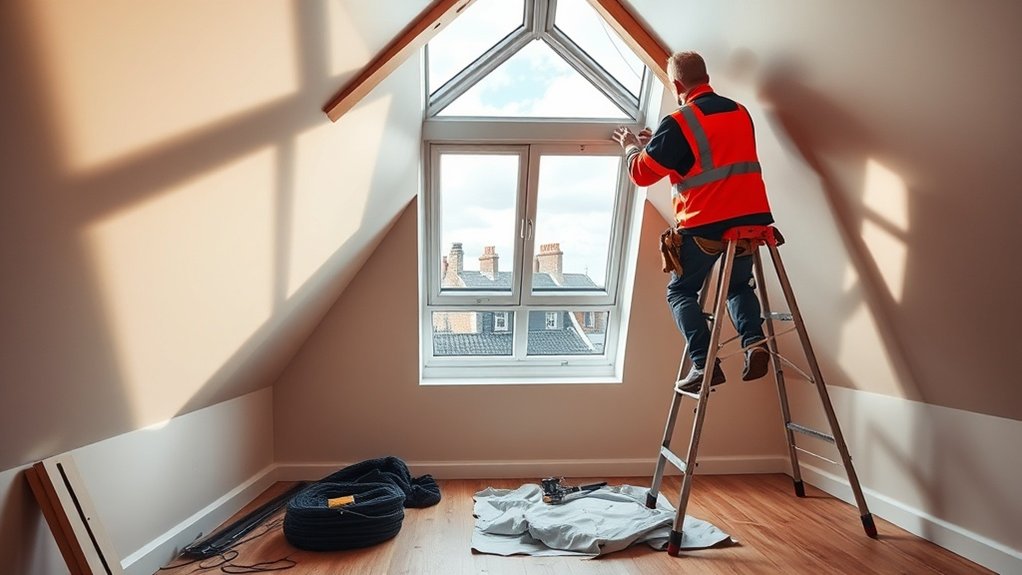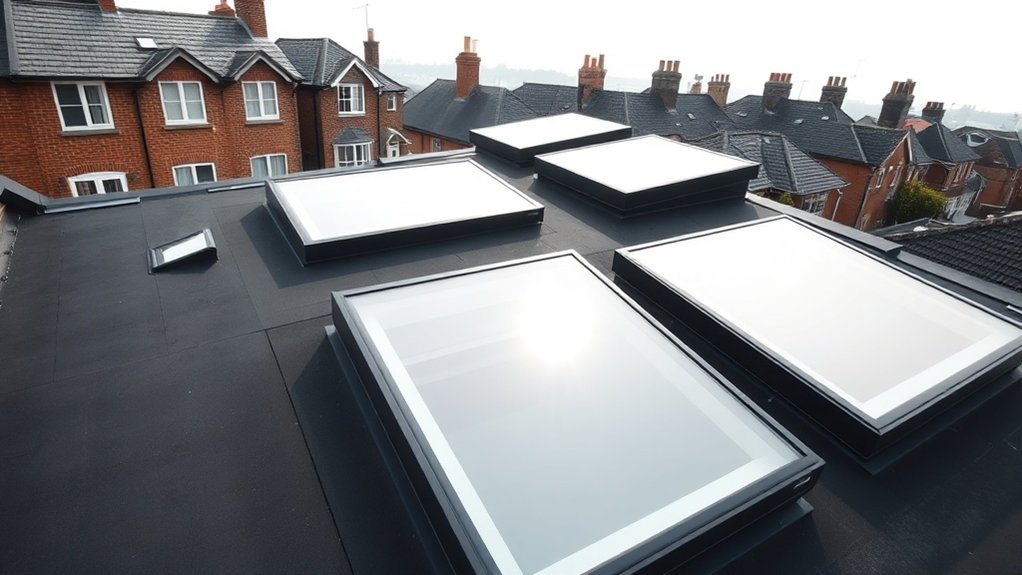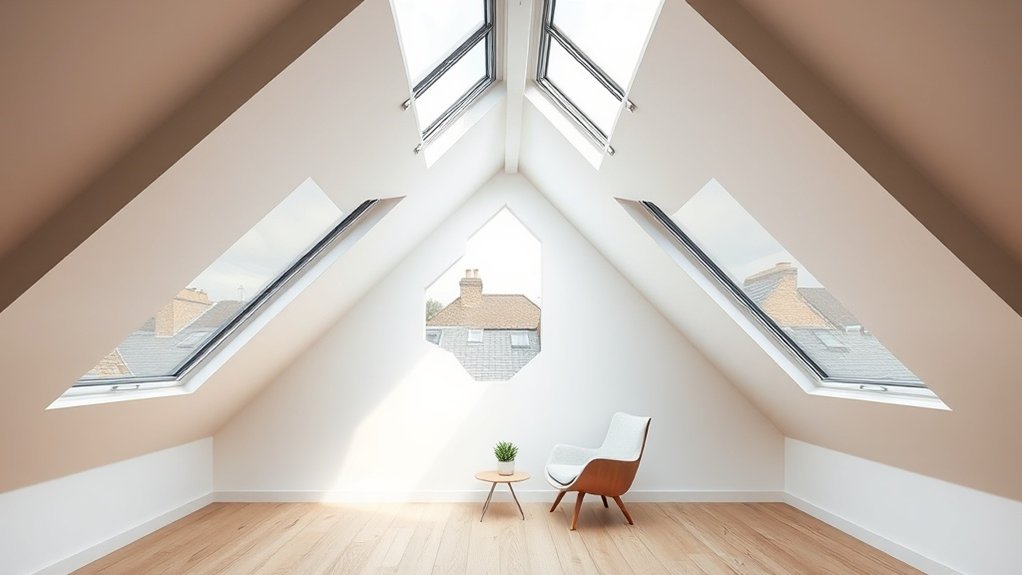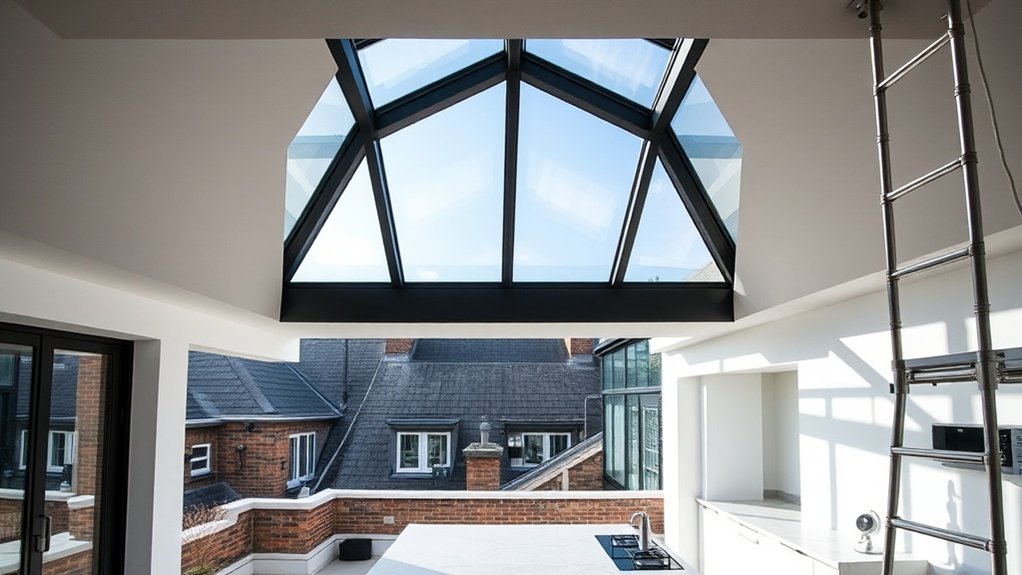
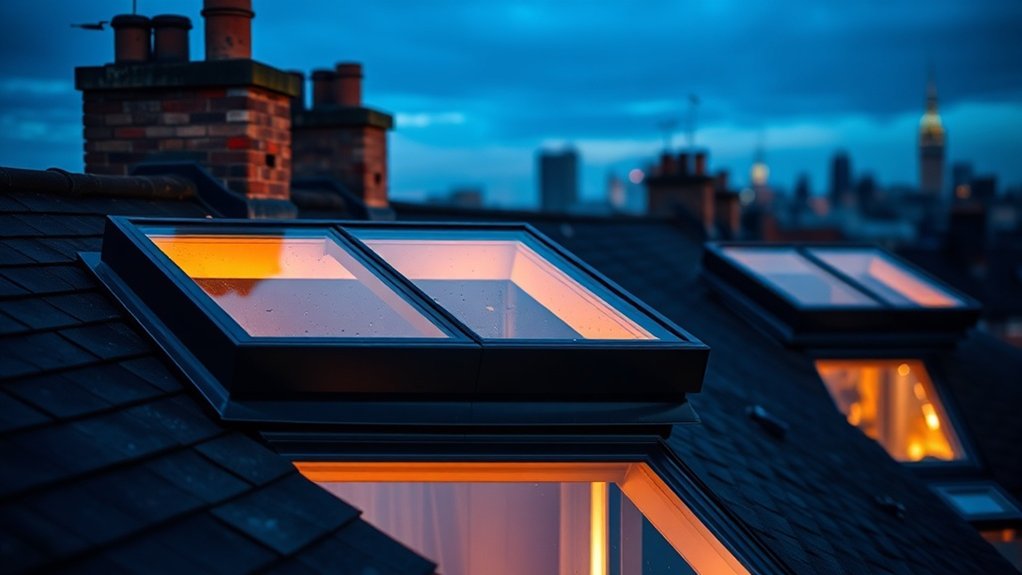
Skylights in London let you drive daylight deep into tight plans , cut reliance on artificial lighting, and upgrade thermal performance in both flat and pitched roofs. You’ll choose between flat rooflights, pitched roof windows, lanterns or walk-on glass, each with specific structural trimming, upstand and vapour‑control requirements. With the right glazing, ventilation strategy and installer, you minimise leaks, condensation and drafts while maximising usable space, comfort and views of the sky, which is exactly what the rest of this page explains.
Key insights
- Skylights in London homes increase natural daylight, improve perceived space, and can enhance thermal performance when detailed with modern high-performance glazing.
- Common options include flat rooflights, pitched roof windows, roof lanterns, and walk-on glass roofs, each suiting different roof types and design goals.
- Careful design must consider structure, planning rules, overlooking, and conservation area constraints within London’s strict planning and building regulations.
- Energy-efficient skylights use low‑E glass, warm-edge spacers, insulated upstands, and optional triple glazing to limit heat loss and reduce overheating.
- Ventilating skylights with sensors, blinds, and shading devices help manage condensation, summer heat, glare, and privacy in dense London neighbourhoods.
Benefits Of Adding Skylights To London Homes
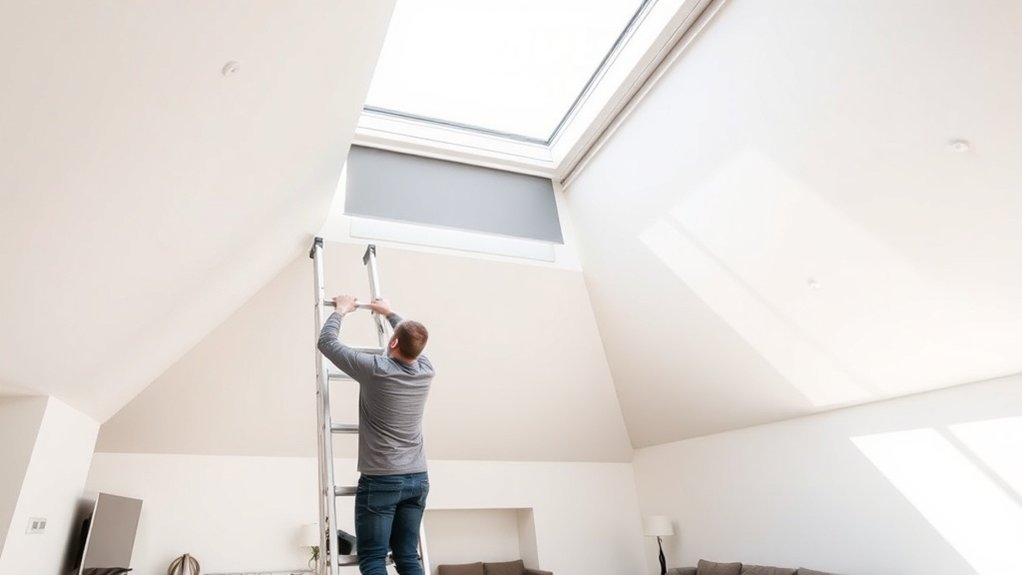
Adding skylights to London homes increases usable daylight penetration, improves spatial perception, and enhances thermal performance when specified correctly. You transform underlit zones into high-lux environments, reducing reliance on artificial lighting and stabilizing circadian rhythm. By directing light deep into the plan, skylights expand perceived volume, making compact London rooms feel taller and more open.
You also gain passive solar gains in winter while advanced glazing assemblies limit overheating and heat loss. Structurally, you can integrate skylights between rafters or within engineered openings, preserving roof integrity and drainage paths. Vertical light shafts frame views of sky and surrounding roofs, aligning with Gardening aesthetics on terraces and courtyards, while controlled luminance enhances interior decor, materials, and surface articulation.
How To Choose The Right Skylight For Your London Home
Once you understand how skylights enhance daylight, volume, and thermal performance in London homes, the next step is to specify units that match your roof build-up, orientation, and room function. Start by mapping structural constraints : rafter spacing, roof pitch, insulation depth, and any steelwork. These parameters determine feasible skylight dimensions, upstand height, and integration with your waterproofing layer.
Next, analyse solar path and overshadowing from neighbouring buildings to tune glazing g‑values, visible light transmittance, and any external shading. Align skylight aesthetics with your interior geometry—think sightlines, ceiling plane continuity, and frame sightline thickness.
Finally, factor in skylight maintenance : select accessible opening mechanisms, self-cleaning coatings, and internal finishes that tolerate London’s condensation risk and pollution levels.
Common Types Of Skylights London Homeowners Use
Three core skylight typologies dominate London housing—flat rooflights, pitched roof windows, and modular roof lanterns—each suiting different roof constructions and spatial strategies. Flat rooflights sit flush within warm-roof build-ups, optimising U‑values and delivering evenly diffused daylight to kitchens, corridors, and deep-plan spaces.
Pitched roof windows integrate between rafters, respecting existing roof pitches while maximising sky visibility and controllable ventilation. You can specify triple glazing, laminated inner panes, and acoustic upgrades to counter urban noise.
Modular roof lanterns form raised, thermally-broken structures over larger openings, creating atrium-like volumes and pronounced light shafts. They demand rigorous detailing around upstands, drainage falls, and vapour control layers, plus consistent skylight maintenance . You’ll also need planned skylight cleaning access to preserve optical clarity and performance.
Skylights For London Terraces And Loft Conversions
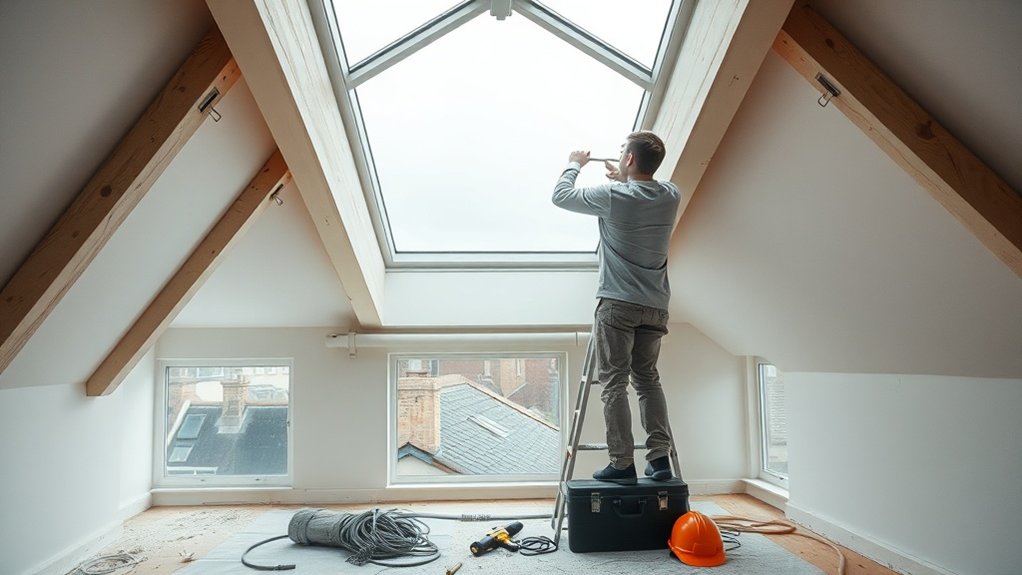
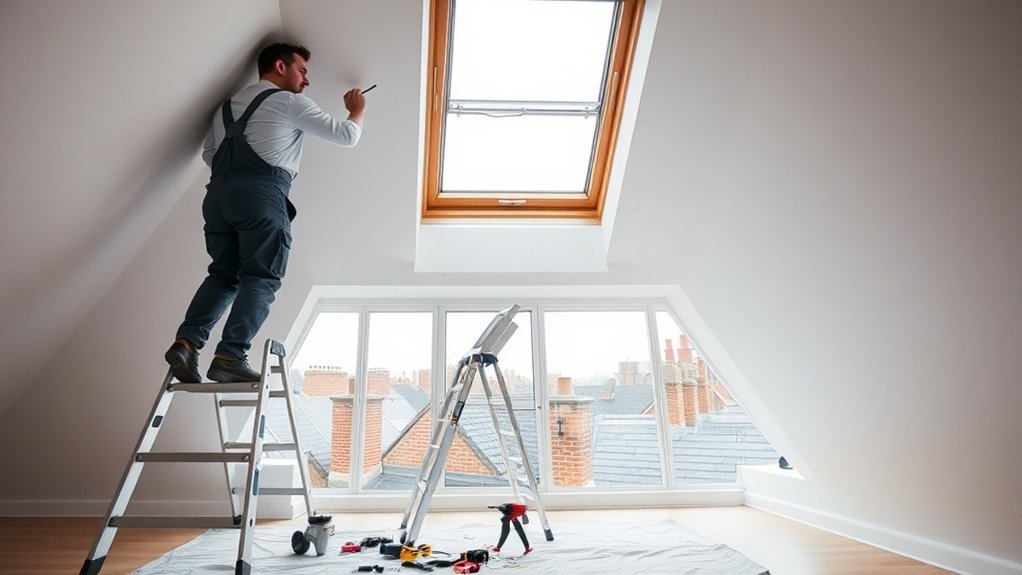
When you plan skylights for loft conversions and roof terraces in London, you’re working with constrained roof geometry, party-wall boundaries, and strict daylight targets . You’ll need to position rooflights, walk-on units, or lanterns to maximise light penetration deep into the floor plate while preserving insulation continuity and structural load paths. Terrace skylight design also requires you to resolve issues like fall protection, waterproofing interfaces, and compatible framing details with existing joists and steelwork.
Maximising Light In Lofts
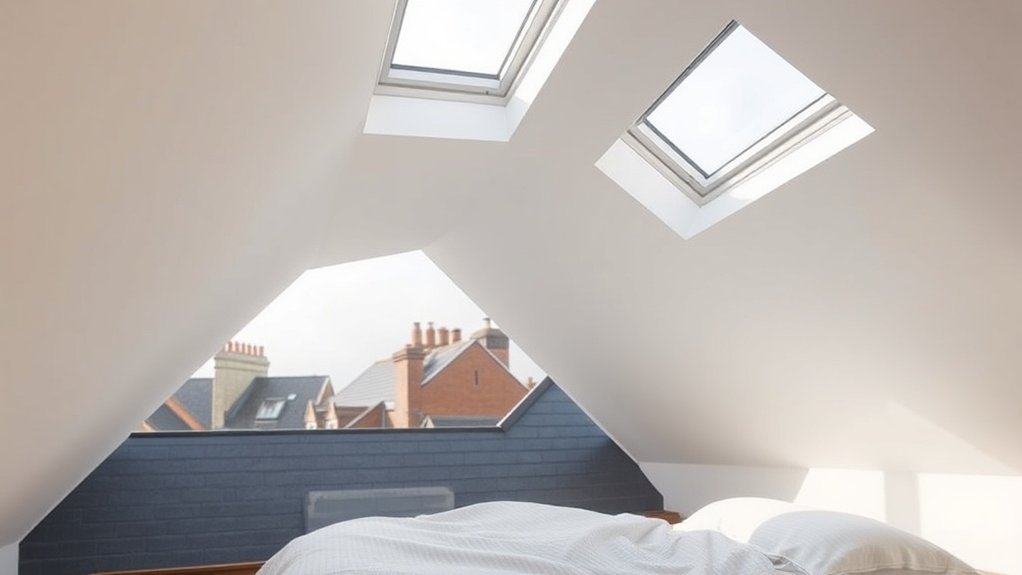
Although London terraces often have shallow plans and shared party walls, you can still transform a loft by treating skylights as primary daylight apertures rather than cosmetic add‑ons. You align your skyward aspirations with structural logic by positioning units along the roof’s sun‑facing pitch, exploiting the longest diagonal of the space.
You maximise luminance by specifying larger glazed areas between rafters, using trimmed openings, doubled headers, and reinforced purlins to maintain structural integrity. Set glass planes flush or near‑flush with the roofline to optimise daylight penetration and reduce internal shadow lines, sharpening daylight aesthetics. Combine higher-level skylights with lower-level vertical elements to create a stacked light strategy that drives daylight deep into the loft volume, stabilising lux levels throughout the day.
Terrace Skylight Design Tips
Because London terraces compress width and depth, terrace skylight design demands rigorous control of placement, structure, and detailing rather than decorative add‑ons. You need to map joist directions, chimney stacks, and drainage runs before fixing any opening, then align the skylight to structural bays to avoid costly trimming.
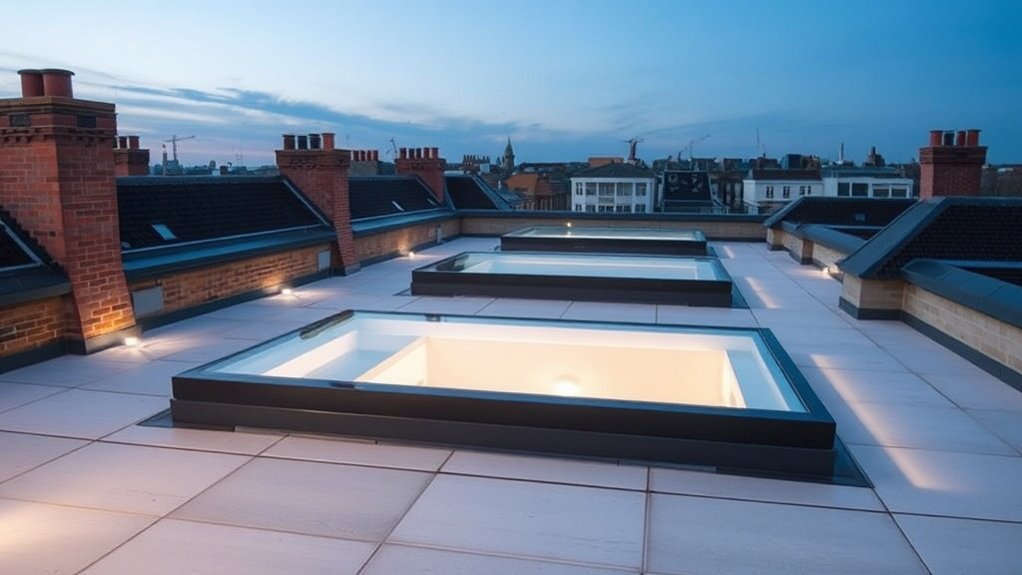
Prioritise low‑profile, thermally broken aluminium systems with laminated, solar‑control glass to limit heat gain while preserving skyline views. Use walk‑on or box skylights to extend floor area visually and connect to rooftop gardens, but verify live‑load ratings and slip resistance. Specify integrated upstands, vapour barriers, and warm‑roof insulation to prevent interstitial condensation. Finally, model light angles and privacy sightlines so neighbours’ windows don’t compromise your terrace sanctuary.
Skylights For London Extensions And Kitchens
When you plan skylights for London extensions and kitchens, you need to think in terms of light penetration, ceiling geometry , and the orientation of glazed apertures to maximise natural kitchen illumination. You’ll assess different skylight configurations—such as fixed flat units, lanterns, or modular rooflights—in relation to structural openings, joist layout, and roof pitch. At the same time, you must specify glazing performance, thermal breaks, and operable vents to optimise energy efficiency and controlled ventilation in these high‑use spaces.
Maximising Natural Kitchen Light
How can you turn a dim London kitchen or rear extension into a bright, functional workspace by reconfiguring the roof plane ? You start by analysing solar orientation, neighbouring massing, and existing structural grids. In tight plots or historical architecture, you can thread new openings between joists or rafters, maintaining structural continuity with engineered trimmers and steel flitch beams.
Position roof apertures above key work zones—prep benches, islands, and sinks—to deliver high lux levels without deep shadows. Treat the glazing as skylight art, using precise aperture proportions to control daylight penetration and view framing. Specify high-performance units with tuned visible light transmittance, low g-values, and internal reveals that flare outward, increasing sky exposure while preserving privacy and thermal efficiency.
Skylight Designs For Extensions
Reconfiguring the roof plane for daylight in a kitchen naturally leads to specific skylight typologies for London extensions, where deep plans and party walls restrict lateral glazing. You’ll typically evaluate flat rooflights, modular roof lanterns, and long linear slots to calibrate Skyward views and daylight diffusion across worktops and circulation.
For rear and side-return extensions, you can align structural openings between existing joists or introduce steel box frames to carry trimmed rafters, keeping glass areas generous yet structurally legible. Consider staggered skylight bays to articulate zoning between cooking, dining, and soft seating. Specify fritted or lightly opaline inner panes to soften contrast ratios on task surfaces, and use slender thermally broken frames so the glass reads as continuous, precise apertures in the ceiling plane.
Energy Efficiency And Ventilation
Although skylights primarily transform light and volume in a London kitchen extension, they also operate as critical components in the energy and ventilation strategy. You can treat the roof plane as an energy-active surface, specifying high-performance glazing that admits beneficial solar energy while minimising conductive heat loss and summer gains. Low‑emissivity coatings , warm‑edge spacers, and insulated kerbs help stabilise internal temperatures and reduce dependence on mechanical heating.
For ventilation, you integrate opening skylights at high level to exploit stack effect: warm, stale indoor air rises and exhausts through actuated vents, drawing in cooler air from lower apertures. Rain and wind sensors, trickle vents, and airtight yet thermally broken frames ensure precise airflow control, efficient purge ventilation, and reduced condensation risk in busy kitchens.
Fixed Vs Opening Skylights In London’s Climate
When you evaluate fixed versus opening skylights for London’s damp, variable climate, you’re really choosing between a sealed glazing element that maximises thermal stability and an operable roof aperture that adds controlled ventilation and smoke‑exhaust capacity. Fixed units prioritise airtightness , minimising infiltration at the roof interface while still delivering generous skyward views and uniform daylight diffusion across the interior plane.
Opening skylights integrate actuators, hinges, and compression gaskets, so you must consider hinge orientation, sash weight, and wind‑loading on exposed roof pitches. In London, you’ll typically specify trickle‑vent or electrically actuated opening models for kitchens, stairwells, and lofts where stratified warm air demands purge ventilation. Fixed modules suit highly insulated envelopes, complex roof geometries, and locations where penetrations must remain structurally minimal.
Glass And Glazing Options For London Skylights
When you specify glass for a London skylight, you’re really choosing between double and triple glazing configurations that control thermal transmittance and acoustic performance across the roof plane. You also need to decide on Low‑E coatings that manage U‑values and internal radiant comfort, particularly under overcast but variable sky conditions. Finally, you should assess solar control glazing to limit solar heat gain and glare while maintaining adequate visible light transmission into the occupied space below.
Double Vs Triple Glazing
While every London rooflight must resist wind , water, and impact loads, your choice between double and triple glazing determines how the unit actually performs once installed in the roof build-up. Double glazing usually offers sufficient U‑values for typical London refurbishments, while triple glazing targets ultra‑low energy envelopes and more stable microclimates for Indoor plants beneath the skylight.
You’ll weigh added pane weight, frame depth, and structural upstand capacity against marginal thermal gains. Triple units increase dead load and may require reinforced curb details and modified Skylight maintenance access.
- Evaluate roof joist span and deflection under increased glass weight.
- Confirm upstand height and bearing width for triple units.
- Coordinate opening size with desired daylight factor.
- Balance acoustic attenuation against added structural complexity.
Low-E And Solar Control
How you specify Low‑E and solar control glass on a London skylight directly governs heat loss, solar gain, and visual comfort beneath the opening. You’ll balance U‑value, g‑value, and visible light transmission to tune internal conditions without compromising skylight aesthetics or clashing with historical architecture.
Use soft‑coat Low‑E on inner panes to reflect long‑wave radiation back into the room, reducing winter heat loss. Combine this with selective solar control coatings on outer panes to filter short‑wave solar energy, limiting summertime overheating.
Calibrate coating density to orientation: higher solar control on south‑facing rooflights, lighter on north‑facing. Ensure laminated inner panes with warm‑edge spacers, argon fill, and thermally broken frames so the whole skylight assembly performs as designed.
Managing Overheating, Glare And Privacy With London Skylights
Because London homes often sit under variable solar gain and close neighbouring properties, skylight design must address overheating, glare and privacy as core performance criteria rather than afterthoughts. You’ll treat the skylight as a controlled aperture: specifying glazing geometry, reveal depth and internal reflectance to regulate luminous flux and sightlines.
You’ll combine solar shading with aesthetic integration so baffles, louvres and fins read as part of the roofscape, not bolt‑on accessories. To systemise your approach, consider:
- External brise-soleil or micro-louvred glass for high-angle summer sun.
- Deep shaft detailing to cut low-angle glare and frame sky views.
- Switchable or patterned interlayers to disrupt overlooking while preserving daylight.
- Automated blinds linked to sensors for dynamic control of visual comfort and privacy.
Skylight Energy Ratings, U-Values And Heat Loss
When you choose a skylight for a London property, you need to read U-values and energy ratings as carefully as you’d read structural load data. These metrics quantify how much heat migrates through the glazing, frame, and junctions, directly affecting winter heat loss and summer gains in your roof zone. By specifying low U-values, high-performance coatings, and thermally broken frames, you minimise conductive and radiant heat loss through the roof aperture.
Understanding Skylight U-Values
Although skylights are primarily installed for daylight and architectural impact, their thermal performance is quantified by a metric called the U‑value, which measures the rate of heat transfer through the glazing assembly. You’re balancing Historical architecture, skylight aesthetics, and strict energy performance, so you need to understand how this value shapes envelope behaviour across the roof plane.
A lower U‑value means the skylight resists conductive and convective heat loss more effectively. You’ll evaluate:
- Glazing build‑up: pane count, cavity depth , gas fill, low‑E coatings.
- Frame composition: thermal breaks, material conductivity, profile geometry.
- Edge conditions: warm‑edge spacers, seal integrity, bridging risk.
- Installation interface: curb insulation, air‑tightness, continuity with the roof’s thermal layer.
Together, these parameters determine your skylight’s heat‑loss profile.
Energy Ratings Explained
As you step beyond basic U‑values, skylight energy ratings let you quantify how each unit will actually perform within London’s variable climate and your roof build‑up. You’re no longer looking at a single metric, but a bundle: U‑value , g‑value (solar heat gain), visible light transmittance, and air‑tightness.
You balance these against orientation, pitch, and structural opening size. A low U‑value reduces conductive losses, while a tuned g‑value exploits winter solar gains without overloading the interior in shoulder seasons. You then integrate spacer technology, gas fills, and warm‑edge frames into the specification.
Critically, you align performance with skylight aesthetics and long‑term skylight maintenance, ensuring coatings, seals, and drainage details maintain their stated rating across the installation’s service life.
Minimising Heat Loss
Energy ratings only become meaningful once you understand how they control heat loss through the roof opening, and U‑value is your primary metric here. You’re targeting a low U‑value so conductive, convective, and radiative losses through the skylight frame and glazing remain tightly controlled without compromising skylight aesthetics or historical styles.
To minimise heat loss, interrogate the assembly, not just the glass:
- Specify triple or high‑performance double glazing with warm‑edge spacers and argon or krypton fill.
- Use thermally broken aluminium or composite frames to interrupt cold bridges.
- Detail insulated upstands and airtight vapour control layers around the opening.
- Integrate exterior blinds or low‑e coatings to manage night‑time radiative losses while preserving visual quality.
Flat Roof Skylights In London: Lanterns, Domes And Walk-On Glass
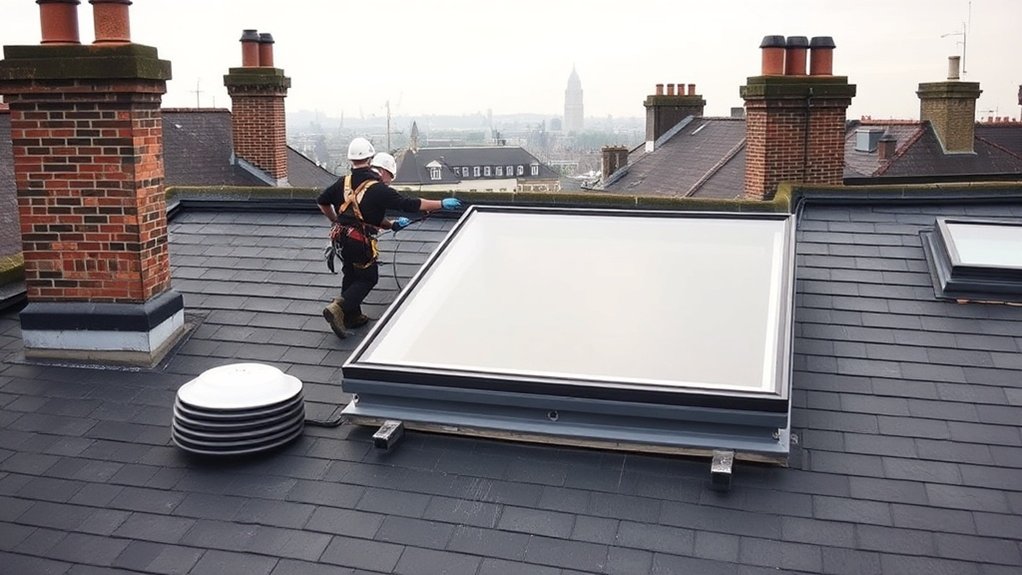
When you work with a flat roof in London, skylights become engineered daylight apertures rather than simple windows, and your main options resolve into lanterns, domes , and walk-on glass units. You treat lanterns as lightweight rooflight atria: pitched, thermally broken frames supporting insulated glass, oriented to capture skyline views while distributing daylight deep into plan. Domes function as compact, high-transmission pods, exploiting curvature for structural rigidity, self‑shedding, and uniform light diffusion over service zones or rooftop gardens.
Walk-on glass turns the roof into occupiable surface. You specify laminated, anti-slip, load‑bearing glass assemblies, with countersunk frames and warm-edge spacers, so internal rooms still receive vertical light while maintaining a flush external deck geometry and uninterrupted circulation across terraces.
Planning Rules And Permitted Development For London Skylights
Flat roof lanterns, domes and walk-on units only work in London if they sit inside a lawful planning framework, so you design them with both Part L details and planning constraints in mind. You map sightlines , parapet heights and overlooking risks, especially in dense terraces and areas of historical architecture, where conservation officers scrutinise skylight symbolism and visual impact on roofscapes.
Key planning checks you run:
- Confirm Permitted Development limits on projection above the roof plane and roof volume increase.
- Test visual impact from street level and neighbouring windows using sections and 3D massing.
- Verify positions relative to conservation areas, listed buildings and Article 4 Directions.
- Coordinate frame depth, upstand height and curb detailing so planning elevations remain visually recessive.
Building Regulations For Skylights In London
Although planning permission determines what you’re allowed to build, Building Regulations govern how your London skylight must perform in structure, safety, and energy efficiency. You must verify load‑bearing capacity of rafters, trimming members, and upstands, ensuring the opening doesn’t compromise the roof’s global stability or fire compartmentation.
You’ll use laminated or toughened safety glass with compliant U‑values and g‑values to optimise daylight while controlling solar gain. In habitable rooms, you must achieve adequate purge ventilation via openable sections or integrated actuators. For escape routes, position rooflights to satisfy egress dimensions and minimum clear openings.
In conservation zones , you’ll reconcile skylight aesthetics with historical architecture, using flush‑glazed, low‑profile frames and colour‑matched flashings to retain original roof geometry.
Costs Of Skylights In London And What Affects Price
Compliance with London’s Building Regulations directly shapes what you’ll pay for a skylight, because structural reinforcement, fire‑rated detailing , and thermal performance all add specific cost layers. You’re not just buying glass; you’re funding load‑bearing alterations, precision flashings, and high‑spec insulation to stabilise the building envelope.
Key price drivers include:
- Glazing specification – triple glazing, solar control coatings, and low‑E layers increase unit cost but cut operational energy.
- Opening mechanism – electric actuators, sensors, and smart controls add hardware and wiring overheads.
- Roof configuration – complex steel trimming, upstands, and weatherproofing on flat or pitched roofs alter labour time.
- Lifecycle factors – robust Skylight maintenance plans and extended skylight warranties influence long‑term cost‑benefit calculations.
Choosing Reliable Skylight Installers In London
When you’re choosing skylight installers in London , you’re effectively appointing a contractor to cut and re‑engineer a live structural plane in your building envelope, so installer competence directly governs load paths, weather‑tightness, and thermal continuity. You need a team that understands roof build‑ups, vapour control layers, and cold-bridge mitigation, not just glazing.
Interrogate their detailing: how do they interface curb upstands with membranes, insulation, and drainage falls? Ask for section drawings, not brochures. Check they specify systems with accessible components that simplify skylight maintenance and future upgrades.
Evaluate their sensitivity to skylight aesthetics in three dimensions: internal daylight distribution, sightlines from below, and roofscape impact from surrounding buildings—critical in dense London contexts where aerial views and planning scrutiny are intense.
Skylight Installation In London: Timelines And Disruption
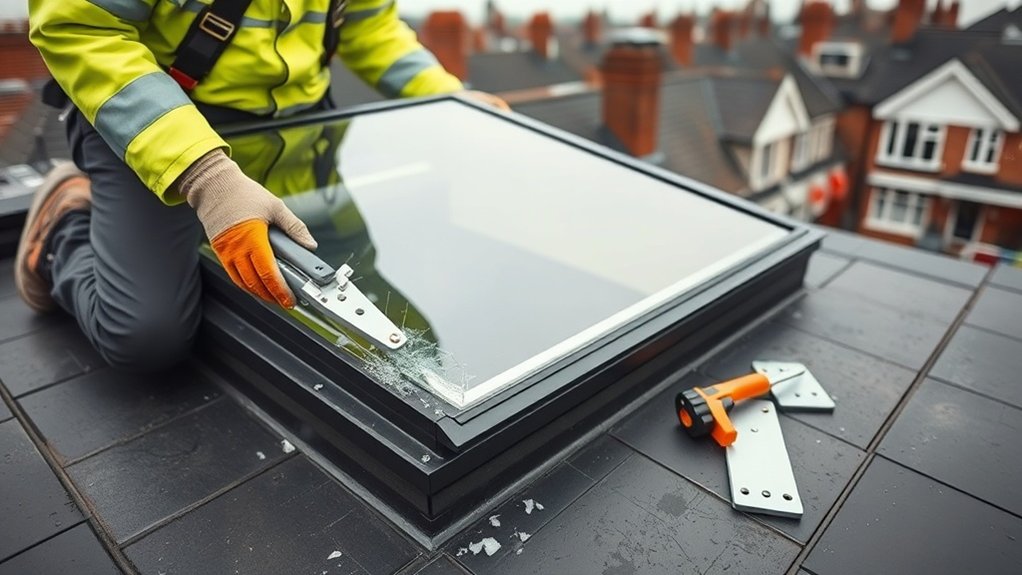
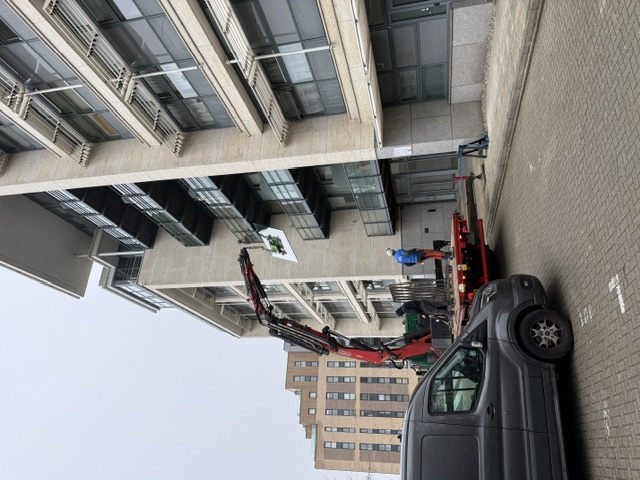
Because a skylight installation in London modifies a live roof build‑up, you need a clear programme that sequences survey, structural verification , weather‑tight opening, curb construction, glazing placement, and internal making‑good to minimise exposure and disruption. You’re coordinating around scaffold access, crane lifts, and temporary weathering, so duration matters as much as detailing.
Typically, you should expect:
- Pre‑site phase (1–2 weeks): measured survey, structural checks, design of curb profiles and drainage falls.
- Envelope works (1–3 days): cut opening, form insulated curb, integrate membranes with existing roof build‑up.
- Glazing installation (1 day): position unit, seal interfaces, verify sightlines and Skylight aesthetics from key viewpoints.
- Internal completion (1–3 days): lining, vapour control, decoration, access provision for future Skylight maintenance and cleaning.
Leaks, Condensation And Drafts: Common London Skylight Problems
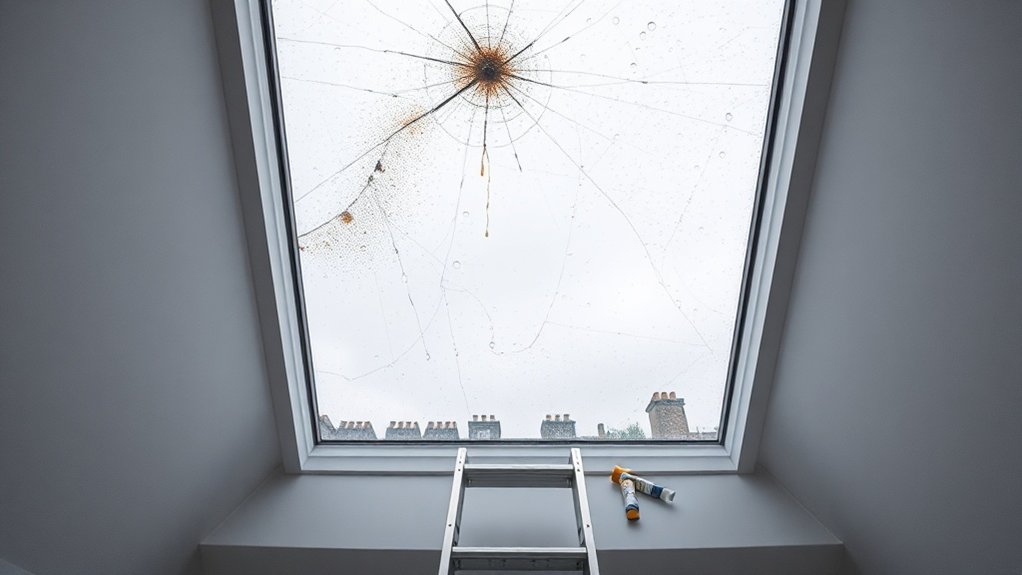
Although a well‑designed rooflight should remain airtight and watertight for decades, London’s mixed‑use roofscapes and variable microclimates mean skylights often fail first at junctions, not in the glass. You’ll typically see leaks at abutments where roof membranes, upstands, and flashing interfaces lose continuity, especially on retrofitted units bridging different roof build‑ups.
Condensation indicates thermal bridging or inadequate ventilation. Cold interior kerbs, metal frames without thermal breaks, and poorly sealed vapour barriers let warm, moist air condense on inner panes or within the cavity, staining ceiling finishes.
Perceptible drafts usually track along incomplete air seals around the frame perimeter or through distorted hinges and opening mechanisms. Proactive skylight maintenance integrated with targeted roof repairs lets you re‑engineer these junctions, upgrading performance rather than just patching symptoms.
Frequently Asked Questions
Are There Eco-Friendly or Recycled-Material Skylight Options Available in London?
Yes, you’ll find multiple eco-friendly skylight systems using recycled aluminum frames and low‑E, argon‑filled glazing. You can specify triple glazing, warm‑edge spacers, and thermally broken frames to cut heat loss and harness solar energy gains. Many units integrate operable vents or automated actuators for natural ventilation, improving indoor air quality. You can also select daylight‑redirecting lenses and green‑roof compatible curb details for advanced, future‑ready building envelopes.
How Do Skylights Impact the Resale Value of London Properties?
They typically increase resale value because you’re converting dark voids into luminous volumes. You introduce natural light deep into the plan, enhancing interior aesthetics and perceived floor area. Buyers read roof apertures, insulated glazing units, and precision flashing as high-spec upgrades . When you optimize orientation, g‑values, and airtightness, you reduce operational loads, aligning with energy-conscious buyers and premium valuations in competitive London micro-markets.
Can Skylights Be Integrated With Smart Home and Automation Systems?
You can integrate modern skylights seamlessly with smart home integration platforms. Many units offer automation compatibility via RF, Zigbee, or Wi‑Fi modules, letting you map opening angles, blind positions, and ventilation levels to scenes. You’ll program sensors for rain, CO₂, and lux thresholds, then trigger actuators for precise aperture control. Link everything to voice assistants and centralized building management systems for responsive, data‑driven spatial modulation.
What Maintenance Schedule Is Recommended for Skylights in London’s Polluted Air?
You should adopt a quarterly maintenance schedule , with bi‑monthly skylight cleaning in peak pollution periods. This mitigates pollution effects such as particulate abrasion on glazing, sealant degradation, and drainage-channel blockage. Inspect perimeter flashings, structural fixings, and vapour barriers each visit. Clean external panes with pH‑neutral solutions, verify gasket compression, and test condensate pathways. Annually, commission a professional survey with thermal imaging to detect micro‑leaks and insulation discontinuities.
Are There Insurance Implications or Discounts for Installing Skylights in London Homes?
You might get modest insurance discounts if your skylights improve security, thermal performance, or fire resistance, but underwriters assess them case‑by‑case. Declare the upgrade to avoid claim disputes. Key installation considerations include laminated or toughened glass, robust curb detailing, certified flashing systems, and compliance with Part L and Part B. Specify impact‑resistant glazing, integrated ventilation control, and tested fixings to mitigate storm, leak, and breakage risk in dense London roofscapes.
Summary
When you integrate skylights into your London home, you’re not just adding glass; you’re reshaping spatial dynamics, daylight distribution and thermal performance. Properly specified units with low‑U‑values and high visible light transmittance can cut artificial lighting use by up to 50%. By coordinating roof structure, fall, flashing systems and vapour control layers, you’ll reduce leaks, condensation and drafts, while transforming lofts, extensions and kitchens into brighter, more efficient, structurally coherent spaces.