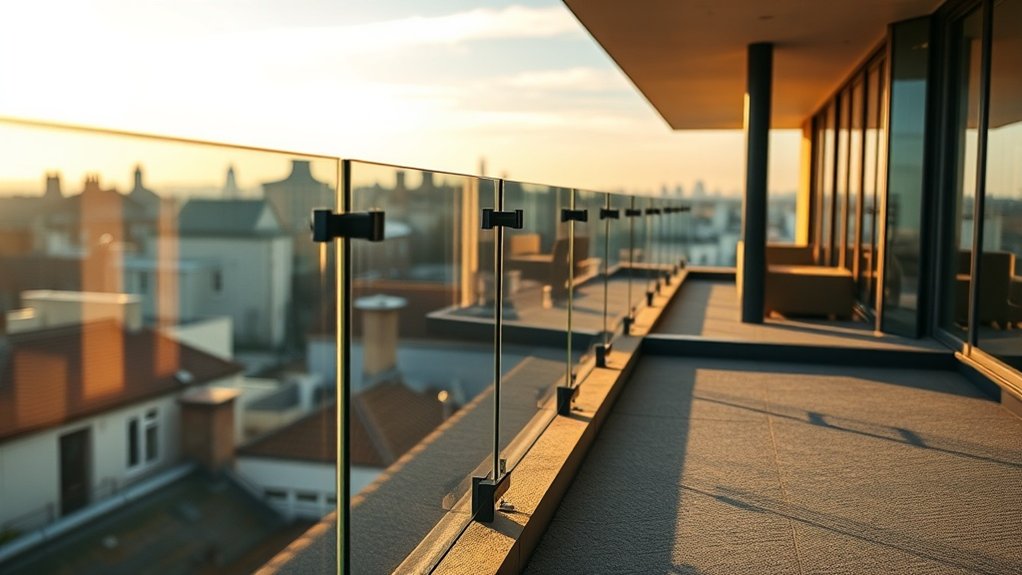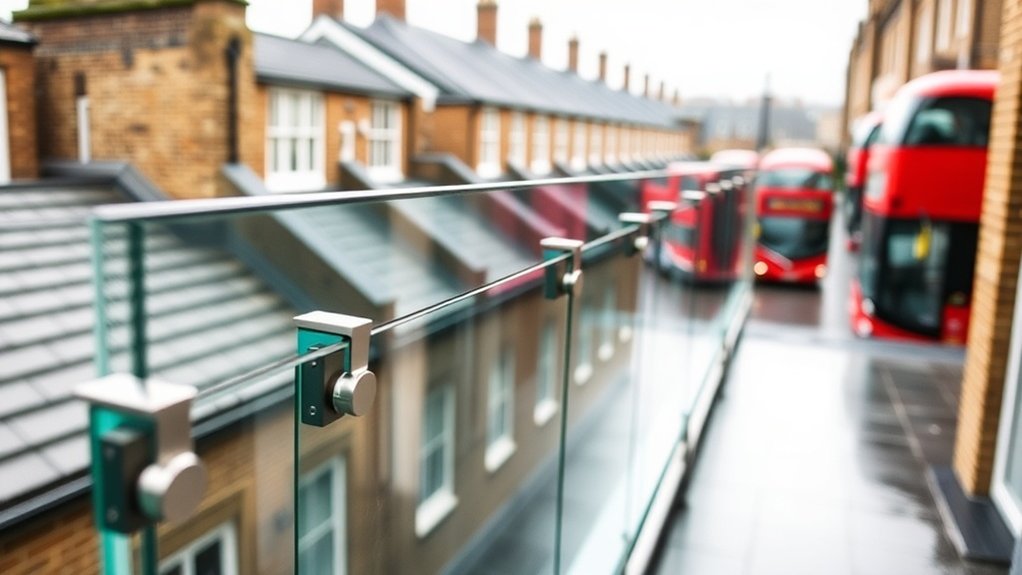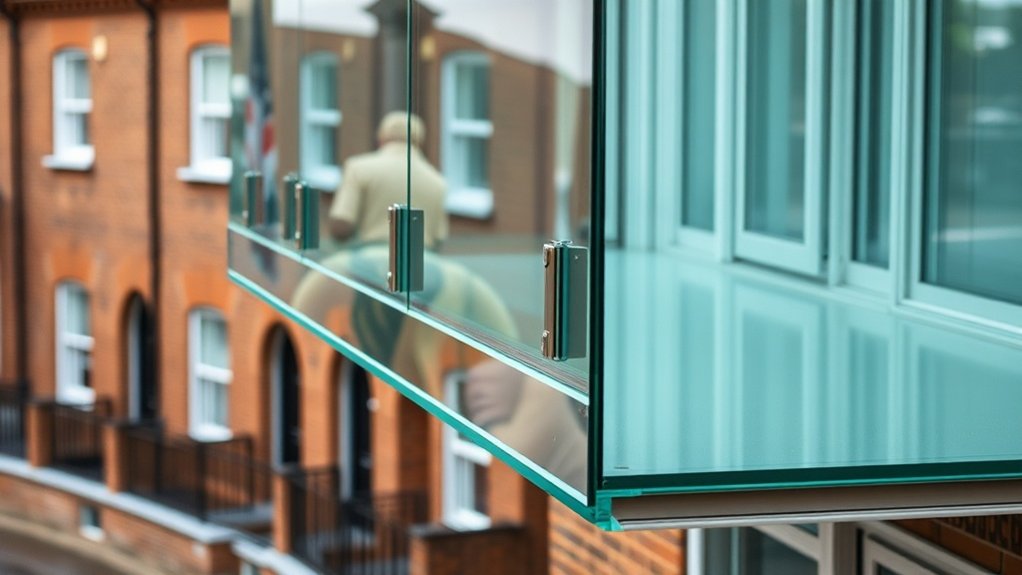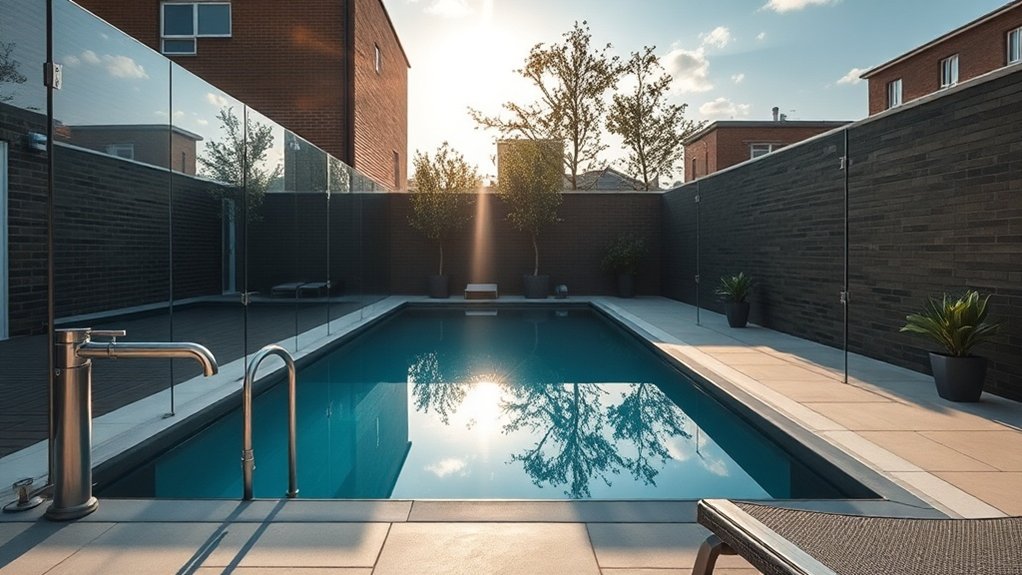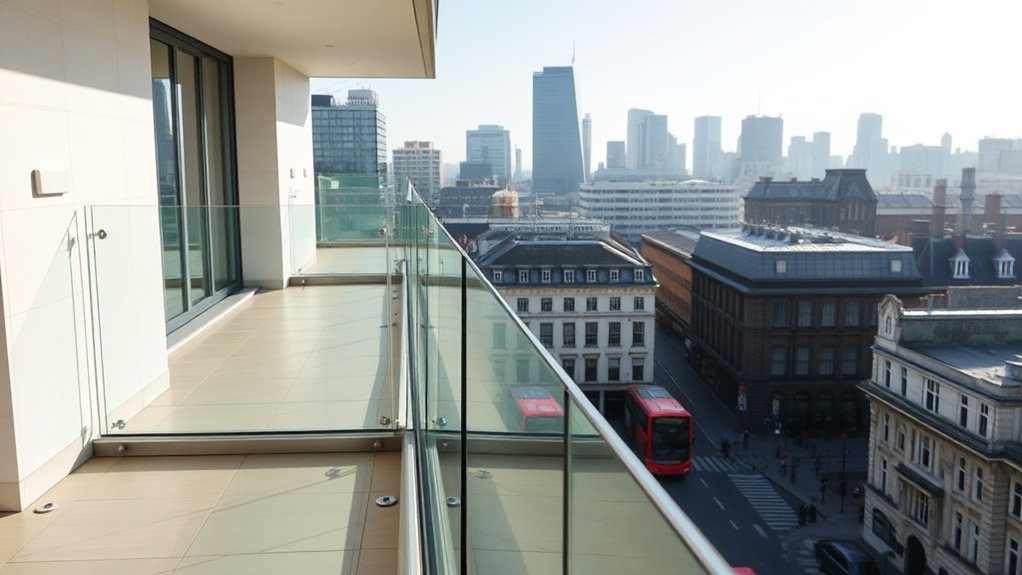
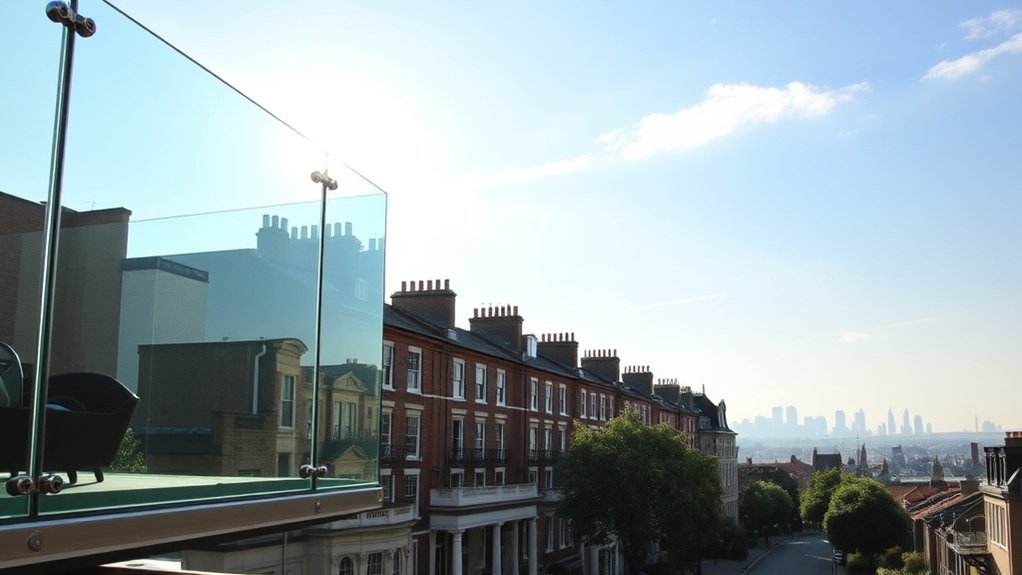
You choose glass balustrades in London to achieve safe, BS 6180‑compliant fall protection that maximises light and views while suiting both period homes and modern extensions. You’ll typically use laminated, heat‑treated safety glass with corrosion‑resistant fixings, sized and anchored to meet strict line‑load and impact requirements for stairs, balconies and roof terraces. You also balance frameless vs framed systems, privacy, cost and maintenance so you can specify the right system with confidence.
Key insights
- Glass balustrades in London provide safe, compliant guarding for stairs, balconies, and roof terraces while maximizing daylight and views.
- Systems include frameless, semi-frameless, and post-and-rail options, typically using toughened laminated glass tested to BS 6180 and related UK standards.
- Design and installation must address wind loads, impact resistance, anchoring, drainage, and corrosion protection, especially on exposed terraces and skyline locations.
- Planning and heritage constraints often influence height, fixings, and glass type; clear, low-iron glass with discreet details suits conservation areas.
- Professional digital surveying and structural checks are essential to ensure precise panel alignment, safe fixings, and full regulatory compliance in London properties.
Why Glass Balustrades Work So Well in London Homes
Why do glass balustrades integrate so effectively into London homes’ architecture and safety requirements? You’re working in a city where historical preservation, dense streetscapes, and strict Building Regulations intersect. Glass lets you meet loading, impact, and containment standards while preserving original facades and sightlines . You maintain parapet heights and barrier performance without visually competing with period brickwork, stucco, or stone.
Inside, you maximise daylight penetration, reducing reliance on artificial lighting and supporting low‑energy strategies. Externally, glass balustrades interface cleanly with contemporary extensions, roof terraces, and balconies, aligning with progressive urban landscaping that prioritises visual openness and safe edge protection. When you specify laminated, toughened glass with certified fixings and tested anchorage, you achieve a high-performance barrier system that respects London’s character yet supports architectural innovation.
Key Types of Glass Balustrade Systems
When you choose a glass balustrade system, you’ll typically work within three core configurations: frameless, semi-frameless, and post-and-rail. Each option uses different fixing methods, glass thicknesses, and support details that affect load performance , edge protection, and compliance with UK Building Regulations. Understanding how frameless channels, minimal-support semi-frameless designs, and fully framed post-and-rail systems behave helps you select a solution that’s structurally robust and safe for your specific London property.
Frameless Glass Balustrades
How do you achieve a completely unobstructed view without compromising structural safety? You specify frameless glass balustrades that rely on engineered base-fixings rather than visible posts or handrails. In London, you’ll typically use toughened and laminated safety glass, calculated to resist crowd loading, wind pressure, and impact in accordance with BS 6180 and local building control requirements.
You clamp the glass into aluminium or stainless-steel channel systems, often with wedge or dry-glaze technology that allows precise on-site alignment and future panel replacement. You can specify decorative finishes on the channel or capping rails, including anodised, powder‑coated, or brushed metal effects. Integrate linear LED strips within the base profile for subtle lighting integration, enhancing wayfinding, night-time safety, and architectural drama.
Semi-Frameless Glass Options
For projects where a fully frameless edge isn’t practical, semi-frameless glass balustrades give you a controlled balance between transparency and structural robustness. You still achieve clean sightlines, but discrete vertical or minimal perimeter members deliver added resistance to line loads, crowd pressure, and wind uplift—critical on exposed London terraces and roof decks.
Semi frameless options let you fine‑tune performance:
- Slim perimeter channels that clamp laminated glass, optimised for drainage, thermal movement, and BS 6180 compliance.
- Minimal side-fix profiles using engineered glass hardware to free up floor space while maintaining edge protection.
- Hybrid corner or end conditions where short posts or returns enhance rigidity without visually segmenting long runs.
You can integrate handrails, lighting, and smart fixings while retaining a forward‑looking, lightweight aesthetic.
Post and Rail Systems
Although they’re the most traditional glass balustrade layout, post and rail systems remain the go‑to option in London where predictable performance, straightforward detailing, and clear compliance with BS 6180 are paramount. You gain a clearly defined load path: posts transfer line loads from the handrail and glass to the structure, simplifying structural calculations and fixing design.
You can specify stainless steel, powder‑coated aluminium, or hybrid systems to echo historical influences while keeping the balustrade visually light. Laser‑etched decorative patterns , fritting, or interlayer prints let you introduce branding or privacy without compromising impact performance. With posts, you also gain tolerance for onsite variances, controlled glass edge exposure, and an intuitive way to integrate lighting, drainage, and handrail ergonomics.
Framed vs Frameless: Which Is Right for You?
When you choose between framed and frameless glass balustrades, you’re balancing visual impact with structural performance and regulatory compliance. You’ll need to assess how each option affects aesthetics, everyday practicality (cleaning, fixings, wind loading), and critical safety factors such as glass thickness, edge protection, and handrail requirements under UK standards. Cost will also influence your decision, as higher-spec frameless systems, engineered fixings, and laminated safety glass typically carry different supply-and-install prices than conventional framed systems.
Aesthetic And Design Impact
Choosing between framed and frameless glass balustrades in London directly affects your project’s visual language , structural detailing, and long-term maintenance profile. With framed systems, you define edges through metal geometry, using profiles, joints, and brackets as intentional graphic lines. Frameless systems push the envelope, visually dissolving boundaries and privileging light, continuity, and reflection.
You’ll also tune perception through glass thickness, tint, and Color options, coordinating balustrades with façade systems, flooring, and lighting.
- Frameless lines enhance panorama-driven schemes, making terraces, atria, and roof decks feel expansive and ultra-contemporary.
- Framed schemes let you highlight rhythm, contrast, and engineered hardware as expressive, tech-forward elements.
- Both formats can embed decorative accents—etched patterns, interlayers, or edge treatments—to reinforce branding and wayfinding without visual clutter.
Practicality, Safety, And Cost
Visual impact only tells part of the story; in London, framed and frameless glass balustrades must also meet strict practical, safety, and budget requirements. You’ll balance structural performance, compliance, and lifecycle cost before committing to a system.
Framed balustrades typically use posts and handrails to distribute loads, simplifying calculations and helping you satisfy UK Safety regulations, including BS 6180, with standard glass thicknesses . They’re often more forgiving on installation tolerances and can deliver excellent weather resistance through gasketed systems and drainage details, making maintenance predictable.
Frameless systems demand thicker, often heat-strengthened or laminated glass, precision-engineered channels, and higher-spec fixings. Upfront costs rise, but you gain unobstructed views and easier cleaning access. You must verify impact performance, edge cover, anchoring substrates, and long-term seal durability.
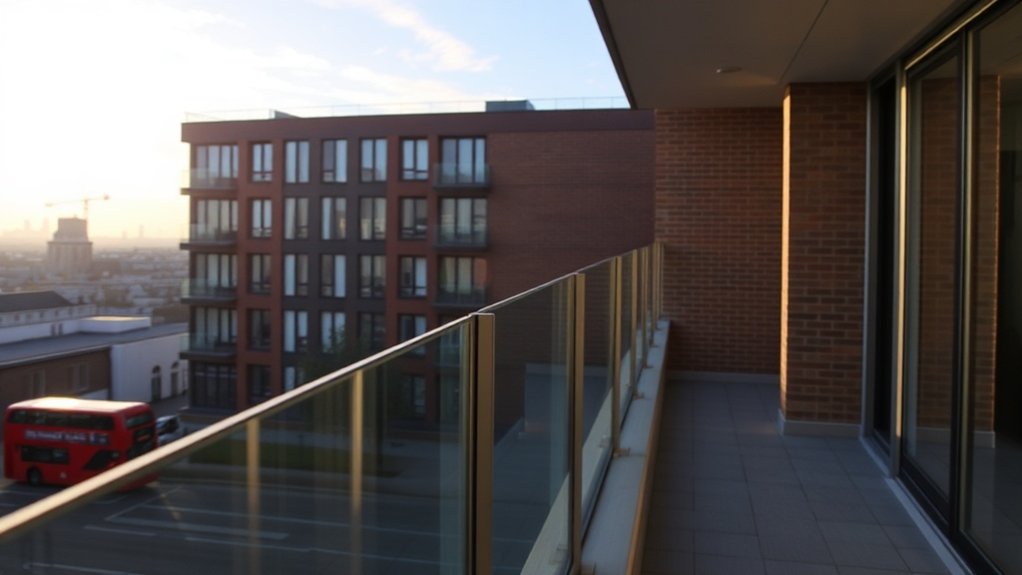
Glass Balustrades for Balconies and Garden Terraces
How do you create a balcony or garden terrace that feels open while still meeting strict safety requirements? You start by specifying a glass balustrade system engineered to BS 6180, using toughened or laminated panels designed to resist wind loads and line loads on higher-level spaces. Frameless or minimally framed systems maximise sightlines into your garden while maintaining robust edge protection.
You can refine performance and aesthetics with precise choices:
- Glass thickness, interlayer type, and fixing method (base shoe, point-fix, or post system) to match structural conditions.
- Color options, frosted finishes, and selective decorative patterns to deliver privacy without sacrificing light transmission.
- Drainage detailing, corrosion-resistant fixings, and low-iron glass to ensure durability, reduced maintenance, and long-term optical clarity in London’s climate.
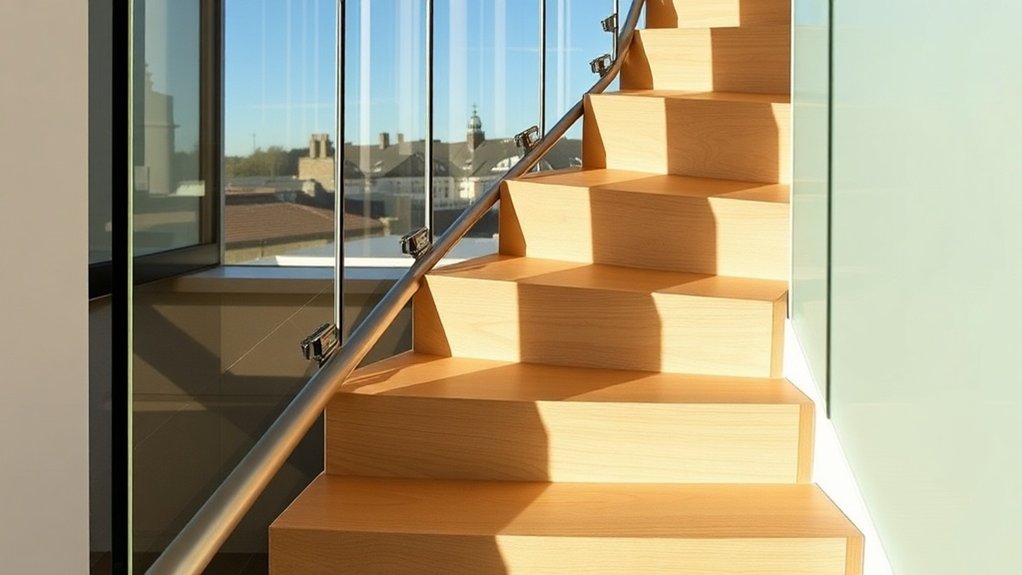
Staircase Glass Balustrades in London Townhouses
When you retrofit a London townhouse staircase with glass balustrades , you’re balancing stringent safety compliance with the tight geometries and load paths of an often century‑old structure. You must verify existing stringers, joists, and landings can resist new line loads, then integrate steel shoes or side‑fix brackets without undermining heritage elements.
You’ll select laminated, toughened glass sized to BS 6180 and occupancy category, often 17.5–21.5 mm, to achieve both glass aesthetics and material durability. Continuous handrails help control deflection and protect glass edges on narrow, winding flights. You also need precise digital surveying to align panels with irregular walls and nosings. Finally, you’ll prioritise anti-slip nosings, secure fixings into sound substrates, and compliant baluster spacing for child safety.
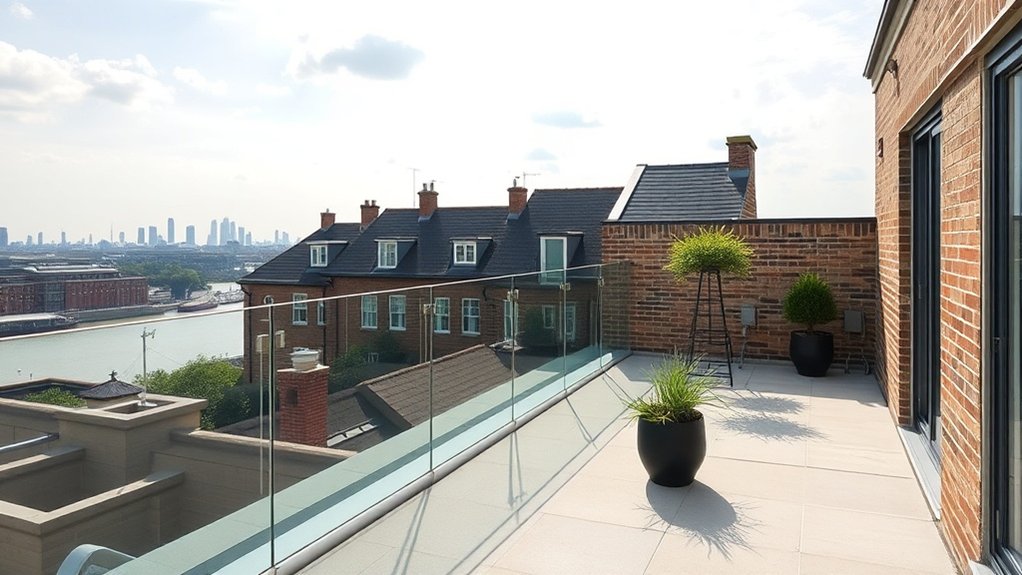
Roof Terrace Glass Balustrades and Skyline Views
From a roof terrace in London , you’re not just framing skyline views; you’re designing a fall‑prevention system that must withstand extreme exposure, wind uplift, and edge‑of‑slab constraints. You prioritise laminated safety glass, continuous edge protection, and rigorously tested fixings that won’t creep under cyclic loading. Base‑shoe channels, point‑fixed systems, and baluster posts all demand precise structural calculations and certified anchoring into the slab or upstand.
- Specify glass thickness, interlayer type, and deflection limits to control vibration under wind loading and occupant impact.
- Assess material durability for marine‑grade stainless, aluminium, and glass coatings to resist pollution, UV, and thermal stress.
- Use Color options—tints, frits, and low‑iron glass—to manage glare, privacy, and solar gain while preserving clean, uninterrupted skyline views.
Planning Permission for Glass Balustrades in London
Once you resolve the structural design of a glass balustrade in London, you must address whether the scheme needs planning permission or falls within permitted development. You’ll assess height, siting, and impact on neighbours’ outlook and privacy. In many low‑rise domestic settings, replacing existing guarding with similar dimensions may proceed under permitted development, but new roof terraces or significant height increases rarely do.
You must also evaluate heritage factors . In conservation areas or listed buildings, planners scrutinise visual impact, reflections, and Color options for handrails, fixings, and glass interlayers. Clear, low‑iron glass might be favoured over bold tints where historical preservation is critical. Submit accurate section details, fixing locations, and elevation visuals so case officers can confirm compliance and avoid enforcement issues.
UK Safety Rules for Glass Balustrades
When you design glass balustrades in London, you must align every element with UK Building Regulations such as Approved Document K and BS 6180. You’ll need to verify minimum height requirements for internal and external locations, as well as for stairs, landings, and balconies, to guarantee robust fall protection. You also have to specify the correct safety glass type and its load resistance, confirming it can withstand line loads, point loads, and impact in accordance with the relevant standards.
Relevant Building Regulations
Several key UK building regulations govern how glass balustrades in London must be designed, specified, and installed to guarantee safety and structural integrity. You’ll work primarily with the Building Regulations 2010 , supported by Approved Documents K and B, plus BS 6180 for best practice on barriers. These frameworks let you integrate glass into historical architecture while maintaining material durability and robust impact performance.
You must evidence compliance through calculations, test data, and documented risk assessments, particularly where you’re pushing minimalist or frameless designs.
- Confirm glass type, thickness, and fixing methods meet BS 6180 load and impact criteria.
- Coordinate fire-safety interfaces with Approved Document B in multi-storey schemes.
- Validate that edge details, tolerances, and fixings align with manufacturers’ tested systems.
Minimum Height Requirements
Minimum height rules for glass balustrades in London are tightly defined because they’re your primary safeguard against falls, especially in high-traffic and multi-storey environments. For internal guarding, you’ll typically work to a minimum of 900mm, measured from finished floor level to the top of the handrail or glass. Externally, on balconies, roof terraces, and voids, 1100mm is the accepted minimum.
You must measure from all accessible standing surfaces, including built‑in seating and planters, to prevent climb-over risk. Where historical influences drive a low-profile aesthetic, you still need to integrate compliant height—often by subtly elevating the glass line or handrail. Color options, fritting, or banding can reinforce the perceived barrier, enhancing edge awareness without sacrificing transparency or contemporary minimalism.
Glass Type And Load
Height is only one part of a compliant glass balustrade in London; the glass specification and its load performance carry equal weight in UK safety rules. You must select glass that meets BS 6180 and BS EN 1991 load criteria for its occupancy type, whether you’re protecting a domestic landing or a high‑traffic roof terrace.
You’ll typically combine toughened and laminated glass so that, even if one ply fails, the interlayer retains the pane and maintains edge restraint under crowd loads and impact.
- Specify thickness via structural calculation, not aesthetics, then overlay Color options and decorative etching.
- Verify line and point load resistance at fixing details, especially for frameless systems.
- Demand test evidence and third‑party certification for any innovative glass build‑up.
Best Glass Specs for London Balustrades
Choosing the right glass specification for a London balustrade means balancing structural performance, compliance with UK Building Regulations , and real‑world safety under urban conditions. You’ll typically start with laminated, heat‑treated glass: for residential use, 13.5–17.5 mm; for higher‑risk commercial zones or crowd‑loaded terraces, 17.5–21.5 mm or engineered alternatives verified by structural calculation.
Prioritise material durability: specify heat‑soaked toughened glass laminated with PVB or SentryGlas interlayers to resist impact, edge‑chipping, and delamination in London’s polluted, moisture‑rich air. Consider Color options—ultra‑clear low‑iron laminates for premium transparency, or subtle tints and ceramic frits to manage solar gain and privacy without compromising sightlines. Insist on tested systems : BS 6180, BS EN 1991 loadings, and documented impact performance.
Fixing Glass Balustrades in Tight London Spaces
When you’re fixing glass balustrades in tight London spaces, you must start with precise measurements and a realistic assessment of how you’ll get panes, fixings, and tools to the install area. You’ll evaluate stair widths, lift sizes, turning circles, and temporary support options so the glass can move and be positioned without stressing edges or compromising compliance with BS 6180. From there, you’ll select installation methods and fixing systems specifically suited to constrained access, such as modular sections, bolt-through detailing, or base channels that allow safe, staged assembly.
Measuring And Planning Access
Before you drill a single hole for a glass balustrade in a tight London space, you need accurate measurements and a clear access plan that aligns with structural and safety requirements. Start by laser‑measuring floor edges, wall returns, and ceiling heights, documenting every tolerance and obstruction, including radiators, conduits, and window reveals.
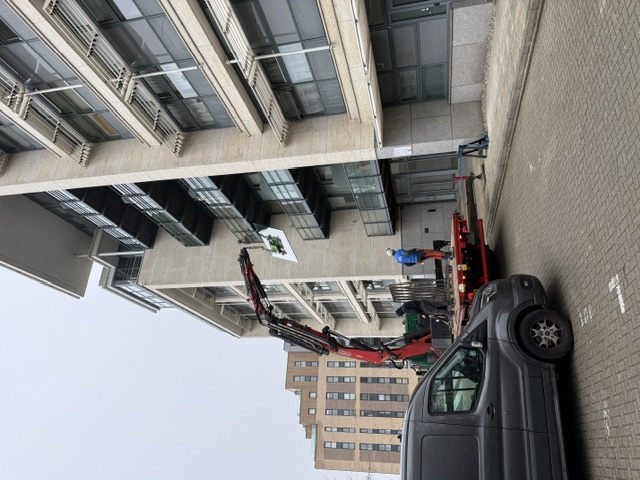
Account for glass thickness, fixing zones, and minimum edge distances so balustrade loads transfer safely into the structure. At the same time, plan how large glass panels, color options, and decorative patterns will physically reach the site through lifts, stairwells, or craned access.
- Map access routes , turning radii, and maximum panel sizes.
- Model fixing lines and datum levels in BIM or CAD.
- Pre‑coordinate manual handling and temporary protection zones.
Installation Methods For Constraints
Although your design might be finalised, installing glass balustrades in constrained London sites demands methods that respect both limited access and strict structural performance. You’ll typically rely on modular glass panels , pre-drilled for anchors, so you can manoeuvre them through narrow stairwells and lifts. Use surface-mounted or fascia-fixed channels with mechanical fasteners and structural adhesives where embedment isn’t feasible.
Specify laminated, heat-strengthened glass to optimise material durability under crowd loading and edge impacts. Combine slimline aluminium or stainless-steel profiles with isolators to prevent bimetallic corrosion and protect the slab edge. In tight spaces, employ mini-cranes, vacuum lifters, and temporary edge protection to maintain safe handling. Finally, align fixing centres and channel geometry to preserve sightlines and aesthetic harmony.
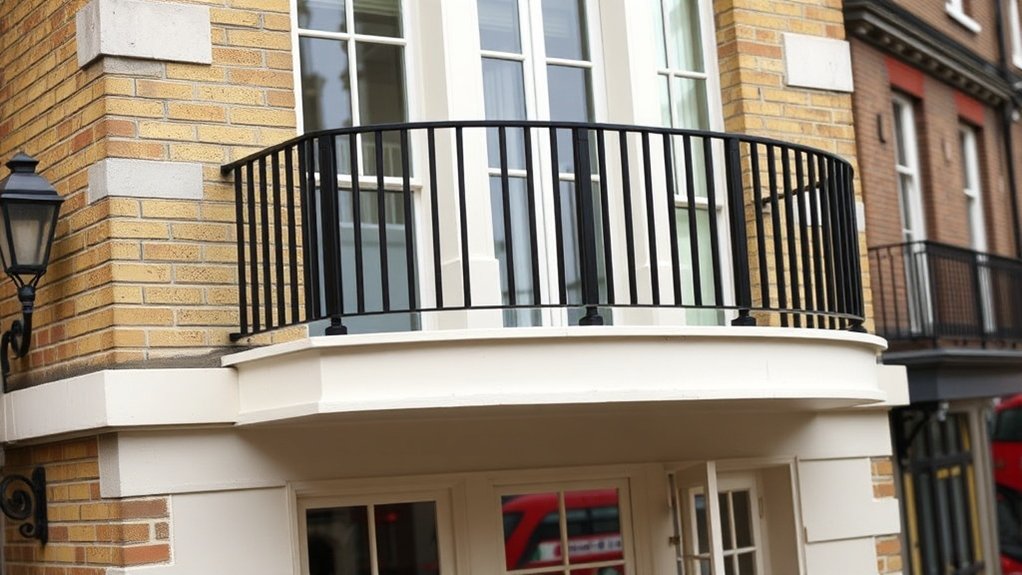
Blending Glass Balustrades With Period Features
If you’re integrating glass balustrades into a period property, you need to balance structural performance, safety compliance, and visual sensitivity to original features. You’re not just upgrading; you’re executing Historical preservation with contemporary engineering, ensuring loads, deflection limits, and impact resistance meet current regulations without visually overpowering cornices, stair strings, or hand-carved newel posts.
You’ll achieve successful interior integration by treating glass as a recessive, clarifying element that showcases, rather than competes with, existing craftsmanship.
- Specify low‑iron, laminated safety glass with discreet fixings aligned to existing structural members, minimising interventions in historic fabric.
- Use custom metalwork (often patinated brass, bronze, or blackened steel) that echoes original ironmongery profiles.
- Coordinate with conservation officers and structural engineers to validate anchor details, edge distances, and permissible substrate alterations.
Privacy, Tinting and Frosted Glass Balustrades
Respecting period detailing doesn’t mean you’re limited to clear glass; privacy control and light management become performance criteria you can engineer just as rigorously as structural load paths. In London, overlooking and sightline analysis should drive your specification, especially where neighbours’ Privacy concerns or planning constraints apply.
You can use frosted glass, acid‑etched or ceramic‑fritted, to establish a defined privacy band while retaining daylight and a safe visual edge for users. Gradient frosting lets you keep transparency at handrail height yet obscure floor‑level views.
Tinted glass helps manage solar gain and glare on south‑facing terraces, but you’ll need to verify light reflectance values to avoid façade glare. Always coordinate privacy treatments with laminated safety glass build‑ups and certified balustrade fixings.
Typical Costs of Glass Balustrades in London
Two main cost drivers dictate what you’ll actually pay for glass balustrades in London: specification and fixing complexity. For a compliant domestic system, you’ll typically see installed prices ranging from £220–£450 per linear metre, rising to £600+ for high-load commercial or frameless structural systems. Costs escalate as glass thickness, laminate interlayers, and stainless or aluminium grades increase to enhance material durability and impact resistance.
You’ll also pay more where fixing into steel , waterproofed terraces, or heritage substrates demands specialist engineering.
- Toughened-laminated glass with tested fall-protection certification
- Precision-engineered channels, point fixings, and handrails with proven corrosion resistance
- Optional low-iron glass, bespoke tinting, and minimalist hardware for maximum aesthetic appeal
How to Choose a Glass Balustrade Installer in London
When you’re selecting a glass balustrade installer in London, treat it as a safety‑critical procurement, not just a cosmetic upgrade. Verify they work to BS 6180 and relevant Eurocodes , provide structural calculations, and can evidence third‑party accreditation and insurance. Ask for site‑specific risk assessments, method statements, and material data sheets for glass, fixings, and sealants.
Prioritise installers who understand Historical preservation and can integrate minimalist systems into listed or period façades without compromising heritage fabric. Review examples of Local craftsmanship : precision in edge finishing, alignment tolerances, and anchoring into London’s typical substrates (London stock, concrete, steel). Demand written warranties, clear tolerance schedules, and documented handover packs including as‑built drawings, glass specifications, and load‑test or snagging reports.
Maintenance and Cleaning Tips for London Glass Balustrades
Although a well‑designed glass balustrade demands minimal upkeep, you still need a structured maintenance regime to preserve optical clarity and structural safety in London’s polluted, often damp environment. Use a pH‑neutral glass cleaner and microfiber cloth weekly on high‑traffic areas, especially around decorative accents and integrated lighting options where grime accumulates.
- Inspect fixings, handrails, and channels quarterly; tighten loose components, check for corrosion, and document hairline cracks or edge chips for immediate professional assessment.
- Clean drainage tracks and base shoes; remove moss, grit, and organic matter that trap moisture and compromise laminated glass interlayers.
- Test lighting options and cable routing during cleaning; verify IP ratings, seals, and gaskets remain intact to prevent water ingress that could cause electrical faults or discolor LED features.
Frequently Asked Questions
Can Glass Balustrades Help Improve Natural Light in Basement or Lower-Ground London Flats?
Yes, you can considerably improve natural light in basement or lower-ground flats by replacing solid barriers with glass balustrades . You maximise light transmission while maintaining safety, provided you specify toughened or laminated glass and compliant fixings. This solution refines interior aesthetics, keeps sightlines open, and still allows privacy enhancement with frosted or tinted finishes. You’ll gain a brighter, more innovative space without compromising structural integrity or fall protection.
How Do Glass Balustrades Perform in London’s Polluted, High-Traffic Street Environments?
They perform well, but you must address Durability concerns and elevated Maintenance requirements. Traffic pollution accelerates surface soiling and micro‑abrasion , so you’ll specify toughened or laminated safety glass with high‑performance coatings and corrosion‑resistant fixings. You’ll schedule more frequent cleaning cycles, use non‑abrasive agents, and inspect anchors for chloride-induced corrosion. With innovative self-cleaning coatings and precision-engineered brackets, you’ll maintain structural integrity, optical clarity, and long-term safety in harsh roadside conditions.
Are There Eco-Friendly or Recyclable Glass Balustrade Options Suitable for London Properties?
You can specify balustrades that use laminated safety glass with high recycled content, stainless or aluminium supports from recyclable materials, and fittings from low‑VOC, eco friendly manufacturing. Instead of wasteful demolition, you’ll detail modular systems for disassembly and material recovery. You’ll also check EPDs, Cradle‑to‑Cradle, and BES 6001 certifications to verify embodied carbon, durability, and post‑use recyclability, ensuring innovation without compromising structural or impact safety.
Can Glass Balustrades Integrate With Smart Home or Automated Shading Systems?
Yes, you can integrate glass balustrades with smart home controls and Automated shading. Using Smart integration , you’ll link motorised blinds, electrochromic glass, and light sensors to your building management system. You specify safety interlocks so moving elements never obstruct escape routes or compromise barrier load requirements. You’ll also coordinate wiring routes within handrails or base channels, ensuring low-voltage control circuits remain accessible, code-compliant, and protected from mechanical damage.
How Do Glass Balustrades Affect Property Resale Value in Different London Boroughs?
They typically boost resale value , but the uplift varies by borough. Imagine adding a precision-engineered spoiler to a performance car: in Kensington & Chelsea or Westminster, buyers pay a premium for luxury aesthetics and seamless detailing. In Hackney or Southwark, you’ll still gain, but privacy concerns mean you must specify frosted or partially screened systems. You’ll maximise value by using laminated safety glass, certified fixings, and compliant load calculations.
Summary
When you choose glass balustrades for your London home, you’re choosing clarity of design, security of construction, and compliance with strict safety standards. You’re committing to tested glass thicknesses, engineered fixing systems, and Building Regulations that protect your family. And you’re investing in correct installation, regular inspection, and simple, consistent maintenance. Specify carefully, verify credentials, and maintain routinely—and your glass balustrades will stay safe, durable, and visually seamless for years.