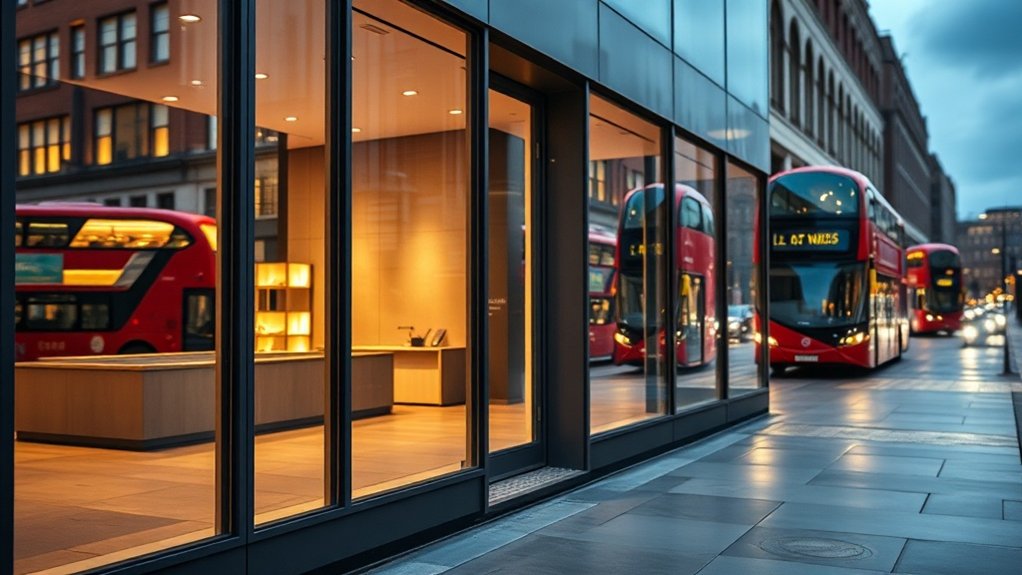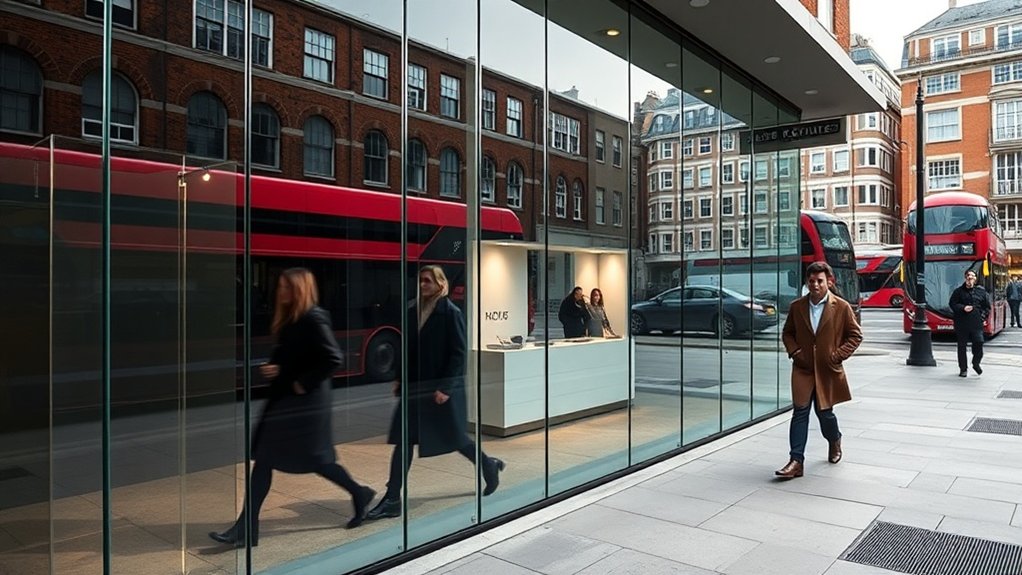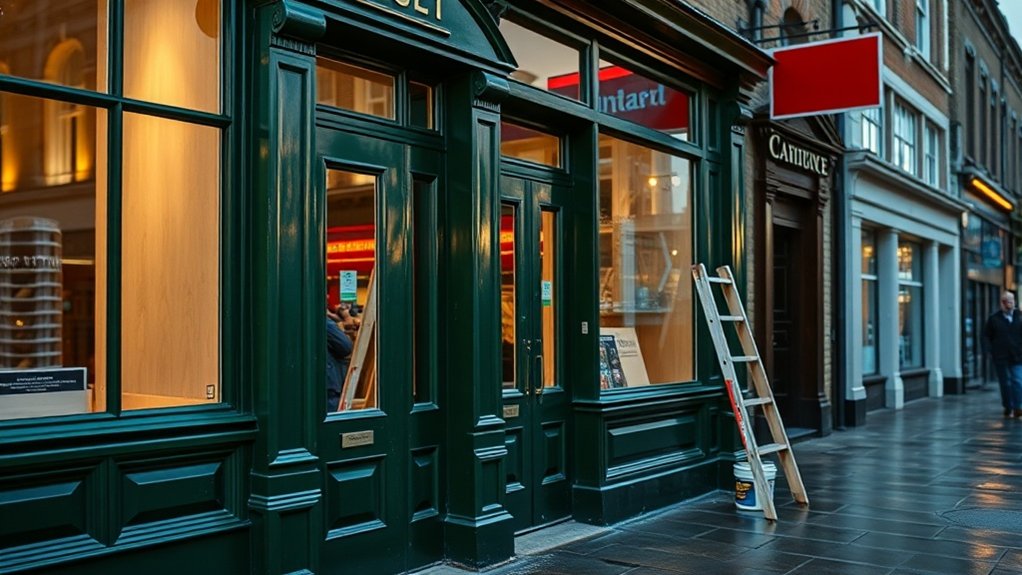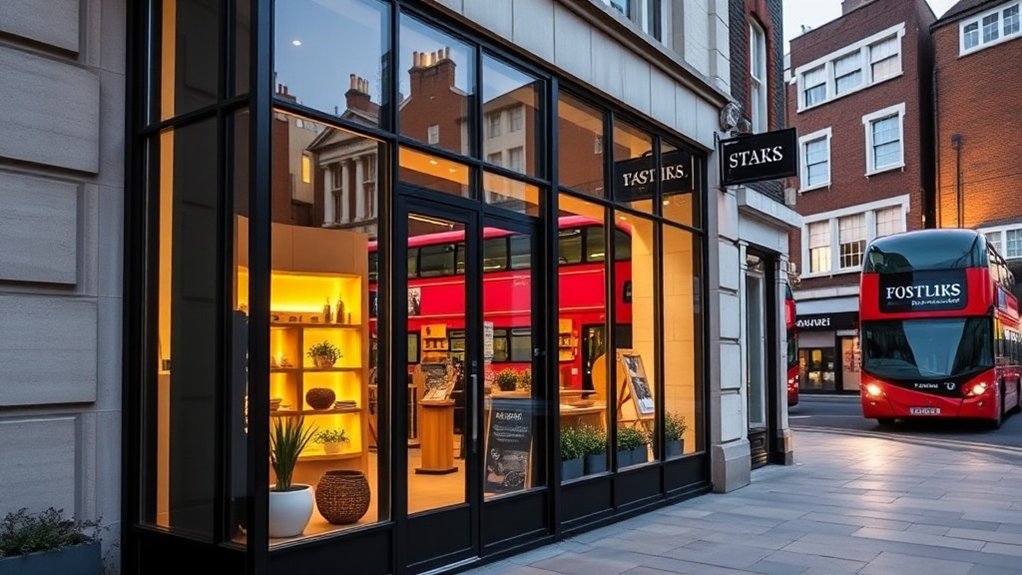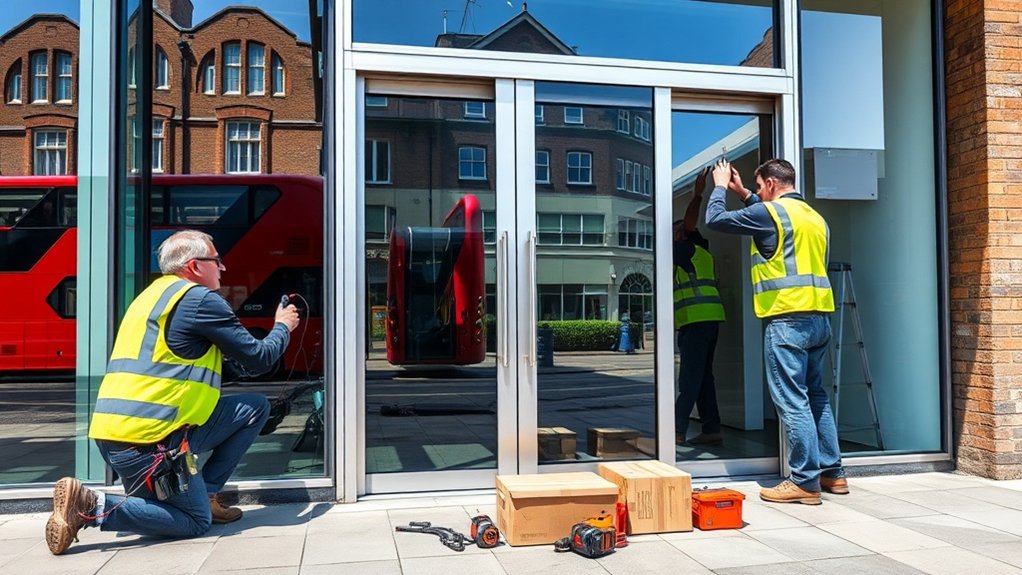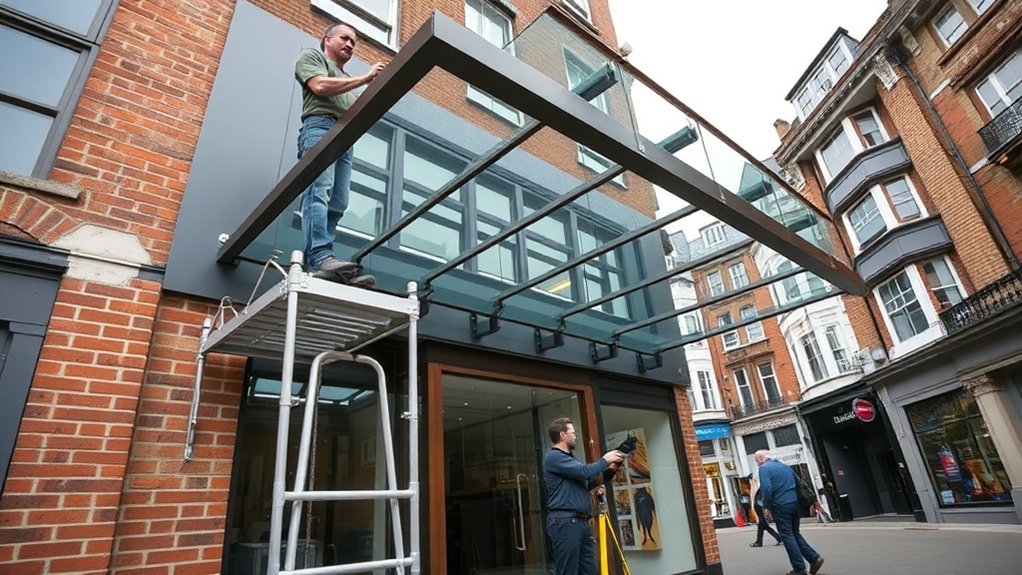
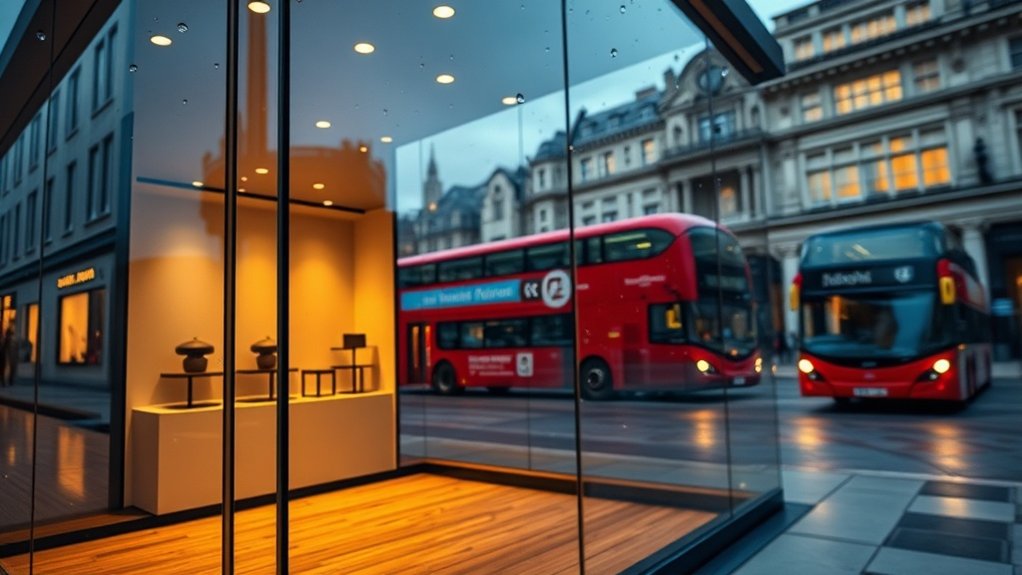
You’re choosing shop front glazing in London under tight planning controls, conservation constraints and high security expectations, so you need the right balance of PAS 24 protection, Part L thermal performance and brand-led transparency. You’ll weigh framed vs frameless systems , toughened vs laminated vs double glazing, and integrate compliant doors, hardware and access control. You’ll also factor lifecycle costs, maintenance and heritage alignment, and the next sections show you exactly how to specify this correctly.
Key insights
- London shop front glazing must comply with UK Building Regulations and local planning/heritage controls, especially in conservation areas and listed buildings.
- Choose between framed and frameless systems based on brand image, structural needs, security requirements, and long-term maintenance costs.
- Specify impact‑resistant, laminated safety glass that meets BS 6262, EN 12600, EN 356 and PAS 24 for security and public safety.
- Optimise energy and comfort with double glazing, low‑E coatings, thermal breaks, and acoustic laminates suited to busy London streets.
- Work with specialists who can provide structural calculations, regulatory guidance, and lifecycle maintenance plans for durable, compliant shop fronts.
What Makes London Shop Front Glazing Unique
Although shop fronts around the world may look similar at a glance, London shop front glazing is defined by strict planning controls, heavy footfall, complex security risks, and demanding energy-performance requirements. You’re not just installing glass; you’re engineering a façade system that reconciles heritage, branding, and performance .
You must interface contemporary glazing with historical architecture, aligning mullion grids, sightlines, and frame depths with listed façades while still integrating thermal breaks, low‑E coatings, and acoustic laminates. High pedestrian flows require impact-resistant glass, anti-burglary laminates, and PAS 24-compliant lock integration. Simultaneously, you’re leveraging oversized panes, digital print interlayers, and frit patterns to deliver Artistic designs that function as wayfinding and brand assets, all while meeting Part L , noise attenuation, and solar-control targets.
How to Choose the Right London Shop Front Glazing
To turn those unique London constraints into a working specification, you need to choose shop front glazing as a full façade system, not as “just glass.” Start by mapping planning status, security risk profile, and energy targets into performance criteria: impact resistance (BS 6262, EN 12600), attack resistance (EN 356, PAS 24 door sets), U‑values and g‑values to satisfy Part L and local planning guidance, and acoustic ratings for nearby traffic or rail.
Then align those metrics with current retail trends and your brand’s customer engagement strategy. Specify sightlines, mullion density, and low‑iron glass to maximise product visibility, while using selective coatings to control solar gain on west‑ or south‑facing frontages. Integrate frameless or slimline systems with oversized panes to future‑proof visual merchandising flexibility.
Key Glazing Regulations for London Shop Fronts
When you design a London shop front, you must align your glazing specification with current UK Building Regulations, including Parts K, M, N, and Q where applicable. You’ll need to use compliant safety glass in critical locations, engineer sightlines and thresholds for accessibility, and integrate secure glazing systems that meet insurance and Secured by Design benchmarks. By treating compliance, safety, access, and security as a single technical package, you reduce retrofit risk, streamline approvals, and protect both footfall and assets.
Building Regulations Compliance
Because London shop fronts sit at the intersection of structural safety, accessibility, and public protection, your glazing design must comply with a specific set of UK Building Regulations and local authority requirements. You’ll reference Parts A, B, K, L, M, N, and relevant BS EN standards, then map each clause to specific glazing materials, fixing methods, and interface details.
You must also reconcile conservation constraints where historical architecture is protected. That typically means justifying your specification through heritage statements, U‑value calculations, and sightline analyses demonstrating minimal visual intrusion .
To streamline approval, integrate compliance into RIBA stages: coordinate structural load paths, door thresholds, manifestation bands, and thermal performance early, so your shop front drawings, specifications, and on-site installation all align with building control expectations.
Safety Glass Requirements
How do you turn a vulnerable expanse of shop front glass into a compliant safety barrier on a busy London street? You start by specifying safety glass that meets BS 6262 and EN 12150/EN 14449 Safety standards for critical locations up to 1,500mm from finished floor level. You’ll typically deploy toughened or laminated units, engineered for impact resistance, residual integrity, and enhanced glass durability.
You should calculate thickness using wind load, pane size, and fixing method, not just rule-of-thumb. For frameless systems, you’ll need higher-spec laminated toughened glass, heat-soak tested, with structurally bonded joints. Edges must be polished, not arrised , to minimise stress concentrations. Always document glass type, interlayer spec, and test certifications to streamline approvals and future refits.
Accessibility and Security
Although clear sightlines and brand presence drive your design, London shop front glazing has to deliver inclusive access and robust security in parallel. You must align door widths, threshold details, and manifestation with Approved Document M and BS 8300 to guarantee step-free, legible entry for all users. Low-reflection glass and automatic sliding systems optimise wayfinding and customer engagement.
On security, you should specify laminated glass to EN 356, anti-bandit profiles, and PAS 24 or LPS 1175-certified doorsets, integrated with monitored locks and access control. Toughened laminated assemblies resist opportunistic attack while maintaining transparency that supports contemporary retail trends. By combining DDA-compliant hardware, continuous hinges, and secure glazing rebates, you deliver a future-ready shop front that’s both accessible and highly resilient.
Framed vs Frameless Shop Front Glazing
When you compare framed and frameless shop front glazing, you’re balancing brand-led aesthetics against structural performance and compliance. You’ll need to evaluate how mullions, patch fittings, and glass specifications affect visual impact , load paths, impact safety, and whole-life cost. By considering budget, cleaning regimes, hardware wear, and expected service life, you can specify a glazing solution that aligns with both your branding strategy and operational requirements.
Aesthetic Impact And Branding
Before you specify any glass thickness or mullion layout, you need to decide whether a framed or frameless shop front will better support your brand’s visual language and street presence . The choice directly calibrates retail aesthetics and customer perception, influencing how passers‑by decode your offer in seconds.
Framed systems let you deploy bolder sightlines, colour‑matched powder coating, and integrated branding hardware . Frameless fronts deliver a minimalist, “gallery-grade” transparency that foregrounds product curation over architecture.
Use glazing as a branding tool, not just an enclosure:
- Align mullion rhythm with merchandising grids and signage zones
- Coordinate frame finishes with your brand palette and in-store materials
- Specify fritting, interlayers, and discreet decals to reinforce logo and campaign narratives
Structural Support And Safety
Brand‑driven glazing choices only work if the shop front can resist real‑world loads and protect occupants. With framed systems, you anchor glass into aluminium or steel profiles, gaining predictable structural integrity , reliable load paths, and straightforward safety compliance with BS 6262 and relevant Eurocodes. Mullions and transoms manage wind load, impact, and building movement.
Frameless shop fronts demand a more engineered approach. You’re relying on toughened or laminated glass, high‑spec interlayers, and precision‑designed patch fittings, channels, and spider brackets to deliver equivalent performance. You must validate fixing substrates, edge cover, and deflection limits through structural calculations and, ideally, finite element analysis . In both approaches, you design for safe breakage behaviour, controlled access, and resilient escape routes.
Cost, Maintenance And Longevity
Although framed and frameless shop fronts can deliver a similar visual impact, their cost profile, maintenance demands , and service life differ markedly once you move past headline supply rates. You’ll weigh initial capex against lifecycle cost: framed systems are usually cheaper to supply but can require more hardware replacement; frameless glazing demands higher-spec glass and fittings but often delivers a sleeker, lower-clutter asset.
- Cost: Factor in hardware, access gear, specialist glass cleaning, and window tinting retrofit to improve solar control and security.
- Maintenance: Framed units need periodic gasket, hinge, and coating inspections; frameless relies on accurate alignment and high-quality patch fittings.
- Longevity: Correctly detailed drainage, edge protection, and impact-resistant laminates considerably extend service life and reduce unplanned downtime.
Toughened, Laminated or Double Glazing: What to Choose
When you’re specifying shop front glazing in London, your choice between toughened , laminated, and double glazing comes down to risk profile, performance targets, and regulatory compliance. Toughened glass delivers enhanced glass durability through heat treatment, giving high resistance to impact and thermal stress, with clean fracture behaviour that reduces hazard.
Laminated glass integrates one or more interlayers, improving residual stability, acoustic attenuation, and UV filtering while preserving sharp glazing aesthetics. It’s ideal where you need continuity of the façade after breakage and stricter safety ratings.
Double glazing prioritises thermal performance and condensation control, optimising U‑values and solar gain. You’ll typically combine toughened or laminated panes within insulated glass units to meet Part L standards and reduce whole‑life operational energy.
Balancing Security and Style in London Shop Fronts
Selecting the right glass specification is only half the equation; you also need a shop front that hardens your asset against crime while projecting a clean, on‑brand façade to London footfall. You’re designing for high threat, high visibility streets , often constrained by historical architecture and planning controls, so every component must work harder.
You’ll balance physical security and aesthetics by integrating:
- Anti‑ram frames, reinforced mullions, and PAS 24‑informed locking sightlines
- Flush thresholds, ultra‑slim thermally broken profiles, and discreet security film
- Weather resilience details: drained rebates, marine‑grade hardware, high‑performance sealants
With the right glazing contractor, you can deploy laminated glass, structural silicone, and concealed bracing to deliver burglary delay times that satisfy insurers while still achieving the transparent, minimal frontage your brand and local conservation officers expect.
Energy Efficiency and Comfort With Shop Front Glazing
You can use double glazing as a high-performance thermal barrier , cutting U-values and stabilising internal temperatures across your shop floor. By specifying insulated glass units with low-E coatings and argon fills, you’ll minimise conductive and radiant heat loss through the façade. This improves customer comfort near the glazing line while reducing your HVAC load and long-term energy spend.
Double Glazing For Insulation
Although shopfronts are mainly glass, they don’t have to be thermal weak points; high‑performance double glazing radically improves insulation, cutting heat loss and stabilising internal temperatures. You’re not just upgrading glass; you’re engineering a high‑performance façade that respects historical architecture while showcasing contemporary artistic designs.
Specify low‑emissivity (Low‑E) coatings, warm‑edge spacer bars, and argon or krypton gas fill to achieve a high centre‑of‑glass U‑value without compromising transparency or branding potential.
- Optimise cavity depth to balance thermal resistance and sightline slimness.
- Integrate thermally broken framing to prevent cold bridging at mullions and transoms.
- Calibrate glazing make‑up (laminated, toughened, acoustic interlayers) to align comfort, security, and brand experience.
This way, your shopfront performs like a thermal envelope, not just a display surface.
Minimising Heat Loss
High‑performance double glazing lays the groundwork, but meaningful heat‑loss reduction comes from treating the entire shopfront as an integrated thermal system. You’re not just upgrading glass; you’re engineering a high‑performance façade.
Specify low‑emissivity coatings, warm‑edge spacers, and argon or krypton gas fill to cut U‑values without sacrificing transparency for Art display. Pair this with thermally broken aluminium or steel framing to eliminate conductive cold bridges along mullions and transoms.
In London’s conservation zones, you can reconcile Historical preservation with efficiency by using slimline double glazing, vacuum units, or secondary glazing that sit behind original frames. Integrate airtight gaskets, pressure‑equalised joints, and insulated bulkheads at roller shutters and signage to prevent stack‑effect losses and maintain stable internal comfort.
Acoustic Glazing for Noisy London High Streets
How do retailers on London’s busiest high streets cut traffic roar, bus braking, and late‑night crowds without compromising visibility and access? You tackle Urban noise at the façade, specifying acoustic shop front glazing engineered to decouple and damp vibration.
You deploy laminated glass assemblies with asymmetric panes, acoustic PVB interlayers, and deep‑set frames to disrupt sound transmission paths. Correctly detailed, these systems achieve significant dB reductions across critical traffic frequencies while retaining slim sightlines and accessible entrances.
- Specify STC/Rw‑rated acoustic laminates tuned to low‑frequency road noise
- Use airtight gaskets, insulated thresholds, and perimeter seals as primary Soundproofing techniques
- Combine structural silicone, thermally broken frames, and isolated mullions to minimise flanking transmission
Branding, Visibility and Lighting Through Shop Front Glass
When you treat the shop front as an illuminated brand canvas rather than just an opening in the façade, glass specification , coatings, and lighting design become critical commercial tools. You optimise visual transmission, colour rendering, and reflection control so your brand palette and window display read accurately from pavement to pavement.
Low‑iron glass delivers high clarity and true whites; selective coatings minimise glare while preserving luminance. You integrate fritted bands , interlayers, or subtle logos within the glazing build-up to embed branding without sacrificing transparency. Edge‑lit glass, integrated LEDs, and concealed tracks give you design flexibility to reconfigure merchandising without rewiring.
Calibrated lux levels, uniformity ratios, and contrast control ensure your storefront remains legible in fluctuating London daylight and night-time conditions, maximising dwell time and impulse entry.
Glazing for London Heritage and Conservation Areas
Why does glazing in London’s heritage and conservation areas demand a different playbook from standard high street shop fronts? Because planners expect you to balance Historical preservation with contemporary performance metrics—thermal efficiency, security and acoustic attenuation. You’re not just replacing glass; you’re reverse‑engineering original sightlines , mullion depths and glazing bar profiles, often replicating Art deco styles or Victorian proportions with modern IGUs.
You typically need conservation‑grade details such as:
- Slimline double glazing that mimics single-pane reflections
- Low‑iron, low‑E coatings tuned to avoid “mirror-like” façades
- Putty‑fronted or astragal systems that hide spacer bars
Doors, Access and Hardware for London Shop Fronts
Because your door set carries most of the daily abuse and risk, doors, access control and hardware for London shop fronts need the same design rigour as the glazing specification. You’re engineering a single, integrated façade system where hinges, pivots, closers and locks work as hard as the glass.
Prioritise Material durability with high-cycle, corrosion‑resistant hardware rated for intensive footfall and London’s polluted microclimate. Specify concealed overhead closers , anti-finger-trap profiles and thermally broken thresholds to maintain performance and inclusivity.
For Urban aesthetics, align sightlines between framing, door rails and patch fittings, using minimal ironmongery or structural glazing doors where appropriate. Integrate smart access control – maglocks, readers, electric strikes – into the frame design early, ensuring cable routes, power provision and fail‑safe operation are resolved at concept stage.
London Shop Front Glazing: Costs and Budgeting
How do you build a realistic shop front glazing budget in London without compromising performance, compliance, or brand impact? You start by defining specification tiers instead of chasing the lowest quote. Factor in glass type (toughened, laminated, low‑iron), U-values , acoustic performance, and security ratings alongside installation complexity and access constraints.
You should benchmark cost per square metre, then model scenarios that balance capex with lifecycle value and retail innovation potential. To structure your thinking, interrogate:
- Performance drivers: thermal efficiency, solar control, safety, and security ratings
- Brand and customer engagement goals: transparency, sightlines, and visual merchandising impact
- Regulatory and urban factors: Part L, Part Q, conservation areas, and local authority constraints
This approach lets you align glazing spend with measurable commercial outcomes.
Planning, Maintaining and Upgrading Your Shop Front Glazing
Once you’ve set a clear budget and specification for your London shop front glazing, you need a lifecycle plan that keeps it compliant, high-performing, and visually on-brand. Start with a glazing asset register: glass types, interlayers, coatings, framing systems, fixings, installation dates, and warranty data. That lets you schedule predictive maintenance instead of reactive call-outs.
You should specify cleaning protocols compatible with hydrophobic or low-E coatings, and implement quarterly inspections for seal failure, frame distortion, and impact damage. In conservation areas, align upgrades with historical preservation requirements while integrating high-performance units and discreet security laminates.
When you refresh branding or lighting, use the opportunity to introduce smarter glass, improved thermal performance, and artistic detailing that amplifies your street-facing identity.
Frequently Asked Questions
How Quickly Can Damaged London Shop Front Glazing Be Repaired in an Emergency?
You can typically get damaged glazing stabilized within 1–2 hours via Emergency repair , with full replacement often completed same day, depending on glass spec and hardware interfaces. A Fast response crew will isolate the impact zone, deploy temporary security boarding, and laser-measure for toughened or laminated units. They’ll align with existing mullion/transom systems, validate load paths, and verify compliance with safety glass standards before final reinstatement.
Can Shop Front Glazing Be Integrated With Smart Locks and Remote Monitoring Systems?
Yes, you can fully integrate shop front glazing with smart lock integration and remote monitoring systems. You specify compatible access control hardware—maglocks, electric strikes, or smart cylinders—then interface them via PoE controllers to your network. You’ll route low-voltage cabling through frames, deploy contact sensors in the glazing system, and link CCTV/analytics. This creates a unified, IP-based perimeter where you manage access, alerts, and audit trails in real time.
What Insurance Requirements Affect Glazing Choices for London Retail Premises?
You’re driven by insurance policies that treat glass like your first line of cyber‑physical defense. Insurers often mandate laminated safety glass , specified impact ratings, and compliant glazing standards (BS EN 356, BS 6262) to reduce claims. You’ll align U-values, fire‑resistance and anti‑bandit specs with your policy’s small‑print. Ideally, you integrate certified systems, get written insurer approval, and treat glazing as a performance‑engineered risk‑mitigation asset, not just a façade.
How Does Shop Front Glazing Impact Business Rates or Property Valuations in London?
You’ll see only an indirect effect on business rates , but glazing choices can still influence your property tax. High-spec, thermally efficient shopfront systems can uplift the hereditament’s valuation impact by improving perceived prime frontage, transparency, and tenant covenant strength. Conversely, poor-performing glazing may depress yield assumptions. You should align glass specification with RICS Red Book valuation metrics, targeting energy performance, Security by Design, and placemaking benefits that valuers can capitalise.
Are There Sustainable or Recycled Glass Options for Environmentally Conscious London Retailers?
Yes, you’ve got credible sustainable options: you can specify low‑iron, high‑performance glazing manufactured from cullet-based recycled glass options, combined with warm‑edge spacers and argon-filled IGUs. You can also use eco friendly materials in framing, like thermally broken aluminium with high post‑consumer content. Work with suppliers offering EPDs , Cradle‑to‑Cradle certification, and lifecycle carbon data so you can benchmark embodied CO₂ and future‑proof your façade strategy.
Summary
When you treat your London shop front glazing as both shield and shop window, you turn glass into a hard‑working asset. Specify the right system, comply with Part K and Part M, integrate secure access control, and you’ll future‑proof performance, security and aesthetics. Build glazing upgrades into your planned preventative maintenance, and you won’t just react to failures—you’ll strategically optimise footfall, thermal performance and brand impact across your entire retail frontage.