
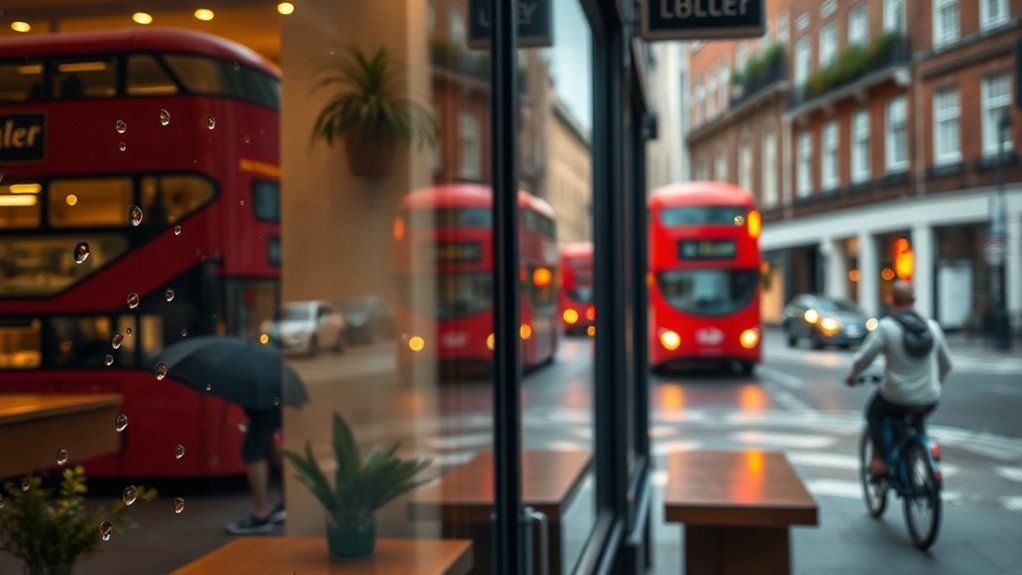
You choose glass shop fronts in London to maximise visibility, convert passing footfall, and hit performance and planning targets. High-transparency toughened or laminated glazing boosts daylight, merchandising impact, and energy efficiency while integrating security, privacy films, and branded graphics. Whether you go framed or frameless , thermally broken profiles, low‑E units, and compliant hardware are key to durability and BS/EN compliance. Stay with this guide to see what works best, what it costs, and how to specify it.
Key insights
- Maximise visibility and footfall with high-transparency glazing, minimalist frames, and bespoke branding layers that create an attractive, modern London street presence.
- Choose appropriate glass types—toughened, laminated security, and low‑E double/triple glazing—to meet safety, security, and energy-efficiency requirements under UK and London regulations.
- Decide between framed and frameless systems based on desired aesthetics, structural demands, budget, and heritage or conservation area constraints.
- Integrate security and privacy solutions such as anti-bandit laminated glass, multi-point locking, discreet shutters, frosted or tinted glazing, and smart monitoring systems.
- Ensure long-term performance with thermally broken aluminium, solar-control coatings, quality seals, documented maintenance, and reputable London suppliers familiar with BS/EN and local planning policies.
Should You Choose a Glass Shop Front in London?
Why do so many high-performing retailers in London specify glass shop fronts as their default façade solution? You’re operating in a dense urban marketplace where visual merchandising, brand legibility, and regulatory compliance intersect. A glass frontage lets you integrate contemporary glazing systems with stringent historical preservation requirements, especially in conservation areas and listed streetscapes.
You can deploy low-iron, laminated, or toughened units, recess fixings, and minimal framing to achieve a seamless, high-transparency interface. At the same time, you can layer in artistic embellishments—ceramic frits, applied vinyls, digital print interlayers, or etched motifs—to express brand DNA without compromising sightlines. When you evaluate options, you’re not just choosing a material; you’re specifying an adaptive façade platform that supports evolving retail formats and experiential concepts.
Benefits of Glass Shop Fronts for London Retailers
When you deploy a well‑engineered glass shop front in London, you’re not just upgrading aesthetics; you’re optimising visibility, footfall conversion, and operational performance in a single façade system. High‑transparency glazing creates an always‑on merchandising canvas , turning your interior into a dynamic shop window that captures impulse traffic and extends dwell time.
You leverage natural light to reduce artificial lighting loads, improving energy performance while enhancing product colour rendition. With precision‑engineered hardware and secure laminated glass, you maintain robust loss‑prevention without visual barriers.
In conservation zones or streets with strong historical architecture, you can specification‑match profiles and use decorative etching to echo period detailing, aligning with planning expectations while projecting a contemporary brand image. The result is a future‑proof, high‑ROI frontage .
Framed vs Frameless Glass Shop Fronts
When you compare framed and frameless glass shop fronts, you’re really balancing visual impact with engineering performance and lifecycle value . You need to assess how each system handles aesthetic branding, structural support and safety compliance, along with installed cost, maintenance demands, and projected lifespan. By understanding these variables, you can specify a glass frontage that optimises both storefront presence and whole‑life asset performance.
Aesthetic Impact And Style
Two primary design choices define the visual language of modern glass shop fronts in London: framed and frameless systems, each projecting a distinct brand message and spatial aesthetic. You’re fundamentally calibrating how your façade mediates between Historical architecture and contemporary minimalism.
With framed systems, you articulate strong sightlines, express module grids , and foreground Artistic craftsmanship in mullions, transoms, and junction detailing. They’re ideal when you want to echo neighbouring period façades while still showcasing product.
Frameless shop fronts, by contrast, deliver a seamless, “invisible” envelope, maximising transparency and perceived interior volume. You prioritise pure glazing, crisp edge detailing, and uninterrupted brand graphics. This approach suits future-facing retail concepts where you want the store experience, not the façade, to dominate visual perception.
Structural Support And Safety
Although aesthetic choices often drive your initial concept, structural performance and safety compliance ultimately determine how viable a framed or frameless glass shop front is on a London street. You’re balancing transparency with structural integrity, impact resistance , and stringent UK safety regulations.
-
You treat framed systems as load-bearing exoskeletons: mullions, transoms, and head tracks distribute wind loads, resist crowd impact, and integrate certified fire-exit hardware with predictable performance.
-
With frameless systems, you rely on thicker toughened or laminated glass, discreet patch fittings, and engineered floor springs, so point loads, deflection limits, and glass breakage behavior stay within BS and EN codes.
-
You coordinate with structural engineers to validate fixing details, anchorage to substrates, and glass specification, ensuring risk assessments satisfy local Building Control.
Cost, Maintenance, And Lifespan
Structural performance and compliance set the parameters; cost, maintenance , and lifecycle value decide which glass shop front actually makes sense for your budget and operating model. With framed systems, you’re looking at lower upfront capex, modular replacement of damaged panels, and predictable maintenance cycles for gaskets, hardware, and coatings. They’re often the pragmatic choice for high-traffic, cost-sensitive sites.
Frameless fronts demand higher initial investment: thicker toughened or laminated glass, premium fittings, and precise installation. However, their reduced framework means fewer corrosion points, streamlined cleaning, and longer visual relevance—critical on design-led streets or Historical restoration schemes. When you specify eco friendly materials, such as high-recycled-content aluminium or low-iron glass, you reduce embodied carbon while protecting long-term asset value and operational efficiency.
Best Glass Types for London Shop Fronts
Selecting the right glass specification for a London shop front means balancing impact, security, and thermal performance against local planning and Building Regulations. You’re also reconciling Historical architecture with a contemporary retail experience and a low Environmental impact, so material choice really matters.
-
Toughened safety glass Use heat‑treated, BS EN 12150 compliant glass for primary façades where you need high impact resistance , clean sightlines, and minimal visual distortion.
-
Laminated security glass For high street or late‑trading sites, specify multi‑ply laminated units with PVB or ionoplast interlayers to achieve anti‑bandit and UV control performance.
-
High‑performance double‑ or triple‑glazed units Combine low‑E coatings, warm‑edge spacers, and argon fill to cut U‑values, improve acoustic attenuation, and satisfy Part L without compromising transparency.
London Glass Shop Front Design Ideas
When you plan London glass shop front design, you need modern minimalist concepts that maximise sightlines, daylighting, and product visibility while complying with local glazing regulations. You’ll balance clean frameless systems, low-iron glass, and slimline aluminium profiles to achieve a high-end, clutter-free façade. At the same time, you can use bespoke fronts —through custom etching, film graphics, integrated lighting, and branded hardware—to turn the glazing into a powerful visual identity tool.
Modern Minimalist Glass Concepts
Although trends shift quickly on London’s high streets, modern minimalist glass shop fronts keep delivering a clean, high-impact aesthetic that aligns with premium retail positioning. You prioritise uninterrupted sightlines , low visual noise, and precise detailing that lets product and lighting do the talking.
To execute this, you typically combine oversized glazing with ultra-slim aluminium or steel profiles, concealed fixings, and integrated drainage channels.
- Privacy + diffusion – Use frosted glass strategically to obscure back-of-house zones while diffusing LED lighting for a soft, uniform glow.
- Solar control – Specify tinted glass with selective coatings to cut glare, manage g-values, and protect stock from UV without heavy shading.
- Seamless thresholds – Opt for frameless doors, recessed tracks, and flush thresholds to maintain a continuous, barrier-free façade.
Branding With Bespoke Fronts
Modern minimalist glass fronts set a strong architectural framework, but bespoke branding elements turn that clean canvas into a recognisable London storefront. You can treat the façade as a brand interface, integrating logo forms, typography, and wayfinding into the glazing specification itself. Decorative etching on toughened or laminated glass lets you embed patterns, gradients, and brand marks without relying on short‑life vinyl.
Use low‑iron glass to keep colours accurate, then layer fritted bands or interlayers for subtle identity cues. Integrate LED lighting within head tracks, mullions, and threshold details to create dynamic halos, edge‑lit logos, or responsive accent washes. With DMX‑controlled LED lighting, you can schedule colour temperatures and scenes, ensuring your shop front broadcasts your brand narrative 24/7.
Balancing Transparency and Privacy in Glass Shop Fronts
As you design a glass shop front in London’s high-visibility streets, you need to calibrate transparency and privacy with the same precision you’d apply to structural loading or thermal performance. You’re not just choosing glass; you’re engineering visual permeability.
Use glazing strategies that modulate sightlines throughout the day:
- Prioritise frosted glass on lower zones to obscure clutter, while keeping clear vision panels at eye level to preserve merchandising impact.
- Deploy tinting options with specific visible light transmission (VLT) values, so you can fine-tune internal luminance and prevent silhouettes at night.
- Integrate layered treatments—laminated interlayers, internal blinds, or switchable smart film—to create adjustable privacy gradients that align with trading hours, customer flow, and neighbouring façades.
Security Features for London Glass Shop Fronts
When you engineer security for a London glass shop front, you’re designing a resistance system, not just specifying thicker glass. You start by pairing laminated, anti-bandit glazing with structurally bonded framing, so impact energy dissipates through the interlayer, not the pane. Then you integrate multi-point locking and concealed through-frame anchors to eliminate obvious attack vectors.
You’ll treat the glazing as part of a wider envelope: roller shutters hidden in head-boxes, anti-ram bollards, and blast-mitigating films that enhance vandalism prevention without killing transparency. Security sensors should bond directly to the glass, feeding into a monitored alarm and smart lighting sequence. Leverage current security innovations—AI-enabled CCTV, access analytics, and remote lock-down protocols—to create an adaptive, data-driven deterrent strategy.
London Planning Rules for Glass Shop Fronts
Although a glass shop front looks like a simple design decision, in London it’s a tightly regulated façade element governed by local planning policies, conservation constraints, and building control standards. You’ll navigate borough-specific Supplementary Planning Documents , London Plan guidance, and sometimes stringent Historical preservation requirements, especially in Conservation Areas and near listed buildings.
To de‑risk your scheme and accelerate approvals, you should:
- Map planning constraints: verify use class, frontage rhythm, stall-riser expectations, and transparency ratios set by your local authority.
- Coordinate design: align mullion grids, signage zones, and manifestation with streetscape character while evidencing minimal environmental impact.
- Front‑load compliance: submit scaled elevations, materials schedules, and heritage/ townscape justifications, showing how your glazing strategy enhances legibility and active frontage.
Energy Efficiency for London Glass Shop Fronts
Planning compliance sets the visual and regulatory envelope for your glass shop front, but energy performance determines its long‑term operating cost and comfort. You’ll need to treat the façade as a thermal system, not just a branding surface. Specify low‑emissivity double or triple glazing to drive Energy conservation while maintaining transparency.
Prioritise insulation efficiency via warm‑edge spacers, argon or krypton fills, and thermally broken aluminium framing to cut conductive losses. Integrate solar control coatings tuned to your orientation to limit unwanted solar gains without dulling daylight. Use airtight perimeter seals and high‑performance thresholds to reduce infiltration.
Pair the envelope with intelligent controls: external shading, dynamic glazing, and zoned HVAC strategies that respond to real‑time solar load and footfall.
Cleaning and Maintaining Glass Shop Fronts on Busy High Streets
On a high-footfall London high street, you need a robust daily cleaning regime that removes traffic film, silica deposits, and fingerprints without stripping protective coatings. By using pH-neutral glass detergents , non-abrasive applicators, and correct squeegee technique, you’ll prevent micro-scratches and maintain optical clarity. Pairing this with anti-graffiti films, edge protection, and correct hardware maintenance protects the glass from impact damage and extends the lifecycle of your shop front.
Daily Cleaning Best Practices
Because footfall, pollution , and traffic residue build up quickly on busy high streets, you need a disciplined daily cleaning regime to keep your glass shop front optically clear and structurally sound. You’re not just wiping fingerprints; you’re managing micro‑abrasives, chemical deposits, and visual merchandising impact while supporting historical preservation objectives and brand perception.
- Inspect at opening: identify impact zones, gasket failures, and frame soiling; prioritise high-contact panels and door leaves.
- Clean mid-day and close: use pH‑neutral , IPA-free solutions with eco friendly materials such as biodegradable microfiber heads and low-runoff spray systems.
- Standardise technique: work top‑down, edge‑in, using overlapping S-strokes to avoid drag marks, and log activity in a simple digital checklist so you can refine frequency, labour allocation, and consumable usage.
Protecting Glass From Damage
A disciplined daily cleaning regime sets the baseline, but you also need to harden the glass against physical, chemical, and mechanical damage that accumulates on a busy London high street. You start by specifying high‑performance glass coatings —hydrophobic, oleophobic, and anti-graffiti systems—that create a sacrificial nano-layer, reducing etching from pollutants and mineral deposits.
Integrate laminated or toughened glass with ion-exchange or heat-strengthening to increase impact resistance and deter opportunistic vandalism. Where visibility allows, deploy protective films that can be stripped and replaced after tagging or scratching.
Use decorative patterns not just for branding, but as functional fritting to break up visual uniformity and help mask minor surface defects. Finally, implement a documented maintenance schedule that aligns re-coating intervals with measured wear levels.
How Much Do Glass Shop Fronts Cost in London?
Understanding what drives the cost of glass shop fronts in London lets you scope, budget, and value‑engineer your project from the outset. You’re not just paying for glass; you’re investing in performance, aesthetics, and lifecycle value . You should demand pricing transparency so every line item—from glass spec to hardware—is clearly broken down.
Key cost drivers typically include:
- Glass specification – Toughened, laminated, or insulated units, low‑iron clarity, coatings, and thickness all affect price and thermal performance.
- Material durability – Aluminium vs. steel framing, powder‑coat quality, sealants, and ironmongery determine long‑term resilience and maintenance costs.
- Complexity and compliance – Oversized panes, structural glazing, manifestations, access control, and Part L/Part M compliance increase design, fabrication, and installation inputs.
Choosing a London Glass Shop Front Installer
Selecting the right glass shop front installer in London directly determines installation quality, compliance, and whole‑life performance. You need a contractor who understands Part M access, security glazing classifications, and London borough planning nuances, not just basic fit‑out work.
Interrogate their track record with structural glass , oversized panes, and integrated Indoor displays. Ask how they coordinate lighting options with mullion layouts, cable routing, and thermal performance to avoid glare, shadowing, and overheating.
Check if they offer CAD/BIM coordination, on‑site surveys with laser measurement, and load calculations for fittings, manifests, and door hardware. Prioritise firms that self‑deliver (not heavily subcontract) and provide warranties covering seals, fixings, and hardware cycles. Finally, guarantee 24/7 call‑out and documented maintenance regimes to safeguard uptime and brand presence.
Common Glass Shop Front Mistakes London Stores Make
Despite London’s mature fit‑out market, glass shop fronts still fail for the same avoidable reasons: mis-specified glass, non‑compliant access, and poorly detailed interfaces. You’ll see fragmentation, cold-bridging, and condensation because systems aren’t value‑engineered for London’s microclimates or adjacent historical architecture.
The most common errors are:
- Underspecified glass – Using non-laminated or incorrect thickness that fails impact, acoustic, or security requirements, especially near transport nodes.
- Ignoring heritage context – Clashing mullion grids, reflective coatings, and generic ironmongery that fight conservation-area sightlines instead of complementing period façades.
- Weak supply chain strategy – Overlooking local suppliers who understand borough planners, lead times, and BS/EN compliance, leading to costly redesigns and abortive install visits.
Fix these, and your shop front performs and passes first time.
Frequently Asked Questions
How Long Does Installation of a New Glass Shop Front Usually Take?
You’ll typically see installation completed within one to three days, assuming structural openings are prepared and surveys are accurate. Lead times for toughened panels, Glass durability specifications, and design customization—like bespoke mullions, manifests, and thermal breaks—can extend the overall program. Installers coordinate glazing, sealing, and alignment in phased runs to minimize downtime, guarantee regulatory compliance, optimize load paths, and integrate future-ready hardware like automated doors and smart façade systems.
Can I Operate My Store During Glass Shop Front Replacement Works?
You can often keep trading during replacement works, but you’ll need a phased store renovation strategy. Contractors typically install temporary hoardings , dust barriers, and controlled access points to maintain customer safety and business continuity. You’ll reroute footfall, isolate the work zone, and possibly limit trading hours. Coordinate method statements, risk assessments, and signage with your installer so the project runs as a live-site upgrade, not a full shutdown.
What Insurance Do I Need for a Glass Shop Front in London?
You’ll need property damage, public liability, and business interruption cover, all explicitly endorsing glass durability and specialist glazing. Specify toughened or laminated units, anti-shatter films, and enhanced security measures like shutters and PAS 24 doors to avoid claim disputes. Add accidental damage and vandalism riders, plus non-negligent cover for contractors. Make sure your insurer accepts innovative systems—smart glass, switchable tinting, structural glazing—within the policy wording and reinstatement valuations.
How Often Should Glass Shop Fronts Be Professionally Inspected for Safety?
You should commission a professional safety inspection at least annually, with six‑monthly checks in high‑traffic or high‑risk zones . Align your maintenance schedules with BS 6262 and relevant safety regulations, including toughened/laminated glass standards and impact‑safety zones. Specify visual defect audits, hardware torque tests, sealant integrity checks, and frame alignment surveys. Use a digital asset register and condition‑based monitoring to optimise inspection frequency and reduce lifecycle risk and unplanned downtime.
Are There Grants or Local Incentives for Upgrading to Modern Glass Shop Fronts?
You can usually access financial incentives and renovation grants through local councils, business improvement districts, and heritage or high-street regeneration schemes. You’ll need to demonstrate energy efficiency gains, accessibility upgrades, or compliance with current safety standards. Check UK Government grant portals, London Business Hub, and local BID programs. Partner with a specialist contractor who can supply performance specs, U-values, and cost–benefit analyses to strengthen your funding application.
Summary
When you step back from the pavement and see your brand framed in crystal‑clear, low‑iron toughened glass, you’re not just looking at a façade —you’re reading a performance spec. A well‑engineered glass shop front optimizes sightlines, captures footfall, and boosts dwell time. Choose the right glazing build‑up, hardware set, and sealing system, and you’ll get a high‑impact, low‑maintenance, security‑rated frontage that turns London’s street glare into pure commercial advantage.