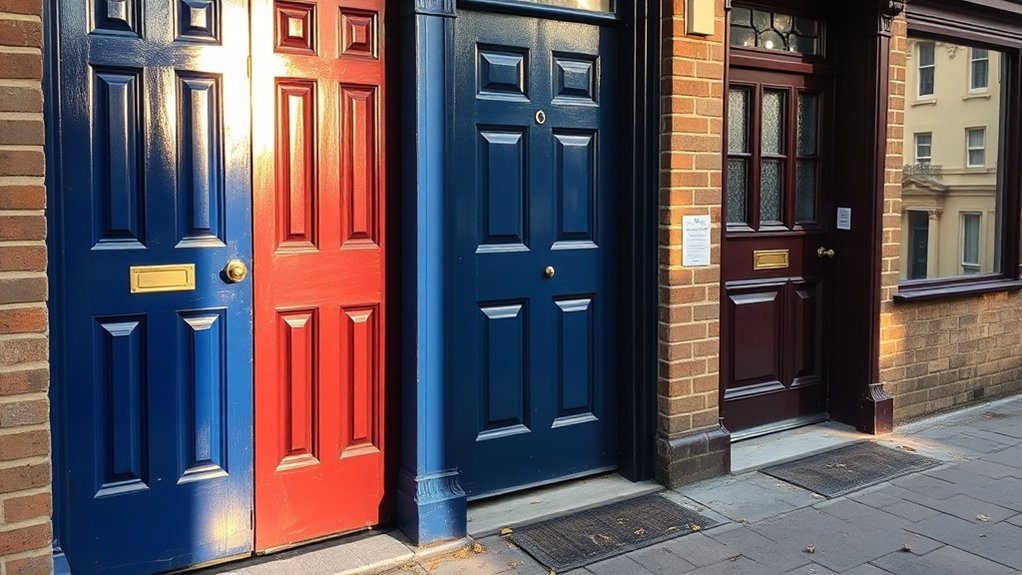
When you choose a shop front door in London, you need high‑security locking , laminated glazing, thermally broken aluminium or engineered timber frames, and full compliance with planning, Part M accessibility and conservation rules. Specify robust hinges, heavy‑duty closers, low‑E double glazing and airtight seals to handle footfall, noise and heating costs. Decide early between off‑the‑shelf and bespoke to balance budget with branding and performance, because the right entrance can work as engineered street‑facing equipment.
Key insights
- Supply and installation of secure aluminium, steel, and timber shop front doors across London, including laminated security glass and multi-point locking systems.
- Fully compliant with London planning, conservation area guidelines, and UK Building Regulations, including fire safety and accessibility (Part M, Equality Act).
- Bespoke and off-the-shelf options to suit branding, from ultra-clear display glazing to frosted or branded glass, with a wide range of colours and finishes.
- Energy-efficient, thermally broken frames and acoustic glazing to reduce heat loss and street noise in busy London locations.
- Ongoing maintenance, repairs, and upgrade services, including smart access control, closers, hinges, and hardware replacement for high-footfall premises.
Key Criteria For A Great London Shop Front Door
Although every premises has its own constraints, a great London shop front door always meets the same core criteria: robust security, high footfall durability , compliance with UK building and fire regulations, effective thermal and acoustic performance, and strong visual alignment with your brand and the surrounding streetscape.
You start by engineering Retail security into the door leaf, frame, and ironmongery: anti-jemmy sections, multi-point locking, laminated security glass, and certified cylinders. Next, specify heavy-duty hinges, closers, and thresholds rated for intensive use, so operation stays smooth under constant traffic.
To enhance Customer engagement, you maximise clear glazing, sightlines, and intuitive pull/push geometry, then integrate accessibility, airtight seals, and low-U-value systems . Finally, you coordinate finishes, lighting spill, and handle design to communicate brand quality instantly.
Planning Rules And Conservation Areas In London
Once you’ve defined the performance and security brief for your shop front door, you have to test those ambitions against London’s planning framework, especially if your premises sit in a conservation area or within a designated shopping parade. You’re not just getting consent; you’re negotiating between innovation, urban aesthetics, and historical preservation.
You’ll typically need planning permission for material changes to openings, frames, glazing proportions, and signage integration. Check your borough’s conservation area appraisal and shopfront SPD before commissioning drawings.
- Map constraints: Article 4 Directions, frontage lines, sightlines
- Specify compliant materials: hardwoods, slimline aluminium, heritage ironmongery
- Quantify change: scaled elevations, sections, and joinery details
- De-risk approval: pre-application discussion with a conservation or design officer
Designing A London Shop Front Door For Your Brand
When you design a London shop front door for your brand, you should treat it as a functional extension of your visual identity, not just an entry point. You’ll need to specify materials, colours, and hardware that express your brand’s positioning while still meeting performance requirements such as durability, security, and thermal efficiency. By carefully coordinating proportions, glazing style, and finish with your signage and storefront, you create a coherent streetscape presence that customers recognise instantly.
Aligning Door With Brand
Why should a shop front door in London function as anything less than a three-dimensional expression of your brand? You align the door with your brand by translating your identity into interaction, not decoration. Treat the entrance as a calibrated interface for customer engagement and branding consistency, where every element is intentional and measurable.
Design your door to:
- Signal your market position through proportion, hardware sophistication, and detailing precision
- Guide visitor flow via door width, swing, and handle ergonomics that match your service model
- Integrate smart access (sensors, counters, signage triggers) to capture behavioural data
- Synchronise logo placement, typography, and lighting hierarchy with wider brand touchpoints
Materials, Colours And Style
Brand alignment sets the brief; materials, colours, and style execute it at street level. You’re engineering a high-performance interface between brand and passer-by, so specify materials first. In London, aluminium and steel suit slim profiles and high-traffic resilience , while engineered timber or hybrid composites give warmth with predictable dimensional stability. Track material trends such as thermally broken frames, anti-fingerprint coatings, and smart glass for dynamic transparency.
Next, deploy colour psychology deliberately. Use high-chroma accents to signal energy and innovation, desaturated palettes for premium calm, and contrast ratios that maximise legibility in low light. Style completes the system: integrate flush thresholds, minimal ironmongery, and concealed closers so the door reads as one coherent, branded technology, not just a compliant entry point.
Best Materials For London Shop Front Doors
When you choose materials for a London shop front door, you need to balance security , maintenance, and planning constraints. Durable aluminium shopfronts give you high structural strength and corrosion resistance, while timber doors suit heritage facades and conservation area requirements. Toughened glass front options then let you maximise visibility and natural light without compromising on impact resistance or safety standards.
Durable Aluminium Shopfronts
How do you guarantee your London shop front can withstand constant footfall, pollution, and unpredictable weather without constant repairs? You specify a precision-engineered aluminium shopfront system. Aluminium profiles deliver high structural integrity with slim sightlines, enhancing retail branding while maximising glazing for better customer experience and product visibility.
- High-tensile alloy frames resist impact, forced entry, and door sagging.
- Polyester powder-coated finishes outperform standard paint against UV, grime, and corrosion .
- Thermal break technology reduces heat transfer, improving comfort and energy performance.
- Modular systems integrate auto-doors, sensors, and access control for future-ready upgrades.
You can calibrate door closers, pivot hardware, and thresholds to handle heavy pedestrian flow, prams, and deliveries. With minimal maintenance and long lifecycle value, aluminium becomes a strategic, innovation-led choice.
Timber Doors For Heritage
Nowhere does material choice matter more than in London’s conservation areas , where a timber shop front door often becomes a planning requirement rather than a design preference. You’re not just fitting an entrance; you’re aligning with heritage restoration standards, local character, and long-term performance.
You should specify engineered hardwoods (often Accoya or oak) for superior stability, minimal warping, and tight tolerances around weatherstripping and thresholds. High-performance microporous coatings let the timber breathe while resisting moisture ingress and UV degradation. Precision timber craftsmanship allows you to replicate original mouldings, panel patterns, and bead profiles while discreetly integrating modern ironmongery, access control, and concealed security hardware. By combining traditional joinery with CNC machining, you get a door that passes planning scrutiny yet functions like a contemporary system.
Toughened Glass Front Options
Although heritage timber still dominates many streets, toughened glass shop front doors have become the default choice across much of London because they maximise visibility, security, and durability in a compact footprint. You’re working with Toughened glass that’s heat-treated to increase impact resistance and designed to fail safely into small granular pieces.
To optimise performance, you’ll specify:
- Glass thickness calibrated to door width, height, and anticipated footfall
- Laminated or double-glazed panels for acoustic control and thermal efficiency
- Hardware tested to current Safety standards, including anti-fingertrap pivot systems
- Edge protection, patch fittings, and rails engineered for high-cycle use
You can integrate branding via ceramic frit, interlayers, or subtle vinyls without compromising structural integrity. Done correctly, a glass front delivers transparency, resilience, and a future-ready aesthetic.
Glass Options For London Shopfronts: Clear To Frosted
When you’re choosing glass for a London shopfront , you’re really balancing visibility, privacy, safety, and thermal performance rather than just “clear vs frosted.” Clear glazing maximises product visibility and natural light, which is ideal for retail displays and impulse footfall, but it may require additional security measures and solar control.
You’ll treat glass aesthetics and transparency options as a spectrum: ultra-clear low‑iron glass for premium colour rendering; standard clear for cost‑effective openness; tinted or solar‑control coatings to cut glare and overheating; acid‑etched frosted glass for diffuse privacy without sacrificing daylight.
You can also specify gradient or banded frosting to align with eye-level privacy zones, or integrate brand graphics via ceramic frit or interlayers, optimising performance and identity together.
Locks, Shutters And Security For London Shop Doors
Once you’ve defined how transparent your shopfront glass should be, you need to specify how that glazed entrance will actually resist forced entry , vandalism, and opportunistic attacks. You’re designing a layered security envelope: certified locking, structural reinforcement, and intelligent monitoring.
Specify tested, multi-point mortice locks with anti-drill, anti-bump cylinders, integrated into a continuous strike plate. Pair this with:
- Laminated glass anchored in security-rated aluminium or steel profiles
- Internal or built-in roller shutters with tamper-detected bottom bars
- Smart technology: access control, audit trails, and real-time alerts
- Decorative hardware that hides high-security fixings and cylinders
Tie everything into a monitored alarm, ensuring lock status and shutter position are visible in your building management or cloud dashboard.
Accessibility And Disability Compliance For Shop Entrances
When you plan a shop entrance in London, you must align your doors, thresholds, and approach routes with UK accessibility standards such as the Equality Act 2010 and current Building Regulations (Part M). You’ll need to address clear opening widths, level or ramped access, door hardware, and visibility features so wheelchair users, people with limited mobility, and visually impaired customers can enter safely and independently. By treating inclusive design as a core performance requirement, you can specify door systems, controls, and layouts that reduce barriers while remaining practical for daily retail operations.
Meeting UK Accessibility Standards
How do you guarantee your shop front door doesn’t just look good but fully complies with UK accessibility law? You start by aligning your design with the Equality Act 2010, Building Regulations Part M, and BS 8300-1 , then engineer each component to those benchmarks.
You should verify:
- Clear opening width of at least 1000mm, with minimal threshold upstand for wheelchair access
- Door furniture at 900–1000mm height, operable with a closed fist and low opening forces
- High-contrast framing and glazing manifestation at 850–1000mm and 1400–1600mm
- Integrated audible/visual alerts linked to access control for users with sensory impairments
You can embed eco friendly innovations—like low-energy automatic operators—and smart sensors for people counting, tying them into digital integration platforms that log compliance data and maintenance events.
Inclusive Design For Entrances
Legal compliance gives you a baseline; inclusive entrance design turns that baseline into a door every customer can approach, read, operate, and pass through independently. You treat entrance accessibility as a system: geometry, hardware, sensory cues, and information all working together.
You start with thresholds and door clear widths, then specify low-resistance closers and lever or paddle handles set at consistent heights. You integrate flush thresholds or minimal ramps with non-slip finishes and clear maneuvering zones for mobility devices.
You layer in multi-sensory guidance: high-contrast framing, glazing manifestation bands, and tactile paving aligning with the door line. You use inclusive signage with Braille, raised lettering, and pictograms, positioned within sightlines and lit evenly. Finally, you coordinate automatic door sensors , intercoms, and assistance buttons for true independence.
Insulation, Noise And Energy Efficiency Of Shop Doors
Although shopfronts are often designed with appearance in mind first, the insulation, noise control, and energy efficiency performance of your door has a direct impact on running costs, customer comfort, and even product protection. You should treat Insulation benefits and Noise reduction as engineered outcomes, not aesthetic by-products.
Modern London shop doors can integrate:
- High-performance glazed units with low‑E coatings and warm-edge spacers
- Thermally broken aluminium profiles that cut conductive heat loss
- Acoustic laminates and perimeter seals to block street noise and drafts
- Automatic closers and threshold systems that minimise conditioned air leakage
Off-The-Shelf Vs Bespoke London Shop Front Doors
When you compare off-the-shelf shop front doors with bespoke systems in London, you’re really weighing speed and lower upfront cost against precise performance, branding, and compliance. Off-the-shelf units suit standard openings and straightforward door security requirements; they’re pre-tested , readily available, and easy to integrate with basic access control or shutters.
Bespoke doors let you engineer the interface between structure, street, and customer flow. You can specify exact glazing ratios, hinge or pivot architecture, and frame depth to optimise daylight, durability, and accessibility. You also align materials, sightlines, and hardware finishes to maximise aesthetic appeal while meeting Secured by Design or Part M criteria. If you’re planning advanced automation, sensor-driven entry, or smart locks, a bespoke system gives you cleaner, future-proof integration.
Costs, Quotes And Budgeting For A New Shop Entrance
Choosing between off-the-shelf and bespoke shop front doors quickly turns into a budgeting exercise, so you need clear cost structures before you instruct a fabricator. You’re not just buying a door; you’re specifying a performance interface for security, energy efficiency, customer service, and branding consistency.
Request itemised quotes that break down:
- Door leaf, frame, ironmongery, glazing type, and access control hardware
- Finishes (powder-coating, anodising, specialist colours aligned to brand palette)
- Professional design input (CAD drawings, structural checks, compliance sign‑off)
- Ongoing costs (maintenance cycles, replacement parts, smart system upgrades)
Benchmark at least three London suppliers, using a common specification so you can compare like-for-like. Treat lifecycle cost as critical: a higher first cost can be justified by reduced heat loss, lower maintenance, and better customer flow that drives revenue.
Installing Or Replacing London Shop Front Doors
Precisely planning how you’ll install or replace a shop front door in London prevents security gaps, trading disruption, and compliance issues. Start by commissioning a measured survey , capturing floor levels, wall tolerances, and existing wiring so your new frame, thresholds, and access control align perfectly. Coordinate with your electrician to integrate interior lighting, maglocks, and sensors through concealed cabling routes.
Sequence works to protect trading hours: fabricate off‑site, then schedule removal and installation for low‑footfall periods. Use temporary hoardings and clear wayfinding to maintain safe customer flow. Specify precision-hung doors with adjustable hinges, compliant thresholds, and tested hardware, then pressure-test closing speeds and latching. Finally, integrate the door with CCTV, alarm, and BMS systems for unified, remotely monitored access.
Maintenance, Repairs And When To Upgrade Your Door
A well‑maintained shop front door in London protects revenue, reduces liability, and extends the life of your hardware. You should schedule routine inspections of closers, hinges, pivots, seals, and access control components, logging any changes in performance and customer feedback about difficulty entering.
- Check alignment, latching force, and automation response monthly
- Monitor weather impact on seals, thresholds, and finishes seasonally
- Test locking, panic exit hardware, and access control integrations quarterly
- Audit energy loss around frames and glass annually
Repair issues early: replace worn closers, re-pack glazing, and recalibrate sensors before they fail. Upgrade when recurring faults, rising energy costs, or poor accessibility appear, or when analytics from smart hardware show high cycle counts and degraded operation.
Frequently Asked Questions
How Do London Shop Front Doors Affect Insurance Premiums and Policy Conditions?
They directly influence your premiums by shaping risk profiles and insurance cost factors. If you deploy high-spec shop front security—laminated glass, certified locks, anti-ram frames, smart access controls—insurers typically reduce premiums and excesses, and may broaden theft cover. If standards are low, you’ll face higher rates, exclusions, or mandatory upgrades as policy conditions. You should document specs, certifications, and maintenance to leverage best terms and negotiate technology-driven discounts.
What Are Common Mistakes London Retailers Make When Choosing Shop Front Doors?
You often treat the entrance like décor, not infrastructure. You chase aesthetic appeal and ignore door security ratings , certified locks, and impact-resistant glazing. You under-specify frames, accept vague installation standards, and skip access-control integration. You forget thermal performance, sensor placement, and future signage or automation. Fix this by demanding test certificates, digital-ready hardware, precise tolerances, and a lifecycle plan that aligns performance, branding, and emerging security tech.
How Can I Reduce Street Pollution and Dust Entering Through My Shop Entrance?
You reduce street pollution and dust by creating layered defenses . Install an automatic closer and tight seals, then add brush or rubber Dust Barriers at the threshold. Use a recessed entrance or vestibule to disrupt airflow. Integrate overhead air curtains calibrated to your doorway size. Inside, deploy HEPA-grade Air Filtration units near the entrance, and specify smooth, easily cleanable floor finishes to prevent particulates from resuspending into the breathing zone.
Are There Eco-Certified or Recycled-Material Options for London Shop Front Doors?
Yes, you’ll find several eco-certified and recycled-material door systems. Specify FSC-certified timber, low-VOC finishes, and thermally broken aluminium profiles with high post-consumer recycled content. Ask suppliers for EPDs, BRE Green Guide ratings, and ISO 14001-backed manufacturing. Prioritise double or triple glazing with warm-edge spacers and recycled glass. When tendering, request documentation proving Eco friendly materials and Recycled options, plus end-of-life recyclability and modular, repairable hardware.
What Warranties and Aftercare Packages Do Reputable London Door Installers Typically Offer?
You usually get two shields: a product warranty and a workmanship guarantee. Manufacturers cover the door material and hardware for 5–15 years, often against warping, delamination, or glazing failure. Installers back the installation process for 1–10 years, focusing on alignment, sealing, and security performance. Aftercare packages can include scheduled inspections, adjustment visits, weatherseal replacement, and smart-lock firmware checks, ensuring your entrance system evolves reliably with your innovation goals.
Summary
When you choose a London shop front door , you’re not just ticking a compliance box, you’re engineering first impressions. Align materials, glazing, security hardware, and accessibility with planning rules and your brand story. Measure precisely, specify performance (U‑values, acoustic ratings, lock grades), and get like‑for‑like quotes. Maintain proactively and plan upgrades before failure. After all, the shop door is your “handshake before the sale” – make sure it’s firm, inviting, and future‑proof.