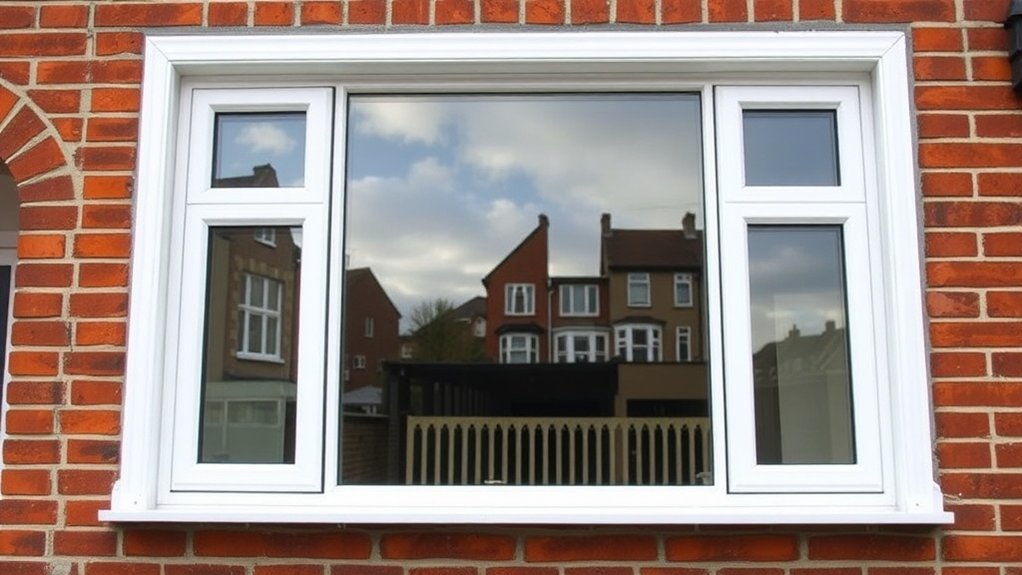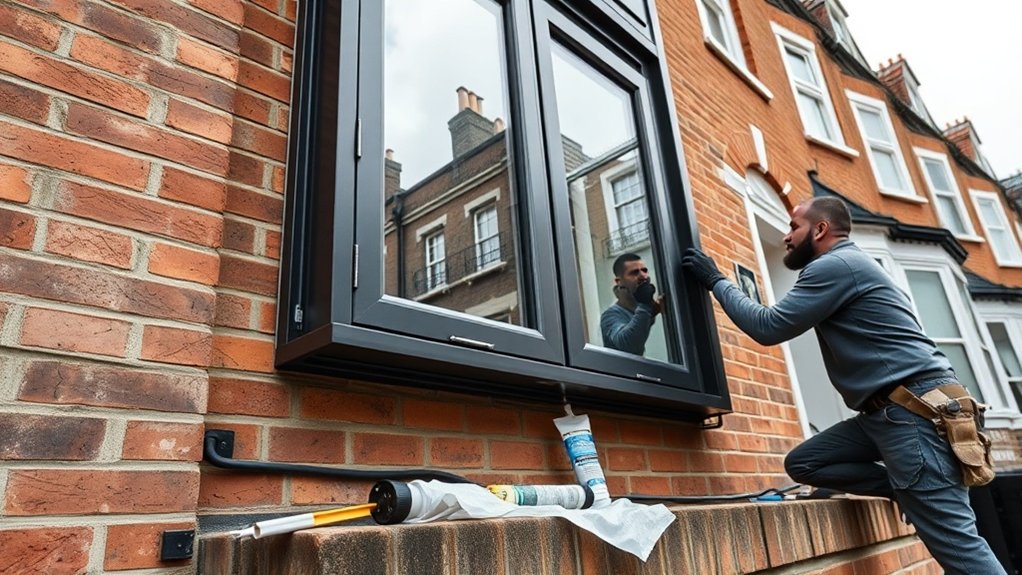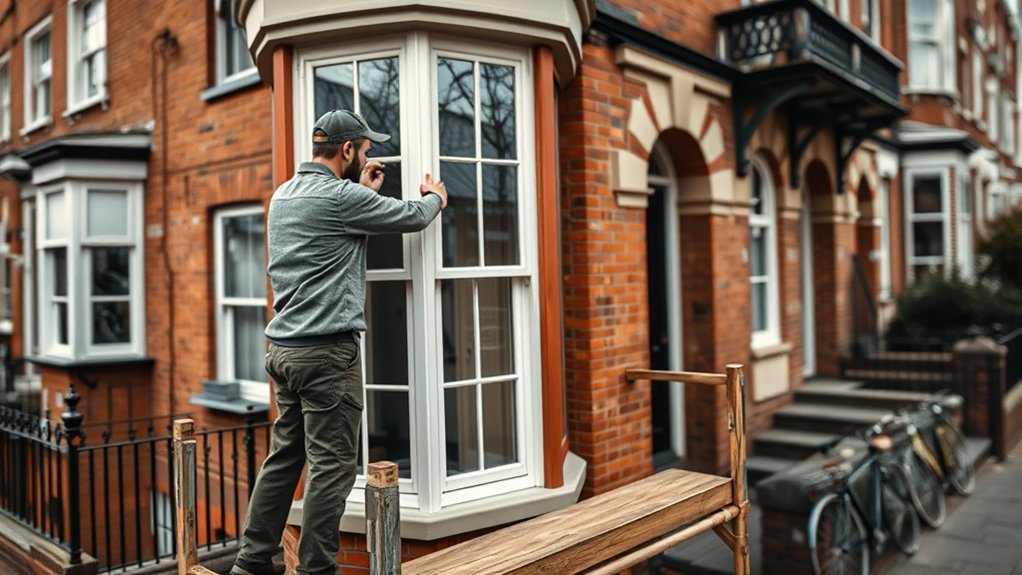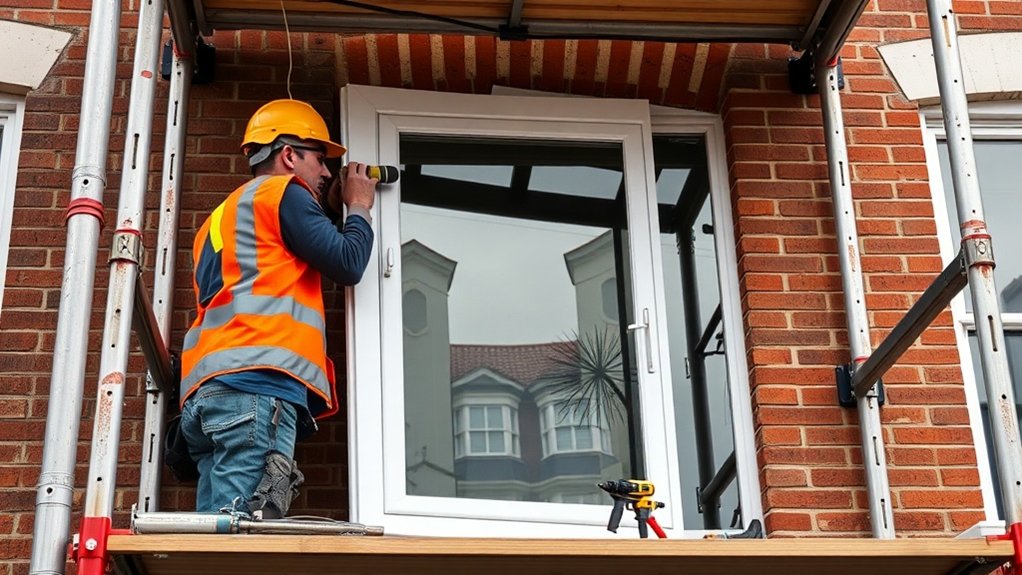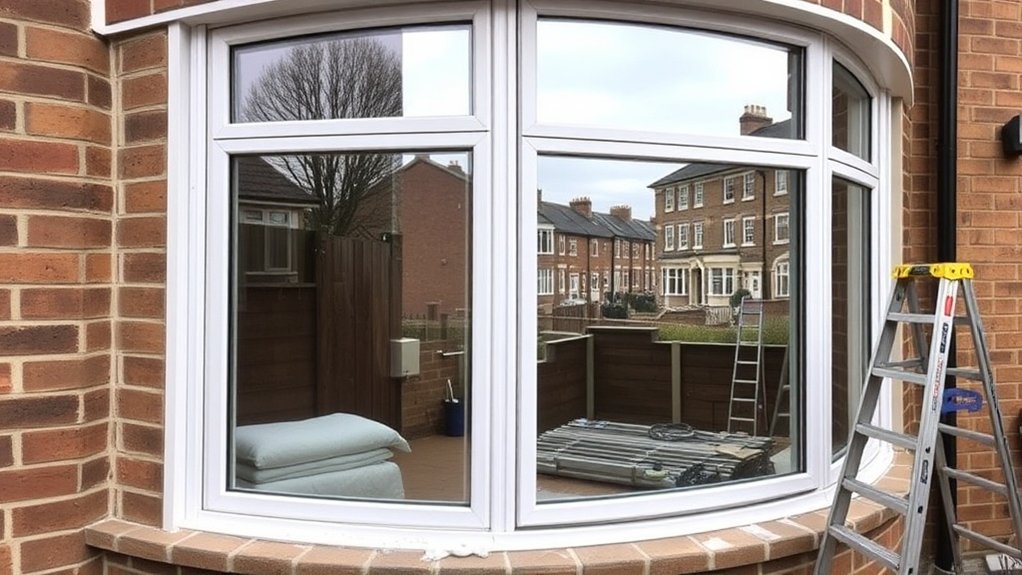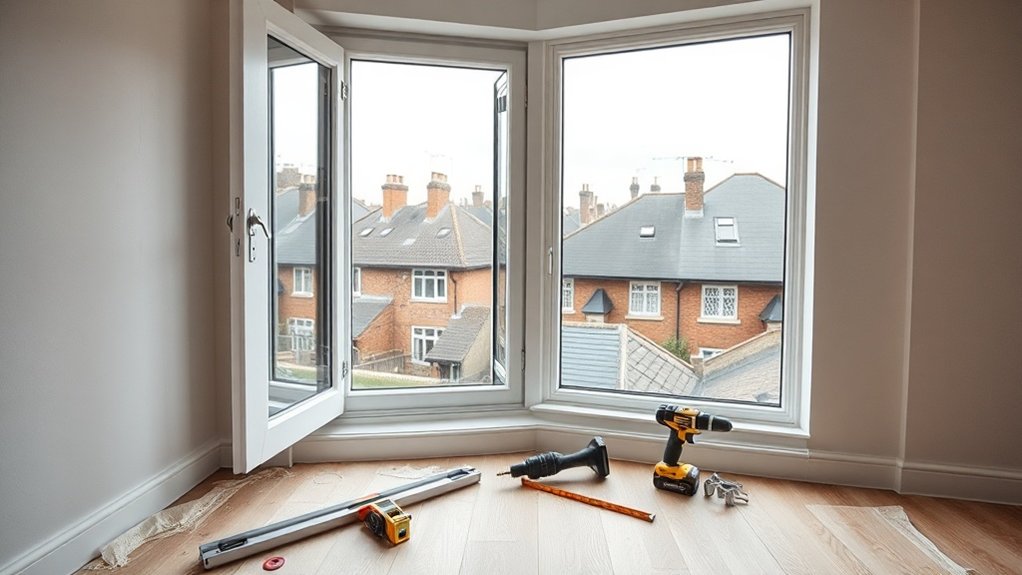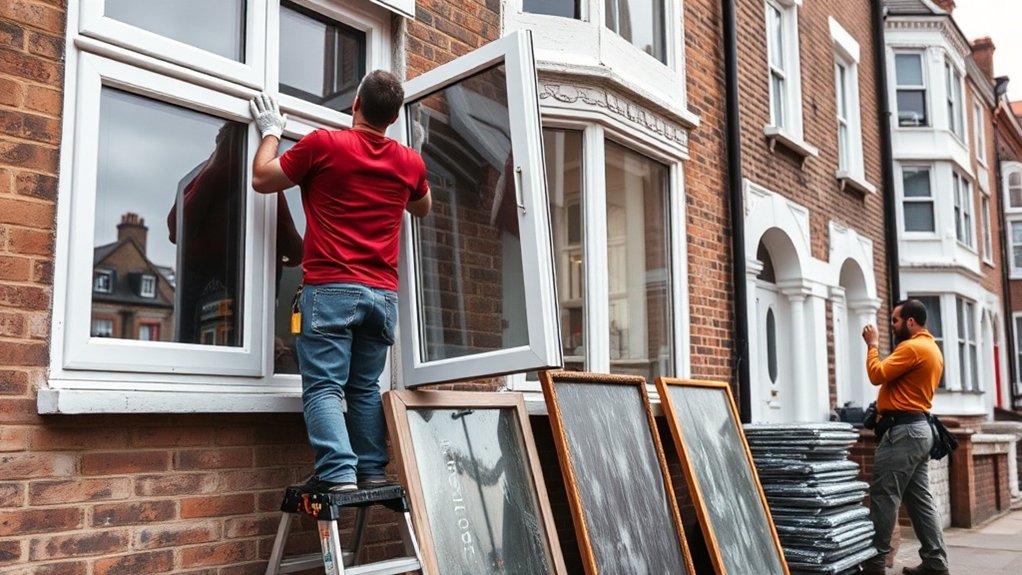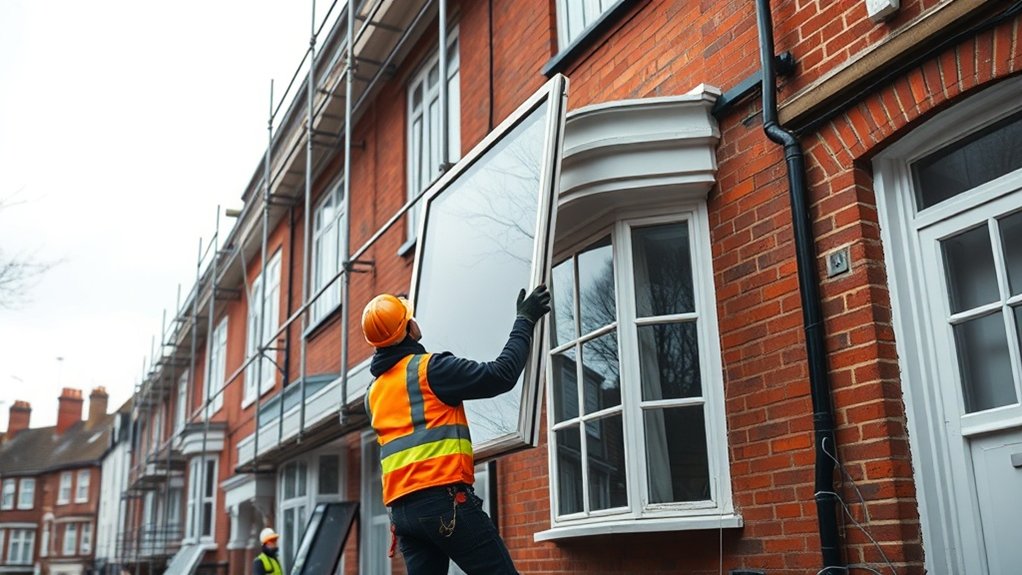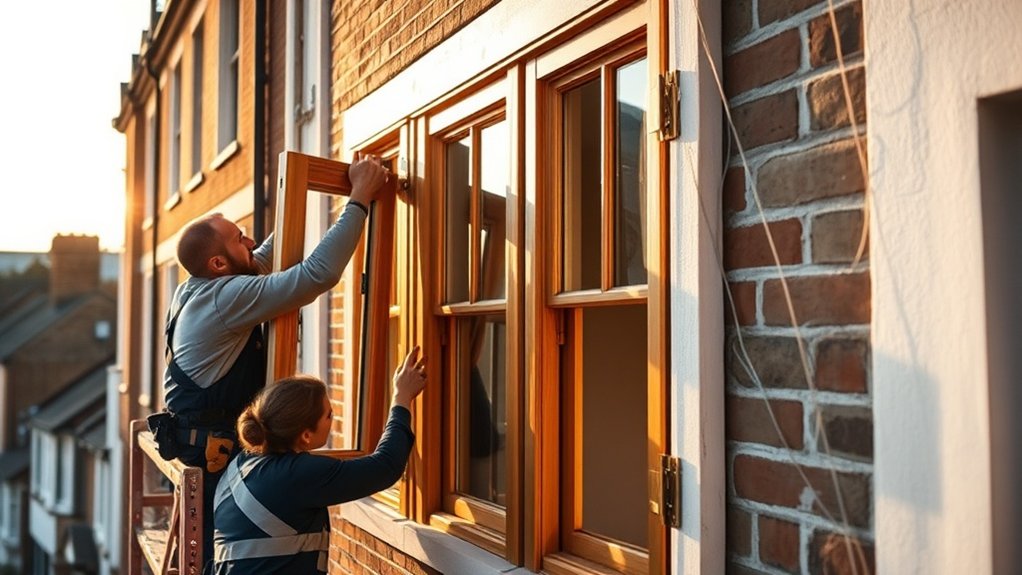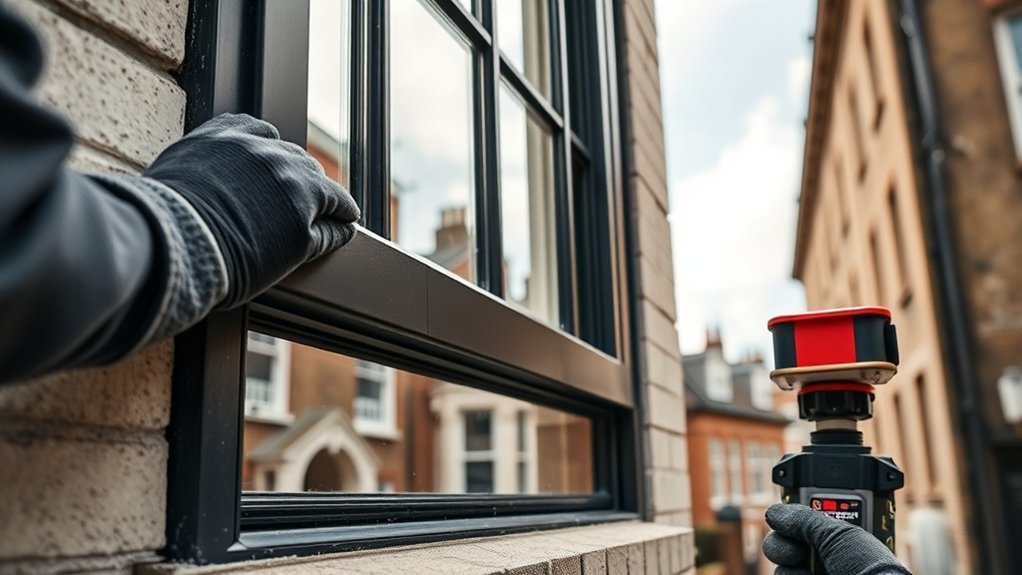
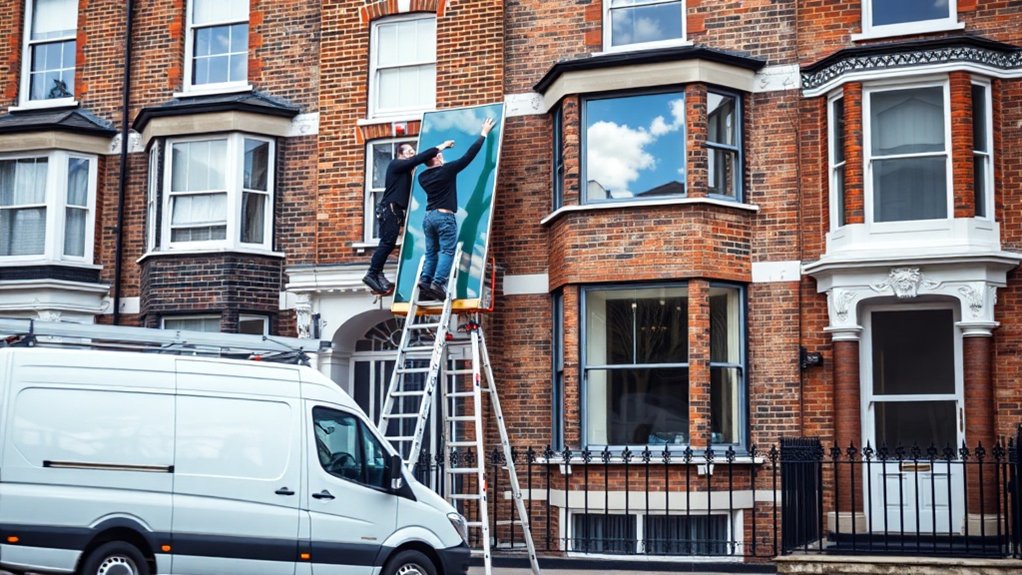
When you install windows in London, you must balance planning rules , tight access, and mixed-age housing stock. You’ll choose between uPVC, aluminium, or timber frames to match conservation requirements, security needs, and energy targets. Specify correct U-values, acoustic glazing, and secure fixings, especially on noisy or exposed façades. Expect £650–£2,200+ per window, depending on material and complexity. If you want to get it right first time, the next sections walk you through each critical decision.
Key insights
- Consider London-specific constraints like conservation areas, restricted access and heritage façades when choosing frame materials, glazing type and installation method.
- Compare materials: uPVC for low cost/maintenance, aluminium for slim strength, and timber for authentic period properties and listed buildings.
- Specify performance: target low U-values, suitable g-values, and, where needed, acoustic glazing to reduce traffic noise and overheating.
- Budget £650–£900 per uPVC window, £900–£1,400 for aluminium, and £1,400–£2,200 for bespoke timber sash, plus access/complexity costs.
- Ensure installers are FENSA or similar certified and compliant with UK Building Regulations and local planning rules, especially in conservation zones.
What’s Different About London Window Installation?
Although the basic principles of fitting a frame and glazing remain the same, window installation in London has distinct requirements driven by dense urban layouts, older housing stock, strict planning controls, and high environmental standards. You must integrate new systems without undermining historical architecture, often working within Conservation Area or Listed Building constraints. That means you’ll prioritise slimline double- or secondary-glazing, putty-fronted sightlines, and profiles that replicate original sections.
You also need robust access planning : restricted streets, scaffold limitations, and tight internal stairwells shape your installation sequence and lifting strategy. Acoustic performance is critical; you’ll specify laminated units, compression seals, and ventilators tuned to traffic noise. Finally, you must design for long-term window maintenance: serviceable ironmongery, reversible seals, and drainable glazing rebates.
How Much Does Window Installation in London Cost?
When you budget for window installation in London, you need to understand the typical price bands per unit and per square metre, including labour and materials. You’ll see costs shift depending on frame material, glazing spec, installation complexity, access, and any planning or FENSA requirements. Let’s break down the average installation prices and the key cost drivers so you can scope your project accurately.
Average London Installation Prices
London window installation costs vary widely, but most homeowners can expect to pay a premium compared with the rest of the UK due to higher labour rates, access constraints, and stricter planning controls. For straightforward uPVC replacements, you’ll typically see £650–£900 per window supplied and fitted. High‑performance aluminium systems usually range from £900–£1,400 per opening.
In historical architecture, bespoke timber sash replacements commonly sit between £1,400–£2,200 per window, reflecting joinery complexity and conservation‑grade detailing. If you integrate advanced window security hardware—multi-point locking, laminated glass, reinforced hinges—expect an uplift of £120–£250 per unit.
Whole‑property projects in London often land between £8,000 and £25,000+, depending on window count, access logistics, and specification level across the schedule.
Key Factors Affecting Cost
Several core variables drive what you actually pay for window installation in London, and understanding them lets you interpret quotes correctly and value‑engineer your specification. Frame material , glazing type, and opening mechanism sit at the core: aluminium and composite systems with advanced thermal breaks cost more than uPVC, while triple glazing, acoustic laminates, and oversized units further load the budget.
You’ll also pay for geometry and access . Non‑standard shapes, large spans, and restricted or scaffold-only elevations increase labour and plant costs. In conservation zones or listed buildings, aligning with historical architecture and mandated sightlines can push you toward bespoke joinery and slimline glazing.
Finally, installation method, airtightness detailing, and integrated ventilation or sensors influence cost and long‑term window aesthetics.
Key Choices Before You Install New Windows
Before you commit to new window units, you need to make a few critical decisions that affect performance, compliance , and installation complexity. First, confirm whether you’ll retain or replace the existing window frame; this dictates structural preparation, thermal bridging, and airtightness detailing. Next, specify glazing performance: U‑values, g‑values, and spacer technology. In London, solar control through selective glass tinting and low‑E coatings helps manage overheating risk while preserving daylight.
You also need to choose opening configurations in line with Building Regulations for ventilation and egress, then coordinate hardware, restrictors, and security ratings (PAS 24 or equivalent). Finally, plan integration with the wall build‑up: positioning within the insulation zone, tapes or membranes, sealant specification, and drainage paths to prevent moisture ingress.
Best Window Styles for London Homes and Flats
When you choose window styles for a London home or flat, you need to balance architectural authenticity with thermal performance and compliance with local regulations. For period properties, you’ll assess traditional timber or uPVC sash windows, focusing on sightlines, glazing bar profiles, and suitability for conservation areas. For newer or refurbished buildings, you’ll typically specify energy‑efficient modern window designs—such as casement or tilt-and-turn systems—with high-performance glazing, multi-chambered frames, and low-U-value configurations.
Sash Windows For Period Properties
Although glazing technology has advanced, sash windows remain the benchmark for period properties in London because they preserve original sightlines while meeting modern performance standards. When you commission new or replacement sashes, you’re balancing historical authenticity with precise engineering tolerances and regulatory constraints.
- Profile matching – Specify slim meeting rails, putty-line glazing, and accurate horn details to mirror original joinery.
- Craftsmanship techniques – Insist on through-tenon joints, resin repairs to existing boxes, and spliced, like-for-like timber sections.
- Ventilation strategy – Use correctly weighted cords and pulleys, plus controllable trickle vents concealed within head frames.
- Material and finish – Choose engineered timber or modified softwood, microporous paint systems, and discrete security hardware so the façade reads period-correct while delivering robust, low-maintenance performance.
Energy-Efficient Modern Window Designs
Sash replacements keep period façades intact, but most London homes and flats need window designs that actively cut U‑values, improve airtightness, and control solar gain . You should assess each elevation’s exposure, glazing ratio, and shading before specifying a system.
Prioritise thermally broken aluminium or timber-aluminium composites using eco friendly materials and low‑e coated, argon‑filled double or triple glazing. For tight urban plots and Historical architecture, consider tilt‑and‑turn units for controlled ventilation and cleaning access, or high‑performance casements with dual seals and multi‑point locking for airtightness.
On south and west façades, combine solar control glass with external shading or deep reveals. Specify warm‑edge spacers, insulated frames, and compression seals to minimise thermal bridging, drafts, and condensation risk across all window interfaces.
Comparing Window Materials for London Properties
Because London’s housing stock ranges from Victorian terraces to modern flats, you need to choose window materials that match both performance requirements and planning constraints. Start by defining your priorities: thermal performance, structural rigidity, maintenance profile, and visual compliance with conservation or leasehold rules . Your choice of window frame material directly affects long‑term stability, airtightness, and integration with advanced window tinting or SmartGlass technologies.
- Timber – Ideal for heritage façades; specify engineered softwood or hardwood with factory-applied microporous coatings.
- uPVC – Cost‑efficient, low‑maintenance, but confirm reinforcement to resist frame deflection in larger apertures.
- Aluminium – Slim sightlines, high strength; insist on thermally broken profiles with marine-grade powder coating.
- Composite (aluminium-clad timber) – Pairs internal warmth with external durability; suitable for design-led refurbishments.
Double vs Triple Glazing in London
When you compare double vs triple glazing for a London property, you need to assess U-values and solar gain to understand the real energy efficiency gains. You should also consider required noise reduction in relation to your property’s exposure to traffic, rail lines, or flight paths, as the extra pane and gas fill change acoustic performance. Finally, you’ll weigh the higher supply-and-fit cost of triple glazing against long-term savings, comfort improvements, and potential added resale value.
Energy Efficiency Comparison
In a city with high energy costs and strict Part L requirements, you need to understand exactly how double and triple glazing differ in thermal performance before specifying new windows. You’ll compare whole-window U-values , g-values, and spacer technologies, not just glass thickness, to judge real-world performance in London’s climate.
- U-values – Triple glazing can achieve ~0.8 W/m²K versus ~1.2 W/m²K for high-spec double , cutting heat loss in exposed elevations.
- Solar gains (g-value) – In south-facing façades, you may prefer slightly higher-g double glazing to exploit passive gains.
- Frames and spacers – Use thermally broken frames and warm-edge spacers; otherwise you waste triple-glazed potential.
- Conservation contexts – For historical preservation and window aesthetics, consider slimline double glazing or vacuum units to balance compliance with authentic sightlines.
Noise Reduction Benefits
How much noise you need to cut in a London property dictates whether you specify high-performance double glazing or step up to triple. You’ll assess traffic intensity, flight paths, and rail proximity, then match soundproofing options to measured dB levels .
With double glazing, you’ll typically work with 28–36 dB reduction using asymmetrical panes and laminated glass as key acoustic insulation upgrades. Specify wider cavities (14–20 mm) and argon-filled units to disrupt airborne sound.
Triple glazing pushes performance further when detailed correctly. Use mixed pane thicknesses, at least one laminated lite, and optimized cavity depths to avoid resonance. For façades facing A-roads or junctions, you’ll combine triple-glazed units with perimeter acoustic sealing and insulated reveals to achieve stable internal sound environments.
Cost And Value
Acoustic performance sets the brief, but budget and long‑term value determine whether you justify triple glazing over high‑spec double in London. You’re balancing upfront capital outlay against lifecycle performance, especially in mixed Architectural styles and Historical preservation zones where profiles and sightlines must stay authentic.
- Capex vs. Opex – Triple glazing typically costs 20–40% more, but can trim heating loads in exposed or north‑facing elevations.
- Energy payback – In a well‑insulated envelope, the payback period may exceed 15–20 years; model this with SAP or PHPP.
- Acoustic uplift – Triple delivers marginal dB gains over optimized asymmetric double; don’t overpay for negligible attenuation.
- Value engineering – Specify triple for façades with highest noise and heat loss, retain advanced double elsewhere to optimise ROI.
London Window Regulations and Planning Rules
Before you order new units or open up an existing façade, you need to understand how London’s planning rules and building regulations govern window size, position, glazing type, and fire performance. You’ll coordinate planning consent with Building Regulations Part B (fire), K (safety), M (access), and Q (security).
In conservation areas and listed buildings, historical preservation controls your visible profiles: you’ll often specify slimline double glazing, putty-fronted sightlines , and like-for-like timber sections. On street-facing elevations, planners scrutinise opening style, frame depth, and mullion pattern.
You must design escape windows to meet clear-opening dimensions and sill-height limits, and maintain compliant fire-stopping around frames. For Security enhancements, you’ll typically select PAS 24-rated hardware, laminated glass, and reinforced fixing patterns.
Energy Ratings and Lower Heating Bills in London
Once you’ve satisfied planning and compliance, you need to specify windows that actually cut your fuel bills in London’s high-cost heating climate. You should target at least B-rated, preferably A+ rated, frames and glass to minimise U‑values and maximise solar gain without causing overheating.
- Specify performance: Ask for certified whole-window U‑values (≤1.2 W/m²K) and low-e coatings tuned to your orientation.
- Optimise glazing build-up: Use argon-filled double or triple glazing with warm-edge spacers to cut conductive and edge losses.
- Integrate controls : Pair high-performance windows with smart thermostats so the heating curve reflects the reduced heat loss.
- Plan energy ecosystem: When adding solar panels, size arrays assuming lower space-heating demand, freeing generation for EV charging or storage.
Noise-Reducing Windows for Busy London Streets
Even if your insulation and glazing are thermally efficient, London’s traffic and rail noise will still penetrate unless you specify windows with proven acoustic performance. You should start by targeting a certified dB reduction based on external noise surveys , not guesswork.
Select asymmetric double or triple glazing options with at least one laminated acoustic pane and wider-than-standard cavities, filled with argon or krypton where budgets allow. Staggered pane thicknesses disrupt different sound frequencies.
Treat the window frame as a critical acoustic element: choose multi‑chambered uPVC or thermally broken aluminium, with continuous compression gaskets . Insist on fully sealed perimeter joints with acoustic mastic and correctly packed fixings to avoid flanking paths. Finally, verify performance via manufacturer test data to BS EN 14351 and BS EN ISO 10140.
More Secure Window Installation for London Homes and Flats
Although energy and acoustic performance often dominate specifications, secure window installation in London demands equal attention to burglary resistance , anti‑tamper detailing, and compliant hardware. You need a system approach: frame, sash, glazing, fixings, and locking points must operate as one tested envelope, especially in multi‑occupancy flats and ground‑floor bays in historical architecture.
- Reinforced frames: Specify steel‑ or composite‑reinforced uPVC or aluminium with mechanically fixed corner joints, not just welded seams.
- Glazing security: Use laminated glass with secure glazing tapes and concealed glazing beads to deter pane removal.
- Fixing strategy: Anchor frames into structural reveals with tested security fixings, avoiding weak plaster-only substrates.
- Hardware integration: Upgrade to multi‑point locks, hinge‑side security bolts, and lockable handles, coordinated with custom designs to preserve period sightlines.
How to Choose a Reliable Window Installer in London
Two factors matter most when you choose a window installer in London: proven competence and verifiable compliance . Check for FENSA or Certass registration, full public liability insurance, and manufacturer-approved installer status. Ask for evidence of Part L and Part F Building Regulations familiarity, especially for high‑performance glazing.
Request a detailed technical survey , not just a sales visit. A reliable installer should quantify U‑values, ventilation strategy, and fixing methods appropriate to your substrate (brick, block, or timber frame). Review previous projects with similar window aesthetics and performance goals.
Clarify aftercare: documented window maintenance schedules, hardware adjustment visits, and warranty terms for frames, glass, and installation. Finally, demand itemised quotations that specify profiles, glass build‑ups, sealants, and perimeter insulation materials.
London Window Installation Process: Step-by-Step Guide
Before anyone lifts a pry bar or orders glass, a professional London window installation follows a defined sequence that protects the structure, maintains compliance, and preserves manufacturer warranties. You coordinate installation timelines around access, noise constraints, and scaffold or MEWP needs, then your installer completes final measurements to align hardware with existing reveals and desired window aesthetics.
- Strip out existing frames, check for hidden decay, and laser-check openings for plumb, level, and square.
- Install packers, fix the new frame mechanically, and verify tolerances with gauges and digital levels.
- Apply airtightness tapes , sealants, and insulated closers, sequencing layers for drainage and vapor control.
- Hang sashes, adjust hardware, test operation, document performance data, and issue updated compliance certificates.
Window Care, Common Mistakes, and When to Replace
Once your new units are in and signed off, disciplined aftercare in London’s climate determines whether they deliver 30+ years of performance or start failing in a decade. You need a structured window maintenance schedule : quarterly inspections, annual seal checks, and documented adjustments to hardware and trickle vents.
Use pH‑neutral agents for window cleaning; avoid abrasive pads that score glass coatings and powder‑coat finishes. Don’t over‑caulk drainage slots, paint over gaskets, or ignore early signs of condensation between panes.
Plan to replace units when you see failed seals (misting in the cavity), soft or decayed timber, distorted uPVC profiles, stiff or dropped sashes, or U‑values no longer meeting your energy strategy. At that point, replacement outperforms repair on performance and lifecycle cost.
Frequently Asked Questions
Can I Stay in My Home During the Entire Window Installation Process?
You can usually stay in your home throughout the entire window installation process, but you should plan for localized noise disruption and temporary loss of access to specific rooms. Installers typically follow a phased Installation timeline , working room by room, which lets you relocate within the property as they progress. You’ll optimize comfort and efficiency by pre-clearing work zones, securing valuables, and coordinating any sensitive activities around peak noise periods.
How Will New Windows Affect My Property’s Resale Value in London?
They’ll typically boost resale value—think of it as a property “software upgrade” for buyers. You improve Energy efficiency , cut U‑values, and increase EPC ratings, which attracts tech‑savvy purchasers and buy‑to‑let investors. If you’re in a conservation area, specify slimline double glazing or heritage‑grade sashes to satisfy Historical preservation constraints. Document compliance (FENSA/Certass), acoustic ratings, and warranties; you’ll leverage these in surveys, valuations, and buyer negotiations.
Are There Eco-Friendly or Recycled Window Options Available for London Homes?
Yes, you can specify eco friendly materials and Recycled frames for your project. Choose FSC-certified timber, recycled aluminium, or composite systems with high post-consumer content. Pair these with low-E argon-filled double or triple glazing to optimise U-values and g-values. You’ll reduce operational carbon, improve airtightness, and future-proof against stricter regulations. Always request full thermal calculations, lifecycle data, and recyclability statements from the window manufacturer.
Can I Get Windows That Reduce UV Fading on Furniture and Flooring?
You can, and you should. Specify glazing with a low‑e coating plus integrated UV protection to cut up to ~99% of harmful rays, dramatically improving furniture preservation and flooring longevity. Request laminated or UV‑filter interlayers, spectrally selective coatings, and guarantee the glass meets EN standards for solar and light transmission. Work with installers who can provide performance data (g-values, LT, UV transmittance) so you’re not just buying glass—you’re buying controlled light.
Do London Installers Offer Smart or Automated Window Opening Systems?
Yes, many installers do, and you’ll choose from Smart technology and fully automated systems . You can specify motorised actuators for top-hung, roof, or high-level windows, then integrate them with sensors for rain, CO₂, temperature, or time schedules. You’ll typically connect them to a smart hub (KNX, Zigbee, or Wi‑Fi) so you can control openings via app, voice, or BMS for precise ventilation and security.
Summary
When you plan your window installation in London with care, you don’t just swap glass; you upgrade performance, security, and compliance. You’ve weighed costs, U-values, materials, and locking systems, and you know how a proper install should run from survey to final snagging. Now, the ball’s in your court: choose a certified installer, insist on documented guarantees , and schedule regular maintenance so your new units deliver thermal efficiency, noise reduction, and long-term durability.