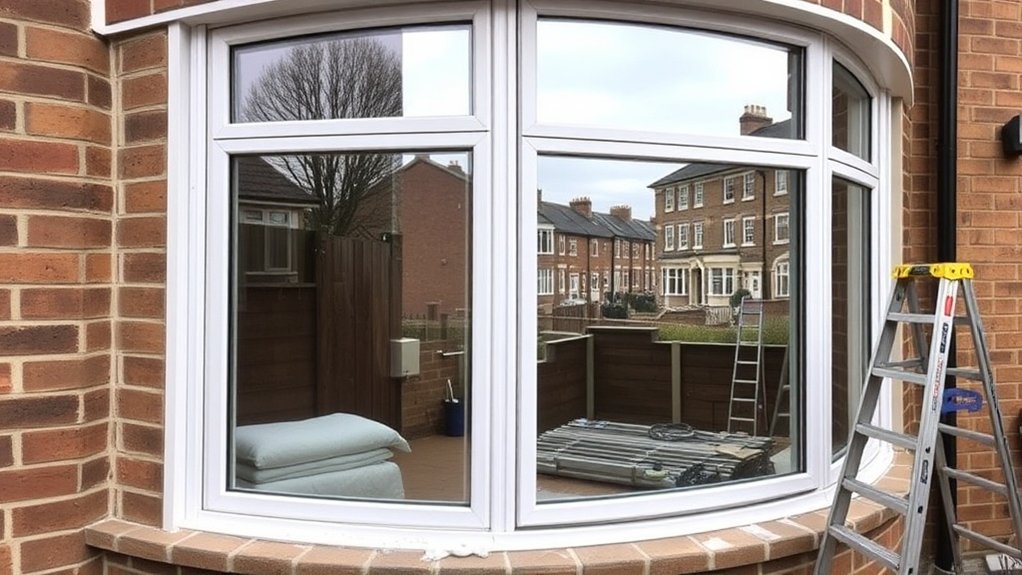
You install a bow window in London to gain more natural light , extra usable space, and a heritage-friendly feature that suits local architecture. A well-designed bow uses high-performance double or triple glazing, thermally broken timber or aluminium frames, and airtight installation to meet U-value and acoustic targets. You’ll also need to manage planning consent, structure, and access. Done properly, a bow window can markedly lift comfort, efficiency, and resale value, as you’ll see next.
Key insights
- Assess whether your London property, façade style, and planning constraints (especially conservation areas) allow a projecting bow window of the desired size and curvature.
- Choose appropriate frame materials—engineered timber, aluminium, or hybrid systems—balancing heritage appearance, maintenance needs, and thermal performance.
- Specify high‑performance double or triple glazing with Low‑E coatings, gas fill, and warm‑edge spacers to meet London energy and acoustic expectations.
- Use an installer experienced with structural checks, lintel support, weatherproofing, and airtight sealing for curved bow windows in London housing stock.
- Budget for full installation costs, including structural alterations, scaffolding, internal finishes, and any integrated seating or storage beneath the new bow.
What Is a Bow Window and How Is It Different?
Although many homeowners casually group them with other projection windows , a bow window is a distinct, curved arrangement of three or more window units that extends outward from your exterior wall to create a gentle arc. You typically see equal-sized, fixed or operable frames linked with slim mullions to maximise glass area and daylight.
You differentiate bow windows from bay windows by their continuous radius and higher unit count, which deliver softer geometry and broader viewing angles. Bow windows also carry Historical significance, evolving from Victorian façades that leveraged curvature for elegance and daylighting before modern glazing existed. Today, you gain advanced Design versatility: you can specify asymmetric configurations, integrated ventilation, high-performance glazing, and precision-engineered supports that align with contemporary façades and energy strategies.
Is a Bow Window Right for Your London Home?
When you assess whether a bow window suits your London home, you need to balance architectural context , performance targets, and planning constraints rather than just aesthetics. You’ll want to map the proposed curvature, projection, and frame depth against your façade’s existing lines, neighbouring properties, and local sightlines. In conservation areas, you must respect historical significance and cultural influences, aligning profiles, mullion patterns, and finishes with established street character.
Internally, evaluate how a bow window will reconfigure your floor plate, daylight factor, and thermal envelope. Consider whether you can integrate high‑performance glazing, discrete trickle ventilation, and under-sill insulation without compromising space. Finally, validate feasibility: check structural capacity, load paths, and service runs so the bow window enhances your home as a coherent, future-ready system.
Pros and Cons of Bow Window Installation in London
When you assess bow window installation for a London property, you need to balance architectural and aesthetic impact with practical performance. You’ll weigh how the feature enhances kerb appeal and natural light against maintenance demands, installation cost, and long-term durability in the city’s variable climate. By understanding these trade-offs, you can specify a bow window solution that fits both your design goals and lifecycle budget.
Architectural And Aesthetic Appeal
Even in London’s dense and varied streetscapes , bow windows immediately change how a façade looks and how a room feels. You’re not just adding glass; you’re re‑engineering the elevation. Their curvature softens rigid brick lines, increases perceived ceiling height, and creates a panoramic visual field that standard casements can’t match. They also reference the city’s historical significance and cultural influence, aligning contemporary performance with heritage character.
Internally, a bow window acts as a micro‑bay, delivering a deeper reveal for seating, planting, or display. You can use tailored mullion spacing, slimline frames, and asymmetric angles to align with modern or transitional schemes. The risk is visual overload on already complex façades, so you’ll need disciplined proportions, glazing ratios, and alignment with existing architectural rhythms.
Maintenance, Cost, And Durability
Although bow windows feel like a one‑time upgrade, their long‑term value in London hinges on how you balance maintenance demands, upfront cost, and service life. You’ll pay more than for a flat window because of the curved frame, structural supports, and bespoke glazing , but you gain usable space, daylight, and higher perceived property value.
To protect that investment, you need a defined cleaning schedule and proactive paint maintenance or cladding strategy. Self‑cleaning glass, powder‑coated aluminium, or composite frames minimise manual upkeep and resist urban pollution. Specifying trickle vents and robust seals helps keep condensation and mould off the internal reveals. With quality installation, reinforced supports, and high‑performance sealed units, you can expect several decades of service with only modest, planned interventions.
Planning Permission for Bow Windows in London
Before you commit to a bow window in London, you need to understand how planning rules , building regulations, and local conservation policies affect your project. In many historical neighborhoods, bow windows alter the principal elevation, so planners scrutinise design, projection depth, and materials for Building conservation compatibility. You’ll typically need planning permission if you’re changing the façade line, enlarging openings, or working on a flat or maisonette.
Start by checking your property’s status: listed, in a conservation area, or subject to an Article 4 Direction. Then review your council’s design guides and pre-application advice service. Submit scaled drawings, section details, and glazing specifications that demonstrate visual continuity and improved energy performance. Aligning aesthetics with measurable performance data considerably enhances approval prospects.
Structure and Building Regulations for Bow Windows
When you add or replace a bow window in London, you must first establish whether the existing wall is load-bearing and what structural support (such as steels or gallows brackets) is required. At the same time, you need to confirm the new glazing and insulation meet Building Regulations, especially Part L requirements for thermal performance and airtightness. You’ll also want to coordinate these structural and compliance decisions with any planning permission conditions already granted, so the final design satisfies both planners and Building Control.
Load-Bearing Wall Assessment
How do you safely turn an existing wall opening into a bow window without compromising your home’s structure or falling foul of London’s building regulations? You start with a rigorous load bearing assessment to confirm which elements transfer vertical and lateral forces. A structural engineer models these loads, then designs a new support strategy that preserves structural integrity while creating the projection you want.
Typically, they’ll:
- Analyse existing foundations, masonry, and floor/roof junctions to quantify current and additional bow-window loads.
- Specify steel or engineered-timber beams, posts, and connection details to redistribute loads around the enlarged opening.
- Produce calculations and drawings for Building Control approval and contractor use, including temporary propping requirements .
You then implement exactly to spec—no onsite improvisation.
Compliance With Part L
A robust load-bearing design is only half the job; your new bow window also has to meet Part L energy-efficiency requirements and wider London Building Regulations. You must limit heat loss through the curved façade while preserving the bow’s historical significance and cultural influence on the streetscape.
Specify high-performance glazing with low U-values , warm-edge spacers, and argon-filled units, then pair them with insulated cills, thermally broken frames, and airtight junctions at the head, jambs, and soffit. Detail continuous insulation beneath any projecting base and verify Psi-values at structural tie-in points.
You’ll also need accurate SAP or SBEM calculations to demonstrate overall compliance. By integrating thermal modelling early, you can push for innovative forms and slimmer sightlines without compromising Part L performance.
Planning Permission Considerations
Because bow windows alter both structure and streetscape, you have to treat planning permission and Building Regulations as parallel, not sequential, hurdles. In London, planners care about load paths, projection into the public domain, and how your design engages with historical significance and regional styles, especially in conservation areas or listed buildings.
Plan your route strategically:
- Define structural intent: document openings, supports, and ties into existing masonry; show compliance with Part A and disproportionate collapse guidance.
- Contextualise aesthetics: supply elevations and 3D visuals that reinterpret local regional styles without pastiche, highlighting materiality and sightlines.
- Front‑load approvals: use a pre‑application meeting and submit coordinated structural calculations, U‑values, and installation details so planning, building control, and (if relevant) heritage officers can align early.
Where to Place a Bow Window in Your Home
When you’re deciding where to place a bow window in your London home, you need to balance structural feasibility, natural light, and how you actually use each room. Start by mapping the sun path against existing interior lighting: south- and south‑west‑facing elevations typically deliver the best daylight gains, while north‑facing bows offer softer, more consistent light.
Assess window placement relative to load‑bearing walls, joists, and existing services; you’ll often minimise structural intervention by aligning with existing openings and lintels. In living spaces, position the bow to frame your primary external view and create a defined seating or dining zone. In upper floors, use it to expand usable floor area, but check floor deflection limits and ensure compliant guarding solutions.
Bow Window Styles That Suit London Homes
Although bow windows share the same core geometry , specific configurations suit London’s varied housing stock and planning constraints in very different ways. You’ll want a style that respects historical architecture while elevating interior design performance and daylighting.
-
Victorian and Edwardian terraces Choose shallow 4- or 5-light bows that echo original bay proportions. Slim mullions and balanced sightlines preserve street rhythm and maximise glass area .
-
Georgian and stucco-fronted properties Opt for symmetrically glazed bows with restrained curvature. Align transoms with existing sash heights to keep façades coherent and planning-friendly.
-
Contemporary apartments and mews conversions Use bolder, wider-radius bows to create panoramic views and a sense of spatial expansion. Integrate seating, shelving, or workstation niches to turn the projection into a functional, high-value zone.
Best Bow Window Frame Materials for London
Once you’ve chosen a bow window style that suits your property, the frame material largely determines its thermal performance, longevity, and compliance with London’s planning expectations. For period streetscapes and historical architecture, engineered timber (with factory-applied micro-porous coatings) gives you authentic sightlines, excellent rigidity, and easier Listed Building or Conservation Area approvals.
If you want low‑maintenance performance , aluminium with thermal breaks offers slim profiles, high structural capacity, and strong resistance to urban pollution—ideal for larger bow projections. You can specify bespoke powder‑coat finishes to coordinate with contemporary interior design schemes.
For cost‑effective retrofits, modern uPVC profiles deliver reliable durability and integrated steel reinforcement, though bulkier sections may not suit fine façades. Hybrid timber‑aluminium systems balance warm interiors with robust external weather resistance.
Energy-Efficient Glazing for Bow Windows
When you’re planning bow window installation in London’s variable climate, you need to specify glazing that balances thermal performance, solar gain, and comfort. You’ll choose between double and triple glazing, specify low-E coatings with appropriate solar properties, and consider argon or krypton gas fills to reduce conductive heat loss. By comparing U-values and verified energy ratings, you can select a glazing configuration that lowers heating bills, reduces draughts, and meets local building performance expectations.
Double And Triple Glazing
As you plan a bow window installation in London’s variable climate , choosing between double and triple glazing becomes a key decision that directly affects thermal performance, comfort, and long-term running costs. You’re also working within façades that often carry historical significance and strong cultural influences, so your glazing choice must enhance efficiency without compromising architectural character.
Consider how each option performs in practice:
- Double glazing offers a proven balance of U‑value reduction, weight, and cost, ideal for most London retrofits and compliant refurbishments.
- Triple glazing pushes performance further, improving acoustic control and internal surface temperatures, valuable on noisy or exposed sites.
- For period-style bow windows, you might combine slimline double glazing with advanced frames, achieving contemporary performance while respecting original sightlines.
Low-E Coatings And Gas Fills
Why do some bow windows in London feel noticeably warmer and quieter than others, even with similar frames and glass thickness? In most cases, it’s the specification of Low-E coatings and gas fills . A high-performance Low-E layer reflects interior heat back into your room while allowing high visible light transmission, so you gain thermal comfort without dulling natural daylight.
You’ll typically pair this coating with argon or krypton gas fills between panes. These inert gases reduce convective heat transfer and dampen external noise, which matters on busy London streets. Specifying the right Low-E formulation also protects furnishings from UV fade and supports long-term glass durability. When you integrate these choices early in your bow window design, you lock in efficiency, comfort, and future-ready performance.
U-Values And Energy Ratings
Low-E coatings and gas fills only deliver their full benefit if the overall glazing specification achieves a strong U-value and energy rating . When you choose bow windows for a London property, you’re balancing architectural impact with thermal performance. U values measure heat loss (W/m²K): the lower the figure, the better your insulation and comfort.
To optimise performance, evaluate:
- Whole-window U values – Don’t just check centre-of-glass; frame, spacer, and installation detail must meet or exceed current Part L benchmarks.
- Energy ratings (A–G) – Target A or A+ to capture solar gain efficiently while controlling losses in winter.
- System integration – Specify warm-edge spacers, insulated frames, and airtight installation so the installed bow matches the designed performance, not just the brochure figures.
Bow Window Costs in London
Wondering how much you should really budget for a bow window in London?
You’ll typically see installed costs ranging from mid four figures for a compact three-section unit to markedly higher for oversized, fully bespoke systems. Pricing depends on frame material (uPVC, aluminium, timber), glazing specification, and the structural work required to respect surrounding historical architecture. High-performance triple glazing, integrated trickle vents, and acoustic laminates increase costs but can materially reduce energy loss and street noise.
You’ll also need to factor in finishing: exterior cladding, internal cills, plastering, and any integrated seating or storage that elevates your interior design concept. Complex curves, powder-coated aluminium, and conservation-grade detailing carry premiums, but they can future‑proof performance while aligning with planning constraints and long-term asset value.
Bow Window Installation Process: What to Expect
Once you’ve set a realistic budget, it helps to understand how a bow window is actually installed and what will happen on site. Your installer will survey structural loading, cavity depths, and sightlines so the new frame respects London’s historical architecture while introducing modern design performance.
-
Pre-installation – The team templates the opening , confirms lintel capacity, checks damp-proof courses, and orders the bespoke bow frame, cill, and insulated roof.
-
Removal and preparation – They remove the existing window, trim masonry, install structural supports or reinforced bay poles, and laser-check levels and plumb .
-
Fitting and sealing – They fix the bow frame, mechanically anchor it, inject expanding insulation, apply airtight tapes, and integrate lead flashing, ensuring U-value compliance , acoustic control, and a clean finish ready for internal trims and decoration.
Managing Disruption and Access in London Homes
Although a bow window installation is a major intervention in the fabric of your property, careful planning keeps disruption to a minimum and guarantees safe access in tight London streets. You’ll phase works to align with local parking rules, loading bay windows, and permitted delivery times, reducing downtime and neighbour impact.
Inside, you’ll isolate the work zone with dust barriers , floor protection, and temporary lighting so your interior lighting and daily circulation remain functional. Power tools run on planned circuits to avoid nuisance tripping. Externally, you’ll coordinate scaffold or access platforms to keep pavements clear and compliant.
During openings, you’ll specify interim sheathing and secure fixings so window security, weather resistance, and acoustic performance aren’t compromised overnight.
Choosing a Bow Window Installer in London
Managing disruption on-site only works if you appoint an installer who understands London’s constraints, from conservation area controls to restricted access streets. You need a specialist who reads the historical context of your façade, then engineers a bow window that satisfies planners while upgrading performance.
Look for an installer who:
- Demonstrates precise structural design , including load-path calculations, steel support specification, and verified ties into existing masonry, not just “like‑for‑like” swaps.
- Provides transparent material comparisons—timber, aluminium, composite—benchmarked for U-values, acoustic ratings, recyclability, and lifecycle cost, then models options against your priorities.
- Holds FENSA or equivalent certification, carries robust insurance, and offers digital project management : documented surveys, 3D visuals, and sequenced installation plans that reduce scaffold time, neighbour impact, and programme risk.
Maintaining Bow Windows in London’s Climate
Because London’s weather cycles relentlessly between driven rain, soot-laden air, and rapid temperature swings, you need a maintenance regime that treats your bow window as a critical façade component, not just a decorative feature. Inspect seals, gaskets, and drainage channels every six months; clear debris so standing water can’t track into the frame. Specify breathable, micro-porous coatings on timber to respect historical preservation while resisting urban pollutants.
Clean glass and frames with pH-neutral agents to avoid degrading sealants. Check hardware torque and hinge alignment so the curved assembly doesn’t rack under wind load. Manage interior humidity with trickle vents to prevent condensation in the cavity. Plan furniture placement to keep radiators, sofas, and blinds from restricting airflow or stressing the frame.
How Bow Windows Increase London Home Value
Few upgrades reshape both the performance and perceived value of a London property as effectively as a well-designed bow window . By projecting outward, a bow window expands usable floor area, optimises natural Interior lighting, and reframes key elevations, all of which surveyors and buyers translate into higher valuations.
You don’t just gain glass; you gain a premium architectural feature that supports flexible furniture placement, improved thermal performance, and stronger kerb appeal in competitive London postcodes.
-
Perceived Space & Layout – The curved projection creates a breakout zone for seating, storage, or a compact workstation without reconfiguring structural walls.
-
Daylight & Energy Profile – Multi-panel glazing increases daylight penetration, reducing reliance on artificial lighting.
-
Façade Impact – A precisely detailed bow window elevates street presence, signalling quality upgrades throughout.
Frequently Asked Questions
Can I Convert an Existing Flat Window Into a Bow Window?
Yes, you can, but you’ll need structural assessment first. A bow window projects outward, so you must re-engineer the window framing to carry additional loads and meet structural codes. You’ll also upgrade Glass durability to handle increased surface area, thermal stress, and safety requirements. Work with a specialist who can calculate loads, specify laminated or toughened units, and integrate insulation for high-performance, innovative envelope design.
How Long Does a Typical Bow Window Last Before Needing Replacement?
You can expect a typical bow window to last 25–35 years before replacement, though materials age at different speeds, like instruments in a symphony. High-spec uPVC or fiberglass boosts window durability, while timber demands stricter maintenance. To optimize your replacement timeline, specify low-expansion foam, warm-edge spacers, and high-performance seals, then schedule periodic inspections every 3–5 years to catch seal failure, sash distortion, or frame movement early.
Are Bow Windows Suitable for Listed or Conservation-Area Properties?
Yes, you can use bow windows in listed or conservation-area properties , but you must align with the original Architectural styles and comply with strict Building regulations. You’ll typically need planning and listed-building consent, detailed drawings, and material specifications. Opt for slimline double or vacuum glazing, heritage profiles, and bespoke framing to replicate sightlines. Work with a conservation-accredited designer and installer to future‑proof performance while preserving historic character.
Can Bow Windows Be Combined With Integrated Blinds or Shutters?
Yes, you can combine bow windows with integrated blinds or shutters, and they’ll operate like a finely tuned instrument. You specify sealed units with cavity-fit blinds or frame-mounted shutters, aligned to sash geometry. This preserves clean sightlines, supports advanced interior decor, and boosts energy efficiency by reducing solar gain and winter heat loss. For innovation-focused projects, you can integrate motorised control, solar-powered drives, and smart-home connectivity for precise daylight and privacy management.
Do Bow Windows Affect My Home Insurance Premiums in London?
Yes, bow windows can affect your home insurance premiums in London. Insurers assess glazing area, security hardware, and installation quality when calculating Insurance implications and potential Premium adjustments. If you specify laminated or toughened glass, multipoint locks, and accredited installation, you’ll typically mitigate risk and sometimes avoid increases. Always notify your insurer pre-installation, submit technical specs, and request a revised risk assessment to optimise cover and control long‑term costs.
Summary
In the city’s brick-and-glass library, your home is a key chapter, and a bow window is a carefully engineered illustration in the margin—subtle, but transformative. When you assess structure, permissions, thermal performance, and installation quality, you’re not just adding glass; you’re calibrating light, airflow, and value. Choose your installer like an architect chooses a load path, and your new bow window will frame London itself as a calm, efficient, future‑proofed panorama.