
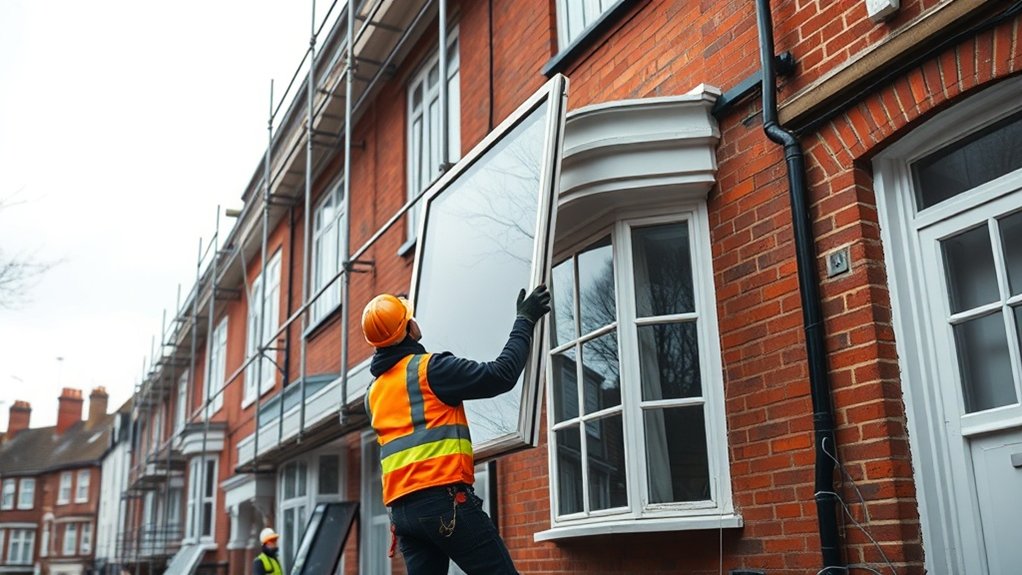
You install triple glazing in London to cut heat loss, tame traffic and aircraft noise, and boost comfort in front rooms facing busy streets. It works best when you pair low‑U‑value units with good airtightness, insulated reveals, and smart ventilation. You’ll pay around 15–25% more than for high‑spec double glazing, so it’s most cost‑effective in noisy or exposed locations. If you want to know when it genuinely pays back in London homes, you’re in the right place.
Key insights
- Triple glazing in London is most worthwhile for homes near rail lines, flight paths, or busy roads, where noise and heat-loss reduction are priorities.
- Check that existing frames can support heavier triple-glazed units, or budget for new reinforced frames, deeper profiles, and compatible hardware.
- Use installers who are FENSA or Certass registered, provide detailed written specifications, and document thorough pre-installation surveys with photos and measured drawings.
- Model cost-effectiveness by comparing the 15–25% higher cost to expected energy savings, comfort gains, and improved resale value using London-specific climate and tariffs.
- Ensure proper installation with airtight perimeter sealing, insulated reveals, and smart ventilation to maximise thermal, acoustic, and condensation performance.
Is Triple Glazing Worth It in London Homes?
Although London’s climate is relatively mild, triple glazing can still be worth it in specific scenarios, depending on your property type, existing insulation, and performance goals. You’ll see greatest value when you target airtightness, thermal bridging, and acoustic control as part of a whole-envelope strategy, not as a stand‑alone upgrade.
You should prioritise triple glazing in homes near rail lines, flight paths, or dense traffic, where high dB reduction materially improves comfort. For period properties, you can specify slimline triple units designed for historical preservation, integrating with existing sightlines and minimizing impact on interior aesthetics. When you pair low‑U‑value triple glazing with insulated reveals, smart ventilation, and airtight tapes, you disclose measurable reductions in heat loss, drafts, and internal surface condensation risk.
Triple vs Double Glazing in London’s Climate
While triple glazing often looks superior on paper, its real advantage over double glazing in London’s mild, maritime climate depends on how you balance thermal performance , noise control, cost, and installation quality. You’re not fighting extreme cold, so the marginal U‑value improvement can be modest relative to extra expense.
You should first analyse your building’s heat‑loss profile , orientation, and prevailing wind exposure. In highly glazed elevations, optimised glass thickness combinations and warm‑edge spacers often narrow the gap between high‑end double and standard triple units. Triple glazing becomes more compelling on busy routes, where asymmetric glass thickness and a third pane significantly reduce traffic noise.
Your window style also matters: heavier triple units load hinges and frames, so specify reinforced profiles and high‑spec fixings.
Benefits You’ll Notice With Triple Glazing in London
Once you move beyond performance charts and into day‑to‑day living, triple glazing in London delivers benefits you can actually feel: steadier indoor temperatures, lower draughts near windows, and noticeably quieter rooms facing busy streets or flight paths.
You gain measurable energy efficiency because the extra pane and wider cavities reduce conductive and convective heat loss, especially when combined with low‑E coatings and argon or krypton gas fills. Surface temperatures on the inner pane stay closer to room temperature, so you can specify bolder glazing areas without creating cold zones.
Noise reduction is equally tangible. The additional glass layer, asymmetric pane thicknesses, and optional acoustic laminates disrupt sound transmission paths, helping you hit stricter dB targets in high‑exposure London locations.
Drawbacks and When Triple Glazing Isn’t Ideal in London
Even with its clear performance gains , triple glazing isn’t automatically the best specification for every London property, budget, or elevation. You add weight to existing frames, reduce solar gain, and increase material costs, which may not pay back in marginal energy efficiency gains on milder, sheltered streets.
You’ll especially question triple glazing when:
- Structural limits – Old timber sashes or slender aluminium systems may not support heavier units without costly reinforcement.
- Aesthetic impact – Thicker sightlines, chunkier beads, and deeper frames can conflict with slim heritage proportions or contemporary minimalism.
- Performance trade‑offs – On south‑facing façades, lower solar gain can actually increase winter heating demand.
In these cases, high‑spec double glazing or selective upgrades can deliver a better-balanced solution.
Pre‑Installation Checks for London Homes
Before you order triple glazing , you need to assess whether your existing window frames can structurally support the extra weight and meet current thermal performance standards. You’ll also need to plan how you’ll maintain adequate ventilation, especially in airtight London properties where condensation and indoor air quality are concerns. Finally, you should map out clear access routes for installers and confirm any constraints posed by narrow streets, upper floors, or restricted scaffolding space.
Assessing Existing Window Frames
Although triple glazing delivers major performance gains, it can only do so if your existing window frames are structurally sound, correctly aligned, and compatible with the new units. You’ll need to evaluate window frame integrity first, checking for deflection, rot, corrosion, and joint failure. Assess existing window materials—timber, aluminium, uPVC—because each responds differently to additional glass weight and deeper profiles.
Focus your survey on:
- Frame geometry : verify squareness, level, and plumb using a spirit level and diagonal measurements.
- Fixings and substrate: inspect anchors, brickwork, or concrete for pull‑out risk under higher sash loads.
- Rebate depth and width: confirm they can accommodate thicker triple‑glazed units without compromising gaskets, drainage paths, or thermal breaks.
Planning Ventilation And Access
How do you maximise triple glazing performance without creating stuffy rooms or awkward maintenance? You start by mapping airflow. Cross‑reference room sizes, occupancy, and use with current UK ventilation standards, then decide whether trickle vents, mechanical extract, or a whole‑house MVHR system gives you the best balance of airtightness and air quality. Specify vent locations to avoid cold draughts while preserving acoustic performance.
Next, address access considerations. Model how each sash will open once the deeper triple‑glazed units are installed: check clearance against reveals, blinds, radiators, and external features. For upper floors, plan safe cleaning and egress routes, complying with fire‑escape guidance. Integrate easy‑clean hinges, restrictors, and removable beads so future maintenance doesn’t compromise the glazing system.
Triple Glazing Installation: What Happens
Once you’ve approved your quote and specification, the triple glazing installation follows a structured, step‑by‑step process designed to protect your property and guarantee airtight, thermally efficient results. Technicians first survey exact openings, confirm window thickness, hardware positions, and glazing color, then schedule works to align with access and noise constraints.
They remove existing frames, prepare the openings, then position new frames using calibrated packers and laser levels for precise squareness and load transfer. Next, they insert triple glazed units, checking edge clearances and gasket compression .
Key stages typically include:
- Subframe fixing, frame alignment, and mechanical anchoring.
- Perimeter sealing with multi‑stage membranes and low‑expansion foam.
- Internal finishing, trim installation, and final air‑tightness and operational testing.
How to Choose a London Triple Glazing Installer
Because London’s glazing market is crowded and quality varies considerably, you need a structured way to evaluate installers against clear technical and compliance criteria. First, verify they’re FENSA or Certass registered and can provide digital certification for Building Regulations. Ask for detailed specifications on frame systems, spacer technology, gas fill, and coatings, then challenge them on material durability under London’s pollution , UV exposure, and wind loading.
Interrogate their fixing methods: anchoring patterns, sealant systems, and interface detailing with your existing fabric. Demand written installation warranties that differentiate between product, glass unit integrity, and workmanship, with explicit terms on call‑outs and remedial timelines. Finally, request project references with similar property types and performance targets, and insist on pre‑installation surveys documented with photos and measured drawings.
Triple Glazing Costs, Savings and Payback in London
Although triple glazing carries a clear performance advantage over older double glazing, its financial case in London depends on upfront capital cost , your property’s heat‑loss profile, and local energy tariffs. You’re typically looking at a 15–25% premium over high‑spec double glazing, driven by extra glass weight, deeper frames, and higher‑performance spacers.
To evaluate payback, you should model:
- Capex vs. fabric performance – integrate U‑values with wall/roof upgrades to avoid overspecifying glazing.
- Operational savings – simulate reduced heat loss and gains using London‑specific weather data and your actual tariffs.
- Non‑energy value – monetise improved Energy efficiency ratings, Acoustic insulation, and comfort, plus potential uplift in resale value and future‑proofing against stricter Part L requirements.
Frequently Asked Questions
Can I Get Planning Permission Issues With Triple Glazing in London Conservation Areas?
You can face planning issues in conservation areas , yes. You’ll usually need consent if windows alter appearance, profiles, or glazing depth, even when targeting noise reduction and energy efficiency. Check if the property’s listed; rules are stricter. You should propose slimline triple glazing, matching sightlines, putty lines, and materials. Engage a conservation officer early, submit detailed sections, U‑values, and acoustic data to demonstrate minimal visual impact with high performance.
How Does Triple Glazing Affect the Appearance of Period or Listed London Properties?
It can subtly alter sightlines, reflections, and frame proportions , so you’ll need to actively manage Aesthetic impact to protect Historical authenticity. You typically specify slimmer profiles, true or applied glazing bars, and putty‑style detailing to emulate original sashes. You’ll also choose low‑iron outer panes and warm‑edge spacers to minimise visual distortion. With bespoke joinery and heritage-approved finishes, you can integrate high-performance units while keeping façades visually consistent.
What Maintenance or Cleaning Routines Do Triple Glazed Windows in London Require?
You’ll maintain triple glazed windows with minimal effort: quarterly cleaning frequency, annual checks. Picture a smart home in Shoreditch: you use a pH‑neutral glass cleaner, microfiber cloth, and soft squeegee, protecting glass durability and coatings. Clean frame drainage channels yearly, inspect perimeter seals for fogging, and lubricate hinges/locks with silicone spray. Avoid abrasives and pressure washers; they’ll damage seals and reduce thermal and acoustic performance over time.
Are There London‑Specific Building Regulations for Replacing Old Sash Windows With Triple Glazing?
Yes, you must meet London‑specific rules: Building Regulations Part L (thermal performance), Part F (ventilation), and often conservation‑area or listed‑building consents. You’ll need compliant U‑values, trickle ventilation, and like‑for‑like window aesthetics on street façades. Factor in higher installation costs for bespoke triple‑glazed sashes and potential secondary glazing. Engage an FENSA‑registered installer and consult your borough’s planning portal to align innovative designs with regulatory and heritage constraints.
Can I Install Triple Glazing in a Flat With a London Leasehold or Shared Freehold?
You usually can, but you’ll need to navigate some critical steps first. In a leasehold or shared freehold, you must check the lease’s alterations clause, then secure freeholder or management company consent in writing. Confirm windows aren’t demised to the building. Align your triple glazing spec with Energy efficiency and Noise reduction targets, plus FENSA/Building Regulations compliance . Document U-values, acoustic ratings, and installation method to overcome objections and future‑proof approval.
Summary
Triple glazing in London isn’t just “overkill” for cold climates. With Heathrow flight paths, busy A-roads, and rising energy costs, you’ll feel the difference in quieter rooms , warmer surfaces, and more stable internal temperatures. Once you’ve checked frame suitability, ventilation, and installer accreditation, it becomes a targeted upgrade, not a gamble. Over time, reduced heat loss, improved acoustic performance, and better comfort levels make triple glazing a technically sound, future‑proof choice for your London home.