You install wooden windows in London by first checking if you need planning permission or conservation consent, then accurately surveying openings, moisture levels, and structural integrity. You choose compatible timber (e.g. Accoya, engineered oak), appropriate glazing, and microporous coatings, then use vapour-permeable membranes, drained rebates, and precise fixing to manage movement and moisture. Regular inspections and recoating protect against pollution and UV. Next, you can see how styles, costs, and maintenance choices affect long-term performance.
Key insights
- Check if planning permission or conservation area consent is needed, especially for listed buildings or changes to window style, size, or glazing pattern.
- Choose timber species, window style (sash/casement), and glazing (double or slimline) to balance heritage character with thermal and acoustic performance.
- Ensure installers survey structure, measure accurately, manage tolerances, and use vapour-permeable membranes, drained rebates, and proper sill flashings.
- Prioritise microporous finishes and regular maintenance (inspection and recoating) to prevent moisture damage, joint failure, and reduced lifespan.
- Use FENSA-registered or similarly accredited London installers experienced with period properties, Article 4 areas, and detailed joinery replication.
Step-By-Step Plan for Timber Window Installation in London
Before you begin fitting new timber windows in London, establish a clear, methodical installation plan that covers assessment, measurement , preparation, fitting, sealing, and final inspection. First, survey each opening: check squareness, structural integrity, and moisture levels. Then record precise measurements, allowing tolerances for packers, insulation, and movement.
Next, pre-finish frames and sashes with your chosen timber finish, sealing all edges, including concealed surfaces. Pre-assemble and test all window hardware to verify smooth operation and security performance.
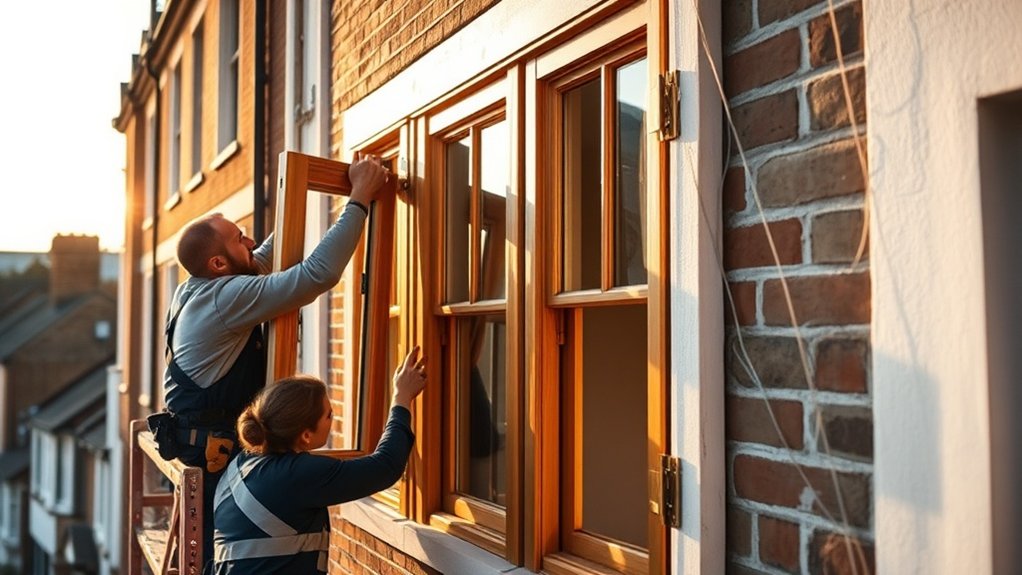
On installation day, remove old units, prepare reveals, and install membranes or tapes. Position the new frame with lasers, then mechanically fix through structurally sound zones. Fill gaps with compatible insulation, apply air- and weather-tight tapes or sealants, and re-check hardware functionality, drainage paths, and surface protection.
Planning Permission and Conservation Rules in London
Before you specify or order new wooden windows, you must confirm whether your project triggers planning permission under current London and national regulations. You’ll assess factors such as changes to window style, materials, glazing pattern, and openings, then check these against your local authority’s criteria and Article 4 Directions . If your property sits in a conservation area or is listed, you’ll follow additional rules that tightly control alterations to external appearance, requiring you to match original profiles, sections, and sightlines as closely as possible.
When Planning Permission Applies
Although window replacement may look like a straightforward upgrade, London’s planning rules treat external alterations to a building’s appearance as “development,” which can trigger a requirement for planning permission . You’ll usually need consent when you alter window dimensions, change the opening configuration, or modify the frame material in a way that notably changes the façade.
You must also apply if you replace uniform window patterns on elevations visible from the street, even with high‑performance timber units. Where historical preservation is relevant, planners assess glazing profiles, mullion proportions, and joinery details against the building’s original character. For environmental sustainability upgrades, such as triple glazing or integrated ventilation trickle vents, you should evidence performance gains while demonstrating minimal visual impact. Always verify constraints via your borough’s planning portal.
Rules For Conservation Areas
When your property sits within one of London’s many conservation areas, window replacement falls under tighter control because councils must preserve or enhance the area’s “special architectural or historic interest.” Any change to window style, frame profile, glazing pattern, or opening method visible from the public sphere is scrutinised against adopted conservation area appraisals and design guides.
You must first check if an Article 4 Direction removes permitted development rights; if so, you’ll need planning consent even for like‑for‑like swaps. Specify timber species, section sizes, and joinery details that replicate original vintage designs while integrating concealed performance upgrades. To introduce modern aesthetics, you should keep external sightlines and proportions identical, placing innovation in hidden layers: slimline double glazing, acoustic laminates, and advanced draught‑proofing systems.
Matching Timber Windows to London Property Styles
To match timber windows effectively to London property styles, you must assess the building’s architectural period, façade composition , and original joinery details before specifying any product. Evaluate brick bond, stone dressings, lintel geometry, and sill profiles, then calibrate frame depths, sightlines, and glazing bar patterns to align with these fixed parameters. Prioritise eco friendly materials and modern design detailing that remain visually compatible with historic fabric.
- Identify typology precisely: Georgian terrace, Victorian villa, Edwardian mansion block, inter‑war suburban, or post‑war infill, then map typical mullion spacing and pane hierarchy.
- Measure existing reveals, head heights, and masonry openings to define exact frame sections and tolerance gaps.
- Coordinate finish: select stains, microporous paints, and ironmongery that reference local streetscape precedents.
Sash, Casement or Bespoke: Choosing Your Window Style
How do you decide whether a sash, casement or fully bespoke timber window best suits a London property? Start by mapping window style to façade geometry, opening requirements and planning context . Sash windows deliver vertical operation, balanced sightlines and vintage charm ideal for period terraces. You’ll prioritise slim meeting rails, concealed weights or spring balances, and fine glazing bars to maximise glass area.
Casement windows suit deeper reveals and high-performance sealing . Specify friction hinges, multi-point locking and controlled ventilation gaps for airtight yet responsive operation.
Choose a bespoke solution when existing openings are irregular, you’re integrating smart shading, or you need hybrid performance and modern aesthetics. Combine fixed, sash and casement modules, aligning mullions with internal layouts and external rhythm for coherent design.
Timber Types That Work Best for London Homes
Now you need to select timber species that match London’s specific performance demands, not just appearance. You’ll compare options like engineered softwood, oak, and accoya regarding density, stability, and resistance to moisture and pests . Assess each timber’s durability in an urban climate with high pollution, driving rain, and temperature swings so your windows maintain structural integrity and finish over time.
Best Timber Species
What timber species actually perform best in London’s climate and housing stock? You’ll get the best performance by aligning species, timber grain , and coating systems with your façade exposure and insulation targets.
-
Engineered European Oak – Choose quarter-sawn or engineered sections for stable grain and sharp detailing. It machines cleanly for slim frames and high-spec ironmongery, and accepts advanced eco friendly treatments that reduce solvent load.
-
Accoya (Modified Radiata Pine) – Use where you want ultra-precise tolerances and minimal movement. Its uniform grain suits micro-profile gaskets and triple glazing.
-
Red Grandis or Laminated Redwood – Specify laminated, defect-free stock for consistent density and efficient CNC machining. These species pair well with water-based, eco friendly treatments, enabling thinner, high-performance coating films and reduced maintenance.
Durability In Urban Climate
In London’s dense, pollution-heavy microclimate, timber durability depends less on “hardness” and more on dimensional stability, moisture resistance, and coating compatibility. You must choose species that limit swelling–shrinkage cycles while tolerating Urban pollution and fine particulate deposits.
Prioritise engineered softwoods such as laminated Scandinavian pine or modified timbers (acetylated or thermally modified wood). They’re dimensionally stable, accept high-performance coatings uniformly , and reduce maintenance frequency. For premium frames, consider dense hardwoods like oak only when you can control moisture with deep rebates, ventilated glazing, and end-grain sealing.
To optimise Material sustainability, specify FSC- or PEFC-certified stock, low-embodied-carbon treatments, and factory-applied microporous coatings. Combine these with drained-and-vented glazing systems and you’ll extend service life significantly in London’s demanding urban climate.
Single vs Double vs Triple Glazing for Timber Windows
Although all three glazing options fit within traditional timber frames, single, double, and triple glazing perform very differently in regards to thermal efficiency , acoustic control, weight, and cost, so you need to specify them carefully at design stage. For London, you should treat Energy efficiency and sound insulation as primary performance drivers.
-
Single glazing Use only where regulations permit minimal performance. It’s light and inexpensive but offers poor U‑values, minimal sound reduction, and higher risk of surface condensation.
-
Double glazing Adopt this as your baseline. Specify low‑E coatings, warm‑edge spacers, and argon fill to optimise heat loss and acoustic attenuation without overloading sashes.
-
Triple glazing Deploy selectively. It improves U‑values and noise control but increases unit thickness, weight, hinge loads, and installation complexity, demanding robust timber sections and high-spec ironmongery.
Heritage Character vs Modern Performance: Finding the Balance
Because London’s planning controls often prioritise historic streetscapes, you need to reconcile conservation expectations with modern thermal, acoustic, and security performance when detailing timber windows. Start by mapping the existing sightlines: measure stile, rail, and glazing-bar dimensions, then specify new sections that replicate profiles while accommodating high-performance glazing units.
To satisfy Historic preservation goals and architectural harmony, you should retain traditional putty lines, sash proportions, and horn details, yet deploy engineered timber , concealed trickle vents, and low-iron, low‑E glass. Use slimline double or vacuum glazing where rebates are shallow. Integrate brush and compression seals within parting and staff beads to upgrade airtightness without altering external appearance. Finally, design ironmongery with traditional forms but multi-point or enhanced locking cores.
Choosing a Reliable Timber Window Installer in London
When you select a timber window specialist in London, you should first verify their credentials, certifications, and compliance with relevant British Standards and FENSA or equivalent schemes. You’ll then compare itemised quotations, ensuring they specify timber species, glazing specification, hardware, finishes, installation method, and waste removal. Finally, you should analyse warranty terms in detail, checking coverage periods for frames, glazing, and workmanship, as well as response times and documented aftercare procedures .
Checking Installer Credentials
Before you sign a contract with any timber window installer in London, you need to verify that their credentials match the technical demands of the job. Start by interrogating installer credentials against recognised UK certification standards and London-specific regulations on thermal performance and conservation areas.
Check three core dimensions:
- Confirm registration with bodies such as FENSA or CERTASS and verify membership numbers against official databases.
- Request evidence of manufacturer-approved training for the specific timber systems, glazing technologies, and hardware you’ve specified.
- Assess competency in airtightness detailing, moisture management, and PAS 24 or Secured by Design compliance, asking for project case studies with performance data.
Document everything digitally so you can benchmark each installer’s technical capability.
Comparing Quotes And Warranties
Once you’ve shortlisted technically competent installers, you need to dissect their quotes and warranties line by line rather than comparing only the headline price. Build a structured quote comparison table: list timber species, glazing spec (U‑values, g‑values, coatings), hardware grade, paint system, seals, ventilation, and installation method . Identify what’s included: survey, making‑good, scaffolding, waste removal, decoration, and call‑backs.
Interrogate warranty coverage in detail. Separate frame, glazing unit, coatings, and ironmongery durations, and check whether labour is included for remedial works. Confirm who underwrites the warranty (installer vs manufacturer vs insurance‑backed scheme) and how transferability works on resale. Ask for example warranty claim workflows and response time SLAs. Prioritise installers whose documents are specific, measurable, and digitally trackable .
What to Expect During a London Timber Window Installation
Although each property is different, a typical London timber window installation follows a defined, methodical sequence that you can anticipate and plan around. Installers first survey reveals, check structural integrity, and confirm sightlines so frames align with your interior design intent and long-term energy efficiency goals.
-
Remove existing units: Fitters protect adjacent finishes, de-glaze sashes, and carefully detach frames, avoiding damage to masonry, plaster, and services around the openings.
-
Prepare and position frames: They level, pack, and temporarily fix new timber frames, verifying squareness with lasers and confirming ventilation and safety-compliance clearances.
-
Seal , insulate, and finish: Low-expansion foam and airtight membranes minimise thermal bridging; external sealants and internal trims are installed, then ironmongery, trickle vents, and security hardware are calibrated and tested.
Costs of Timber Window Installation in London
Several interlocking factors determine what you’ll actually pay for timber window installation in London, and you should break them down methodically before commissioning work. First, specify frame material: engineered softwood typically costs less than hardwoods, but hardwood may align better with historical architecture requirements. Next, quantify glazing performance ; double or triple glazing, warm-edge spacers, and low‑E coatings increase upfront cost yet improve urban sustainability through reduced heat loss.
You should also itemise labour: London installers may charge per unit, per day, or per metre of frame, with surcharges for access issues, scaffold, or restricted streets. Factor planning approvals and conservation-area surveys into your budget. Finally, include finishing, ironmongery, and integrated security or acoustic upgrades, which materially affect total lifecycle cost .
Maintaining Timber Windows in London’s Climate
Why do well-installed timber windows in London sometimes deteriorate faster than expected? Moisture cycling, airborne pollutants, and UV exposure attack coatings and joints, especially on south- and west-facing elevations. To keep performance aligned with innovative design and historical preservation goals, you need a structured maintenance regime.
-
Inspect quarterly Examine sill horns, lower rails, and glazing putty for micro-cracks, joint movement, and coating failure. Record defects systematically.
-
Control moisture Maintain clear drip grooves, weep holes, and ventilation gaps. Keep junctions with masonry well-sealed using vapour-permeable sealants to avoid trapped moisture.
-
Maintain coatings Lightly sand and recoat every 3–5 years using microporous paint or oil systems. Prioritise edges and end-grain; seal any exposed timber immediately to prevent fungal ingress.
Common Timber Window Mistakes to Avoid in London
Even when you specify high-quality joinery, a handful of recurring mistakes will shorten the service life of timber windows in London’s harsh urban climate. You underestimate moisture management: omitting drained and ventilated rebates, vapour-permeable membranes, and properly flashed sills leads to concealed decay .
You also mismatch coatings and substrates. For historical restoration, you might use brittle, non-breathable paints on softwood, trapping moisture. Instead, specify microporous systems compatible with eco friendly materials such as modified timber or engineered laminated sections.
Another error is poor tolerance planning. If you don’t allow for differential movement between frame, sash, and masonry, joints open, gaskets fail, and acoustic performance collapses. Finally, you neglect ironmongery specification, using ferrous hardware that corrodes rapidly in polluted, coastal air.
Frequently Asked Questions
How Do Timber Windows Impact My London Property’s Resale Value?
They typically increase your property’s resale value by improving performance and perceived quality. You leverage timber windows’ natural insulation for measurable energy efficiency gains, which future buyers can quantify via lower heating demands and improved EPC ratings. You also achieve aesthetic enhancement through slimmer sightlines, precise joinery, and customizable finishes that align with contemporary design expectations, helping your property differentiate in a crowded market and justify a premium sale price.
Are There Grants or Subsidies in London for Upgrading to Timber Windows?
You can access limited grants and subsidies through government incentives and local funding programs, but they’re fragmented. You should first check the ECO4 and Great British Insulation Scheme, then your borough’s climate-action grants. Prioritize timber windows with high-performance glazing and documented U-values to align with energy-efficiency criteria. Maintain invoices, product certifications, and installer credentials, so you can evidence carbon-reduction impact and maximize eligibility in future innovation-focused retrofit schemes.
Will New Wooden Windows Affect My Home Insurance Premiums?
They might, but it depends on risk profiling. You should notify your insurer, as new wooden windows can improve security yet require disciplined window maintenance. Emphasize enhanced locks, glazing specs, and documented professional installation. Insurers assess material durability, fire performance, and resistance to forced entry. Provide certificates (FENSA or equivalent) and warranties. If you implement sensors or smart locks simultaneously, you can sometimes negotiate neutral or even reduced premiums.
How Do Timber Windows Influence Indoor Noise Levels Near Busy London Roads?
You turn roaring traffic into a distant, slightly embarrassed mumble. Timber windows influence indoor noise by combining dense frames with advanced Soundproofing techniques: laminated acoustic glass, wider air gaps, and multi-chamber profiles. You specify high-performance Acoustic insulation in perimeter seals and cavities, then rigorously test for flanking paths. You’ll treat frames as modular acoustic systems, fine‑tuning glazing thickness, spacer type, and seal compression to engineer a custom urban sound barrier.
Can I Integrate Smart Locks or Sensors Into New Timber Window Frames?
You can integrate smart locks and sensors into new timber window frames if you plan the hardware from the design stage. Prioritise Smart lock integration by specifying reinforced keeps, concealed cabling routes, and compatible multipoint locking gear. For Sensor compatibility, select low-profile magnetic or reed sensors rated for timber substrates and double-glazing rebates. Make certain you coordinate power supply, wireless protocols (Zigbee/Z-Wave/Wi‑Fi), and drainage/vent paths to avoid signal attenuation or moisture damage.
Summary
You’re now ready to plan a precise, regulation-compliant timber window installation in London—from permissions and profiles to timber species and ongoing maintenance. Done correctly, high‑performance timber windows can cut heat loss by up to 40% compared with old single glazing, while preserving your property’s character. Use detailed measurements, confirm conservation requirements in writing, specify factory finishing, and schedule regular inspections so your new windows deliver efficiency, durability, and aesthetic value for decades.