
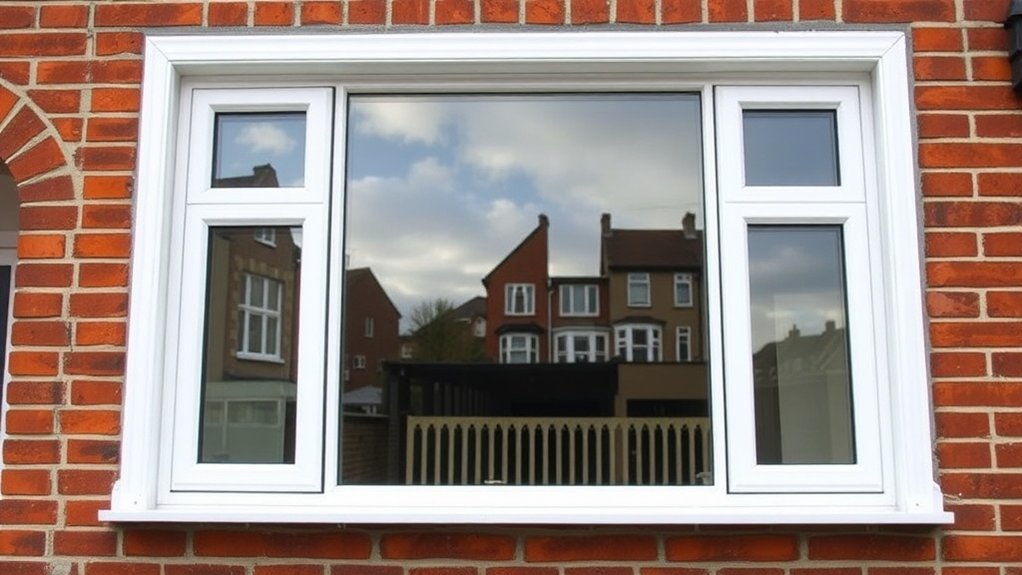
You install uPVC windows in London to gain measurable improvements in thermal efficiency , noise reduction, and security while meeting local regulations. High‑performance multi‑chamber frames, low‑E double or triple glazing, and quality gaskets reduce heat loss and road noise, while multi‑point locks and reinforced frames boost protection. A FENSA‑registered installer guarantees compliance, correct sizing, and clean detailing around brickwork and sills. From planning constraints to aftercare, there’s a lot more that can work in your favour.
Key insights
- Choose FENSA-registered London installers to ensure compliant uPVC window replacements that meet UK building regulations and provide certification for property sales.
- uPVC windows suit London’s climate, resisting moisture and warping while improving thermal efficiency, noise reduction, and security in urban properties.
- Plan designs in line with local conservation or heritage requirements, matching original sightlines, sash proportions, and finishes to ease planning approval.
- Expect a structured installation process: precise survey, careful frame removal, laser-checked fitting, secure fixing, and multi-layer perimeter sealing.
- Prepare your home by clearing 1.5–2m around windows, removing curtains and blinds, and protecting floors and furniture before installers arrive.
Why uPVC Windows Suit London Homes
Two factors make uPVC windows especially well‑suited to London homes: performance in a demanding urban climate and strict compliance with modern building standards. You deal with rapid temperature swings, particulate pollution, and frequent rainfall; uPVC profiles resist warping, corrosion, and moisture ingress, so frame tolerances and gasket compression remain stable over time.
You also navigate tight planning requirements, especially where Historical architecture dominates. Modern uPVC systems let you specify slim sightlines, mechanically jointed frames, and heritage‐style glazing bars , so you align with conservation expectations while upgrading the envelope. With advanced color customization, you can match RAL references, dual‑finish interiors/exteriors, and textured foils that replicate timber. This lets you coordinate façades, future‑proof maintenance cycles, and integrate new windows into complex refurbishment strategies.
Key Energy, Noise and Security Benefits in London
When you specify modern uPVC windows for your London property, you gain measurable performance improvements in thermal efficiency , acoustic attenuation, and resistance to forced entry. Multi‑chambered profiles, quality gaskets, and low‑E double or triple glazing help you cut heat loss, stabilise indoor temperatures, and reduce reliance on heating systems. At the same time, laminated or thicker glass, advanced locking mechanisms, and reinforced frames work together to limit urban noise intrusion and enhance your home’s security envelope.
Enhanced Thermal Efficiency
Ever wondered why high‑spec uPVC windows are so effective at stabilising London homes against cold, noise and intrusion? You’re leveraging a precisely engineered window frame system that minimises conductive and convective heat loss. Multi‑chambered uPVC profiles create air pockets, enhancing thermal insulation and reducing linear heat transmittance at junctions.
You specify low‑emissivity double or triple glazing , warm‑edge spacers and argon or krypton gas fill to cut U‑values markedly below older timber or aluminium units. High‑performance gaskets and precision‑machined seals eliminate draught paths, maintaining stable internal temperatures despite London’s variable climate.
When you integrate these components with correct installation tolerances and airtight tapes, you reduce heating demand, stabilise room comfort and future‑proof your property against stricter UK energy performance standards.
Reduced Urban Noise
Amid London’s constant traffic, rail lines and late‑night activity, high‑spec uPVC windows act as a controlled acoustic barrier that measurably reduces external noise intrusion into your living spaces. You benefit from multi‑chambered profiles, precision gaskets and tight compression seals that disrupt sound transmission paths and stabilise internal sound levels.
Improved Home Security
Beyond controlling noise, modern uPVC window systems also strengthen your home’s physical security by design. You gain multi‑point locking mechanisms , reinforced steel cores, and internally beaded glazing that prevents glass removal from the outside. When specified with laminated or toughened glass, uPVC frames create a barrier that resists forced entry and tool‑based attacks common in London burglaries.
You integrate these systems with smart sensors, keyless locks, and alarm contacts to align window protection with advanced door security, forming a unified perimeter. Essentially, you don’t sacrifice window aesthetics: slimline profiles, concealed hinges, and colour‑stable finishes maintain a clean façade while improving structural rigidity. By upgrading legacy timber or aluminium units, you close security weak points and standardise protection across every elevation.
Choosing uPVC Window Styles for London Properties
When you choose uPVC window styles for a London property, you need to balance architectural character, planning constraints, and performance requirements from the outset. You start by mapping window geometry to façade rhythm: sash-effect profiles for period terraces, slimline casements for post-war blocks, tilt-and-turn systems for contemporary infill schemes.
You then specify frame sections, mullion widths, and opening configurations to optimise light ingress, ventilation strategy, and safety egress. Decorative finishes and advanced color options let you replicate timber grains for conservation-sensitive streets while using darker, ultra-matte tones for modern elevations. You also evaluate hardware lines, sightline symmetry, and trickle vent integration to maintain visual coherence. Always verify your preferred style against borough planning guidance and any building management covenants before final selection.
Double vs Triple Glazing for London uPVC Windows
When you compare double and triple glazing for your London uPVC windows, you’re really evaluating how much thermal performance and acoustic control you need for your specific property conditions. You’ll want to weigh U-values, solar heat gain, and air leakage rates against local noise levels from traffic, rail, or flight paths. By matching the glazing specification to your building’s orientation and noise exposure, you can optimise both energy efficiency and sound reduction without overspending.
Energy Efficiency Comparison
How do you decide between double and triple glazing for uPVC windows in London’s mixed, often mild-but-damp climate? You start by comparing whole‑window U-values, not just glass specs. High-performance double glazing with low-e coatings and argon can reach ~1.2 W/m²K, while triple glazing can push below 1.0, but only if the window frame durability and thermal breaks match the glass performance.
Triple glazing reduces heat loss further, yet in London’s relatively moderate winters the payback can be marginal unless your property already has upgraded insulation. You’ll gain more by combining optimized cavity widths, warm-edge spacers, and selective glass tinting options that control solar gain without sacrificing visible light, ensuring your heating system runs shorter, smarter cycles.
Noise Reduction Benefits
Curiously overlooked in many window upgrades, acoustic performance can matter as much as thermal efficiency for London homes exposed to traffic, trains, or flight paths. When you compare double and triple glazing for uPVC windows, you’re really engineering your interior acoustics, not just adding glass.
Double glazing with asymmetric panes and laminated glass already delivers robust attenuation, especially when combined with purpose‑designed soundproofing materials in the frames and reveals. Triple glazing adds a third pane and a second cavity, improving reduction of mid‑ to high‑frequency noise, but offering diminishing returns against low‑frequency rumbles from buses or the Underground.
You should specify gas fill, cavity depth , and glass thickness strategically, then integrate perimeter sealing and trickle vents engineered for acoustic performance.
Energy Ratings and Cutting London Heating Bills
Why do energy ratings matter so much for uPVC windows in a city like London with high heating costs and variable weather? Because they quantify how effectively each unit resists heat loss and solar gain. You should target A-rated or better windows with low U-values, warm-edge spacers, and argon-filled double or triple glazing.
Start with detailed energy audits to model your building’s heat-loss profile, then align window specifications with planned insulation upgrades to walls and roofs. Look for frames with multi-chambered profiles and high-performance gaskets that minimise thermal bridging and air leakage. Specify coatings tuned to London’s climate: low‑emissivity layers that retain heat without causing overheating. By integrating these data-driven choices, you’ll systematically cut gas consumption and stabilise indoor temperatures year‑round.
Security Features to Look for in uPVC Windows
While high-performance glazing cuts your heating bills, the same uPVC units must also act as primary security barriers for a London property. You should specify multi-point locking systems with steel-reinforced frames and internally beaded glazing, so intruders can’t remove the glass from outside. Look for PAS 24 or Secured by Design accreditation to verify tested attack resistance.
Choose laminated or toughened glass on ground-floor and accessible windows; laminated interlayers resist impact and opportunistic entry. Hinges should be heavy-duty, with hinge-side security claws and locking handles with key-operated cylinders.
Integrate these features without compromising Interior décor by selecting low-profile hardware and colour-matched fittings. Finally, guarantee secure night-vent positions and easy-access hinges that support safe window cleaning from inside, without reducing locking performance.
London Planning Rules and Conservation Areas
Because London’s planning framework is stricter than many other UK regions, you need to treat uPVC window replacement as a regulated building alteration, not just a cosmetic upgrade. Local authorities assess proposals against conservation area appraisals, Article 4 Directions, and heritage impact , so you must map your property’s designation before specifying any profile.
In conservation areas, planners prioritise historic preservation, so they’ll scrutinise sightlines, sash proportions, glazing bar depth, and external bead profiles . You increase approval odds by selecting uPVC systems that replicate original timber sections, incorporate slimline double glazing, and match existing reveal depths.
Submit precise drawings, section details, and material samples with your planning permissions application, demonstrating how your design optimises energy performance while preserving the façade’s architectural rhythm.
FENSA and Building Regulations for uPVC Windows
When you replace uPVC windows in London, you must understand how FENSA certification proves compliance with current building regulations. You’ll need to guarantee your installation meets key technical requirements , including thermal performance (U-values), structural integrity, ventilation, safety glazing, and means of escape where applicable. By working with a FENSA-registered installer or following the local authority route, you can close off compliance risks and secure the correct documentation for future property transactions.
Understanding FENSA Certification
How do you know your new uPVC windows actually comply with UK building law and won’t cause problems later? You verify the installer’s Fensa certification. FENSA is a government‑authorised Competent Person Scheme that confirms your installer can self‑certify compliance when replacing external windows and doors in dwellings.
With Fensa certification, you receive a digital certificate after installation that proves legal compliance and is usually requested during property sales. It demonstrates the installer's work meets required performance benchmarks while preserving or enhancing window aesthetics, sightlines, and frame proportions.
You don’t need to liaise with Building Control or commission separate inspections; FENSA audits the installer’s work and technical processes. Always check the company’s FENSA registration number and confirm it directly on the official FENSA database before you sign.
Key Building Regulation Requirements
So what exactly do FENSA and Building Regulations require from new uPVC windows in London homes? You must balance energy efficiency, structural integrity, safety, and respect for historic architecture and modern urban aesthetics.
-
Thermal performance (Part L) Your uPVC windows must achieve specified U‑values and airtightness, using low‑E glazing , warm‑edge spacers, and insulated frames to minimise heat loss.
-
Safety and access (Parts B & K & M) You need compliant fire‑escape openings, safety glazing in critical zones, and accessible handle heights.
-
Ventilation (Part F) You must integrate trickle vents and opening configurations that meet background and purge ventilation rates.
-
Structure and appearance (Parts A & Q & local controls) Frames must resist wind load, provide security glazing/locking, and, in conservation areas , match profiles that protect historic architecture while complementing contemporary urban aesthetics.
uPVC Window Installation Costs in London
Several key variables drive uPVC window installation costs in London, and understanding them lets you benchmark quotes accurately and control your budget. You’ll primarily pay for three components: the window frame specification, the glazing performance , and the installation method.
Frame profiles with thicker multi‑chamber sections, reinforced with steel or composite inserts, cost more but deliver superior rigidity and thermal performance. Complex sash design choices—tilt-and-turn, oversized fixed lights, or shaped units—add hardware and fabrication time, increasing unit price.
Glazing upgrades (triple glazing, low‑E coatings, warm-edge spacers, acoustic laminates) raise costs but can reduce heating loads and noise, improving lifecycle value.
On-site factors—access constraints, structural alterations, disposal of existing units, and making-good of reveals—also influence your final installation price.
Comparing uPVC Window Companies in London
When you compare uPVC window companies in London, you should assess technical criteria such as profile systems , glazing specifications, hardware quality, installation accreditation, and warranty terms. You’ll also want to analyse whole-life cost by considering energy savings, maintenance requirements, repair responsiveness, and expected service life. This lets you select a contractor that offers not just a competitive quote, but also strong long-term value and performance stability.
Key Comparison Criteria
Although many London firms advertise similar products, clear comparison criteria help you distinguish a reliable uPVC window installer from a mediocre one. You’ll want to interrogate how each company specifies, engineers, and executes your project, not just what it costs.
- Technical specification – Assess window frame materials, reinforcement systems, multi‑chamber profiles, glazing options, and thermal/acoustic performance certificates.
- Installation techniques – Compare survey accuracy, fixings, packers, sealant systems, and compliance with BS 8213 and FENSA/Certass standards.
- Design and integration – Check CAD capability, tolerance planning for London brickwork, ventilation strategy, and compatibility with smart sensors or automated shading.
- Quality control and aftercare – Demand documented QA processes, photographic installation records, pressure-testing options, and structured maintenance/inspection schedules.
Evaluating Long-Term Value
Beyond comparing quotes and brochures, you need to evaluate how each London uPVC window company will perform over the 20–30‑year lifespan of the installation. Assess frame stability (multi‑chamber profiles, steel reinforcement), gasket performance , and spacer systems that minimise gas loss and fogging.
Check whether their products are tested for London’s pollution load, UV exposure, and acoustic demands near busy routes. For historical housing, confirm they can engineer slim profiles, authentic sightlines, and heritage-approved finishes while maintaining modern U-values.
Interrogate lifecycle costs: anticipated repainting (ideally none), hardware replacement cycles, and glass upgrade options. Compare warranty terms that explicitly cover colour stability, warping, and seals. Finally, guarantee they can adapt designs to varied architectural styles without compromising structural integrity or thermal performance.
Choosing a FENSA-Registered uPVC Window Installer
Selecting a FENSA-registered uPVC window installer in London is critical to ensuring your new units comply with current Building Regulations, deliver the specified thermal performance, and protect your legal documentation for future property sales. You’re not just buying windows; you’re buying certified installation, robust sign-off , and future-proof traceability.
- Verify their FENSA number against the official database and check their history of self-certified installations.
- Assess technical competence: ask about U-values, spacer technologies, and how they optimise material durability under London’s climatic loads.
- Examine design versatility: confirm they can integrate bespoke glazing, smart hardware, and low-visibility security features without breaching compliance.
- Demand a sample certificate, detailed written specification, and installation method statement to validate process control and regulatory alignment.
What to Expect From uPVC Window Installation in London
Once you’ve chosen a FENSA-registered installer , the installation itself follows a structured, technical process that you should understand before anyone’s on site. First, the team verifies measurements against your agreed window design, checking opening configurations, glazing specs, and hardware positions. They’ll then remove existing frames using controlled cuts to protect surrounding structure and services.
Next, they dry-fit the new uPVC frames , laser-check plumb, level, and square, and set precise expansion gaps. Mechanical fixings anchor frames into the substrate, then installers apply high-performance packers to optimise load transfer and sash operation.
They’ll seal perimeters with multi-layer systems, balancing airtightness, vapour control, and acoustic performance. Finally, they validate operation, drainage paths, and document material durability, U-values, and compliance for your records.
Preparing Your Home for Installation Day
Before your installers arrive, you should prepare the property so they can work efficiently, maintain tolerances, and protect finishes . Focus on giving them clear access to every opening so they can position the new window frames precisely and seal them without disruption.
- Clear a 1.5–2 m working zone around each window; move furniture , blinds, and fragile items to avoid impact or dust contamination.
- Remove curtains, pelmets, and any decorative finishes directly contacting existing frames to prevent damage during extraction.
- Protect floors and nearby joinery with heavy-duty dust sheets or self-adhesive floor protection, especially in circulation routes.
- Unlock access routes, gates, and parking so installers can move large window frames, tools, and sealed units without twisting or bending.
Common uPVC Installation Mistakes in London
Although uPVC systems are forgiving, London installations frequently fail because fitters ignore key technical details that directly affect performance and compliance. You’ll often see frames packed unevenly, creating racking forces that distort otherwise robust upvc design and compromise gasket compression.
Another chronic error is relying on generic installation tools instead of calibrated kit. Mis-set laser levels, worn masonry bits, and incorrect torque on frame fixings introduce micro-movements that degrade thermal and acoustic performance.
Installers also skip proper structural assessment of London’s mixed brick and block substrates, using anchors that don’t match cavity depth or masonry condition. To avoid this, insist on substrate pull-out tests , BBA-approved fixings, and documented setting-out data, including sightline, reveal offset, and drainage path verification before final sealing.
Aftercare, Maintenance and Warranties in London
Even with a flawless installation, uPVC windows in London only deliver design performance if you follow a structured aftercare and maintenance regime backed by a clear, enforceable warranty. You should specify maintenance in measurable terms: cleaning frequency, lubricant type, and inspection intervals for gaskets, hinges, and locking points. Confirm that both frames and decorative finishes are covered against discoloration and warping, especially under London’s pollution and UV exposure.
- Inspect perimeter seals quarterly ; replace any compressed or torn gaskets immediately.
- Clean profiles with pH‑neutral, eco friendly materials; avoid abrasives that degrade surface integrity.
- Lubricate hardware annually with silicone or PTFE-based products to maintain smooth operation.
- Demand written warranties defining duration, inclusions, transferability, and claim response times.
Frequently Asked Questions
Can I Install uPVC Windows in a Leasehold Flat Without Freeholder Permission?
You usually can’t install uPVC windows in a leasehold flat without freeholder consent. Your leasehold restrictions and any planning or building control rules create strict permission requirements. First, audit your lease for clauses on alterations and façade changes. Then, submit a detailed specification : profiles, U‑values, acoustic ratings, and drawings. Propose innovative, like‑for‑like aesthetics to reduce objections. Don’t proceed without written approval, or you risk enforcement and costly reinstatement.
How Do uPVC Windows Affect the Value and Saleability of London Properties?
They act like a precision-engineered visor on a spacecraft: they sharpen your property’s performance and market narrative. You boost value by quantifiably improving energy efficiency (lower U-values, reduced heat loss, better EPC rating) and by refining aesthetic appeal (clean sightlines, consistent finishes, modern hardware). You also enhance saleability through acoustic insulation, low-maintenance frames, and secure, multi-point locking—tangible innovations buyers can verify, compare, and cost-justify during due diligence.
Are There Sustainable or Recycled uPVC Options Available From London Suppliers?
Yes, you’ll find sustainable or recycled uPVC options from innovative London suppliers. They specify high‑grade profiles containing post‑consumer recycled materials in the core, with virgin uPVC on external faces for durability and colour stability. You can also request eco friendly manufacturing credentials: ISO 14001 plants, closed‑loop water systems, lead‑free stabilisers, and take‑back schemes for old frames. Ask for Environmental Product Declarations and recycled content percentages in writing.
What Disruption and Access Issues Arise in High‑Rise London Apartment Installations?
You’ll face vertical access limits , scaffolding challenges, strict lift loadings, and tight working windows due to leaseholder and building‑management rules. Installers must sequence works stack‑by‑stack, pre‑fabricate units, and use mechanical hoists or MEWPs where feasible. You’ll need robust noise mitigation: acoustic sheeting, off‑site cutting, and phased drilling schedules. Smart logistics—just‑in‑time deliveries, digital permits, and resident communication apps—minimize disruption and speed installation.
How Long Do uPVC Window Installations Typically Take per Window in London Homes?
You’re typically looking at 1.5–3 hours per window , assuming standard sizes and straightforward access. You’ll see extra time for structural repairs, precision sealing for superior window insulation, and enhanced noise reduction detailing. Installers remove the old frame, prep and square the aperture, fix and pack the new unit, then foam, seal, and trim. Smart scheduling means you can rotate rooms, maintain security, and minimise downtime while upgrading performance.
Summary
When you choose uPVC windows for your London home, you’re not just upgrading frames ; you’re optimising performance. You cut heat loss, reduce noise, and strengthen security with carefully specified glazing, hardware, and seals. By preparing properly for installation, avoiding common fitting errors, and following structured maintenance, you maximise lifespan and warranty cover. Remember, “a stitch in time saves nine” – investing in precise installation now prevents costly remedial work and inefficiency later.