Casement window installation in London lets you boost energy performance, security, and ventilation while staying on the right side of strict planning rules and UK Building Regulations. You’ll need the right frame material (uPVC, aluminium, or timber), compliant glazing, and hardware that meets safety and fire-escape standards, especially in conservation areas . A specialist installer will survey, specify, and fit your units to match sightlines and heritage requirements. Next, you’ll see how to choose the best options for your home.
Key insights
- Check if your London property is in a conservation area or listed; obtain any required planning permission and listed building consent before ordering windows.
- Choose suitable frame materials (uPVC, aluminium, or timber) balancing heritage appearance, energy efficiency, maintenance, and local authority expectations.
- Specify glazing (double or triple) and acoustic options to improve thermal performance, reduce street noise, and meet London’s climate and comfort needs.
- Use an installer experienced with historic London buildings, able to provide surveys, detailed drawings, compliance evidence, and Secured by Design–level hardware.
- Ensure correct installation with airtight sealing, proper fixings, and pressure testing to achieve planned U-values, ventilation performance, and long-term durability.
Are Casement Windows Right For London Homes?
Although no single window style suits every property, casement windows are often a strong fit for London homes because they combine secure ventilation, good thermal performance , and compliance with UK building regulations. You’ll first need to assess your property’s age, façade, and existing openings. In areas of historical architecture or conservation zones, you must align frame profiles, sightlines, and opening positions with local authority guidance.
Next, evaluate how far you want the sash to project, ensuring safe operation above pavements or shared access routes. Specify high-quality locking systems and restrictors to meet safety and security expectations. Finally, consider energy efficiency targets: choose low‑U‑value glazing , thermally broken frames, and airtight seals so your casement specification aligns with Part L requirements and long‑term performance goals.
Key Benefits Of Casement Windows In London’s Climate
Because London’s weather shifts quickly from driving rain to humid warmth, casement windows offer clear, practical advantages that suit the city’s microclimates and regulatory context. Their compression seals lock tight against the frame, reducing air leakage, improving energy efficiency, and limiting condensation risks that can damage reveals and finishes.
You can control ventilation precisely: wide opening angles purge humid air rapidly, supporting indoor air quality and helping mitigate mould growth in tightly insulated homes. Multi-point locking and robust hinges enhance security, aligning with Secured by Design and common insurer expectations.
In conservation areas , carefully detailed casements maintain historical authenticity while still meeting current Part L thermal standards and Part F ventilation requirements, so you upgrade performance without undermining your building’s character.
UPVC Vs Aluminium Vs Timber Casement Frames
When you choose casement windows for a London property, your frame material—uPVC, aluminium, or timber—determines not just appearance, but long‑term performance, compliance, and maintenance obligations. uPVC offers strong material durability, reliable air‑ and water‑tightness, and low maintenance, helping you meet Part L thermal targets and Part F ventilation strategies with minimal upkeep.
Aluminium gives you slim sightlines, exceptional structural strength for larger openings, and strong fire performance, while thermally broken profiles reduce cold bridging. It’s ideal where contemporary aesthetic appeal and recyclability matter.
Engineered timber suits conservation areas and heritage façades, aligning with planning constraints while providing excellent inherent insulation. You’ll need a defined maintenance schedule —inspection, recoating, and joint checks—to preserve durability and ensure safe operation over the frame’s lifecycle.
Double Vs Triple Glazing For London Casement Windows
As you weigh up double versus triple glazing for casement windows in London, you need to balance thermal performance, acoustic control , weight, and cost against the specific demands of your property and local regulations. Double glazing already delivers strong Energy efficiency and good noise reduction with lighter sash weights, reducing stresses on hinges, stays, and safety restrictors.
Triple glazing improves U‑values and acoustic damping further, but you must factor in heavier units, deeper profiles, and more robust hardware to maintain safe operation and sash stability under wind loading. It can also marginally reduce solar gain, which may or may not suit your heating strategy.
Window aesthetics differ too: triple glazing typically needs chunkier frames, while slim double‑glazed units can retain sharper, more minimal sightlines.
London Building Regulations For Casement Window Replacement
When you replace casement windows in London, you must guarantee the installation complies with Building Regulations , especially Part L for thermal performance and energy efficiency. You also need to meet specific requirements for background and purge ventilation, safety glazing, and means of escape where applicable. If your property is in a conservation area or is listed, you’ll face additional planning constraints that can limit frame materials, profiles, and visible changes to the façade.
Compliance With Part L
How do you guarantee your new casement windows don’t just look good, but also comply with London’s Part L energy-efficiency requirements ? You start by treating thermal performance as a core design constraint, not an afterthought. That means specifying compliant U-values, low‑emissivity glazing, warm‑edge spacers, and insulated frames that balance historical significance with modern material durability.
You’ll need documented evidence: manufacturer’s performance data, BFRC or equivalent ratings, and installation details that minimise thermal bridging at reveals and cills. For listed or conservation properties, you coordinate with building control to justify slimline double or high‑performance secondary glazing as Part L‑compatible upgrades. Finally, you assure installers follow approved details, then retain certificates and warranties as proof of full regulatory compliance.
Ventilation And Safety Rules
Even if you’re focused on aesthetics or thermal performance, you can’t replace casement windows in London without meeting strict rules on ventilation, means of escape, and guarding. You must size background and purge (rapid) ventilation in line with Approved Document F , often combining trickle vents with wide-opening sashes to maintain energy efficiency while limiting drafts.
For upper floors, at least one casement in each habitable room usually needs to meet escape window criteria: compliant clear opening size, sill height, and friction hinges that hold the sash open. Where cills fall below 800mm, you’ll generally need guarding or safety glass to meet Part K.
Innovative hardware, smart actuators, and slim-frame profiles can enhance window aesthetics without compromising these statutory safety and airflow requirements.
Planning And Conservation Constraints
Although casement windows are usually treated as like‑for‑like repairs, London’s dense planning framework means you often need consent before you alter frames, sightlines, or materials. You must check if your property is listed, in a conservation area, or subject to Article 4 Directions, because these remove permitted development rights.
Local authorities balance Historic preservation with performance upgrades. They’ll scrutinise glazing thickness , opening configurations, and visible frame sections to ensure the new units don’t disrupt the established façade rhythm.
You should also evidence Environmental impact gains: lower U‑values, reduced drafts, and improved acoustic control. In sensitive zones, you’ll often specify slimline double glazing, heritage profiles, or timber-aluminium hybrids to meet Part L and Part K while respecting streetscape continuity.
Planning Permission For Casement Windows In London
When you plan casement window installation in London, you must first confirm whether your project falls under permitted development or requires formal planning permission. You’ll need to pay particular attention if your home sits in a conservation area or is a listed building, where stricter controls govern window design, materials, and appearance. By checking these constraints early, you reduce the risk of enforcement action, costly alterations, or safety compromises.
When Planning Permission Applies
Planning permission for casement windows in London typically applies where the proposed changes alter the building’s external appearance in a way that goes beyond “like-for-like” replacement, affect protected heritage status, or conflict with local planning policies. You’ll need consent when you’re not just swapping frames, but re‑designing openings to improve Energy efficiency or performance while still respecting Historic preservation principles .
You should check permission requirements if you plan to:
- Enlarge or reduce window openings, or change the window layout on any elevation
- Introduce radically different materials, colours, or finishes visible from the street
- Add new safety features (such as Juliet guards) that alter façade geometry
Always verify constraints in your borough’s Local Plan and any Article 4 Directions before commissioning detailed designs.
Conservation And Listed Buildings
Even minor casement window alterations become highly regulated once a London property falls within a conservation area or is listed, because the law prioritises preserving historic character over convenience or cost. You can’t rely on permitted development; you must secure listed building consent and, often, full planning permission.
You’ll need detailed drawings, section profiles, and material specifications that demonstrate Historic preservation and Architectural authenticity. Councils expect you to match sightlines, glazing bar dimensions, and opening mechanisms, even when integrating high‑performance double or secondary glazing.
Safety standards still apply: you must evidence compliance with fire escape egress rules, toughened glass requirements, and secure locking systems, all without visually compromising original fabric. Early consultation with conservation officers reduces redesign risk, programme delays, and costly enforcement action.
Casement Window Styles: Side, Top And French Openers
How do you decide which casement opener style best suits your property, ventilation needs, and compliance obligations in London? You’ll balance window aesthetics, historical authenticity, and performance against Approved Document F (ventilation) and K (safety).
- Side openers pivot on vertical hinges, giving strong cross‑ventilation and generous egress potential, ideal where Building Regulations require escape-compliant openings in habitable rooms.
- Top openers hinge at the head, shedding rain safely while open and limiting fall risks, making them suitable for upper floors and child‑accessible areas.
- French openers use paired side‑hung sashes with a floating mullion, maximising clear openings and daylight—useful for Juliet balconies or contemporary terrace access.
You’ll often combine opener types within one frame to fine‑tune airflow, usability, and regulatory compliance.
Security Features For London Casement Windows
When you choose casement windows for a London property, you need to treat security as a core specification, not an add‑on. You should start by insisting on multi-point locking mechanisms that engage securely along the full sash perimeter, not just at the handle. Look for PAS 24-tested systems and compliance with Secured by Design guidance to align with current UK security benchmarks.
Specify laminated glazing to resist impact and delay forced entry, and use reinforced hinges with security bolts to prevent the sash being levered from the frame. Integrate modern security enhancements such as keyed or smart handles with encrypted access control. Ensure installers through‑fix frames into the structure with appropriate anchor types, maintaining manufacturer-tested fixing patterns.
Ventilation, Noise And Privacy With London Casement Windows
When you specify casement windows for a London property, you need to balance natural ventilation, acoustic performance , and privacy in line with Building Regulations and local planning constraints. The way the sash opens, the hardware you choose, and the glazing specification all affect how effectively you maximise airflow while limiting external noise transmission. You’ll also need to evaluate obscure glazing, opening angles, and secure ventilation positions to maintain discreet privacy without compromising safety or compliance.
Maximising Natural Airflow
Ever wondered why casement windows are so effective at drawing in fresh air on London’s often dense streets while still protecting your comfort indoors? Their side-hinged design lets you angle the sash to capture prevailing breezes while complying with Part F ventilation requirements and fall-prevention rules. You can combine restricted opening positions with secure night-vent settings to keep airflow consistent and safe.
To maximise natural airflow, you should:
- Align openings so fresh air passes across workspaces, sleeping zones, and Indoor plants.
- Pair high and low casements to create a controlled stack effect, expelling warm, stale air.
- Specify easy-access hardware to simplify Window cleaning, maintaining clear, efficient airflow channels and hygienic frames.
Reducing Urban Noise
While casement windows excel at drawing fresh air through your home, they also need to shield you from London’s persistent traffic and street noise. To achieve effective urban noise reduction, you’ll specify high‑performance glazing, airtight compression seals , and thermally broken frames that limit vibration transfer.
Prioritise laminated acoustic glass with asymmetrical panes and correctly sized air gaps; this disrupts sound waves without compromising daylight or ventilation. Combine this with certified soundproofing materials around the reveals and sill to eliminate flanking paths.
Ensure trickle vents, if required under Building Regulations Part F, are acoustic-rated so you don’t reintroduce external noise. A professional installer will pressure‑test the installation, verify seal integrity, and confirm that decibel reductions align with your project’s acoustic design targets.
Enhancing Discreet Privacy
How do you maintain privacy in a dense London streetscape without sacrificing light, ventilation, or compliance? With casement windows, you can engineer discreet privacy rather than improvise it. You’ll balance Part F ventilation requirements, overlook rules , and safe operation while still keeping interiors visually protected.
Consider integrating:
- Angled or adjustable privacy screens that shield direct sightlines while preserving cross-ventilation and safe egress clearance.
- High‑performance window tinting or frosted interlayers on lower panes, calibrated to reduce inward visibility without compromising daylight or U‑values.
- Top‑hung or offset casement configurations, allowing you to ventilate at secure openings while preventing direct views from pavements or neighbouring windows.
Pair these with secure restrictors and compliant ironmongery so privacy never undermines fire escape routes or user safety.
How To Measure For New Casement Windows
Before you order new casement windows, you need accurate measurements that account for the frame, plaster lines, and any existing distortions in the opening. Use a calibrated steel tape and record width and height in three places—top, middle, bottom; left, centre, right—then work with the smallest figures. This protects operation, weather‑tightness, and safety.
Check diagonals to identify racking , essential in London properties with historical architecture where openings rarely stay perfectly square. Deduct an industry‑standard fitting tolerance (typically 10–15mm overall) so the new frame can be packed and sealed correctly.
Note sill height and potential egress requirements, especially for habitable rooms. Photograph junctions with brickwork and existing trims; these details guide innovative frame profiles that respect window aesthetics and local planning expectations.
Casement Window Installation In London: Step By Step
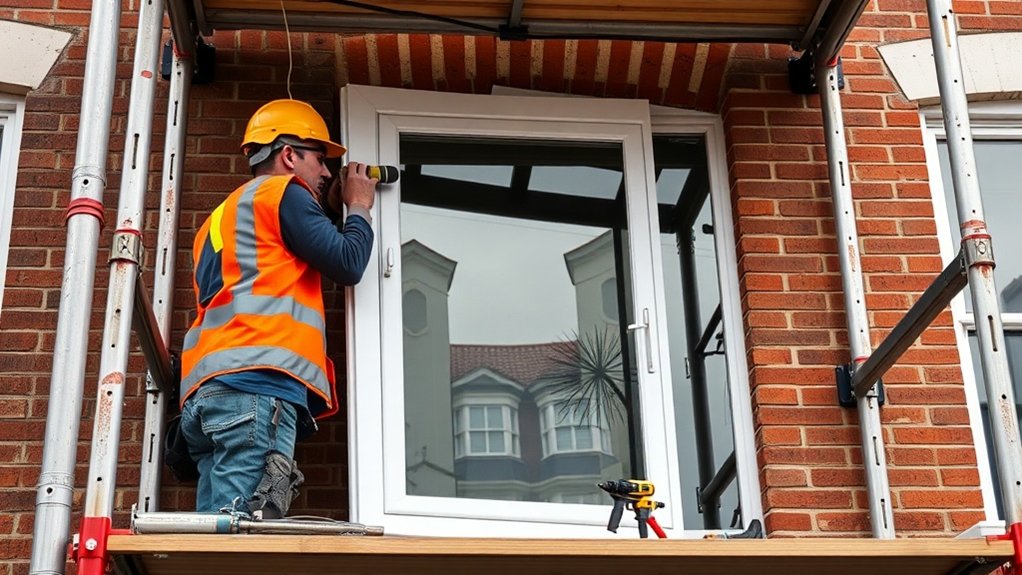
Once you’ve confirmed your measurements and specification, you can move into a structured installation sequence that protects both the property and compliance with UK regulations. First, prepare the opening: remove the old frame, check masonry integrity, and repair any defects. In London’s historical architecture, you’ll also verify conservation requirements before drilling or fixing.
Dry-fit the new casement, check sightlines, and confirm hinge clearances. Then:
- Pack and level the frame , maintaining tolerance for thermal expansion.
- Fix mechanically, apply airtight tapes or membranes, then low-expansion insulating foam.
- Integrate trickle vents and secure ironmongery, confirming PAS 24 security compliance.
Finish with internal sealing and external weatherproofing, optimising energy efficiency while preserving façade character. Finally, test operation, ventilation, and safe egress.
Casement Window Installation Costs In London
Pricing casement window installation in London quickly reveals that you’re paying for far more than the frame and glass. You’re funding compliant design, structural integrity, and precise integration with existing masonry or cladding. Costs vary with aperture size , hardware specification, glazing type, access complexity, and any requirement to protect historical architecture under local conservation policies.
You’ll typically pay more for high-spec, multi-point locking systems, laminated safety glass near floor level, and engineered fixings that meet wind-load and impact standards. Triple glazing and advanced coatings raise upfront costs but improve energy efficiency, reducing long‑term heating demand in dense urban settings. Budget for survey fees, Part L and Part K compliance measures, waste removal, and potential scaffold or powered access where façade conditions demand it.
Choosing A Casement Window Installer In London
When you choose a casement window installer in London, you’re not just picking a contractor, you’re appointing someone accountable for structural safety, weatherproofing, and regulatory compliance. You need a specialist who understands historical architecture, modern performance glazing, and local planning constraints, including conservation areas and listed buildings.
Look for an installer who can integrate advanced hardware and airtightness detailing without compromising local craftsmanship or façade character. Verify they self-certify under FENSA or a similar scheme, and that they provide documented U-values, ventilation strategies, and load calculations.
Key checks include:
- Evidence of projects in comparable properties and London postcodes
- Written guarantees covering frame, hardware, installation, and seals
- Clear method statements for removal, fitting, sealing, and final commissioning
Common Casement Installation Mistakes To Avoid
Although a competent installer should manage technical risks for you, recurring casement window failures in London almost always trace back to a handful of avoidable mistakes. You shouldn’t accept frames fixed out‑of‑square, as this stresses hinges, compromises airtightness, and can breach Part L energy requirements. Poor anchoring into weak masonry or old timber linings can create structural movement and safety risks in wind loads.
Installers often under-spec hinges and friction stays, limiting safe opening angles and making window cleaning from inside difficult. Inadequate drainage and vapour barriers invite condensation, staining, and long‑term frame decay. Finally, don’t let anyone ignore sightline alignment or hardware quality; sloppy detailing undermines window aesthetics, reduces perceived value, and can conflict with local conservation or planning conditions.
Maintaining Casement Windows In London Homes
Once your casement windows are installed correctly and comply with London’s planning constraints and Building Regulations, their long‑term performance depends on disciplined maintenance . You’re not just preserving appearance; you’re protecting safety, security, and energy efficiency while respecting surrounding historical architecture.
Inspect hinges, friction stays, and locks at least annually. Lubricate moving parts with a non‑staining, silicone‑based product and check that restrictors and egress functions still operate freely for safe escape.
- Clean frames and gaskets with non‑abrasive solutions to prevent deterioration and maintain airtight seals.
- Monitor paint, sealants, and beading for micro‑cracks that could lead to moisture ingress and heat loss.
- Check trickle vents and drainage channels, clearing debris so ventilation and condensation control work as designed.
Repair, Upgrade Or Replace Casement Windows?
Deciding whether to repair, upgrade, or fully replace casement windows in a London property hinges on more than visible wear; it demands a careful assessment of safety, compliance, and whole‑life performance. You’ll first evaluate structural integrity of frames, hinges, and locks, then consider Part L thermal standards , Part B fire egress, and secure‑by‑design principles.
Targeted repairs suit minor air leaks or hardware fatigue, extending service life without altering window aesthetics. Upgrades—such as high‑performance gaskets, friction stays, and acoustic or low‑E glazing—boost efficiency while supporting historical preservation in conservation areas . Full replacement’s justified when rot, distortion, or non‑compliant sightlines compromise safety or performance. In that case, you can specify engineered timber or slimline aluminium systems that integrate advanced security, smart controls, and future‑ready glazing.
Frequently Asked Questions
How Do Casement Windows Affect the Resale Value of London Properties?
They typically increase your property valuation by enhancing energy efficiency, security, and market appeal. When you specify modern, double- or triple-glazed casements with compliant safety restrictors and robust locking systems, you’re aligning with buyer expectations and current Building Regulations . You also future‑proof the asset by integrating low‑U‑value glass and smart ventilation hardware, which reduces operational costs and improves EPC ratings, strengthening both resale potential and negotiation leverage.
Are There Heritage-Style Casement Options Suitable for Listed or Period London Homes?
Yes, you’ve got an almost absurd wealth of heritage-style casement options to choose from. You can specify true heritage design with slim sightlines, putty-look glazing, and period appropriate materials like hardwood, engineered timber, or heritage-approved aluminum-clad systems. You’ll need Listed Building Consent and compliance with Part L, Part K, and safety glazing rules, but innovative slimline double- or vacuum-glazed units can deliver modern performance while preserving authentic aesthetics.
What Colours and Finishes Are Most Popular for London Casement Window Exteriors?
You’ll see matte black, anthracite grey and off‑white leading current exterior colour palettes, with bolder accents emerging on contemporary schemes . When you choose window frame materials, you’ll typically match aluminium and alu-clad frames to darker RAL tones, and timber or timber-alternative frames to heritage creams or greys. Always check planning guidance: conservation areas may restrict colours and finishes, especially glossy or reflective coatings, for streetscape safety and visual coherence.
How Long Does It Typically Take to Manufacture Custom Casement Windows in London?
You’ll typically wait 4–8 weeks for custom casement windows, depending on specification and supplier capacity. A longer manufacturing timeline often reflects higher material durability, stricter QC, and compliance with UKCA, Part L, and safety glazing standards. Aluminium and composite frames can extend lead times, especially with bespoke finishes and advanced hardware. You should confirm locking systems, ventilation requirements, and U-values early to avoid redesign delays and guarantee future‑ready performance.
Can Casement Windows Be Integrated With Smart Home or Automated Ventilation Systems?
Yes, you can integrate casement windows with smart home integration and automated ventilation systems. As they say, “measure twice, cut once,” so you’ll specify motorised operators, concealed sensors, and secure control modules. You’ll guarantee compliance with UK Building Regulations (e.g., Part F for ventilation, Part B for fire escape). You’ll also implement safety interlocks, manual overrides, and fail-safe positions to prevent entrapment, damage, or unsafe pressure differentials.
Summary
When you weigh the options, casement windows can feel like a hassle—but they don’t have to be. If you choose certified frames and glazing , follow London’s building regulations, and use a FENSA or CERTASS-registered installer, you’ll get safer ventilation, better security, and improved efficiency without compromising compliance. Maintain the hinges and seals, and you’ll extend lifespan, avoid costly call-backs, and keep your London home comfortable, legal, and protected for years.