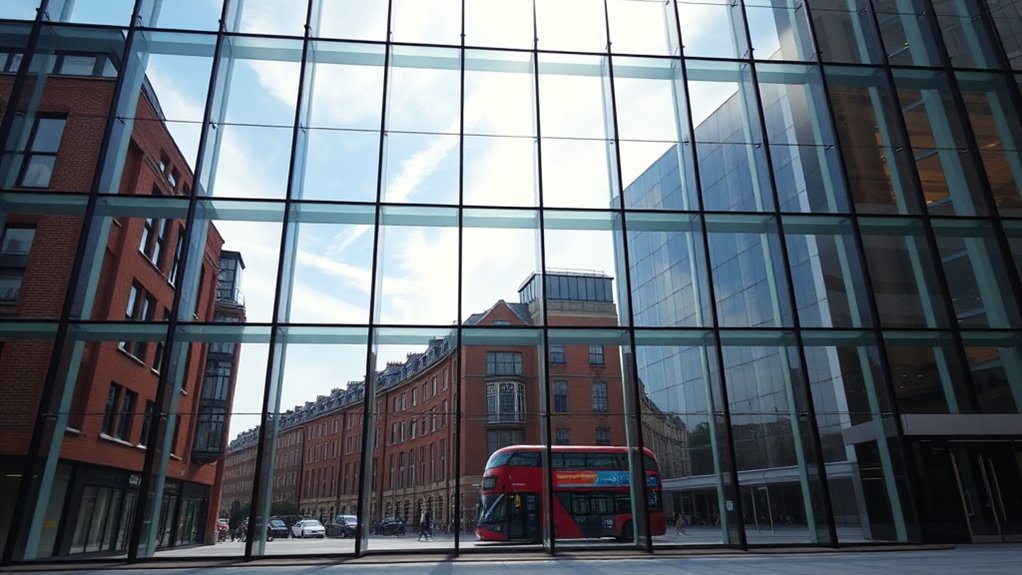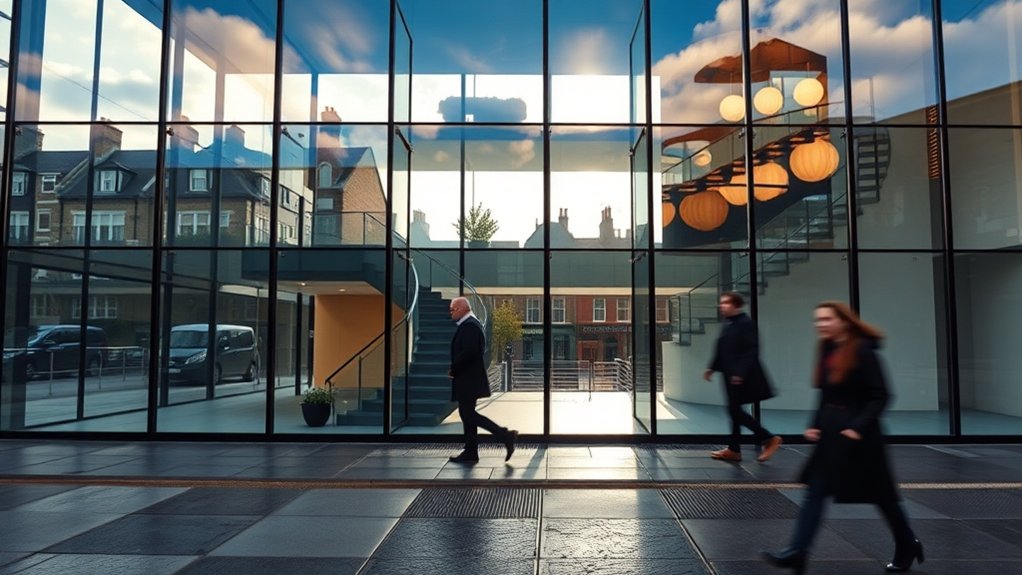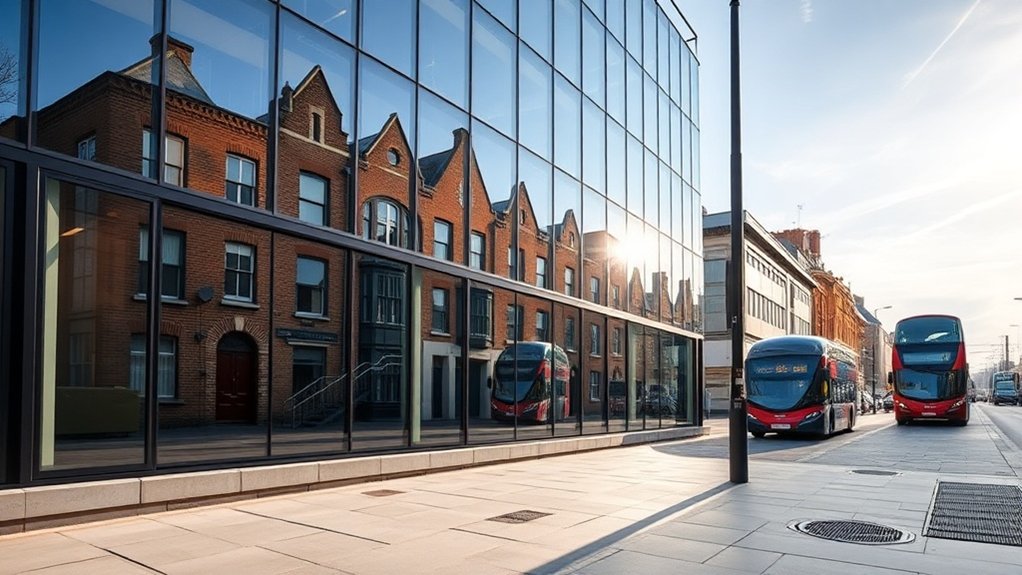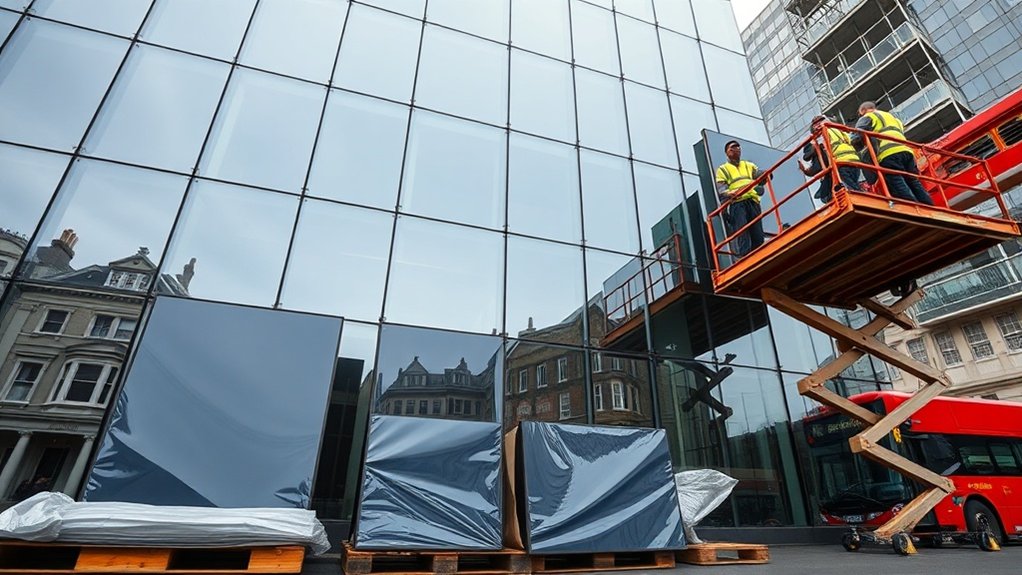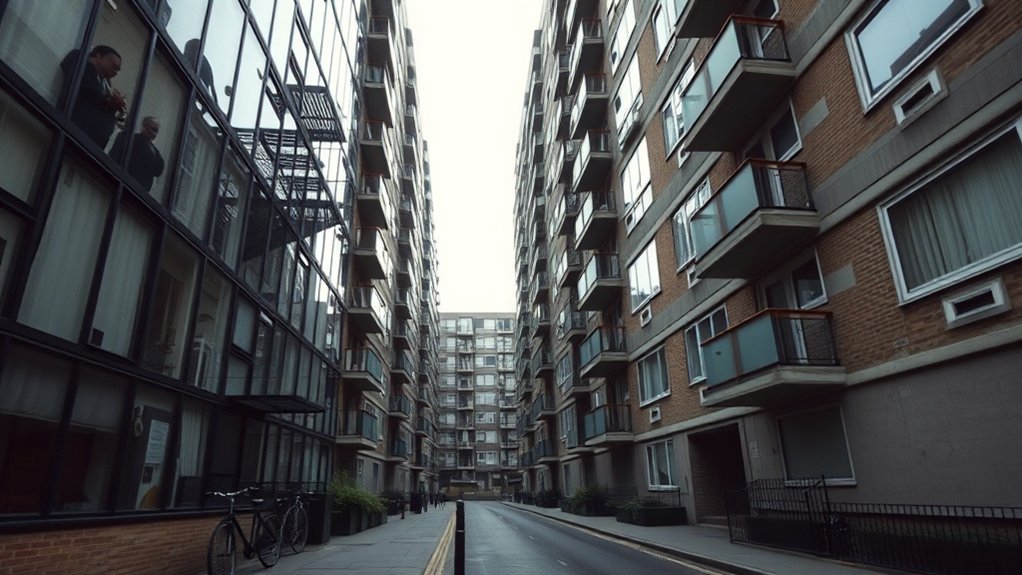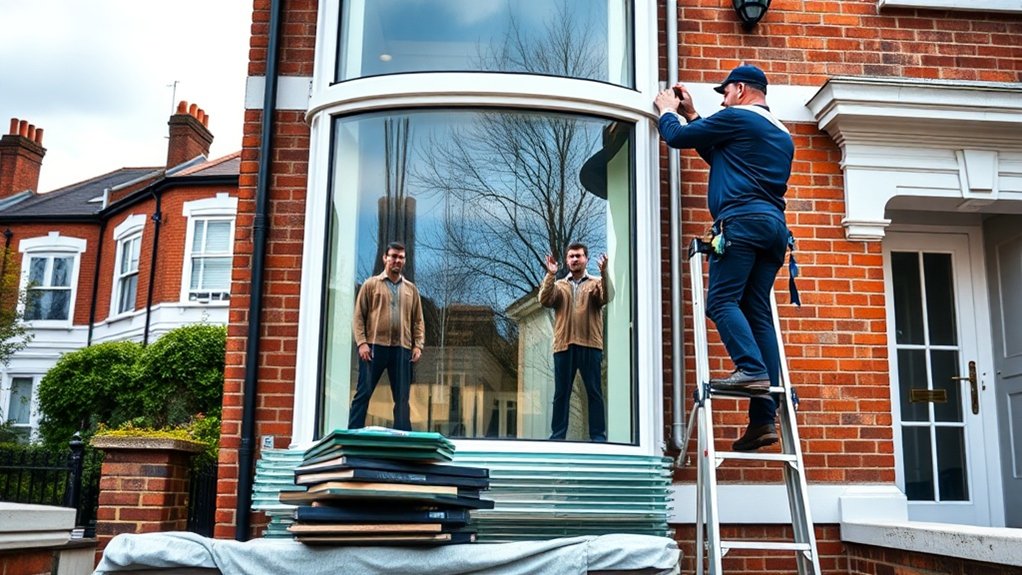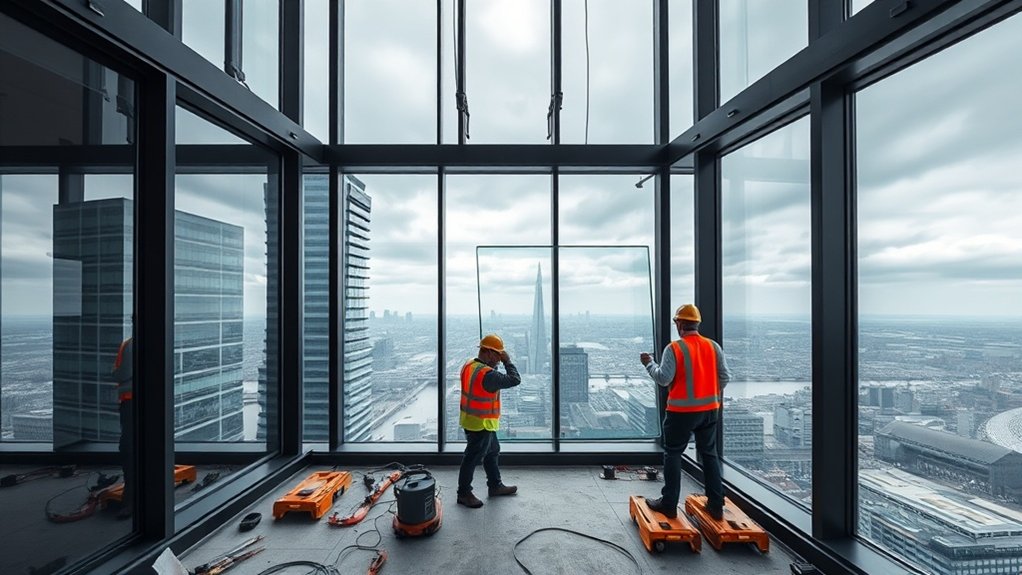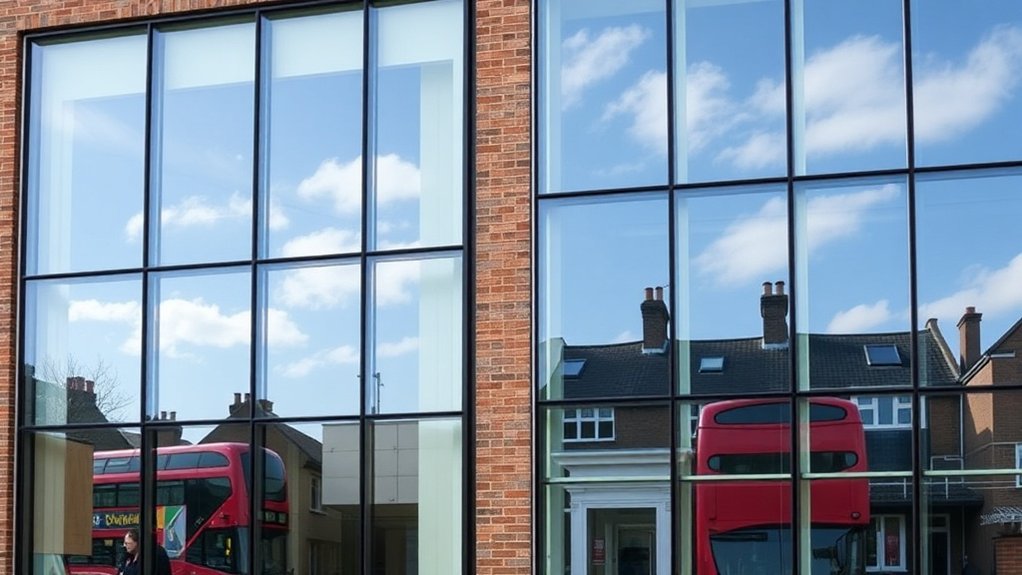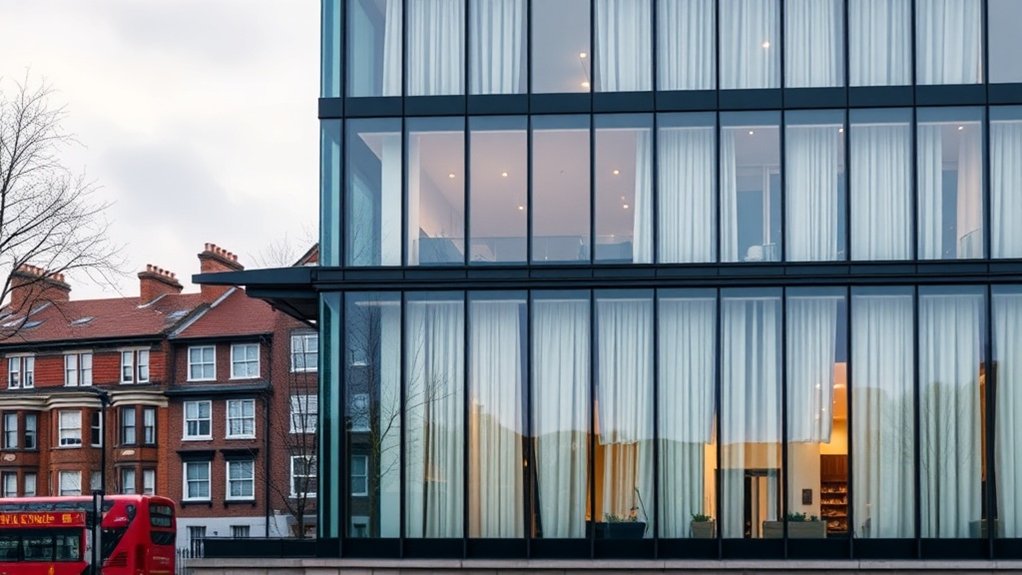
You rely on commercial glazing in London for far more than just glass: you’re commissioning engineered façade systems that meet strict planning rules, boost energy efficiency, control noise, and strengthen security. From curtain walling and structural glazing to slimline systems for heritage buildings, you’ll balance U‑values, g‑values, acoustic ratings , and safety classifications with branding and aesthetics. Understanding your options, regulatory duties, costs, and contractor choices will help you specify glazing that performs for decades, as the next sections show.
Key insights
- Supply and installation of high‑performance curtain walling, structural glazing, and shopfronts for offices, retail, hotels, and mixed‑use buildings across London.
- Full compliance with UK Building Regulations (Parts L, B, K) and third‑party‑certified systems for fire, impact, security, and thermal performance.
- Energy‑efficient façades using low‑E coatings, solar‑control glass, warm‑edge spacers, and inert gas fills to reduce heating and cooling costs.
- Specialist capability in heritage and conservation projects, delivering slimline traditional glazing that upgrades performance while respecting protected façades.
- End‑to‑end service including design coordination, cost planning, access and temporary works, installation, and planned maintenance with digital asset records.
What Commercial Glazing Involves in London
At its core, commercial glazing in London covers the specification, supply, and installation of high‑performance glass systems for offices, retail units, hospitality venues, public buildings, and mixed‑use developments. You’re not just buying glass; you’re commissioning an engineered façade component that must perform structurally, thermally, acoustically, and aesthetically within tight urban constraints.
You’ll expect rigorous site surveys , design coordination with architects and structural engineers, and detailed interface planning with cladding, MEP, and fit‑out trades. In London, Historical architecture drives complex heritage integrations, where you balance conservation requirements with glazing innovations that enhance daylight, comfort, and energy performance. You also manage planning considerations, Building Regulations compliance, façade access strategies, and long‑term maintenance to protect your asset’s value and operational efficiency.
Main Commercial Glazing Systems and Glass Types
When you’re planning a commercial glazing project in London, choosing the right system and glass type is as critical as the design itself. You’ll need to balance structural performance, thermal efficiency, solar control, and aesthetics across options like curtain walling, structural glazing, and framed shopfront systems. By matching these systems with appropriate glass types—such as toughened, laminated, double or triple glazed, and low‑E units—you position your building for long-term performance and compliance.
Key Commercial Glazing Systems
Although every commercial project in London has its own demands, most specifications draw from a core set of glazing systems and glass types that solve predictable performance challenges: light, thermal efficiency, structural load, security, acoustics, and aesthetics. You’ll typically evaluate four primary system families to balance innovative design with historical preservation and regulatory compliance.
Curtain wall systems give you maximum transparency across multi-storey façades while integrating solar control and ventilation strategies. Unitised façades suit fast-track schemes, improving airtightness and lifecycle performance. Structural glazing lets you minimise visible framing for flagship retail or atria, relying on precision engineering and advanced fixing technologies. For conservation areas, you’ll often deploy high‑performance, slimline window systems that replicate traditional sightlines yet meet today’s energy and acoustic standards.
Popular Commercial Glass Types
How you specify the glass itself will often determine whether a commercial façade in London merely complies or genuinely performs. You’re typically selecting from toughened, laminated, insulated, and low‑iron or coated glass, each driving different performance metrics.
Toughened glass delivers strength and safe breakage, ideal where impact risk is high. Laminated glass adds security, acoustic control, and integral fall protection, often mandated at height. Insulated glass units combine panes and gas fills to hit U‑values and g‑values that satisfy London’s stringent energy targets.
Solar control and low‑E coatings fine‑tune daylight, comfort, and solar gain without sacrificing glazing aesthetics. During glass installation, you’ll align structural loads, edge conditions, and sealant systems to ensure durability, visual precision, and future adaptability.
London Building Regulations and Safety Rules for Glazing
When you plan commercial glazing in London, you need to align every specification with local building regulations , British Standards, and fire and structural safety requirements. You’ll rely on certified systems, documented safety compliance, and rigorous impact, load, and fire-resistance testing to protect occupants and satisfy inspectors. By understanding these glazing standards early, you can reduce redesign risk, control costs, and secure faster approvals.
Key London Glazing Standards
Why do London projects live or die by glazing compliance ? Because every façade you design must satisfy a tight matrix of standards: Part L for energy performance, Part B for fire strategy, and Part K for impact resistance and safe access. You’re also navigating local planning guidance that protects historical architecture while allowing contemporary transparency and artistic ornamentation.
You need U‑values, g‑values, and frame performance that align with London Plan carbon and overheating targets. At the same time, noise constraints near rail and arterial routes demand high-spec acoustic glazing. Solar control coatings, low‑iron glass, and high-performance interlayers let you push innovative envelope concepts while remaining compliant. When specified early, these standards become a strategic tool, not a constraint.
Safety Compliance And Testing
Long before you sketch a curtain wall or atrium, glazing safety compliance in London should sit alongside aesthetics and performance as a primary design driver. You must align with Building Regulations (notably Parts K, B, L, and M), plus BS 6262 and BS EN 14449/12150 for toughened and laminated glass.
You’ll specify impact-resistant zones , define guarding heights, and verify breakage behavior through test evidence, not assumptions. For fire-rated assemblies, you’ll integrate tested glazed systems rather than “mix-and-match” components.
On constrained sites and schemes involving historical preservation, you’ll balance slender profiles and transparency with robust containment, blast, and intrusion resistance. Rigorous mock‑ups, on-site hose and barrier‑load tests, and third‑party certification let you push architectural aesthetics while satisfying insurers, regulators, and long‑term risk strategies.
Energy-Efficient Commercial Glazing to Cut Costs
How can you turn your building’s glazing from a cost centre into a long-term performance asset? You start by treating the façade as an energy system, not just a visual statement. In London, you must balance historical architecture with advanced glazing specifications, selecting low‑emissivity coatings, warm‑edge spacers , and inert gas fills that minimise U‑values and solar heat gain.
Next, you optimise glass installation techniques. Precision in frame alignment, air‑tightness, and thermal break continuity can cut heating and cooling loads by double‑digit percentages. Dynamic glazing, solar-control interlayers, and high‑performance units integrated with BMS sensors let you modulate light and heat in real time.
You reduce operational expenditure, enhance occupier comfort, and future‑proof assets against tightening energy regulations.
Security and Fire-Resistant Commercial Glazing in London
When you specify commercial glazing in London, you need solutions that integrate fire-rated glass systems and enhanced security glazing without compromising aesthetics or performance. You must balance impact resistance , containment, and fire compartmentation with strict adherence to UK standards such as Approved Document B, BS 476, and BS EN 13501. By aligning these technical requirements with your risk profile and building use, you can reduce liability while strengthening protection for occupants, assets, and operations.
Fire-Rated Glass Systems
Why does fire-rated glass matter so much in a dense commercial environment like London? You’re managing tight floorplates, intense footfall, and stringent UK fire regulations , often within or alongside historical architecture. Advanced fire-rated glass systems let you open up sightlines, maximise daylight, and still compartmentalise fire and smoke for 30, 60, or 120 minutes.
You can specify clear, integrity-only or integrity-and-insulation glass, tested to BS EN 13501, integrated into doors, screens, and façades. Modern glazing innovations use intumescent interlayers and gel-filled laminates that activate under heat, maintaining structural stability and limiting temperature transfer.
Enhanced Security Glazing
While London’s commercial buildings face rising risks from break-ins, vandalism, and targeted attacks, enhanced security glazing lets you harden the envelope without turning it into a fortress. You integrate laminated, multi-layer glass with high-spec interlayers that resist forced entry, blast, and ballistic threats while maintaining transparency and daylighting.
You can protect historical architectural façades by deploying bespoke glazing build-ups behind existing frames, preserving sightlines and profiles. Structural glazing, point-fixed systems, and security-rated curtain walling let you resolve complex geometries without compromising performance.
You’re not forced to sacrifice artistic expression. Ceramic frits, digital printing, and tinted interlayers allow branding, wayfinding, and curated visual impact to coexist with security. In lobby, retail, and street-facing zones, you strategically combine visible deterrence with discreet, engineered resilience .
Compliance With UK Standards
How do you turn robust security and fire performance into a competitive asset rather than a compliance headache? You start by aligning your glazing strategy with UK Building Regulations (Approved Documents B and Q), BS 476 / BS EN 13501 for fire, and EN 356 / EN 1063 for impact and ballistic resistance.
You don’t just tick boxes; you specify tested, certified systems that integrate security laminates, intumescent interlayers, and fire-rated framing without compromising innovative aesthetics. By coordinating early with façade engineers, fire consultants, and insurers, you minimise redesign risk and programme delays.
This lets you use glazing aesthetics—large spans, minimal sightlines, transparent fire barriers—as a brand statement, while demonstrably meeting London’s demanding security, fire, and lifecycle performance criteria.
How to Choose Frames, Glass Specs and Design
Once you move from concept to specification , your choice of frames, glass make‑up and overall façade design becomes a technical exercise in balancing performance, compliance and aesthetics. You start by defining thermal targets, acoustic criteria, security class and solar control, then map those back to frame materials and glass configurations that can actually deliver.
Prioritise frame materials that integrate thermally broken profiles, slim sightlines and proven interface details with adjacent trades. For glass, combine low‑E and solar‑control glass coatings with selective tinting or fritting to manage gains without killing daylight or views. Model U‑values, g‑values and light transmittance together, not in isolation. Finally, resolve the façade geometry early—span, module, and opening strategy—so engineering, maintenance and visual intent stay aligned.
Commercial Glazing for London Offices, Shops and Hotels
Why does commercial glazing in London look so different from one street to the next? Because each office, shop and hotel has a distinct performance profile and branding objective, yet all compete within the same dense fabric of urban aesthetics. You’re not just installing glass; you’re engineering daylight, thermal balance, and visual impact.
For offices, you prioritise low‑e coatings , solar control, and acoustic performance, supporting agile workspaces and strict energy targets. For shops, you maximise transparency, colour rendering and security, using glass innovation such as anti-reflective laminates and integrated LED or digital façades to turn frontage into a live brand platform. Hotels demand acoustic insulation, privacy gradations, and dynamic glazing options that shift from clear to tinted, enhancing guest comfort and operational efficiency.
Choosing a Commercial Glazing Contractor in London
Selecting the right commercial glazing contractor in London determines whether those performance ambitions for offices, shops, and hotels become reality or remain a specification on paper. You’re not just buying glass; you’re procuring a specialist who can integrate structure, services, and façade performance into one coherent envelope.
Look for a partner who can reconcile London’s historical architecture with cutting‑edge glazing innovations, while navigating planning, Part L, and acoustic requirements.
- Technical capability – Verify thermal, acoustic, structural, and security credentials, plus in‑house design, BIM proficiency, and test evidence.
- Urban and heritage experience – Demand a portfolio spanning conservation areas, complex access, and occupied buildings.
- Innovation and collaboration – Assess R&D culture, supply‑chain depth, digital coordination, and willingness to co‑author performance specifications with you.
Commercial Glazing Costs, Timelines and Disruption
Even with the design resolved and a contractor appointed, commercial glazing in London only succeeds if you control cost, programme, and operational disruption as rigorously as U‑values and g‑factors. You should interrogate cost plans line‑by‑line: glass specification, framing systems, access equipment, temporary works, and out‑of‑hours labour. Push for options analysis showing how changes in glazing aesthetics, performance coatings, or module size affect budget and payback.
On timelines, insist on a detailed phasing schedule that sequences glass installation around trading peaks, deliveries, and critical building services. Require method statements that address noise, dust, security, and protected routes for staff and visitors. Use mock‑ups and digital coordination to pre‑empt clashes, shorten install durations, and reduce on‑site decision‑making that risks delay or rework.
Maintaining and Upgrading Commercial Glazing in London
Once installation ends and trading resumes, the real performance of your commercial glazing in London depends on how you manage maintenance, monitoring, and timely upgrades. You treat glazing as a live asset: you track seal integrity, frame movement, and coating performance, especially where new façades interface with historical architecture or bespoke decorative panels.
-
Planned maintenance – Implement annual inspections, façade cleaning strategies, and sealant replacement cycles, backed by digital asset registers and condition reports.
-
Performance upgrades – Phase in higher-spec units (solar-control, acoustic, security) to meet new operational, ESG, and compliance targets without full façade replacement.
-
Smart monitoring – Deploy sensors for temperature, condensation, and impact, integrating alerts with your building management system to pre-empt failures and optimize occupant comfort.
Frequently Asked Questions
How Does Commercial Glazing Impact a Building’s Market Value in London?
It boosts your building’s market value by enhancing Glass aesthetics and measurable Energy efficiency. You gain sharper façade performance, stronger daylighting metrics, and lower operational carbon—key drivers in London’s investment decisions. High-spec glazing improves EPC ratings, tenant desirability, and headline rents, while reducing lifecycle costs. You’re not just upgrading windows; you’re strategically repositioning the asset as a future‑ready, low‑energy, visually distinctive property in a competitive urban market.
Can Commercial Glazing Help With Noise Reduction From London Traffic and Transport?
Yes, it can—think of the right system as a noise firewall . You use laminated or acoustic glass, optimized air gaps, and high‑performance seals to cut traffic noise from roads, rail, and air. Properly specified units deliver superior sound insulation, targeting key urban frequencies. You’ll coordinate glazing thickness, frame design, and installation quality to meet acoustic ratings, enhance user experience, and future‑proof assets in a dense, innovation‑driven city.
Are There Grants or Incentives for Upgrading to Modern Commercial Glazing in London?
Yes, you can access grants and incentives , but they’re fragmented. You’ll typically leverage UK-wide schemes focused on energy efficiency, carbon reduction and business rates relief, plus occasional local authority funds. By upgrading to modern glazing with strong thermal performance and aesthetic appeal, you align with ESG targets, improve EPC ratings and reveal potential tax allowances. You should commission an energy assessment, then structure the project to qualify under multiple overlapping programmes.
How Does Glazing Performance Differ Between Historic and Newly Built London Properties?
You’ll see weaker thermal and acoustic performance in historic properties , where single glazing and leaky frames preserve historical authenticity but lose heat and comfort. New builds integrate high-spec units prioritizing modern energy efficiency, with low‑e coatings, warm‑edge spacers, and optimized g‑values. Strategically, you must balance conservation constraints with innovation—using slimline double glazing, secondary glazing, or bespoke units—to upgrade performance without undermining heritage value or long‑term asset resilience.
What Warranties and Insurance Should I Expect With Commercial Glazing Installations?
You should treat Warranty coverage and Insurance requirements as your safety net and parachute. Expect a 10–25 year glass/unit warranty, 5–10 years on frames and seals, and 1–2 years on workmanship. Insist on installer PI and public liability insurance, plus product liability. Verify insurance-backed guarantees, collateral warranties, and clear defect response times so your façade performance, risk profile, and lifecycle costs all stay tightly controlled.
Summary
You’ve seen the theory: commercial glazing in London is just a cost, not a strategic asset. It’s wrong. When you specify the right systems, meet regulations, and optimise for energy, safety, and security, your façade becomes a performance engine—cutting operating costs, protecting people, and elevating your brand. Partner with a specialist contractor who can model performance, phase works with minimal disruption, and future‑proof your glazing so every pane works hard for your business.