
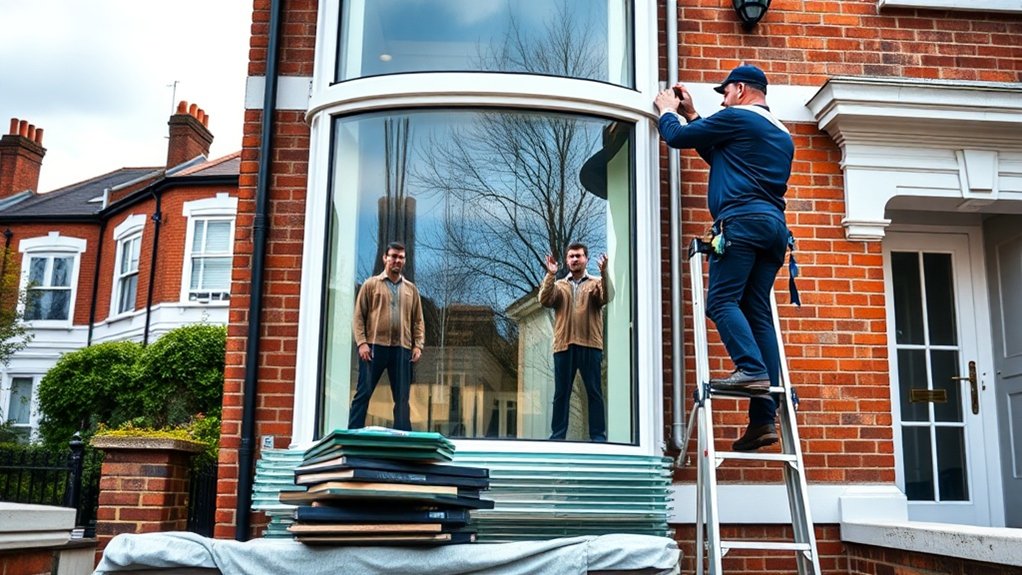
You need landlord-focused glazing in London that’s compliant, thermally efficient, and heritage-sensitive . A specialist can replace single glazing with slimline double or acoustic units, improve EPC ratings, and meet BS safety glass standards and Building Regulations. They’ll also provide 24/7 emergency boarding, impact-resistant security glass, and structured maintenance to protect tenants and assets. With the right contractor, you can balance cost, performance, and conservation requirements, and the next sections show exactly how to do that effectively.
Key insights
- Specialist London glazing contractors provide repair, replacement, and upgrade services tailored to landlords, including heritage properties and large rental portfolios.
- Services cover emergency boarding, safety glass replacement, and temporary security/thermal barriers to protect tenants and comply with legal duties after breakages.
- Landlord-focused glazing includes energy-efficient double/triple glazing, slimline heritage units, and secondary glazing to improve EPC ratings and reduce heating costs.
- Compliance support includes safety glass to BS standards, building regulation guidance, documentation (FENSA, RAMS, warranties), and assistance with planning in conservation areas.
- Providers offer noise-reducing and security-enhanced glazing for street-facing windows, communal entrances, and stairwells, improving tenant comfort and reducing anti-social behaviour risks.
Why Glazing Matters for London Landlords
Although glazing is often treated as a minor specification detail, it’s one of the most important elements of a London rental property’s performance and compliance. You rely on correctly specified glazing to manage thermal efficiency, reduce operational costs, and support low‑carbon strategies demanded by increasingly discerning tenants.
You also need glazing solutions that respect historical preservation while enabling aesthetic enhancement. In conservation areas , you can’t simply replace windows with generic units; you must integrate slimline double glazing, specialist coatings, and bespoke sightlines that align with heritage profiles.
London Window Safety And Compliance Rules
As a London landlord, you must understand the key legal requirements that govern window installation, maintenance, and performance in rented properties. You’ll need to guarantee your glazing meets specific safety glass standards , particularly in critical locations such as doors, low-level glazing, and high-traffic areas. By aligning your windows with current building regulations and housing legislation, you reduce liability and protect occupants from avoidable glazing-related injuries.
Key Legal Requirements
Even before you specify a single replacement pane, London’s window safety rules impose clear legal duties that you must meet as a landlord. You must align structural performance, fire strategy, and fall‑prevention measures with both national regulations and borough-level policies, while preserving window aesthetics and, where relevant, listed‑building or conservation constraints on historical glazing.
-
Visualise a compliance matrix where every sash, casement, and frame is mapped against Building Regulations, planning consents, and licensing conditions for your property type.
-
Picture digital schedules documenting opening sizes, restrictor positions, and maintenance intervals, ready for inspection at short notice.
-
Imagine a portfolio-wide dashboard that flags non‑compliant windows in real time, triggering targeted upgrades before inspections, tenant complaints, or enforcement action arise.
Safety Glass Standards
Legal duties only become meaningful when they’re expressed in the glass and frames tenants actually interact with, and this starts with safety glass selection and specification. In London, you must align with BS 6262 and BS EN 12150/14449, ensuring toughened or laminated glass in critical locations: doors, side panels, low-level glazing, and high-occupancy zones.
You should interpret safety glass standards not as static rules but as evolving benchmarks, reflecting historical trends in impact testing , edge stability, and post-breakage behaviour. Modern compliant systems let you integrate advanced interlayers, acoustic control, and solar-performance coatings without compromising glazing aesthetics. Specify permanently marked, third-party-certified products and insist on installation to manufacturer tolerances, so your portfolio remains legally robust, future-ready, and visually coherent.
Core Glazing Services Landlords Need (Including Emergencies)
You need glazing support that covers both critical incidents and day‑to‑day asset performance. This includes emergency boarding and repairs that protect your property, occupants, and security when glass fails unexpectedly. It also requires structured routine window maintenance services that optimise thermal performance, prevent water ingress, and extend the service life of your glazing systems.
Emergency Boarding And Repairs
When a window shatters at 2 a.m. or a shopfront is compromised after a break‑in, rapid emergency boarding and repairs protect both your tenants and your asset. You need technicians who can stabilise the opening , preserve security, and prepare the aperture for high‑performance replacement glazing.
Emergency specialists should:
- Arrive with pre‑cut boards, anti‑tamper fixings, and sealing systems that won’t damage historical architecture or delicate decorative features.
- Conduct a structured risk assessment, documenting glass type, frame integrity, and building envelope vulnerabilities for insurers and future upgrades.
- Implement temporary thermal and acoustic barriers , using innovative panel materials that minimise energy loss and disruption.
You maintain operational continuity while positioning the property for swift, specification‑compliant reglazing.
Routine Window Maintenance Services
Emergency interventions stabilise the property, but disciplined routine window maintenance prevents many failures from occurring in the first place. You implement scheduled inspections to verify seal integrity , sash alignment, and frame moisture levels, reducing thermal losses and condensation risk. Technicians clean tracks, hinges, and locks, then lubricate moving components to guarantee smooth operation and consistent security performance.
You also commission periodic glass condition surveys, identifying micro-cracks, edge damage, or failed coatings before they escalate into structural failures. For decorative panes and heritage sash units, you adopt specialist protocols that balance energy efficiency with historical preservation, using compatible putties, ventilated beads, and discreet secondary glazing. Digital asset registers and maintenance logs help you optimise lifecycle planning and budget forecasting across your portfolio.
Single Vs Double Vs Triple Glazing For Rentals
Although single glazing still exists in many older London rentals, most landlords now weigh it against double and even triple glazing to meet modern standards and tenant expectations. You’ll assess performance, capital cost, and impact on window aesthetics and historical window preservation before specifying upgrades.
- Visualise slim single-glazed sashes in a Victorian terrace: elegant, but thermally inefficient, with cold downdrafts and higher heating demand.
- Picture discreet double-glazed units with low‑e coatings: improved U‑values , reduced condensation risk, and a balanced façade that still respects period proportions.
- Imagine high‑spec triple glazing in a contemporary infill block: deep frames, advanced gas fills, warm internal surfaces, and strong energy credentials that support EPC targets.
Noise-Reducing Glazing For Busy London Streets
As road, rail, and aircraft noise intensify across London, you increasingly need glazing that provides measurable acoustic insulation rather than relying on standard double glazing alone. To achieve rigorous street noise mitigation, you should specify systems engineered around decibel reduction and frequency targeting, not just U‑values.
You can combine thicker asymmetrical panes with wider cavities and acoustic interlayers to disrupt sound transmission paths. Laminated acoustic glass with specialised PVB cores considerably attenuates mid–high frequency traffic noise, while argon-filled or larger cavities improve low-frequency performance from buses and trains.
For maximal soundproofing enhancements, you should pair high-spec acoustic units with purpose-designed acoustic frames and correctly compressed seals. Professional installation, including perimeter acoustic sealants and decoupled linings, ensures the glazing’s laboratory-rated performance translates into real-world, tenant-pleasing quiet.
Boosting Security With Toughened And Laminated Glazing
High-performance glazing doesn’t just control noise; it also acts as a primary barrier against forced entry, vandalism, and opportunistic theft. By specifying toughened glass and laminated safety units , you create a robust, multilayered defence that resists impact, delays intrusion, and deters casual break-ins. Toughened glass provides increased mechanical strength, while laminated safety interlayers hold shards in place, maintaining integrity even when damaged.
You can visualise the upgrade across your portfolio as:
- Doors and street-facing windows with toughened glass resisting sudden, high-energy impacts.
- Laminated safety glazing in communal entrances, maintaining a solid barrier after attempted breakage.
- Stairwells and balcony screens combining both, limiting fall risk and unauthorised access simultaneously.
This integrated approach enhances security, compliance, and tenant confidence.
Energy-Saving Glazing Upgrades For London Landlords
As a London landlord, you must consider how modern glazing systems reduce heat loss, stabilize internal temperatures, and lower energy consumption. By upgrading to energy-efficient double or triple glazing with low‑emissivity coatings and insulated frames, you’ll markedly improve your building’s thermal performance. These enhancements also help you meet current and forthcoming EPC requirements, protecting both rental viability and asset value.
Reducing Heat Loss
Why allow valuable heat to escape through outdated glazing when precise upgrades can substantially improve your building’s thermal performance? You reduce conductive, convective, and radiative losses by specifying high-performance units with low-emissivity coatings, warm-edge spacers, and argon-filled cavities. Advanced window tinting further limits solar gain while maintaining visible light, stabilising internal temperatures and cutting reliance on mechanical heating.
You can align performance with aesthetics by integrating decorative glazing that incorporates insulated or laminated configurations without compromising U-values. Target critical façades, draught-prone openings, and poorly performing communal areas first to achieve measurable reductions in heat loss.
- Visualise façades wrapped in low-E glass, quietly retaining warmth.
- Picture corridors free from cold draughts along upgraded frames.
- Imagine tenants experiencing consistent, stable indoor comfort.
Meeting EPC Requirements
Although EPC rules continue to tighten across London’s rental market, you can often secure required band improvements more cost‑effectively through targeted glazing upgrades than through wholesale fabric interventions. By optimising U‑values, solar gain , and airtightness at window level, you directly lift SAP scores while controlling capital expenditure.
You’ll typically combine low‑emissivity double or secondary glazing with warm‑edge spacers and inert gas fill to minimise thermal losses. In historic architecture, you can specify slimline units or secondary glazing that preserves original sashes and decorative glass, maintaining heritage value while meeting compliance thresholds.
Data‑led window surveys, including infrared thermography, let you prioritise high‑impact apertures, validate performance in situ, and document improvements for EPC assessors, supporting predictable, regulation‑aligned investment strategies.
Emergency Glazing And Same‑Day Call‑Outs In London
When glazing fails unexpectedly, you need an emergency response that secures your London property the same day and complies with landlord obligations. You can’t risk unsecured apertures in high‑footfall areas, mixed‑use blocks, or buildings with historical architecture where both fabric and public safety are critical.
Emergency glazing services deploy rapid assessment, board‑up, and interim or permanent glass replacement that respects existing sightlines, structural loads, and aesthetic enhancements. Technicians should arrive with pre‑cut laminates, safety glass variants, and smart‑measurement tools to capture exact tolerances in one visit.
- Shattered shopfronts rapidly stabilised with anti‑tamper boards and laminated replacements.
- Upper‑floor casements re‑glazed safely using compliant access systems.
- Communal entrances restored with secure, impact‑resistant glass before nightfall.
Choosing A London Glazing Specialist
As a London landlord, selecting a glazing specialist demands more than comparing prices; you must verify technical competence, regulatory compliance, and genuine 24/7 responsiveness. You should prioritise contractors with documented experience in Historical architecture and complex façade systems, ensuring they can integrate new glazing without compromising heritage fabric or planning consents.
Assess whether they specify high‑performance units (low‑E coatings, warm‑edge spacers, acoustic laminates) and can interface with smart‑building controls, remote monitoring, and energy‑analytics platforms. Confirm FENSA or equivalent certification, robust RAMS documentation, and clear product warranties.
If your portfolio includes Artistic window designs, insist on CAD/BIM capability , digital surveying, and prototype sampling, so replacements align precisely with visual intent while upgrading thermal performance, security ratings, and durability across your estate.
London Glazing Costs And Rental Property Budgets
Selecting the right specialist is only viable if the numbers work across your portfolio, so you need a clear view of how glazing costs interact with rental yields, service‑charge caps , and planned maintenance cycles in London. You’ll model capex against void‑period risk, EPC uplift, and likely rent reversion, especially in zones with strict conservation constraints and sensitive Historical architecture.
Visualise budget impact:
- A Victorian terrace : slimline double glazing replicating sash profiles and Decorative patterns, funded via phased stair‑core works.
- A mixed‑use block: acoustic glazing on street‑facing units, offset by reduced tenant churn and premium lease terms.
- A prime conversion: high‑performance heritage units, capitalised into a 10‑year lifecycle plan, integrating service‑charge recovery and green‑lease clauses.
Frequently Asked Questions
Can Glazing Upgrades Help Increase My Rental Property’s EPC Rating and Tax Efficiency?
Yes, glazing upgrades can markedly improve your rental property’s EPC rating and tax efficiency . By installing high-performance double or triple glazing, you reduce heat loss, enhance energy savings, and stabilise indoor temperatures. These improvements can increase property value, attract higher‑quality tenants, and potentially qualify you for energy‑efficiency tax reliefs or allowances. You’ll also future‑proof your asset against tightening environmental regulations and evolving market expectations.
How Should I Coordinate Glazing Works With Existing Tenants to Minimise Disruption?
You minimise disruption by prioritising proactive tenant communication and meticulous scheduling coordination. Issue a clear works timetable, specify access requirements , and agree time windows that reflect tenant working patterns. Use digital tools for notifications, consent tracking, and real‑time updates. Sequence rooms to maintain habitable space, and align noisy activities within agreed hours. Provide contingency plans for delays, and document all arrangements to guarantee transparency, compliance, and an innovation‑driven, low‑friction upgrade process.
Are There Specific Glazing Choices Recommended for HMOS and Student Rentals in London?
You’ll prioritise robust double or triple glazing, like giving the building a tailored exoskeleton. Specify toughened or laminated safety glass in high-traffic areas, incorporating acoustic glazing to control noise. Use selective window tinting for solar control and privacy, while maintaining adequate daylight and compliance with Part L and Part B. Integrate decorative glass in communal zones to delineate space, resist vandalism, and support a premium, tech-forward brand.
What Documentation or Warranties Should I Receive and Keep After Glazing Installations?
You should obtain Warranty documentation for frames, glazing units, hardware, and coatings, detailing duration, exclusions, and transferability. Keep Installation certificates confirming compliance with Building Regulations and safety glazing standards. Retain product datasheets, energy-performance ratings, and maintenance instructions. Store risk assessments, method statements, and proof of payment for future claims. Digitize all records, link them to property asset registers, and review expiry dates to align with your long‑term lifecycle and upgrade strategy.
How Often Should Rental Property Glazing Be Inspected or Professionally Maintained?
You should inspect rental glazing at least annually and after any severe impact or storm; high‑traffic or high‑risk units may justify six‑monthly checks. You’ll verify seals, frame fixings, and Glass security hardware, plus test safety glazing and restrictors. Schedule professional maintenance every 2–3 years, or sooner if you’ve integrated smart films or Window tinting. Treat glazing like mission‑critical infrastructure; it’s almost more essential than the building’s skeleton.
Summary
You might think glazing upgrades are just another expense, but they’re a controlled, high‑return intervention in your asset’s performance. By improving U‑values, acoustic attenuation, and safety compliance, you reduce energy waste, void periods, and liability exposure. In London’s competitive rental market, precise glazing choices signal professionalism and due diligence. When you treat glazing as engineered risk‑management—not cosmetic work—you protect long‑term yield, strengthen tenant retention, and future‑proof your portfolio against regulatory tightening.