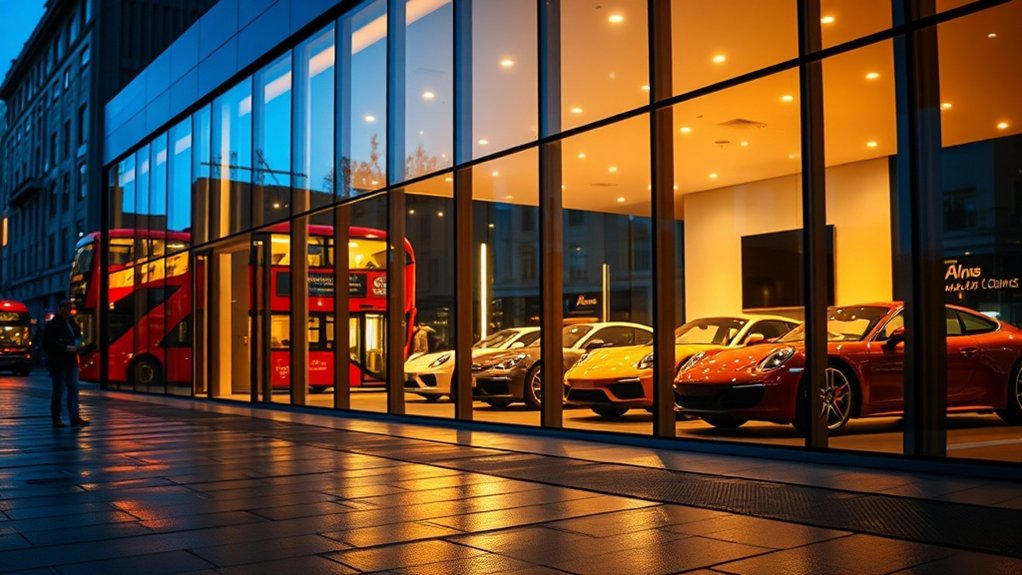
You need London car showroom glazing that satisfies strict planning rules, showcases vehicles accurately, and protects high-value stock. You’ll balance large-span, low-iron glass for maximum visibility with solar-control and acoustic interlayers to manage glare, traffic noise and overheating. Impact-resistant, laminated and EN-356-rated glass supports security and insurance demands, while thermally broken, Part L–compliant systems cut energy costs and protect interiors. Smart branding options, from tints to integrated LEDs, can turn the façade into a high-performance sales tool.
Key insights
- Specialist glazing designs for London car showrooms must address planning constraints, conservation areas, and Article 4 Directions with detailed drawings and access statements.
- High-clarity, low-iron glass and large-span panes maximise visibility of vehicles, while solar-control coatings manage glare and heat gain.
- Laminated, impact-resistant, EN-356-rated glass with discreetly integrated locks and alarms provides security without compromising showroom aesthetics.
- Energy-efficient systems using low‑E coatings, argon-filled units, and thermally broken frames ensure Part L compliance and reduced running costs.
- Experienced glazing contractors offer 3D-coordinated design, careful installation, and maintenance strategies, including retrofit options like secondary glazing for existing showrooms.
What Makes London Car Showroom Glazing Different?
While car showrooms across the UK share similar objectives, London car showroom glazing has to work harder because of the city’s dense urban environment, strict planning rules, and high-value retail locations. You’re not just framing vehicles; you’re engineering a high‑performance façade that reconciles visibility, security, and thermal control within tight spatial and regulatory constraints.
You rely on larger glazed spans with high-spec glass, integrating Innovative coatings to manage solar gain, glare, and UV without dulling colour accuracy on vehicle finishes. Custom tints let you fine‑tune daylight, privacy, and brand expression street by street, often within conservation or mixed‑use zones. Acoustic interlayers mitigate traffic noise, while impact‑resistant laminates and advanced fixings address heightened security expectations and dense pedestrian flows.
Key Glazing Decisions for London Car Dealerships
When you plan new glazing for your London dealership, you need to maximise natural showroom light without creating glare, overheating, or reflections that distort vehicle finishes. At the same time, you must balance clear sightlines and brand presentation with robust security performance, including resistance to impact, forced entry, and vandalism. You’ll also need to guarantee the glazing system meets current Part L energy requirements , reduces heating and cooling loads, and aligns with local planning constraints.
Maximising Natural Showroom Light
How do you turn London’s often muted daylight into a clear commercial advantage in your showroom? You start by treating glazing as a calibrated optical system that reinforces automotive branding and elevates customer experience. Specify high-clarity, low-iron glass to avoid green tint and reveal true paint colours. Use large-span panes with minimal mullions to create uninterrupted sightlines from street to hero vehicles.
Model sun paths for your exact postcode and orient feature glazing to capture softer northern or eastern light, avoiding harsh low-angle glare. Integrate selective solar-control coatings that transmit high visible light while limiting infrared heat gain. Combine this with light-reflective internal finishes and pale floor tones to bounce daylight deep into the space, reducing reliance on artificial lighting.
Balancing Security And Aesthetics
Because London dealerships must operate as both premium retail spaces and high-value asset vaults, you need glazing solutions that project openness without compromising security. You start by specifying laminated, anti-bandit or EN-356-rated glass to resist forced entry, pairing it with structurally bonded framing and secure fixing details that limit deflection under impact.
You then refine visual impact. Use Innovative tinting to manage sightlines: clearer zones for hero vehicles, subtly darkened edges where you want more privacy or concealment of security hardware. Integrate Custom etching for brand elements while simultaneously disrupting direct views of high-risk areas such as key safes or staff zones.
Finally, align hardware, locking, and alarm triggers with mullion locations to maintain clean, uninterrupted sightlines.
Energy Efficiency And Compliance
Although the glazing must showcase vehicles and reassure customers, it also has to meet demanding London energy and regulatory standards, which makes specification a strategic decision rather than a purely visual one. You need to hit targeted U‑values, g‑values , and air‑tightness levels while complying with Part L, local planning conditions, and any BREEAM or LEED goals.
You’ll typically combine low‑emissivity coatings , warm‑edge spacers, argon‑filled cavities, and thermally broken frames to cut heat loss without sacrificing transparency. Solar‑control interlayers manage solar gain, stabilising internal temperatures under intense showroom lighting.
For existing premises, you should prioritise high‑performance retrofit solutions that upgrade façade performance with minimal disruption. Consider secondary glazing, slim‑profile insulated glass units, and other innovative materials that future‑proof your dealership against tightening energy regulations and rising operating costs.
Planning Rules for London Showroom Glazing
While a striking glass façade can define your showroom’s identity, London’s planning rules and building controls strictly govern what you can install, alter, or replace. You must verify whether your site sits in a conservation area , on a strategic road, or within an Article 4 Direction, as these conditions tighten controls on transparency, framing proportions, and signage integration.
You’ll submit scaled glazing elevations, sections, and access statements to demonstrate that Innovative designs won’t compromise street rhythm , glare control, or pedestrian safety. Planners expect you to evidence how enhanced visibility, daylight, and sightlines will improve Customer experience while managing internal light spill. Coordination with Building Control is essential to align structural integrity, fire safety, accessibility, and security with your approved planning scheme.
Glazing Types for London Car Showrooms
Once you understand what planners will accept on your frontage, you can choose glazing systems that meet both regulatory and showroom performance demands. For London car showrooms, you’ll typically evaluate laminated security glazing , insulated glass units (IGUs), and structural glazing walls.
You can specify laminated systems with interlayers tuned for security, acoustics, and UV control, using innovative materials such as ionoplast or acoustic PVB to refine impact resistance and sound attenuation . IGUs let you pair low‑iron outer panes with selective coatings to enhance colour fidelity on vehicle finishes.
For bolder branding, you can integrate custom tinting, ceramic frit patterns, or discreet digital printing while maintaining internal clarity. Structural glazing and slimline framing maximise uninterrupted sightlines and support large-span, double- or triple-glazed façades.
Balancing Light, Visibility and Glare in Showrooms
Because your cars are the primary visual asset, your glazing strategy must deliver high daylight levels and clear outward views without creating glare that washes out paintwork or discomforts visitors and staff. You need glass that controls luminance contrast across the façade, so the eye moves naturally from street to display without harsh reflections.
You achieve this balance by coordinating glazing performance with interior lighting design. Specify glass with calibrated visible light transmission and selective coatings to cut specular reflection on curved bodywork. Combine this with targeted, dimmable LED accent lighting to maintain colour fidelity and surface definition.
Energy-Efficient Showroom Glazing to Cut Costs
You can use advanced glazing options—such as low‑E coatings, selective solar control, and insulated glass units—to improve your showroom’s thermal performance without sacrificing visibility. By limiting unwanted solar heat gain in summer and reducing heat loss in winter, you’ll ease the load on your HVAC systems and maintain a more stable internal temperature. This targeted approach to energy-efficient glazing helps you lower utility bills, protect margins, and plan more accurately for long-term operating costs.
Glazing Options For Efficiency
How can the right glazing specification turn your showroom into a brighter space that quietly cuts energy bills month after month? You start by pairing high-performance glass with innovative window coatings that selectively transmit daylight while controlling solar gain. Low‑emissivity layers , spectrally selective tints, and warm-edge spacer systems work together to optimise visible light and U‑values.
To refine your specification, you should assess:
- Glass build-ups that combine solar control, thermal performance, and acoustic insulation for quieter, more premium-feeling interiors.
- Interlayers and gas fills that stabilise internal conditions, protecting vehicles, finishes, and digital displays from UV and temperature fluctuations.
- Framing systems with thermally broken profiles that complement the glass and maintain continuous performance across every glazed elevation.
Reducing Heating And Cooling
Done well, energy‑efficient glazing turns your showroom envelope into a controlled buffer that sharply reduces reliance on both heating and air conditioning. You stabilise internal temperatures by specifying low‑emissivity coatings that reflect long‑wave heat back inside in winter while minimising solar heat gain in summer.
With innovative tinting, you fine‑tune visible light transmission and g‑values by orientation, so south‑facing façades work harder than north‑facing ones. Warm‑edge spacers, argon‑filled cavities and thermally broken framing reduce conductive losses at the perimeter, preventing cold‑bridge hotspots that trigger localised heating demand.
Smart glass lets you modulate tint dynamically via sensors or a building management system, cutting peak cooling loads during intense sun yet maintaining clear, high‑impact display conditions when external gains are lower.
Long-Term Energy Cost Savings
Over time, energy‑efficient showroom glazing functions as a predictable cost‑reduction asset rather than a pure design expense. By specifying Innovative glass coatings and Smart glazing systems, you stabilise long‑term operational costs while maintaining a high‑impact façade. These technologies precisely regulate solar gain and heat loss, so your HVAC plant runs fewer hours at lower loads.
You’re not just lowering bills; you’re engineering a more efficient, data‑driven building envelope that supports future energy strategies:
- Reduce peak‑demand charges by limiting overheating and aggressive cooling cycles.
- Extend HVAC life by decreasing mechanical strain and runtime.
- Improve cost forecasting with more consistent year‑round energy consumption profiles.
In London’s competitive automotive market, these savings compound annually, strengthening cash flow and funding further showroom innovation.
Security, Safety and Insurance for Showroom Glass
Although showroom glazing is central to displaying vehicles, it also forms a critical line of defence for your assets, staff, and customers, so it must be designed with security, safety , and insurance compliance in mind from the outset. As automotive trends push higher vehicle values and more tech‑rich interiors, you need laminated, anti‑bandit glass with certified impact resistance, tested to EN standards and aligned with insurer requirements.
You can integrate security films, structural silicone, and concealed anchoring to resist forced entry without compromising visibility or customer experience. Internally, toughened safety glass, compliant balustrades, and protected edges minimise injury risk. Insurers increasingly expect documented glass specifications, intrusion‑delay performance, and monitored alarm interfaces , helping you negotiate better premiums and demonstrate robust risk management.
Designing Showroom Glazing as a Brand Showcase
When you treat your showroom glazing as a brand asset rather than just a façade, the glass becomes an active medium for storytelling and differentiation. You choreograph how vehicles, light, and pedestrians interact, using apertures, reflections, and sightlines to express your brand DNA. Glazing design should synchronise with logo geometry, colour palette, and lighting strategy to deliver a coherent visual language that’s legible from street to sales desk.
Use the façade to communicate:
- Narrative – Layer graphics, frit patterns, and LED integration to express performance, heritage, or sustainability.
- Material intelligence – Specify innovative materials such as electrochromic or holographic interlayers that respond dynamically to context.
- Human connection – Optimise transparency, thresholds, and visual cues to increase customer engagement and make entry feel intuitive and welcoming.
Installing and Maintaining Showroom Glazing in London and Choosing a Specialist
As you move from concept to construction, the success of your showroom glazing in London depends on disciplined installation , planned maintenance, and the right specialist partner. You’ll want installers who work to tight tolerances, verify load paths, and integrate fixing systems with your façade and structural frame, not around them. Demand documented compatibility between glass, sealants, and thermal breaks to protect performance.
For maintenance, specify easy-access hardware , removable beads, and sensor-ready openings so you can future‑proof against emerging automotive trends and evolving customer experience expectations. Choose a glazing specialist with proven car showroom portfolios, 3D coordination capability, and 24/7 call‑out. Insist on lifecycle costings, glass breakage modelling, and a proactive inspection regime aligned with London’s environmental and compliance pressures.
Frequently Asked Questions
How Much Does London Car Showroom Glazing Typically Cost per Square Metre?
You’ll typically pay £350–£650 per square metre , depending on specification. You then refine that through a cost comparison of suppliers, performance levels, and installation complexity. Premium material options like high-performance laminated glass, low‑iron panels, or structural glazing push you toward the upper range. You’ll also factor in thermal performance, acoustic control, UV filtering, and integration with smart façades to align cost with long‑term, innovation‑driven value.
What Is the Average Lead Time From Survey to Completed Glazing Installation?
You’ll typically see a 4–8 week lead time from survey to completed glazing installation. Fast concept, meticulous execution: you move from technical survey and structural checks, through specification of material durability and design aesthetics, to off‑site fabrication and on‑site fitting. You coordinate access, confirm interface details with frames and flooring, then schedule phased installation so you minimise disruption while maximising visual impact and long‑term performance.
Can Glazing Work Be Scheduled Outside Showroom Opening Hours to Avoid Disruption?
Yes, you can schedule glazing work outside opening hours to avoid disruption. You gain full scheduling flexibility, including early mornings, evenings, and weekends, coordinated around your trading patterns and delivery windows. A detailed pre-installation survey lets you pre-authorise access, lifting equipment, and noise constraints. After hours installation minimises customer impact, protects display areas, and supports continuous operations while still meeting strict performance, safety, and aesthetic requirements for innovative, high-visibility environments.
Are Financing or Leasing Options Available for Major Showroom Glazing Projects?
Yes, you’ll usually access tailored financing plans and flexible lease options for major showroom glazing projects. With nearly 60% of commercial refurbishments now using structured finance , you’re free to protect cash flow while upgrading. You can spread costs over fixed terms, align payments with projected sales cycles, and bundle design, installation, and maintenance into one agreement, ensuring predictable expenditure and supporting a more agile, innovation‑driven investment strategy.
How Long Do London Showroom Glazing Systems Usually Last Before Needing Replacement?
They typically last 25–35 years before you’ll consider full replacement, assuming high-spec glazing materials and good detailing. Window durability depends on frame type, seal quality, UV exposure, and cleaning methods. Toughened or laminated units with warm-edge spacers and low-iron glass extend service life and visual clarity. You’ll usually only replace gaskets, hardware, and failed units earlier, enabling phased upgrades aligned with new sustainability and brand-experience goals.
Summary
When you treat glazing as both an engineering system and a marketing tool, you test a useful theory: that better glass directly sells more cars. In reality, it’s the interplay of U‑values, g‑values, security ratings, sightlines and brand cues that moves the needle. By partnering with a specialist who understands London’s planning, performance standards and insurer expectations, you turn your showroom façade into a controlled, measurable asset—not a speculative design gamble.