In London, the right shower screen lets you control water precisely , maximise tight space, and keep a clean, contemporary look. You’ll balance frameless vs framed systems, door swing, drainage falls, and clearances with 8–10mm toughened safety glass and corrosion‑resistant hardware. Consider sliding options for small bathrooms, eco-friendly aluminium, and compatibility with digital showers, underfloor heating, and linear drains. If you want to choose confidently, the next sections walk you through every key decision.
Key insights
- Wide range of shower screens in London, from basic framed units to bespoke frameless designs, typically ranging from about £350 to £2,000+ supplied and fitted.
- Prioritise toughened safety glass (8–10mm), corrosion-resistant hardware, and high-quality seals for durability, safety, and effective water containment.
- Choose between framed, frameless, and sliding systems based on bathroom size, layout constraints, door swing, and desired aesthetic.
- Look for installers offering site surveys, laser measurements, CAD drawings, and warranties to ensure accurate fitting and long-term performance.
- Consider eco-friendly and smart options, including low-iron recyclable glass, certified aluminium, low-VOC seals, and compatibility with digital showers and linear drains.
How to Choose the Right Shower Screen in London
When you’re choosing a shower screen in London , you need to balance technical performance with design intent and the constraints of your bathroom layout. Start by mapping clearances, door swing, and drainage fall so you don’t compromise circulation or waterproofing.
You’ll then define performance: specify tempered or laminated safety glass, precision hinges or runners, and corrosion‑resistant hardware suitable for London’s hard water. Prioritise Eco friendly materials such as low‑iron recyclable glass, certified aluminium, and low‑VOC seals to reduce environmental impact.
Next, future‑proof the space by integrating smart shower technology. Coordinate screen sizing and cable routes with digital valves, occupancy sensors, or LED profiles, ensuring watertight penetrations. Finally, verify that every component aligns with UK regulations and your installer’s tolerances.
Popular Shower Screen Styles London Homeowners Love
When you’re refining your London bathroom, you’ll typically compare frameless minimalist designs , classic framed systems, and sliding space-saving options to get the right balance of performance and aesthetics. You can use frameless screens to create a clean, uninterrupted visual line, framed screens to introduce structure and definition, or sliding configurations to optimise tight floorplans. By evaluating how each style manages water containment, hardware integration, and maintenance, you’ll select a solution that’s both technically robust and design-led.
Frameless Minimalist Designs
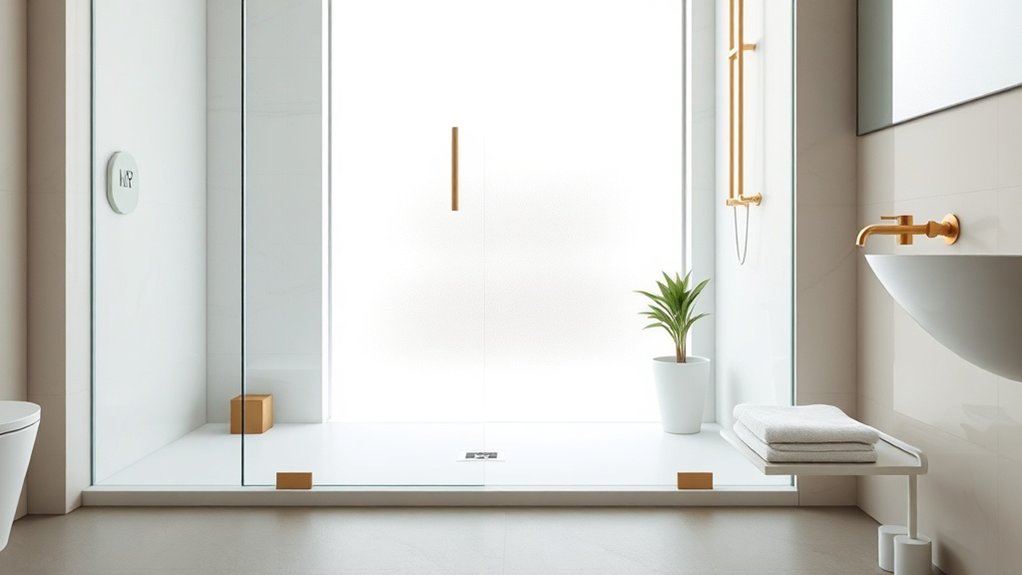
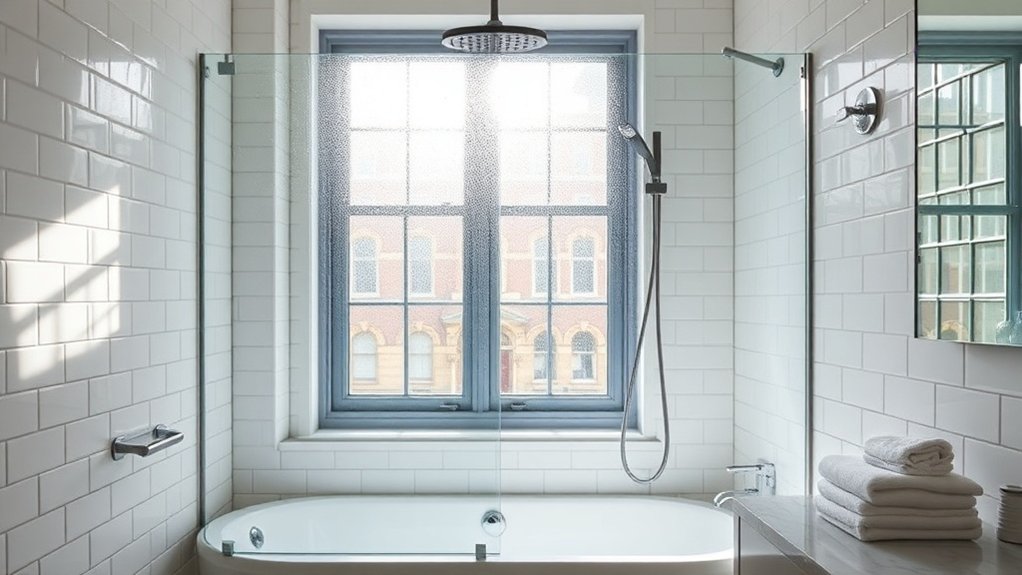
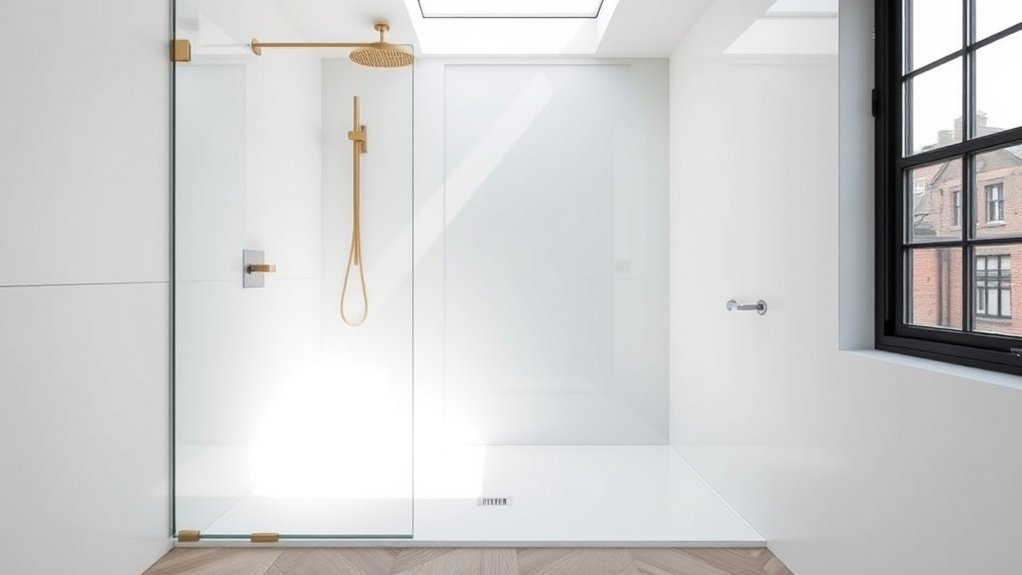
Although trends evolve quickly in London interiors, frameless minimalist shower screens remain a constant for homeowners who value clean lines, visual lightness, and efficient use of space. You use low‑iron toughened glass, slimline brackets, and precision-engineered hinges to create an almost invisible barrier that lets porcelain, terrazzo, or microcement surfaces dominate.
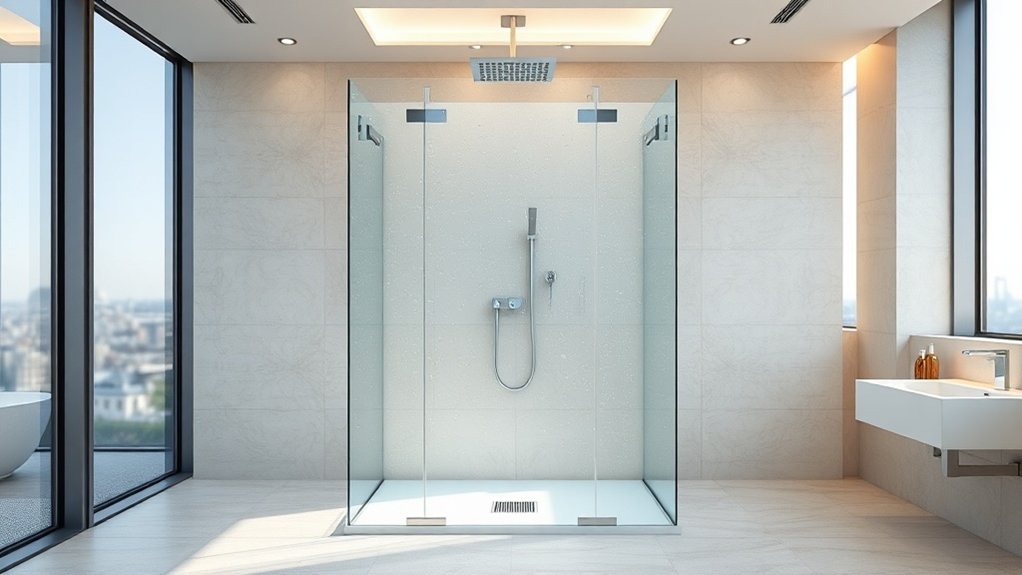
With a ceiling-mounted rain shower, a frameless screen keeps spray precisely contained without interrupting the architectural volume of the room. For a steam enclosure, you can specify full-height glass, discreet seals, and minimal gaps to optimise vapor retention while preserving a gallery-like aesthetic.
Classic Framed Elegance
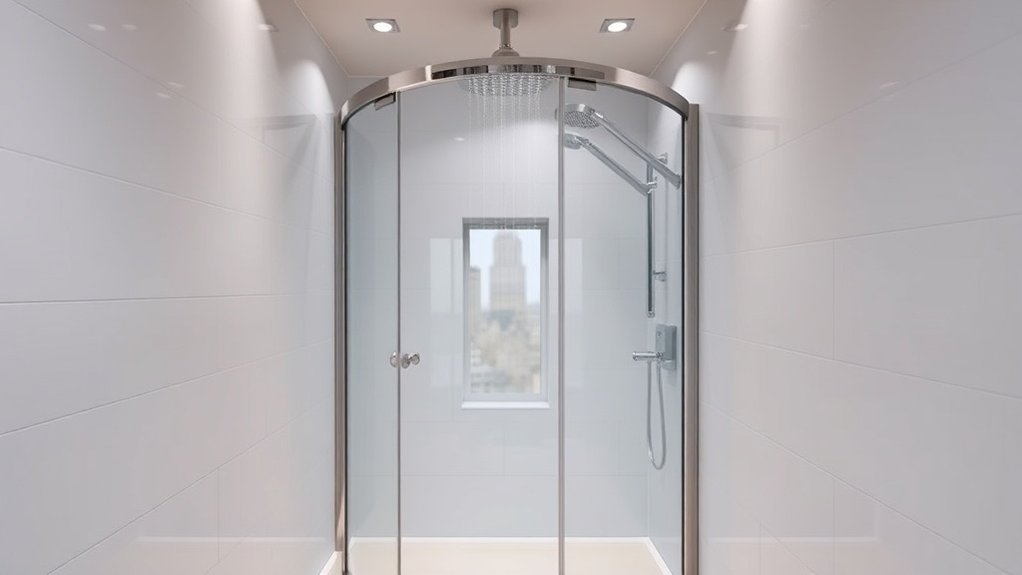
Even in the most contemporary London bathrooms, you’ll often specify classic framed shower screens to introduce structure, proportion, and a sense of permanence. You gain a defined architectural line that visually anchors compact spaces and works brilliantly with strong tile geometries or terrazzo floors.
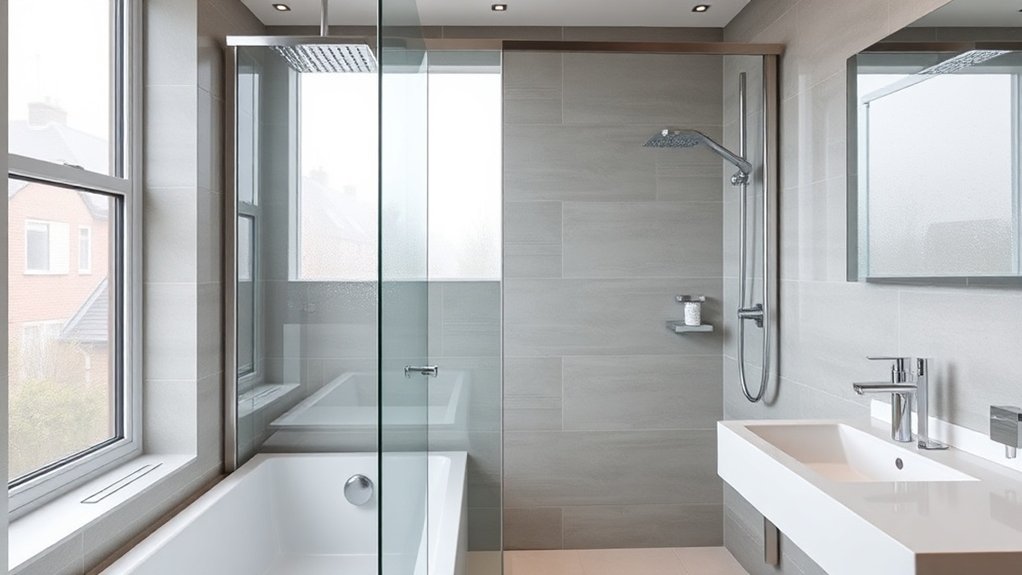
You’ll choose aluminium or stainless-steel profiles with precision mitred corners, magnetic seals, and integrated channels that optimise bathroom ventilation by directing steam upwards rather than into the room. As shower curtain alternatives, framed systems minimise billowing, improve water containment, and reduce mould traps along the floor line. Specify clear, low‑iron, or fluted glass to control privacy while maintaining light transmission. With powder-coated RAL finishes, you can align the frame with brassware, radiators, or window ironmongery for a coherent, future-ready scheme.
Sliding Space-Saving Options
Why sacrifice valuable floor area to a door swing if a precision-engineered sliding shower screen can deliver full access within the tightest London footprint? By transferring movement to a concealed track, you free up space for storage, heating elements, or a larger shower tray without compromising accessibility.
You can specify low-profile stainless-steel rollers, soft-close mechanisms, and minimal top rails that read as architectural, not bulky. Toughened glass panels , paired with Eco friendly materials such as recycled aluminium frames and low-VOC seals, support a lower-impact specification.
With custom designs, you can follow awkward eaves, nib walls, or recessed niches precisely, ensuring every millimetre works hard. Configure single-, double-, or corner-sliding layouts to optimise circulation, enhance daylight, and create a clean, future-ready shower zone.
How to Measure Your Bathroom for a Shower Screen
To get a precise fit for your shower screen, you’ll start by assembling the right tools and taking accurate measurements of your shower area’s width, height, and any angles. You’ll then map these dimensions against your preferred screen style, making sure to factor in walls that aren’t perfectly square and floors that aren’t perfectly level. Finally, you’ll account for existing fixtures—like taps, towel rails, and radiators—so the screen opens, closes, and seals correctly without clashing with your bathroom layout.
Tools You’ll Need
Before you take any measurements, assemble a simple but accurate toolkit: a quality tape measure (ideally 5m+ with metric markings), a spirit level at least 600mm long, a pencil, masking tape, and a notepad or digital device for recording dimensions. This lets you capture precise data for bespoke or off-the-shelf shower screens.
Add a square or digital angle finder to assess out-of-true walls , essential in London properties with historic movement. A laser measure helps when you’re aligning with existing fixtures, Bathroom ventilation grilles, or structural nibs.
Keep a small torch handy to inspect corners, ceiling junctions, and any pipe chases that might impact profiles or fixings. Note nearby Water pressure controls and valves so you can plan future screen access intelligently.
Measuring Shower Area
How do you turn a complex, often uneven London bathroom into clear, reliable dimensions for a new shower screen? Start by establishing your datum lines: measure floor-to-ceiling height at three points and record the smallest figure. Next, measure wall-to-wall width at tray level, mid-height, and proposed screen top, again using the tightest dimension. Note any deviation over 5mm; it’ll determine whether you need adjustable profiles or bespoke glass.
Measure the shower tray’s outer edge, not the tiled line, and confirm that corners are square using a digital angle finder. Consider bathroom ventilation early : note extract positions and air paths so taller screens don’t trap moisture. Finally, match measurements to compatible shower enclosure materials, ensuring structural integrity and minimal visual interruption.
Accounting For Fixtures
Once you’ve fixed your core dimensions, you need to map every obstacle that could clash with the new screen: taps, valves, riser rails, niches, towel warmers, window sills, and even awkward boxing-in around soil pipes. Measure the projection of each element from the wall and its height from finished floor level. Sketch a simple elevation and plan , then annotate clearances.
Treat this like spatial accounting procedures: every millimetre is allocated to glass, hardware, or access. Check hinge swing against radiators and towel rails, and confirm that door movement doesn’t compromise fixtures maintenance. If you’re integrating recessed profiles, verify there’s enough depth without cutting into pipework. Finally, share this annotated plan with your fabricator so they can optimise cut-outs, brackets, and sealing lines.
Frameless vs Framed Shower Screens: Pros and Cons
Although both options enclose water effectively, frameless and framed shower screens in London bathrooms differ considerably in structure, performance, and visual impact. Frameless screens use toughened glass anchored with minimal hardware, delivering a seamless aesthetic that amplifies light, showcases tiles, and supports Eco friendly options through durable, long‑life materials and easy‑clean coatings. You gain precise alignment and custom design features such as recessed channels, flush thresholds, and integrated linear drains.
Framed systems rely on perimeter profiles for rigidity, offering robust water containment and often lower upfront cost. However, frames introduce more visual weight, additional joints, and increased maintenance points. When you evaluate both, consider installation tolerances, structural support, long-term seal integrity , and how each solution aligns with your desired level of visual minimalism and technical performance.
Best Shower Screens for Small London Bathrooms
Two key factors define the best shower screens for small London bathrooms: efficient use of footprint and intelligent light management. You’ll maximise space by prioritising sliding or bi-fold doors over outward-opening models, and by specifying minimal profiles that visually recede. Clear glass and low-iron options transmit more light, making tight layouts feel larger without altering the room’s structure.
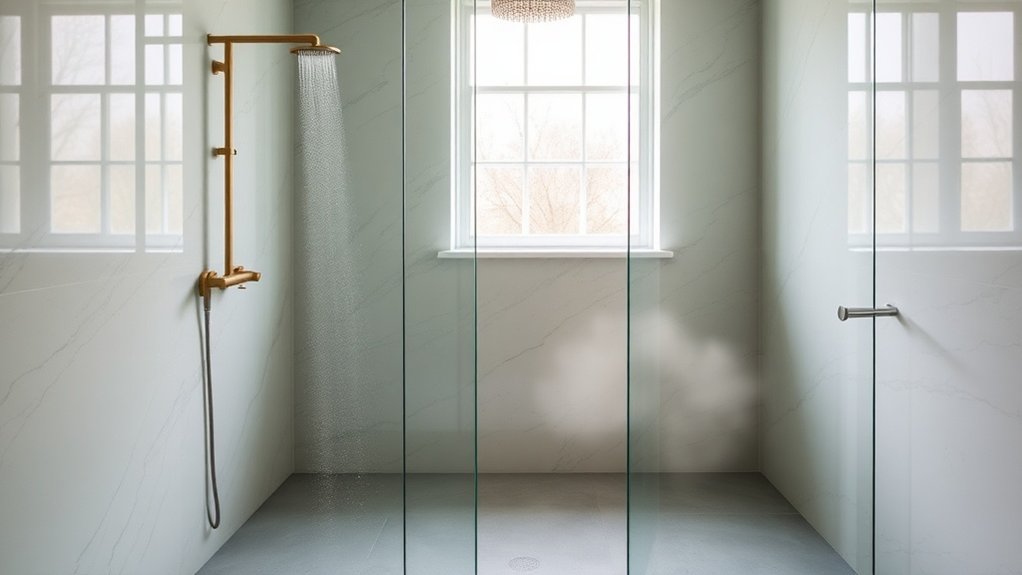
For a future-ready solution, you should integrate eco friendly materials, such as recycled aluminium framing or low-VOC sealants, into the specification. Custom design options let you calibrate screen height, width, and door direction to negotiate awkward alcoves, sloping ceilings, or boxed-in pipework. Consider fixed-panel walk-in configurations for ultra-compact ensuites; they reduce mechanical components and keep circulation paths clean and uninterrupted.
Glass and Hardware: Choosing Durable Shower Screens
After you’ve planned how a screen will work within a tight London footprint, the next decision is the specification of glass and hardware that can withstand daily use without losing clarity or performance. You’ll want 8–10mm toughened, low-iron safety glass with an easy-clean nano coating that resists limescale from hard London water and integrates cleanly with any Water filtration upgrades at the showerhead.
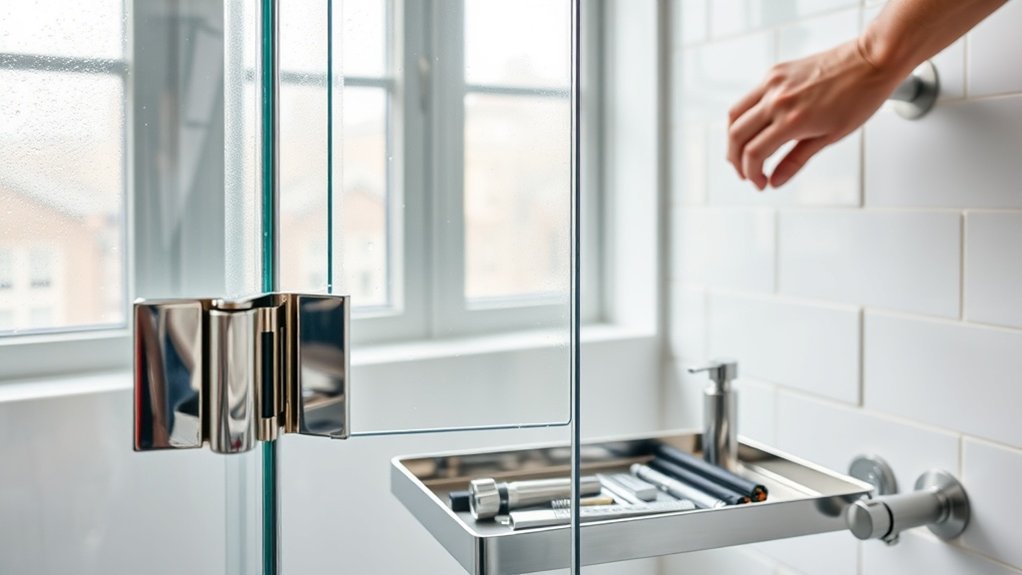
Specify corrosion-resistant 316 stainless steel or solid brass hardware with precision-engineered pivots and rollers, ensuring smooth motion under constant humidity. Opt for wall channels with integrated adjustment to accommodate out-of-true London walls.
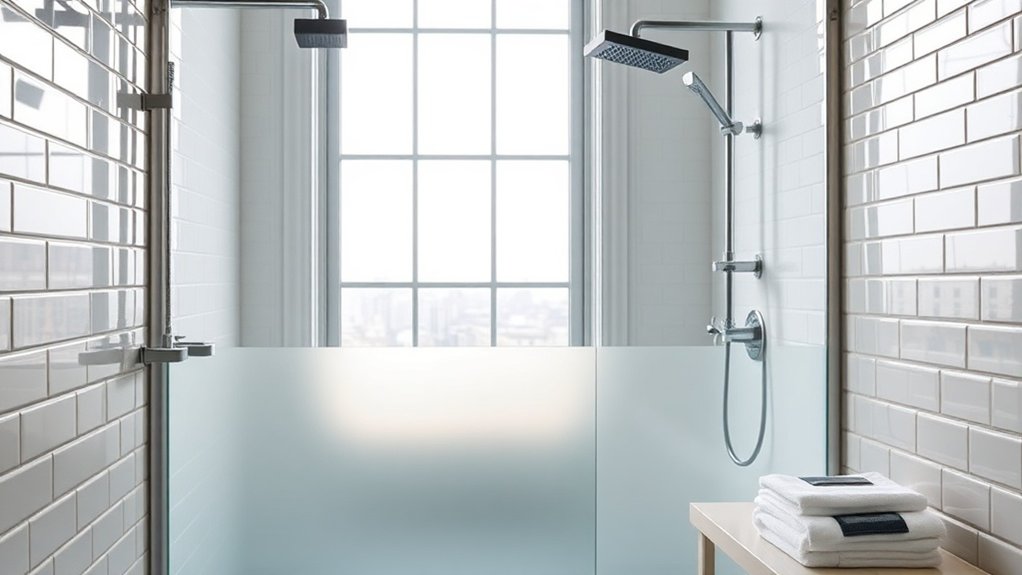
For Privacy options, consider gradient frosting, switchable smart glass , or patterned interlayers that diffuse light while maintaining a minimal, contemporary aesthetic compatible with underfloor heating and linear drains.
How Much Do Shower Screens Cost in London?
When you start costing shower screens in London, you’re balancing three main variables: configuration complexity, glass specification, and hardware quality . A basic framed screen might start around £350–£500 supplied and fitted, while a minimalist walk‑in with premium hardware typically ranges from £700–£1,200.
Once you move into custom design, costs rise with precise tolerances, bespoke cuts, and specialist finishes. Fully tailored, wall‑to‑wall frameless systems in thicker toughened glass usually sit between £1,000 and £2,000+, depending on layout and access constraints.
Eco friendly materials can slightly increase upfront cost—think low‑iron recycled glass, water‑borne coatings, or high‑grade aluminium with recycled content—but they reduce lifecycle impact and often extend durability. Always factor in silicone, seals, and precision templating when comparing quotes.
Choosing a Reliable Shower Screen Installer in London
Although product choice defines the look and performance of your bathroom, the installer you choose in London ultimately determines how well your shower screen functions and how long it lasts. You need a specialist who understands glass tolerances, wall deviations, and drainage gradients, not just basic plumbing.
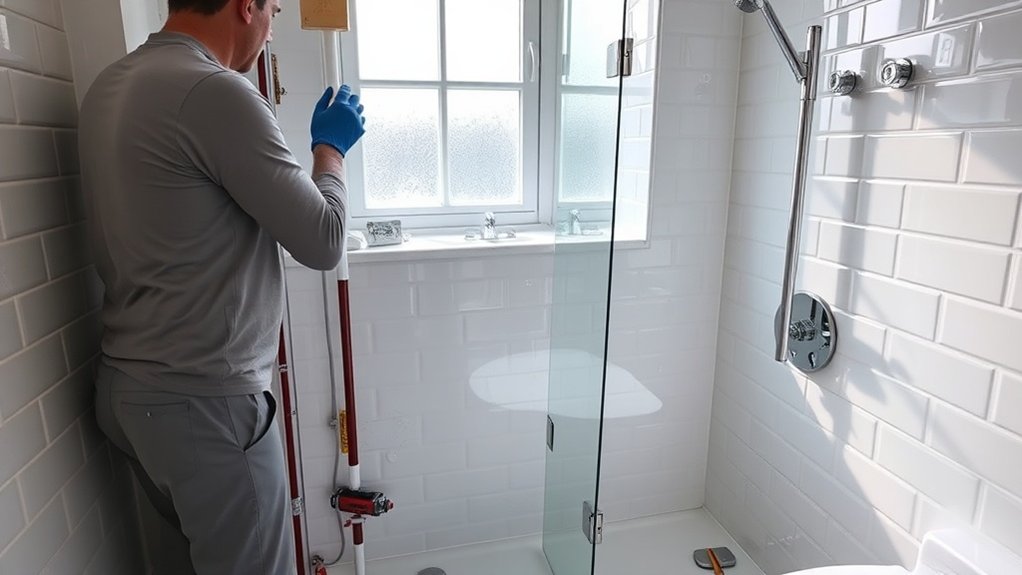
Evaluate installers who survey on-site, laser-measure, and provide CAD or clear technical drawings before fabrication. Ask how they fix frames into different substrates and manage waterproofing at junctions. Confirm they’re experienced with low-iron glass, bespoke hardware, and Eco friendly materials such as recycled aluminium profiles or sustainable sealants.
Prioritise installers offering written installation warranties, clear timelines, and transparent variations procedures. Finally, check recent London case studies and independent reviews to validate consistency, precision, and aftercare responsiveness.
Care Tips for Long-Lasting Shower Screens in London Homes
Because your shower screen is exposed daily to hard water, steam, and soaps, a disciplined care routine is essential to preserve clarity, prevent limescale, and protect seals in a London home. Prioritise eco friendly options: use pH‑neutral, plant-based sprays or a white vinegar and water mix to dissolve mineral deposits without degrading coatings or silicone.
Adopt daily maintenance tips: squeegee glass after each shower, then ventilate to disperse humidity and prevent mould on frames and channels. Weekly, detail clean hinges, runners, and rubber gaskets with a soft brush to stop grit from abrading metal finishes. Inspect seals quarterly and replace at the first signs of cracking. Finally, avoid abrasive pads; choose microfiber cloths to preserve nano-coatings and maintain optical transparency.
Frequently Asked Questions
Can I Install a Shower Screen in a Listed London Building or Conservation Area?
Yes, you can, but you must protect the building’s fabric and visual character. You’ll coordinate with planning or conservation officers before altering walls, floors, or windows. Focus on reversible fixes, slimline profiles, and high-spec Shower screen materials like low-iron glass and discreet hardware. Prioritize Bathroom aesthetics that echo original detailing—think minimal framing, heritage-appropriate finishes, and concealed fixings—to deliver innovation without compromising statutory protection.
Do I Need Planning Permission for an Outdoor or Rooftop Shower Screen in London?
You usually won’t need full planning permission , but you must check local rules, especially in conservation areas or tall buildings. You’ll treat an outdoor or rooftop shower screen like light external works—planning hinges on visibility, overlooking, and structural impact. You’ll also need robust waterproofing standards, wind‑load calculations, and verified installation safety. Want innovation that passes inspection? Involve a structural engineer and confirm details with your borough’s planning and building control teams.
How Do London Hard-Water Conditions Affect Shower Screen Warranties and Lifespan?
London’s hard-water conditions accelerate limescale buildup, so you’ll see Hard water damage reducing clarity, stressing seals, and shortening coating performance. Most manufacturers treat this as maintenance-related, creating strict warranty limitations unless you follow specified cleaning regimes . You should choose screens with advanced hydrophobic or nano-coatings, corrosion-resistant hardware, and removable seals. Combine a water softener or inline filter with non-abrasive, pH-balanced cleaners to extend lifespan and preserve both function and aesthetics.
Are There Eco-Friendly or Recycled-Glass Shower Screen Options Available in London?
Yes, you’ll find eco-friendly glass shower screens using recycled materials through several innovative UK suppliers. You can specify toughened low-iron glass with 30–60% cullet content, paired with minimal, recyclable aluminium framing. Opt for VOC-free seals, modular hardware, and demountable fixing systems to future‑proof the design. You won’t just reduce embodied carbon—you’ll turn your bathroom into a sustainability lab disguised as a luxury wet-room.
Can London Landlords Require Specific Shower Screen Types in Rental Properties?
Yes, a London landlord can specify certain shower screen types if they meet safety and housing standards . You’ll often see toughened glass or framed designs required for durability and liability reasons. While you can propose innovative shower screen styles aligned with current bathroom renovation trends, any change typically needs written consent. To innovate, present specs: safety glass rating, easy-clean coatings, and water-containment performance to justify an upgrade.
Summary
Now you can picture it clearly: water cascading behind a flawless glass panel, clean sightlines stretching wall to wall, hardware aligned with millimetre precision. When you choose the right screen, measure accurately, match glass and fittings, and trust a skilled London installer, your bathroom stops being cramped and cluttered. It becomes a bright, engineered envelope of glass and light—easy to maintain, built to last, and tailored exactly to the way you live.