
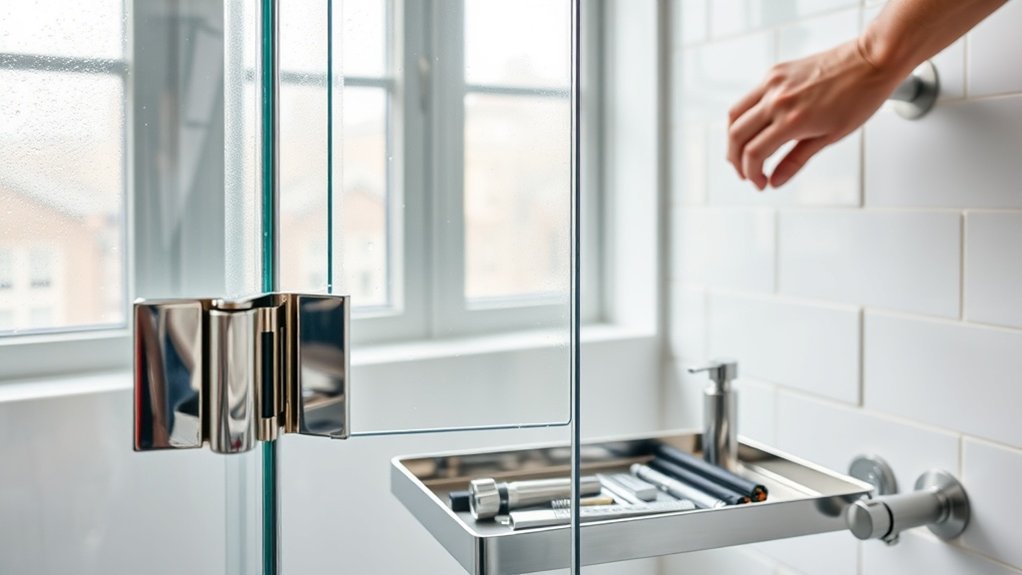
If your shower screen in London’s showing leaks , dragging doors, limescale haze, or hairline cracks, you can usually fix it without full replacement. Targeted resealing, hinge or roller replacement, and correct alignment often restore safety and performance at lower cost than new glass. For cracked or structurally compromised panels, BS EN 12150-compliant glass replacement keeps you safe and compliant. You’ll also see how to choose the right specialist, manage costs, and prevent future damage.
Key insights
- Professional London technicians diagnose leaks, misalignment, cracks, and hardware issues, then recommend repair or safe replacement of your shower screen.
- Common services include seal and gasket replacement, hinge and roller upgrades, glass panel replacement, and realignment to stop water escaping.
- Costs depend on glass type, hardware, access, and postcode; minor seal repairs are cheaper than replacing cracked or shattered safety glass.
- Reputable companies use BS EN 12150-compliant toughened glass, sanitary silicone, insured installers, and water testing to validate repairs.
- Many London services offer photo-based pre-diagnosis, online booking, same-day or urgent visits, and cashless payment options.
How to Tell Your Shower Screen Needs Repair
When you understand the early warning signs of damage, you can repair a shower screen before it becomes unsafe or fails completely. You start by visually inspecting the glass and hardware under bright, directional light. Look for hairline cracks at corners, hinge points, and cut-outs; even micro-fractures indicate stress and require prompt attention.
Check alignment: the door should close smoothly, with consistent gaps along the seals. Any drag on the floor track, catching at the frame, or movement in the wall channels signals loosening fixings.
Evaluate bathroom ventilation and moisture patterns . Persistent condensation around framing accelerates corrosion and seal failure. Finally, track soap scum buildup along edges and joints; unusual staining, etching, or cloudy bands often reveal degraded seals or leaking interfaces that need repair.
Common Shower Screen Problems in London Bathrooms
Although every property is different, London bathrooms tend to suffer from a predictable set of shower screen issues driven by hard water , high humidity, and tight spaces. You’ll typically see limescale etching on glass, causing hazing that standard cleaners can’t remove. Seals and gaskets degrade quickly, leading to micro-leaks that leave tell‑tale trails and encourage tile mold at junctions.
Roller mechanisms and hinges often corrode or clog with mineral deposits, making sliding or pivot doors drag, scrape, or misalign. In compact rooms, impact damage from basins or doors can chip or crack glass panels. Where a shower curtain has been replaced with a rigid screen, poorly detailed junctions can channel water onto floors, stressing grout lines and amplifying existing waterproofing weaknesses.
Repair or Replace: How to Make the Right Call
If your shower screen’s starting to leak, drag, or haze over, you don’t automatically need a full replacement . You first assess the hardware, seals, and glass. If leaks come from failed silicone or perished gaskets, a targeted seal replacement usually restores performance. When rollers grind or stick, upgrading hinges, runners, and handles often solves the issue and extends service life.
Replacement makes more sense when the glass is deeply etched, cracked, or no longer meets current safety standards. At that point, you can align with contemporary design trends: frameless systems, low-iron glass, and minimalist hardware. You can also specify eco friendly materials, such as recycled aluminium profiles and water-efficient sealing solutions, to future-proof your bathroom with a smarter, lower-impact installation.
Costs of Shower Screen Repair in London
Because repair budgets can vary widely across the capital, you’ll make better decisions once you understand how London-specific factors drive shower screen costs. Labour rates shift by postcode, access constraints in compact bathrooms add time, and premium frameless systems demand specialist handling.
You’ll typically see three cost drivers : components, labour, and preventive upgrades. Replacing worn hinges or profiles is usually mid-range, while cracked safety glass is the priciest element. Targeted use of advanced shower sealants can be cost‑efficient, restoring watertight integrity without full panel replacement. Adding professional glass cleaning and mineral removal reduces micro‑etching, extending the life of coated glass and hardware. By bundling minor fixes with these protective treatments, you stabilise long‑term costs and avoid premature system failure.
What to Expect From Professional Shower Screen Repairs
When you book a professional shower screen repair in London, you can expect a structured, diagnostic approach that targets the root cause rather than just the visible symptoms. The technician will inspect the glass , frame, seals, hinges, and channels, checking alignment, integrity, and how the system responds to actual water pressure.
They’ll identify leaks, instability, or staining that compromise shower cleanliness, then propose targeted interventions: resealing perimeter joints, replacing worn hinges or rollers, correcting misaligned panels, or upgrading seals to higher-performance materials. Technicians typically test the enclosure under full water pressure, validate drainage behaviour, and ensure smooth door operation.
You can expect precise finishing, minimal disruption, and guidance on maintenance strategies that extend service life while preserving both aesthetics and structural performance.
How to Find a Reliable Shower Screen Repair Specialist
When you’re choosing a shower screen repair specialist in London, you need to verify technical qualifications, certifications, and insurance so you know the work meets safety standards. You’ll then compare quotes, scope of services, and warranty terms to guarantee you’re getting both value and durability. Finally, you’ll assess response time and reliability, so urgent issues are handled quickly and your bathroom returns to normal with minimal disruption.
Checking Qualifications And Credentials
Although price and availability matter, you should first verify that any shower screen repair specialist you’re considering is properly qualified and credentialed . Ask for evidence of NVQ or City & Guilds certifications in glazing or fenestration, plus manufacturer training for frameless and semi‑frameless systems.
Check they understand load calculations, glass impact safety standards (such as BS EN 12150), and sealing systems, not just basic hardware swaps. Confirm they carry public liability insurance and, ideally, are members of recognised trade bodies.
For Shower screen aesthetics and performance, look for documented experience with low‑iron, coated, or textured glass, plus defined Glass cleaning techniques that protect hydrophobic or nano‑coatings. Finally, review technical portfolios or case studies that show diagnostic skill, not just “before and after” photos.
Comparing Quotes And Services
Once you’ve confirmed a repairer’s credentials, you should compare quotes line‑by‑line so you understand exactly what you’re paying for and what’s being delivered. Look for a clear breakdown: inspection, glass replacement or adjustment, hardware, sealing, disposal, and any optional upgrades.
Prioritise specialists who specify materials (glass thickness, hinge type, sealant grade) and distinguish between repairing the shower screen, replacing a shower curtain rail, or renewing a bathtub seal. That level of detail shows technical control, not guesswork.
Check whether the quote includes site preparation, protection of tiles, silicone removal, and re‑sealing around trays or baths to prevent future leaks. Ask for photos or diagrams in the proposal; innovative firms often use digital reports, giving you transparent, comparable data across multiple London repairers.
Evaluating Response Time Reliability
Even in a busy city like London, a reliable shower screen specialist should demonstrate consistent, predictable response times from your first enquiry onward. You’re not just timing how fast they reply; you’re evaluating how well they manage workflows, scheduling, and communication under pressure.
Ask for defined service-level targets: response within one business hour, site visit within 24–48 hours, and clear lead times for parts. For critical leaks or shattered glass, check whether they offer a structured emergency response with time-stamped updates.
Assess their digital systems: online booking, automated confirmations, and real-time tracking all indicate operational maturity. Finally, ensure their personal warranty specifies response obligations for post-repair issues, so you’re not left waiting if a seal fails or a hinge misaligns.
Booking Fast Shower Screen Repair in London
Need a shower screen repair in London handled the same day or within tight time constraints? You can streamline booking by using providers with real-time online scheduling, instant slot confirmation, and postcode-based technician allocation . This guarantees the nearest qualified engineer is dispatched, minimising downtime and safeguarding bathroom aesthetics and water conservation through rapid leak control.
When booking, specify glass type, hinge or track system, enclosure configuration, and visible damage. Uploading photos lets technicians pre-diagnose issues and arrive with correct seals, rollers, and compatible safety glass. Choose services that offer digital job tracking, engineer ETA notifications, and cashless payment. Confirm that they carry BS EN 12150-compliant toughened glass and silicone systems engineered for wet environments, so the repair’s not just fast, but durable and performance-focused.
Easy DIY Fixes for Minor Shower Screen Issues
Although a cracked or leaking shower screen can look like a major problem, many minor issues are straightforward to fix yourself with basic tools and the right method. Start by checking seals and hinges. If water escapes, remove old silicone with a plastic scraper, then apply a high-quality sanitary silicone , ensuring a continuous bead along the frame.
Align loose doors by tightening hinge screws and adjusting the tension so the glass closes smoothly without scraping. For Eco friendly cleaning, use a white vinegar and water mix to dissolve limescale without damaging coatings.
When replacing worn seals, measure precisely and choose clear, minimalist profiles that complement modern design trends, keeping your shower enclosure visually light, efficient, and technically reliable.
Staying Safe Around Cracked or Broken Shower Glass
When you spot a crack or shattered panel in your shower screen, your first priority is to secure the area and prevent any contact with unstable glass. By using simple protective measures and correct handling techniques, you can safely contain and remove loose fragments without causing further damage or injury. You’ll also learn how to assess when a straightforward repair is no longer safe and a full glass replacement is the only reliable option.
Immediate Safety Precautions
Even a small crack in a shower screen turns the glass into a potential hazard , so your first priority is to stabilise the area and prevent contact. Don’t use the shower until a technician’s assessed the damage, especially if the crack runs across a frameless shower door or near hinges.
You can implement fast, low‑tech but effective controls:
- Turn off the shower at the isolating valve to stop impact from water pressure and reduce water leakage.
- Close the bathroom to children and pets; put a visible “Do Not Use” note on the door.
- Apply wide masking or duct tape in a grid over the crack to limit vibration and flex.
- Place a non‑slip mat or folded towel under the screen to cushion minor movement.
Handling Broken Glass Safely
Once you’ve stabilised the damaged screen, your next priority is managing any broken or shedding glass so nobody gets cut. For best glass safety, start by wearing cut‑resistant gloves and closed shoes. Lay down a damp towel or non‑slip sheet to capture small fragments. Carefully lift larger pieces into a rigid container, never into thin bin liners that can puncture.
Use a torch at a low angle to locate slivers, then vacuum with a nozzle attachment, followed by a damp microfibre wipe to trap residual shards. For break prevention while you plan repairs, apply clear safety film or strong packing tape over cracked zones to bind fragments. Finally, keep children and pets out of the area until it’s fully cleared.
When To Seek Replacement
Although small chips and hairline cracks might look harmless, they tell you the glass has already lost part of its structural integrity and can fail suddenly under normal use. You shouldn’t rely on temporary fixes once the pane shows spreading cracks, edge damage , or visible bowing under door movement. At that point, replacement is the safest, most future‑proof option.
You’ll typically need a new screen when:
- Cracks reach an edge – stress concentrates and failure risk escalates.
- Hinges or channels deform – the door no longer closes in a stable plane.
- Laminated or tempered layers delaminate – you see milky streaks or bubbles.
- You’re upgrading to luxury fixtures using eco friendly materials – modern toughened, low‑iron, and recycled‑content glass boosts safety and sustainability.
How to Prevent Future Shower Screen Damage
When you understand what typically causes shower screen failures, you can take simple, targeted steps to prevent cracks, leaks, and hardware breakdown . Start by stabilising movement: confirm hinges, wall channels, and brackets are tight and aligned, so the glass doesn’t experience torsion when opening or closing. Fit soft-close hinges or bump stops to prevent impact stress.
Control water behaviour next. Calibrate the shower head angle so water doesn’t constantly flood seals. Replace worn seals promptly and avoid hanging heavy items on the glass; use a separate rail or shower curtain for that load.
Finally, manage surface chemistry. Clean regularly with non‑abrasive products to stop soap scum forming a hard, corrosive layer that degrades seals, rollers, and coatings, extending your screen’s functional lifespan.
Repair Challenges in Small Flats vs Larger Bathrooms
When you repair a shower screen in a compact London flat, space constraints and limited access dictate how you position tools, remove panels, and safely handle glass. In larger bathrooms, you can use bulkier hardware and heavier glass, but you still need to assess wall structure, fixing points, and movement clearances. In both cases, you’ll make better long-term decisions by matching material type and thickness to the room’s size, humidity levels, and expected mechanical stress.
Space Constraints And Access
Even in a well‑planned bathroom, how much space you’ve got and how you can access the shower area will dictate the repair method, tools, and time required. In London flats, you’re often dealing with tight clearances , awkward door swings, and obstacles like towel rails or boxed‑in pipework.
To keep disruption low and performance high, a specialist will quickly map out:
- Panel removal routes that avoid damaging tiles or fittings in cramped corners
- Hinge and seal replacement methods that need minimal swing space
- Fixings that withstand local water pressure yet can be serviced from the most accessible side
- Vent‑aware solutions that maintain bathroom ventilation while allowing future inspection
This approach lets you upgrade or repair your shower screen efficiently, even in the smallest footprint.
Material Choices And Durability
Although glass and aluminium look similar from one bathroom to the next, the way they behave under daily use in a compact London flat versus a larger family bathroom can be very different. In small flats, you’re dealing with higher impact frequency: doors hit basins, towels snag seals, and steam lingers longer. That means your material options should prioritise tempered or laminated safety glass , hard‑anodised aluminium, and high‑density polymer seals.
In larger bathrooms, durability factors shift toward structural rigidity over longer spans, corrosion resistance near windows, and stable hardware that won’t sag under oversized panels. You’ll want reinforced hinges, stainless fixings (A2 or A4 grade), and nano‑coatings to reduce limescale . With the right specification, repairs become less frequent and more predictable.
Frequently Asked Questions
Can I Upgrade to Frosted or Tinted Glass During a Repair Visit?
Yes, you can usually upgrade during a repair visit, as long as measurements and compatibility check out. You’d specify if you want frosted glass or darker tinted options, then the technician verifies hardware load, safety rating, and hinge alignment. They’ll order toughened or laminated panels to spec, remove the old unit, and install the upgraded glass, ensuring clean edges, reliable seals , and a modern, privacy‑focused finish.
Do London Landlords Usually Cover Shower Screen Repair Costs in Rented Properties?
Yes, they usually do when damage results from normal wear and tear under standard landlord responsibilities. If you or guests caused the breakage, costs often shift to tenant obligations. Check your AST, inventory photos, and deposit scheme guidance; they’ll define liability like a clear workflow. Document the issue , notify your landlord in writing, and propose modern, durable replacements to encourage an upgraded, future-proof repair strategy.
Are There Eco-Friendly or Recycled Glass Options for Shower Screen Repairs?
Yes, you can specify eco friendly glass and panels made from recycled materials for shower screen repairs. You’d typically choose tempered low-iron or laminated glass with a high recycled content and verify manufacturer certifications. Ask installers about closed-loop production, local sourcing, and durable, non-toxic sealants. You’ll maintain structural performance, safety compliance, and a clean aesthetic while substantially reducing embodied carbon and lifecycle environmental impact .
Can Existing Shower Hardware Be Reused When Repairing a Damaged Screen?
Yes, you can often reuse existing shower hardware; around 60% of fittings remain compatible after glass failure. A technician first checks hardware compatibility—measuring clamp tolerances, screw integrity, and alignment with new glass thickness. If components pass stress and corrosion checks, they’re retained to preserve repair durability and reduce waste. Where tolerances fail, you’ll upgrade selectively , integrating modern, precision-engineered fittings that optimise performance without a full system replacement.
Is It Possible to Improve Bathroom Ventilation as Part of a Shower Screen Repair?
Yes, you can improve bathroom ventilation during a shower screen repair. You integrate upgraded ventilation systems, optimize bathroom airflow paths, and coordinate screen design with extract fan capacity. You might specify a higher-capacity, humidity-sensing fan , add or resize ducting, and align screen gaps or transoms to reduce stagnation zones. You’ll end up with less condensation, faster drying, and a more future-proof, innovation-ready bathroom environment.
Summary
When you spot early cracks, when you seal loose frames, when you choose repair over risky delay, you’re not just fixing glass—you’re protecting your home. You understand costs, you know what professionals deliver, you’ve seen what simple DIY can solve. In a compact flat or a spacious bathroom, you can act quickly, plan safely, and prevent future damage—keeping your London shower screen clear, secure, and reliably engineered for daily use.