
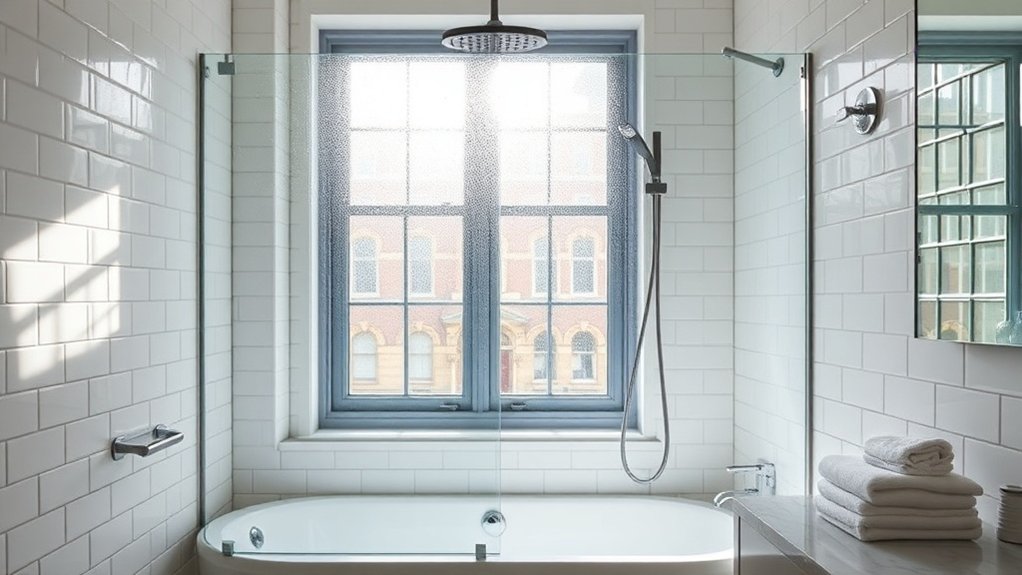
Upgrade your London bathroom with a well‑specified bath screen and you’ll gain sharper aesthetics, better water control, and longer‑lasting finishes. Choose fixed, sliding or folding glass to suit tight layouts, shower‑over‑bath setups, and period or modern schemes. Prioritise toughened safety glass, quality brass or stainless hardware, and precise installation to protect subfloors and cabinetry from moisture. With the right design choices, even a small flat feels brighter, larger, and you’ll see exactly how to achieve that next.
Key insights
- Bath screens in London efficiently convert baths into contained shower zones, protecting walls, subfloors, and cabinetry from persistent moisture and leaks.
- Choose between fixed, folding, or sliding bath screens based on bathroom size, access needs, and whether the space is a family home, loft, or micro-bathroom.
- Clear or low-iron glass and slim profiles help small London bathrooms feel larger and brighter, while framed screens add graphic structure and period character.
- Quality hardware (solid brass, stainless steel, or aluminium) with suitable load ratings and finishes like matte black or brushed nickel ensures durability in London’s humid climate.
- Professional surveying and installation, including precise fixing and sealing, are crucial to prevent leaks, ensure safety, and achieve a clean, architectural finish.
How Bath Screens Transform London Bathrooms
When you add a well‑specified bath screen to a London bathroom, you’re not just stopping splashes; you’re redefining how the space performs and looks. You convert a bath into a precise, contained shower zone, protecting joints, subfloors, and cabinetry from persistent moisture .
By replacing outdated shower curtain alternatives, you eliminate fabric that traps humidity and encourages mould. A properly fitted glass screen works with bathroom ventilation, not against it, allowing air to circulate freely while keeping water exactly where it’s needed.
You also gain visual continuity: clear or low‑iron glass extends sightlines, making compact London bathrooms feel wider and brighter. Hardware alignment, sealing profiles, and tolerances become design tools, letting you achieve a sharp, engineered aesthetic that’s both durable and easy to maintain.
Bath Screen Types and Which Homes They Suit
When you compare fixed panel bath screens with folding options, you’re really balancing structural rigidity, visual clarity, and daily practicality. You’ll want to match the screen type to your bathroom’s footprint, plumbing layout, and how the tub functions in your routine. By evaluating hinge mechanisms , panel widths, and clearance zones, you can pinpoint the best screens for small bathrooms and compact London floor plans.
Fixed Panel Bath Screens
Although they’re the simplest style of bath screen, fixed panel bath screens deliver a clean architectural look and robust water control that suits many London bathrooms. You anchor a single pane of toughened safety glass to the wall and bath edge, creating a static barrier that resists movement and leakage even under high‑pressure showers.
You’ll value glass durability here: thicker 8–10mm panels offer superior rigidity , long service life, and a premium tactile feel. Minimal profiles, concealed fixings, and seamless silicone lines protect performance while maximising aesthetic appeal. Fixed panels work especially well in narrow, linear spaces, loft conversions, and contemporary refurbishments where you want uninterrupted sightlines, easy cleaning, and no floor swing. For a sharper edge, consider bespoke heights, smoked tints, or fluted textures.
Folding Bath Screen Options
Fixed panels suit streamlined spaces, but many London homes need a bath screen that moves with the room. Folding bath screens answer that need by articulating along precision-engineered hinges, allowing you to pivot, fold, and stow the glass to suit changing routines, visiting guests, or multi-use family bathrooms.
You can specify 3–5 panel systems, framed or frameless, with low-profile seals that minimise splash without disrupting the sightline. For Eco friendly options, choose lightweight aluminium profiles with high recycled content and low‑iron toughened glass that maximises natural light, reducing reliance on artificial lighting. A Custom design lets you tune panel widths, folding direction, and handle placement to clear existing brassware, radiators, or window reveals while maintaining a clean, architectural geometry.
Best Screens For Small Bathrooms
How do you choose a bath screen that protects your floor without overwhelming a tight London footprint? You start by maximising light, movement, and multifunctionality. Clear, low‑iron glass keeps bathroom lighting effective, so the room feels larger and sharper.
-
Single fixed panel – Ideal for narrow terraces. A frameless 8–10mm panel fixes directly to the wall, leaving open access at one end. It pairs neatly with linear towel racks to maintain a clean sightline.
-
Folding multi‑panel screen – Best for family flats. It concertinas above the bath, freeing elbow room when not in use and simplifying cleaning.
-
Sliding bath screen – Works in micro‑bathrooms where door swing is impossible. A concealed runner delivers smooth travel and avoids clashes with basins or vertical towel racks.
Fixed vs Hinged vs Folding Bath Screens
When you compare fixed, hinged, and folding bath screens, you’re really balancing structural stability, access, and spatial efficiency . Fixed panels give you maximum rigidity, clean sightlines, and minimal hardware, ideal when you want uninterrupted glazing or to echo vintage charm with slim, metal-framed profiles. They excel when your bath layout is predictable and you don’t need wide entry zones.
Hinged screens pivot on robust wall-mounted brackets, giving you generous access and precise control over swing direction and sealing. They work well if you prioritise ergonomic entry and integrated towel rails.
Folding (bi‑fold or tri‑fold) screens segment the glass into articulated panels. With the right material options—toughened glass, anodised aluminium, soft-close hinges—you gain compact stowage, fine-tuned movement, and a highly adaptable , future-proof configuration.
Best Bath Screens for Small London Flats
Although London bathrooms often feel compressed by awkward footprints and tight clearances, you can still specify a bath screen that optimises both movement and visual space. Focus on ultra-thin profiles, precise sealing, and components that integrate with tight junctions around sills and radiators.
-
Minimal-frame sliders – Choose low-profile top rails and clear toughened glass to keep sightlines open. Dark or metallic Color options accent hardware without visually shrinking the room.
-
Micro-fold panels – Compact segmented leaves park tightly against the wall, freeing access for cleaning and bath entry. Refine hinge geometry to avoid clashing with taps.
-
Fixed offset screens – A short, fixed panel with a carefully calculated overhang controls spray while preserving openness. Prioritise Material choices like 8mm glass and corrosion-resistant aluminium to endure high-humidity London flats.
Planning a Bath Screen for Shower-Over-Bath Layouts
Because a shower-over-bath has to function as both a soaking tub and a full-height wet zone, planning the bath screen starts with mapping how water actually leaves the spray footprint and interacts with the room envelope. Track splash trajectories from head height to the floor, noting critical junctions: tile transitions, window reveals, and the edge of the tub lip.
Next, coordinate the screen with bathroom ventilation and shower head upgrades. A higher‑pressure or rainfall head changes spray angle and bounce, often demanding a wider or taller screen. Guarantee the screen’s height aligns with the steam plume path so moisture is directed toward the extract, not the door. Finally, resolve detailing at the tub edge and wall to prevent capillary creep and long-term leaks.
Frameless vs Framed Bath Screens
When you compare frameless and framed bath screens in London homes, you’re really balancing visual impact, budget, and performance over time. You’ll want to understand how each option affects the bathroom’s sightlines, hardware expression, and long‑term resistance to limescale, flexing, and seal failure. By weighing aesthetic priorities against cost, durability, and maintenance demands, you can specify a screen that looks refined and works reliably in daily use.
Aesthetic And Design Impact
In London bathrooms where every millimetre counts, the choice between frameless and framed bath screens has a direct impact on how the space looks, feels, and functions. You’re not just selecting glass; you’re defining visual flow, Color coordination , and lighting effects across the whole room.
-
Frameless screens minimise visual interruption, letting wall finishes, large‑format tiles, and feature brassware read as a single plane. They’re ideal when you want a gallery-like aesthetic.
-
Framed screens introduce graphic lines that can anchor a scheme. Black, brass, or colour‑matched profiles let you echo window frames, taps, or hardware for cohesive detailing.
-
From a planning perspective, you’ll use screen geometry to control sightlines, accent feature lighting, and create perceived depth in narrow London layouts.
Cost, Durability And Maintenance
A bath screen doesn’t just shape sightlines; it also sets the long‑term cost profile and maintenance workload of your London bathroom. When you run a clear cost comparison, framed screens usually win on upfront price, while frameless models demand higher initial investment but lower cleaning time and longer design relevance.
In durability testing, frameless screens rely on thicker, toughened glass and precision hardware; framed systems depend on protective profiles that can trap moisture and degrade. You’ll clean a frameless panel faster because there are fewer seals and joints to accumulate limescale and mould. Framed options may need more frequent seal replacement and frame refinishing. If you prioritise lifecycle value and minimal maintenance, a high‑quality frameless screen typically delivers the strongest return.
Bath Screen Glass Thickness, Safety and UK Rules
Although a bath screen looks like a simple sheet of glass, its thickness, safety rating and compliance with UK regulations are critical to how well it performs and how long it lasts. You should regard the screen as engineered infrastructure, not décor.
- Thickness – In London homes, you’ll typically specify 6mm or 8mm toughened glass; 10mm is a premium, ultra-rigid option for large panels or minimal framing.
- Glass safety – Always insist on BS EN 12150 toughened glass, heat-treated to fragment into small, less harmful pieces if it fails.
- UK regulations – Confirm compliance with Part K (protection from impact) and relevant CE/UKCA marking. Ask your supplier for conformity documents and edge-labelling, so you know the glass, fixings, and door furniture all meet London building-control expectations.
Bath Screen Privacy: Clear, Frosted and Tinted Glass
While the glass all performs the same basic function of keeping water in the tub area, your choice between clear, frosted, and tinted bath screens in London drives both privacy and the overall look of the room. Clear glass maximizes light and visual openness, ideal when you prioritize spatial continuity over modesty.
Frosted glass increases privacy options through controlled translucency; acid‑etched or sandblasted finishes diffuse silhouettes while still transmitting light. You can specify banding, gradients, or patterns as part of targeted glass customization.
Tinted glass adds privacy and glare control, with grey, bronze, or subtle blue tones altering light temperature and reflection . When you select tint level, consider lumens, orientation, and artificial lighting to maintain comfortable, functional illumination.
Matching Your Bath Screen to Modern or Period Bathrooms
When you’re matching a bath screen to a London bathroom, you need to read the existing architecture first, from cornicing and sash windows to cast-iron radiators and traditional brassware. In period spaces, you coordinate with these heritage features through framed profiles, classic finishes, and proportioned glass panels, while in contemporary schemes you prioritise minimalist, near-invisible screens with precise hardware. If your home blends old and new, you balance both logics by selecting a screen with clean lines but specifying finishes, fixings, and sightlines that echo your original details.
Coordinating With Period Features
Because bath screens occupy a strong visual plane in the room, coordinating them with your period or modern features demands the same discipline you’d apply to specifying brassware or tiles: you assess architectural era , sightlines, and surface finishes, then select profiles, glass treatments, and hardware that either echo the original detailing or provide a deliberate, contemporary counterpoint. To preserve Vintage charm and period harmony, you treat the screen as an architectural element, not an afterthought.
- Frame profiles – Align metal sections with door architraves and sash bars; choose stepped or ogee sections for heritage schemes.
- Hardware detailing – Match hinge geometry, knurling, and handle backplates to existing ironmongery.
- Glass specification – Use subtly tinted, lightly patterned, or reeded glass to reference traditional glazing while maintaining performance.
Minimalist Screens For Modernity
Even in a characterful London home, a minimalist bath screen can sharpen the architecture rather than strip it back, provided you control proportion, junctions, and material shifts with intent. You treat the screen as a plane of glass that extends sightlines, not a decorative object. Choose low-iron glass, slim anodised or powder-coated profiles, and concealed fixings to keep visual noise down.
For modern bathrooms, align the screen’s geometry with grout lines and fixture axes, so every sightline reads deliberate. Use color coordination between hardware, taps, and frame finish; black, brushed brass, or stainless steel can either echo contemporary fittings or cool more ornate, vintage styles nearby. Prioritise easy-clean coatings , tight tolerances, and robust wall anchoring for long-term precision.
Blending Old And New
Although London bathrooms often juggle ornate cornicing, sash windows, and sharp new fixtures in the same compact footprint, you can make a bath screen the element that quietly edits these eras into a single composition. Treat it as a regulating plane : it aligns sightlines, materials, and light.
-
Profile detailing Specify ultra-slim aluminium channels in a warm metallic finish. You’ll bridge Vintage charm brassware with Modern elegance tapware without visual noise .
-
Glass specification Use low-iron, 8–10mm toughened glass with subtle reeded or bevelled panels near heritage features, keeping the main expanse optically clear.
-
Hardware strategy Match hinge geometry, not just colour, to your architecture: square for modernist lines, radiused edges for period curves, ensuring continuity across the room.
Choosing Bath Screen Hardware and Finishes
When you choose bath screen hardware and finishes, you’re defining both the performance and the visual language of your bathroom. You’re also fixing how the screen will age under London’s hard water and intensive use.
Start with material options: solid brass with PVD coating for maximum corrosion resistance, marine‑grade stainless steel for minimalist profiles, or aluminium for lightweight, budget‑sensitive projects. Verify hinge and bracket load ratings against your glass thickness and panel width.
Prioritise hardware upgrades that improve daily use: soft‑close hinges, anti‑lift pivots, and adjustable wall profiles to tolerate imperfect walls. For finishes, align taps, towel warmers, and screen components—think brushed nickel, matt black, or warm bronze—to create a continuous, future‑proof design language across the entire bathroom.
Bath Screen Installation in London: What Actually Happens
Despite how straightforward a finished bath screen looks, a London installation is a tightly sequenced process that blends precise surveying, structural fixing , and clean detailing. Your installer first verifies wall plumb, bath level, and tile compatibility, checking grout lines, substrate type, and whether fixings need specialist anchors or resin.
They then map how the screen interacts with bathroom ventilation, sightlines, and lighting, so the glass doesn’t block airflow or create dark corners.
- Identify fixing zones , mark drill points to avoid services, and protect tiles.
- Drill, plug, and fasten profiles, then hang and true the glass, calibrating hinges or sliders.
- Silicone seal critical junctions, test for leaks, and fine‑tune movement for silent, fingertip operation.
Bath Screen Prices in London and What Drives Them
When you’re planning a bath screen in London, you need to understand how glass specification, hardware quality , fixing method, and site conditions each push the price up or down. You’ll see clear cost bands between off‑the‑shelf screens, semi‑bespoke options, and fully bespoke frameless systems, especially once you factor in tight spaces or awkward layouts. Let’s break down the key price drivers and the typical London cost ranges so you can specify a solution that meets both your design intent and your budget.
Key Bath Screen Price Factors
Although bath screens might seem like a simple purchase, their prices in London vary widely based on a handful of technical and design-driven factors: glass thickness and quality, hardware specification, opening mechanism, size and customisation, waterproofing performance , and installation complexity. You’re effectively paying for engineering discipline disguised as minimalism.
Key cost drivers you should evaluate:
-
Bath screen material & glass spec – Toughened or laminated, low-iron “ultra-clear,” or coated self-clean glass each adds incremental cost but upgrades performance and visual purity.
-
Installation height & geometry – Taller screens demand thicker glass, reinforced hinges, and tighter tolerances to avoid flex and leaks.
-
Hardware + opening strategy – Soft-close pivots, concealed fixings, and framed vs frameless systems all alter fabrication time and on-site setup requirements.
Typical London Cost Ranges
In London, you’ll typically see bath screen prices fall into three clear tiers : entry-level off‑the‑shelf models from around £180–£350 supplied and fitted, mid-range semi‑frameless or upgraded glass options in the £350–£750 bracket, and premium bespoke or fully frameless systems that commonly run from £750 to £1,800+ depending on specification.
Within each band, you’ll pay more for thicker toughened glass , precision hardware, and customized geometry to resolve awkward bath lengths or sloping ceilings. Installers also factor substrate and tile compatibility: brittle porcelain, large-format tiles, or weak backer boards demand specialist fixings and extra time. You should also consider bathroom ventilation; high-humidity environments benefit from superior seals and corrosion-resistant fittings, nudging costs towards the upper end of each tier.
Where to Buy Quality Bath Screens in London
Because the right supplier directly affects performance, longevity, and aesthetics, you should focus on London retailers and manufacturers that specialise in technical glazing and bathroom hardware rather than generic DIY chains. Prioritise firms that understand loading, hinge geometry, and watertight detailing, and that can prototype custom designs using Eco friendly materials without compromising structural integrity.
Look for suppliers that can deliver:
- Technical showrooms in zones 1–3, offering CAD-based layout support , on-site measuring, and bespoke hardware specifications.
- Fabricators with in-house toughening and precision CNC cutting , so your bath screen fits millimetre-perfect into complex London bathrooms.
- Design-led studios collaborating with architects, providing integrated tracks, minimal profiles, and discreet seals that align with your broader interior concept.
Maintenance Tips to Keep Your Bath Screen Sparkling
Ever wondered why some bath screens still look showroom-clear years after installation while others etch, spot, and yellow within months? You control that outcome with disciplined, low-impact maintenance. First, squeegee the glass after every shower; you’ll physically remove minerals before they crystallise. Follow with a microfiber cloth to prevent streaking on both standard and custom designs.
For weekly care, use a pH-neutral cleaner formulated for glass and aluminium hardware; it protects seals without clouding coatings, especially on Eco friendly materials. Avoid abrasives, bleach, and vinegar on anodised profiles or nano-coated glass, as they’ll degrade surface treatments.
Finally, inspect hinges and seals monthly, wiping them dry and lightly lubricating moving parts with a bathroom-safe, non-silicone product.
Common Bath Screen Problems to Avoid and When to Replace
Disciplined maintenance dramatically extends the life of a bath screen, but you still need to recognise when wear, damage, or poor installation start to compromise performance and safety. Look for leaks along the seals , stiff or misaligned hinges, and etched glass that no longer clears with proper cleaning. These all signal declining performance and a need for intervention or replacement.
Consider replacing your screen when:
- Structural integrity fails – cracked glass, corroded profiles, or loose fixings undermine safety.
- Functionality degrades – repeated leaks , sagging panels, or failing seals resist precise adjustment.
- Design objectives evolve – you want smarter Aesthetic customization, frameless geometry, or upgraded Material sustainability with low-iron, recycled glass and modular aluminium profiles that future‑proof your bathroom.
Frequently Asked Questions
Are Bath Screens Suitable for Households With Young Children or Elderly Users?
Yes, they’re suitable when you specify the right configuration. You prioritise Child safety with toughened, laminated glass, anti-finger trap hinges, and full-height seals to minimise splashing hazards. For Elderly accessibility, you select low-threshold trays, wide-opening hinged screens, and integrated grab-rail profiles to reduce transfer risk. You can also integrate anti-slip coatings and soft-close mechanisms , ensuring a future-proof, user-centric solution that balances performance, safety, and clean-lined aesthetics.
Can I Combine a Bath Screen With Smart Shower Controls or Digital Mixers?
You can absolutely pair a bath screen with smart shower controls or digital mixers. When you treat Smart technology as infrastructure, not a gadget, Digital integration becomes seamless: specify concealed smart valves, guarantee IP-rated components near wet zones, and coordinate cable runs behind the screen profile. You’ll calibrate flow, temperature, and presets via app or wall interface, creating a clean-lined, future-ready bathing environment that merges precision engineering with minimal visual noise.
How Do Bath Screens Affect Ventilation and Mould Risk in Small Bathrooms?
They can either restrict airflow or enhance it, depending on design. You prioritize Ventilation improvements by choosing hinged or sliding panels with gaps at the top, using openable windows, and integrating low-profile extractor fans near the screen. For Mold prevention strategies, specify hydrophobic coatings, minimal framing to reduce condensation traps, and a slight inward fall on ledges so water drains quickly. You’ll balance enclosure performance with continuous air circulation .
Are There Hypoallergenic or Low-Maintenance Seal Materials for Bath Screens?
You’ve got options: yes, hypoallergenic, low‑maintenance seal materials exist. Picture crisp silicone lines—but upgraded. Choose medical‑grade or platinum‑cure silicone for allergy prevention; it resists microbes and harsh cleaners. Consider TPV or EPDM gaskets for flexible, durable joints with minimal off‑gassing. For Maintenance tips , specify smooth, non‑textured profiles, sloped edges, and continuous runs, so water sheds quickly and biofilm can’t anchor, keeping your screen’s perimeter clinically clean.
Can Bath Screens Be Adapted for Accessibility or Future Mobility Needs?
You can absolutely adapt bath screens for accessibility and future mobility needs. Apply Universal design: specify wider openings, low or zero thresholds, and compatibility with level-access showers. Integrate Adjustable features like height-adjustable hinges, folding or sliding panels, and offset pivots to increase clear entry width. Choose robust wall reinforcement now for future grab bars, and select modular screen systems so you can reconfigure panels as your mobility requirements evolve.
Summary
As you step into your London bathroom, imagine clear glass framing steam‑softened light, every line precise, every seal watertight. The right bath screen turns cramped square footage into a clean, efficient zone where water stays exactly where it should. By matching screen type to your layout, budget, and maintenance routine, you don’t just add glass – you engineer a smarter, sharper space that works hard every day and still looks newly installed.