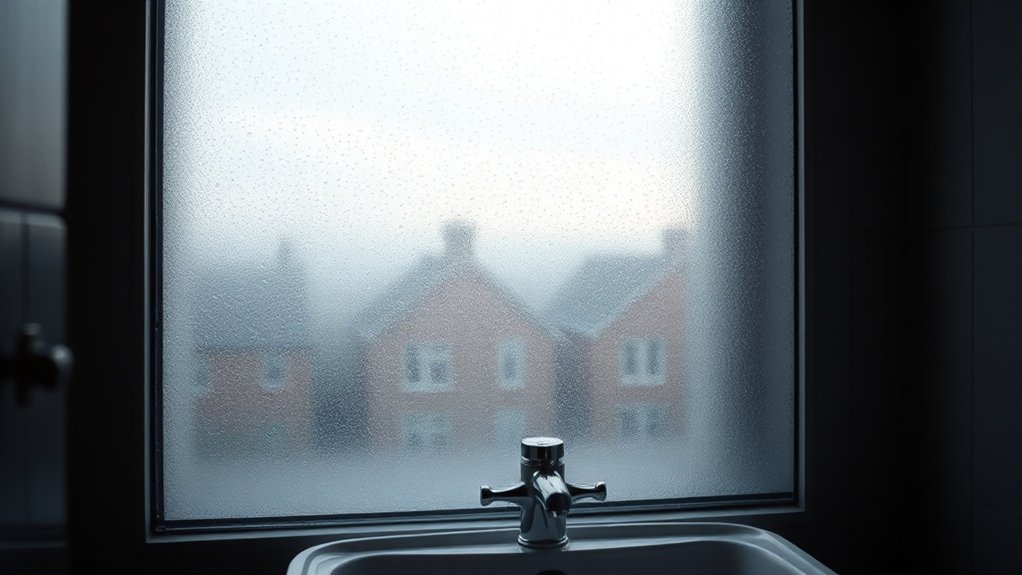
Bathroom frosted glass in London lets you protect privacy while maximising natural light under changeable skies, cutting glare and energy use. You can specify acid‑etched or sandblasted safety glass to BS 6262 and Part K, with tailored opacity, patterns, and tints that suit period or modern bathrooms. Toughened or laminated panels, precision‑cut and properly sealed, resist limescale, scratches, and impact in wet zones. As you explore further, you’ll see how to choose the best system, spec, and installer.
Key insights
- Frosted bathroom glass in London provides privacy while maximising natural light, reducing glare from variable skies and lowering reliance on artificial lighting.
- Choose toughened or laminated frosted safety glass installed to BS 6262 and Part K for compliant impact resistance in showers, baths, and WC areas.
- Design options include acid-etched, sandblasted, gradients, patterns, and tints, allowing coordination with period, modern, or eco-friendly interiors.
- Typical supplied-and-fitted costs range from about £220–£280/m² for framed panels to £380–£500+/m² for bespoke frameless, low-iron installations.
- Select a specialist London glazing firm offering certified materials, precision CNC fabrication, corrosion-resistant hardware, and clear aftercare guidance for cleaning, seals, and warranties.
Why London Bathrooms Benefit From Frosted Glass
Why does frosted glass work so effectively in London bathrooms? You operate in a dense, overlooked cityscape where privacy and daylight must coexist. Frosted glazing scatters incoming light, eliminating harsh glare from variable London skies while preserving luminance levels that reduce reliance on artificial lighting. That immediately improves energy performance and lowers long‑term environmental impact.
You also gain functional resilience. The etched or acid-treated surface masks water spots and minor scratches, so visual quality degrades far more slowly than with clear glass. With correct frosted glass maintenance—non-abrasive cleaners, pH-balanced agents, and regular hydrophobic treatments—you stabilize optical performance and hygiene. Combined with modern toughened substrates, frosted glass delivers a durable, low‑profile privacy system that integrates seamlessly with advanced bathroom technologies.
How to Choose the Right Bathroom Frosted Glass in London
When you choose bathroom frosted glass in London, you need to balance privacy levels and design style with the room’s layout, light conditions, and glazing proportions. You’ll also want to assess safety performance by confirming the glass is toughened or laminated to BS EN standards, and checking edge finishing and hardware compatibility. Finally, compare durability and lifecycle cost by looking at glass thickness, coating quality, ease of cleaning, and long-term resistance to scratches, limescale, and thermal stress.
Privacy Levels And Styles
Although all frosted glass aims to obscure visibility, bathroom applications in London demand you think precisely about privacy levels , light transmission, and style before choosing a specification. Start by defining sightlines: street-facing windows usually need high-opacity acid-etched or sandblasted finishes, while internal ensuites can use softer gradient or patterned frosts that keep silhouettes diffuse but daylight high.
Next, evaluate pattern geometry . Linear, geometric, or pixelated designs let you target privacy at critical heights while maintaining vertical light flow. Etched motifs and partial bands can align with existing architectural grids for a more integrated look.
You should also factor in Frosted glass maintenance and Environmental impact. Denser textures show fewer water spots, and durable, low-VOC surface treatments reduce cleaning chemicals over the glass’s lifecycle.
Safety, Durability And Cost
Once you’ve defined privacy and style , you need to assess safety, durability, and cost together, because in London bathrooms they’re tightly linked by building regulations and real-world wear. You should specify toughened or laminated frosted glass that’s EN 12150 or EN 14449 compliant, especially in wet zones and near doors.
To balance longevity and budget, compare thickness (8–10 mm for screens) and edge finishing, since polished edges reduce fracture risk. Ask fabricators about surface treatments that resist limescale and abrasion; they extend service life and lower cleaning frequency.
When exploring eco friendly options, look for low‑iron recycled content and local manufacturing to cut transport emissions. Build in maintenance tips: avoid abrasive cleaners, verify compatible seals, and schedule periodic hardware checks.
Types of Bathroom Frosted Glass Popular in London
As you evaluate bathroom frosted glass for a London property, you’ll typically choose from four main types: acid‑etched , sandblasted, patterned/obscure, and laminated/privacy films. Acid‑etched glass delivers a uniformly smooth diffusion, ideal when you want low‑glare light and simplified frosted glass maintenance, since the surface is less prone to trapping contaminants. Sandblasted glass creates a slightly rougher micro‑texture with higher scatter, useful where you need deeper privacy gradations.
Patterned or obscure glass references Victorian and Art Deco motifs, giving you a contemporary solution that still respects London’s architectural historical significance. Laminated or film‑applied privacy systems let you retrofit existing panes, integrate switchable smart layers, and replace only the film when design standards or privacy levels need to evolve without full reglazing.
Frosted Glass for Showers and Enclosures in London Homes
When you specify frosted glass for showers and full-height enclosures in a London home, you’re balancing privacy, light transmission, safety compliance, and ease of cleaning in a compact, humidity‑heavy environment. You’ll typically select toughened or laminated safety glass with an acid‑etched or ceramic‑frit finish, ensuring BS EN 12150/14449 compliance and resistance to thermal shock .
You can push innovation with gradient frosting, switchable privacy interlayers, or digitally printed patterns that align with existing tile grids and ironmongery for precise architectural integration. In period properties, you’ll also weigh historical preservation, choosing neutral, fine‑grain frosting that respects original sightlines while modernising performance. Specify minimal channels, well‑detailed seals, and hydrophobic coatings to reduce mould risk and maintain optical clarity over time.
Frosted Glass for London Bathroom Windows
When you specify frosted glass for your London bathroom windows, you want maximum privacy without sacrificing natural light, especially in tight urban plots and overlooked terraces. You’ll need to select moisture-resistant glass types and surface treatments that withstand constant condensation, hard water, and regular cleaning without clouding or peeling. From subtle acid-etched finishes to patterned laminates and tinted options, you can match the glass style to your existing décor while still meeting performance and safety standards.
Privacy Without Blocking Light
Although bathroom windows in London often face close neighbours or busy streets, you don’t have to sacrifice natural light to achieve real privacy. By specifying frosted glass with a controlled opacity level, you let daylight penetrate while diffusing silhouettes to full obscurity.
You can fine‑tune privacy further with decorative patterns : linear gradients, micro‑etched dots, or geometric motifs that disrupt direct sightlines but still transmit high visible light. Laminated frosted units also enhance window insulation, reducing heat loss and limiting cold spots near the bath.
For maximum performance, you’d assess visible light transmission (VLT), privacy rating, and U‑value together, then choose a configuration that balances brightness, thermal efficiency, and aesthetics for London’s dense urban context.
Moisture-Resistant Glass Options
Why does bathroom frosted glass need more than just privacy in London’s damp climate? You’re battling persistent condensation, mould risk, and thermal swings, so you need glass engineered for moisture. Start with toughened or laminated frosted units with factory‑applied etching or acid‑etched surfaces; they won’t peel like films and resist micro‑pitting that harbours mildew.
Specify double- or triple-glazed units with warm‑edge spacers and argon fill to reduce interior surface cooling and dew formation. Hydrophobic or nano‑ceramic coatings shed water, keep glazing clearer, and protect the frosted finish, enhancing long‑term glass artistry.
Key maintenance tips: ventilate aggressively, wipe standing condensation, avoid abrasive cleaners, and inspect seals annually. This way, your frosted bathroom glass stays clear, stable, and low‑maintenance.
Styles To Match Décor
Even in a compact London bathroom, frosted glass can act as a designed surface rather than just a privacy screen, so you should align the pattern, opacity, and light transmission with your existing finishes. Treat the glass as part of the architectural palette , coordinating it with tile geometry, metalwork, and your lighting plan.
-
Period homes with vintage fixtures Use acid‑etched glass with soft, diffused opacity; echo leaded or sash-window sightlines so the glazing respects traditional proportions.
-
Minimal, modern schemes Specify sandblasted bands or gradient frosting that aligns with grout lines and recessed LED strips for controlled luminance.
-
Eco-led, hybrid interiors Select laminated frosted panes using eco friendly materials, low‑iron glass for maximum daylight, and patterns that visually connect reclaimed timber, terrazzo, and matte black brassware.
Privacy vs Light in Small London Bathrooms
Balancing privacy and natural light in a small London bathroom demands precise glass specification rather than ad‑hoc fixes like heavy blinds or adhesive films. You start by defining your privacy threshold: full obscuration for basement or street‑level windows, or moderated diffusion for upper floors. Then you match that to light transmission values , typically 70–90%, to avoid a claustrophobic feel.
You can also tune ambience with subtle color options such as cool neutrals to amplify daylight or warm greys to soften LED lighting. Specify toughened, low‑iron frosted glass for crisper light and safer impact resistance. Prioritise edge‑polished panes and corrosion‑resistant fittings to reduce mould‑prone junctions. For longevity, key maintenance tips include using non‑abrasive cleaners, silicone‑safe detergents, and soft microfibre cloths.
Patterns, Tints and Custom Etched Frosted Glass Designs
When you select frosted glass for a London bathroom, you’re not limited to a flat matte finish; you can specify precise patterns, tints, and etched motifs to control both privacy and light transmission. You’ll want to compare popular options such as linear stripes, geometric grids, or gradient fades alongside custom tints that adjust colour temperature and glare without compromising luminance. For a fully tailored solution, you can commission custom etching—logos, text, or architectural patterns—engineered to exact dimensions, opacity levels, and maintenance requirements.
Popular Frosted Glass Patterns
Although all bathroom frosted glass serves the same core function—obscuring views while transmitting light—the pattern, tint, and etching method you choose in London has a direct impact on privacy level , maintenance, and visual integration with your fixtures and tiles. When you evaluate frosted glass patterns, you’re really tuning how light diffuses, how silhouettes read, and how easily the surface cleans.
- Acid‑etched satin – Ultra-smooth diffusion, high bathroom privacy, resists fingerprinting, ideal for large shower panels.
- Sandblasted gradient – Denser frosting at eye level, clearer at top/bottom to maximise daylight and spatial depth.
- Geometric micro-patterns – Repetitive dots, flutes, or pixels break up contours, delivering strong privacy with a contemporary, tech‑driven aesthetic that pairs well with smart lighting and minimal hardware.
Custom Tints And Etching
Once you move beyond off‑the‑shelf patterns, custom tints and etching let you tune bathroom frosted glass in London to precise privacy, light, and design requirements . You control opacity gradients, colour temperature, and reflectance, so glazing performs exactly as needed in compact or low‑light spaces.
You can specify subtle bronze, cool grey, or soft green tints that complement brassware, terrazzo, or concrete. Laser or acid‑etched layers allow micro‑patterns—hex grids, linear ribs, or pixelated fades—that scatter light without visual clutter. If you’re sustainability‑driven, you’ll prioritise eco friendly materials, low‑VOC interlayers, and durable surface treatments that won’t require early replacement.
Historical influences—Georgian motifs, Art Deco banding, or Victorian fanlights—can be abstracted into clean, contemporary etched geometries.
Safety, Durability and Bathroom Glass Regulations in London
Because bathroom glass has to perform under constant moisture, temperature swings, and impact risk, London regulations treat it as a safety‑critical material that must meet defined standards for strength, breakage behaviour, and installation. You’ll typically specify toughened or laminated frosted glass that complies with BS 6262 and Building Regulations Part K, ensuring fragments stay small or bonded if failure occurs.
London’s planning context, especially in historical architecture, also pushes you to balance compliance with visual sensitivity and eco friendly materials. You should verify certification, edge processing, and fixing details on every panel.
- Assess impact zones around showers, baths, and WC areas.
- Specify glass thickness to match span, load, and door use.
- Detail hardware to prevent frame corrosion and stress points.
Bathroom Frosted Glass Costs and Price Ranges in London
A clear cost plan for bathroom frosted glass in London starts with understanding how suppliers actually build up their prices: you’re paying for glass specification (toughened vs laminated, thickness, pattern or acid‑etch), panel size and shaping, edge processing, hardware, and on‑site installation.
Expect basic framed frosted panels to start around £220–£280 per m² supplied and fitted, with frameless, thicker, low‑iron glass moving toward £380–£500+ per m², especially when you specify bespoke cut‑outs around bathroom fixtures or complex niches.
If you’re synchronising with plumbing upgrades, budget extra for sequencing, protection, and re‑templating risks. London labour rates add a premium: complex shaping, mitres, and concealed channels can add 20–35%. Always request itemised quotes separating glass, hardware, labour, and access costs.
Professional Installation vs DIY Bathroom Frosted Glass Film
While frosted glass film looks like a quick win for privacy, the real decision in a London bathroom is whether you need the permanence and performance of professionally installed glass or the flexibility and lower upfront cost of DIY film. With pro installation, you gain factory-etched or sandblasted surfaces, precise tolerances, and long-term optical stability ; with film, you trade lifespan for adaptability and speed.
-
Performance & durability – Toughened, acid-etched glass resists peeling and discoloration, reducing Frosted glass maintenance cycles in humid bathrooms.
-
Installation accuracy – Professionals laser-measure, template, and seal edges, limiting micro-gaps , limescale traps, and delamination risk.
-
Environmental impact – High-quality glass has a higher initial footprint but longer service life and better recyclability than short-lifespan PVC-based films.
Design Ideas for Period and Modern London Bathrooms
Although London bathrooms span everything from Victorian terraces to minimalist penthouse suites, you can use frosted glass as a precise tool to control light, privacy, and visual weight within each style. In period homes, align etching patterns with your historical architecture: think slim vertical reeds echoing sash windows, or acid‑etched borders that reference original cornicing while keeping shower zones visually light.
In modern bathrooms, specify full‑height frosted glass partitions with clean channels and minimal iron content for a neutral, almost “white” translucency. Combine switchable frosted panels with zoned lighting to shift from daylight privacy to evening ambience. Prioritise eco friendly materials: low‑VOC films, recyclable aluminum framing, and toughened glass with high recycled content to reduce embodied carbon without compromising performance.
How to Choose a Trustworthy Frosted Glass Company in London
Because London’s glazing market is crowded and inconsistent in quality, you need a clear checklist to identify a frosted glass specialist who’ll deliver accurate fabrication, safe installation, and durable finishes. Focus on firms that treat your bathroom as a controlled performance environment, not a generic window job.
-
Technical competence – Check they use toughened or laminated safety glass, precision CNC cutting, and certified anti-slip treatments on screens and doors. Ask for glass data sheets and installation method statements.
-
Material and sustainability credentials – Prioritise Eco friendly materials, low-VOC etching films, and recyclability. Confirm compliance with BS EN glass standards and Part K.
-
Aftercare and support – Demand written maintenance tips, warranty terms, and response times for seal failures, hardware issues, or coating degradation.
Frequently Asked Questions
Can Frosted Bathroom Glass Help With London’s Energy Efficiency and Heat Retention?
Yes, it can, especially if you specify high‑performance frosted glazing. You’ll get Energy savings by using low‑e coated, double‑ or triple‑glazed units that cut conductive losses and improve overall heat retention. Combine argon-filled cavities, warm‑edge spacers, and thermally broken frames to reduce thermal bridging. You can also integrate solar-control coatings to balance daylight with reduced heat loss, optimizing both comfort and efficiency in dense, innovation‑driven urban environments.
How Does Frosted Glass Perform With London’s Hard Water Limescale Buildup?
It resists limescale structurally, but the etched or patterned surface lets mineral deposits anchor more visibly, raising durability concerns over time. You’ll see buildup faster than on smooth glass, which can dull aesthetic appeal. To counter this, specify acid‑resistant frosted coatings, hydrophobic nano‑sealants, and removable surface films. Combine these with a mild, non‑abrasive descaler and microfiber cleaning regime to protect the texture while maintaining optical diffusion and long‑term performance.
Are There Eco‑Friendly or Recycled Frosted Glass Options Available in London?
You can choose several sustainable solutions : select sandblasted or acid‑etched panels made from high‑recycled‑content float glass, verify suppliers’ Recycling programs for offcuts and end‑of‑life panels, and specify Eco friendly coatings that reduce chemical cleaning needs. You’ll want documented percentages for post‑consumer cullet, Environmental Product Declarations, and ISO‑certified plants. Partner with fabricators who reclaim masking media and water, so your specification pushes manufacturers toward closed‑loop, low‑impact production.
Can Smart or Switchable Glass Be Combined With Frosted Finishes in Bathrooms?
Yes, you can combine smart or switchable glass with frosted finishes in bathrooms. You typically specify a PDLC smart film laminated within low‑iron glass, then apply an etched or ceramic frit pattern for Smart integration and enhanced Privacy control. You’ll wire it to a low‑voltage transformer and wall switch or home‑automation relay. This setup gives you clear/opaque switching, glare reduction, and a sleek, minimal‑hardware aesthetic.
What Ongoing Maintenance Schedule Is Recommended for Frosted Bathroom Glass in London Homes?
You should follow a monthly maintenance schedule: weekly light Cleaning routines with pH‑neutral glass cleaner, and a deeper clean every four weeks. Remember, “an ounce of prevention is worth a pound of cure.” Inspect edges and hardware monthly, checking for limescale and seal failure. Reapply nano Protective coatings every 12–18 months to resist hard‑water spotting, optimise privacy performance, and keep innovative glazing systems operating efficiently in London’s humid bathroom conditions.
Summary
When you choose bathroom frosted glass in London, you solve privacy, safety, and light-control issues in one precise move. By matching glass type, obscurity level, and hardware to your space, you create a bathroom that performs as well as it looks. Prioritise certified products, accurate measurement, and professional installers, and you’ll get a result that’s as clean and defined as an architectural blueprint brought to life.