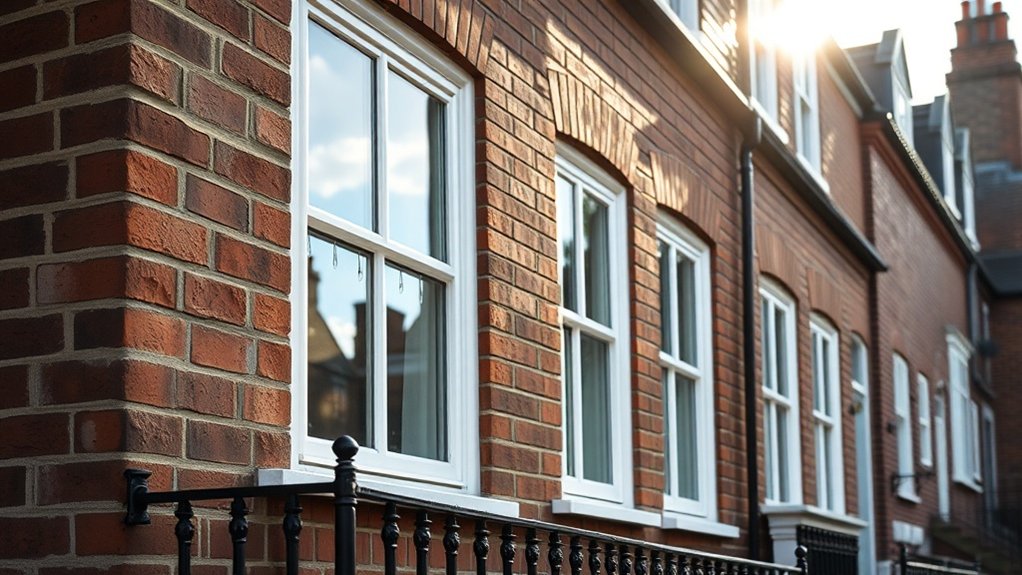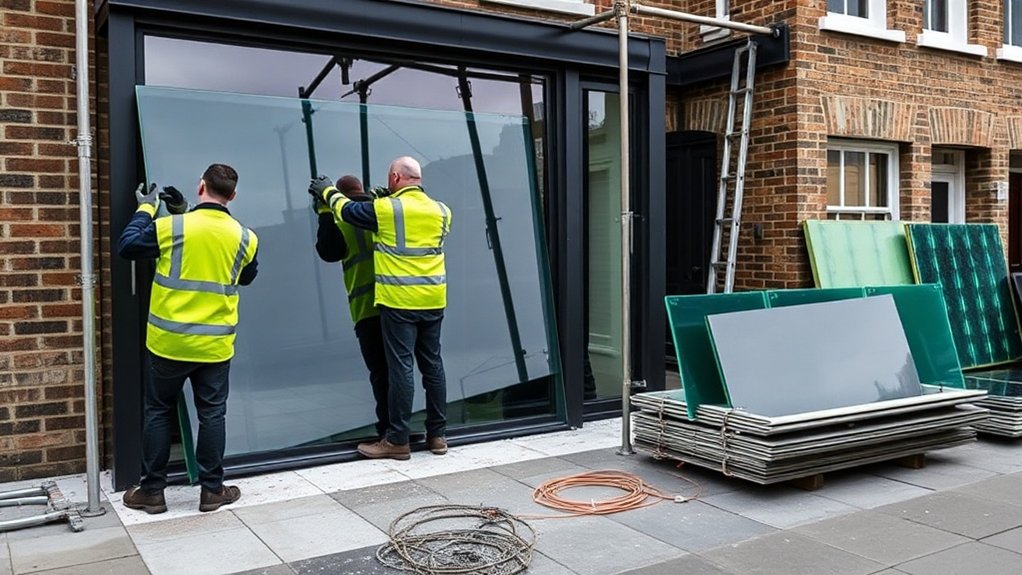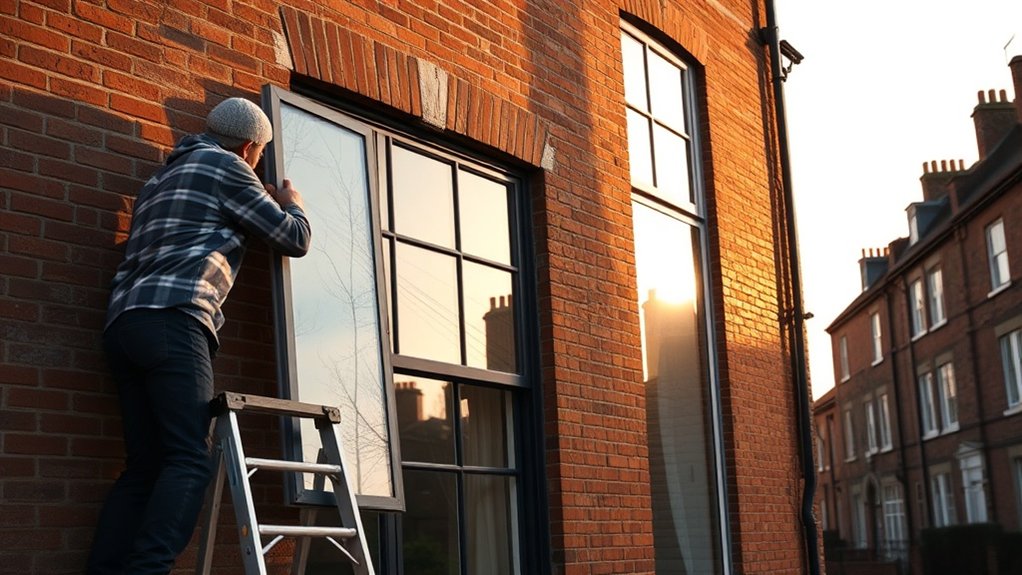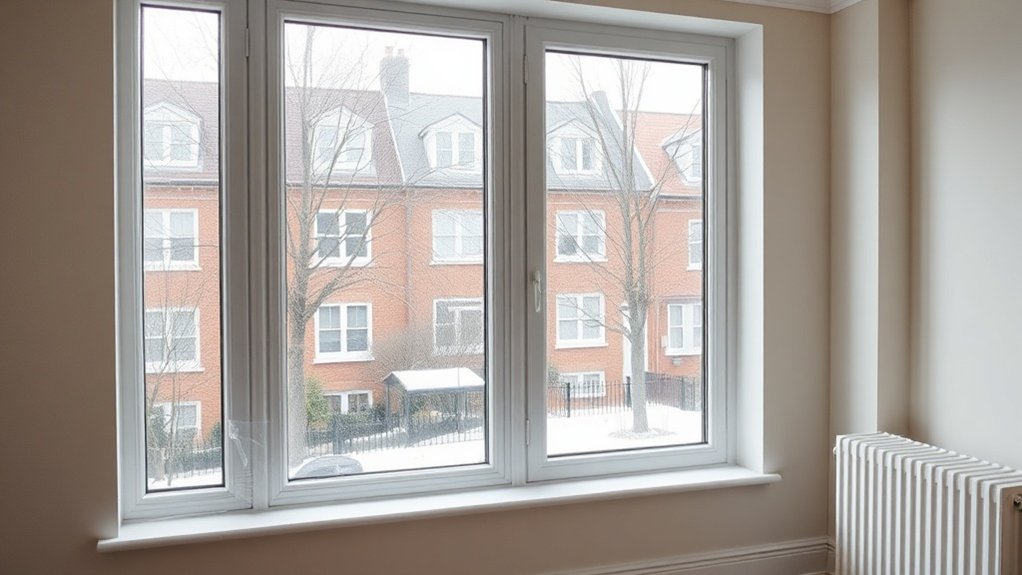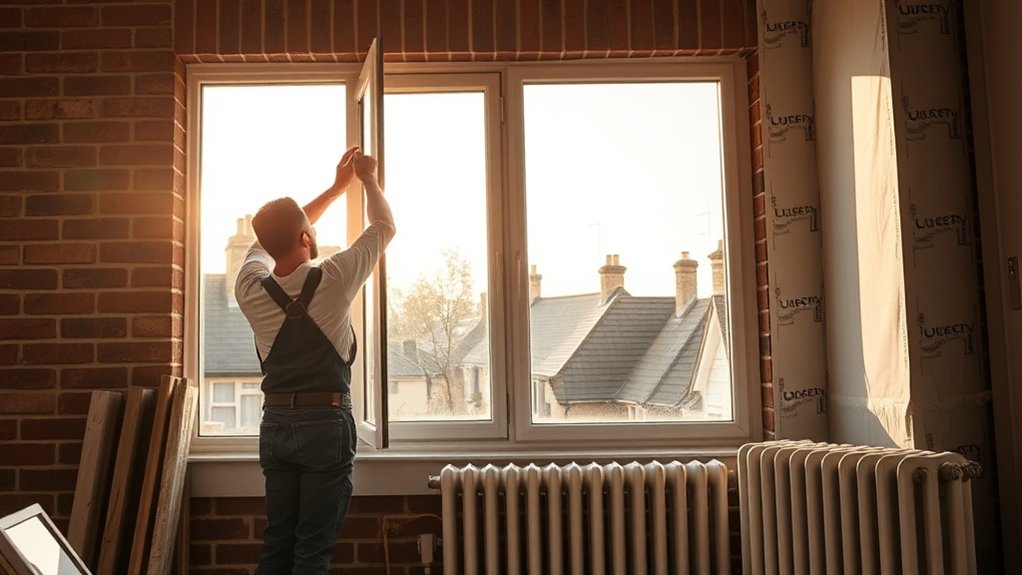
You cut heat loss, meet London’s strict Part L and Part O requirements, and improve your EPC rating when you specify high‑performance, low‑U‑value glazing tailored to your home. Aim for whole‑window U‑values ≤ 1.2 W/m²K, g‑values around 0.35–0.55, and verified test data (EN 14351‑1, EN 1279). Factor in noise, orientation, and any conservation or listed status, then use certified installers (FENSA/CERTASS) to ensure compliance and facilitate further performance gains.
Key insights
- Choose windows with whole-window U-values ≤ 1.2 W/m²K and at least a B energy rating to meet and exceed London Building Regulations.
- Use low-e double or triple glazing with argon-filled cavities and warm-edge spacers to cut heat loss by up to 65% compared with single glazing.
- Control overheating in London homes by specifying g-values around 0.35–0.55, plus external shading or good blinds on south- and west-facing elevations.
- In noisy London areas, consider laminated acoustic double or triple glazing (Rw ≥ 40 dB) to improve sound insulation without sacrificing thermal performance.
- Always use FENSA-registered (or equivalent) installers and products tested to EN 14351-1 / EN 1279 to ensure compliance, warranties, and reliable performance data.
How Energy Efficient Glazing Works in London
When you specify energy efficient glazing for a London property, you’re fundamentally installing a multi-layered thermal control system that reduces heat transfer, optimises solar gain, and limits air leakage in line with UK Building Regulations (Part L) and local planning constraints. You’re managing three variables: U‑value, g‑value, and air permeability .
Low‑emissivity coatings reflect long‑wave infrared back into the room, while argon- or krypton-filled cavities slow conduction and convection. Warm-edge spacers reduce thermal bridging at perimeter zones, critical for London’s exposed façades.
You can integrate solar control via spectrally selective coatings or advanced window tinting films that cut solar gains while maintaining visible light transmission, supporting daylighting targets. High-performance seals and precision-installed frames ensure airtightness , helping you meet SAP and EPC performance thresholds.
How to Choose the Right Glazing for London Homes
So, how do you select glazing that actually performs in a London home rather than just meeting a brochure claim? You start by targeting numbers: aim for a whole-window U-value at or below 1.2 W/m²K and a window energy rating of B or better to align with and exceed Part L benchmarks .
Next, manage solar gains. Specify glazing with appropriate g-value (typically 0.35–0.55) and advanced solar control coatings on south- and west-facing façades to limit overheating while preserving daylight. Consider window tinting only where glare or privacy is critical, as dark tints can cut useful solar gain and daylight autonomy.
Finally, insist on verified test data (EN 14351-1, EN 1279) and ensure installation complies with FENSA or equivalent schemes.
Double vs Triple vs Secondary Glazing in London
Although marketing often frames it as a simple upgrade path, choosing between double, triple, and secondary glazing in London is a trade-off between U‑value , noise reduction, cost, frame design, and planning constraints. You’ll typically see double glazing delivering U‑values around 1.2–1.4 W/m²K, which already beats Part L minimums, while high-spec triple glazing can reach ~0.8 W/m²K but increases weight and embodied carbon.
In dense areas or near rail lines, triple glazing’s improved acoustic attenuation can justify the premium. However, in Historical architecture and conservation areas, secondary glazing often proves more viable. It preserves original sashes, maintains window aesthetics, and can still achieve sub‑1.5 W/m²K performance with low‑e glass and optimized air gaps, while easing listed-building consent.
Choosing Frame Materials for Energy Efficient Windows in London
Because window frames can account for 20–30% of a unit’s overall U‑value , your choice of frame material in London directly affects compliance with Part L and long‑term performance. You should evaluate window frame materials by whole‑window U‑value, Psi‑values at junctions, and air permeability, not just centre‑pane data.
Thermally broken aluminium delivers slim sightlines and durable finishes, but you’ll need advanced polyamide breaks and insulated cavities to hit sub‑1.2 W/m²K. Timber offers low conductivity and strong lifecycle credentials, yet requires documented maintenance cycles. Composite (aluminium‑clad timber) can optimise durability, thermal performance, and glazing aesthetics while controlling frame factor.
uPVC remains cost‑efficient but may struggle in larger spans; specify multi‑chamber profiles and steel‑free reinforcement to reduce thermal bridging.
Warmth vs Daylight: Keeping London Homes Bright and Cozy
Balancing solar gains with daylight is critical in London, where Part O, Part L , and London Plan energy policies increasingly penalise overheating and excessive heat loss. You need glazing that maximises useful solar gain in winter while limiting heat loss (low U-values) and preserving daylight factors above typical 2% targets.
Specify low‑emissivity double or triple glazing with a balanced solar heat gain coefficient (g‑value) around 0.4–0.6 on south façades, higher on east/west only where Part O assessments permit. Use selective coatings that admit visible light but restrict infrared.
Window tinting and solar shading should prioritise high visible light transmittance (≥60%) to avoid gloomy interiors, while frame design and mullion layout must minimise thermal bridging without compromising daylight penetration and view quality.
Preventing Overheating and Excess Solar Gain in London Flats
While London’s climate is traditionally heating‑led, south‑ and west‑facing flats with large glazing areas now routinely risk failing Part O overheating criteria and London Plan cooling‑demand benchmarks without careful solar control. You need glazing strategies that limit g‑values and peak solar gains while maintaining useful daylight and views.
To keep CIBSE TM59 and TM52 compliance achievable, you should combine selective coatings, automation, and good façade design:
- Specify low‑g solar control double or triple glazing with spectrally selective coatings .
- Combine external shading (bris‑soleil, louvers) with internal blinds for dynamic control.
- Use Smart home integration to automate blinds and ventilation based on solar sensors and indoor temperature.
- Optimise glazing‑to‑wall ratios and orientation at concept stage.
- Choose framing and coatings that deliver both performance and high‑end aesthetic design.
Cutting Traffic Noise With Energy Efficient Glazing in London
When you select the right glazing specification, you can cut external noise from London traffic by 30–45 dB while still meeting Part L and Part O energy performance requirements. You’ll need to understand how laminated acoustic glass, wider cavity depths, and asymmetric double or triple glazing affect both sound reduction indices (Rw, Rw+Ctr) and U-values. The key is to balance acoustic performance with thermal efficiency so your installation complies with Building Regulations and local planning or conservation constraints.
How Glazing Reduces Noise
How does the right glazing specification cut traffic noise in a city as dense as London? You’re not just adding glass; you’re engineering an acoustic barrier that complements thermal performance and solar control. When you align your façade design with BS 8233 and Approved Document O, you can target measurable dB reductions without sacrificing daylight or energy efficiency.
Key mechanisms include:
- Laminated panes that damp vibration and disrupt sound transmission paths.
- Asymmetric pane thicknesses that break up different sound frequencies.
- Optimised cavity depth and gas fill to reduce resonance and flanking noise.
- High‑performance frames and seals that prevent acoustic leakage at junctions.
- Window tinting and solar control coatings that cut solar gain while maintaining acoustic integrity.
Choosing Acoustic Glass
Before you specify “acoustic glass” for a London project, you need to translate façade noise targets in BS 8233 and WHO guidelines into a required weighted sound reduction index (Rw + Ctr) for each orientation and floor. You then select glazing make‑ups that deliver that performance in tested configurations, not brochure headline Rw values.
Prioritise laminated constructions with acoustic PVB interlayers; they provide superior acoustic insulation in the critical 100–3150 Hz range of traffic noise. Vary pane thicknesses to disrupt coincidence effects and upgrade low‑frequency control. Treat the glazing as one element in a wider set of soundproofing methods: frame design, airtight gaskets, and installation tolerances often dictate real‑world performance, so you should specify system-level acoustic testing to BS EN ISO 10140.
Balancing Quiet and Efficiency
Although London’s traffic noise often drives you toward heavy acoustic glass, you still need to keep whole‑window U‑values, g‑values, and airtightness within Part L and Part O limits. You’re balancing sound reduction indices (Rw) with thermal transmittance and solar control, not optimising one in isolation.
You can fine‑tune that balance by combining laminated acoustic panes with low‑e coatings, inert gas fills, and advanced seals, then layering in dynamic technologies:
- Specify target Rw ≥ 40 dB while maintaining whole‑window U‑values ≤ 1.4 W/m²K.
- Use low‑iron outer panes plus selective coatings to control g‑values for overheating risk.
- Deploy Smart glass to modulate solar gain and daylight autonomously.
- Apply spectrally selective window tinting to cut glare without over‑darkening.
- Model performance via EN ISO 10052 and BS EN 410 before committing to a specification.
London Building Regulations and Part L for Windows
When you plan energy efficient glazing in London, you must align your window specifications with Part L’s quantified targets for U-values , solar gain (g-values), and airtightness. You’ll need to understand how these performance thresholds differ for new builds vs. refurbishments to guarantee your upgrades don’t increase overall carbon emissions. By evaluating product data, installation details, and SAP calculations, you can demonstrate full compliance for window replacements and avoid regulatory issues with Building Control.
Key Part L Requirements
Precisely what does Part L require of windows in London? You must limit heat loss, solar gains, and air leakage while preserving daylight and Window aesthetics. For most dwellings, you’re targeting a whole-window U‑value around 1.4 W/m²K or better, with low‑e coatings, warm‑edge spacers, and insulated frames. Glass tinting is acceptable if it doesn’t compromise daylight factors or increase lighting energy demand.
Key technical levers you’ll monitor include:
- U‑values for whole windows, not just glass.
- Solar heat gain coefficient (g‑value) to control overheating risk .
- Air permeability thresholds to reduce infiltration losses.
- Limiting fabric-area weighted average U‑values across elevations.
- Alignment with SAP calculations and overheating risk assessments.
Compliance For Window Upgrades
As soon as you replace windows in a London dwelling, Building Regulations Part L treats the work as a controlled intervention, so you must demonstrate that the upgraded units meet current performance standards, not just “improve on existing.” For most domestic refurbishments this means either using windows with a certified whole‑window U‑value no worse than 1.4–1.6 W/m²K (depending on the specific Approved Document L edition and project type), or proving via SAP that the dwelling’s overall CO₂ and primary energy targets are still achieved.
You’ll also need to evidence compliant g‑values and airtightness, especially where large glazed areas or window tinting are proposed for solar control. Any coating or film must be included in the manufacturer’s performance data or your SAP model. Use certified installers or obtain a Building Control completion certificate .
Planning Rules for Conservation Areas and Listed London Homes
Although energy-efficient glazing can markedly cut heat loss, in London’s conservation areas and listed buildings you must treat window upgrades as a planning and heritage issue, not just a technical one. You’ll balance historical preservation, aesthetic considerations and performance within a strict regulatory framework.
Key constraints you need to navigate:
- Listed Building Consent under the Planning (Listed Buildings and Conservation Areas) Act 1990 for any window replacement or double‑glazing insertion.
- Conservation area status triggering stricter control of frame profiles, sightlines, and glazing bars.
- Preference for repair, like‑for‑like replacement, or slimline units over standard uPVC double glazing.
- Requirement to evidence U‑values, g‑values, and acoustic gains without altering façade character.
- Early engagement with the local planning authority and a heritage consultant to de‑risk refusals.
Costs, Savings and Payback Periods for London Properties
When you plan energy efficient glazing in London, you need clear numbers on typical installation cost ranges by window type, frame material, and performance rating (e.g. U‑values). You’ll also want quantified energy savings estimates based on your property’s EPC band, current glazing specification, and London’s heating degree days. With these inputs, you can calculate realistic payback periods that align with Part L of the Building Regulations and any applicable local planning or funding conditions.
Typical Installation Cost Ranges
Typical installation costs for energy efficient glazing in London depend on glazing type, frame material, property size, and whether you’re upgrading within existing openings or undertaking full replacements. For standard uPVC double glazing that meets Part L U‑value requirements, you’ll typically budget £450–£750 per window, supplied and fitted. High‑performance triple glazing in aluminium or composite frames often sits in the £900–£1,400 range per unit.
Key cost drivers you should quantify:
- Frame specification: uPVC < aluminium < timber-aluminium composites
- Glazing performance: double vs triple, low‑e coatings, warm‑edge spacers
- Access complexity: upper floors, scaffold, restricted sites
- Historical preservation and aesthetic considerations in conservation areas
- Compliance extras: safety glass, acoustic laminates, trickle vents, documentation
Energy Savings Estimates
Installation costs only tell half the story; for most London properties the key question is how quickly compliant double or triple glazing pays back through reduced space-heating demand. You should start with modelled Energy Performance Certificate (EPC) data and London-specific degree-day figures.
For a typical pre-2000 semi-detached home upgrading from single glazing (U-value ~4.8 W/m²K) to low-e argon-filled double glazing (~1.2 W/m²K), you can usually cut window heat losses by 55–65%. In gas-heated homes, that often translates to 12–18% reduction in annual space-heating consumption , assuming airtightness remains unchanged.
Triple glazing (U-value ~0.8 W/m²K) may add a further 5–8% saving, with higher impact in exposed orientations. Robust glazing durability and stable gas-fill retention are essential to maintain these savings over a 25–30 year lifespan.
Payback Period Calculations
So how do you translate London-specific energy savings into a concrete payback period for new glazing? You start by treating the upgrade as a mini infrastructure project: quantify all capital and operational variables, then map them against forecast savings under current and projected Energy tariffs.
Use a simple model:
- Upfront cost: supply, installation, design, compliance, plus contingency.
- Annual benefit: kWh reduction × blended gas/electric Energy tariffs, adjusted for climate trends.
- Regulatory drivers : future Part L tightening, MEES thresholds, and EPC uplift value.
- Operating costs: glazing maintenance, periodic seal checks, and any smart-control calibration.
- Payback calculation: total investment ÷ net annual savings, stress‑tested with tariff escalation and carbon pricing scenarios.
This approach yields a defensible payback period aligned with London’s evolving regulatory and market conditions.
How to Choose an Energy Efficient Glazing Installer in London
When selecting an energy efficient glazing installer in London, you need to verify more than just price and product brochures. You should confirm MCS, FENSA, or CERTASS accreditation , plus compliance with Approved Document L and Part O for overheating and solar control. Ask for documented whole-window U-values, g-values, and air leakage rates, not just glass centre-pane data.
Evaluate their capability in advanced specifications: low‑e coatings, warm-edge spacers, inert gas fills, and selective window tinting that optimises daylight while limiting solar gains. Request SAP or PHPP inputs and recent EPC improvements from completed projects. Verify insurance-backed warranties, performance guarantees, and post-installation testing (e.g., blower-door coordination). Prioritise installers who provide digital modelling, detailed thermal-bridge assessments, and London climate-specific design assumptions.
Practical Tips for Upgrading Existing Windows in London Homes
Although full window replacement often delivers the largest efficiency gains, you can usually cut heat loss and drafts in London homes through targeted upgrades to existing frames and glazing. You’ll need to align any intervention with Part L of the Building Regulations and, in conservation areas, local planning constraints that protect glazing aesthetics.
- Install secondary glazing with low‑e glass to cut U‑values and improve airtightness without altering external façades.
- Apply high‑performance perimeter seals and draught-proofing strips as part of routine window maintenance.
- Use thermally broken edge spacers when refurbishing double glazing to reduce condensation risk.
- Retrofit trickle vents that comply with Part F to balance ventilation and efficiency.
- Specify reflective or solar-control films on south-facing panes to limit overheating loads.
Frequently Asked Questions
Can Energy Efficient Glazing Help Reduce Condensation and Mould in London Homes?
Yes, it can. With high-performance units, you improve surface temperatures, strengthening condensation control and reducing mould risk. Low‑emissivity coatings and warm‑edge spacers minimise cold bridging, stabilising indoor humidity near recommended 40–60% levels. When you pair this with trickle ventilation and Part F–compliant airflow, you cut interstitial moisture and meet UK Building Regulations. You also future‑proof your home for tighter thermal and moisture standards anticipated in upcoming revisions.
How Does Energy Efficient Glazing Impact Property Value in London?
You typically boost property value by improving EPC ratings, cutting carbon, and proving long‑term cost savings. Smart, sealed systems strengthen property appeal to tech‑savvy buyers and institutional investors. You align with Part L of Building Regulations and future‑proof against tightening MEES standards, reducing “stranded asset” risk. Valuers increasingly factor verified U‑values, g‑values, and airtightness into RICS‑compliant assessments, so you often see a measurable uplift in resale and rental yields.
Is There Eco-Friendly or Recyclable Energy Efficient Glazing Available in London?
Yes, you can specify eco-friendly, recyclable energy efficient glazing in London. You’ll typically choose low‑iron glass with high recycled cullet content, warm‑edge spacers from recyclable materials, and inert gas fills. Check Environmental Product Declarations and ISO 14001‑certified Eco friendly manufacturing. Confirm units comply with Part L, BS EN 1279, and lifecycle assessments (EN 15804) so your glazing solution aligns with circular-economy and net‑zero innovation targets.
Can I Get Green Grants or Incentives for Energy Efficient Glazing in London?
You can access some grants and financial incentives, but they’re a moving target shaped by shifting Government policies. You’ll primarily look at schemes like ECO4, the Great British Insulation Scheme , and occasional local-authority retrofit programmes, which may cover high‑performance glazing when it delivers quantifiable U‑value improvements and carbon reductions. You’ll need EPC data, installer certification (e.g., FENSA) and compliance with Part L to qualify and evidence eligibility.
How Does Energy Efficient Glazing Perform in London’s Older, Draughty Housing Stock?
It performs very well, but you must balance performance with Historical preservation. You’ll cut heat loss by up to ~60% versus single glazing, dramatically reducing draughts and condensation. You’ll specify slimline double or secondary glazing to achieve Aesthetic integration with original sashes. In conservation areas, you’ll navigate planning and Listed Building Consent, selecting low‑emissivity glass, warm‑edge spacers, and airtight installation to meet Part L targets without compromising heritage fabric.
Summary
By now, you can see energy‑efficient glazing isn’t window dressing; it’s a performance upgrade . When you choose the right U‑values, g‑values, and frame materials, you cut heat loss, meet Part L and London Plan targets, and boost EPC ratings. If you factor in payback periods, local planning rules, and installer certifications (FENSA, TrustMark), you’ll lock in lower bills, higher comfort, and long‑term compliance across London’s varied housing stock.