
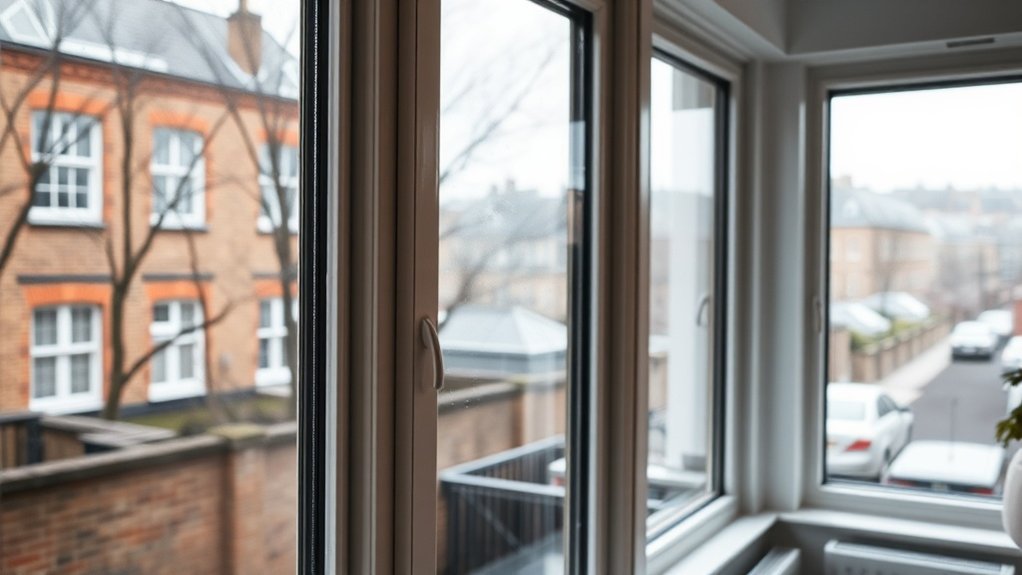
With secondary glazing insulation in London, you add a discreet internal pane to create an 80–150 mm sealed air gap behind your existing windows, cutting U‑values from about 4.5 to around 1.8–2.0 W/m²K and boosting internal pane temperatures by 4–7°C. You’ll drastically reduce draughts, condensation and cold spots while blocking 45–55 dB of traffic noise from buses and sirens, especially in period sash windows, and you can now explore how it suits your property in detail.
Key insights
- Secondary glazing in London adds an internal pane with an 80–150 mm air gap, cutting heat loss by up to 50–65% and draughts significantly.
- High‑performance systems use low‑E glass and thermally broken aluminium/uPVC frames, lowering U‑values from ~4.5 to around 1.8–2.0 W/m²K.
- Quality secondary glazing can reduce external traffic and city noise by 45–55 dB, transforming bedrooms and studios near busy roads or rail lines.
- Typical London costs range from about £280–£650 per window (£2,000–£4,000 per flat), with energy savings of roughly £220–£450 per year.
- Slim, discreet systems suit Victorian, Edwardian, and listed buildings, installed internally to preserve original windows and avoid altering the external façade.
How Secondary Glazing Insulation Actually Works
Although it looks simple, secondary glazing insulation works by creating a controlled, sealed air (or gas) cavity between your existing window and a new internal pane, dramatically cutting heat loss and noise transmission. You’re effectively building a micro-climate in your reveal: the cavity disrupts convection, the extra pane reduces radiation, and the airtight seals block London’s traffic noise.
To optimise performance, you specify cavity depth (typically 80–150 mm in London’s sash boxes), low‑e coatings, and thermally broken aluminium or uPVC frames. You also manage installation challenges: out‑of‑square Georgian frames, heritage constraints, and limited reveals in Victorian terraces. Hardware and sightlines must protect window aesthetics while still allowing cleaning, condensation drainage, and rapid venting during summer peaks.
Secondary vs Double Glazing in London
Once you understand how that sealed cavity performs, it’s natural to ask how secondary glazing stacks up against full double‑glazed replacement in a London context. With secondary glazing, you retain the primary sash or casement, adding an independent inner frame to create a controllable air gap. That’s essential for Historical preservation in conservation areas and listed buildings, where you often can’t alter external sightlines.
Compared with double glazing, secondary systems typically deliver superior airborne noise reduction and competitive U‑values when you specify low‑e glass and optimized cavity depths. You also avoid external frame bulk, aiding Aesthetic integration with slender Georgian or Victorian profiles. Installation’s less invasive, usually faster, and doesn’t trigger the same planning, waste, or façade‑alteration implications.
Is Secondary Glazing Right for Your London Home?
To decide if secondary glazing suits your London home, you’ll first need to assess your property type—whether it’s a Victorian terrace in a conservation area, a post-war flat, or a modern infill. You must balance installation and maintenance costs against measurable gains in U-values, reduced street noise, and lower heating bills. It’s also essential to check local planning guidance and any listed building or Article 4 constraints, as these will shape what’s technically and legally feasible.
Assessing Your Property Type
When you assess whether secondary glazing suits your London property, you need to balance its technical performance with the constraints of your building type, age, and legal status. Start by mapping window aesthetics to frame depth, reveal size, and opening style; this ensures units integrate cleanly with your interior design rather than looking like retrofitted add‑ons.
For Victorian and Edwardian terraces , you’ll usually work with tall box sashes, variable squareness, and fragile putty lines, so slimline, made‑to‑measure systems are critical. In post‑war flats, concrete reveals and metal frames demand thermally broken sections and secure fixing strategies. If you’re in a conservation area or listed building, you must respect sightlines, avoid external alteration, and prioritise fully reversible, low‑impact installations.
Balancing Costs And Benefits
Although secondary glazing looks like a straightforward upgrade, you’ll only know if it’s right for your London home by weighing installation cost against measurable gains in heat retention, noise reduction, and compliance constraints. You’re fundamentally investing in a high‑performance internal facade: added panes, bespoke framing , and precision seals.
Start by modelling energy savings against current gas or electricity tariffs; in many London terraces and mansions blocks, reductions in heat loss through single glazing can be substantial. Quantify improvements to interior acoustics too—especially if you live near main roads, rail lines, or flight paths—by targeting systems with tested dB ratings.
Finally, factor in aesthetic integration. Slimline aluminium or discreet uPVC frames can preserve sightlines while future‑proofing the fabric against higher performance expectations.
Conservation And Planning Considerations
Costs and performance only tell part of the story; in London, conservation and planning controls often decide whether secondary glazing is even an option. If you’re in a listed building or conservation area, you’ll navigate policies focused on historical accuracy and minimal visual impact.
You typically won’t need planning permission because you’re not altering the external façade, but conservation officers may still scrutinise details. They’ll look at sightlines , frame depths, and how discreetly units fix to existing sashes or casements. To secure approval, you specify ultra-slim aluminium sections, colour-matched to existing joinery, and design for precise aesthetic integration. Magnetically fixed or lift-out panels can serve where access and reversibility are critical. Always pair product data with heritage statements referencing your local borough’s guidance.
Thermal Benefits: How Much Warmer With Secondary Glazing?
When you add secondary glazing to London’s typical single-glazed sash or casement windows, you can cut conductive and draught-related heat loss by measurable margins, often in the region of 50–65% depending on frame condition and gap size. That reduction in heat loss means your boiler or heat pump runs less to maintain the same internal temperature, so you see lower gas or electricity bills across the heating season. At the same time, you feel a more stable, even warmth in rooms that previously suffered from cold downdraughts and cold spots near the windows.
Measurable Heat Loss Reduction
So how much warmer can secondary glazing actually make a London home, and can you measure it? You can. Properly specified secondary units typically cut window U‑values from around 4.5 W/m²K to close to 1.8–2.0 W/m²K, often halving conductive heat loss while preserving historical preservation requirements and aesthetic integration on listed façades.
You verify gains with thermal imaging , before‑and‑after heat‑flux measurements on the glazing, and internal surface temperature logging during cold snaps. In many Victorian terraces, you’ll see internal pane temperatures rise by 4–7°C under identical conditions, sharply reducing radiant chill near windows. You can also calculate theoretical savings using window area, exposure (e.g. north‑facing on a London terrace street), and local degree‑day data to quantify performance.
Energy Bills And Comfort
Although every property performs differently, secondary glazing in a typical London home usually translates into a tangible cut in heating demand and a noticeable boost in comfort, especially in front rooms with large single‑glazed sashes. You’re effectively upgrading thermal performance to near double‑glazing without disturbing original frames, essential for historical preservation in conservation areas.
By introducing a sealed air cavity of 80–150 mm, you sharply reduce convective currents and radiant chill from cold glass. Surface temperatures rise, so you can lower thermostat settings while maintaining perceived warmth, trimming gas or electricity use during London’s extended shoulder seasons.
Slimline aluminium or uPVC frames integrate cleanly with contemporary interior design, allowing discreet installations that optimise thermal performance without compromising sightlines or shutter operation.
How Much Noise Can Secondary Glazing Cut in London?
In London’s dense acoustic environment, well‑designed secondary glazing can typically cut external noise by 45–55 dB (Rw) at the window, often halving or better the perceived loudness inside compared with standard single glazing. You’re not just reducing noise pollution; you’re reshaping the soundscape into something closer to artistic acoustics, where wanted sounds remain and urban roar recedes.
On a busy arterial road, you can expect internal levels to drop from 70–80 dB down toward the low 30s–40s, enough to meet typical bedroom and studio targets. The key mechanism is decoupling : you create an independent inner barrier with a controlled air cavity that disrupts vibration transmission, particularly from low‑frequency buses, sirens, and late‑night traffic typical of London streets.
Types of Secondary Glazing Systems and Glass
When you’re choosing secondary glazing in London, you need to match the sliding system and glass specification to your property’s noise profile, heat-loss issues, and window layout. You can opt for horizontal or vertical sliding secondary units to suit sash or casement windows, then pair them with glass types such as acoustic laminated, low‑E, or thicker float glass. Each combination offers different performance in dB reduction , U‑values, and condensation control, so you’ll want to select a setup that responds to traffic, rail, or flight noise in your specific area.
Sliding Secondary Glazing Options
Wondering which sliding secondary glazing system will give you the best balance of insulation, access, and appearance for a London property? You’ll usually work within the existing window frame, so the installation process must be slim, precise, and fully reversible for heritage compliance.
- Horizontal sliders – Ideal for sash and wide casements; they deliver smooth stacking panels and allow easy cleaning from inside.
- Vertical sliders – Suits traditional box sashes; use spring balances for controlled movement and tight brush seals.
- Lift‑out sliders – Panels lift clear of the frame, giving full access where you open windows less frequently.
- Tilt‑in hybrid sliders – Combine sliding with inward tilt for maintenance and discreet trickle ventilation, popular on busy London streets.
Glass Types And Performance
How you specify the glass in your secondary glazing has more impact on insulation and comfort than the frame design itself, especially in London’s mix of traffic noise, conservation rules, and rising energy costs. You’ll typically choose between toughened, laminated acoustic, and low‑emissivity (low‑E) glass, or a hybrid of these.
Laminated acoustic glass targets low‑frequency Underground and bus noise, while low‑E coatings cut heat loss through existing single glazing, vital for Victorian and Edwardian stock. Increase glass thickness and the air gap (ideally 100–150 mm) to boost performance without compromising aesthetic compatibility with original sashes.
Prioritise glass durability where windows face busy streets or risk impact. For heritage facades, specify ultra-clear or slender-profile glass to maintain sightlines and detailing.
Costs, Energy Savings and Payback in London
Curious what secondary glazing in London actually costs and how fast it pays for itself? You’re typically looking at £280–£650 per window, installed, depending on glass spec, opening type, and hardware. Conservation-led projects needing historical preservation compliance or bespoke frames sit at the higher end.
In London’s climate, you can cut heat loss through existing windows by around 55–65%, which translates into tangible gas or electric savings. To frame it:
- Typical flat: 6–8 windows → ~£2,000–£4,000.
- Annual bill reduction : ~£220–£450, assuming current energy tariffs.
- Simple payback: usually 7–12 years; faster with rising tariffs.
- Added value: better acoustics, draught control, and smarter ventilation strategies for summer comfort without sacrificing insulation.
Secondary Glazing for Period and Sash Windows
Although London’s period and sash windows are central to a building’s character, they’re often the weakest point thermally and acoustically, which is where well‑designed secondary glazing comes in. You introduce a discreet inner sash or hinged panel, maintaining the original box frame and sightlines.
To optimise performance, you specify low‑iron glass, warm‑edge spacer bars, and a 100–150 mm air gap, which dramatically reduces U‑values and external noise from traffic or Overground lines. Slim aluminium decorative frames can be colour‑matched to existing joinery, protecting historical authenticity while delivering modern insulation. Brush or compression seals minimise draughts without clogging heritage pulleys. In conservation areas, you typically avoid altering external façades, so internal secondary glazing often satisfies planners and conservation officers.
DIY vs Professional Secondary Glazing in London
When you weigh up DIY against professional secondary glazing in London, you need to balance cost savings against performance , compliance, and disruption. DIY kits suit straightforward frames, temporary tenancies, and tight budgets, but you’ll rely on standard seals, limited glass options, and manual tolerances that can compromise acoustic and thermal gains.
- Define objectives: noise reduction on a TfL route, thermal performance, or strict historical preservation in a conservation area.
- Assess complexity: curved bays, worn sash boxes, and out‑of‑square frames usually justify professional survey and templating.
- Evaluate technology: pros can specify low‑e, acoustic laminates, warm‑edge spacers, and slimline frames for seamless aesthetic integration.
- Factor disruption: installers can phase rooms, work around business hours, and manage dust, waste, and snagging.
Planning Permission, Maintenance and Lifespan in London
Before you commission secondary glazing in London, you need to confirm where you stand on planning consent , how you’ll maintain the system, and what lifespan you can realistically expect in the capital’s climate. In conservation areas, planners typically favour secondary glazing for Historical preservation because it leaves original sashes intact. You’ll usually avoid full planning permission, but always verify with your borough and check Building regulations Part L and Part K compliance.
Specify anodised or powder‑coated aluminium frames with trickle vents and low‑e glass for durability and performance. Plan maintenance around periodic vacuuming of tracks, lubricating runners, and inspecting seals for condensation risk. With quality hardware, UV‑stable seals, and proper installation, you can expect a 20–30 year lifespan, even on exposed London elevations.
Frequently Asked Questions
Can Secondary Glazing Improve Security Against Break-Ins in London Properties?
Yes, it can. You gain security enhancement because secondary glazing adds a rigid internal barrier, typically using toughened glass , deep rebates, and multi-point locks. This second layer slows forced entry, disrupts typical burglary prevention weak points like older sash or casement windows, and reduces access for opportunistic break-ins common in London. You can also specify laminated glass, reinforced aluminum frames, and discreet lock sensors to integrate with smart security systems.
How Does Secondary Glazing Affect Window Condensation and Mould Problems?
It reduces condensation by raising internal window temperature and stabilising surface conditions , so moist air’s less likely to hit dew point on the glass. You gain a controlled cavity that improves moisture control and limits cold bridging around frames. In London’s humid, traffic‑polluted environment, that means fewer wet sills, less mould on reveals, and better IAQ. Specify ventilated cavities and trickle vents to balance airtightness with controlled air exchange.
Is Secondary Glazing Suitable for Rental Properties and Landlord-Tenant Agreements?
Yes, it’s highly suitable, like upgrading from dial‑up to fibre without changing the line. You gain Rental compatibility because it’s usually a reversible, non-structural improvement, ideal for furnished lets and HMOs . In your lease agreement considerations, you’ll specify responsibility for maintenance, removal at end of tenancy, and access for installation. You’ll also document acoustic and thermal performance targets, aligning with EPC goals and emerging local retrofit standards.
Are There Eco-Friendly or Recyclable Materials Used in Secondary Glazing Frames?
Yes, you can specify eco friendly materials and recyclable frames in modern secondary glazing systems. You’ll typically choose between thermally-broken aluminium (highly recyclable), uPVC with recycled content, or engineered timber from FSC-certified sources. You can also pair these with low‑VOC seals and mechanically fixed components for easier disassembly and recycling. In London, you’ll align with circular-economy goals while improving U-values and reducing embodied carbon.
Can Secondary Glazing Be Combined With Smart Home Ventilation or Heating Controls?
Yes, you can tightly integrate secondary glazing with smart home ventilation or heating controls. With smart home integration, you link room temperature, CO₂, and humidity sensors to your heating schedule; studies show smart controls can cut heating demand by up to 23%. You’ll optimize airflow using trickle vents and controlled purge ventilation, while algorithms handle ventilation optimization to prevent condensation on inner panes, especially in tightly sealed London properties.
Summary
When you add secondary glazing to your London home, you’re not just tweaking comfort—you’re building a thermal and acoustic fortress . You cut heat loss, tame city noise, and protect original sash or period windows without battling planning officers. With the right glass gaps, seals, and framing, you’ll see lower bills and higher comfort, often for less than full replacement. Weigh DIY against professional installation, then specify robust hardware and maintenance so your system performs for decades.