
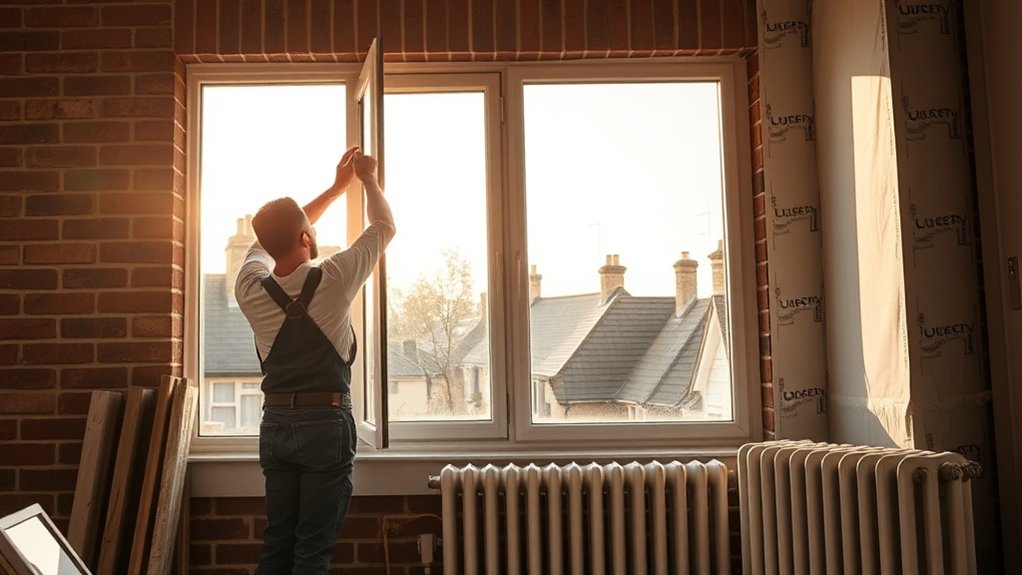
Upgrade to energy‑saving windows in London and you’ll typically cut heating demand by around 10–18% while improving comfort and noise control. Modern A‑rated double or triple glazing with low‑E glass, argon fills and insulated uPVC, aluminium or timber frames achieves whole‑window U‑values near 1.2 W/m²K. Expect £650–£1,100 per window, 8–15 year payback, and options for both period and modern homes, with planning, grants and installer choice all influencing your results further.
Key insights
- Energy‑saving windows in London use Low‑E glass, gas fills, and insulated frames to cut heat loss, drafts, and external noise.
- Expect 10–18% lower heating demand and improved comfort, with typical costs of £650–£1,100 per window depending on frame material and specification.
- A‑rated double glazing (U‑values 1.2–1.4 W/m²K) usually offers better value than triple glazing in London’s moderate climate.
- Period homes can use slimline or vacuum‑glazed sash replacements to preserve heritage sightlines while reducing heat loss by up to 60%.
- Choose FENSA/CERTASS‑registered installers experienced in heritage and airtightness detailing, and insist on written guarantees for frames, hardware, and sealed units.
How Energy-Saving Windows Work in London
Although they look similar to standard glazing, energy‑saving windows in London work as engineered thermal barriers that control heat transfer, solar gain, and air leakage in a climate with cool, damp winters and increasingly hot summers. You’re effectively installing a calibrated envelope component, not a cosmetic upgrade.
Low‑emissivity coatings reflect long‑wave heat back into your rooms while allowing high levels of visible light. Inert gas fills between panes cut conductive losses by up to 50% versus air. Advanced window frame design with insulated profiles and warm‑edge spacers reduces thermal bridging at the perimeter.
You can specify selective glass tinting to trim solar gain on south‑ and west‑facing elevations without over‑darkening interiors, aligning daylight, overheating risk, and HVAC sizing.
Benefits: Comfort, Noise Reduction and Lower Bills
By acting as calibrated thermal barriers rather than simple panes of glass, energy‑saving windows in London translate directly into measurable comfort, acoustic, and cost benefits. You stabilise internal temperatures, cutting surface‑temperature asymmetry near glazing, so rooms feel warmer at lower thermostat set‑points. That typically yields 15–25% reductions in space‑heating demand, depending on orientation and fabric performance.
Advanced interlayers and engineered airspaces also attenuate external noise by up to 40 dB, essential if you live near main roads or rail lines. You gain quieter interiors without sacrificing window aesthetics or natural light transmission.
For period properties, you can specify slimline, high‑performance units that respect historical preservation requirements while still lowering U‑values, shrinking carbon intensity, and delivering consistently lower utility bills.
Double vs Triple Glazing for London Homes
How do you decide whether double or triple glazing makes more sense for a London home where winters are mild but energy costs are high? You start with performance data. Modern A‑rated double glazing typically delivers U‑values around 1.2–1.4 W/m²K, while triple glazing can reach 0.8–1.0. In London’s relatively moderate climate, that extra reduction often yields diminishing thermal returns compared with upgrading leaky frames or improving airtightness.
You also weigh window aesthetics and installation challenges. Triple-glazed units are thicker and heavier, which can distort slim sightlines, stress older timber frames, and limit what you can specify in conservation areas. They may need deeper frames and more robust hinges, so you assess structural capacity, solar gain, and orientation before deciding.
Energy-Saving Window Costs, Savings and Grants in London
When you plan an energy-saving window upgrade in London, you need clear figures on typical installation costs , expected bill reductions, and payback periods. By comparing U-values, installation prices per m², and projected kWh savings, you can quantify the return on investment for your property type and usage. You’ll also want to assess which national and London-specific grants or financing schemes you can stack to cut upfront costs and shorten the payback horizon.
Typical Window Upgrade Costs
Typical energy‑saving window upgrades in London range from a few hundred to several thousand pounds per property, depending on frame material, glazing spec, and installation complexity. For a typical flat, you’ll often spend £3,000–£6,000; larger Victorian terraces can exceed £8,000 when you prioritise window aesthetics and strict historical preservation.
uPVC double glazing usually sits at £450–£700 per window installed, while high‑performance aluminium systems run £700–£1,200. Timber or timber‑aluminium hybrids, preferred in conservation contexts, can reach £1,000–£1,600 per unit.
You’ll also need to budget for access, scaffolding, and making‑good costs , which can add 10–25%. Bespoke shapes, acoustic laminates, and solar‑control coatings further increase unit prices but can let you engineer a performance‑driven, future‑ready envelope.
Grants And Long-Term Savings
While the upfront outlay can feel steep, the combination of London‑specific grants, tax‑efficient funding, and long‑term bill reductions often makes high‑performance glazing a strong financial decision over a 15–25 year horizon. You can typically cut space‑heating demand by 10–25% with A‑rated or triple‑glazed units, and those Energy Performance Certificate gains directly support asset value.
You’ll want to track schemes such as ECO‑linked offers, local authority decarbonisation funds, and green‑mortgage products that reward energy efficiency upgrades with lower interest rates. Some programmes also co‑fund secondary glazing in conservation areas, letting you enhance performance without compromising window aesthetics. Model payback using your kWh baseline, projected U‑value improvements, and scenario analyses for energy‑price inflation to validate return on investment.
Best Energy-Saving Windows for Different London Property Types
You’ll get the best energy performance when you match the glazing system to your specific London property type. For period homes, you can use high-performance sash windows with slimline double or vacuum glazing that preserve heritage sightlines while cutting heat loss by up to 60% versus single glazing. For new builds, you should specify modern triple or advanced double glazing with low‑e coatings and warm-edge spacers to reach or exceed current Part L and Future Homes Standard targets.
Sash Windows For Period Homes
How do you preserve the character of a Victorian or Georgian façade and still hit modern energy-efficiency targets? You start by treating sash windows as performance components, not just heritage features. With the right specification, you’ll cut heat loss while meeting strict Historical preservation and aesthetic considerations demanded by London planners.
Key technical levers include:
- Slimline double glazing with low‑iron glass to maintain sightlines while improving U‑values.
- Argon-filled cavities and warm-edge spacers to reduce conduction at glazing perimeters.
- Engineered timber or composite frames with low thermal conductivity and long service life.
- Precision brush and compression seals to minimise infiltration without impeding sash movement.
- Secondary glazing units tuned for optimal cavity depth, delivering strong thermal and acoustic gains.
Modern Glazing For New Builds
So when you’re specifying windows for a London new build, the priority shifts from preservation constraints to maximising thermal performance against Part L and future‑proofing for rising energy standards. You’re typically targeting whole‑window U‑values of 1.0–1.2 W/m²K or better, so triple glazing with warm‑edge spacers and argon or krypton fill becomes the baseline, not the upgrade.
You’ll select window frame styles using thermally broken aluminium , engineered timber, or hybrid composites to balance slender sightlines with low Psi‑values at junctions. Specify low‑E coatings tuned for solar gain on south façades and reduced g‑values elsewhere, using glass tinting options to control glare without sacrificing daylight factors. Integrate trickle ventilation, airtight installation tapes, and insulated cavities to minimise thermal bridges.
Planning Rules for London, Listed Buildings and Conservation Areas
Although upgrading windows for energy efficiency seems straightforward, London’s planning rules—especially for listed buildings and homes in conservation areas —impose strict controls on what you can change, how, and with which materials. You must balance historical preservation, aesthetic considerations, and measurable performance gains.
Planning officers typically assess whether your proposal:
- Retains original profile, sightlines, and opening method
- Uses materials and finishes consistent with the building’s heritage status
- Delivers demonstrable carbon and U‑value improvements, supported by data
- Avoids visual harm to street façades or key townscape views
- Minimises risk to historic fabric during installation and future maintenance
You’ll usually need full planning permission for replacements in conservation areas and listed building consent for any alteration to listed properties, so engage your local authority early with drawings, specifications, and performance calculations.
Low-E Glass, Gas Fills and Frame Materials Explained
Once you move beyond basic double glazing, the performance of a window in a London home depends largely on three elements: low‑emissivity (low‑E) glass coatings, inert gas fills between panes (typically argon or krypton), and the thermal properties of the frame material.
You use Low e coatings to reflect long‑wave heat back into the room while still admitting daylight; advanced soft‑coat low‑E can cut heat loss by up to 70% versus uncoated glass. Pair this with argon or krypton gas fills to disrupt convection and improve U‑values by roughly 10–20%.
Frame choice then fine‑tunes performance: multi‑chamber uPVC and thermally broken aluminium deliver low U‑values, while engineered timber adds sustainability and excellent airtightness when properly detailed.
Finding a Reliable Energy-Saving Window Installer in London
Knowing which glass, gas fill and frame delivers the best performance is only half the job; you now need an installer who can achieve those U‑values and airtightness figures on site. In London, that means someone who understands urban wind loads , traffic noise spectra, and the constraints of conservation areas.
Look for installers who can demonstrate:
- Measured post-installation U‑values and airtightness (blower-door or smoke-pencil testing)
- Experience balancing performance with historical preservation on listed or period façades
- Capability to integrate sensors, actuators, and Smart home integration platforms at the frame level
- Certification with FENSA or CERTASS plus manufacturer-approved training for your chosen system
- Detailed installation specs: tapes vs foams, thermal break continuity, fixing patterns, and sill drainage design
This way, your design performance translates into real-world energy savings.
Costs, Guarantees and Payback for London Window Upgrades
When you start putting numbers to a London window upgrade, three questions dominate: upfront cost, how long the system’s guaranteed to last , and when the energy savings pay you back.
You’ll typically invest £650–£1,100 per window, depending on Energy efficient coatings, glazing spec, and window frame materials (aluminium-clad timber and composite cost more, uPVC less). Look for whole-window U-values ≤1.2 W/m²K and verified installation details.
Robust manufacturers offer 10–20 years on frames, 5–10 on hardware, and 10–25 on sealed units; insist on insurance-backed guarantees.
In London’s climate and tariffs, you’ll often see 10–18% heating-demand reduction, giving a simple payback of 8–15 years, faster for leaky period homes or when combined with other envelope upgrades.
Frequently Asked Questions
Can I Upgrade One Window at a Time or Must I Replace All at Once?
You can upgrade a single window at a time; you don’t need to replace all at once. A phased replacement strategy lets you prioritise orientations with highest heat loss, typically north-facing or poorly insulated units. You’ll see incremental U-value improvements, reduced drafts, and measurable energy savings after each upgrade. Use performance metrics (U-value, g-value, airtightness) to sequence replacements for maximum ROI and smoother budget and technology shifts.
How Do Energy-Saving Windows Impact My Property’s Resale Value in London?
They typically increase your property’s resale value by improving EPC ratings, cutting operating costs, and signalling high-spec performance. When you upgrade Window insulation, buyers quantify comfort and efficiency, not just aesthetics. You’ll see resale benefits through stronger negotiation power, faster sale times , and appeal to sustainability-focused purchasers. In London’s competitive market, modern glazing acts as a low-visibility tech upgrade, aligning your home with evolving building standards and smart-energy expectations.
Are There Window Options Suitable for Allergy Sufferers or Asthma Patients?
Yes, you’ve got several window options tailored to allergy sufferers and asthma patients. Imagine replacing old timber frames with smooth uPVC using allergy friendly materials that don’t trap dust or mould. You can specify asthma safe coatings on frames and glass—low-VOC finishes, anti-condensation glazing, and integrated trickle vents with allergen filters. These systems reduce particulate levels by up to 40%, improving indoor air quality and respiratory comfort.
What Maintenance Do Energy-Efficient Windows Require Over Their Lifetime?
You’ll maintain energy-efficient windows with scheduled window cleaning , annual seal inspections, and occasional hardware checks. Clean glass and frames with non-abrasive agents to preserve low‑E coatings and gaskets. Inspect perimeter seals for condensation, drafts, or visible gaps; replace compromised seals promptly to prevent argon loss and performance decay. Lubricate hinges and locks yearly. With this regime, you’ll typically retain 90–95% thermal performance over a 20–25 year lifecycle.
Can I Combine Secondary Glazing With New Energy-Saving Windows for Extra Performance?
Yes, you can combine secondary glazing with new energy‑saving windows, and you’ll usually gain measurable performance. By adding a second pane, you increase the air gap , boosting window insulation and reducing U‑values, especially for noise and draught control. However, you must specify glazing options carefully to prevent condensation between layers, guarantee adequate ventilation, and maintain access for cleaning. Model thermal performance (e.g., WUFI, THERM) before committing to the design.
Summary
When you upgrade to energy‑saving windows in London, you tackle heat loss, noise, and high bills in one fell swoop. By choosing the right glazing, low‑E coatings, gas fills and frames, you optimise U‑values, g‑values and overall SAP performance. If you check planning rules, compare installers on certification and guarantees, and model your payback period, you’ll cut carbon, improve comfort, and future‑proof your home against rising energy prices.