
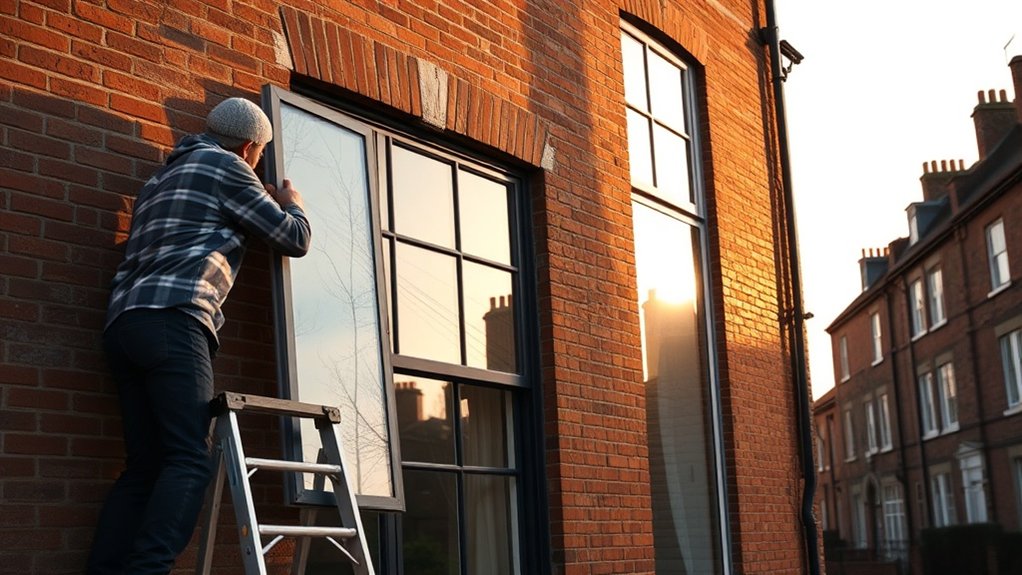
Upgrade to high‑performance thermal glazing in London to cut space‑heating demand by 20–40%, improve SAP scores and meet tighter Part L, EPC and MEES requirements. You’ll move from ~5.0 W/m²K single glazing to ≤1.2 W/m²K double or ~0.8–1.0 W/m²K triple units using low‑E coatings, argon fills and warm‑edge spacers. Typical homes see 15–35% annual kWh savings, with 8–18 year payback, and you can now see how to specify and install it correctly.
Key insights
- Upgrading to high-spec double or triple glazing in London cuts heat loss 15–35% and typically reduces space-heating demand by 20–40%.
- Modern thermal glazing improves EPC ratings, helps meet Part L and MEES requirements, and can increase overall property and rental value.
- Options include double and triple glazing with low‑E coatings, inert gas fills, and warm‑edge spacers, paired with timber, uPVC, aluminium, or hybrid frames.
- Correct installation to BS 8213‑4, including airtightness and thermal break detailing, is essential to achieve claimed U‑values and energy savings.
- Acoustic and condensation performance also improve, reducing traffic noise and surface condensation risks, which is particularly beneficial in dense London environments.
Why Upgrade To Thermal Glazing In London Now
As London’s building stock faces stricter energy-efficiency targets under Part L of the Building Regulations and rising energy prices, upgrading to thermal glazing now delivers immediate and quantifiable performance gains. You reduce fabric heat loss, improve SAP scores, and future‑proof assets against tightening minimum EPC thresholds and potential MEES extensions.
You also stabilise internal comfort, cutting reliance on mechanical heating and cooling, which supports NABERS-style operational performance outcomes. For Historical architecture, you can specify slimline insulated units and heritage‑grade profiles that preserve protected façades and Window aesthetics while still achieving low U‑values and improved g‑values.
What Is Thermal Glazing And How Does It Work?
When you specify thermal glazing, you’re choosing a multi-pane glazing system engineered to reduce U-values and control heat transfer through the building envelope. It typically combines low-emissivity (low‑e) coatings, inert gas fills , and warm-edge spacers to cut conductive, convective, and radiant heat losses in line with Part L and BS EN ISO 10077 performance metrics. You’ll see the benefit in higher internal surface temperatures, reduced thermal bridging, and more stable indoor conditions with lower space-heating demand.
Thermal Glazing Defined
How exactly does thermal glazing turn an ordinary window into a high‑performance building element? You can define it as a multi‑layered glazing system engineered to reduce conductive, convective, and radiative heat transfer while preserving daylight and window aesthetics. It typically combines multiple glass panes, low‑emissivity (low‑e) coatings, inert gas fills, and thermally improved edge spacers in a sealed unit.
You’ll see thermal glazing specified by U‑value (W/m²K), g‑value (solar factor), and visible light transmittance, allowing you to benchmark performance against Part L of the Building Regulations and relevant BS EN ISO standards. In London’s historical architecture, it lets you upgrade thermal performance while maintaining original sightlines, frame profiles, and proportional relationships critical to façade authenticity.
Heat Retention Mechanism
Building on that definition, thermal glazing works by creating controlled thermal resistance and selective solar gain within the glazing cavity and on the glass surfaces. You trap low‑temperature indoor heat while managing higher‑energy solar input, so your window design acts as a tuned thermal filter rather than a simple opening.
Key mechanisms you’ll leverage are:
- Low‑E coatings – Reflect long‑wave infrared back indoors, cutting emissivity to ~0.03–0.05 and reducing U‑values below 1.0 W/m²K.
- Gas-filled cavities – Argon or krypton lower convective and conductive losses versus air.
- Warm-edge spacers – Limit edge losses and thermal bridging in advanced glazing materials.
- Optimised frame integration – Thermally broken frames and airtightness guarantee the glass performance isn’t undermined at junctions.
Single Vs Double Vs Triple Glazing In London
When you compare single, double, and triple glazing for a London property, you’re really weighing quantified gains in thermal performance (U-values, g-values), acoustic attenuation (Rw ratings), and lifecycle cost . You’ll want to assess how each glazing type meets or exceeds UK Building Regulations Part L and local planning guidance while controlling heat loss and external noise from traffic and rail. By looking at performance data against installation and maintenance costs, you can identify which option delivers the best long-term value for your specific building typology and usage.
Energy Efficiency Comparison
In London’s temperate, often damp climate, the energy performance gap between single, double, and triple glazing is measurable in both U‑values and annual kWh savings . You’re typically moving from ~5.0 W/m²K (single) to ~1.4 (modern double) and ~0.8 (high‑spec triple), dramatically cutting space‑heating demand in both new builds and historical architecture, provided you select compatible glazing materials and frame systems.
- Quantify baseline: model your SAP or PHPP energy balance with existing single glazing.
- Compare upgrade paths: simulate low‑e double vs argon‑filled triple with warm‑edge spacers.
- Assess lifecycle: weigh embodied carbon against operational kWh savings over 30–40 years.
- Align with standards: target Part L compliance or EnerPHit/Passivhaus benchmarks for future‑proof performance.
Noise Reduction Levels
Beyond thermal performance, glazing choice in London directly affects acoustic comfort, especially near red routes, rail lines, or flight paths. You should assess noise reduction using Rw or DnT,w values from BS EN ISO 717-1 reports. Typical single glazing (4 mm) delivers ~25–27 dB Rw, often inadequate for inner-London façades exceeding 65 dB Lden.
High-spec double glazing with asymmetric panes and argon can reach 36–42 dB Rw, markedly improving thermal comfort and speech privacy while preserving contemporary window aesthetics.
Triple glazing, when optimised with mixed pane thicknesses and laminated acoustic glass, can exceed 45 dB Rw. It’s most effective when combined with airtight frames and trickle vents tested for Dn,e,w, ensuring the whole window system meets your targeted façade sound insulation.
Cost And Value
Although single glazing has the lowest upfront cost, lifecycle performance data in London almost always favours high-spec double or triple glazing once you factor in energy, maintenance, and asset value. You should evaluate options using whole-life cost , aligned with RICS and BS EN standards, rather than purchase price alone.
- Capex vs Opex – Double and triple glazing cut heating demand by 20–40%, typically delivering 8–15 year payback in London’s tariff conditions.
- Asset value – Higher EPC ratings and Part L compliance usually translate into stronger yields and sale premiums.
- Historical preservation – Vacuum or slimline double glazing lets you upgrade sash windows while meeting conservation requirements.
- Material durability – Specify low-iron glass, warm-edge spacers, and robust frame finishes to extend service life and reduce replacement cycles.
Thermal Glazing Ratings For London Buyers
When you compare thermal glazing options for a London property, you should focus on quantifiable performance metrics such as U‑value (W/m²K), g‑value (solar heat gain coefficient), and airtightness classes defined by standards like BS EN 14351‑1 and BS EN 673. You’re aiming for low U‑values (≤1.2 W/m²K for high performance) and carefully tuned g‑values that limit overheating while preserving daylight and Interior design intent.
Verify that test data comes from notified bodies and that whole-window performance , not just centre-of-pane, is declared. Integrate glazing selection with real-time energy monitoring so you can validate predicted savings against in‑use performance. In London’s dense urban context, also review acoustic ratings and ensure labels specify conformity with UKCA or CE marking requirements.
Choosing Frame Materials For London Homes
As you move from glass specification to the supporting structure, frame material choice becomes a primary driver of whole‑window U‑value, durability , and compliance with standards such as BS EN 14351‑1 and Part L of the Building Regulations. You’re balancing thermal performance, structural capacity, window aesthetics, and glazing durability under London’s moisture, pollution, and wind loads.
- Timber (engineered softwood/hardwood) – λ ≈ 0.13 W/m·K, excellent U‑values with deep sections; needs verified coatings and maintenance cycles.
- uPVC – multi‑chamber profiles, low conductivity, but check recyclate content and UV stability declarations.
- Aluminium with thermal breaks – λ of metal is high, so demand polyamide breaks, HI profiles, and verified Psi‑values.
- Hybrid (aluminium‑clad timber/composites) – optimizes internal insulation, external durability, and slim sightlines for contemporary façades.
How Much Can Thermal Glazing Cut Your Bills?
When you upgrade to modern thermal glazing that meets or exceeds current Part L Building Regulations, you can typically cut space-heating demand by 20–40%, with annual gas or electricity bill reductions to match. To quantify realistic savings, you’ll need to compare U-values, g-values, and air leakage rates against your existing windows and model usage with SAP or PHPP-style assumptions. With these inputs, you can calculate a payback period and ROI based on installed cost, projected tariff increases, and any available local incentives in London.
Realistic Energy Bill Savings
A thermal glazing upgrade in London can reduce your heating energy demand by roughly 15–35%, depending on your existing windows, property type, and installation quality. With optimised window design and selective solar control coatings, you cut conductive and radiative losses while limiting unwanted gains in shoulder seasons.
You can benchmark realistic bill reductions using typical London scenarios:
- Solid-wall terrace, single to high‑performance double glazing – expect ~25–35% gas‑heating kWh reduction .
- 1960–1990 cavity-wall semi, old double to modern low‑e units – typically 15–25% space‑heating reduction.
- Electric-heated flat with poor glazing – 20–30% reduction in kWh, strongly tariff-dependent.
- Well-insulated new build, sub‑optimal glazing – 10–18% reduction once U‑values align with BS EN 673 and airtightness is verified.
Payback Period And ROI
Most London homes that upgrade to modern low‑e double or triple glazing see simple payback periods in the 8–18 year range, but the exact ROI depends on your fuel type, tariff structure, and baseline window performance. You should quantify this using modeled kWh savings, your current unit rates, and projected price escalation.
You’ll also want to factor non-energy variables into ROI. Enhanced window aesthetics can raise buyer appeal and support higher EPC ratings, indirectly lifting asset value. At the same time, glazing durability—frame material, spacer systems, and certified gas-retention rates—determines how long thermal performance stays within design U‑value. For a robust business case, you should model cashflows over a 25–30 year horizon and compare them to alternative low‑carbon investments.
Reducing Noise And Condensation With Thermal Glazing
Although thermal glazing is often specified for its U-value performance, it also delivers quantifiable reductions in external noise transmission and surface condensation risk in London’s dense urban climate. By optimising pane thicknesses, gas fills, and interlayer configurations, you can achieve RW improvements of 35–45 dB while maintaining window aesthetics through selective glazing tinting and low-iron substrates.
- Acoustic optimisation – Use asymmetric double/triple glazing and laminated panes to target traffic and rail frequencies (100–1,000 Hz).
- Condensation control – Warm-edge spacers and argon/krpton fills keep internal surface temperatures above dew point.
- Standards alignment – Design to BS EN 12758 (acoustics) and BS 6262 / BS EN 673 (thermal).
- Performance verification – Specify lab-tested acoustic/thermal data and commission on-site dB and surface-temperature logging.
Planning Rules For Thermal Glazing In Conservation Areas
When you upgrade glazing in a London conservation area, planning constraints typically prioritise preserving the original façade while still allowing measurable thermal gains, so you need to treat U-values, visible light transmittance (VLT), and external appearance as linked design variables. You’ll work within London Plan energy policies and local conservation appraisals, which often restrict reflective coatings, dark window tinting, and visible frame profile changes.
You should evidence performance with BRE and BS EN ISO 10077 calculations, plus whole-building SAP or PHPP modelling where applicable. Planners usually accept discreet solar control solutions if they’re spectrally selective, maintain high VLT (often >70%), and don’t alter perceived colour from the street. Early pre‑application discussions de‑risk refusals and align detailing with heritage officers’ expectations.
Thermal Glazing Options For Period And Sash Windows
When you upgrade period and sash windows, you’ll typically assess three main thermal glazing pathways: double glazing retrofits , slimline heritage units, and secondary glazing solutions. Each option offers different U‑values, acoustic performance, and sightline impacts, and must be evaluated against BS 6262, Part L, and local conservation requirements. In this section, you’ll see how these systems compare regarding thermal performance, visual compatibility, and compliance with London’s planning and heritage constraints.
Double Glazing Retrofits
Even in strict conservation areas , you can usually upgrade thermal performance by retrofitting double glazing into existing period and sash frames, provided you respect heritage constraints and relevant standards such as Part L of the Building Regulations and BS 6262 for glazing. You’ll balance window aesthetics with measurable gains in U‑value, airtightness, and glazing durability.
Key design decisions include:
- Specify argon- or krypton-filled units with low‑E coatings to target whole-window U-values around 1.4–1.6 W/m²K.
- Use warm-edge spacers and flexible sealants tested to EN 1279 to minimise thermal bridging and seal failure.
- Integrate slim timber beads or putty profiles to preserve sightlines and sash proportions.
- Validate sash weights, joint integrity, and frame moisture content before routing or rebating for new units.
Slimline Heritage Units
Retrofitting standard double glazing into existing sashes sets a useful benchmark, but slimline heritage units give you more flexibility where glazing bars are narrow or conservation officers insist on near-original sightlines. You’re typically working with 11–14 mm overall thickness, argon-filled, low‑E coated glass, achieving centre‑pane U‑values around 1.1–1.3 W/m²K while keeping putty fronting and lamb’s‑tongue profiles intact.
You can specify warm‑edge spacers , krypton fill, and selective window tinting to fine‑tune g‑values without visually darkening the facade. Many manufacturers now quote EN 1279 compliance and whole‑window performance to BS EN ISO 10077. If you prioritise circularity, require Environmental Product Declarations and documented glass recycling streams for old panes and offcuts, aligning your upgrade with London’s emerging low‑carbon planning expectations.
Secondary Glazing Solutions
Although slimline double glazing pushes traditional sashes close to modern performance, secondary glazing often delivers superior thermal and acoustic gains without disturbing original frames. You introduce an internal secondary pane, creating a deeper cavity that sharply cuts heat loss and street noise while preserving heritage glass and putty lines.
- Thermal performance – Properly detailed systems can achieve whole-window U‑values near 1.3–1.5 W/m²K, with low‑e glass and argon cavities further improving results.
- Acoustic attenuation – Optimised pane thickness and air gaps can deliver 40–45 dB Rw, targeting traffic and rail noise.
- Design integration – Discreet aluminium frames, bespoke Color options, and slim sightlines maintain listed-building compliance.
- Deployment – A defined installation timeline, off‑site fabrication , and minimal internal disruption suit occupied London properties.
Thermal Glazing Costs In London Explained
Thermal glazing costs in London vary primarily by glass specification (double vs. triple glazing), frame material (uPVC, aluminium, timber), and performance metrics such as U-value , g-value, and air permeability. You’ll typically see uPVC double glazing at the lowest capital cost, with aluminium and timber commanding premiums driven by structural performance and window aesthetics, especially on architect‑led schemes.
Unit prices scale with pane size, spacer technology, gas fill, and low‑E coatings. Triple glazing, while costlier, can achieve U-values ≤1.0 W/m²K, which reduces heating demand in highly insulated envelopes.
You must also factor survey, fabrication lead time, and installation timeline, since access constraints, scaffold, and off‑site prefabrication strategies substantially influence final installed £/m² in London projects .
Glazing Grants, Green Schemes, And Landlord Rules In London
In London, access to glazing grants and compliance with landlord and energy rules hinges on how your upgrade aligns with current UK policy instruments such as ECO4, the Great British Insulation Scheme (GBIS), and Minimum Energy Efficiency Standards (MEES). You’ll need to evidence U-values, whole-building SAP improvements , and use of sustainable materials to qualify.
- ECO4 – Targets low-income households; you can leverage high-performance double or triple glazing and smart glass to deliver modeled carbon and kWh savings.
- GBIS – Prioritises fabric-first; you must show glazing reduces heat loss within scheme cost caps.
- MEES – As a landlord, you must reach EPC band C (likely future requirement), making advanced glazing a compliance lever.
- Local top-ups – Some London boroughs stack grants; verify scheme interoperability and reporting standards.
Choosing A Thermal Glazing Installer In London
Grants, MEES obligations, and EPC targets only pay off if your London installer can evidence performance to the standards those schemes expect. You should prioritise firms that work to BS EN 1279 (insulated glass), BS EN 14351 (windows/doors), and hold FENSA or CERTASS certification with auditable U‑value calculations and g‑value data .
Interrogate their thermal modelling: ask for BRUKL/SAP outputs, Psi‑values for spacers, and documented whole‑window performance, not just centre‑pane figures. For window tinting and solar control glazing, require spectral data (380–780 nm), SHGC values, and proof of compliance with Part L and Part O overheating criteria.
Check they can integrate with BMS, smart sensors, and dynamic façades, and that they provide post‑installation performance verification , including thermography or in‑situ U‑value testing.
What To Expect During Thermal Glazing Installation
Once you’ve signed off the specification and U‑value targets, the installation phase becomes a tightly sequenced process that should be planned and documented to the same standard as the design. You can expect your contractor to work to BS 8213‑4 and relevant UK Building Regulations, with every interface detailed, photographed, and logged.
- Pre‑installation survey – Laser measurements, frame tolerances, and checks for load paths, moisture risk, and airtightness strategy.
- Preparation and protection – Internal surfaces, window aesthetics, and façade elements protected; old units removed with dust and noise controls.
- Frame and unit installation – Setting blocks, fixings, and glazing materials verified; thermal breaks and packers positioned to design.
- Commissioning and QA – Air‑tightness tests, infrared scans, and sign‑off documentation confirming performance.
Common Mistakes London Homeowners Make With Thermal Glazing
Although London’s housing stock offers huge thermal upgrade potential , many homeowners still undermine glazing performance through predictable, avoidable errors. You often prioritise aesthetics over U‑value, g‑value, and air‑tightness, ignoring Part L and F compliance. You might under-specify Solar control, accepting generic Window tinting that reduces visible light but barely limits solar heat gain, driving cooling loads in south- and west-facing rooms.
You may pair high-performance units with thermally weak frames or leave existing cavities uninsulated, creating edge losses and condensation risk . Poor attention to spacer type, gas fill verification, and installation detailing around reveals can cut real-world performance by 20–30%. Finally, you may skip blower-door testing and infrared thermography, so you never validate that your thermal glazing actually meets its design targets.
Frequently Asked Questions
Can Thermal Glazing Increase My London Property’s Resale Value and EPC Rating?
Yes, you can typically boost both resale value and EPC rating with thermal glazing. You enhance energy efficiency by reducing U‑values and air leakage, aligning performance with current Part L and future‑proofing against stricter standards. Buyers quantify projected cost savings, shorter payback periods, and improved comfort. You also mitigate overheating and condensation risk, which supports better survey outcomes and strengthens your property’s position in a data‑driven, low‑carbon market.
How Does Thermal Glazing Affect Summer Overheating in London Flats and Lofts?
It reduces heat gains if you specify low‑g‑value glass and external Solar shading, but it can worsen overheating if you just add airtight, highly insulated units. You’ll need selective coatings, Window tinting tuned to London’s solar exposure, and adequate purge ventilation. Model performance using CIBSE TM59 or TM52 criteria; target ≤26°C operative temperature exceedance limits. Combine glazing upgrades with shading devices and controllable vents to keep lofts and top‑floor flats comfortable.
Are There Thermal Glazing Options Suitable for Listed Buildings’ Internal Secondary Glazing?
Yes, you can use slimline secondary units that respect historic preservation while improving performance. Specify low‑iron, low‑e glass with warm‑edge spacers, targeting whole‑window U‑values near 1.6–1.8 W/m²K as interior insulation. Use reversible fixing systems, maintain ventilation gaps, and guarantee compliance with BS 8213 and EN 14351‑1. You’ll also want discreet frames, preferably thermally broken aluminium, to minimise visual impact yet maximise airtightness and thermal resistance.
What Maintenance and Cleaning Routines Keep Thermal Glazing Performing Efficiently Long Term?
You maintain thermal glazing efficiency by adopting a quarterly cleaning frequency using pH‑neutral, non‑abrasive agents and de‑ionized water. You avoid solvent‑based products that can degrade seals and low‑E coatings. Key maintenance tips include inspecting perimeter seals biannually, verifying drainage/ventilation paths , checking hardware torque against manufacturer specs, and logging U‑value or IR‑camera spot checks annually. You address micro‑scratches early to prevent optical scattering and incremental solar‑gain losses.
How Long Do Thermal Glazing Units Typically Last Before Seals or Gas Need Replacement?
You typically get 20–30 years before seals or gas need replacement, so you’re not signing up for frequent interventions. With high-spec units, seal durability often exceeds 25 years, and gas lifespan (argon/krypton) retains >80% fill for two decades under standard EN 1279 test conditions. You should factor in UV exposure, frame movement, and installation quality—these drive early failure far more than the core glazing technology itself.
Summary
When you upgrade to thermal glazing in London, you’re not just swapping glass, you’re tightening a building envelope. One client in Zone 3 cut gas use by 28% after moving from single to low‑e argon‑filled double glazing (BFRC‑rated A), like sealing a leaky circuit so every watt counts. If you treat U‑values, g‑values, and Part L compliance as your spec sheet, your windows become engineered components, not décor.