
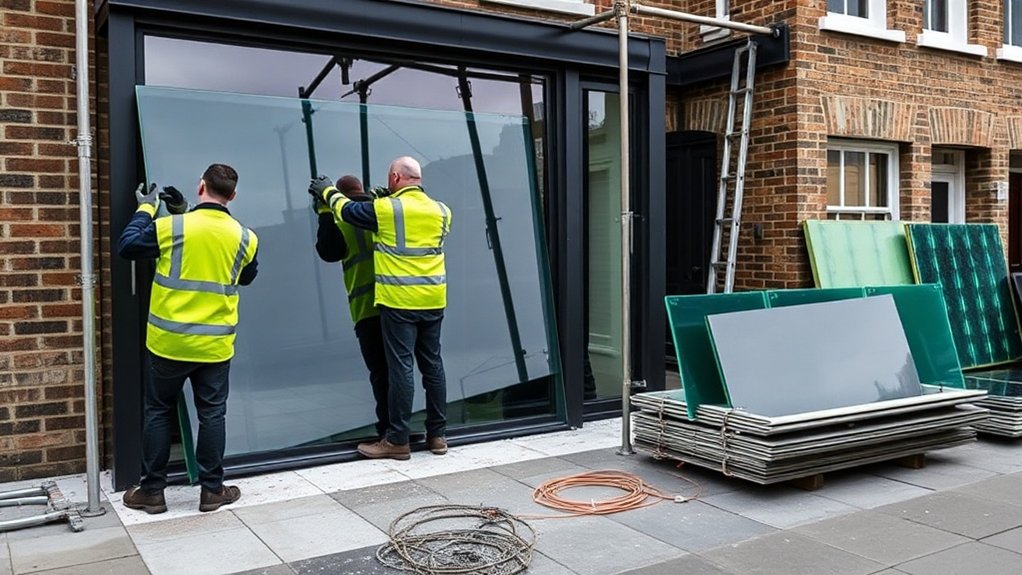
You install Low‑E glass in London to cut heat loss, control solar gain, and boost comfort while meeting UK regulations. A micro‑thin coating reflects infrared heat, reduces cold spots, and limits condensation, helping stabilise room temperatures and protect finishes. It’s suitable for most uPVC, timber, and aluminium frames when correctly surveyed, specified, and safety‑glazed near floor level and doors. If you go further, you’ll see how to choose types, plan installation, and prevent common issues.
Key insights
- Low-E glass improves insulation and comfort in London homes, cutting heating bills by 20–35% and reducing summer overheating and condensation.
- Installers should match Low-E type (soft-coat or hard-coat) to façade orientation, shading, and frame material for optimal performance.
- Many London properties, including heritage sash windows, can be retrofitted with slimline Low-E units without major structural changes.
- Request certified U-values and g-values, and ensure compliance with UK Building Regulations Part L and relevant London planning requirements.
- Installation costs are typically 10–25% higher than standard double glazing but are offset by long-term energy savings and improved comfort.
How Low-E Glass Works in Simple Terms
Although it looks like ordinary glass, low‑E (low emissivity) glass uses an ultra‑thin, transparent metallic coating to control how heat and UV radiation move through your windows. You can think of it as an engineered filter: it reflects long‑wave infrared heat while still letting visible light pass through.
Unlike basic window tinting, which simply darkens or colors the pane, low‑E glass coatings selectively manage wavelengths. In winter, they reflect room heat back indoors; in summer, they limit solar heat gain while reducing UV exposure that can degrade furnishings. The coating is fused to the glass in a controlled factory process, so you don’t handle bare metals or films on‑site, reducing installation risks and maintaining consistent optical and thermal performance over time.
Why Low-E Glass Suits London Homes
Because London’s climate combines cool, damp winters with increasingly warmer summers, low‑E glass offers a precise way to stabilise indoor temperatures while cutting energy demand. It suits your home because the coating’s emissivity rating can be matched to your façade orientation, glazing ratio, and shading conditions, delivering controlled solar gain without over‑darkening rooms.
Unlike basic window tinting, which mainly cuts visible light, low‑E assemblies provide calibrated solar control by reflecting specific infrared wavelengths while maintaining daylight and external visibility. You can integrate them into existing uPVC, timber, or aluminium frames with minimal structural alteration, provided installers verify frame tolerances, edge clearances, and ventilation pathways. When specified correctly, low‑E units also reduce surface temperature differentials, helping mitigate condensation risk in London’s humid air.
Comfort and Energy Benefits of Low-E Glass
When you move from choosing the right low‑E specification to living with it day to day, the most immediate change you notice is a steadier, more comfortable indoor environment with lower heating and cooling demand. The low‑emissivity coating reflects long‑wave infrared back into the room while limiting solar heat gains, so temperature swings reduce and draught zones near glazing almost disappear.
- Thermal stability – You experience fewer cold downdrafts and hotspots, improving comfort at lower thermostat settings.
- Energy savings – Reduced heat loss cuts boiler runtime and cooling loads, directly lowering kWh consumption.
- Condensation control – Warmer interior pane temperatures reduce visible condensation, protecting finishes and Glass durability.
- Acoustic and safety synergy – Advanced installation techniques (correct edge clearance, sealed cavities, verified fixing patterns) maintain performance, limit stress fractures, and support secure, long‑life operation.
Best Places to Install Low-E Glass at Home
You’ll get the highest thermal and glare-control gains by prioritising south-facing windows , where incident solar radiation is strongest and can most easily cause overheating. Next, you should upgrade patio doors and bi-folds, as their large glazed areas considerably influence heat loss, solar gain, and safe occupant comfort near the glass. Finally, it’s essential to protect rooflights and skylights with appropriate Low-E units, since their horizontal or near-horizontal orientation exposes interiors to intense solar gain and UV, while also requiring compliant safety glazing overhead.
Prioritising South-Facing Windows
Why do glazing specialists so often recommend starting with south-facing windows when upgrading to low‑E glass in London? Because those elevations receive the highest solar gain, they’re the most critical for thermal performance , glare comfort, and safety.
- Maximised solar control – South-facing low‑E units with advanced solar control coatings cut overheating risk, stabilise room temperatures, and reduce HVAC cycling.
- Optimised daylight, reduced glare – You keep high lux levels while controlling UV and visible light that cause eye strain and fading.
- Synergy with window tinting – Combining spectrally selective low‑E with professional window tinting lets you fine‑tune g‑values without dark, gloomy interiors.
- Structural and safety reliability – Prioritising sun-exposed elevations guarantees toughened or laminated low‑E glass, compliant fixings, and movement joints handle thermal stress safely.
Upgrading Patio And Bi-Folds
Although south-facing windows often take priority, upgrading the patio doors and bi-folds is usually the single most effective way to bring low‑E performance into the main living space. You’re dealing with large glazed areas, so specifying the correct low‑E coating, gas fill, and spacer system has a disproportionate impact on heat loss and solar gain.
For a genuine patio transformation, choose low‑E double or triple glazing with a U-value that meets or exceeds current London Building Regulations, and verify whole-door performance, not just centre-pane figures. Confirm toughened safety glass to BS EN 12150 and laminated panes where impact risk is higher. Low‑E units also improve Bi fold aesthetics by reducing internal condensation, allowing slimmer frames, cleaner sightlines, and more stable year-round comfort.
Protecting Rooflights And Skylights
Rooflights and skylights expose the interior to the most intense solar radiation and heat loss because they sit directly under the sky dome, so they’re prime candidates for low‑E glass. You’re dealing with high UV, wind loading, and impact risk , so the specification must be precise.
- Choose toughened or laminated units with low‑E coatings to enhance skylight durability while meeting BS 5516 and Part L compliance.
- Specify warm-edge spacers and argon-filled cavities to minimise thermal bridging and reduce condensation risk around reveals.
- Use neutral‑tone low‑E coatings to preserve rooflight aesthetics, maintaining true daylight colour while cutting solar gain.
- Ensure safe access, fall protection, and weather‑tight sealing during installation; verify that frames, upstands, and fixings accommodate the extra glass weight and differential movement.
Types of Low-E Glass Available in London
When you choose Low-E glass in London, you’ll usually compare soft-coat and hard-coat configurations, each with distinct performance and handling requirements. You need to understand how soft-coat Low-E units offer higher solar control and insulation but demand careful installation, sealed glazing systems, and controlled site conditions. In contrast, hard-coat Low-E options provide greater durability, tolerate on-site handling better, and can suit exposed or retrofit applications where impact, scratching, and condensation risks are higher.
Soft-Coat Low-E Options
Precisely specifying a soft-coat low‑E glass in London starts with understanding the main variants: standard low‑E (often tuned for maximum U‑value performance), solar control low‑E (combining low emissivity with reduced solar heat gain), and enhanced neutral low‑E (prioritising natural light and colour neutrality). You’ll select coatings based on orientation, glazing ratio, and local shading, not just headline centre-pane values or Low e myths about “one-glass-fits-all”.
- Standard soft-coat – maximises thermal resistance; ideal for north façades and low solar exposure.
- Solar-control soft-coat – reduces overheating risk while protecting interior finishes.
- Enhanced neutral soft-coat – keeps colour rendering accurate for design-led spaces.
- Project-specific laminates – combine soft coat advantages with acoustic, security, and fall‑protection interlayers.
Hard-Coat Low-E Choices
Although soft-coat products dominate high‑performance glazing, hard‑coat low‑E glass still has a defined role in London projects where durability, handling robustness, and cost control matter. You’ll typically choose from pyrolytic low‑E on clear, tinted, or body‑tinted substrates, each tuned for different g‑values and light transmission.
Hard coat durability lets you cut, toughen, laminate, and install with lower damage risk on congested sites. You can use it as monolithic outer panes on Juliet balconies, canopies, or secondary glazing where impact loads , cleaning cycles, and public contact are high.
When you assess UV resistance, verify how each product interacts with sealants, interlayers, and internal finishes, especially for museums, galleries, and retail façades that must protect stock and exhibits.
How to Choose the Right Low-E Glass for Your Home
Before you specify Low-E glass for your London home, you need to match the glass type to your property’s orientation, glazing area , and heating profile. South‑ and west‑facing elevations usually benefit from higher solar gain; shaded or north‑facing façades may need ultra‑low U‑values instead.
- Solar control and window tinting – Select coatings that balance passive heat gain with glare reduction while maintaining UV protection for furnishings and finishes.
- U‑value and g‑value – Insist on certified data; target low U‑values for winter efficiency and tuned g‑values per façade.
- Safety and compliance – Use toughened or laminated Low‑E units near floor level, doors, and stairwells to meet BS 6262 and Part K.
- Future‑proofing – Consider smart‑glass‑ready frames and spacer systems for later integration with dynamic glazing.
Low-E Glass vs Standard Double Glazing
When you compare Low-E glass with standard double glazing, you need to look closely at U-values, solar heat gain coefficients , and edge-seal performance to understand real-world energy savings. You’ll also want to balance the higher initial cost of Low-E units against long-term reductions in heating demand, cooling loads, and potential condensation issues. By evaluating both cost and performance in these technical terms, you can specify glazing that safely meets London’s building regulations and your home’s thermal requirements.
Energy Efficiency Comparison
Ever wondered how much more efficiently Low‑E glass performs compared to standard double glazing in a London property? You’re practically upgrading the glazing to act more like your solar panels: selectively transmitting energy while sharply limiting losses.
-
Thermal performance: Low‑E coatings cut U‑values markedly versus standard double glazing, reducing conductive and radiative heat loss through the pane.
-
Solar control: Unlike blunt window tinting, spectrally selective Low‑E layers admit useful daylight while limiting infrared gain, stabilising internal temperatures.
-
Condensation risk: Warmer internal glass surfaces lower condensation potential, protecting frames, plaster, and electrical fixtures near reveals.
-
System integration: When you pair Low‑E glass with insulated frames and airtight detailing, you create an envelope that better supports heat‑pump efficiency, smart controls, and on‑site renewables.
Cost And Performance
You’ve seen how Low‑E glass outperforms standard double glazing on energy efficiency; the next question is whether the numbers stack up in pounds and performance. Upfront , you’ll typically pay 10–25% more than for standard sealed units, depending on coating type, spacer technology, and frame system. However, improved Energy ratings (often moving from C/B to A/A+) reduce space‑heating demand, especially in London’s mixed heating‑cooling profile.
You gain performance through selective solar control: the coating reflects long‑wave heat while allowing high visible light transmission, maintaining comfort without overloading mechanical systems. Glass durability is critical; you should specify coatings on protected surfaces (usually surface #3), toughened or laminated where impact risk exists, and edge seals with proven moisture resistance to prevent performance drift over time.
Energy Savings From Low-E Glass in London
How much can low‑emissivity (low‑E) glass actually cut your energy demand in London’s mixed heating‑and‑cooling climate? In practice, you’ll typically reduce space‑heating loads 20–35 % and summer solar gains 25–40%, depending on orientation, glazing ratio, and airtightness. Low‑E coatings reflect long‑wave infrared back indoors while admitting visible daylight, so you stabilise internal temperatures and lower peak loads on heat pumps and boilers.
- Smart home integration – Link low‑E windows with motorised blinds and sensors to optimise solar gain versus glare in real time.
- Historical preservation – Use slimline low‑E units in heritage sashes to enhance efficiency without altering façades.
- Condensation control – Warmer interior glass surfaces reduce mould risk.
- System downsizing – Lower design loads enable smaller, safer HVAC plant.
Costs of Low-E Glass Installation in London
When you budget for low‑E glass in London, you need to separate material costs, installation labour , and any ancillary works such as frame repairs or scaffold access. You’ll see higher material rates for advanced coatings, laminated build‑ups, and bespoke geometries, especially in historical architecture where units must match sightlines and glazing bar patterns.
Installation labour scales with access complexity, glass weight, and interface detailing. Commercial buildings often require out‑of‑hours work, mechanical lifting, and enhanced safety measures , which increase labour and supervision costs. You must also factor airtightness tapes, structural silicone, safety barriers, and temporary weatherproofing.
On constrained urban sites, traffic management, crane permits, and waste handling fees can rival direct installation costs, so you should model them explicitly in your budget.
London Grants, Incentives and Glazing Regulations for Low-E Glass
When you plan Low‑E glass installation in London, you must align your specification with local glazing regulations , including U‑value limits, safety glazing requirements, and conservation constraints. You can reduce your net project cost by targeting applicable grants, energy‑efficiency incentives, and local authority funding schemes. To avoid compliance issues and safety risks, you’ll need a structured application process, accurate documentation, and verification that the installed system meets all regulatory and funding conditions.
Key London Glazing Regulations
Managing London’s glazing regulations for Low-E glass demands that you balance thermal performance, safety compliance , and planning constraints from the outset. You must align innovative coatings with rules protecting historical architecture, fire safety, and neighbours’ amenity, while maintaining high-end glazing aesthetics.
-
Building Regulations (Part L & K) – Verify U-values , g-values, and pane thickness. Confirm safety glass in critical locations and compliant balustrades.
-
Planning & Conservation* – For listed buildings and conservation areas, secure consent where *Low-E coatings might alter external reflectivity or sightlines.
-
Overheating & Daylight – Model solar gain and daylight factors to avoid excessive internal temperatures or under-lit rooms.
-
Acoustic & Fire Strategy – Coordinate laminated Low-E units with acoustic targets, fire resistance, and safe access for cleaning and maintenance.
Grants And Funding Options
Beyond satisfying London’s glazing regulations and performance standards, you should map out what funding support can offset the higher upfront cost of Low-E glass. Start by reviewing borough-level decarbonisation grants , which often prioritise façade upgrades that deliver quantifiable U-value and g-value improvements.
You can also access UK-wide energy-efficiency incentives that recognise Low-E glazing as a carbon-reduction measure, especially in mixed-use schemes and public buildings. For historical architecture, target heritage-environment funds that support thermally efficient secondary glazing, provided you retain protected sightlines and guarantee safe glass specification.
If your project includes art installations or media façades, investigate cultural or innovation grants that back experimental, energy-efficient envelopes, ensuring laminated or toughened Low-E units meet impact, fire, and containment requirements while still qualifying as eligible low-carbon technology.
Application And Compliance Process
Although the funding landscape and regulatory framework can appear fragmented, you’ll progress smoothly if you treat the Low‑E glazing package as a single, auditable compliance pathway that ties planning, building control, and grant conditions together from the outset. You’ll align performance specs , safety glazing zones, and documentation so nothing conflicts with your Interior design intent or maintenance strategy, including Glass cleaning access.
- Define thermal, solar, and safety performance targets, referencing Part L and Part K, and map them to grant criteria.
- Coordinate drawings, U‑value calculations, and installer accreditations for planning and building control submissions.
- Integrate method statements covering structural fixing, fall protection, fire-stopping, and temporary works.
- Document post-installation evidence: air‑tightness results, photos, warranties, and cleaning/access plans, then reconcile with grant audit requirements.
How to Plan a Low-E Glass Installation in London
Before you order any Low-E units or book an installer in London, you need a structured plan that covers performance requirements , existing building conditions, and local compliance. Start by commissioning a thermal and daylight analysis, then define U-values, g-values, and visible light transmittance targets appropriate for London’s climate and pollution levels.
If you’re working with historical architecture, survey existing frames, sightlines, and glazing materials to confirm structural capacity, heritage constraints, and condensation risk. Coordinate with your architect and façade engineer to select Low-E coatings (hard/soft), cavity depths, and gas fills that balance energy performance with aesthetics.
Finally, map access, manual handling routes, and temporary edge protection to ensure safe removal and installation within dense urban streetscapes.
What to Expect on Low-E Glass Installation Day
Once your Low-E glass delivery, access equipment , and permits are confirmed, installation day follows a tightly sequenced process focused on safety, protection of finishes, and accurate fit. You’ll see a team arrive with lifting gear, PPE, and sealing materials matched to your frame system and London’s climate conditions.
- Installers isolate the work area, protect floors and furniture, and verify each unit’s dimensions , coatings, decorative patterns, and tint options against the specification.
- They remove existing glazing, inspect frames for defects, and prepare contact surfaces for structural silicone or gasket systems.
- The crew positions each Low-E unit using calibrated packers to maintain drainage paths and correct sightlines.
- Finally, they apply air‑ and weather‑tight seals, clean the glass, and complete compliance and performance checks.
Common Low-E Window Issues and How to Avoid Them
After a precise installation, Low-E windows still demand attention to avoid performance losses, safety risks, and premature failures. You’ll mainly contend with edge seal failure, thermal stress cracking, misted cavities, and reflectance issues on sensitive Historical architecture.
Specify insulated glass units from reputable glass manufacturing lines with documented gas-fill rates, spacer conductivity, and sealant chemistry. Confirm edge clearances and packers so frames don’t pinch units and create stress risers. In London’s variable climate, require thermal calculations that consider orientation, local shading, and internal heat loads to prevent fracture or distortion.
To limit visual distortion and unintended glare, insist on mock-ups, especially on curved façades or heritage streetscapes. Verify installers follow manufacturer torque settings, glazing tape types, and bite dimensions to maintain structural safety.
Looking After Low-E Windows for Long-Term Performance
Although Low-E glazing systems are engineered for durability, you’ll only achieve their design performance if you adopt a structured maintenance regime that protects coatings, seals , and frame interfaces over time. Prioritise non-abrasive glass cleaning methods and compatible window tinting products so you don’t compromise the Low-E layer or thermal edge spacers.
- Inspect perimeter seals every six months; look for fogging, drafts, or frame distortion and remediate immediately.
- Use pH-neutral glass cleaning agents, lint-free cloths, and avoid razor blades or scouring pads on coated surfaces.
- Maintain drainage paths in frames and sills; clear debris to prevent standing water and hidden corrosion.
- Document maintenance cycles, cleaning agents, and any tinting films to preserve warranties and performance data.
Frequently Asked Questions
Can Low-E Glass Be Installed in Listed or Heritage Buildings in London?
Yes, you can install low‑e glass in listed or heritage buildings, but you must navigate strict Historical regulations and Preservation guidelines. You’ll typically seek Listed Building Consent, specify slim-profile or secondary glazing systems, and guarantee sightlines, putty lines, and frame sections match originals. You should work with a conservation architect, use reversible interventions where possible, and document thermal, solar, and condensation performance to justify the innovative upgrade.
Will Low-E Glass Noticeably Change the External Appearance of My Property?
You’ll rarely see a noticeable external change if you specify the right Low‑E coating and glass type. Most modern coatings are microscopically thin and virtually clear, so façade aesthetics remain consistent. You must, however, coordinate reflectivity, tint, and light transmission with your installer, especially for heritage contexts. Done correctly, you gain substantial energy efficiency and long‑term cost savings without compromising visual character or breaching local planning and safety standards.
How Does Low-E Glass Affect Indoor Plants and Natural Daylight for Photography?
You’ll still get ample light for Indoor plant health and Natural daylight enhancement, but with reduced infrared and some UV. That means plants photosynthesize efficiently while avoiding leaf scorch and thermal stress. For photography, you’ll retain accurate visible-spectrum daylight, though you may notice slightly cooler color temperature—nothing a custom white balance can’t fix. Want consistent, glare-controlled light for shoots without overheating your space? Low‑E coatings give you that innovative balance safely.
Can I Combine Low-E Glass With Acoustic Glazing for Noise Reduction?
Yes, you can combine low‑E glass with acoustic glazing. You’ll effectively stack coatings and laminated layers to achieve Energy efficiency, UV protection, and significant sound reduction. You must specify compatible interlayers, cavity widths, and gas fills to avoid resonance and thermal stress. Guarantee the unit’s thickness works with your frames and hardware. Always confirm compliance with local safety, wind-load, and impact standards before final specification and installation.
What Insurance or Warranties Should I Request for Low-E Glass Installations in London?
You treat each pane like a circuit: every component must be protected. You should request clear insurance coverage for installation damage, accidental breakage, and third‑party liability during works. Demand written warranty options covering glass seal failure, coating degradation, thermal stress cracks, and hardware performance, ideally 10–20 years. Confirm installers hold public liability and professional indemnity, plus product liability from the manufacturer, all specifically referencing high‑performance Low‑E systems .
Summary
As you stand by your new low‑E windows, imagine London’s winter sun pouring through clear glass while an invisible shield holds the warmth inside and keeps draughts out. You’ve reduced heat loss, controlled glare, and improved acoustic comfort—without compromising safety or compliance. With correct installation, sealed units, and regular checks on frames and gaskets, your low‑E glass will quietly optimise performance, cut energy waste, and protect your home for years.