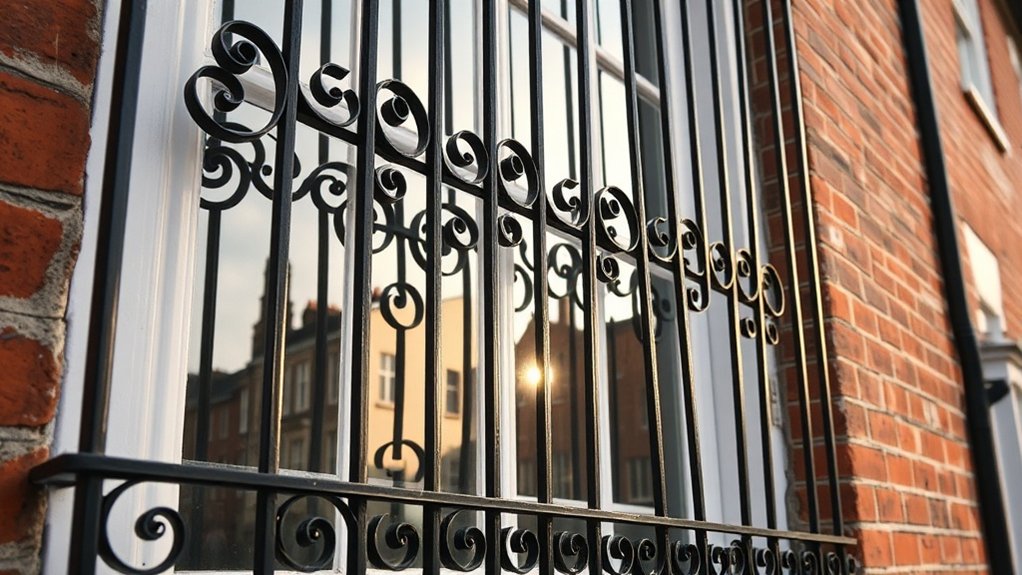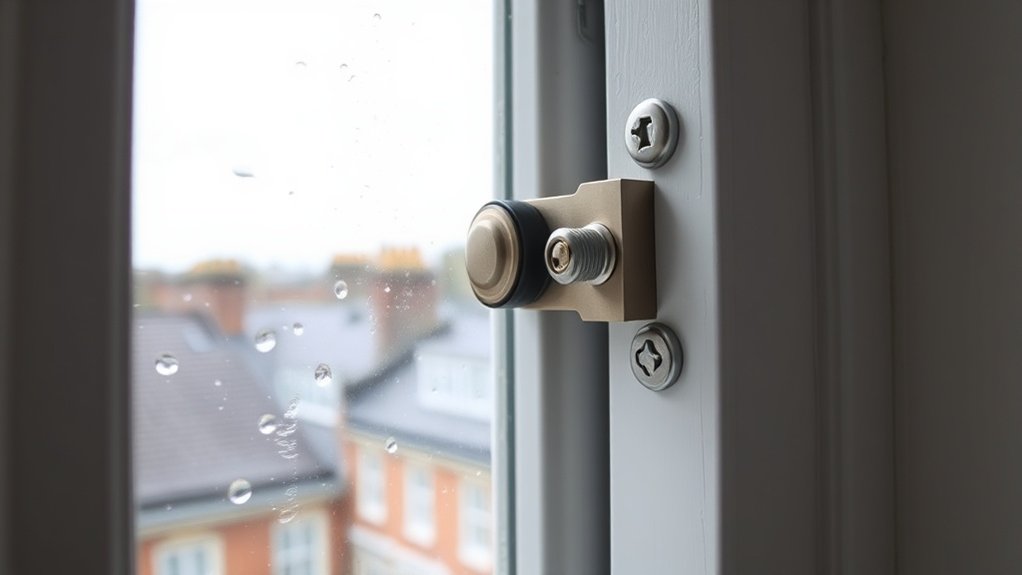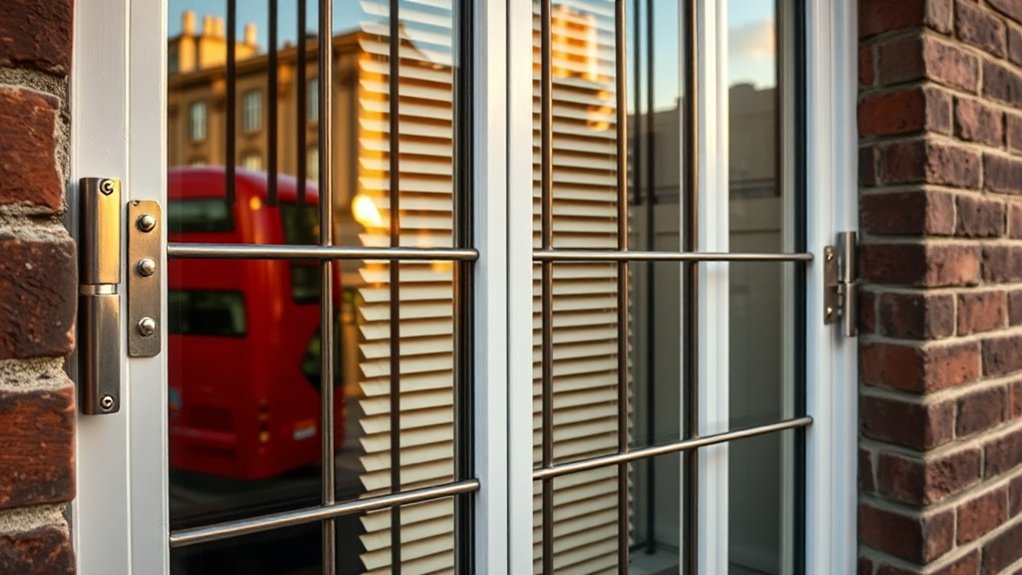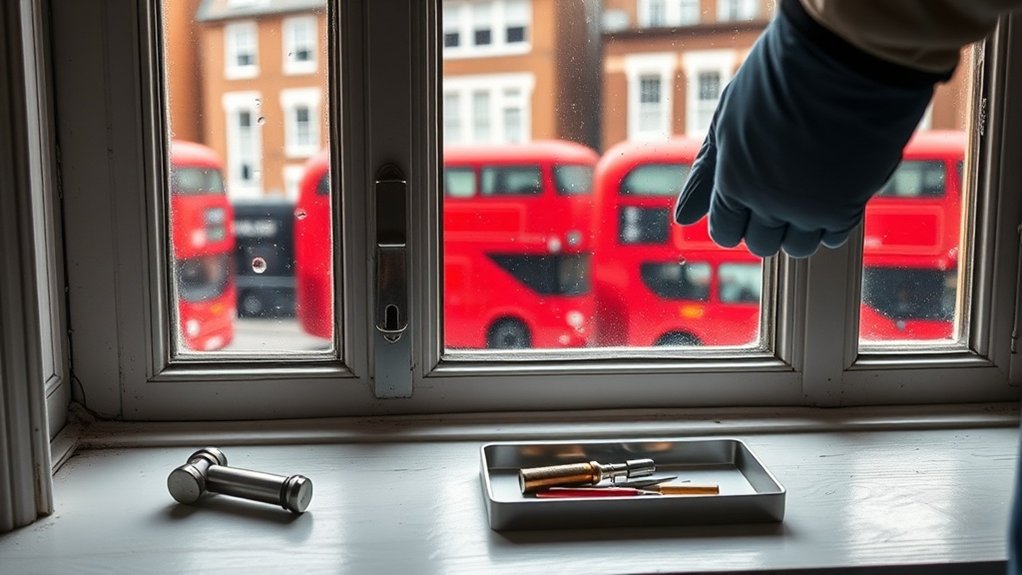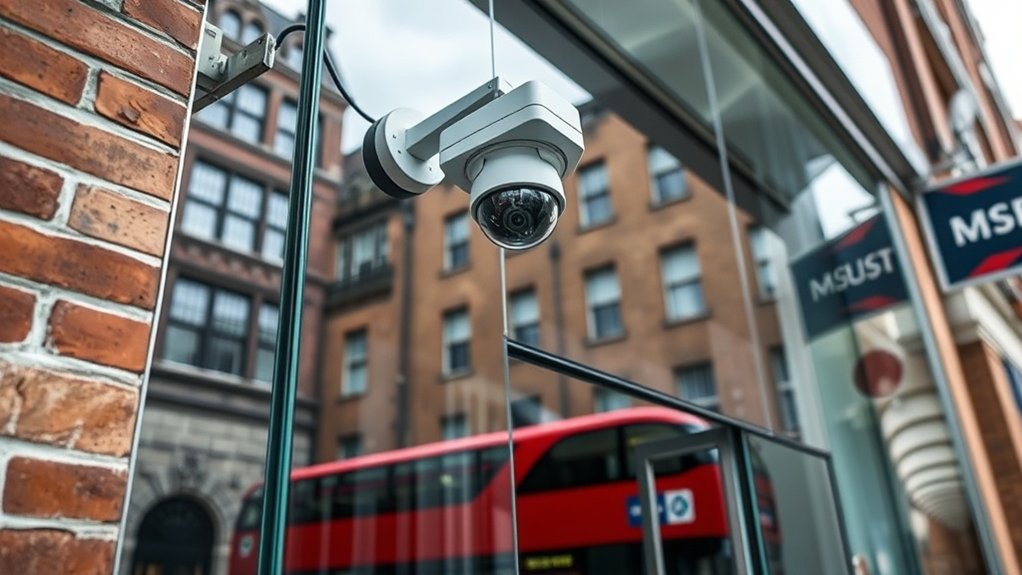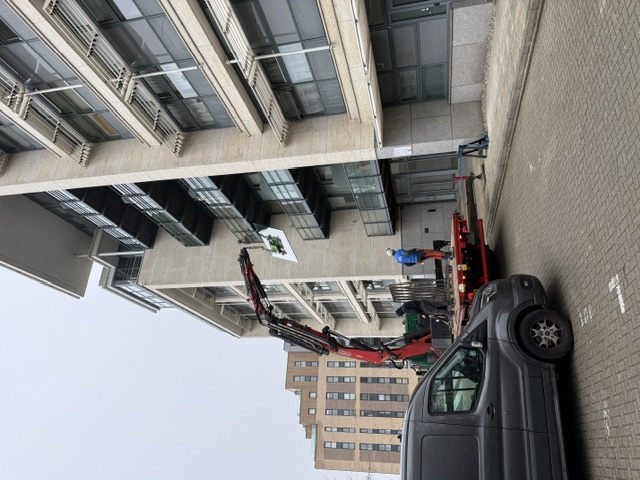
Security glazing in London lets you harden windows and doors against forced entry, protest damage and blast overpressure without losing light or façade character. You use laminated, toughened or polycarbonate systems to absorb impact, keep shards bonded and delay intrusion, buying time for response. Correctly specified to EN 356/EN 1063 and integrated with robust frames, it also improves thermal, acoustic and privacy performance, and you can now see how to match it precisely to your risk profile.
Key insights
- Security glazing in London protects against forced entry, vandalism, protests, and blasts while preserving shopfront, home, and office aesthetics.
- Solutions range from laminated and toughened glass to polycarbonate systems, tailored to EN 356/EN 1063 ratings and Secured by Design guidance.
- Installations can upgrade existing frames in conservation areas with “like-for-like-plus” designs that maintain original character and daylight.
- Modern security glazing also improves thermal efficiency, reduces noise from traffic and rail, and can incorporate privacy or solar-control interlayers.
- Costs depend on glass specification, frame reinforcement, site access, and certification level, with specialist installers needed for complex or listed buildings.
How Security Glazing Protects London Properties
Although London’s building stock ranges from Victorian terraces to glass-fronted offices, the security glazing challenges are similar: you’re protecting high‑value assets in a dense, high‑risk urban environment. You’re managing threats from forced entry, opportunistic crime, protest, and blast overpressure, while keeping façades visually compelling.
Security glazing creates a controlled failure mode: it absorbs and redistributes impact energy, keeps shards bonded, and maintains structural integrity long enough for response or deterrence. That’s critical for Historical architecture, where you must upgrade performance without compromising listed fabric.
Key Types of Security Glazing Used in London
When you’re evaluating security glazing for a London property, you’ll usually choose between laminated security glass, toughened or tempered glazing, and high-impact polycarbonate or acrylic panels. Each option manages risk differently, balancing resistance to forced entry, blast, impact, and vandalism against cost, weight, and aesthetics. By understanding how these systems perform under specific threat scenarios, you can specify the right glazing package for each façade, access point, and internal partition.
Laminated Security Glass
Because it combines physical strength with controlled failure behaviour, laminated security glass is one of the most effective and widely specified glazing solutions for high‑risk London premises. You gain a composite barrier: multiple glass plies bonded by interlayers that retain fragments, sustain residual load, and delay penetration under sustained attack.
You can tune interlayer thickness, material, and stack configuration to address ballistic , blast, manual attack, or forced‑entry risks while maintaining innovative design ambitions and seamless aesthetic integration with premium façades. Laminates can also incorporate acoustic, solar‑control, and privacy interlayers, consolidating functions into one engineered assembly.
When you specify laminated glass correctly, you reduce spall, control break patterns, and maintain compartmentation, supporting performance‑based security strategies and standards‑aligned risk mitigation.
Toughened And Tempered Glazing
While laminated assemblies excel at post‑break integrity, toughened and tempered glazing gives London projects a high‑strength outer skin that resists impact, thermal shock, and daily abuse long before failure occurs. You’re exploiting compressive surface stresses that make the pane several times stronger than annealed glass, yet still compatible with slim, elegant frames and advanced coatings.
You’ll typically specify it where crowd loading, wind pressures, or aggressive cleaning regimes create elevated risk, but you still want transparency, decorative patterns, or modern reinterpretations of historical applications.
- Risk profiling – Match glass thickness and tempering level to impact classes and edge‑cover conditions.
- Detail design – Coordinate fixings, tolerances, and movement joints to avoid point‑stress failures.
- Aesthetic control – Integrate fritting and patterns without compromising stress profiles.
Polycarbonate And Acrylic Panels
Although they’re often seen as “plastic glass”, polycarbonate and acrylic panels play a critical role in London security schemes where impact, forced‑entry, or blast risk can’t be managed with glass alone. You gain exceptional impact resistance at a fraction of the weight of laminated glass, enabling larger spans, slimmer frames, and retrofit over‑cladding of vulnerable façades.
You can specify multi‑wall, solid, or laminate constructions, integrating anti‑spall, abrasion‑resistant, and UV‑stable coatings . Color options support brand expression, privacy, or threat‑responsive zoning (for example, discreetly marking higher‑risk zones).
To control lifecycle risk, apply clear Maintenance tips: use non‑abrasive cleaners, avoid solvent‑based products, and schedule periodic inspections for edge damage and coating wear. In critical applications, you should link inspections to security audits.
Choosing the Right Security Glazing
Selecting the right security glazing for a London property demands a structured assessment of risk, not just a preference for “stronger glass.” You need to match glazing specifications to specific threats: opportunistic break-ins, sustained forced entry, vandalism, blast, or ballistic risk. You’ll also need to respect historical architecture and existing artistic design, ensuring any upgrade enhances, not erases, character.
Consider three parallel decision tracks:
- Threat mapping – Define attack scenarios, tools, and exposure time; align with certified glazing classifications and test standards.
- Fabric and façade – Evaluate frame strength, fixings, and substrate; weak interfaces can nullify high-spec glass.
- Performance stack – Combine security with thermal, acoustic, and solar-control layers, using laminated or hybrid constructions that deliver protection without compromising transparency or daylight.
Forced Entry Resistance: How Security Glazing Performs
Because most London break-ins involve speed and simple tools, forced entry resistance is fundamentally about how long your glazing can delay a determined attacker, not just whether the glass “breaks.” Security glass is engineered to absorb impact, fracture in a controlled way, and keep an intact barrier in place so an intruder can’t create a usable opening within their window of opportunity.
You measure performance by impact cycles, tool types, and time-to-breach under European standards such as EN 356 and EN 1627 . To optimise security glazing durability, you’ll combine laminated interlayers, toughened substrates, and edge retention systems that prevent peel-out under repeated blows. Innovative coatings can add abrasion and chemical resistance without compromising aesthetic integration, allowing you to maintain clear sightlines, daylight, and branding while elevating attack-delay performance.
Security Glazing for London Shopfronts
When you upgrade your London shopfront to security glazing, you reduce smash-and-grab risk, protect stock, and maintain clear visibility for merchandising. You’ll need to balance impact resistance, laminated interlayers, and framing strength with thermal and acoustic performance. At the same time, you must guarantee the installation complies with British Standards , local planning rules, and Building Regulations specific to London’s high‑risk retail zones.
Benefits Of Security Glazing
How effectively your shopfront resists forced entry, vandalism, and accidental impact depends heavily on its glazing, and that’s where security glass delivers clear, measurable benefits. You’re not just adding thickness; you’re specifying a system that manages impact energy, delays intrusion, and maintains visibility.
-
Intrusion delay and risk reduction Laminated interlayers keep the pane intact under attack, buying you critical response time and cutting smash‑and‑grab risk.
-
Design flexibility and brand alignment Advanced films and interlayers support subtle tints and color options, so you strengthen security without compromising visual identity .
-
Asset protection and historical preservation Retro‑fit security glazing lets you upgrade vulnerable heritage façades from the inside, preserving original sightlines while improving resilience against impact, graffiti etching, and opportunistic attacks.
Compliance And London Regulations
Although security glazing is primarily about resisting attack, in London it also has to satisfy a tight mesh of building, planning, and security requirements that go beyond basic safety glass. You must align with Building Regulations Part K and N for impact safety, Part B for fire strategy, and any conservation-area or listed-building constraints .
You’ll also need to coordinate with SBD (Secured by Design) standards and insurance benchmarks for resistance classifications. That’s where a compliance-led specification becomes critical.
You start by mapping risks, then selecting glass innovations—laminated, polycarbonate-reinforced, or hybrid systems—that meet EN 356 or EN 1063 while preserving transparency and thermal performance. Continuous monitoring of security trends ensures your shopfront isn’t just compliant today, but adaptable to future threat profiles and regulatory shifts.
Security Glazing for London Homes
In a city where opportunistic break-ins and targeted attacks on glazing are routine risks, security glass for London homes functions as a critical physical barrier, not just an upgrade. You’re mitigating brute-force entry, tool-assisted attacks, and vandalism while preserving glass aesthetics that align with contemporary residential design.
You can specify laminated, multi-layered constructions with interlayers tuned for impact resistance, acoustic damping, and UV control. Use decorative patterns to diffuse sightlines without sacrificing natural light or sensor performance.
- Perimeter doors and sidelights – upgrade to P1A–P4A-rated laminates with anti-shatter films.
- Street-facing windows – integrate privacy-focused decorative patterns and low-reflectivity coatings.
- Vulnerable access points – pair high-security glazing with reinforced frames, PAS 24-complaint locks , and monitored sensors.
Security Glazing for London Offices
Why treat office glazing as just an architectural feature when it’s one of your most exposed security assets? In London’s high-density commercial zones, your façade is a primary attack surface —for forced entry, vandalism, and opportunistic crime.
You need security glazing that delivers measurable resistance without compromising Glass innovation or design aesthetics. Laminated, multi-layer composites, embedded interlayers, and security films can delay intrusion, contain glass fragments, and protect high-value assets and data-rich environments.
Security Glazing and London Planning Rules
Securing your office façade is only half the equation; you also have to align every glazing upgrade with London’s planning and building control requirements. You’re operating in a tightly regulated environment , especially where conservation areas and historical architecture are involved, so you must demonstrate that higher security doesn’t compromise character.
You reduce planning friction when you:
- Map constraints early – Identify conservation status, Article 4 Directions, and façade line controls before you even specify glass types or framing systems.
- Engineer “like-for-like-plus” solutions – Use laminated systems that replicate original sightlines, colours, and decorative patterns while upgrading to tested attack‑resistant glazing.
- Document performance and aesthetics – Provide planners with drawings, test certificates (EN 356, EN 1063, etc.), and visual mock‑ups to prove risk reduction without visual harm.
Security Glazing: Energy and Acoustic Benefits
Although security often drives the brief, modern laminated and composite security glazing also becomes a performance asset for energy efficiency and acoustic control in London offices. By engineering interlayers, coatings, and gas fills, you reduce solar heat gain , improve U‑values, and cut HVAC loads without compromising glass aesthetics or daylight factors.
You can tune acoustic interlayers to target dominant noise frequencies from traffic, rail, or night-time servicing. That reduces distraction, boosts concentration, and supports hybrid working patterns. Specialist make‑ups also deliver privacy enhancement through selective light transmission, patterned interlayers, or switchable films, limiting sightlines while maintaining transparency.
A rigorous specification process lets you balance impact resistance, thermal performance, and sound reduction, ensuring your façade actively manages risk and operational comfort.
Security Glazing Costs in London
When you assess security glazing costs in London, you need to understand the key pricing factors such as glass specification, frame reinforcement, fixing methods, and certification level. You should also account for typical installation charges, including labour, access equipment, waste removal, and out-of-hours working where risk demands it. By mapping these costs against your asset value and threat profile, you can balance upfront spend with the level of protection that measurably reduces your security exposure.
Key Pricing Factors
Because security glazing is a performance-driven product rather than a simple pane upgrade, its cost in London hinges on a handful of technical variables: threat level (impact, blast, ballistic), glass composition and thickness, frame and anchoring system, certification standard (such as EN 356, EN 1063, or PAS 24), and installation complexity on your specific site. You’re not just buying glass; you’re specifying a risk-mitigation system.
Key pricing levers typically include:
- Performance specification – Higher threat ratings, multi-laminate stacks, and advanced interlayers raise costs but extend material durability and lifecycle value.
- Design innovations – Minimal sightlines, oversized panes, and complex geometries demand bespoke engineering and heavier sections.
- Interface engineering – Reinforced frames, specialist fixings, and substrate strengthening to prevent bypass or progressive failure.
Typical Installation Charges
Material specification sets the baseline for your security glazing budget , but installation in London often determines the final figure you actually pay. You’ll typically see labour charged per opening, with rates rising where access is constrained, glass units are oversized, or you’re working within protected historical architecture. Expect higher charges when installers must coordinate with conservation officers or custom-frame around irregular apertures.
If you’re integrating decorative patterns, switchable interlayers, or embedded sensors, installation costs increase to cover alignment tolerances, specialist lifting gear, and commissioning. Night or weekend works, common in the City and West End, add premiums for noise restrictions and security escorts. To control risk and cost, insist on fixed method statements, measured surveys, and itemised installation line‑items in every quotation.
Balancing Cost And Security
How do you decide what level of security glazing is “enough” for a London property without overspending? You start by quantifying risk, not reacting to fear. Map likely threats—opportunistic theft, targeted attack, vandalism—and match them to certified glazing performance levels rather than marketing labels.
Balance cost and protection by prioritising exposure points and integrating security innovations only where they add measurable value to your risk profile.
- Risk Zoning – Assign higher-spec laminated or multi-layer glass to street-facing and secluded access points; use lighter upgrades elsewhere.
- Performance-to-Cost Ratios – Compare impact, delay, and blast ratings against incremental cost per square metre.
- Integrated Design – Coordinate frames, locks, and glazing aesthetics so enhanced security doesn’t compromise natural light, branding, or façade innovation.
How Security Glazing Installation Works
Once you’ve specified the required protection level, security glazing installation becomes a tightly controlled process that manages structural risk, impact resistance, and compliance from frame to finish. You start by verifying the substrate, frame depth, and fixing patterns so they’ll support glass durability under dynamic and concentrated loads. Engineers map load paths, edge cover, and tolerances before any pane is moved on site.
Next, you deploy calibrated installation techniques : precision templating, dry-fit checks, and setting blocks positioned to control deflection. You apply compatible structural sealants, interlayer-safe gaskets, and mechanical restraints that prevent forced removal. Finally, you verify sightlines, edge clearances, and hardware integration, ensuring the glazing performs as a unified barrier system that resists attack, limits spall, and remains serviceable over time.
Security Glazing Standards and Certifications
Before you sign off on any specification, you need to anchor your security glazing choices to the right standards and certifications, because they define exactly what level of forced-entry, blast, ballistic, or fire performance you’re really buying. In London, regulators, insurers, and security consultants will all reference test evidence, not marketing claims.
You should interrogate:
- EN 356, EN 1063, and EN 13541 classifications to quantify resistance to manual attack, small arms, and blast loads.
- Fire-resistance ratings (e.g., integrity/insulation minutes) to align compartmentation with your evacuation and continuity strategy.
- Third‑party certification schemes that verify ongoing compliance as you adopt Security innovations or slim-profile systems to preserve glazing aesthetics.
Map each rating back to a defined threat scenario, then verify the glass, framing, and anchorage are certified as a system.
How to Choose a Trusted Security Glazing Specialist in London
Standards only protect you if the team specifying, fabricating, and installing the glass understands them and can evidence compliance, so you need to vet any London security glazing specialist with the same rigor you apply to the product itself.
Start by demanding project references with test reports proving glass durability, impact performance, and resistance to manual attack. Verify they design systems , not just sell panes or security film, and that they understand interfaces with frames, fixings, and building movement.
Question their experience with blast, ballistic, or hostile vehicle risk where relevant, and ask how they model threat, consequence, and residual risk. Finally, check they offer lifecycle support—condition monitoring, re-certification, and upgrade paths—so your glazing strategy can evolve with changing security requirements and emerging technologies.
Frequently Asked Questions
Can Security Glazing Be Retrofitted to Listed or Heritage London Buildings?
Yes, you can retrofit security glazing to listed or heritage buildings , but you must treat Historical preservation as a primary design constraint. You’ll typically use secondary glazing, slim-profile laminated units, or bespoke framing systems to guarantee Aesthetic integration with original sightlines. You’ll navigate planning consent, conduct risk assessments, and specify reversible, low-impact fixings so you upgrade blast, intrusion, and UV performance without compromising fabric or heritage value.
Does Security Glazing Affect Mobile Phone or Wi‑Fi Signals Inside the Property?
Yes, it can, but not always as severely as you might fear. Certain security glazing layers and metal coatings cause signal interference and signal attenuation, particularly for mobile and Wi‑Fi at higher frequencies. You’ll want a technical survey to map current coverage, then design mitigation: specified glass coatings, strategic use of uncoated panes, boosted access points, or indoor signal repeaters. That way, you raise security without compromising your property’s connectivity.
How Do I Maintain and Clean Security Glazing Without Damaging Its Protective Layers?
You maintain and clean security glazing by using non‑abrasive Cleaning techniques that protect its Protective coatings. Use a pH‑neutral glass cleaner or diluted mild detergent, plus a soft microfiber cloth. Don’t use solvents, scouring pads, or high‑pressure jets; they risk micro‑scratching and delamination. Rinse with clean water, then gently dry edges to avoid seal degradation. Implement a scheduled inspection cycle to detect coating wear or impact damage early.
Will Installing Security Glazing Impact My Existing Home or Business Insurance Policy?
Yes, it can, and you should treat it as a strategic upgrade. Smart security steps sometimes trigger Insurance implications, usually positive, but only if you notify your insurer. You might see Policy adjustments such as premium reductions or revised conditions. Document specifications, installation standards, and certifications, then share them proactively. By aligning glazing performance data with your risk profile, you won’t just protect property; you’ll optimize insurability and leverage innovation-driven coverage.
Are There Temporary Security Glazing Options for Short‑Term Events or Construction Sites?
Yes, you can deploy temporary security glazing for short‑term events or construction sites. You’ll use modular, impact‑resistant panels designed for rapid Temporary installation, often clamped to existing frames or integrated into hoarding systems. These solutions enhance Event security, deter opportunistic attacks, and control blast or debris risk. You can specify anti‑tamper fixings, forced‑entry ratings, and clear vs. obscured panels, aligning protection level with your project’s threat model and innovation goals.
Summary
When you look at London crime data and attack methods, one theory keeps proving true: standard glass consistently fails under real-world threats. Security glazing changes that risk profile. By combining laminated layers, tested interlayers, and certified installation, you turn vulnerable openings into delay barriers that disrupt forced entry and opportunistic attacks. If you treat glazing as part of an integrated security design, you’re not just buying glass—you’re buying time, control, and a measurable reduction in exposure.