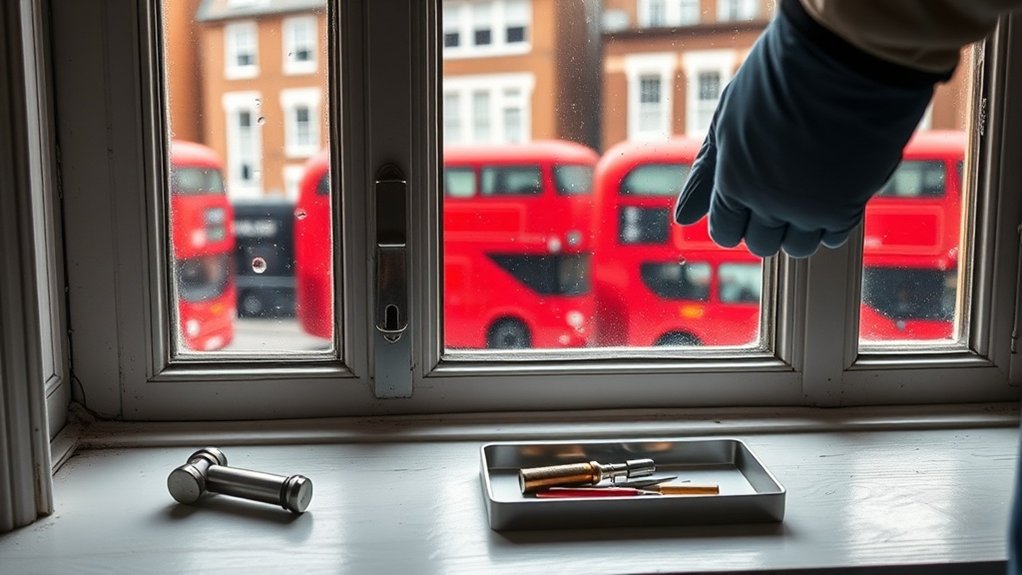
You replace your window locks in London to restore full security, weather resistance, and insurance compliance when hardware is worn, misaligned, corroded, or below modern British Standards. Check for difficulty locking, slack handles, visible damage, or frame movement. Match replacement locks to sash, casement, uPVC, or aluminium frames, ensuring PAS 24 or BS-rated components and tamper-resistant fixings . A certified locksmith can upgrade you to multipoint or smart-compatible systems, and you’re about to see exactly how that works.
Key insights
- Choose window locks that match your window type (uPVC, sash, casement, aluminium) and London’s security, weather, and heritage requirements.
- Ensure replacement locks meet relevant British Standards (e.g., PAS 24, BS 3621/8621) and your home insurance policy conditions.
- Replace locks showing corrosion, misalignment, sticking, loose handles, or difficulty locking, prioritising operational security over cosmetic issues.
- Consider professional locksmith installation for multipoint, heritage, or smart locks to avoid misalignment, damage, and non‑compliance with building or insurance standards.
- Ask about child‑safety restrictors, smart sensors, and corrosion‑resistant finishes to improve safety, monitoring, and durability in London’s climate.
Why Window Lock Replacement Matters in London
Because London properties face unique security and weather challenges, replacing worn or inadequate window locks is a critical maintenance task rather than a cosmetic upgrade. You operate in a dense urban environment where opportunistic entry, driving rain, and rapid temperature shifts converge, so your locking hardware must perform mechanically, thermally, and acoustically.
You need locks engineered for Historical architecture yet compatible with double- or triple-glazed units, trickle vents, and modern seals . High-tolerance multipoint or espagnolette systems improve sash compression, reducing drafts and enhancing energy efficiency. Upgraded locks also integrate with sensors, enabling smart-home monitoring and automated ventilation without compromising security. By standardising high-spec mechanisms across frames, you simplify maintenance, ensure predictable performance under load, and future‑proof your windows against evolving threats and regulations.
Signs You Need Window Lock Replacement
You should first inspect each window lock for visible damage or wear, such as corrosion, cracks in the housing, bent bolts, or loose fixing screws. Next, test the mechanism by fully closing the sash and checking whether the lock engages smoothly without sticking, misalignment, or excessive force. If you can’t lock the window securely on the first attempt, or the handle feels slack when turned, you likely need a lock replacement to maintain proper security and performance.
Visible Damage Or Wear
When evaluating whether a window lock in your London property needs replacement, start by examining it for clear physical defects and operational wear. Don’t overlook period fittings with decorative accents or historical significance; aged hardware can conceal critical structural fatigue.
Look for:
- Material degradation – Identify corrosion on steel components, pitting on brass, hairline fractures on cast sections , or UV-brittled uPVC housings. Any distortion compromises alignment and load-bearing performance.
- Component looseness – Test for lateral play in handles, wobbly spindles, or slack fixing screws. Movement indicates worn threads or enlarged fixing holes in the sash or frame.
- Surface and coating failure – Check peeling paint, flaking plating, or oxidised finishes around the lock body; these expose substrates, accelerating moisture ingress and weakening security-critical parts.
Difficulty Locking Securely
Although cosmetic issues can be tolerated for a time, any difficulty getting a window to lock fully and cleanly is a strong indicator the locking mechanism in your London property needs replacement. When you need to push, lift, or jiggle the sash to engage the lock, you’re seeing misalignment between keeps and bolts , usually from frame movement, worn hinges, or fatigued locking hardware.
Test each window systematically: close it gently, then operate the handle. Note resistance points, partial latching, or handles that don’t return to their resting position. These symptoms reduce security and invalidate many insurance policies.
Modern replacement locks let you integrate decorative enhancements while respecting historical preservation requirements, using slimline multi-point systems, keyed restrictors, and security-rated hardware that’s discreet yet high-spec.
Common Window Lock Types in London Homes
Across London’s housing stock, several window lock types appear repeatedly, each with distinct mechanisms, security levels, and suitability for different frame materials. You’ll see modern systems retrofitted into historical architecture, often paired with decorative hardware that respects conservation constraints while upgrading security performance .
-
Sash window locks You typically use dual-screw sash fasteners or key-locking fitch fasteners on timber box sashes. They clamp meeting rails, reducing prying and lateral movement.
-
Casement window locks Contemporary casements usually rely on espagnolette or shoot-bolt systems, driven by a handle that engages multiple locking points into keeps along the frame.
-
uPVC and aluminium multipoint locks These integrate mushroom cams, hook bolts, and sometimes deadbolts along the sash perimeter, enhancing resistance to jemmying and frame flex under attack loads.
How to Choose the Right Replacement Window Locks
Before you choose replacement window locks, define the specific security, compliance, and usability requirements for each window in your property. Map window types (sash, casement, tilt-and-turn, rooflight) to compatible lock mechanisms, then verify material constraints for timber, aluminium, and uPVC frames.
If you’re working with historical architecture, prioritise low-profile, surface-mounted systems or retrofittable internal restrictors that preserve sightlines and original frames. Specify corrosion‑resistant finishes and tamper‑proof fixings , especially on upper floors and coastal locations.
Assess how each lock interacts with gaskets and seals, as poor alignment can increase air leakage and undermine energy efficiency. Choose designs that integrate secure night‑vent positions, enabling controlled airflow without compromising resistance to forced entry or frame distortion over time.
Security Standards and Insurance Rules for Window Locks
When you replace window locks in London, you must check that the products meet relevant British Standards (such as BS 3621, BS 8621, or PAS 24) to maintain a recognised security level. You should then compare these standards with the specific security clauses in your home insurance policy , paying attention to any requirements for key-operated locks, locking points, or certification marks. By aligning your lock specification with both British Standards and insurer rules, you reduce the risk of claims being refused after a break-in.
British Standards Compliance
Although it’s easy to focus only on convenience and aesthetics, you must treat British Standards compliance as a core requirement when replacing window locks in London. You’re working within dense urban fabric, historical architecture, and often delicate Victorian design, so you need locks that meet BS 3621, BS 7950, or PAS 24 where applicable, without compromising heritage sightlines.
-
Identify applicable standards Map each window type (casement, sash, tilt‑turn) to its relevant British Standard and performance class.
-
Verify test certification Demand third‑party test reports for attack resistance , key security, and corrosion performance.
-
Integrate compliance into specification Document required kitemarks, materials, fixing methods, and frame compatibility so your installer can’t substitute lower-spec hardware.
Insurance Policy Requirements
Because your window locks form part of your overall risk profile , you must align any replacement work in London with the exact security conditions set out in your home or commercial insurance policy. First, extract policy wording on “minimum security standards,” “openings,” and “forceable entry.” Identify any specified British Standards, lock types, installation heights, or glazing interfaces.
Next, map these requirements onto each window category, including roof lights, basement windows, and openings in historical architecture where you might need heritage-approved or reversible fittings. Document model numbers, keys, and locking points for your insurer.
Integrate seasonal maintenance into your compliance plan: schedule inspections to confirm locks still latch, key cylinders haven’t loosened, and sash alignments remain true, then log remedial work to maintain uninterrupted cover.
Child Safety and Restrictor Locks for Upper Floors
-
Specify performance Select restrictor locks tested to BS EN 14351 and child safety guidance, with defined load ratings and anti-tamper features.
-
Engineer the fixing points Fix into the sash’s reinforcement or solid timber, using through-screws where possible to resist leverage and repeated impact.
-
Design for dual-mode use Choose units with a key or tool-operated override, so adults can fully open windows for cleaning or emergency egress without disabling everyday restriction.
Security Upgrades for Sash Window Locks
When you upgrade sash window locks for security, treat the window as part of a layered defence that resists forced entry, manipulation, and bypass from outside. Start by replacing basic cam locks with key-operated, anti-jemmy fasteners fixed into the meeting rails and reinforced with steel sash stops above the typical levering points.
Specify through-screwed hardware into the stiles, not just the sash face, to resist shear loads. For ground‑floor windows, integrate frame-mounted limiters that lock the sash slightly open for ventilation but can’t be overridden from outside.
Where you’re undertaking historical restoration, use high-security locks in traditional patterns, colour-matched and low-profile for seamless aesthetic enhancements. Consider smart-compatible sash fasteners that provide status sensing, event logs, and integration with intrusion alarms.
Replacing uPVC Window Locks in London Properties
When you’re replacing uPVC window locks in a London property, you should first identify specific faults such as gearboxes failing, misaligned espagnolette rods, worn locking cams, or damaged key cylinders. You’ll then need to match the replacement mechanism to the existing profile and hardware, checking backset, spindle size, mushroom cam positions, and handle fixing centers. Finally, you should choose upgraded mechanisms where possible, prioritizing multi-point locking, corrosion-resistant components, and PAS 24 or equivalent security-rated products suited to London insurers’ expectations.
Common uPVC Lock Issues
Although uPVC window locks are designed for durability, they commonly develop faults that compromise both security and ease of operation in London properties. You’ll often see issues intensified by historical architecture, where frames aren’t perfectly square, and by aesthetic design choices that push standard hardware beyond its tolerances.
-
Misalignment and binding – Seasonal movement in old masonry distorts frames, causing locking cams to scrape or jam. You’ll notice stiff handles or incomplete engagement of the locking points.
-
Gearbox wear – The internal multipoint gearbox can strip or shear, leaving the handle spinning or stuck. This often follows years of high-torque operation.
-
Handle and spindle failure – Repeated force or overtightening rounds the spindle or fractures the handle base, creating unreliable locking and inconsistent key operation.
Choosing Replacement Mechanisms
Misaligned frames, worn gearboxes , and failed handles don’t just call for repairs; they dictate exactly what kind of replacement mechanism you should fit in a London uPVC window. Start by measuring the existing espag or shootbolt gearbox depth, spindle length, and backset; this guarantees the new lock aligns with the keeps without stressing the sash.
Next, map your property’s risk profile and any historical security weaknesses . Upgrade basic espag locks to multi-point or twin-cam gearboxes with mushroom cams for enhanced anti-jemmy performance. Where ventilation’s vital, specify night-vent locking positions.
You must also balance aesthetic considerations: choose low-profile handles, colour-matched furniture, and concealed gearing that complements slim uPVC sightlines while integrating future-ready options like sensor-ready keeps for smart monitoring.
Replacing Locks on Wood and Aluminium Windows
Before you replace a lock on a wood or aluminium window, you must identify the exact lock type, fixing method, and frame construction so the new hardware seats correctly, operates smoothly, and maintains security. On timber sashes in historical architecture, you’ll often align new espagnolette or fitch fasteners with existing mortices to preserve window aesthetics and avoid weakening the stile.
- Inspect the frame substrate (solid timber, composite, thermal‑break aluminium) and select screws or through‑bolts with compatible corrosion resistance.
- Measure backset, spindle size , and keep position; transfer these precisely to avoid sash binding or air leakage.
- For aluminium, use pre‑drilled reinforcement channels where possible and isolate dissimilar metals to prevent galvanic corrosion while maintaining slim, modern sightlines.
DIY vs Locksmith for Window Lock Replacement
When you weigh DIY window lock replacement against hiring a locksmith, you need to assess your actual skill level, tool access, and ability to follow precise installation tolerances. You’ll also compare the upfront cost of labour against your own time investment, the risk of misalignment , frame damage, or voided insurance, and the impact of any installation errors on the window’s security rating. Finally, you should factor in whether you require a locksmith’s documented warranty, compliance with British Standards (e.g., BS 3621/BS 9520), and proof for insurers or future property inspections.
Skill Level And Tools
Although window lock replacement can look straightforward, the decision to handle it yourself or hire a locksmith should hinge on your skill level, access to tools, and the type of lock fitted to your window. You’ll need more than a screwdriver: precision bits, a drill with torque control, measuring gauges, lubricant, and, for sash or casement systems, alignment shims.
-
DIY-ready profile – You’re comfortable reading technical diagrams, matching sightlines, and drilling accurately near glazing without cracking it.
-
Conservation and design focus – Where decorative styles or historical significance matter, you must source heritage-compatible hardware and preserve original frames.
-
When to call a locksmith – Complex multipoint, keyed-alike, or smart-integrated locks demand professional tooling, calibration jigs, and secure key-control procedures.
Cost, Time, And Risk
Ultimately, you’ll weigh cost, time, and risk together, not in isolation, when deciding between DIY window lock replacement and hiring a locksmith in London.
DIY appears cheaper: you’ll pay only for locks, consumables, and any specialized drill bits or jigs. However, factor in your billable time, learning curve, and potential damage to frames—critical in historical architecture where sash boxes and putty lines are fragile and costly to repair .
A locksmith’s invoice includes call‑out, labour, and premium decorative hardware, but you gain predictable scheduling and faster completion, especially across multiple windows. You also reduce risks of misaligned keeps, compromised sightlines, and non‑reversible screw placements on heritage timbers. For unconventional window profiles, professional templating and precise mortising often justify the higher upfront expense.
Security And Warranty Considerations
Cost, time, and risk only tell part of the story; the way you replace window locks also affects the security rating of your property and the validity of warranties and insurance in London. When you DIY, you’re responsible for compliance with PAS 24, Secured by Design, and any glazing or frame manufacturer specifications. A misaligned shootbolt or under‑spec euro cylinder can void guarantees and downgrade burglary resistance .
- Security certification – Verify locks meet British Standards (e.g., BS 3621/8621/10621) and match insurer requirements.
- Warranty integrity – Check if your window or hardware warranty mandates professional or FENSA-registered installation .
- Context-sensitive design – In historical architecture, use locksmiths experienced in concealed or heritage-compatible hardware to balance security with aesthetic considerations.
What to Expect From a London Window Lock Locksmith
When you call a specialist London window lock locksmith, you should expect a structured, methodical process that starts with verifying your identity and evaluating the type, condition, and security rating of your existing locks. They’ll inspect frame material, sash profile, and opening geometry, especially in properties with historical architecture where regulations constrain alterations.
Next, they’ll map your current threat profile: access points, ladder reach, glazing type, and any smart-home infrastructure. You’ll see clear options: retrofittable high-security locks , keying systems, or smart, sensor-enabled mechanisms that preserve aesthetic design while upgrading resistance to forced entry.
Finally, they’ll outline an installation plan: drilling patterns, fixing depths, corrosion-resistant fasteners, and integration with restrictors, alarms, or child-safety hardware, all aligned with relevant British Standards.
Window Lock Replacement Costs in London
Several variables drive window lock replacement costs in London, and understanding them lets you forecast a realistic budget before you book a locksmith. You’ll typically pay more when a specialist must protect historical architecture, integrate with advanced smart-security, or preserve refined window aesthetics.
To estimate costs, break them down into:
- Hardware specification – Material (brass, stainless, high‑security alloys), locking grade (BS EN standards), and smart features (sensors, Wi‑Fi, integration with alarms) directly affect unit price.
- Frame and access complexity – uPVC, timber, aluminium, sash, or tilt‑and‑turn frames each require distinct mechanisms and labor times.
- Compliance and finishing – Insurance-approved locks, discrete installation on listed buildings , and colour‑matched fittings increase cost but maintain performance and design integrity.
Emergency Window Lock Replacement After a Break-In
After a break‑in, you must treat emergency window lock replacement as both a security and evidence‑preservation task. First, secure the perimeter without touching tool marks on frames or glass. Photograph hinge points , damaged keeps, and lock bodies; these images support forensic analysis and insurance claims. Only then remove compromised components.
Next, specify replacement locks that upgrade resistance classes while respecting historical architecture and existing window design. For sash, casement, or tilt‑and‑turn units, you should match lock geometry (backset, spindle size, fixing centers) to avoid weakening the substrate. In London, insist on PAS 24–compliant or equivalent multi‑point or shoot‑bolt systems where feasible.
Finally, request anti‑tamper fixings and keyed‑alike cylinders , enabling rapid re‑securing across all vulnerable windows.
How to Maintain New Window Locks
Although modern security hardware is designed for durability, you still need a structured maintenance routine to keep new window locks operating at their specified performance level. Treat locks as part of the overall window design, not as isolated components. Align the sash, frame, and locking points so load paths remain linear and friction stays low.
-
Inspect and test quarterly Check fixings for movement, verify the lock throws fully, and confirm the sash closes without racking. Prioritise sash maintenance to prevent misalignment.
-
Clean contact and motion surfaces Remove dust, paint overspray, and oxidation from strikes and bolts using non-abrasive pads and alcohol-based cleaners.
-
Lubricate with purpose-made products Apply PTFE or dry-film lubricant to cylinders, cams, and sliding elements. Avoid oil-based sprays that attract particulates and degrade performance.
Choosing a Trustworthy London Window Lock Specialist
When you’re selecting a window lock specialist in London, you need to treat the process like a technical procurement task rather than a convenience purchase. First, verify they’re MLA-approved or similarly accredited, insured, and DBS-checked. Request evidence of recent projects in historical architecture so you know they can work within conservation constraints without damaging original frames.
Ask which lock systems they specify for sash, casement, and tilt‑and‑turn windows, and how they integrate reinforced keeps, anti-jemmy features, and compliant key control. Insist on written specifications referencing PAS 24 or equivalent .
Evaluate their understanding of energy efficiency: they should detail how lock placement, compression points, and gasket interaction improve airtightness. Finally, require a clear commissioning process, including torque checks, adjustment steps, and documented maintenance intervals.
When to Replace the Whole Window Instead of Just the Lock
In some situations, attempting to upgrade or replace window locks becomes a false economy , and you should instead specify full window replacement as the correct intervention. You’ll typically reach this threshold when the frame, sash, and glazing can no longer support modern security hardware or performance targets.
-
Structural failure If the sash is twisted, rotten, or corroded, new locks won’t seat correctly. In historical architecture, this often means commissioning bespoke, like-for-like replica windows with integrated secure locking.
-
Thermal underperformance When single glazing and leaky frames undermine energy efficiency, a full unit with advanced glazing and multi-point locks delivers measurable gains.
-
Hardware incompatibility If your existing profile can’t accept current high-security or smart-lock systems, replacing the entire window enables cohesive, future-ready integration.
Frequently Asked Questions
Can New Window Locks Improve My Home’s Energy Efficiency or Reduce Draughts?
Yes, you can improve efficiency and reduce draughts with new window locks. High‑compression locking systems pull sashes tighter into the frame, enhancing perimeter sealing and Insulation benefits. By increasing contact pressure on gaskets, you achieve more effective Draft prevention and minimize convective heat loss. Specify multi-point locks with adjustable keep plates, then fine‑tune closure tension to optimise airtightness while maintaining smooth operation and long‑term mechanical reliability.
Are There Eco-Friendly or Recyclable Options for Replacement Window Locks in London?
Yes, you can specify eco-friendly , recyclable window locks. Choose units manufactured from sustainable materials such as high-grade recyclable aluminium or stainless steel, avoiding mixed-plastic assemblies. Verify product data sheets for recyclability percentages and RoHS/REACH compliance. You should also ask suppliers about take-back or manufacturer-led recycling programs for old hardware. When installing, segregate removed components by material type to streamline downstream recycling and minimize embedded carbon in your upgrade.
How Do Smart or Keyless Window Locks Work With London Home Security Systems?
You integrate smart or keyless window locks into London home security systems via encrypted wireless protocols (typically Z-Wave, Zigbee, or Wi‑Fi). You pair each lock with your hub, then map zones and alert rules. You configure Biometric access for authorized users, while Remote locking routes through a secure cloud or local server with TLS. You’ll also sync logs, automate arming scenes, and enforce firmware updates to close emerging attack vectors.
Can I Standardise All My Window and Door Locks to Use One Key?
Yes, you can. You standardise access by ensuring key compatibility across all cylinders, then using lock rekeying to match them to a single key profile. First, audit every door and window lock type and brand. Next, replace non‑compatible cylinders with keyed-alike models. Finally, have a locksmith re-pin the cylinders to one master key. You’ll reduce key clutter while keeping upgrade paths open for future smart or modular systems.
What Legal Responsibilities Do London Landlords Have for Tenant Window Lock Security?
You’re legally responsible for window lock security because Landlord liability extends to providing “reasonably secure” premises. You must install robust locks on accessible windows, maintain them proactively, and repair faults fast once notified. For Tenant safety, document lock specifications, maintenance schedules, and inspection results. Integrate smart or keyed-alike systems only if they don’t reduce security. If a defect enables burglary or injury, you risk claims under Housing Health and Safety Rating System.
Summary
When you refresh your window locks, you’re quietly retiring tired hardware and inviting in a more disciplined layer of security. You’re not just tweaking fittings; you’re upgrading to compliant components that satisfy insurers and frustrate uninvited “inspectors.” By scheduling periodic checks, lubricating mechanisms, and calling a vetted London specialist when performance declines, you avoid sudden “surprises.” When frames or sashes are past their prime, you’ll know it’s time to gracefully promote the entire window to replacement.