
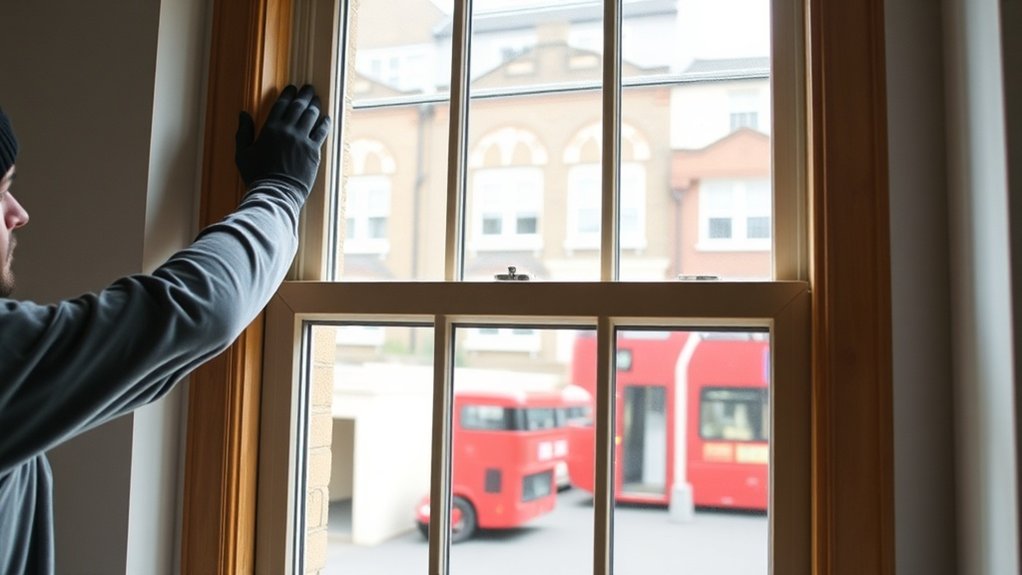
You can use secondary glazing in London to cut heat loss, reduce noise by up to 40–45 dB, and improve comfort without replacing your existing windows. Installers fit slim, colour-matched internal frames that respect conservation rules, maintain sightlines and help with Part L energy targets. It’s usually quick to install, low-disruption, and ideal for period or listed homes where new double glazing isn’t allowed. Below, you’ll see how it works, what it costs, and how to specify it correctly.
Key insights
- Secondary glazing in London homes improves thermal efficiency and noise reduction (up to 40–45 dB), often cutting heating demand by 10–30%.
- It is usually acceptable for listed buildings and conservation areas because installations are fully reversible and visually discreet within existing window reveals.
- Common systems include vertical and horizontal sliders or lift-out panels, tailored to sash windows, balcony doors, and rarely used openings.
- Installation costs typically range from £450–£1,500 + VAT per window, depending on size, glass specification, and access complexity.
- Professional installers survey frame condition, design bespoke units, and fit them with minimal disruption, checking condensation management and regulatory compliance.
Why Secondary Glazing Works for London Homes
Because London’s housing stock is a complex mix of period properties, conservation-area homes, and modern apartments, secondary glazing offers a uniquely effective way to boost performance without breaching planning constraints or altering external façades. You retain original sashes or steel frames while achieving modern U-values, improved airtightness, and robust acoustic attenuation against traffic and flight paths.
You’ll notice space heating demand drop, helping you align with Part L targets without disruptive envelope overhauls. Secondary glazing also mitigates condensation risk, protecting timber and decorative finishes.
Because units sit internally, you can coordinate frame finishes with your interior scheme, outdoor decor, and even window-side planting informed by your gardening tips, ensuring visual continuity while discreetly integrating high-spec glass, secure locks, and low-maintenance tracks.
How Secondary Glazing Installation Works in London
Once you’ve decided secondary glazing suits your London property, the installation process follows a defined, building-regulation-aware sequence that protects both performance and original fabric. Your installer begins with a detailed window survey , checking frame condition, sightlines, and any constraints linked to listed status or conservation-area controls focused on historical preservation.
They then design a secondary system that’s fully reversible, mechanically fixed to existing surrounds without disturbing primary sashes. You’ll see specifications covering cavity depth , ventilation strategy, and acoustic targets, plus certified hardware and seals selected for material durability.
On installation day, technicians template, pre-drill, and fix frames with minimal intervention, then glaze, seal, and commission. They verify smooth operation, condensation management, and compliance with London-specific regulations and guidance.
Is Your London Property Suitable for Secondary Glazing?
You’ll first need to check whether your existing window frames are structurally sound and accessible, as this determines what secondary glazing systems can be fitted in accordance with UK Building Regulations and, where relevant, conservation guidance. We’ll also look at the age and architectural character of your London property to guarantee any new units respect sightlines and listed or Article 4 constraints. Finally, you should consider your current noise and heat levels so we can specify glass types, frame profiles, and ventilation strategies that deliver measurable acoustic and thermal performance gains.
Assessing Existing Window Frames
Before you invest in secondary glazing for your London property, you need to confirm that your existing window frames can safely and effectively support it. You’ll assess three fundamentals: structural integrity, geometry, and accessibility . Check for rot, warping, corrosion, or loose joints; any movement can compromise fixings and air‑tightness. Evaluate whether the frame’s reveal depth and clearances can accommodate secondary units without obstructing ironmongery, vents, or blinds.
Next, consider the frame material and its historical significance alongside your appetite for modern designs. Timber, steel, aluminium, and uPVC each need different fixing methods and gasket solutions. Finally, ensure the substrate can accept secure mechanical fixings while complying with relevant London building regulations , especially regarding ventilation, safety glazing, and fire‑escape windows.
Property Age And Style
Although every building is different, your property’s age and architectural style largely determine how secondary glazing should be designed, detailed, and approved in London. If you’re in a listed building or conservation area, Historical preservation drives the specification: you’ll typically need discreet, reversible systems that respect original sightlines and comply with heritage and planning constraints .
For Victorian, Edwardian, or 1930s homes, you can follow traditional proportions while introducing slimmer frames, improved air‑tightness, and compliant safety glass. Post‑war and contemporary schemes often invite a more expressive, Modern design approach, integrating bolder framing, larger panes, and smart‑control operation.
Across all ages, you must coordinate with Part L, F, and K requirements, ensuring the secondary glazing elevates performance without compromising the building’s architectural intent.
Noise And Heat Levels
Once you’ve understood how your property’s age and architecture set the design parameters, the next test of suitability for secondary glazing is the actual noise and heat profile of your London home. You’ll need to quantify typical external noise levels (dB) and identify façades most exposed to traffic, rail, or flight paths. From there, we can specify glass thickness, cavity depth, and frame type to achieve targeted dB reductions.
For heat, review existing U-values, draught paths, and surface temperatures, especially around original frames. Secondary glazing helps you meet Part L ambitions without altering primary elevations, preserving your interior design intent. At the same time, multi-point locks and laminated panes enhance window security, integrating discreetly with sensors and smart-home monitoring for a higher-performing, future-ready envelope.
Secondary Glazing for Period and Listed Buildings in London
When you own a period or listed property in London, you must enhance performance without altering the original window fabric or harming its architectural significance. Secondary glazing lets you improve thermal and acoustic performance while preserving sightlines, glazing bars, and heritage glass. You’ll also need to guarantee the design, fixing methods, and frame sightlines comply with conservation area policies and any Listed Building Consent conditions.
Preserving Historic Window Aesthetics
Because so much of London’s architectural character is tied to original sash and casement windows, any upgrade must respect historic sightlines , mouldings, and glazing bars while meeting modern performance expectations. You want secondary glazing that’s visually recessive yet technically advanced, so we design ultra-slim aluminium or steel sections that sit behind existing frames, preserving elevations and proportion.
You retain the visible Artistic craftsmanship of your primary windows while benefiting from Modern innovations: low-iron glass , micro-perimeter seals, and discreet trickle-vent integration. We match rail positions, sightlines, and colour finishes, and avoid altering putty lines or external profiles. Hinged, lift-out, or sliding systems are specified to align with sash operation, ensuring you enhance acoustic and thermal performance without visually compromising your period facade.
Meeting Conservation Area Requirements
Respecting original sightlines is only half the challenge; you also have to satisfy planning officers and conservation teams who guard London’s designated streetscapes. You’re working within Article 4 Directions, conservation area appraisals, and, for listed buildings, statutory Listed Building Consent .
You minimise risk by designing secondary glazing that sits within the existing reveal, maintaining historical accuracy while upgrading thermal and acoustic performance. Ultra-slim aluminium sections, colour-matched to existing frames, deliver aesthetic integration without mimicking faux period details.
Key compliance steps include:
- Commissioning measured surveys and section drawings for pre-application discussions
- Specifying reversibility, minimal fixings, and fully demountable frames
- Demonstrating performance gains (U‑values, dB reductions, condensation control) in a concise heritage impact statement
Types of Secondary Glazing Systems (Vertical, Horizontal, Lift-Out)
Although all secondary glazing serves the same core purpose —improving thermal and acoustic performance without replacing existing windows—choosing the right system type (vertical sliding, horizontal sliding, or lift-out) is critical to meet both client use and regulatory expectations. You’ll typically coordinate this decision alongside window tinting and glass refurbishment strategies to optimise solar control, light levels, and U‑values.
Vertical sliding units suit traditional sash windows, providing controlled ventilation while maintaining safe cleaning access – essential in multi‑storey London properties. Horizontal sliding systems work best where you need frequent operation, such as balcony doors or wide bays, preserving egress routes required by Building Regulations. Lift-out panels offer the most discrete, airtight solution for seldom‑used openings, ideal where you prioritise maximum acoustic performance and airtightness over daily operability.
Design Choices to Keep Secondary Glazing Discreet
When you design secondary glazing for London properties, keeping it visually recessive is as important as hitting acoustic and thermal targets, especially in heritage or Article 4 areas. You prioritise slim aluminium or composite frames, colour‑matched to existing sashes and surrounding window treatments, so the new line virtually disappears in elevation and in section.
You also align sightlines with meeting rails and glazing bars, preventing “double framing” that jars with high-end interior décor. Low-iron glass and discreet gasket details keep reflections and shadow lines under control.
- Specify sub-frame depths that sit within existing reveals, avoiding proud frames
- Use concealed fixings and perimeter seals to maintain clean junctions
- Integrate with blinds, pelmets, and smart shading to preserve design intent
Permissions, Building Rules, and Heritage Restrictions in London
Before you commit to a secondary glazing specification in London, you need to map your design against planning controls , listed-building legislation, and Building Regulations to avoid delays or enforced alterations. You’ll engage with three key regimes: planning permission, listed building consent, and compliance with Parts L, K, and N.
If your property’s listed, especially within clusters of historical landmarks, secondary glazing usually remains acceptable because it’s reversible and visually minimal, but conservation officers may demand section details, ventilation strategies, and evidence that existing frames remain untouched.
In conservation areas and design-led urban planning districts, you must demonstrate that sightlines, mullion alignment, and external appearance stay unchanged. Always obtain written confirmation from the local authority before fabrication or on-site installation.
Cost of Secondary Glazing Installation in London
When you assess the cost of secondary glazing in London, you need to account for frame material, glass specification (including acoustic or low‑E options), access constraints, and compliance with relevant Building Regulations (notably Parts L and O). These factors affect both the unit price per window and the overall project cost, including survey, manufacture, installation, and any making-good. Below, you’ll see how typical installation costs range for standard sash or casement windows versus larger, bespoke, or heritage-sensitive openings.
Key Pricing Factors
Although every project is unique, the cost of secondary glazing in London primarily hinges on window dimensions, glazing specification, frame system, access conditions, and compliance-related requirements. Larger spans, bespoke shapes, and high-performance acoustic or low‑E glass increase material and fabrication costs, while slimline systems for heritage façades demand tighter tolerances and more skilled installation.
You’ll also factor in aesthetic and performance upgrades:
- Advanced color options (including dual-colour powder coating) to coordinate with internal design and external conservation criteria.
- Enhanced security features such as laminated glass, reinforced frames, and key‑lockable or anti-lift hardware that satisfy Secured by Design principles.
- Site-specific constraints: scaffold or rope access, out-of-hours working, and detailing to meet Part L, Part K, and conservation officer stipulations.
Typical Installation Costs
In London, you’ll typically see professionally supplied and fitted secondary glazing starting from around £450–£650 + VAT per standard casement or sash-sized opening, with larger, acoustically rated, or shaped units often ranging between £800 and £1,500 + VAT each once access and regulatory detailing are included.
Within those ranges, you’ll pay more for bespoke colours, premium ironmongery, and slimline aluminium sightlines that integrate cleanly with contemporary interior design schemes. Complex scaffolding, awkward access , or heritage constraints can add 10–25%.
Allow £250–£400 + VAT per opening for survey, detailing, and commissioning where thermal modelling or acoustic reports are required to evidence energy efficiency gains or Part L compliance. For whole-property retrofits, you can often negotiate efficiencies on per-unit pricing and installation sequencing.
Secondary Glazing Energy Savings and Bill Reductions
Because secondary glazing creates a sealed, insulating air gap at the window, it can considerably cut conductive and convective heat loss, directly reducing your space-heating demand and bills. In many London homes, you’ll see 10–30% reductions in annual heating energy, depending on existing glazing quality, air-leakage pathways, and boiler efficiency.
You’re effectively upgrading thermal performance without breaching conservation constraints or replacing original sashes, keeping more budget available for garden landscaping or interior design upgrades.
Key efficiency gains include:
- Lower U-values at the window line, supporting Part L compliance pathways
- Reduced draughts, allowing tighter control of set-point temperatures and smart zoning
- Smoother load profile on your heating system, improving boiler/heat-pump operating efficiency and extending plant life
How Much Noise Reduction Can Secondary Glazing Deliver?
Beyond driving down heat loss and bills, secondary glazing also acts as a highly effective acoustic barrier, often delivering the most noticeable improvement to day-to-day comfort in London’s noisier postcodes. Properly specified systems typically cut external noise by 40–45 dB, and in some rail- or flight-path scenarios you can achieve greater reductions than with replacement double glazing, because the critical factor is the decoupled cavity.
Installation Time and Disruption in London Homes
How long does secondary glazing actually take to fit, and what does the disruption look like in a typical London home ? For a standard bay or casement window, you’re usually looking at 60–90 minutes per opening, with most full-home projects completed in one to two days, depending on access, number of units, and any Security enhancements or Window tinting integrations.
Installers work from the room side, so there’s no scaffolding for most low-rise properties and minimal impact on the façade—important in conservation areas and listed buildings.
- Dust and noise: low, controlled with sheeting and extraction.
- Existing frames: left in place; fixings comply with Part L and Part K considerations.
- Occupation: you can typically remain in the property, with rooms phased and reinstated the same day.
Maintenance, Cleaning, and Lifespan in London Properties
You’ll want a clear plan for routine cleaning so you protect seals, tracks, and hardware without compromising performance or breaching manufacturer warranties. By using compatible products and checking fixings, gaskets, and trickle vents, you can maximise unit lifespan and maintain acoustic and thermal performance to Part L and Part O expectations. We’ll also set out how to prevent moisture damage and surface condensation, which is critical in London’s humid, traffic-heavy environment and in listed or tightly insulated properties.
Routine Cleaning Practices
Although secondary glazing systems in London are largely low‑maintenance, routine cleaning is essential to preserve sightlines , maintain acoustic and thermal performance, and prevent premature deterioration of seals and hardware. You should define clear cleaning schedules that reflect your property’s pollution exposure, proximity to main roads, and occupancy pattern.
Use a pH‑neutral, non‑abrasive solution on frames and glass, ensuring you don’t damage coatings or compromise fire‑safety markings. Integrate your window accessories—trickle vents, locks, and restrictors—into the same routine so operation remains smooth and compliant with Part F and Part K requirements.
- Vacuum framing tracks to remove dust that could hinder airtight closure.
- Wipe gaskets lightly to keep compression seals effective.
- Inspect moving parts, lubricating only with manufacturer‑approved products.
Maximising Unit Lifespan
When you treat secondary glazing as a long‑term asset rather than a cosmetic add‑on, its service life in a London property can easily exceed several decades with only modest, targeted maintenance. You extend lifespan by selecting stable window materials, ensuring fixings are correctly specified for masonry type, and confirming installation tolerances meet manufacturer and Part L expectations.
Inspect operating gear annually: check runners, hinges, and compression seals for wear, then lubricate with manufacturer‑approved products to prevent stiffness and acoustic gaps . Re‑tighten accessible fixings that may have relaxed under cyclic loading from sash movement and urban vibration.
Stay alert to emerging glazing trends—such as low‑maintenance coatings and advanced polymer seals—and schedule retrofit upgrades when they offer measurable performance and durability gains.
Preventing Moisture Damage
Moisture poses a greater risk to secondary glazing longevity in London than most clients expect, because trapped condensation can corrode fixings, stain reveals, and undermine seals long before the glass itself fails. You prevent this by managing internal humidity and ensuring the cavity between primary and secondary panes can breathe in a controlled way.
Specify trickle or acoustic vents that align with Approved Document F, then combine them with smart ventilation strategies such as humidity‑sensing extract and controlled purge ventilation. Use compatible sealants and thermal breaks around frames to avoid cold bridges that trigger surface condensation.
- Calibrate window tinting to reduce solar gain without overcooling internal glass.
- Maintain clear drainage pathways in sub‑frames.
- Monitor RH levels and adjust ventilation strategies seasonally.
Comparing Secondary Glazing With Full Window Replacement
While both approaches aim to improve comfort and performance, secondary glazing and full window replacement differ markedly in cost, disruption, and regulatory impact. With secondary glazing, you retain existing frames, add an internal sash, and immediately enhance U‑values and acoustic performance without breaching conservation constraints or triggering full Part L compliance reviews.
You’ll typically gain advanced security features through multi‑point locks and laminated inner panes, plus discreet color options to match existing sightlines. By contrast, full replacement demands external scaffolding, potential planning consent, and higher capital expenditure, although it can address failed frames or poor installation. In occupied London properties, secondary glazing usually delivers faster ROI, lower embodied carbon, and far less operational downtime than a complete window change.
Choosing the Right Secondary Glazing for Your Property Type
Because London’s building stock ranges from listed Georgian terraces to post‑war estates and new‑build apartments, you need to match secondary glazing systems to the specific constraints and performance gaps of your property type. You’ll balance acoustics, thermal transmittance, ventilation strategy, and the visual impact on existing frames and interior design.
For heritage properties, you typically prioritise slim‑line, discreet systems that preserve original sightlines and comply with conservation guidance. In modern apartments, you can exploit deeper reveals and uniform architectural styles to integrate high‑performance acoustic or tilt‑in units .
Consider:
- Frame depth, reveal geometry, and existing window operation.
- Target dB reduction, U‑value improvements, and condensation risk.
- Alignment with Part L, Part O, and Part K, while complementing your chosen interior design narrative.
How to Choose a Reliable Secondary Glazing Installer in London
A credible secondary glazing installation in London hinges on more than a competitive quote; you’re fundamentally selecting a specialist contractor who’ll interface with your building fabric, existing windows, and compliance obligations. You need an installer who understands Approved Document L, acoustic performance metrics, and heritage constraints , then translates them into buildable details.
Check they offer site-specific surveys, U‑value calculations, and acoustic predictions , not generic brochures. Review profiles, fixings, and seals for material durability, especially on frequently operated units. Ask how they manage thermal breaks, ventilation strategy, and condensation risk.
Interrogate their design flexibility: frame sightlines, color options aligned with existing joinery, and integration with smart shading or sensors. Finally, confirm references, installation warranties, and membership of relevant trade or self-certification schemes.
Frequently Asked Questions
Can Secondary Glazing Improve Security and Reduce Risk of Break-Ins in London Homes?
Yes, secondary glazing can considerably improve security and cut the risk of break-ins. You add an extra barrier that’s hard to force, enhancing window frame rigidity and delay times—key factors in security enhancement. Toughened or laminated inner panes, secure locks, and discrete fixings align with Part Q principles. You also gain aesthetic options: slimline frames, colour-matched profiles, and bespoke configurations that upgrade performance without compromising your design vision.
Will Secondary Glazing Affect Mobile Phone, Wi‑Fi, or TV Reception in My Property?
It’s vanishingly unlikely you’ll notice any mobile interference, signal disruption, or impact on Wi‑Fi/TV reception . Most secondary systems use aluminium or uPVC frames and low‑emissivity glass that don’t form a perfect Faraday cage, so radio signals still pass through effectively. You’ll position routers and set‑top boxes as normal, and—provided installers respect ventilation, cable routes, and Part O/Part P considerations—your upgraded envelope stays both high‑performance and hyper‑connected.
How Does Secondary Glazing Impact Condensation and Damp Problems in London’s Climate?
It substantially improves condensation control and Damp prevention by raising internal glass temperatures and reducing cold-bridge effects. You stabilise surface temperatures, so moist London air’s less likely to hit dew point on window panes and reveals. With trickle vents and controlled ventilation, you’ll cut mould risk while maintaining Part F compliance. You also protect existing frames from moisture loading, extending lifecycle performance and supporting a more resilient, low‑carbon building envelope.
Are There Secondary Glazing Options Suitable for People With Allergies or Respiratory Issues?
Yes, you’ve got options designed for Allergy relief and better Respiratory health . You can specify tight-seal secondary frames with low‑VOC materials, warm-edge spacers and trickle vents incorporating HEPA or pollen filters. This setup reduces dust, mould spores and outdoor particulates while maintaining compliant background ventilation. You’ll control internal humidity and surface temperatures more precisely, cutting condensation risk and improving indoor air quality without breaching Part F or Part L requirements.
Can I Remove or Relocate Secondary Glazing Easily if I Refurbish or Move Home?
You can usually remove or relocate secondary glazing, but it’s not always plug‑and‑play. Think of it like moving a precision-calibrated lab rig: feasible, yet detail-sensitive. The removal process is straightforward if installers used demountable frames and non-destructive fixings. Relocation challenges arise with different window reveals, compliance with Part L and Part F, and airtightness detailing. You’ll want technical drawings, fixings schedules, and updated energy calculations before refurbishment or moving.
Summary
When you specify secondary glazing for your London property, you’re not just reducing drafts—you’re achieving measurable performance gains. Properly detailed systems can cut heat loss through windows by up to 60%, helping you meet Part L efficiency targets without altering existing frames. By choosing the right system, tailored to your sash, casement, or listed façade, you’ll improve acoustic comfort, security, and compliance while preserving character and minimising disruption to your occupied space.