If your skylight’s leaking in London , you need more than silicone and guesswork. A good specialist will diagnose whether the failure is in the glazing unit, the upstand/kerb, or the roof flashings, using moisture mapping and controlled water testing. They’ll then specify London-proof solutions: correct upstand height, compatible membranes, and wind-driven rain–tested flashings, not generic kits. You’ll also see how to manage emergencies, protect finishes, and use the problem to upgrade performance.
Key insights
- Identify early warning signs such as tea-coloured ceiling stains, blistering paint, musty odours, or condensation bands around the skylight after rain.
- Arrange professional diagnosis in London (£120–£220) to distinguish glazing seal failure from defective flashing, membranes, or surrounding roof coverings.
- For emergencies, contain water with sheeting and tarps, isolate affected electrics, and use dehumidifiers until permanent roof and skylight repairs are completed.
- Expect targeted leak repairs from about £250, rising above £1,200 if full skylight replacement, insulation upgrades, or rotten timber remediation are required.
- Choose London specialists with skylight leak expertise, FENSA-style registration, insurance, conservation knowledge, and a focus on long-term waterproofing and energy performance.
Why Your Skylight Leaks in London
Because London’s weather cycles between heavy rain, wind-driven storms , and frequent freeze–thaw conditions, your skylight is under constant stress that exposes weaknesses in design, installation, and materials. Differential movement between modern skylight frames and older brick or stone parapets opens micro-gaps in perimeter seals, especially on period properties.
You often see leaks where original roof pitches, parapet details, or slate interfaces weren’t properly modelled during design. In pursuit of skylight aesthetics, installers sometimes under-specify upstands, oversize glazing, or rely on generic flashing kits not tuned to London’s low-slope roofs . Heritage roofs add complexity: historical preservation constraints can limit membrane depth, mechanical fixings, or visible flashings.
Ultimately, your skylight leaks when detailing, materials, and local roof geometry aren’t engineered as a single integrated system.
Early Warning Signs of Skylight Leaks
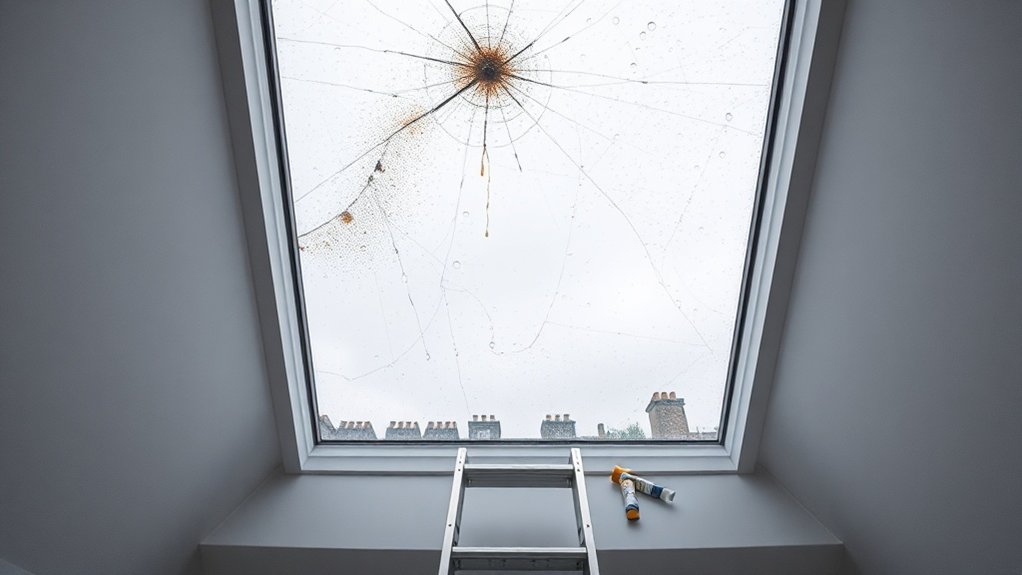
Although a skylight can appear sound from ground level, early leak indicators often show up as subtle changes around the internal reveal and ceiling line. You’ll typically see faint tea-coloured staining , micro-cracking in paint films, or slight blistering in emulsion after sustained rainfall, even when your roof has modern rain protection systems.
In London’s humid, variable climate, condensation can mask early leaks. Check for persistent damp patches that don’t dry between showers, darkened plasterboard edges , or swollen MDF linings. Track any musty odour or mould halos radiating from the skylight corners; these often signal hidden moisture pathways. Also note ventilation issues: fogging between glazing panes, recurring internal condensation bands, or draughts around the frame all indicate compromised seals that will progress to active leaks.
Is Your Leak From the Skylight or Roof Flashing?
When water appears around a roof window in London, you need to distinguish quickly between a failed skylight unit and defective flashing or surrounding roof coverings. First, track the leak pattern . Drips at the frame corners or visible condensation between glazing layers usually indicate a compromised skylight seal, which can also reduce solar efficiency and introduce thermal bridging.
Staining or damp patches spreading sideways along the ceiling or down adjacent walls typically points to defective flashing or tile interface, not the skylight itself. Inspect step flashings, soakers, and upstands for gaps, corrosion, or poorly integrated membranes, especially after reroofing.
Targeted diagnosis lets you upgrade detailing , improve airtightness, preserve aesthetic impact, and integrate modern solutions such as high-performance glazing or solar-compatible curb systems.
Skylight Leak Emergencies: When It’s Serious and What to Do
In a London property, a skylight leak becomes an emergency once water’s entering fast enough to damage plasterboard, electrics, or timber, or it’s tracking toward consumer units, downlights, or sockets. At that point, you’re not just protecting finishes and skyline aesthetics; you’re managing fire risk, structural integrity, and potential insurance complications.
You should immediately isolate power to any affected lighting circuits, especially if you see water staining around downlights or surface-mounted conduits. Document visible ingress points, flow patterns, and interior impact with time‑stamped photos and short videos; London insurers and loss adjusters often request this.
Next, contact a skylight specialist experienced with UK glazing standards and flat-roof build‑ups, not just a general roofer, to preserve both performance and natural light.
Quick Temporary Fixes Until a Roofer Can Visit
Even before a roofer can get across London to you, you can stabilise a leaking skylight with a few controlled, temporary measures that limit internal damage and keep the roof build‑up safe. First, contain ingress: position a bucket, then tape polythene sheeting to the ceiling around the reveal to direct drips away from finishes and electrics.
If it’s safe and accessible from inside, apply low‑tack waterproof tape to the internal frame junctions to slow capillary tracking, preserving daylight access and your skyline views. Externally, only if you’ve got secure flat‑roof access, sandbag a weighted tarp above the skylight to divert rainwater. Finally, isolate affected circuits and run a dehumidifier to keep insulation, plasterboard, and timber within acceptable moisture levels.
Permanent Repair Options for Skylight Leaks
When temporary measures aren’t enough, you’ll need to evaluate permanent interventions such as full skylight replacement and advanced waterproofing systems tailored to London’s weather patterns. You’ll assess frame condition, glazing performance, and surrounding roof coverings to determine whether a complete unit swap is more reliable than repeated patch repairs . From high-performance membranes to liquid-applied waterproofing compatible with common London roof types like asphalt, slate, and single-ply, you’ll specify solutions that provide long-term resistance to wind-driven rain and standing water.
Full Skylight Replacement
A full skylight replacement offers the most reliable long-term solution when seals, frames, or glazing have deteriorated beyond effective repair. You eliminate legacy defects, upgrade to modern units , and reset performance benchmarks for skylight aesthetics and energy efficiency. In London’s climate, you’ll benefit from high-spec double or triple glazing, warm-edge spacers, and thermally broken frames that minimise condensation and heat loss.
You start by commissioning a detailed survey: measuring structural openings, evaluating roof pitch, and checking load paths around the existing skylight. A competent installer then removes the old unit, prepares the opening, and mechanically fixes the new frame to manufacturer tolerances. They integrate compatible liners and insulation, ensuring airtightness and correct drainage paths, so the replacement functions as a durable, leak-free daylight system .
Advanced Waterproofing Systems
While full replacement resets the skylight itself, long-term reliability in London’s wet, wind-driven conditions often depends on the advanced waterproofing systems you install around it. You’re not just sealing gaps; you’re engineering layered redundancy against capillary action, wind uplift, and thermal movement.
You can specify high-performance liquid-applied membranes that chemically bond to upstands and kerbs, forming continuous, joint-free protection. Pair these with proprietary skylight aprons and pre-formed corners to eliminate weak points that traditional lead flashing can leave in complex roof geometries.
Hybrid systems let you integrate warm-roof insulation, improving energy efficiency while maintaining clean skylight aesthetics. On heritage or conservation roofs, you can use ultra-low-profile waterproofing finishes that visually recede while still delivering robust, testable, long-term leak resistance .
Reseal, Reflash or Replace Your Skylight?
Deciding whether to reseal, reflash, or replace your skylight hinges on accurately diagnosing how and where water is entering the roof build-up. In London’s mixed rainfall and wind conditions, you can’t just treat the visible drip; you need to trace capillary paths, degraded membranes, and failed sealant interfaces .
If leaks track around the frame and sealant has perished, a high‑performance reseal using hybrid polymer sealants usually suffices. Where water is bypassing metal upstands or abutments—especially on slate or London clay-tile roofs—you’ll likely need a full reflash with compatible lead, zinc, or modern lead-free systems.
If the glazing unit has failed, or you’re upgrading solar efficiency and aesthetic design, a complete replacement with a thermally broken, triple‑sealed unit is the most future‑proof option.
Skylight Leak Repair Costs in London
When you budget for skylight leak repairs in London, you’ll need to understand typical price bands for resealing, reflashing, or full unit replacement. Your final cost depends on factors like roof height and access, glazing type, frame condition, and whether your property’s in a conservation area or subject to London-specific planning constraints. By choosing the correct repair scope and planning preventative maintenance , you can reduce reactive call-outs and save considerably on total lifecycle costs.
Typical Repair Price Ranges
Curious what a leaking skylight actually costs to put right in London? You’re typically looking at a spectrum from minor sealing to near-full rebuild, all while protecting your interior aesthetics and original skylight design. In most London postcodes, repair pricing usually falls into these bands:
- Basic diagnostics and sealant renewal: £120–£220 – stops minor perimeter drips.
- Targeted leak remediation (new flashing, localised re-bedding): £250–£550 – ideal for recurring but contained ingress.
- Advanced refurbishment (new kerb, upgraded membranes, trims): £600–£1,100 – stabilises aging units without full replacement.
- High-spec performance upgrade (triple glazing, smart ventilation sensors): £1,200–£2,000+ – turns a problem skylight into a precision daylight system.
These ranges help you budget before commissioning surveys.
Factors Influencing Total Cost
Ultimately, your final bill for fixing a leaking skylight in London hinges on a mix of technical and local factors rather than a flat “per skylight” price. Access is critical : steep slate roofs, shared London terraces, or restricted scaffold zones increase labour and compliance costs.
Your building’s historical architecture also matters. Listed façades often require heritage-sensitive methods, specialist glazing, and conservation-grade lead work, which are pricier than standard materials. Skylight design further drives costs: larger units, walk-on glass, domes, or complex rooflight arrays need more intricate detailing, advanced membranes, and custom flashing kits.
Finally, underlying defects—rotten timbers, saturated insulation, or failed vapour control layers—extend the scope beyond a simple perimeter reseal, raising both material and diagnostic costs.
Saving Money Long-Term
Although a leaking skylight can feel like an unwelcome expense, you’ll save more in London by treating it as a building-performance issue rather than a cosmetic nuisance. When you repair proactively, you prevent moisture from degrading insulation, steelwork, and electrical systems—costs that escalate fast under the UK’s frequent wind‑driven rain.
To lock in long-term savings, you should pair leak remediation with performance upgrades :
- Reduce heating demand by improving airtightness at the skylight junctions.
- Cut cooling loads via integrated solar shading that limits summer solar gains.
- Enhance daylight optimization, allowing dimmed artificial lighting and lower electricity use.
- Protect asset value by preventing mould, ceiling collapse, and interior finishes failure.
Future-focused skylight repair turns a liability into an efficiency retrofit.
How to Choose a Skylight Repair Specialist in London
When you’re choosing a skylight repair specialist in London, you need to assess more than just price; you’re evaluating technical competence , product knowledge, and familiarity with local building regulations and weather conditions. Verify they understand advanced skylight design, including structural loading on existing roofs, thermal bridging, and compatibility with modern membranes common in London refurbishments.
Ask how they diagnose leak paths around upstands, flashings, and junctions with slate or flat roofs. A strong specialist will propose upgrades, not quick patches, such as improved ventilation options to reduce condensation, high‑performance glazing, and integrated solar or smart‑control solutions.
Check they’re FENSA or equivalent registered , carry appropriate insurance, and can reference recent London projects on similar property types to yours.
What to Expect During Skylight Leak Repair
When your contractor arrives, you can expect a structured initial roof assessment that checks the skylight frame, flashing interfaces, and surrounding London roof coverings for moisture ingress paths . They’ll then outline a repair process timeline that factors in access requirements, weather windows, and curing times for sealants compatible with local roofing materials. After the works, a post-repair inspection will verify watertightness, confirm correct integration with your existing roof system, and document any maintenance actions you’ll need to schedule.
Initial Roof Assessment
Before anyone reaches for sealant or replacement parts, a proper skylight leak repair in London starts with a methodical roof assessment that establishes exactly where water’s entering and why. Your roofer will inspect membranes, flashings, and glazing interfaces, plus how the skylight integrates with insulation, solar ventilation features, and overall aesthetic design.
Expect a structured, data‑driven survey:
- Identify moisture pathways around tiles, felt, and upstands, especially on wind‑exposed London elevations.
- Test for hidden ingress using moisture meters and targeted hose simulation.
- Evaluate frame condition, sealant failure, and drainage channels for blockages.
- Map findings to potential upgrades, such as smarter ventilation controls or revised curb details, so your repaired skylight isn’t just watertight but performance‑optimised for London’s variable climate.
Repair Process Timeline
With the initial assessment completed and leak paths mapped, the repair process follows a clear, staged timeline so you know exactly what will happen on your London property and in what order. First, technicians install temporary weatherproofing so rainfall doesn’t escalate damage. Next, they strip defective flashing, sealants, and failed membranes, carefully protecting interior aesthetics below.
They then integrate new flashing systems, high-performance vapour barriers, and precision-engineered sealants compatible with London’s high-moisture, wind-driven rain conditions. If glazing is inefficient or delaminated, they’ll upgrade to insulated skylight units, boosting energy efficiency as well as optical clarity.
Finally, roof interfaces are recalibrated—tiles, slates, or single-ply systems are re-bonded and securely fixed—to restore structural continuity and prepare the skylight system for sustained, leak-free performance.
Post-Repair Inspection Steps
How do you know the skylight repair’s truly resolved the leak and not just delayed it until the next London downpour? After the contractor finishes, you should run a systematic, post-repair inspection that validates both watertight performance and skyline aesthetics.
- Feel that quiet confidence when controlled hose-testing shows no ingress along the frame, flashing, or glazing seals.
- Experience relief as thermal imaging confirms no hidden moisture or cold bridging around the opening.
- Sense pride when the resealed unit aligns cleanly with your roofline, preserving modern lines and sunlight benefits without glare or hotspots.
- Enjoy reassurance as your installer documents materials, membrane overlaps, and fall-protection compliance, then books a follow-up check after the next heavy London rain.
Preventing Skylight Leaks in London’s Climate
Given London’s persistent rainfall, high humidity, and frequent freeze–thaw cycles, effective skylight leak prevention starts with specifying the right system and detailing it correctly at design or retrofit stage. You prioritise thermally broken frames , laminated glass, and factory‑bonded upstands with continuous vapour control layers tied into the existing roof build‑up.
Treat the skylight envelope like skydiving safety: redundancy, controlled load paths, and zero tolerance for weak links. You integrate high‑performance membranes, pre‑formed corners, and mechanically fixed flashings tested for wind‑driven rain typical along the Thames corridor.
For roofs supporting urban gardening or PV arrays, you raise kerb heights, design protected drainage paths, and incorporate sacrificial inspection zones, so you can monitor seals, clear debris, and maintain watertight performance over multi‑decade lifecycles.
Insurance, Warranties and Your Rights for Skylight Leaks
Although a leaking skylight feels like a simple maintenance issue, in London it often triggers a three‑way matrix of insurance, installer warranties, and your statutory consumer rights . Your buildings policy may cover sudden leak damage, but not faulty daylight design, poor detailing, or neglected maintenance. Installer warranties typically address workmanship and glazing seals, which are critical for integrated solar energy or vented units.
To stay in control, you should:
- Document water ingress with timestamped photos and moisture readings.
- Cross‑check your policy schedule and warranty certificates before authorising works.
- Invoke UK Consumer Rights Act protections if the installer resists reasonable remediation.
- Demand a written defect report specifying causes, risks, and upgrade options.
This approach turns a leak into leverage for smarter retrofit.
Frequently Asked Questions
Can I Upgrade to a More Energy‑Efficient Skylight During Leak Repair?
Yes, you can, and you should. During leak repair, you’ll already expose the kerb and flashing, so it’s an ideal moment to integrate energy efficiency–driven skylight upgrades. Specify low‑U‑value glazing , warm‑edge spacers, argon‑filled double or triple glazing, and thermally broken frames. Make certain the installer optimizes air‑tightness and insulation around the opening, and confirms compliance with local Part L requirements to maximize performance and reduce heat loss.
Do Planning Permissions Affect Skylight Repair or Replacement in London?
Yes, planning permissions can affect skylight repair or replacement in London, especially in conservation areas or listed buildings. You’ll usually work under permitted development, but you must still comply with building regulations for structure, thermal performance, and safety glazing. Check local planning restrictions on roofline changes, projection height, and materials. Engage your borough’s planning portal early and specify high‑performance systems to future‑proof compliance and facilitate innovative daylighting options.
How Do Skylight Leaks Impact Indoor Air Quality and Mould Growth?
Skylight leaks compromise indoor air quality by raising localized humidity, driving condensation, and feeding mould colonies in framing and insulation. You’ll see reduced air circulation as occupants close vents to “block draughts,” which actually worsens spore concentration. For robust mold prevention, specify vapour-permeable membranes, warm-edge spacers, and controlled mechanical ventilation . In London’s dense housing stock, integrate smart humidity sensors and automated trickle-vent controls to keep RH below 60% year‑round.
Are There Eco‑Friendly Materials for Sustainable Skylight Leak Repairs?
You can use eco‑friendly materials for sustainable skylight leak repairs. Think of your roof as a lung that breathes cleaner with every upgrade. Specify low‑VOC eco paints for internal reveals and trims, and choose recycled seals made from reclaimed EPDM or TPE for perimeter joints. Combine FSC‑certified timber packers, solvent‑free adhesives, and high‑performance tapes to meet UK weather conditions while reducing embodied carbon and enhancing long‑term airtightness.
Can I Coordinate Skylight Repairs With a Larger Loft or Roof Renovation Project?
You can, and you should. Coordinating skylight repairs with a loft or roof renovation lets you integrate Skylight sealing into the wider roofing membrane design and upgrade Roof insulation in one coordinated thermal envelope . You’ll minimise thermal bridges, optimise vapour control layers, and align structural alterations with daylight strategy. In London’s housing stock, this integrated approach also reduces scaffolding costs, planning disruption, and delivers a more future‑proof, energy‑efficient roof build‑up.
Summary
When you tackle a leaking skylight properly, you’re not just stopping a drip, you’re preventing a full-blown indoor monsoon soaking your plasterboard, electrics, and insulation. In London’s sideways rain and gale-force gusts, robust flashing, correct pitch, and manufacturer-approved detailing aren’t “nice-to-haves” – they’re survival gear. Partner with a London roofer who eats BS EN standards for breakfast, and your skylight will shrug off storms that could drown half the postcodes on your street.