You can get specialist Velux window repair in London that stops leaks and draughts, cures condensation, and restores smooth, airtight operation. A trained technician inspects glazing, gaskets, flashings, and ventilation, then recalibrates seals, realigns sashes , replaces misted units, and upgrades flashing kits suited to London’s slate and tile roofs. Using original Velux components and modern insulation, they improve comfort and energy efficiency in period or modern homes, and there’s more that can markedly extend your window’s lifespan.
Key insights
- Professional Velux window specialists in London diagnose leaks, draughts, condensation, and operational faults through thorough internal and external inspections.
- Common repairs include resealing gaskets, upgrading flashings, realigning sashes, and replacing misted or broken double-glazed units.
- Upgrades such as high-performance glazing, insulated flashing kits, and trickle vents improve energy efficiency and reduce condensation issues.
- Costs vary by access, roof complexity, and whether work involves minor resealing, glass replacement, or full sash/frame refurbishment.
- Regular maintenance—cleaning panes, checking flashings and seals, and clearing drainage channels—prevents future leaks and prolongs Velux window lifespan.
What Velux Window Repair Includes In London
Velux window repair in London typically includes a systematic assessment of the frame, sash, glazing unit, flashings, and ventilation components to identify leaks, draughts, or operational faults specific to the city’s damp, variable climate. You’ll get a diagnostic inspection that maps moisture pathways , checks timber moisture content, and tests opening mechanisms for smooth, balanced operation.
Technicians then recalibrate or replace gaskets, upgrade perimeter seals, and realign sashes to restore airtightness and enhance energy efficiency. Where glazing has aged, you can opt for high-performance replacement units that boost thermal performance without compromising window aesthetics. External flashings are refitted or upgraded to suit London’s common slate and tile profiles, ensuring robust water management and future‑proof integration with your existing roof system.
Common Velux Window Problems In London Homes
In many London properties, you’ll notice Velux windows suffering from common draughts and leaks, especially after heavy rain or high winds. You may also struggle with condensation on the inner panes , which quickly leads to mould around plasterboard reveals and timber linings in the damp city climate. By understanding these specific issues, you can target the right repairs to restore airtightness, improve insulation, and protect your home from moisture damage.
Common Draught And Leaks
Although Velux roof windows are engineered for tight seals, London’s variable climate—persistent rain, high winds, and rapid temperature swings—often exposes weaknesses that lead to draughts and leaks. You’ll typically see cold air ingress around sash gaskets , frame junctions, and poorly integrated flashing kits, particularly on older slate and mixed-material roofs.
Deteriorated seals don’t just undermine comfort; they compromise energy efficiency and window aesthetics, as staining, warped timber, and discoloured plaster reveal hidden water paths. In dense London terraces, wind-driven rain can bypass outdated flashing profiles and clogged drainage channels.
A targeted repair approach focuses on re-gasketing, upgrading to climate-appropriate flashings, recalibrating sash alignment, and renewing external weathering components , giving you a tighter thermal envelope and a cleaner visual line to support future-smart roofspaces.
Condensation And Mould Issues
Persistent condensation on your roof windows is a recurrent problem in London homes, where high ambient humidity, tightly sealed refurbishments, and everyday activities like cooking and drying clothes saturate indoor air. Left unmanaged, this moisture feeds mould on plaster reveals, timber linings, and gaskets, particularly in loft conversions within historical architecture.
You first need to distinguish normal seasonal fogging from failure: persistent droplets between glazing panes indicate broken seals and lost gas fill, undermining energy efficiency and requiring sash or unit replacement. Surface condensation, however, usually signals inadequate ventilation and cold bridging. You can mitigate it by upgrading to modern Velux glazing with low‑E coatings, installing trickle vents , integrating humidity‑controlled extraction, and improving insulation around the window to maintain warmer internal surface temperatures.
Signs Your Velux Velux Needs Professional Repair
When your Velux in London starts showing persistent drafts or leaks, visible condensation and mould around the frame, or stiff and noisy operation , it’s signalling a need for professional attention. In the capital’s damp, changeable climate, these symptoms usually indicate failed seals, compromised flashing, or worn mechanisms rather than minor wear and tear. By recognising these issues early, you can instruct a specialist to restore weather-tightness, energy efficiency, and smooth operation before more serious damage develops.
Persistent Drafts And Leaks
Even minor drafts or intermittent drips around your Velux window in London usually indicate a breakdown in the unit’s weatherproofing that won’t fix itself. You’re likely losing conditioned air through failed gaskets, compromised flashing, or warped sashes, undermining energy performance and window aesthetics. Left unchecked, water ingress will track into plasterboard, insulation, and decorative accessories, multiplying repair costs.
A specialist Velux technician will pressure‑test the installation, inspect the external flashing kit against current BS and London borough standards, and verify the integrity of seals around the frame-to-roof interface. They can upgrade outdated components with next‑generation membranes, insulated upstands, and precision-moulded flashings engineered for London’s rainfall intensity, reinstating airtightness. Prompt professional intervention restores performance, protects finishes, and keeps your roofline visually sharp.
Condensation And Mould Growth
Why does condensation keep forming around your Velux window , leaving dark spotting or fuzzy patches on the plaster and frame? In London’s damp climate, that usually means the glazing unit has lost its seal, thermal bridges exist around the frame, or ventilation paths are blocked. Moist indoor air then condenses on the coldest surface: your roof window reveals.
You’ll notice mould growth on plasterboard edges, timber linings, and sealant joints. Beyond looking poor and undermining your interior design, it signals declining energy efficiency, as failed units lose heat and attract further moisture. A Velux specialist in London can test the glazing, inspect insulation and vapour barriers, and upgrade to high-performance Low‑E or triple glazing, restoring a dry, healthy, and thermally stable roof space.
Stiff Or Noisy Operation
Condensation and mould aren’t the only warning signs that your roof window’s performance is slipping; the way your Velux opens and closes often tells you just as much. If the sash feels stiff, grates on the frame , or emits grinding, squeaking, or clicking noises, you’re likely dealing with worn hinges, misaligned brackets, or degraded seals.
In London’s variable climate, these faults don’t just affect comfort; they compromise energy efficiency and long-term weather protection. Forcing a stiff mechanism can distort the frame, damage glazing seals, and undermine window aesthetics from both inside and outside. A specialist Velux technician will recalibrate balances, lubricate with manufacturer-approved products, replace fatigued components, and verify airtightness—restoring smooth, near-silent operation while preserving thermal performance in line with current London building standards.
Velux Repair Vs Replacement: How To Decide
When a Velux window in your London property starts leaking, sticking, or misting between the panes, you need to decide whether targeted repair or full replacement will deliver better value and performance. You first assess frame integrity, sash alignment, and flashing condition. If the timber or uPVC is sound and the opening mechanism remains true, precision repair usually restores function, preserves Velux aesthetics, and controls cost.
However, if you’re losing heat, seeing recurring condensation, or feeling draughts, the glazing and seals are likely beyond efficient repair. In dense London climates and rising energy prices, replacement often delivers superior energy efficiency, reduced maintenance, and tighter weather performance. Factor in access complexity, heritage constraints, and scaffold costs before committing.
Upgrade Options For Older Velux Windows In London
Even if your existing rooflights still open and close, older Velux windows in London can usually benefit from targeted upgrades that improve thermal performance, daylight control, and usability without a full replacement. You can retrofit high-performance glazing units that boost energy efficiency while maintaining profiles appropriate for historical architecture in conservation areas.
Upgrade options include new insulated flashing kits matched to London’s common slate or tile formats, reducing wind-driven rain ingress. You can add factory-spec trickle vents for controlled ventilation and better indoor air quality. Internal blackout, dim-out, or heat-reflective blinds integrate cleanly with the sash, optimising solar gain. For smarter operation, you can install electric or solar-powered actuators and rain sensors , giving you app-based control without altering rooflines.
Velux Repair Costs In London
Understanding typical Velux repair costs in London helps you budget accurately and decide whether a repair or a full replacement offers better value. In most boroughs, minor adjustments and resealing usually sit at the lower end of the cost spectrum, while glass unit replacement , sash renewal, or frame refurbishment command higher fees, especially on steep or complex roofs.
You’ll pay more for premium glazing that boosts energy efficiency, improves Velux window aesthetics, and meets London’s tighter thermal expectations . Access (scaffolds, mansard roofs, conservation areas) also influences pricing. It’s smart to factor in potential savings from reduced heat loss and solar gain, particularly in all-electric or low‑carbon homes, where a well‑executed Velux repair can materially cut running costs over the system’s lifespan.
How Velux Window Repairs Work Step By Step
Before any tools touch the roof, a proper Velux repair in London starts with a structured diagnostic: a trained technician inspects the internal finishes, checks for draughts and moisture staining, then moves externally to assess flashing condition, sash alignment, glazing integrity, and roof covering around the window.
Next, they photograph and map defects , considering how the window interfaces with London’s dense roofscapes and nearby historical architecture. You’ll get a step-by-step proposal detailing parts, sequencing, and access (often via roof ladders or scaffold towers to minimise disruption).
During works, the technician isolates the area, removes external flashings and seals, then upgrades membranes, thermal collars, and fixings, prioritising eco friendly materials and airtightness. Finally, they re‑commission the window , test under water spray, and document performance.
Fixes For Draughty Or Stiff Velux Sashes
When a Velux sash in your London property feels draughty or stiff, you’re usually dealing with a combination of worn seals, misaligned sashes, or dry hinges. You’ll need to identify the common draught paths around the frame, then correctly lubricate the sash hinges with a compatible product so the opening mechanism operates smoothly. Where seals have flattened, cracked, or shrunk due to the UK climate, you should replace them to restore airtightness and thermal efficiency.
Common Causes Of Draughts
Although Velux roof windows are built to cope with London’s variable climate, draughts and stiff sashes often trace back to specific, fixable issues in the frame and hardware. You’ll usually find air ingress where compression seals have flattened, perished, or pulled away from the timber, particularly on windward elevations exposed to Thames corridor gusts.
You may also see frame distortion from historic moisture ingress or poor vapour control detailing, leaving the sash slightly out-of-square and no longer closing uniformly on the gaskets. Misaligned locking points and worn ventilation flap seals create linear leak paths that feel like persistent “mystery” draughts.
Poorly integrated solar shading and DIY window tinting films can foul the sash perimeter, preventing a tight, engineered seal.
Lubricating Stiff Sash Hinges
In many London lofts, a stiff Velux sash or notchy opening action comes down to dry, contaminated, or corroded hinges that no longer move smoothly against their pivots and friction pads. To restore performance, you’ll start with targeted hinge maintenance rather than forcing the sash. Open the Velux into cleaning position, then vacuum or brush away brick dust, paint flakes, and insect debris from the hinge channels.
Apply a silicone-based spray or PTFE dry film specifically designed for window sash lubrication, avoiding oil that attracts grit in London’s polluted air. Work the sash through its full travel so lubricant migrates into the friction pads and pivot pins, then wipe surplus from timber and gaskets to prevent staining and dust build‑up.
When To Replace Seals
Persistent draughts around a Velux in a London roof slope usually indicate perished or compressed seals rather than a simple alignment issue. You should replace seals when you feel cold air around the sash perimeter despite correct closing pressure, or you notice visible Seal deterioration: cracking, flattening, or gaps at the gasket corners.
Run your hand around the frame on a windy day; if you detect airflow or whistling, the seals have lost compression. Condensation streaks , black mould traces on plasterboard, or a drop in acoustic performance are further triggers.
If the sash becomes stiff yet the hinges are correctly lubricated, swollen or displaced seals can be the culprit. Timely replacement protects insulation performance and preserves Window aesthetics, especially on exposed London roofscapes.
Fixing Leaks And Failed Velux Flashing
Rain tracking down the inside of your Velux window almost always points to failed flashing or incorrect installation, especially on London’s mixed slate, tile, and flat roofs. You’ll usually find compromised corner pieces, capillary gaps, or poorly lapped underfelt around the frame. On period homes and historical architecture, it’s critical to integrate new Velux flashing with existing leadwork, clay tiles, or natural slate without breaking conservation guidelines.
Start by removing tiles around the window, then inspect and re-level the frame. Install the correct Velux flashing kit for your roof profile, ensuring step flashing overlaps by design, not guesswork. Upgrade the surrounding membrane to breathable, eco friendly materials, tape all interface joints, then reinstate tiles with precise side and head laps.
Fixing Condensation In Velux Windows
When you see persistent misting or water droplets on your Velux units in London, you’re usually dealing with a mix of indoor humidity , inadequate ventilation, or failed double-glazed seals. To fix this, you’ll need to identify whether the condensation is surface-based or between panes, then apply targeted measures such as improving trickle ventilation, upgrading glazing units, or adjusting room extraction. You’ll also want a long-term strategy to control moisture levels in your London property so the same problem doesn’t return each winter.
Causes Of Velux Condensation
Why do Velux windows in London homes so often mist up , even after a spell of dry weather? You’re dealing with a mix of climate, building physics, and sometimes compromised window installation. London’s high ambient humidity, combined with well-sealed, insulated roofs, traps moisture from cooking, showers, and breathing right at roof level, where it condenses on the cooler Velux surface.
If the glazing unit’s perimeter seal begins to fail, moisture can infiltrate the cavity, clouding the glass and degrading Velux aesthetics. In older loft conversions, undersized or blocked ventilation paths and poorly detailed vapour barriers let warm, moist air reach cold roof zones. Temperature differentials across the sash and frame then drive persistent condensation, even when external weather appears dry.
Effective Condensation Repair Methods
Although condensation on Velux units is common in London’s damp climate, you can usually resolve it by targeting both the moisture source and the window assembly. Start by checking the internal pane and sash seals; if you see mist between panes , specify a replacement glazing unit rather than a full new window. Re‑seat or upgrade gaskets and compression seals to restore airtightness.
Next, verify trickle vents and ventilation flaps operate freely ; clean obstructions that restrict airflow. Inspect the external flashing kit, particularly on slate and tiled roofs typical in London, and re‑dress or replace sections that allow cold bridging.
Integrate solar shading and compatible window accessories to fine‑tune surface temperatures, reducing dew‑point formation while maintaining high daylight levels and occupant comfort.
Preventing Future Moisture Build-Up
So how do you stop a repaired Velux in London from slipping back into condensation problems a few months later? You start by balancing internal humidity and surface temperature. Upgrade roof insulation around the Velux reveal to eliminate cold bridges that trigger vapour to condense on the glass and frame. Specify high‑performance insulation boards with taped joints and a continuous vapour control layer tied into the window lining.
Next, optimise airflow. Fit trickle vents if permissible, and integrate the window with a properly sized, low‑noise mechanical extract system in kitchens and bathrooms. Maintain clear external drainage channels and flashing.
Finally, protect window aesthetics by choosing modern low‑E, argon‑filled units; they run warmer internally, resist misting, and preserve a clear, sharp viewing area.
Replacing Velux Handles And Hinges
When the handle or hinges on your Velux window start to fail, replacing them promptly prevents draughts, water ingress , and security issues—especially in London’s often wet and windy conditions. Velux handle replacement begins with identifying the exact window code on the sash, then sourcing compatible hardware to maintain airtightness and secure locking.
- Upgrade to next‑gen handles with improved locking cams for better resistance to urban pollution and high winds
- Apply hinge repair techniques that recalibrate friction and opening angles for low‑pitch London roofs
- Use stainless or coated fixings to withstand city humidity, coastal winds along the Thames, and condensation cycles
- Test seal compression after refitting to verify ideal perimeter pressure and smoother, quieter operation
Choosing A Velux Repair Specialist In London
Because a poorly executed repair can shorten your roof window’s life and void warranties, choosing a Velux specialist in London means checking for manufacturer training, correct certification , and local roof experience rather than just a cheap call‑out fee. You’ll want a technician who understands London’s mixed housing stock—Victorian terraces, post‑war estates, and contemporary loft conversions—and can specify the right flashing kits for each roof profile.
Ask if they’re Velux-approved, carry public liability insurance, and can document compliance with Part L energy standards. Review case studies that show how they’ve improved energy efficiency, eliminated condensation, and preserved window aesthetics. Prioritise specialists who use original Velux components, provide digital photo surveys, and offer written guarantees aligned with Velux’s own warranty framework.
On The Day Of Your Velux Repair
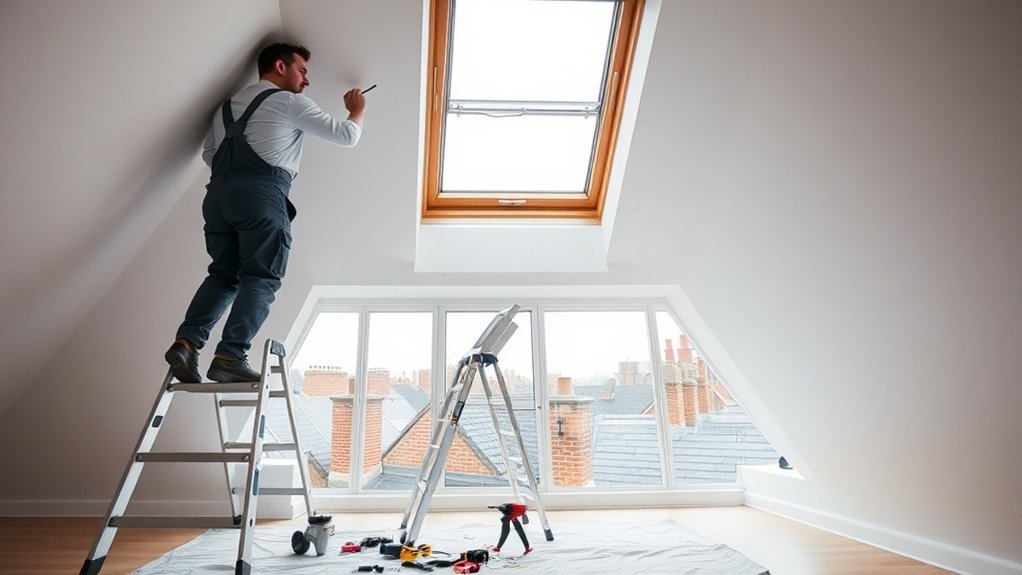
Although every property’s different, the day of your Velux repair in London should follow a clear sequence: your technician will confirm access to the loft or top floor, protect flooring and furniture with dust sheets, and isolate any electrics linked to solar or mains-powered Velux units before work starts. They’ll then remove sash components, assess flashings against typical London rainfall patterns, and check for thermal bridging around the frame.
You can expect your specialist to discuss performance upgrades while everything’s exposed, such as decorative glass for improved light diffusion or window tinting to reduce solar gain in south-facing conversions.
- Verify Part L-compliant insulation around the frame
- Confirm correct flashing set for your roof covering
- Test airtightness and weather seals under spray
- Run functional checks on remote or sensor controls
Maintenance Tips For Velux Windows In London Homes
Once your Velux repair in London ’s complete and everything’s tested, ongoing maintenance keeps that performance consistent through heavy rain, soot, and city pollution. Inspect seals and flashing twice a year, especially after winter storms, to spot micro‑gaps before they admit moisture or drafts. Clean external panes with pH‑neutral solution, avoiding abrasive tools that can damage coatings.
Check ventilation filters and trickle vents; London’s particulate levels clog them faster, so vacuum and replace on manufacturer schedules. Inside, monitor condensation around Decorative finishes and reveal boards; persistent moisture signals poor airflow or failing vapour barriers.
Test all Window accessories—blinds, insect screens, electric or solar operators—verifying smooth travel and recalibrating controls. Document every check, so you can track trends and act proactively.
Frequently Asked Questions
Are There Planning Permission Rules for Replacing Velux Windows in London Conservation Areas?
Yes, you usually need to check planning permissions in London conservation areas before replacing Velux windows. You’re altering the external appearance, so conservation regulations can trigger consent, especially if you change size, profile, glazing, or materials. You should consult your local planning authority’s conservation officer, submit detailed drawings, and specify like‑for‑like or low‑profile conservation roof windows to streamline approval and align with heritage and energy‑efficiency objectives.
How Do Velux Repairs Affect My Home Insurance or Warranty Coverage?
Your Velux repairs can impact both home insurance and manufacturer warranty . If you use non-approved parts or installers, insurers may question Insurance claims and treat work as non-compliant under repair policies. Always check your policy’s “matching items” and “gradual damage” clauses—why risk invalidation? In London, insist on FENSA/Certass-registered installers, keep digital invoices, photos, and serial numbers, and notify your insurer of significant upgrades to maintain full, future-proof cover.
Can Velux Window Repairs Improve My Property’s EPC Energy Rating in London?
Yes, upgrading or repairing these roof windows can improve your property’s EPC rating in London. When you replace failed glazing, seals, or flashing, you boost energy efficiency through better insulation improvement and reduced thermal bridging. You’ll cut heat loss, limit draughts, and optimise solar gain. EPC assessors model these gains, so high‑performance Velux units, low‑U‑value glass, and airtight installations can deliver measurable rating uplifts, especially in loft conversions and top‑floor spaces.
Do You Offer Emergency Velux Repairs for Storm or Impact Damage in London?
Yes, you can access rapid-response emergency Velux servicing for storm damage and impact repairs in London. You’ll get a priority call-out , temporary weatherproofing, and precise diagnostics using moisture mapping and frame alignment checks. Technicians replace damaged sashes, flashings, or glazing units with manufacturer-approved components, optimising airtightness and drainage. Service routes are planned by postcode to minimise downtime, protecting your roof envelope and internal finishes from progressive water ingress.
Are Landlord Responsibilities Different for Velux Window Repairs in London Rentals?
Yes, your landlord’s responsibilities usually mirror other window obligations, but with Velux units you must track tenant responsibilities and repair costs more precisely. You handle structural integrity, weather‑tightness, and safe operation; tenants cover damage from misuse or neglect. In London rentals, reference the tenancy agreement, Housing Act standards , and any FENSA/Velux installation documentation to allocate costs, evidence compliance, and justify innovative upgrade options like smart glazing or automated ventilation.
Summary
You might think it’s cheaper to ignore that sticking Velux or minor leak, but in London’s climate, small defects escalate fast into saturated insulation, blown plaster, and rotten timbers. By choosing targeted repair, hardware upgrades, and better glazing now, you stabilise heat loss, control condensation, and extend the unit’s life without full replacement. Partner with a London-based Velux specialist and stick to simple annual checks, and your roof windows will stay watertight, efficient, and compliant for years.