
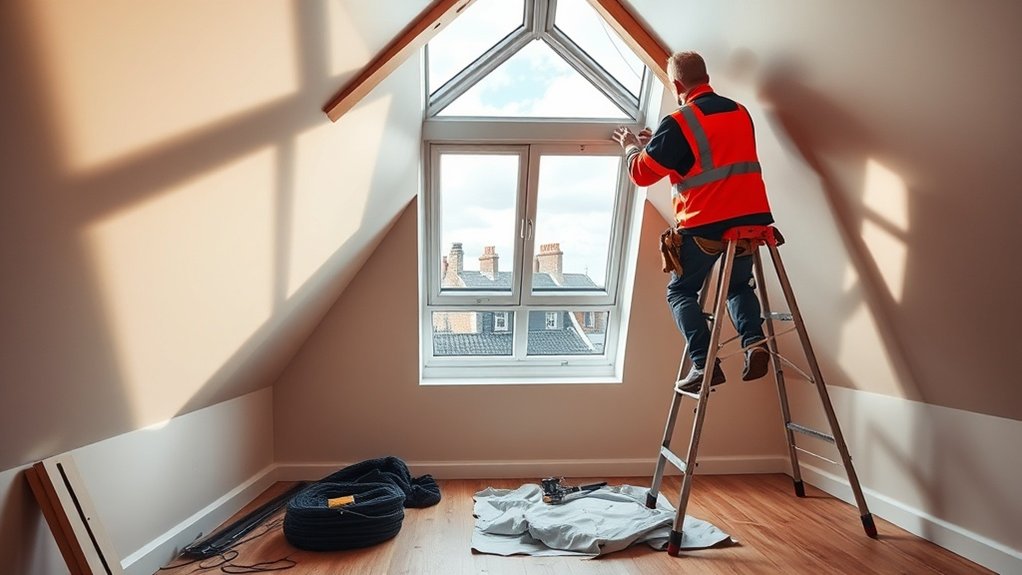
You improve your London home when you fit a Velux window that’s correctly sized to your rafters, matched to your roof pitch, and specified with the right glazing for noise, heat loss and solar gain. You must check planning rules, fire-escape needs and Building Regulations, then use certified flashings and airtight insulation collars to prevent leaks and condensation. Costs typically range from £900–£2,400 installed, and you’ll see how to plan, budget and choose installers next.
Key insights
- Check planning rules, conservation-area restrictions and Building Regulations (Parts L, B, K) before installing any Velux roof windows in London.
- Use a Velux Certified Installer and request method statements, structural checks, warranty details and proof of insurance.
- Typical London supply-and-fit costs range roughly from £900–£1,500 per standard Velux, and £1,600–£2,400 for electric or solar models.
- Choose glazing, ventilation type and operation (manual, electric, solar) based on orientation, noise levels, and desired thermal performance.
- Ensure correct flashing integration, insulation collars and airtightness detailing to prevent leaks, condensation and heat loss in London’s climate.
Is a Velux Window Right for Your London Home?
Before you commit to cutting a new opening in your roof, you need to evaluate whether a Velux window suits your London property’s structure, orientation, and planning constraints. First, confirm your existing rafters can accept a trimmed opening without overloading; a structural engineer should verify spans, load paths, and fixings.
Next, assess solar gain and glare. South- and west-facing roofs deliver strong daylight but may require advanced glazing to balance comfort and energy efficiency. North-facing slopes offer softer, consistent light that’s ideal for precision-driven interior design schemes and workspaces.
Check conservation area or listed-building restrictions , overlooking rules, and fire-escape requirements. Finally, consider access for safe installation and future maintenance, including internal finishes, vapour control, and airtightness continuity.
Choose the Right Velux Window for Your London Roof
Once you’ve confirmed your roof can take an opening and you’re compliant with London planning rules, you can focus on specifying the right Velux unit for your roof build-up and room use. Start by matching the frame material and glazing spec to your thermal target: triple glazing for low U-values, noise-reduction units for flight paths or main roads.
Select window shapes and sizes to align with rafter spacing and desired daylight factor, not just aesthetics. Consider top-hung for unobstructed views, centre-pivot for tight spaces, and roof-terrace or cabrio systems where you want an indoor-outdoor threshold.
Use external and internal color options to coordinate with slate, tile, or zinc, and integrate solar or electric operation where you’ll later add smart controls.
Planning and Building Regs for Velux Installations in London
Although a single Velux window often falls under permitted development in London, you still need to check both planning constraints and Building Regulations for your specific property and roof. Start by confirming if you’re in a conservation area, on a listed building, or within an Article 4 Direction, as these can restrict opening sizes, projection above the roof plane, and visible window aesthetics.
You must also prove compliance with Part L (thermal performance and airtightness), Part B (means of escape and fire spread), and Part K (protection from falling). Specify certified U‑values , toughened or laminated glazing where required, and compliant cill heights. Coordinate structural design for trimmed rafters and load paths, ensuring calculations align with your overall architectural design and any future roof upgrades.
Costs of Velux Window Installation in London
When you cost a Velux window installation in London, you’re typically looking at a defined price band that varies with window size, glazing spec, and access complexity. You’ll need to factor in labour rates, roof type, internal finishing, scaffolding, and any structural modifications to understand the true total. By comparing quotations, adjusting product options, and bundling works where possible, you can reduce installation fees without compromising on technical performance.
Average Installation Price Range
Curious what you should budget for a Velux window installation in London? For a single standard centre‑pivot roof window, you’ll typically invest around £900–£1,500 including supply and professional fitting . Larger or more advanced models, such as electric or solar‑powered units, often push the range to £1,600–£2,400.
This price band usually covers core items: the Velux unit, appropriate flashing kit for your roof type, airtightness accessories , internal finishing around reveals, and labour. When you prioritise high‑end window aesthetics—flush integration with your roofline, slim profiles, and clean internal trims—you’re often near the upper band. Rigorous installation safety measures, including compliant roof access, edge protection, and correct structural fixing, are also built into professional quotes, ensuring durable, warrantied performance.
Factors Affecting Total Cost
Even with a clear headline price range in mind, your actual Velux installation cost in London depends on a tight mix of technical and site‑specific factors . Roof pitch, structure, and material (slate, tile, metal) dictate which flashing kits you need and how complex the detailing becomes. Deeper rafters or trussed roofs may require trimming, structural calculations, and additional labour.
Ventilation options also move the needle: fixed, manual, electric, or solar‑powered opening mechanisms add different hardware, wiring, and commissioning requirements. Glazing specification —triple glazing, acoustic, or solar‑control units—shifts both material price and installation time. Aesthetic considerations such as recessed fitting, conservation-style frames, or grouped windows demand more precise setting out, bespoke linings, and additional finishing, all of which incrementally increase total cost.
Saving on Installation Fees
All of those variables that push your Velux quote up or down also create levers you can pull to keep installation fees under control. Start by standardising dimensions: choose catalogue sizes that match common rafter centres to avoid structural alterations. You’ll reduce labour time, waste, and engineering input.
Bundle multiple units in a single visit so scaffolding, skip hire, and access costs amortise across several openings. Specify integrated flashing kits compatible with your roofing material; they speed installation and minimise callbacks.
Decide early on window aesthetics and energy efficiency targets. Triple glazing, solar control glass, and smart sensors cost more upfront but can cut future retrofit work and heating demand. Finally, request itemised quotes separating labour, materials, and access so you can optimise each component.
Step-by-Step Velux Installation Process
Before you start fitting a Velux window in a London property, you need a clear, methodical installation plan that aligns with the roof structure and the manufacturer’s specifications. First, mark out the opening from inside, checking rafter positions, desired natural lighting levels, and your broader skylight design strategy. Cut the opening, trim rafters if required, and construct a structural frame with treated timber, maintaining precise tolerances.
Next, position the Velux frame, pack it level, and mechanically fix it to the battens and rafters. Add the support brackets, then integrate the bottom and side flashing components, interleaving them with the tiles or slates. Fit the sash, check smooth operation, fine-tune the hinges, and confirm airtight closure lines before final internal lining.
Insulation, Weatherproofing and Noise for London Velux Windows
Once the Velux frame and sash sit correctly in the roof, the performance of the installation depends on how well you handle insulation, weatherproofing, and acoustic control around the opening. You should wrap the frame with high-density insulation collars, eliminating thermal bridges and condensation risk in London’s damp climate. Integrate a vapour control layer with taped, airtight junctions to the existing roof membrane.
For weatherproofing, you’ll rely on the proprietary Velux flashing kit, but you must also interlock it with breathable underlay and counter-battens to drain wind‑driven rain away from vulnerable joints. Specify laminated acoustic glazing and compressible perimeter tapes to cut aircraft and traffic noise. Finally, coordinate internal linings, solar shading and window aesthetics so energy performance and comfort align.
Common Velux Installation Mistakes in London
Why do so many London Velux installations underperform despite using quality windows and branded flashing kits? You often see incorrect integration with existing roofing systems: tiles not back-bedded, battens cut short , or flashing steps misaligned, which channels water towards joints instead of away. Installers also neglect precise squaring and levelling, so sashes bind, seals deform, and Velux window aesthetics degrade over time.
Another common error is compressing or cutting back the insulation collar, creating thermal bridges that undermine energy efficiency and promote condensation on reveals. Many roofs lack a continuous vapour control layer taped to the frame, allowing warm, moist air to leak into the cold roof zone. Finally, installers sometimes ignore minimum upstand heights , critical in London’s heavy, wind‑driven rain conditions.
How to Find a Trusted Velux Installer in London
So how do you sort genuine Velux specialists in London from general roofers who “also fit roof windows”? Start by checking they’re Velux Certified Installers, with current accreditation and proof of manufacturer training on the latest product ranges and controls. Ask for job-specific method statements covering structural checks, insulation continuity, and installation safety, including use of scaffolds, harness points, and weather protection.
Demand technical drawings or marked-up photos showing proposed roof openings, flashing kits, and interface with existing membranes. Review portfolio images that clearly demonstrate alignment, symmetry, and window aesthetics on similar London roof types—slate, tile, or flat roofs.
Finally, verify they supply manufacturer-backed warranties , hold public liability insurance, and issue written compliance certificates for Building Regulations where required.
Velux Window Aftercare, Maintenance and Upgrades
Once your Velux window is installed, you need to apply a regular regime of cleaning, lubrication, and visual checks to keep the frame, sash, and glazing performing to spec. You’ll also want to monitor seals, flashing, and fixings to prevent leaks, condensation, and drafts, especially in London’s variable weather. Finally, you can plan for modern accessories and upgrades —such as blinds, insect screens, or smart controls—to improve light control, insulation, and ease of use over the window’s lifespan.
Routine Cleaning And Care
How do you keep a Velux window performing as efficiently on day 1,000 as it did on day one? Start with a defined cleaning schedule: every three months for internal glass and frames, every six months for external surfaces in London’s pollution load. Use pH‑neutral glass cleaner, microfiber cloths, and avoid abrasive pads that can compromise low‑E coatings.
Key care tips: vacuum dust from ventilation flaps and frame rebates, then wipe with a damp, lint‑free cloth. Clean gasket contact areas to maintain uniform compression. For timber units, inspect lacquered surfaces annually and micro‑sand and re‑coat at the first sign of wear. Lubricate hinges and pivot points with a silicone-based spray, applied sparingly, to preserve smooth, precise operation.
Preventing Leaks And Drafts
Why do some Velux windows stay airtight for decades while others start whistling in the first winter gale? You prevent leaks and drafts by treating the window as a sealed system, not just a glazed opening. Inspect the frame-to-roof junction annually and verify the integrity of rainproof barriers and internal seals.
- Check external flashing for pinholes, lifted edges, or corrosion; reseal with compatible roofing-grade products.
- Test drain channels with a jug of water to confirm unobstructed flow away from the frame.
- Inspect gaskets for compression set or cracking; replace rather than over-caulking.
- Upgrade internal insulation techniques around the reveal, eliminating thermal bridges and voids.
- Use a smoke pencil or infrared thermometer on windy, wet days to pinpoint micro-drafts early.
Modern Accessories And Upgrades
Airtight, well-sealed Velux windows form the foundation, but modern accessories and upgrades let you push performance, comfort, and usability much further. You can specify solar or electric roof windows with rain sensors , so units close automatically when showers start. Motorised operation pairs naturally with smart home integration, allowing app-based control, voice commands, and timed ventilation cycles.
For energy efficiency upgrades, combine triple glazing with insulated flashing kits and airtight collars to minimise thermal bridging. Install external shutters or awnings to reduce solar gain, stabilise internal temperatures, and cut cooling loads. Internally, blackout or dimming blinds provide glare control for screens and precise light tuning. Finally, add security sensors and locking upgrades to monitor openings and integrate with whole-house alert systems.
Frequently Asked Questions
Can Velux Windows Improve the Resale Value of My London Property?
Yes, you can enhance resale value by installing Velux windows. You’re upgrading roof aesthetics with clean lines, precision-engineered frames, and high-performance glazing that maximizes natural light . You’re also delivering clear ventilation benefits through controllable airflow, reducing moisture and improving indoor air quality. Buyers read these as low-maintenance, energy-efficient, future-proof features, so you position your property as a higher-spec, innovation-led asset in a competitive London market.
How Do Velux Windows Impact My London Home’s Energy Performance Certificate (EPC)?
They can positively shift your EPC by cutting heat loss , optimising solar gain, and enhancing natural lighting and ventilation improvement. You reduce artificial lighting loads, lower winter heating demand with high-performance glazing, and limit summer overheating through low‑U‑value frames and integrated blinds. You also improve airtightness using correctly installed flashing kits and vapour barriers. Specify triple glazing, laminated panes, and smart, sensor‑controlled opening to maximise measurable EPC gains in your London home.
Are There Specific Velux Options Recommended for London Conservation Areas?
You’ll typically specify conservation roof windows that mirror original sash proportions while integrating modern performance. Choose Velux “Conservation” models with black external profiles, central glazing bars, and slate/tile flashing kits to satisfy historical preservation requirements. Opt for triple- or enhanced double-glazing with laminated inner panes for superior acoustic insulation against urban noise. You’ll also want low-profile frames, ventilating trickle vents, and solar-powered operation to minimise visual impact while maximising innovation and efficiency.
Can Velux Windows Help With Reducing Condensation and Damp in London Homes?
Yes, they can. You improve moisture control by using Velux trickle vents and controlled opening for continuous airflow, delivering clear ventilation benefits that cut condensation risk on cold surfaces. The warm edge glazing and low‑E coatings keep internal glass temperatures higher, reducing damp formation . You also gain noise reduction from laminated or triple glazing, so you can ventilate effectively without relying on open sashes in London’s high-traffic, high-humidity streets.
What Are the Warranty Terms for Velux Windows Installed in London Properties?
You’ll typically get a 10‑year warranty on Velux windows and flashings, with shorter terms (often 3–5 years) on electrical components and blinds. Coverage depends on correct installation and documented window maintenance, so you must follow Velux’s cleaning, lubrication, and inspection guidelines. Improper fitting or third‑party alterations can void protection, affecting future installation costs if failures occur outside warranty due to non‑compliant setup or neglected upkeep.
Summary
As you weigh Velux options, it’s no coincidence you’re also questioning heat loss, noise, and planning rules—that’s exactly where London homes struggle most. When you specify the right glazing, flashing kit, and insulation details, you don’t just add daylight: you tighten your envelope, cut drafts, and reduce maintenance. Choose a certified local installer, insist on documented specs, and you’ll turn your roof into a high‑performance, low‑risk asset above London’s skyline.