Insurance glazing in London means you use insurer‑approved glaziers to inspect, secure, and replace damaged glass in strict line with your policy and British Standards. They document every pane, photo, dimension, and glass type, liaise with loss adjusters, and provide compliant reports so claims are paid quickly. You’re covered for sudden, accidental breakage and emergency boarding, with exclusions for wear and faulty installation. You can now see how this process protects both your payout and your property.
Key insights
- Insurance glazing in London covers inspection, emergency boarding, repair, and replacement of insured glass, coordinated directly with your insurer and their approved contractors.
- Policies usually cover sudden accidental damage, weather impacts, and break-ins, but exclude wear, pre-existing faults, and intentional or contractor-caused damage.
- A good London insurance glazier provides insurer-grade reports, photos, glass specifications, and compliance details to speed claim approval and payout.
- Evidence gathering—clear photos, measurements, incident reports, and site securing—is essential before or alongside calling an insurance-approved glazing company.
- When choosing a provider, verify insurer recognition, 24/7 response, digital reporting, and expertise with laminated, toughened, and high-performance glass to meet policy requirements.
What Is Insurance Glazing in London?
When you hear “insurance glazing” in London, you’re dealing with a specific service: the inspection, repair, and replacement of glass that’s been damaged in an insured event , managed in direct coordination with your insurance provider. You’re not just hiring a standard glazier; you’re engaging a team that understands policy wording, excess structures, and insurer approval workflows.
Specialist insurance glaziers document damage, generate compliant reports , and liaise directly with loss adjusters, so you don’t duplicate effort. They’ll stabilise the site, specify appropriate glass types, and schedule works to minimise disruption.
Crucially, they can integrate glass customization and aesthetic enhancements—such as upgraded laminates, acoustic layers, or solar-control coatings—while still aligning with insurer cost parameters, giving you both restored protection and an opportunity to evolve your glazing specification.
What Glass Damage Does Insurance Usually Cover?
When you assess what your policy actually protects, you need to understand how it treats accidental breakage , weather‑related cracks, and impact damage from objects or attempted break‑ins. You’ll typically find clear wording on when shattered shopfronts, blown‑out double‑glazed units, or broken door panels are covered as insured events. Just as important, you should pinpoint exclusions and limitations—such as gradual damage, wear, or faulty installation—so you know exactly when your insurer will authorize glazing repairs or replacements.
Accidental Breakage Scenarios
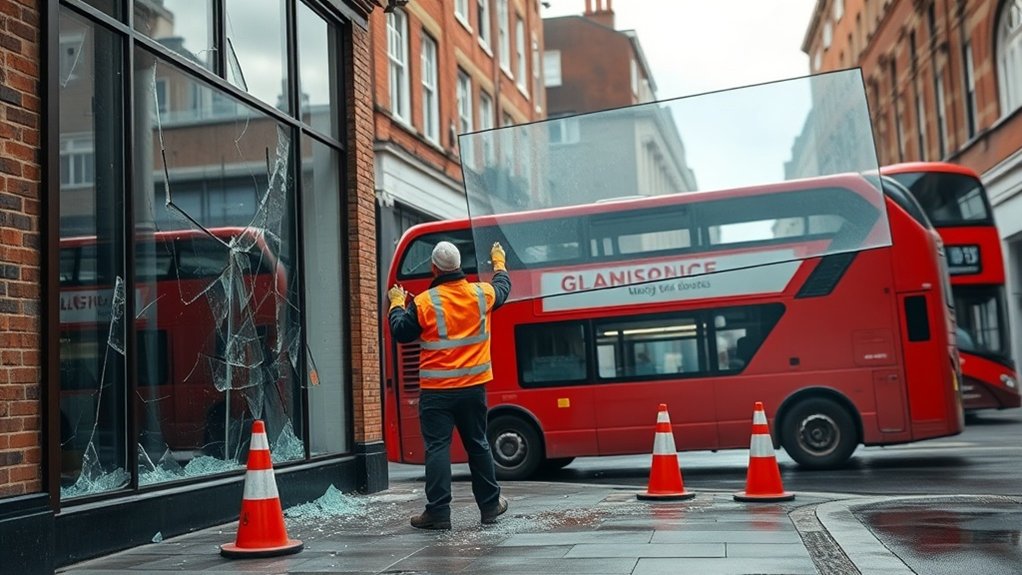
Although every policy has its own wording, most glazing insurance in London focuses on sudden, accidental breakage—shattered shopfronts, cracked display windows, or smashed door panels caused by unforeseen events rather than wear and tear. You’re typically covered when a customer collides with a door, a delivery trolley impacts a display pane, or internal fittings fall and fracture the glass.
Insurers prioritise safety concerns first: they usually fund emergency boarding-up, debris clearance, and sectioning off hazardous areas. Policies then address like‑for‑like replacement or approved upgrades, often including advanced laminates or security films if they match current standards. You’ll also see cover for specialist repair techniques such as resin injection for minor fractures, provided an accredited glazier verifies structural integrity and compliance.
Weather And Impact Damage
Severe weather and sudden impacts often sit at the heart of glazing claims , and insurers in London now define these perils with increasing precision. You’re typically covered when windborne debris, hail, falling branches, or wind pressure fractures or dislodges your glass, provided the event is sudden and unforeseen.
Modern wordings increasingly recognise storm resilience investments. If you’ve upgraded to laminated safety glass , strengthened frames, or smart glazing systems, policies often respond on a “like‑for‑like” basis, restoring equivalent performance rather than basic glass.
You’ll usually find cover extended to damage from flying objects during storms, accidental vehicular impact to shopfronts, and shattered rooflights. Where specified, innovative weatherproof coatings are treated as integral glazing components, so insurers aim to reinstate their protective and thermal properties after an insured event.
Exclusions And Limitations
Despite broad glazing protections in London policies, insurers still ring‑fence what they’ll actually pay for with a set of exclusions and tight conditions . You’ll usually see policy exclusions for gradual wear, pre‑existing cracks, defective installation, or cosmetic scratching that doesn’t impair performance. Intentional damage and contractor‑caused breakage often sit outside standard wordings unless you bolt on specific extensions.
You also need to track coverage limits. Many policies cap single‑pane payouts, emergency call‑out charges, and temporary boarding costs. High‑spec glazing —electrochromic, ballistic, or heated units—may only be insured up to a standard glass rate unless you declare the upgrade. To stay properly protected, align your glazing inventory, risk profile, and claims history with tailored limits and endorsements, then revisit them at each renewal.
Insurance Glazing Costs, Excess and Timing
When you’re dealing with insurance glazing in London, understanding how costs, excess, and timings fit together helps you avoid delays and unexpected bills. You’ll typically face three cost components: material, labour, and access. High‑performance units, smart glass, and laminated security panes increase material costs but may release premium discounts if they reduce risk.
You must align your excess with realistic claim values. If your excess is close to the replacement cost, you’re effectively self‑insuring routine glazing failures. Always map policy exclusions against likely glass specifications and façade designs so you don’t commit to solutions your policy won’t fund.
Timing is critical: insurers often require rapid notification, while glazing contractors schedule around lead times for bespoke, toughened, or shaped units.
What Insurers Look For in Glass Claims
Aligning costs, excess, and timing is only half the picture; insurers also apply specific technical tests before they accept or reject a glass claim. They’ll first check policy wording : does it explicitly cover accidental damage, impact, vandalism, or only specific glazing types?
Insurers then examine causation and condition. They want evidence that the breakage was sudden, not gradual wear or pre‑existing stress fractures. Clear photos, measurements, and glass specifications (laminated, toughened, double‑glazed, fire‑rated) support the claim process.
They’ll also compare Glass repair versus full replacement, favouring the most cost‑efficient , standards‑compliant option. Compliance with British Standards, security ratings, and energy‑performance metrics matters, especially for modern façades and smart glazing. When your documentation aligns with these criteria, your claim typically proceeds smoothly.
How to Make a Glazing Insurance Claim
When glass breaks, you’ll need to document the damage and gather evidence methodically so your insurer can assess the claim without delay. You’ll photograph the glazing, record measurements, note frame and hardware impacts, and keep any emergency repair invoices and incident reports. From there, you’ll follow your insurer’s specific notification timelines, forms, and policy conditions so your glazing claim proceeds smoothly and without technical objections.
Documenting Damage And Evidence
So how do you turn broken glass into a solid insurance claim? You start with structured documentation. First, secure glass safety: cordon off the area, prevent access, and capture wide-angle photos showing barriers and any temporary boarding. Then move to close‑ups of every fracture pattern, frame distortion, and hardware issue to support a precise damage assessment.
Timestamp images and videos, and log them in a simple digital folder structure (location, pane ID, date). Record measurements of each affected pane, glass type (toughened, laminated, double-glazed), and any visible seal failure. Note environmental factors—impact points, weather exposure, proximity to street traffic or plant. Finally, compile a brief incident log : time discovered, suspected cause, immediate mitigation steps, and any witness details.
Navigating Insurer Requirements
With your evidence organised, you can now shape it into a claim your insurer will actually process without delay. Start by mapping your damage to explicit policy coverage clauses: perils insured, glass specifications, exclusions, and any emergency boarding‑up provisions. Cross‑reference each photo, invoice, and report to a relevant section of your schedule.
Then initiate the claims process via your insurer’s preferred digital channel (portal or app) so timestamps, uploads, and correspondence are fully auditable. Enter dimensions, glazing type (single, double, laminated, toughened), frame material, and security impact with engineering‑level accuracy.
Confirm whether they require pre‑authorisation before engaging a glazing contractor. Push for contractors who can supply insurer‑compliant reports and e‑invoices , reducing queries, rejections, and settlement lag.
Insurance Glazing vs Regular Emergency Glaziers
Although both can board up smashed panes and restore your security, insurance glazing and regular emergency glaziers differ in how they handle liability , documentation, and compliance with your policy. An insurance-focused glazier maps every action to your cover: they log damage, capture photographic evidence, and generate estimates in the format underwriters expect. That precision reduces disputes and accelerates claim approval.
You also gain structured risk allocation. Insurance glaziers specify standards, glass thickness, and hardware to meet impact, fire, and security regulations while respecting glass aesthetics and, where relevant, historical preservation requirements set by planners or conservation officers. A standard emergency glazier may restore function quickly, but they’re less likely to optimise for policy wording, long‑term durability, and regulatory traceability .
Choosing an Insurance-Approved Glazing Company in London
When you’re choosing an insurance‑approved glazing company in London, you need a contractor whose processes, not just their tools, are aligned to insurer expectations and regulatory standards. You should verify they’re recognised by major underwriters and conversant with your specific Insurance policies, including exclusions, excess thresholds, and evidence requirements.
Check that they issue itemised, insurer‑grade reports with photographs, U‑values, glass specifications, and EN/BS compliance references. Confirm they use digital job tracking, real‑time reporting, and secure data sharing so loss adjusters can sign off quickly.
You’ll also want a partner who offers structured Glass maintenance programmes, not just reactive repairs, and can integrate with your building management systems. Finally, validate 24/7 response times , vetted operatives, and clear accountability for temporary and permanent works.
How to Prevent Future Glass Damage and Improve Your Cover
Even after an emergency repair, you can actively reduce the likelihood of future glass claims and strengthen the way your policy responds. Start by upgrading to laminated or toughened units that meet current British Standards; insurers often rate these higher for Glass safety. Specify impact‑resistant films on street‑level panes and sensor‑linked shutters in high‑risk zones.
Apply structured maintenance tips: log quarterly inspections, document seal integrity, frame corrosion, and hardware wear. Use calibrated photos and timestamps so you can evidence proactive risk management to underwriters.
Request your broker to endorse these risk‑control measures in writing, seeking reduced excesses, broader accidental‑damage clauses, and explicit cover for emergency boarding. Align glazing specifications, maintenance schedules, and policy wordings to create a defensible, data‑driven risk profile .
Frequently Asked Questions
Does Insurance Glazing Cover Listed Buildings and Conservation Areas in London?
Yes, it can, but you’ll need a policy and installer aligned with Historic Preservation and local Building Regulations. You must declare the building’s listed status , so the specification matches original profiles, sightlines, and materials. Insurers typically approve slimline double glazing, secondary glazing, or specialist laminates that respect façade character. Work closely with a surveyor and conservation officer to get consent while integrating high‑performance, future‑ready glazing solutions.
How Does Making a Glass Claim Affect My Future Insurance Premiums?
It can affect your future insurance premiums, but the premium impact depends on claim frequency, cost, and fault. When you start the claim process, your insurer logs the incident on shared databases, then recalculates risk at renewal using historical loss data and predictive models . A single low‑value glass claim might have minimal effect; repeated or high‑value claims can trigger loadings. Always ask your insurer to model scenarios before proceeding.
Are Shop Window Advertising Vinyls or Decals Covered When Glass Is Damaged?
They’re usually not covered automatically, because most policies treat shop window advertising vinyls or decals as separate “contents,” not part of the glass. You’ll want to check if your cover extends to branding on Retail storefronts or if you need an endorsement. Some insurers bundle certain Window signage options into glass cover , especially for innovative, high-impact designs, so you can negotiate tailored protection that mirrors your storefront’s visual investment.
Can I Choose Upgraded Security Glass and Just Pay the Cost Difference?
You usually can, but you’ll need your insurer’s approval first. Ask them to authorise like-for-like replacement, then request a Security upgrades option and do a clear cost comparison: standard glass vs. upgraded security glass (e.g., laminated, toughened, anti-shatter). The insurer typically pays only the standard equivalent, and you fund the uplift. Get a written breakdown and installer’s spec sheet so the innovation and compliance are fully documented.
Is Temporary Boarding Covered if the Glass Damage Happens Outside Business Hours?
Yes, temporary boarding’s often covered, even outside business hours, as part of emergency response provisions, but it depends on your insurance policy details. You’ll need to confirm if “emergency make‑safe” or “temporary security” is listed as an insured expense. Ask whether out‑of‑hours call‑out charges , labour, and materials are included, any caps per incident, and how to claim—especially if the glazier bills your insurer directly.
Summary
Think of your glazing insurance like a server backup: you hope you’ll never need it, but when a London shopfront took a hit from a late‑night collision, their pre‑approved glazier had them secure and trading by midday. By understanding your cover, documenting risks, and choosing an insurance‑approved specialist, you’re not just fixing glass—you’re hardening your property’s “perimeter firewall” against future shocks, costs, and downtime. Plan now, so any breakage becomes a controlled incident, not a crisis.