If vandals damage your glass in London, treat it as urgent for both safety and security. First, cordon off the area, clear loose shards with protection, and use temporary boarding or security panels. Then call a 24/7 certified emergency glazier who can assess structural risks, document damage for insurance, and advise on toughened or laminated security upgrades. With the right steps you’ll secure the property quickly and understand exactly how to prevent repeat incidents.
Key insights
- 24/7 emergency glaziers in London secure vandalised glass with rapid boarding-up, hazard cordoning, and same-day or next-day replacement where possible.
- Specialists assess impact patterns, cracks, and glass type to distinguish cosmetic vandalism from security-compromising damage requiring urgent action.
- Services include shopfront glass replacement, laminated and toughened safety glass upgrades, and compliance with BS/EN, PAS 24, and Secured by Design standards.
- Onsite repairs can remove scratches, graffiti, and etching using low-pH cleaners, polishing, and protective anti-graffiti or security films.
- Reputable firms coordinate with police, insurers, and facilities managers, providing full documentation, photos, and secure temporary solutions until permanent glazing is installed.
How Urgent Is Vandalised Glass Repair In London?
When glass is vandalised in London—whether it’s a shopfront, office partition, or communal entrance—it becomes an immediate safety and security issue that you should treat as urgent, not cosmetic. Fractured or deeply scratched panes lose structural integrity, increasing the risk of spontaneous failure under wind load, thermal stress, or impact.
You’re also dealing with liability. Sharp edges, falling shards, and weakened toughened glass expose staff, residents, and passers-by to injury. From a security standpoint , even minor impact damage can reduce resistance to forced entry.
Art vandalism and tagging may appear superficial, but aggressive graffiti removal methods can further etch or micro-fracture the glass if you delay proper treatment. Rapid professional assessment lets you decide between on-glass restoration and full unit replacement with minimal operational disruption.
Immediate Steps After Vandalism Glass Damage
When vandals damage your glass, your first priority is to secure the affected area to prevent injury, unauthorised access, or further loss. You’ll need to cordon off hazards, stabilise loose shards, and arrange emergency boarding so the site remains structurally and legally compliant. At the same time, you should methodically document the damage for insurance and police reports, capturing photos, video, and written notes before temporary repairs begin.
Securing The Affected Area
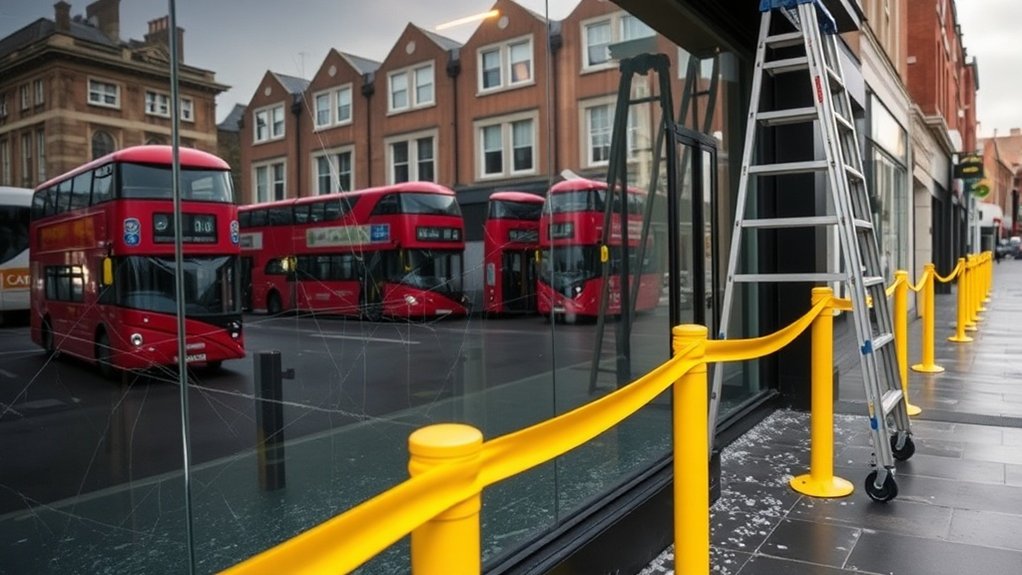
Immediately after vandalism damages your glass, you need to secure the area to prevent injury, protect property, and preserve evidence. Start by isolating the zone: lock doors , redirect foot traffic, and deploy high‑visibility barrier tape or modular safety screens. Keep people at least 2–3 metres from cracked panes or scattered shards.
Shut off nearby HVAC to stop glass dust migrating. If the opening compromises security, install temporary glazing film, polycarbonate sheets, or rapid‑deploy security boards rather than standard plywood for improved resilience and cleaner future removal.
Carefully sweep larger fragments using stiff brushes and collect them in rigid containers; never use bare hands. For surfaces tagged during historical vandalism or fresh attacks, avoid ad‑hoc graffiti removal; use non‑abrasive, glass‑safe chemical systems only.
Documenting Damage For Claims
Once the area’s secure, you should document the damage methodically to support insurance, police, and landlord claims. Use high‑resolution photos and video before any cleanup. Capture overviews of each elevation, then close‑ups of cracks, impact points, and shattered glass patterns. Include any artistic graffiti or tags on the glass, frames, or adjacent surfaces, as they may indicate repeat offenders or targeted premises.
- Photograph glass from inside and outside, plus reflections, to reveal subtle distortion, failed seals, or compromised window tinting.
- Record timestamps, weather, lighting conditions, and any temporary makesafe measures you install.
- Create a brief annotated sketch or digital plan, labelling each pane, frame type, and damage severity to align with future survey reports and glazing specifications.
Who To Call For Emergency Glass Repair In London?
When vandalism shatters your glass in London, you need to identify certified emergency glaziers who can secure the site fast and safely. You’ll want 24/7 call-out services that guarantee rapid response times, clear ETAs, and proper temporary boarding that meets safety standards. To minimise risk and guarantee compliant repairs, you should choose trusted local experts with verifiable credentials, insurance, and traceable reviews.
Identifying Emergency Glaziers
How do you decide who to call first when a pane shatters and your property’s exposed to the street? You start by filtering for specialist emergency glaziers, not generic handymen. Verify they understand security glass systems , decorative patterns, and glass etching so they don’t compromise design while restoring protection.
Look for:
- Technical accreditation – Check GGF/FENSA membership, insurance, and proof of training in laminated, toughened, and security glazing.
- On-site capability – They should arrive with stocked vans, board-up systems, templating tools, and digital measurement equipment for precise replacements.
- Risk-led assessment – Confirm they conduct immediate hazard mapping: load-bearing checks, frame integrity, anti-ligature risks, and temporary sealing that resists prying, impacts, and weather, while preserving future upgrade options like smart or privacy glass.
24/7 Call-Out Services
Before you reach for the nearest “24/7 glass” advert, it helps to map out the seven distinct services you may need on an emergency call-out in London: dedicated emergency glaziers, your building or facilities manager , the police, your insurer, a locksmith, boarding-up specialists, and, in higher-risk environments, security contractors.
You’ll call glaziers first to make shattered areas safe and specify compliant replacements. Simultaneously, brief your facilities manager to isolate access routes, log damage, and coordinate contractors. Notify police where forced entry, artistic vandalism, or targeted attack is suspected; their incident number anchors insurance claims. Contact your insurer early for pre-authorised spend. Use locksmiths if frames, shutters, or access control are compromised. Deploy boarding-up specialists for rapid containment and security contractors when repeated attacks, high-value assets, or complex graffiti removal risks apply.
Choosing Trusted Local Experts
Lining up the right responders is only half the task; you also need to know which London firms you can trust to touch your glass, frames, and security envelope. You should prioritise 24/7 glaziers with documented response times, DBS-checked teams, and clear method statements for vandalism scenarios.
Look for specialists who can handle both impact damage and surface contamination, including paint, acid etching, and artistic graffiti that must be removed without disrupting your brand image or CCTV sightlines.
Key checks before you commit:
- Proven experience with laminated, toughened, and security glazing on commercial sites
- Capability to integrate protective films, smart glass, and window frosting as preventive upgrades
- Transparent pricing , evidence of public liability insurance, and written warranties on materials and workmanship
Boarding Up Vs Immediate Glass Replacement
When vandals shatter your windows, you need to decide quickly whether to board up the opening or proceed with immediate glass replacement, and that decision should be driven by safety, security, and structural risk . You first assess load‑bearing frames, exposed edges, and falling‑glass hazards. If the aperture compromises public access, merchandise, or climate control, emergency boarding up with fire‑rated, tamper‑resistant panels is usually the safest interim solution.
In high‑visibility premises , such as galleries or flagship stores where Art restoration and graffiti removal are already critical, immediate glass replacement with laminated or toughened units can better protect assets and brand image. You’ll also consider alarm integration, sightlines for CCTV, thermal performance, and insurance compliance before choosing between temporary boarding and rapid reglazing.
Types Of Vandalism Glass Damage Explained
When you understand the typical patterns of shopfront glass damage—such as impact stars, stress cracks , spall, and edge fractures—you can assess risk and plan repairs more accurately. You’ll also need to distinguish random breakage from security‑related incidents, looking for indicators like forced-entry points, tool marks, and targeted strikes near locks or mullions. Correctly identifying these damage types helps you prioritise safety measures, choose suitable glass specifications, and document incidents for insurers and police.
Common Shopfront Glass Damage
Although every incident looks different on the surface, most vandalism-related shopfront glass damage in London falls into a few predictable categories that you can quickly identify and assess. You’ll usually see impact damage , surface abrasion, or chemical staining, each requiring a different technical response and risk evaluation.
- Impact fractures and chips – From thrown objects or forced blows, you’ll notice star-breaks, radiating cracks, and edge chips that can rapidly compromise structural integrity.
- Abrasive scratching and etching – Knife, key, or acid-etch tagging cuts into the glass surface, often deeper than standard polishing can safely remove.
- Pigment-based Street art and tagging – Spray paints, markers, and inks can bond to coatings, demanding specialist, low-pH Graffiti removal methods that protect lamination, seals, and any performance films.
Identifying Security-Related Breakages
Beyond recognising chips, scratches and graffiti on the surface, you also need to read what the break pattern tells you about the intent behind the damage and the level of risk left on site. Starburst shattering with a clear impact point often indicates deliberate blows with bricks or metal tools, signalling attempted entry. Repeated, evenly spaced marks suggest systematic testing of your glass strength.
Look for radiating cracks reaching frame edges; these can compromise structural integrity and demand urgent securing, not just cosmetic Graffiti removal or standard Window cleaning. Laminated panes showing internal spidering but intact outer layers may still retain some security, while toughened glass that’s fragmented into cubes generally means total loss of resistance and immediate replacement.
Repair Options For Vandalised Windows In London Homes
Suddenly discovering a vandalised window in your London home forces you to choose between temporary securing, onsite glass repair, or full replacement, each with specific safety and performance implications. You’ll first isolate the risk: loose shards, compromised locks, or exposed edges. Emergency boarding with calibrated fixings and anti-tamper screws stabilises the opening while you plan long-term remediation.
- For shallow surface damage or artistic vandalism on toughened panes, you can specify onsite polishing and resin injection , preserving existing frames and U-values.
- Where graffiti removal chemicals might weaken seals or coatings, upgrade to laminated, low-iron, or acoustic glass with factory-applied protective films.
- If the frame’s racked or the unit’s structurally failed, opt for full replacement with PAS 24-compliant, Secured by Design-rated glazing.
Shopfront And Commercial Vandalism Glass Repair In London
When a shopfront or commercial facade in London’s high footfall areas is vandalised, you’re dealing with a security breach , a public safety hazard, and a trading disruption all at once. You need rapid glass risk assessment: shard stability, structural integrity of mullions, and exposure points vulnerable to forced entry.
Specialist teams isolate the area, install temporary boarding , and prioritise like-for-like or upgraded safety glass (laminated or toughened) that meets BS and EN standards. For artistic vandalism and tagging, technicians integrate graffiti removal with glass replacement, ensuring solvents or abrasives don’t compromise seals, coatings, or manifestation films.
You can also specify smart interlayers, anti-graffiti films, and impact-resistant glazing systems that reduce downtime and future-proof your commercial frontage against repeat incidents.
Fixing Vandalism Scratches And Etching On Glass
Not all vandalism means broken panes; scratched or acid‑etched glass can leave a shopfront or entrance looking compromised even if it’s structurally sound. You don’t need to accept visual damage or mask it with films that degrade over time; you can restore optical clarity with controlled resurfacing.
Technicians evaluate scratch depth, glass type, and any coatings before selecting tooling and abrasives. Precision polishing systems gradually remove microns of glass, levelling scratches while preventing optical distortion or stress points. For deeper acid attack , including unwanted marks that mimic Artistic etching, they’ll blend local resurfacing with edge‑to‑edge finishing for a uniform appearance.
- Multi‑stage mechanical polishing
- Chemical-assisted Graffiti removal for acid etching
- Final inspection under raking light to verify clarity
How The Vandalism Glass Repair Visit Works
Once you’ve reported damage and agreed a repair plan, the visit follows a structured, safety‑led sequence designed to restore the glass with minimal disruption. The team arrives with pre‑calibrated tools, PPE, and access equipment, then carries out a dynamic risk assessment , isolating the work zone to protect staff, customers, and pedestrians.
Next, technicians complete an enhanced window cleaning process to remove contaminants and reveal the true extent of vandalism, from deep scoring to artistic graffiti overlays. They map every defect, measure depth with precision gauges, and confirm glass type and coatings.
Using this data, they apply staged abrasion, polishing, and optical‑blending techniques, continuously checking clarity, structural integrity, and reflection consistency before handing the area back to you.
Typical Costs Of Vandalism Glass Repair In London
Although every vandalism case is unique, you can predict typical glass repair costs in London by focusing on a few measurable factors: pane size, glass specification (standard float, laminated, toughened, low‑E, or security), damage severity, and site access complexity. Larger, thicker, or security‑rated panes cost more, especially in high‑rise or constrained sites.
You’ll usually see higher pricing where Historical vandalism controls or conservation rules demand like‑for‑like replication, or where artistic graffiti must be preserved behind new protective glazing instead of removed.
Typical cost drivers include :
- Emergency call‑out and temporary boarding
- Glass manufacture, edge finishing, and safety‑compliant installation
- Optional upgrades: anti‑graffiti films, laminated security glass, smart or low‑E replacements
Using Insurance For Vandalised Glass Claims
Understanding how insurers treat those cost drivers helps you recover quickly and stay compliant after vandalism. You should first confirm that your policy’s vandalism coverage explicitly includes glazing, shopfronts, and safety glass upgrades. Check limits, per-incident excess, and any requirements for BS EN 356 or laminated security glass, as these affect settlement values.
Document the event with timestamped photos, CCTV extracts, and police crime reference numbers before you board up or clear shards. This evidence streamlines insurance claims and reduces disputes over causation or pre-existing damage. Submit itemised quotes separating temporary securing, glass specification, installation labour, and ancillary hardware. When possible, request cash settlements that let you invest in higher-spec, impact-resistant glazing, aligning risk mitigation with long-term operational resilience.
How To Choose A Reliable London Glazier
When you’re selecting a glazier after vandalism, treat it as a safety‑critical procurement, not a quick cosmetic repair. You’re restoring structural integrity , weather‑tightness, and visual continuity, so prioritise technical competency over price.
Look for firms that demonstrate engineered solutions , not generic replacements. A reliable London glazier will:
- Provide 24/7 response, accurate site surveys, and written method statements addressing glass type, loading, and fixing details.
- Show a portfolio handling complex façades, Artistic graffiti removal from glass, and integrated window tinting that manages glare, privacy, and UV exposure.
- Hold relevant insurance, compliance with BS and EN glazing standards, and evidence of in‑house or audited installers rather than unknown subcontractors.
Verify reviews, request references, and confirm lead times before committing.
Security Upgrades When Replacing Vandalised Glass
When you replace vandalised glass in London, you shouldn’t just restore the pane, you should upgrade the whole security profile of the opening. You can specify toughened or laminated glass with defined impact ratings to resist forced entry and reduce the risk of dangerous break patterns. At the same time, you can integrate added locks and intrusion sensors into the frame and glazing system to create a more robust, monitored barrier.
Toughened And Laminated Glass
After vandalism damage forces you to replace broken glazing, upgrading to toughened or laminated glass considerably improves security, resilience, and safety performance. Toughened glass undergoes controlled thermal treatment, increasing its strength several times over standard float glass and ensuring it fragments into small, less hazardous pieces if it fails. Laminated glass bonds multiple layers with a PVB or EVA interlayer , so panes remain intact under impact, resisting penetration and opportunistic entry.
You can integrate these technologies without compromising aesthetics, especially in Decorative glass schemes and Historical preservation projects where slim profiles and discreet edge treatments matter.
- Specify impact ratings (e.g., EN 356) matched to your risk profile
- Use laminates with UV-filtering interlayers to protect interiors
- Combine clear, tinted, or patterned finishes to maintain design intent
Added Locks And Sensors
Upgrading to tougher glass boosts resistance to impact , but you further reduce repeat vandalism by integrating better locking hardware and discreet electronic sensors into the new glazing system. You should specify multi-point security locks with hardened steel bolts, anti-drill cylinders, and reinforced keeps fixed directly into the frame structure, not just the sash. This makes forced entry via prying or kicking markedly harder.
At the same time, you can embed sensor systems into the frame and beadings. Magnetic contact sensors monitor opening, while vibration or acoustic-break sensors detect impact and glass fracture attempts. Connect these to your alarm, CCTV, or smart-building platform for instant alerts and event logging. Guarantee cabling routes and power supplies are concealed to prevent tampering and maintain system integrity.
Preventing Future Vandalism And Protecting Your Windows
Although emergency glass repairs restore security quickly, you’ll reduce repeat incidents by hardening your windows against opportunistic damage and deliberate attacks. Start with laminated or toughened glass combined with anti-shatter safety films; they resist impact, delay forced entry, and limit hazardous glass fragments. Integrate these with existing locks and sensors for a layered, intelligent perimeter.
Implement Graffiti prevention methods such as nano-coatings or sacrificial films so you can strip off tags without grinding the glass surface. Use discreet vandalism signage to signal CCTV coverage and rapid police response; it deters many impulsive offenders.
- Upgrade to high-spec frames, reinforced beading, and tamper-resistant fixings.
- Install external lighting with motion-activated, camera-linked controls.
- Schedule periodic inspections to detect micro-cracks, loose seals, or tampered fittings early.
Frequently Asked Questions
Can Vandalism Glass Damage Affect My Property’s Energy Efficiency or Insulation Performance?
Yes, vandalism glass damage can considerably reduce your property’s energy efficiency and insulation performance. Even minor cracks disrupt the sealed unit, allowing heat loss, cold ingress, and condensation. You’ll strain HVAC systems, undermining energy conservation goals and smart-building controls. Compromised glazing also creates cold spots and potential moisture issues. You should inspect damaged panes immediately and upgrade to high‑performance , possibly laminated or low‑E glass to restore ideal thermal and safety performance.
Are There Special Glass Options to Reduce Traffic Noise After Vandalism Replacement?
You can upgrade to glass that softens traffic noise like a distant hum behind a closed studio door. Specify laminated soundproof glazing with acoustic interlayers tuned to target mid‑to‑high frequency road noise. Combine this with secondary glazing or thicker, asymmetric panes for enhanced decibel drops. You can also apply noise reduction films to existing panes, but you must make certain of correct edge sealing, safety compliance, and compatibility with your frame system.
How Does Vandalised Glass Repair Impact My Property’s Resale or Rental Value?
It can increase resale and rental value if you treat it as an upgrade, not just a fix. Specify laminated or toughened glass, lockable hardware, and visible security upgrades to reduce perceived risk. Prioritize aesthetic considerations: match sightlines, coatings, and frame finishes to maintain a clean façade. Document specs, certifications, and warranties; tech‑driven, high‑performance glazing signals a safer, lower‑maintenance, more energy‑efficient asset to buyers and tenants.
What Legal Obligations Do Landlords Have After Tenants Report Vandalised Windows?
You must act fast once tenants report vandalised windows: assess risk , secure the opening, and arrange compliant repairs under housing and safety regulations. You’re responsible for structural integrity; tenant insurance may cover contents, not glazing. Document everything, notify your insurer, and implement vandalism prevention measures—smart sensors, laminated glass, CCTV. Delay can breach habitability standards and licensing conditions, exposing you to enforcement action and potential claims for loss of quiet enjoyment.
Can Historic or Listed Building Windows Be Repaired Without Breaching Conservation Rules?
Yes, you can, but you must align methods with historical preservation principles and local conservation regulations. You’ll typically need consent from the conservation officer, detailed surveys, and like‑for‑like materials (single glazing, traditional putty, matching profiles). Use accredited heritage glaziers, document all interventions, and specify reversible techniques where possible. You can integrate subtle innovations—such as slimline heritage double glazing—if you justify performance gains without altering the building’s character.
Summary
You’ve seen how fast vandalised glass can compromise safety, security, and business continuity. You know the steps, the risks, the right London glaziers , and the smarter, tougher glass options. Now imagine it’s 2 a.m., alarms blaring, glass everywhere… Will you be scrambling for numbers, arguing with insurers, exposing stock and staff—or calmly following a plan you’ve already put in place? Your next move determines which future you’ll face.