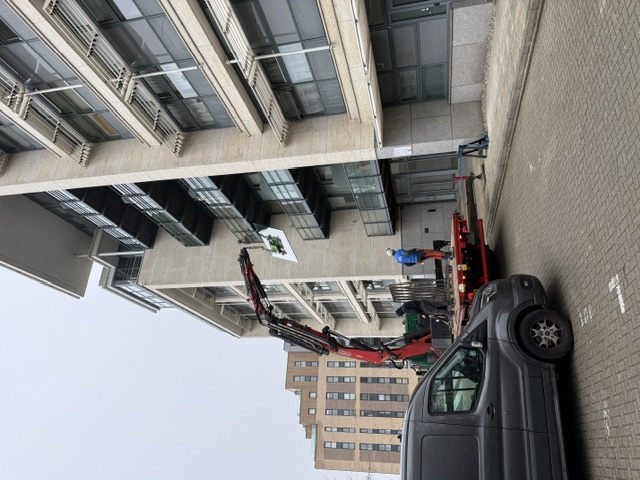

You use anti‑bandit glass in London to turn vulnerable glazing into a certified security barrier that resists smash‑and‑grab attacks and manual force. It’s a laminated glass system, tested to EN 356 and related British Standards, that’s engineered to stay in place when fractured and extend attack time. You’ll typically combine it with compatible security frames and documented installation for insurers. Continue to the sections below to understand options, cost drivers, and best‑practice specification.
Key insights
- Anti‑bandit glass is laminated security glazing designed to resist forced entry, smash‑and‑grab attacks, and manual assault, certified to EN 356 and related UK standards.
- In London, it’s widely used for banks, luxury retail, transport hubs, civic buildings, data centres, and regeneration areas facing elevated burglary or vandalism risks.
- Systems must be tested, documented, and installed with compatible security frames and fixings to satisfy insurers, building control, and risk management requirements.
- Typical installed costs in London range roughly from £350–£1,400 per m², depending on resistance rating, glass build‑up, frame type, and heritage constraints.
- For conservation and listed buildings, discreet secondary glazing or slim, thermally broken frames allow anti‑bandit protection while preserving historic appearances.
What Is Anti‑Bandit Glass, Really?
Although it’s often marketed with dramatic language, anti‑bandit glass is simply a rigorously tested, laminated glazing system designed to resist deliberate manual attack, forced entry, and smash‑and‑grab attempts. You’re specifying a composite: multiple glass plies bonded with interlayers—often Innovative materials such as ionoplast or advanced PVB—engineered to hold together under repetitive impact.
You assess it by performance classifications, not buzzwords. In the UK and Europe, you’ll reference standards like BS EN 356 for resistance to manual attack and align glass make‑up with quantified risk scenarios. You’re managing attack delay time, residual visibility, and spall performance, while controlling weight and retrofit feasibility.
Customer perceptions still matter: the assembly must appear conventional, support branding, and integrate with contemporary façade systems.
Why Are London Businesses Turning to Anti‑Bandit Glass?
Driven by tighter risk tolerances and evolving threat profiles, London businesses are adopting anti‑bandit glass as a primary control measure against forced entry, vandalism, and targeted theft . You’re operating in a dense, high‑value environment where traditional glazing no longer aligns with contemporary risk appetites or insurer expectations.
You turn to anti‑bandit glass because it integrates security performance, transparency, and design flexibility without degrading brand experience. Tested to defined impact and attack standards, it lets you evidence due diligence, satisfy compliance audits, and negotiate more favorable insurance terms.
As you pursue urban resilience strategies, this glass innovation becomes a core element in your protective design stack, complementing access control, surveillance, and response plans while future‑proofing your street‑facing assets against foreseeable threat escalation.
How Anti‑Bandit Glass Stops Smash‑and‑Grab Attacks
When smash‑and‑grab offenders hit your frontage with hammers, axes, or improvised tools, anti‑bandit glass alters the attack timeline and failure mode in your favor. Instead of disintegrating, the pane stays largely intact, even when crazed and heavily fractured, maintaining a physical and psychological barrier.
You’re leveraging multi‑layer laminates, high‑performance interlayers, and precise edge retention to dissipate impact energy and prevent aperture creation. Offenders experience tool bounce, reduced visibility, and extended dwell time, which sharply increases intervention likelihood and slashes loss exposure in retail security environments.
Crucially, you achieve this without sacrificing glass aesthetics. Advanced coatings, low‑iron substrates, and slim laminate stacks deliver transparency, color neutrality, and clean sightlines, supporting premium merchandising while still complying with relevant impact and security standards.
Anti‑Bandit Glass vs Standard Toughened and Laminated Glass
When you compare anti‑bandit glass with standard toughened and laminated glass, you’re really evaluating quantified strength, impact durability, and resistance to forced entry under defined test conditions. You need to understand how each system performs against blunt force, cutting tools, and repeated attacks, and how that translates into real security performance for your site. This comparison then guides you in selecting the right specification and application—shopfronts, glazing near ATMs, critical entrances—based on your risk profile and required standards of protection.
Comparative Strength And Durability
Although standard toughened and laminated glazing already offers enhanced performance over annealed glass, anti‑bandit glass is engineered to a different level of strength and durability, specifically to resist sustained, targeted attack. You’re not just upgrading thickness; you’re specifying glass customization and security integration that’s validated through impact, penetration, and fatigue testing to EN and BS standards.
Anti‑bandit constructions typically combine multiple laminates, interlayers, and sometimes polycarbonate to manage energy, crack propagation, and residual load capacity after damage.
You can benchmark the difference by focusing on:
- Impact endurance – repeated blunt and sharp impacts without structural breach.
- Post‑breakage integrity – retained alignment, visibility, and resistance to collapse.
- Service life under stressors – UV, temperature cycling, and mechanical loading over time.
Security Performance And Applications
So how does anti‑bandit glass actually change your risk profile compared with standard toughened or laminated glazing? You gain defined resistance times against manual attack, tested to EN 356 (P6B–P8B) rather than relying on generic “toughened” claims. Instead of disintegrating or delaminating under impact, interlayers maintain integrity , slowing intrusion and enabling a security response.
You can deploy it in street‑level retail, cash‑handling points, high‑net‑worth residential, transport hubs, and critical infrastructure where forced‑entry risk is quantifiable. Material innovation in interlayers and coatings lets you combine physical resistance with low‑iron clarity, UV control, and acoustic performance, preserving aesthetic integration in premium façades. By mapping threat levels to test classifications, you specify glass as a measurable control, not an architectural afterthought.
Polycarbonate vs Glass Laminate for London Shopfronts
Before you specify anti-bandit protection for a London shopfront, you need to understand the practical and regulatory differences between polycarbonate panels and glass laminate, because each system behaves differently under impact , forced entry, fire, and UV exposure. You’re balancing risk, maintenance, Historical preservation, and aesthetic integration, especially in conservation areas and premium retail zones.
-
Polycarbonate – Extremely high impact resistance and low weight, but you must manage scratch susceptibility, UV yellowing risk, and tighter fire‑reaction constraints in mixed‑use buildings.
-
Glass laminate – Heavier, more brittle to initial impact, yet offers superior optical clarity, long-term UV stability, and better compatibility with heritage shopfront mouldings.
-
Hybrid strategies – You can combine laminated glass externally with polycarbonate liners or shields internally, optimising transparency, resilience, and retrofit practicality for constrained façades.
Security Ratings and UK Standards Explained
How do you know if a proposed “anti-bandit” glazing build-up actually meets the level of attack resistance your London shopfront needs? You benchmark it against recognised UK and European standards, then match those ratings to realistic threat scenarios.
You’ll typically look for EN 356 (manual attack resistance) and, where relevant, EN 1063 (bullet resistance). For retail risk in London, you should interrogate the specific EN 356 classification (e.g. P6B–P8B) rather than accept vague “security glass” claims. Confirm test reports, glass thickness, interlayer type, and edge details.
If you’re refurbishing historical glazing or integrating decorative patterns, insist that full-size test specimens reproduced those design features. Otherwise, you risk downgrading performance despite nominally using the “same” rated glass configuration.
What Insurers Expect From Your Shopfront Glazing
When you specify anti-bandit glass , insurers expect your shopfront to meet clearly defined minimum glazing standards that align with the stated risk profile of your premises. They’ll typically require evidence that your glass and framing systems hold the correct security ratings, tested and certified to relevant British and European standards. To support underwriting and future claims, you must maintain accurate documentation and third-party certification for all installed components, including test reports, compliance statements, and installation records.
Minimum Glazing Standards
Your shopfront glazing must meet defined minimum standards because insurers assess glass performance regarding impact resistance, containment, and delay of forced entry, not just appearance. You’ve got to balance Historical architecture, Artistic design, and contemporary risk scenarios while still aligning with insurer expectations.
Insurers typically look for anti-bandit systems that:
- Use laminated safety glass with interlayers engineered for multi-hit resistance, compliant with relevant EN or BS impact classifications.
- Integrate framing, fixings, and mullions tested as a single system so the glass can’t simply be levered or pushed out under attack.
- Maintain clear sightlines for surveillance and lighting while achieving a defined “attack delay” time, allowing police or keyholders to respond before offenders access high-value stock .
Documentation And Certification
Insurers don’t just want to see robust glass in the frame; they want evidence on paper that it performs as claimed. You need certificates showing tested compliance with BS EN 356, BS 6262, and any relevant LPS or PAS standards, including impact, manual attack, and containment data.
Underwriting teams expect a full documentation pack: test reports, installation records, maintenance logs, and declarations of conformity from both glass processor and installer. They’ll scrutinise frame–glass compatibility and fixing details, not only pane thickness.
You should also demonstrate awareness of the historical context of anti-bandit measures and the cultural significance of transparent security in London’s retail streetscape, showing that your glazing strategy integrates risk reduction, brand presentation, and future-ready design.
Balancing Anti‑Bandit Glass and Aesthetics in Conservation Areas
Although anti‑bandit glass is a security upgrade, it has to satisfy strict heritage and planning controls in London’s conservation areas. You must prove that Historical preservation and aesthetic integration aren’t compromised while you increase resistance to forced entry, vandalism, and ram‑raid risks.
You’ll need to demonstrate that any intervention is reversible, visually subordinate, and compliant with conservation‑grade detailing, while still aligning with contemporary security standards and insurer expectations.
- Facade coherence – Align sightlines, reflection, and colour rendering with original glazing modules to avoid visual discontinuity across the streetscape.
- Profiles and fixings – Use slim, thermally broken frames and concealed fixing systems that mimic historic sections.
- Glare and reflectivity – Specify coatings that control solar gain and reflections without creating mirror‑like surfaces that disrupt heritage character.
Choosing the Right Anti‑Bandit Glass for Your London Premises
You can’t select appropriate anti‑bandit glass without first quantifying your security risk levels, including likely attack methods, exposure times, and critical assets. Once you’ve defined those parameters, you can map them to relevant standards such as EN 356 to guarantee the glass specification matches the threat profile. From there, you should balance cost and performance by comparing whole‑life risk reduction against initial capital outlay and ongoing operational impacts.
Assessing Security Risk Levels
Before specifying any anti‑bandit glass for a London premises, start with a structured assessment of your security risk profile: location‑specific crime patterns , asset value, occupancy type, glazing accessibility, and likely attack methods (forced entry, manual attack, tool‑assisted attack, or ballistic threat). Map these variables against relevant standards such as EN 356, EN 1063, and BS 6262‑4 to define performance thresholds rather than generic “high security” labels.
You’ll sharpen that profile by interrogating three dimensions:
- Proximity to high‑crime corridors, protest routes, or critical infrastructure.
- Sensitivity of interior functions, especially where Historical architecture must coexist with contemporary threat resilience.
- Interface between facade design, sightlines, and Environmental impact, ensuring solar control, thermal performance, and security glazing act as an integrated envelope system, not competing priorities.
Balancing Cost And Performance
Once you’ve defined a clear risk profile, the next step is to match anti‑bandit glass performance to budget without over‑ or under‑specifying. You’ll benchmark options against standards such as EN 356 and EN 1063, then map classes to specific attack scenarios and asset values.
To control cost, you prioritise zones: primary attack surfaces, public interfaces, and discreet back‑of‑house areas. You can specify higher‑rated laminates only where risk concentration justifies them. In London, you also need to respect historical architecture and wider urban aesthetics, so you’ll assess low‑iron, anti‑reflective, or solar-control interlayers that don’t compromise visual intent.
Finally, you balance whole‑life cost : energy performance, maintenance, and potential insurance savings versus initial capex.
Recommended Specs by Business Type: Jewellers, Cafés, Boutiques
Although anti-bandit glass always serves the same core function—resisting forced entry and attack—the ideal specification differs markedly for jewellers, cafés, and boutiques, and should be selected with reference to risk level, asset value, and compliance expectations. You’ll also need to respect London’s historical architecture while enabling contemporary glass artistry and brand expression.
-
Jewellers – Prioritise EN 356 P7B–P8B laminated glazing , anti-spall interlayers, and attack-tested framing. Integrate with certified intruder alarms and consider blast-mitigating films where high-profile.
-
Cafés – Specify EN 356 P4A–P5A for large panes, with high impact resistance, low-iron options, and thermal performance meeting Part L and relevant local guidance.
-
Boutiques – Use EN 356 P5A–P6B, slim sightlines , and structurally bonded systems that protect higher-value stock while maximising visual merchandising and daylight.
Installation Options for Existing London Shopfronts
Selecting the right anti-bandit glass specification is only half the task; you also need a compliant installation strategy that works with London’s varied and often protected shopfronts. You’ll typically choose between full frame replacement , over‑cladding existing frames, or internal secondary glazing.
For listed or Historical architecture, you’ll coordinate with conservation officers and follow BS 5516, BS 6262, and relevant EN 356 classifications, ensuring mullions, fixings, and sealants can absorb impact loads without distorting façades. Structural silicone glazing and discreet steel reinforcement let you upgrade security while maintaining sightlines.
Where branding matters, you can pursue Artistic integration : ceramic frits, interlayers, or digital printing embedded within laminated panes, provided they don’t compromise edge‑cover, anchorage, or blast and attack performance.
Anti‑Bandit Glass Costs in London and What Affects Price
When you assess anti‑bandit glass costs in London, you need to map each cost driver directly to the specific risk level and compliance duty you’re addressing. Thickness, certified resistance rating (e.g. EN 356), pane size, framing system, and installation complexity all materially influence the final price. Below, you’ll see how these factors translate into typical London pricing ranges so you can budget against a defined security and standards profile.
Key Anti-Bandit Cost Drivers
How exactly are anti-bandit glass costs in London built up, and why do quotes for “similar” protection levels vary so widely? You’re not just buying glass; you’re specifying a safety system that must align with risk, regulation, Historical architecture, and Environmental impact targets.
Key cost drivers typically include:
-
Threat level and certification – Higher resistance against manual attack or ballistic risk demands thicker laminates, advanced interlayers, and full compliance with EN 356 or EN 1063, all of which increase material and testing costs.
-
Framing and fixing strategy – Secure edge engagement, anchorage, and blast-compatible frames often cost more than the glass itself.
-
Project context – Irregular geometries, conservation constraints, solar-control coatings, and lifecycle-focused Environmental impact goals drive custom engineering, specialist installation , and tighter quality assurance.
Typical London Pricing Ranges
So what does anti‑bandit glass actually cost in London once you translate resistance classes and design intent into £/m²? For typical commercial projects, you’ll usually see entry‑level tested configurations from roughly £350–£550/m², mid‑range solutions around £550–£900/m², and high‑performance or bespoke systems extending from £900/m² to £1,400+/m², ex‑VAT and installation.
You’ll push toward the upper bands when you require complex Historical preservation constraints, ultra‑clear low‑iron make‑ups, or finely tuned aesthetic integration with heritage façades. Multi‑ply laminates, thicker interlayers, and oversize panes also lift the rate. Where you integrate anti‑bandit glass into certified framing or curtain wall systems, treat the glass price as only 35–55% of the total opening cost, depending on tested detailing, hardware, and fixing method.
Maintaining Anti‑Bandit Glass: Scratches and Durability
Because anti‑bandit glass is a critical security component rather than a conventional glazing choice, its long‑term performance depends on controlling surface damage, monitoring for micro‑scratches, and preventing degradation that could compromise its certified resistance rating. Your glass maintenance regime should align with BS EN 356 test assumptions: clean with non‑abrasive agents, use soft applicators, and document defects. Prioritise scratch prevention because even fine scoring can concentrate impact stress and shorten service life.
- Specify nano‑coatings or hard‑coat interlayers that increase abrasion resistance and ease decontamination.
- Implement scheduled inspections using raking light to identify micro‑scratches and edge chips before they propagate.
- Establish a replacement/upgrade trigger matrix linking observed damage classes to defined actions, ensuring the installation never falls below its original security specification.
Where Anti‑Bandit Glass Is Most Commonly Used Across London
Across London’s higher‑risk environments, anti‑bandit glass concentrates in locations where BS EN 356‑rated glazing materially reduces forced‑entry and smash‑and‑grab exposure: banking halls and ATMs, luxury retail frontages, transport hubs, critical infrastructure control rooms, data centres, and police or civic buildings with public‑facing counters. You’ll also see it protecting ticket offices, stadium turnstiles, and secure hospital receptions, where you must balance throughput, visibility, and impact resistance.
In regeneration zones , you often integrate anti‑bandit glass into historical architecture, using bespoke framing and edge treatments to preserve listed façades. Contemporary galleries and flagship stores specify it to protect high‑value artistic design installations without compromising optical clarity. Across these use‑cases, you’re engineering transparent security envelopes that align with defined threat profiles and London‑specific risk mapping.
Choosing a Trusted London Anti‑Bandit Glass Supplier
When you’re selecting an anti‑bandit glass supplier in London, you’re effectively choosing a security‑critical partner whose competence, certification, and supply chain resilience will dictate your actual risk reduction, not just what’s written in the specification. You need a team that integrates risk assessment, façade engineering , and conservation expertise, especially when you’re protecting historical architecture without compromising artistic transparency.
Key selection checks:
- Verify tested compliance to BS EN 356, relevant EN 1063 overlaps, and documented attack‑resistance classifications for your threat model.
- Demand evidence of traceable batch control, lamination quality audits, and contingency stock for critical frontages.
- Assess design support: ability to model blast/impact loads , detail fixings to existing frames, and prototype bespoke interlayers that align with your visual and innovation goals.
Frequently Asked Questions
Can Anti‑Bandit Glass Be Combined With Alarm and CCTV Systems?
Yes, you can integrate anti‑bandit glass with alarm and CCTV systems for layered Security enhancements. You specify laminated glazing compatible with vibration or break sensors, then align sensor placement with frame profiles to maintain standards compliance (e.g., EN 356, EN 50131). You coordinate CCTV sightlines to avoid glare and reflections, balancing aesthetic considerations with coverage. You should validate performance via integrated testing and maintain documentation for certification and future innovation.
How Does Anti‑Bandit Glass Perform in Fire or Extreme Heat?
It generally withstands short‑term exposure but isn’t a certified fire‑resistance solution. You get good Heat durability from the laminated construction; interlayers soften or delaminate under sustained high temperatures, potentially compromising integrity. For true Fire resistance, you must pair it with tested fire‑rated glazing and frames, validated to EN 13501 or equivalent. You should specify performance via third‑party certifications , worst‑case thermal loading, and integrated façade or partition fire‑protection strategies.
Is Anti‑Bandit Glass Suitable for Residential Properties and Home Studios?
Yes, it’s suitable for residential properties and home studios, provided you specify performance targets clearly. Think of it like upgrading from a standard lock to a graded safe: you’ll select impact class, decorative patterns, and privacy levels to match risk and aesthetics. Verify compliance with BS/EN security glazing standards , edge framing, and anchoring. For studios, you’ll balance acoustic isolation, daylight, and security, ensuring the build-up doesn’t compromise fire‑strategy requirements.
What Planning Permissions Are Needed to Upgrade to Anti‑Bandit Glass?
You typically won’t need new planning permission if you’re only upgrading glazing, but you must comply with Building Regulations. You should notify Building Control when changing glass type or thickness, as material durability and load‑bearing characteristics alter. Make certain the installation process meets standards for impact resistance, escape routes, and thermal performance. If you’re in a listed building or conservation area , you’ll likely need consent before installing anti‑bandit glazing.
Can Anti‑Bandit Glass Improve Thermal Insulation and Reduce Energy Bills?
Yes, it can—sometimes almost like wrapping your building in a high‑tech thermal blanket. If you specify laminated, low‑emissivity configurations, you’ll improve U‑values, reduce heat loss, and trim energy bills measurably. You must, however, balance Security enhancements with aesthetic considerations, ensuring visible‑light transmittance and g‑values align with your façade concept. Verify compliance with BS EN glazing standards and model performance using dynamic simulation before committing to large‑scale deployment.
Summary
When you invest in anti‑bandit glass, you’re not just buying panes—you’re defining your risk posture. By choosing tested laminates or polycarbonate built to relevant British and European standards, you harden your frontage against smash‑and‑grab threats, reduce downtime, and support insurance compliance. Review certification, installation quality, and maintenance plans with the same rigour you apply to any critical control. In London’s evolving threat landscape, your glass can be a vulnerability—or a verified barrier.