
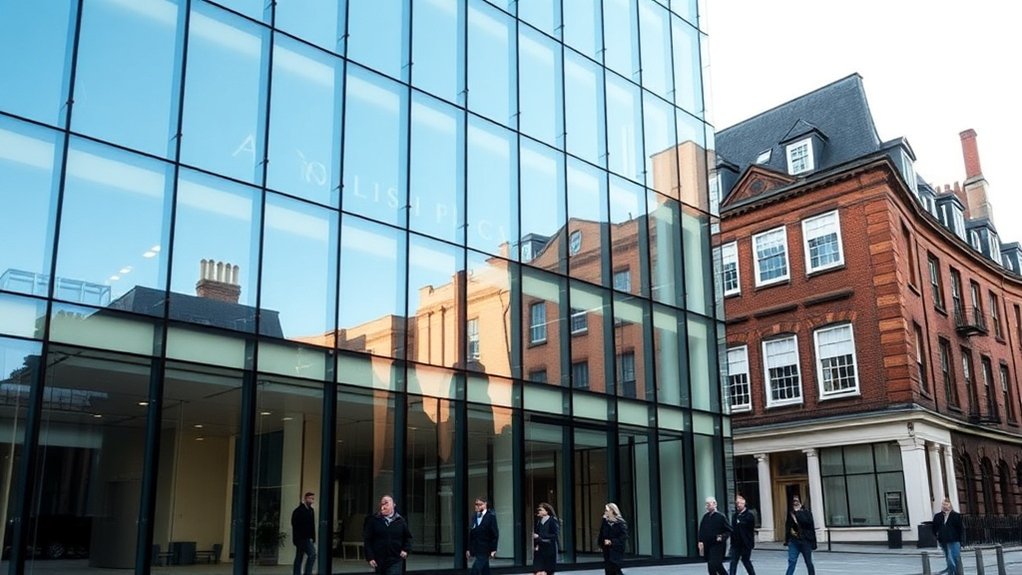
You use Low‑E glass in London to cut heat loss, improve comfort and meet strict energy and planning rules. A microscopically thin metallic coating reflects infrared heat back inside while still letting in high levels of daylight and preserving clear views. It also limits summer overheating when correctly specified by orientation, U‑value and g‑value, which reduces heating bills and carbon. You’ll see how it compares with standard double glazing, costs, funding and maintenance next.
Key insights
- Low-E glass improves insulation in London homes by reflecting heat back inside, reducing U-values and cutting winter heating bills.
- It helps prevent summer overheating when specified with low solar heat gain coatings, especially important in south- and west-facing London façades.
- Slimline Low-E double or vacuum glazing suits heritage and conservation areas, upgrading performance without altering traditional window proportions or sightlines.
- Low-E glass supports compliance with Part L, London Plan energy targets, and borough sustainability policies for refurbishments and new builds.
- Professional specification should consider orientation, U-value, g-value, and visible light transmission to balance energy efficiency, daylight, and comfort in London properties.
Why Low-E Glass Matters in London Homes
Why does glass choice matter so much in a city like London? You’re working with dense streets , variable weather, and strict conservation rules around historical architecture. Standard double glazing often forces trade‑offs: thermal comfort vs. daylight, privacy vs. views, performance vs. heritage character.
Low‑E glass lets you optimize those variables. You can retain slender sightlines, match traditional sash proportions, and still hit demanding U‑value and g‑value targets. That’s critical when you’re electrifying heating, downsizing radiators, or integrating smart controls.
In south‑facing rooms overlooking urban greenery , selective Low‑E coatings limit solar gain while preserving color accuracy and high visible light transmission. In shaded terraces or narrow mews, they reduce radiant heat loss, eliminating cold‑surface asymmetry and condensation risk at the frame interface.
How Low-E Glass Actually Works
To understand Low-E glass , you need to look at the coating technology that’s applied as an ultra-thin, transparent metallic layer on the glass surface. This coating selectively reflects infrared (heat) radiation while allowing most visible light to pass through, so you control thermal performance without darkening your rooms. In London’s climate, this means you can reduce heat loss in winter and limit unwanted solar gain in summer with a single, engineered glazing solution.
Low-E Coating Technology
Ever wondered what actually happens on the surface of low‑E glass that makes it so effective in London’s climate? You’re dealing with nanometre‑thin metallic oxide layers , typically silver-based, sputter‑deposited onto float glass in a vacuum chamber. These layers selectively interact with long‑wave radiation while maintaining high visible transmittance.
You specify either soft‑coat (pyrolytic MSVD) stacks for higher performance or hard‑coat versions where durability and ease of processing matter more, especially in refurbishing historical architecture. Layer sequences include adhesion, barrier, functional silver, and protective overcoats, all calibrated for neutral colour and sharp glazing aesthetics.
You then position the coated surface within insulated glass units to protect it from oxidation, mechanical damage, and cleaning chemicals, extending service life and performance.
Heat And Light Control
Those thin silver-based stacks you’ve just specified only matter if they manage heat and light in a way that suits London’s mixed heating and cooling demands. Each Low‑E layer selectively reflects long‑wave infrared while maintaining visible light transmission, so you cut winter heat loss without turning interiors gloomy.
You tune performance through solar heat gain coefficient (SHGC) and visible light transmittance (VLT). For south façades, you’ll typically target lower SHGC to limit summer gains; for shaded or north aspects, you can prioritise higher VLT. In smart homes, Low‑E glazing pairs with sensors and automated shading to modulate daylight and g‑values in real time. Carefully chosen coatings preserve window aesthetics—neutral colour, low reflectance—while delivering measurable U‑value and comfort improvements.
Types of Low-Emissivity (Low-E) Coatings
When you choose Low-E glazing in London, you’ll usually pick between soft coat Low-E and hard coat Low-E coatings. Each uses a different manufacturing process, which affects its emissivity rating, durability, and performance in London’s mixed heating‑ and cooling‑demand climate. You need to understand how these two coating types behave in real installations so you can match them to your building’s orientation, glazing unit design, and budget.
Soft Coat Low-E
Although all low‑E glass improves thermal performance, soft coat (also called sputter-coated or MSVD) low‑E glass offers the highest efficiency by using multiple ultra-thin metallic layers precisely deposited in a vacuum onto the glass surface. You gain superior control of solar heat gain coefficients and U-values, essential when your London energy audits target specific kWh reductions per square metre of façade.
In practice, you specify soft coat low‑E on surface #2 of double or #3 of triple glazing, combined with inert gas fill and warm-edge spacers. This configuration cuts winter heat loss while limiting overheating from south-facing elevations. It’s fully compatible with modern glass recycling streams, provided you segregate coated units and follow processor guidelines, protecting circular-economy ambitions without compromising performance.
Hard Coat Low-E
By contrast with soft coat options, hard coat low‑E (pyrolytic) glass bonds a durable metal-oxide layer to the glass while it’s still hot on the float line, creating a tough, chemically fused surface that withstands handling, transport, and onsite glazing with minimal risk of coating damage. You gain superior coating durability, making this solution attractive for exposed surfaces and retrofit scenarios across London’s dense urban fabric.
Key performance characteristics you should evaluate:
- Higher emissivity than premium soft coats, but robust thermal performance for standard residential upgrades.
- Excellent handling tolerance, reducing site constraints and processing risk.
- Stable glass transparency , with minimal haze when you specify reputable manufacturers.
- Compatibility with single glazing, secondary glazing, and laminated configurations for security and acoustic control.
Low-E vs Standard Double Glazing in London
Ever wondered what you actually gain by choosing low-E glass over standard double glazing for a London property? With standard units, both panes are usually clear float glass, so solar control depends on add-ons like window tinting or privacy films. Low-E glass integrates a microscopically thin metal oxide coating on one surface, giving you selective spectral performance rather than blunt shading.
You get lower U-values, more stable internal surface temperatures, and better control of solar heat gain coefficients . That means you can specify larger glazed areas without oversizing heating and cooling systems. In dense London streets, low-E also helps decouple acoustic and thermal strategies, so you can pair specialized acoustic laminates with high-performance coatings instead of relying on heavier, less efficient standard double glazing.
How Low-E Glass Reduces Winter Heat Loss
With Low-E glass, you minimise radiant heat loss by reflecting long-wave infrared back into your rooms instead of letting it escape through the glazing. This improves your window’s overall insulation performance (U-value), so the glass surface stays warmer and reduces cold downdrafts near the pane. As a result, your heating system runs for shorter periods in winter, which cuts your gas or electricity bills while maintaining a stable indoor temperature.
Minimising Radiant Heat Loss
Although London’s winters are relatively mild, radiant heat loss through standard glazing can still account for a significant share of your heating demand, and this is where low‑E glass becomes critical. By applying a microscopically thin, low‑emissivity coating to the inner pane, you reflect long‑wave infrared back into the room while still transmitting high levels of visible light.
You can tune performance and aesthetics simultaneously with advanced color options and integrated privacy solutions. When you specify low‑E glass, focus on:
- Emissivity value (e‑value) of the coating.
- Position of the coating within the sealed unit (typically surface #3).
- Solar heat gain coefficient to balance winter gains.
- Spectral selectivity to maximise daylight while limiting thermal losses.
Improving Window Insulation Performance
Instead of relying on bulky frames or triple glazing, you can improve window insulation in winter by using low‑E glass to target the main heat‑loss mechanisms directly. The microscopically thin metallic coating reflects long‑wave infrared back into the room, while still transmitting visible daylight, so you don’t compromise window aesthetics. By specifying low‑E on the cavity-facing surface, you minimise emissivity and reduce U‑values within existing frame depths.
To optimise performance, pair low‑E coatings with argon-filled cavities and warm‑edge spacers, cutting conductive and convective losses through the glazing unit. You’ll maintain higher internal surface temperatures, reducing cold downdrafts and condensation risk on the pane. Modern hard and soft low‑E coatings are durable, so standard glass cleaning regimes remain viable without degrading thermal performance.
Cutting Winter Heating Bills
Ever wondered why rooms with older glazing feel cold even when the thermostat’s high? You’re paying to heat London’s air, not your home. Low‑E glass changes that by reflecting long‑wave infrared back into the room while allowing high visible light transmission, cutting conductive and radiative losses through the glazing.
Here’s how it reduces winter bills:
- It lowers U‑values, so less heat escapes through each square metre of glass per degree temperature difference.
- It optimises solar heat gain, capturing passive winter sun without excessive night losses.
- It supports historical preservation by using thin, nearly invisible coatings compatible with slimline heritage units.
- It enables aesthetic integration, maintaining sightlines, frame profiles, and facade rhythm while discreetly improving energy performance.
How Low-E Glass Helps With Summer Overheating
When London’s summer temperatures climb and solar gain turns rooms into heat traps, low‑E glass mitigates overheating by selectively controlling short‑wave and long‑wave radiation at the glazing surface. You specify coatings with low solar heat gain coefficients (SHGC) to reduce transmitted infrared while maintaining high visible transmittance.
You can fine‑tune façade performance through color options embedded in the coating stack , adjusting reflectance and absorption to suit orientation and surrounding context. Advanced sputter‑coated low‑E products let you target g‑values aligned with dynamic cooling‑load models. Correct installation techniques are critical: you must orient the coated surface precisely, seal units to prevent argon loss, and integrate thermally broken frames. Combined, these measures reduce peak cooling demand, stabilise indoor temperatures, and enable more compact HVAC systems.
Balancing Daylight, Views and Glare With Low-E
Although low‑E glass is often specified to control heat flow, you still have to balance three competing daylighting objectives in London projects: sufficient illuminance , clear outward views, and effective glare control. You do this by tuning visible light transmittance (Tv), solar factor (g‑value), and internal reflectance for each façade orientation.
Consider the following strategies:
- Select spectrally selective low‑E coatings that maintain high Tv while cutting solar gain.
- Combine low‑E units with subtle window tinting only on high‑glare exposures, preserving neutral colour rendition elsewhere.
- Use fritted or etched decorative patterns in marginal view zones to break up contrast ratios near workplanes.
- Model daylight autonomy and glare probability (DGP, UGR) iteratively, adjusting glazing make‑up and patterns until metrics align with your performance targets.
Low-E Glass for Period and Listed London Homes
When you upgrade period or listed London homes, you must balance thermal performance with heritage-led glazing constraints. You’ll need to assess heritage-friendly Low‑E options —such as slimline double glazing, vacuum units, or secondary glazing—that preserve sightlines, bar profiles, and original glass character. At the same time, you must demonstrate compliance with conservation area requirements on U-values, visible light transmission, external reflectance, and frame detailing to secure planning and listed building consent.
Heritage-Friendly Glazing Options
How do you improve thermal performance in a London period or listed home without compromising its original character or breaching conservation rules? You prioritise low‑profile, heritage-friendly glazing that preserves architectural aesthetics and historical authenticity while discreetly adding high-performance coatings .
Consider these key options:
- Slimline Low‑E double glazing*: Uses ultra-narrow cavities (4–6 mm) with inert gas fill and warm-edge spacers, fitted into existing sash or casement frames with *minimal timber loss.
- Low‑E vacuum glazing : Achieves U-values comparable to triple glazing in a pane thickness close to single glass, ideal where rebate depth is limited.
- Laminated Low‑E single-look units : Mimic single glazing thickness while integrating a low‑E interlayer.
- Secondary glazing with Low‑E glass: Installs internally, creating a high-performance insulating layer without altering exterior sightlines.
Meeting Conservation Area Requirements
Precisely steering Low‑E upgrades in a London conservation area means treating planning policy as a technical brief, not an obstacle. You start by extracting measurable constraints: sightline depth, putty-line geometry, reflection levels, and external colour neutrality. Then you map these to specific Low‑E coatings, cavity depths, and gas fills that remain visually recessive.
You’ll typically justify the specification with U‑value calculations, section details, and comparative photos against original glass. Where officers worry about character loss, you deploy artistic design in the glazing layout: slimline units, true or applied glazing bars, and historically accurate edge seals .
For street‑facing windows, you can integrate subtle privacy solutions—such as micro‑patterned or acid‑etched inner panes—while keeping the external face visually unchanged.
Low-E Glass in Modern London Flats and Towers
Amid London’s dense skyline of glass-fronted flats and towers, low‑emissivity (low‑E) glazing has become a critical tool for meeting strict energy, comfort, and planning requirements. You use it to balance urban aesthetics with performance, leveraging glazing innovations that let façades stay transparent while tightly controlling heat transfer and internal comfort.
You’ll typically assess low‑E glass for:
- Spectral selectivity – high visible light transmission with low solar heat gain.
- U‑values – optimized for slim frames and large spans without cold downdrafts.
- Facade integration – compatibility with unitised curtain walling, point‑fixed systems, and sliding doors.
- Overheating control – pairing low‑E coatings with shading, ventilation strategies, and smart controls, especially on south- and west-facing elevations in taller schemes.
Energy Bills, Carbon Savings and EPC Uplift
Once you’ve specified low‑E glass for a London scheme, the next question is what it delivers in hard numbers on bills, carbon, and EPC ratings. In a typical well‑insulated flat, you can often cut space‑heating demand 10–25% by upgrading from standard double glazing to low‑E units with a U‑value around 1.0–1.2 W/m²K .
You’ll see the biggest gains when you combine low‑E coatings with selective solar control and high‑performance window tinting. That pairing reduces winter heat loss while limiting unwanted solar gains in south‑ and west‑facing façades, trimming cooling loads in highly glazed towers.
In SAP/SBEM models, these reductions usually translate into a one‑band EPC uplift (sometimes two for all‑electric schemes), plus measurable, auditable carbon savings.
Planning Rules, Building Regs and Low-E in London
Although low‑E glass isn’t named explicitly in London planning policy, you’ll find it sits at the intersection of Part L of the Building Regulations (conservation of fuel and power), the London Plan’s energy hierarchy , and borough‑level sustainability SPD requirements. You’re expected to evidence how your glazing specification optimises U‑values, g‑values and daylight while managing summer overheating and preserving window aesthetics.
You should typically address:
- Part L compliance – demonstrate whole-window performance (Uw) and junction detailing.
- London Plan – quantify carbon reductions from low‑E glazing in your Energy Strategy.
- Overheating risk – use TM59/TM52 modelling, balancing solar gain control with views.
- Amenity and acoustics – coordinate low‑E coatings with laminated units for interior acoustics, ensuring frame profiles, coatings and spacer bars still satisfy heritage, conservation area, or Article 4 constraints on visible reflections and profiles.
Costs, Payback and Funding Options for Low-E Glass
Having navigated London’s planning and Building Regulations, you then need to quantify what low‑E glass means in pounds and years, not just U‑values and g‑values. Capital costs vary by coating type, substrate thickness, and processing route in glass manufacturing, but for retrofits you’ll typically see a 15–35% uplift over standard double glazing, higher for units compatible with strict historical preservation constraints.
Model payback via half‑hourly gas/electric tariffs, degree‑day data, and orientation-specific solar gains. For many London homes, simple payback falls between 6–12 years; in electrically heated or high‑spec commercial spaces it can drop to 3–7 years.
Funding options include green mortgages , landlord decarbonisation funds, business rates relief, and occasional borough‑level grants targeted at listed buildings and conservation areas.
How to Choose and Specify Low-E Glass in London
So how do you actually decide which low‑E glass to use in a specific London project and then describe it correctly on drawings, specs, and planning submissions? You start by treating glass as a performance component, not a commodity.
-
Quantify performance : define U‑value, g‑value, LT%, and surface location of the low‑E coating (e.g. surface 3) for each orientation.
-
Address context: for historical architecture, specify neutral‑tone coatings, low external reflectance, and thicknesses that preserve glazing aesthetics and sightlines.
-
Integrate standards: reference BS EN glazing standards and London Plan energy targets directly in your specification clauses.
-
Coordinate documentation: on elevations, schedules, and NBS specs, use a single glass ID tying together make‑up (e.g. 6/16/6), coating type, cavity gas, spacer, and edge seal.
Low-E Glass Maintenance, Lifespan and When to Upgrade
When you treat low‑E glass as a long‑term building asset rather than a fit‑out item, maintenance and replacement decisions become much more rational. You start by defining inspection intervals : at least annually you should check seals, spacer bars, and frame drainage to preserve window durability and U‑values.
Use de‑ionised water and non‑abrasive agents for glass cleaning; avoid metallic tools and high‑alkaline detergents that can etch coatings at edges. In London’s polluted environment, schedule more frequent façade washes on traffic‑facing elevations.
Expect modern low‑E IGUs to perform 25–35 years if the cavity remains dry. Plan upgrades when you see misting, rising g‑values, or when new glazing can materially improve kWh/m² performance and align with upcoming Part L or net‑zero refurbishment targets.
Frequently Asked Questions
Can Low-E Glass Affect Mobile Phone, Wi‑Fi or Radio Signals Inside My Home?
Yes, it can. Low E glass sometimes reduces mobile, wi‑fi or radio signals because its metallic coatings can partially reflect electromagnetic waves, not just heat. You’ll see more impact in high‑performance glazing with strong thermal insulation and energy efficiency properties. Signal loss varies by coating type, layer count, frame design and window area. You can offset issues using mesh routers , signal repeaters, or strategically placed access points.
Is Low-E Glass Safe for Birds, or Does It Increase the Risk of Collisions?
It can increase collision risk because birds see a mirrored “sky tunnel,” like drivers misreading a foggy road. Glass reflection factors, not the Low‑E coating itself, confuse them. You’ll improve safety by adding bird safe coatings, UV patterns, or external screens that break up reflections while preserving daylight and thermal performance. You should also vary pattern density near corners and vegetation, where birds most often misinterpret glass as habitat.
Will Low-E Glass Change How Indoor Plants Grow Near My Windows?
Yes, it can subtly change how indoor plants grow near your windows. Low‑E coatings alter light transmission effects, slightly reducing total solar gain while preserving most visible light. You’ll see minor shifts in Indoor plant growth patterns: slower for high‑light species, less leaf scorch, more stable temperatures. Position light-demanding plants closest to the glass, rotate pots to balance directionality, and supplement with full‑spectrum LEDs if foliage color or vigor declines.
Does Low-E Glass Interfere With Solar Panels or Solar Film on the Same Property?
It can, but it won’t catastrophically sabotage your setup. You’re adding another spectral filter: glass tinting and low‑E coatings reflect/absorb portions of infrared and some visible light, slightly reducing irradiance on nearby solar film or panels. You should mount PV and solar film to receive direct, unshaded sunlight whenever possible. Use manufacturer spectral data, angle-of-incidence modeling, and site-specific testing to maximize energy efficiency and avoid counterproductive optical stacking.
Can I Install Low-E Glass in Internal Partitions or Doors, Not Just External Windows?
You can install low‑e glass in internal partitions and doors, but you should justify it technically. It enhances internal partition insulation by reducing radiant heat transfer between zones with different setpoints. You’ll need compatible glazing units, correct cavity fill, and edge spacers to avoid thermal bridging . Combine low‑e coatings with decorative glass options—such as fritted, patterned, or switchable films—to balance performance, privacy, and a high‑tech architectural aesthetic in innovative interiors.
Summary
When you specify low‑E glass in London, you’re not just ticking a compliance box—you’re cutting heat loss by up to 70% compared with single glazing and around 30–50% versus old double glazing. That’s a big dent in space-heating demand. If you match the right coating, spacer, and frame to your façade and orientation, you’ll lock in performance for 25–30 years, reduce carbon, and future‑proof your home against tighter London energy regulations.