
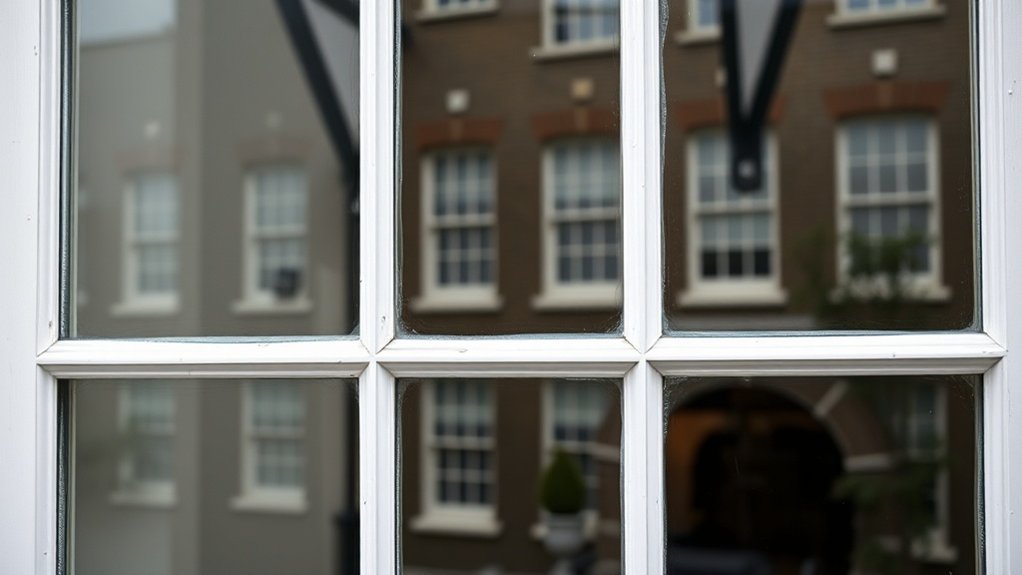
When you’re choosing between Georgian bars and leaded glass in London, you’re deciding how your windows express period character, meet conservation rules, and perform thermally . Georgian bars suit classical façades with rectilinear grids that respect original sash proportions. Leaded glass works better for decorative gables, porches, and side lights, knitting small panes with cames. With slimline double glazing, sensitive repairs, and reversible upgrades, you can keep historic fabric intact while discovering which option best fits your home.
Key insights
- Georgian bars and leaded glass are key heritage features in London homes, shaping façade character, daylight, privacy, and classical or decorative window rhythms.
- For period properties, Georgian bars suit sash windows on primary elevations, while leaded glass often enhances porches, gables, side lights, and decorative panels.
- Conservation-led upgrades in London typically combine like-for-like repairs with slimline double glazing, draught-proofing, and secondary glazing to improve energy efficiency discreetly.
- Any alteration to historic windows in conservation areas or listed buildings usually requires consent, respecting original sightlines, profiles, and glazing patterns.
- London specialists can survey, repair, and replicate Georgian bars and leaded glass using traditional materials and modern performance glazing, avoiding pastiche while meeting current standards.
How Georgian Bars and Leaded Glass Shaped London Homes
Although often treated as mere decoration, Georgian bars and leaded glass fundamentally determined how London homes looked, performed, and aged. When you analyse an elevation, you’re really reading a glazing strategy: bar spacing controls daylight distribution, thermal loss, and façade rhythm. Leaded cames and timber or metal bars imposed structural limits that defined sash proportions and opening patterns.
If you’re pursuing innovation, you still need to respect the artistic craftsmanship that produced these windows. Their historical significance lies not only in aesthetics but in how they mediated privacy, street presence, and internal comfort. By understanding their original section profiles, junctions, and glass types, you can design high‑performance interventions that keep heritage legible while meeting contemporary energy, acoustic, and durability expectations.
Georgian Bars vs Leaded Glass: Key Differences
While they often sit side by side in the same street elevation, Georgian bars and leaded glass solve different technical and visual problems and shouldn’t be conflated. You read Georgian bars as an expression of classical proportion : they divide a sash into rectilinear grids that once reflected the limits of crown and cylinder glass. Their historical significance lies in scale, rhythm, and how they modulate light across a façade.
Leaded glass behaves differently. Here, slender cames structurally knit together many small panes, enabling curves, latticework, and bolder decorative patterns. Its historical significance is tied to ecclesiastical and high‑status domestic glazing, where colour, texture, and iconography matter. You’re not just varying appearance; you’re altering structural logic , light transmission, and material authenticity.
Choosing Georgian Bars or Leaded Glass for Your London Home
Once you understand that Georgian bars and leaded glass do different jobs, you can begin to choose between them in a way that respects both your house and its context. You first identify the building’s period, façade hierarchy , and surviving joinery. In Georgian and early Victorian terraces, you usually favour Georgian bars to retain proportion and rhythm.
You then consider where you want emphasis. Street-facing elevations often demand stricter fidelity to Vintage craftsmanship, while rear or secondary elevations allow more interpretive freedom. Leaded glass suits gables, porches, or side lights where you can articulate pattern without falsifying the main façade.
Finally, you evaluate suppliers’ detailing, ensuring sections, sightlines, and junctions translate historic precedent through Modern innovation , not pastiche.
Balancing Period Charm and Modern Comfort in Your Windows
When you upgrade your windows, you need to retain their historic proportions, sightlines, and glazing patterns while quietly improving thermal performance. You can use sympathetic interventions—such as slimline double glazing, warm-edge spacers, and high-performance seals —to cut heat loss without erasing period character. By treating the original frame, glass layout, and hardware as fixed reference points, you balance authentic appearance with modern comfort and efficiency.
Preserving Historic Window Character
Although double glazing, draught‑proofing, and security upgrades are now standard expectations, you still need to treat Georgian bar and leaded windows as historic fabric rather than mere fittings. You’re not just maintaining glass; you’re safeguarding historical craftsmanship and finely calibrated decorative patterns that define the façade’s hierarchy and rhythm.
To preserve character, you first map what’s original: bar profiles, cames, glass thickness, and irregularities. You then prioritise retention over replacement, repairing joinery and leadwork wherever feasible. When components have failed, you specify like‑for‑like materials and geometries, matching sightlines, rebate depths, and putty lines.
You also document interventions , so future custodians can distinguish original fabric from contemporary insertions without compromising the overall historic legibility.
Enhancing Comfort And Efficiency
Handled carefully, comfort upgrades become an extension of conservation, not a threat to it. You can dramatically improve thermal performance while retaining original sashes, Georgian bars, and leaded lights. Slim-profile double or secondary glazing lets you preserve historic glass where feasible, while reducing draughts and heat loss.
You’ll prioritise detailing: warm-edge spacers, low‑iron glass to preserve colour accuracy, and gas-filled cavities sized to your existing rebates. Specialist films applied to the room-side surface cut UV without flattening reflections or softening decorative patterns.
Ventilation strategies matter too. Trickle vents can be concealed within head rails, maintaining sightlines and historical significance. High-performance perimeter seals, brush piles, and discreet draught-proofing keep frames readable while delivering modern comfort and measurable energy savings.
Materials and Glazing Options for Energy‑Efficient Period Windows
When you choose glazing for Georgian bar or leaded lights, you need to understand how traditional crown, cylinder, and later float glass each perform and read in the frame. You’ll weigh U-values, solar gain, and acoustic control against visual authenticity, waviness, and colour tone so you don’t compromise the period character. By comparing authentic glass types with slimline double or vacuum units, you can specify a solution that respects the original fabric while meeting contemporary energy standards.
Authentic Glass Types Compared
While original Georgian and Victorian windows were almost always glazed with thin, slightly wavy cylinder or crown glass, today you’re typically choosing between historic single glazing , slim-profile double glazing, and, in some cases, specialist laminated or restoration glass to balance authenticity with performance. You’ll notice cylinder and crown glass deliver characteristic distortions and sparkle, ideal where listed-building significance is high.
Restoration glass replicates this refractive quality but allows larger pane sizes and better consistency, suiting Innovative designs that reinterpret Georgian bar patterns. Slim-profile double glazing uses modern techniques—low‑iron outer panes, warm‑edge spacers, inert gas—to keep sightlines close to originals. Laminated glass adds security and acoustic control while accepting applied or true divided Georgian bars, preserving the delicate module of historic elevations.
Balancing Efficiency And Heritage
How do you retain the fine grain of Georgian or Victorian fenestration yet meet modern expectations for comfort and carbon performance? You start by treating the sash as fabric, not fashion. Slim-profile double or vacuum glazing lets you keep narrow glazing bars while radically improving U‑values. You pair this with timber from verified durable species, or thermally broken steel where a refined arris is critical to your interior décor concept.
Low‑iron outer panes preserve visual sharpness; selective low‑e coatings sit internally to avoid cold reflections on historic brickwork. Gas fills and warm‑edge spacers stay visually recessive, protecting historical symbolism expressed in the original pane layout. Secondary glazing, precisely templated, can deliver Passivhaus‑level airtightness without disturbing original boxes or external street elevations.
Planning Rules and Conservation Areas for London Windows
Although London’s streetscapes constantly evolve, window alterations sit under strict planning rules, especially where Georgian bar and leaded glass are present. If your building is listed or in a conservation area, you’ll usually need consent before changing profiles, glazing patterns, or frame materials. Planners assess how proposals affect established sightlines, proportions, and original fabric.
You can still pursue modern aesthetics and security enhancements , but you must demonstrate reversibility, minimal loss of historic fabric, and visual continuity with surviving joinery. Slimline double glazing, restoration-grade putties, and true or applied Georgian bars often pass scrutiny when they replicate original mullion dimensions. Always map your street’s designation, study the relevant Conservation Area Appraisal, and align innovations with documented historic precedent.
Costs, Installation and Choosing the Right Specialist
Because Georgian bar and leaded glass sit at the intersection of craft, regulation, and heritage value, budgeting and contractor choice in London can’t be treated like a standard glazing job. You’ll typically face higher costs than for flat double glazing, driven by hand‑made cames, specialist putties, and time‑intensive on‑site templating.
Request itemised quotes that separate survey, fabrication, installation, and any Historical restoration works. Ask whether costs differ for like‑for‑like replication versus Custom design that reinterprets Georgian proportioning with modern performance glass.
When choosing a specialist, verify PAS and FENSA credentials , but also look for ICON or SPAB affiliations and a portfolio in designated conservation areas. Insist on mock‑ups, precise section drawings, and documented glass specifications before commissioning.
Maintaining and Upgrading Georgian Bars and Leaded Glass
Once you’ve commissioned the right specialist, long‑term performance depends on how Georgian bars and leaded glass are maintained, monitored, and upgraded over time. You’ll need scheduled inspections to track bowing, cracked cames, failed putty, and moisture within sealed units.
Specify Restoration techniques that retain original sightlines: micro‑abrasive cleaning instead of aggressive polishing, targeted solder repairs rather than full recasting, and argon‑filled slimline units where conservation officers accept change. Always document profiles, glazing patterns, and glass composition so any intervention aligns with historical accuracy.
For upgrades, you can introduce discreet secondary glazing , warm‑edge spacers, and ventilated perimeter details to improve U‑values without visually thickening the bars. Insist on reversible methods, so future custodians can adapt the assembly as standards evolve.
Frequently Asked Questions
Can Georgian Bars or Leaded Glass Improve My Property’s Resale Value in London?
Yes, you can improve resale value, especially in period or conservation areas. When you specify Georgian bars or leaded glass with accurate proportions, you reinforce historical authenticity while delivering clear aesthetic enhancement. Buyers seeking character and performance will value high-spec double glazing that mimics traditional profiles. If you integrate low‑iron glass, warm‑edge spacers, and discreet security features, you’ll align heritage appearance with contemporary innovation, broadening market appeal.
Are There Security Advantages to Installing Leaded Glass or Georgian Bar Windows?
You gain modest security enhancements, but they’re not a substitute for modern glazing systems. Properly detailed leaded units can disperse impact energy, offering slight vandal resistance compared to single large panes. Georgian bars, when purely decorative, add negligible strength; when structural within double glazing, they marginally stiffen the unit. For best performance, you’d pair these historically sympathetic treatments with laminated glass, robust frames, and high-spec multi-point locking hardware.
How Do Georgian Bars and Leaded Glass Affect Indoor Noise Reduction in Busy London Streets?
You’ll find they influence sound insulation only indirectly, like a frame around a quiet painting. Georgian bars and leaded cames don’t substantially block street noise themselves; performance depends on glass thickness, cavity depth, and airtightness. If you specify laminated or acoustic glazing within these traditional patterns , you can achieve strong noise reduction while conserving historic character and enabling innovative, retrofit-friendly window systems suited to dense, traffic-heavy London environments.
Can I Integrate Decorative Stained Glass Designs With Traditional Leaded Windows?
You can integrate decorative stained glass designs with traditional leaded windows if you respect structural limits and historical authenticity. You’d design panels using compatible mouth‑blown or restoration glass, maintain original sightlines, and keep lead cames within traditional profiles. This approach preserves load paths and ventilation gaps while showcasing artistic craftsmanship. For innovation, you can add laminated inner panes with UV and thermal control, leaving the external leaded face visually unchanged.
Are There Eco-Friendly or Recycled Materials Available for Georgian Bars and Leaded Glass?
You can specify eco friendly options by choosing recycled materials for both glass and cames. You’ll treat your window like a small urban ecosystem, balancing heritage and innovation. Opt for high‑recycled‑content float glass , lead‑free or low‑lead alloy cames, and reclaimed timber or recycled‑aluminium bars. You can also pair traditional profiles with slimline double glazing and warm‑edge spacers, reducing thermal losses while preserving historically accurate sightlines and proportions.
Summary
When you choose Georgian bars or leaded glass, you’re not just updating windows, you’re shaping London’s streetscape. Historic England notes around 60% of a building’s character comes from its windows and openings, so your decisions really matter. By pairing thin-profile double glazing with accurate bar layouts and leadwork, you protect heritage, cut heat loss, and stay within planning rules. You’re conserving history, improving comfort, and leaving a more energy‑efficient home for the next generation.