
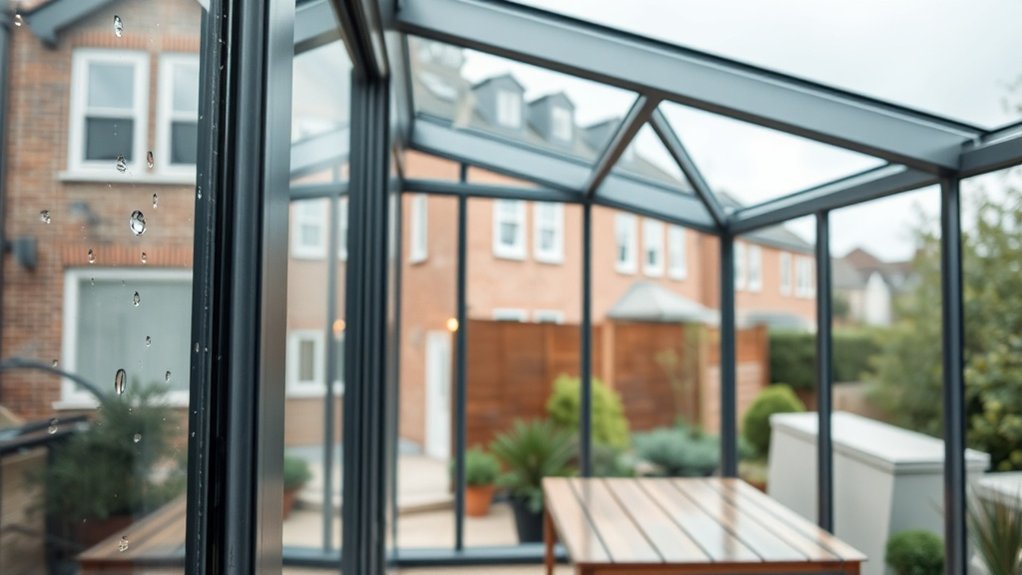
You’re choosing conservatory glazing in London to balance tight plots, heritage rules and urban heat. You’ll need low‑U, solar‑control glass, thermally broken frames and careful roof design to manage glare, overheating and winter losses. Acoustic laminated glazing and airtight detailing cut traffic noise and drafts. In conservation areas, slimline double glazing and discreet seals protect period character while boosting efficiency. Next, you’ll see how to match specific glass types, frame systems and costs to your home.
Key insights
- Choose glazing systems with low U-values, solar-control coatings and argon-filled units to handle London’s variable climate and urban heat island effect.
- Ensure compliance with UK Building Regulations and local planning rules, especially in conservation areas where sightlines, projections and historical character are tightly controlled.
- Select frame materials—uPVC, thermally broken aluminium, timber or hybrids—balancing insulation, durability, appearance and maintenance needs in polluted, high-traffic urban environments.
- Use advanced glass options such as smart-tint, laminated acoustic units and fritted or tinted panes to manage privacy, glare, noise and solar gain.
- Plan for professional installation and regular maintenance, including drainage checks and cleaning, to preserve performance and extend conservatory glazing lifespan in London conditions.
What Makes Conservatory Glazing In London Unique
Why does conservatory glazing in London demand a different specification than almost anywhere else in the UK? You operate in a microclimate of dense urban heat, air pollution, strict planning controls, and constrained plots. Solar gain , noise attenuation, and privacy all need tighter engineering tolerances than suburban sites.
You also face stringent Historical preservation requirements. That means specifying glazing that delivers high U‑values and selective solar control while maintaining period sightlines, reflection levels, and color neutrality. Laminated acoustic units must mitigate transport noise without increasing visible bulk.
Because London’s housing is densely networked, every design choice carries community impact. Glare, overlooking, and night-time light spill must be modelled and limited using advanced coatings, smart-tint glass , and precisely tuned g‑values.
How To Choose The Right Conservatory Glass
When you choose conservatory glass in London’s variable climate, you need to balance low U-values for energy efficiency with effective solar control to cut overheating and glare. At the same time, you should specify coatings, tints, or laminated options that give you the right level of privacy without sacrificing natural light. You’ll also want to assess security and safety performance, prioritising toughened or laminated glass that meets relevant British Standards for impact resistance and forced-entry protection.
Energy Efficiency And U-Values
Ever wondered why some conservatories feel comfortable year‑round while others swing from freezing to overheated? It’s mostly down to U‑values. A U‑value measures how much heat passes through your glazing; the lower it is, the better the insulation. For London’s climate and energy costs, you should target 1.0–1.2 W/m²K for high‑performance roofs and 1.2–1.4 W/m²K for vertical glazing.
Specify insulated glass units with low‑E coatings, argon (or krypton) gas fill, and warm‑edge spacers to cut thermal bridging. Guarantee frames match the glass performance; otherwise you’ll leak heat at the perimeter. Balance energy efficiency with glass aesthetics and glazing durability by choosing coatings that are neutral in tone and applied to toughened or laminated panes for long‑term stability.
Solar Control And Glare
Instead of fighting with blinds and overheating every sunny day, treat solar control as a core design parameter of your conservatory glazing. You’re managing solar gain, visible light, and visual comfort as a single system, not as afterthoughts.
Design around:
- Selective coatings – Specify low‑e glass with tuned solar reflection to reject infrared while transmitting high levels of visible light, preserving daylight clarity.
- G‑value targeting – Use solar control glass with g‑values around 0.3–0.4 to limit heat build‑up in south‑ or west‑facing London conservatories.
- Glare reduction strategies – Combine tint, surface coatings, and orientation analysis to control luminance ratios on screens and work surfaces.
- Layered units – Opt for double or triple glazing that integrates solar control, argon filling, and warm‑edge spacers for thermal and optical optimisation.
Privacy, Security And Safety
Although a conservatory feels like a light, open room, you still need its glazing to deliver robust privacy, security, and safety performance to match a typical London home. Start by addressing privacy concerns with options like switchable smart glass , reflective or tinted coatings, and patterned laminated panes on street‑facing elevations or overlooked boundaries.
For security, specify laminated security glass with multi-layer interlayers and PAS 24‑compliant locking systems; this resists forced entry and holds together when fractured. Safety regulations require toughened or laminated glass in critical locations (doors, low-level glazing, roof panels) to prevent dangerous shards. You’ll also want impact-rated roof units, warm-edge spacers, and secure glazing beads, so the system combines discretion, resilience, and contemporary visual lightness.
Light, Heat And Glare Control In London Conservatories
Because London’s conservatories act as both living spaces and solar collectors, effective control of light, heat, and glare depends on choosing glazing that manages solar gain, visible light transmission, and thermal performance in a balanced way. You must respect surrounding historical architecture while pushing glass sustainability, so every pane should work as an optical, thermal, and comfort-control device.
- Specify selective coatings that admit high visible light while filtering infrared, stabilising temperatures without darkening the space.
- Use graduated glazing: clearer roof zones for daylight, more tinted or coated façades facing south and west.
- Integrate fritted or patterned glass to diffuse harsh sun, reducing contrast ratios on screens and work surfaces.
- Combine internal micro‑louvers or external brise‑soleil with compatible glazing to create dynamic, seasonally responsive shading.
Energy‑Efficient Conservatory Glazing Options
So, when you examine energy‑efficient conservatory glazing in London, you’re really selecting a tuned assembly of low‑emissivity coatings, insulated glass units, and gas fills that minimise heat loss while controlling solar gains across sharply variable seasons. You start by specifying glass with a low U‑value and carefully chosen solar factor, then pair it with warm‑edge spacers and argon or krypton fills to cut thermal bridging at the perimeter.
To integrate with historical architecture, you can combine slim‑profile double or even vacuum‑insulated units with subtly tinted low‑E layers that preserve period sightlines. You also prioritise eco friendly materials: recycled glass content, lead‑free spacers, and sealants with low embodied carbon. Finally, you validate performance via whole‑conservatory thermal modelling before committing.
Noise‑Reducing Conservatory Glazing For Busy London Streets
When your conservatory faces a busy London street, noise‑reducing glazing becomes a precision engineering task rather than a simple glass swap. You’re designing an acoustic envelope that targets traffic, sirens, and low‑frequency vibration without sacrificing daylight or aesthetics.
- Laminated acoustic glass – Use asymmetric laminate thicknesses and specialist interlayers to disrupt sound waves and maximise acoustic insulation across varied frequencies.
- Optimised cavity depth – Specify different pane thicknesses and 14–18 mm gas cavities to detune resonance and cut low‑frequency road noise.
- High‑performance seals – Deploy continuous compression gaskets and acoustic sealants to eliminate flanking paths around sashes and beads.
- Smart window tinting – Integrate spectrally selective window tinting that reduces solar gain while preserving clarity, enabling calmer, cooler, quieter conservatory environments.
Frame And Roof Choices That Affect Your Conservatory Glazing
When you plan your conservatory in London, you need to treat frame materials, roof style, and glazing type as a single integrated system. You’ll compare options such as uPVC, aluminium, and timber framing with polycarbonate, glass, or solid roofs to balance structural performance, light transmission, and acoustic control. At the same time, you must assess U‑values, thermal breaks, and solar control coatings to optimise year‑round energy efficiency and reduce heating and cooling loads.
Comparing Frame Materials
Although glazing often gets most of the attention, the performance of a London conservatory ultimately depends just as much on the frame and roof structure you pair it with, because these components dictate thermal efficiency, structural integrity, weather resistance , and long‑term maintenance. When you compare frame materials, you’re balancing frame durability, Material aesthetics, insulation, and sustainability under London’s demanding climate.
- uPVC – Low‑maintenance, cost‑efficient, strong insulator; limited profiles but improved colour‑stable foils.
- Aluminium – Slim sightlines, high strength, excellent spanning; add thermal breaks and aerogel inserts for top U‑values.
- Timber – Outstanding natural insulation and aesthetics; specify engineered, factory‑finished sections for stability and longevity.
- Hybrid (Aluminium‑clad Timber) – Timber core for performance, external aluminium for protection; ideal when you want sharp lines without sacrificing warmth.
Roof Styles And Glazing
Frame choices set the performance baseline, but the roof style and glazing you specify ultimately determine how a London conservatory handles heat gain, winter losses, noise, and weathering. You’ll typically compare lean‑to, Victorian, Edwardian, and lantern roofs; each dictates pitch, drainage efficiency, and structural loading, which then constrains pane size, mullion spacing, and vent placement .
Specify high-spec toughened or laminated units on exposed pitches to manage impact and acoustic loads. Use selective glass coatings to tune solar transmittance and glare while maintaining daylight quality. You can integrate decorative patterns via etched or fritted glass to control direct sun on worktops or seating zones without heavy tinting. Combine fixed and opening rooflights strategically to optimise natural stack ventilation and maintenance access.
Energy Efficiency Considerations
Why does one London conservatory feel temperate and efficient while another with similar glazing constantly overheats or leaks warmth? The difference usually lies in frame conductivity, roof specification, and how precisely you tune components to London’s mixed climate.
- Frame materials – Specify thermally broken aluminium or engineered composites; they sharply cut linear thermal bridging versus basic uPVC or solid aluminium.
- Roof build-up – Use insulated rafters, warm-roof construction, and low‑U‑value panels; verify independently via energy labeling, not marketing claims.
- Solar control – Deploy selective coatings and glazing tinting that reduce solar gain while preserving visible light transmission and daylight quality.
- Airtightness and detailing – Design gasket systems, junction tapes, and drainage paths to minimise infiltration, prevent condensation, and stabilise operative temperatures year‑round.
Planning Rules And Building Regs For London Conservatories
When you plan a conservatory in London, you need to align the design and glazing specification with both national Planning Permission rules and the Building Regulations that local boroughs enforce. You’ll assess volume limits, projection from the rear elevation, and relationships to historical architecture, ensuring the structure remains “permitted development” where possible.
You must specify compliant U‑values, safety glass in critical zones, and robust fixing details to satisfy Parts L, K, and A. Roof glazing , opening lights, and conservatory accessories such as integrated blinds or roof vents can’t compromise thermal performance or safety. You should also confirm drainage, thresholds, and junctions with the existing envelope meet regs, documenting calculations and manufacturers’ data to streamline sign‑off with building control.
Glazing For Period Vs Modern London Homes
When you specify glazing for a London conservatory, you must respect the original architectural details in period homes while using bolder, cleaner lines in modern properties. You’ll need to balance thermal performance—U-values, g-values, and acoustic control—against sightline thickness, sash profiles, and frame proportions so the new structure reads correctly with the host building. At the same time, you must work within conservation and listed-building constraints, securing any required planning approvals before committing to glass type, frame system, and installation method.
Respecting Original Architectural Details
Although glazing performance is crucial, you also have to align any new conservatory glass with the architectural language of your London property, whether it’s a Victorian terrace in Islington or a contemporary infill in Shoreditch. You’re not just inserting glass; you’re curating Historical preservation and aesthetic harmony while upgrading the envelope.
To respect original architectural details, you should:
- Specify sightlines that echo existing sash or steel profiles, using slimline thermally broken frames where possible.
- Match glazing module sizes and rhythms to original bays, transoms, and mullions to avoid visual discontinuity.
- Select coatings, tints, and edge treatments that align with established façade colours, metals, and masonry.
- Integrate discreet structural solutions—concealed fixings, frameless corners, and flush thresholds—to deliver innovation without visual noise.
Balancing Thermal Performance
Even as you prioritise period-appropriate detailing , you still need to engineer the conservatory glazing to hit demanding thermal targets that differ sharply between London’s heritage stock and newer builds. In Victorian or Edwardian homes, you’ll often pair slimline double glazing with warm-edge spacers and low-iron glass to enhance clarity while discreetly upgrading thermal insulation.
In modern properties, you can push performance harder, specifying triple glazing with low‑E coatings , argon or krypton fill, and thermally broken aluminium or composite frames to minimise linear heat loss. Across both contexts, you should model whole-assembly U‑values, solar gain (g‑values), and condensation risk. Prioritise glazing durability through toughened or laminated panes, robust edge seals, and coatings engineered to resist London’s pollution and UV exposure.
Planning Rules And Approvals
Beyond targeting U‑values and solar control, you also have to design glazing that satisfies London’s layered planning and building control requirements, which differ markedly between period and modern homes. Conservation officers scrutinise visual impact , section thickness, and interface details as closely as performance data, so you must evidence both Historical aesthetics and material durability.
- Check designation – Confirm if you’re in a conservation area, on a listed building, or subject to an Article 4 Direction before fixing any glazing concept.
- Heritage glazing strategy – For period homes, specify slimline double glazing, putty‑line profiles, and colour‑matched frames.
- Modern fabric-first approach – Leverage larger spans, structural glass, and advanced coatings within Part L limits.
- Documentation pack – Submit 3D visuals, section details, and performance specs to pre‑empt refusals.
Conservatory Glazing Costs, Lifespan And Payback In London
When you plan or upgrade conservatory glazing in London, you’re weighing three tightly linked factors: upfront cost, realistic lifespan in an urban climate, and how quickly energy savings and added usability will pay you back. uPVC double glazing, high-spec triple glazing, solar-control glass, and advanced polycarbonate all sit at different price points, with installation complexity, roof pitch, and access in tight London plots often driving labour costs as much as the materials themselves.
You’ll typically see 20–30 years from quality double glazing, 30–40 from triple or hybrid glass roofs, and 15–20 from high-grade polycarbonate. To accelerate payback, prioritise low-U-value units, warm-edge spacers, and argon fills. In conservation zones, balance Historical preservation with discreet glazing innovations—like slimline, low-iron units—to retain character while optimising thermal performance .
Maintenance, Cleaning And Long‑Term Performance Of Conservatory Glazing
Although the right specification sets the foundation, long‑term performance of conservatory glazing in London depends on disciplined maintenance and methodical cleaning tailored to glass type , frame material, and local pollution levels. You’re managing a micro‑climate; if you let contaminants accumulate, you’ll shorten glass durability, compromise coatings, and stress seals.
- Define maintenance schedules: Quarterly inspections, bi‑monthly cleaning near main roads, annual sealant and gasket review.
- Use compatible cleaning chemistry: pH‑neutral agents for self‑cleaning coatings, non‑abrasive cloths, de‑ionised water to avoid mineral spotting.
- Monitor drainage and ventilation: Clear gutters, weep holes, and rafters so moisture doesn’t overload edge seals and spacer bars.
- Track performance data : Note condensation events, dirt patterns, and thermal discomfort; adjust ventilation, shading, or cleaning frequency to optimise long‑term performance.
Choosing A London Conservatory Glazing Specialist
Precisely selecting a London conservatory glazing specialist determines whether your design intent, U‑values, and long‑term performance actually materialise on site. You’re not just hiring an installer; you’re commissioning a building‑physics partner . Prioritise practices that model solar gain, glare, and thermal bridges, and can evidence compliance with London Plan energy policies.
Interrogate their track record integrating glazing with garden design and interior lighting strategies. Ask how they optimise glass specification, coatings, and g‑values to balance daylight autonomy with summer overheating control. Demand section details that show drainage, vapour control, and movement joints, not just glossy visuals.
Insist on manufacturers’ accreditation, IGU warranties, and documented installation QA. Finally, choose a team that prototypes junctions and embraces digital tools—BIM, thermal simulations , dynamic shading control.
Frequently Asked Questions
Can I Install Self-Cleaning Conservatory Glass Myself or Is Professional Fitting Essential?
You can attempt DIY installation, but professional fitting’s strongly advisable. Self-cleaning conservatory glass needs exact tolerances, correct coating orientation, and compatible sealants to preserve its hydrophilic layer. You must manage structural loading, thermal expansion, and watertight junctions with existing frames. A pro will use calibrated lifting gear , laser alignment, and manufacturer-approved fixings, ensuring warranty validity, ideal self-cleaning performance, and long-term energy efficiency that DIY work may compromise.
How Does Conservatory Glazing Affect My Home’s Resale Value in London Boroughs?
You boost resale value when glazing measurably improves thermal performance, daylight, and aesthetics. In innovation‑driven London boroughs, buyers scrutinise U‑values , solar gain, and acoustic ratings. If your glazing upgrades Home insulation and Energy efficiency, agents can justify higher EPC bands and premiums, especially in zones with strict planning or green‑home incentives. Specify low‑e coatings, warm‑edge spacers, argon fills, and self‑cleaning glass to differentiate your property in competitive micro‑markets.
Are There Eco-Friendly or Fully Recyclable Glazing Options for London Conservatories?
You’ve got more eco-friendly materials than stars in the sky. You can specify low‑iron double or triple glazing with argon or krypton fill, warm‑edge spacers, and low‑E coatings to cut U‑values dramatically. For fully recyclable options, use aluminium or steel frames with mechanically fixed units, laminated glass with recyclable interlayers, and silicone‑free gaskets. You’ll reduce embodied carbon, simplify end‑of‑life recovery, and keep performance at cutting‑edge levels.
What Insurance Considerations Apply Specifically to Conservatory Glazing Damage or Failure?
You need to confirm if your policy treats glazing as part of the main structure or as “specified items,” because that governs Insurance claims for breakage or failure. Check exclusions for seals, gradual deterioration, and non-standard materials. Make certain liability coverage addresses falling glass or panel blow-out injuring third parties. Validate storm and impact perils, installer guarantees, and any higher excess for specialist glass systems or innovative glazing technologies you’re adopting.
Can I Integrate Smart Glass or Switchable Privacy Glazing Into an Existing Conservatory?
You can retrofit smart glass or switchable privacy glazing into most existing conservatories, provided the frame profiles and structural loads are compatible. You’ll first evaluate wiring routes, transformer locations, and control integration (switch, app, or BMS). Smart glass benefits include dynamic solar control, UV reduction, and lower cooling demand. Privacy glazing options range from PDLC film laminates to full IGU replacements, each with distinct performance, cost, and installation complexity.
Summary
When you get conservatory glazing right in London, you turn a temperature‑swinging add‑on into a high‑performance living space. By weighing U‑values, g‑values , acoustic ratings and heritage constraints, you balance light, heat, noise and cost for your postcode and property type. Remember, “the devil’s in the detail”: specify carefully, model performance, and partner with a proven London glazing specialist so your conservatory works efficiently, quietly and comfortably, year‑round.