
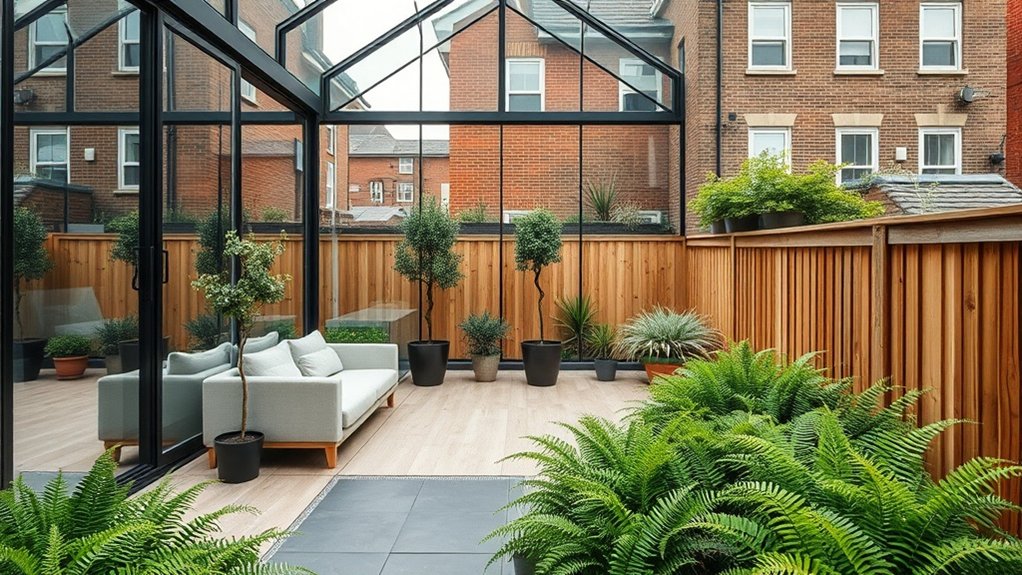
When you design garden room glazing in London, you balance U‑values (target ≤1.2 W/m²K), solar control, and privacy with strict planning and boundary rules. You’ll choose frame materials (aluminium, timber, composite) and high‑performance glass (low‑E, solar control, laminated, acoustic) to cut heat loss, reduce noise, and avoid overheating. Correct orientation, shading, and airtight installation keep the space comfortable and compliant year‑round, and the next sections show you how to get each decision right.
Key insights
- Choose high-performance double or triple glazing (U-value ≤1.2 W/m²K) with low‑E coatings and argon fill to improve energy efficiency and comfort in London’s climate.
- Use thermally broken aluminium, timber, or composite frames with warm-edge spacers to reduce condensation, heat loss, and cold bridging in garden rooms.
- Plan glazing orientation and shading (overhangs, external blinds) to maximise daylight and views while controlling overheating and glare, especially on south-facing London plots.
- Check London planning and permitted development rules for large glass elevations, boundary distances, and privacy impacts on neighbouring properties before final design.
- Appoint certified local installers experienced in structural and floor‑to‑ceiling glass, requesting wind-load calculations, thermal-bridge modelling, and detailed, itemised quotes.
Key Decisions for London Garden Room Glazing
Before you choose glazing for a London garden room, you need to pin down a few critical variables that drive performance, cost, and compliance: orientation and exposure, thermal efficiency (U-values and solar gain), acoustic control , frame systems, and planning or building regulation constraints.
You then balance daylight with overheating risk, specifying low‑g solar control glass on south and west elevations while preserving visible light transmission. For thermal performance, you’ll likely target sub‑1.0 W/m²K with argon-filled double or triple glazing and warm-edge spacers.
Factor in acoustic laminates if you’re near rail lines or arterial roads. Plan plant integration using shelves, green walls, or external shading so foliage cools the envelope without blocking winter gain, and embed wildlife considerations—bird-safe patterns, limited light spill, and secure ventilation gaps.
Glazing Styles for London Garden Rooms
When you choose glazing styles for a London garden room, you’re balancing daylight, thermal performance, and usability. Floor-to-ceiling glass maximizes solar gain and views, but you’ll need to specify low‑g‑value coatings, appropriate U‑values, and shading strategies to control overheating. Sliding and bi‑fold doors then determine how you manage access, ventilation, and spatial flow, so you should assess track systems, threshold details, and panel configurations for your footprint and usage.
Floor-To-Ceiling Glass
Although it looks minimalist, floor-to-ceiling glass is one of the most technically demanding glazing options for a London garden room. You’re effectively creating a transparent wall, so you must integrate structural calculations, thermal performance, and privacy strategies from the outset. Specify high-performance window coatings to control solar gain, reduce glare, and improve U-values without dulling natural light.
You’ll also want to evaluate laminated or toughened panes, hidden frame systems, and precise tolerance detailing to handle wind load and building movement. Decorative patterns—acid-etched bands, fritted designs, or laser-printed motifs—can introduce privacy and solar control while preserving a contemporary aesthetic. Coordinate sightlines, mullion positions, and junctions with floors and ceilings so the glass reads as a continuous, engineered surface.
Sliding And Bi-Fold Doors
Even in compact London plots , sliding and bi-fold doors can turn a garden room into a flexible, indoor–outdoor space while still meeting demanding performance criteria. You can specify thermally broken aluminium systems with low-U-value double or triple glazing, ensuring comfort in both winter and summer.
For sliding doors, focus on slim sightlines, high-performance seals, and precision tracks with low-threshold or flush detailing to maintain level access. Bi-folds suit wider openings where you want a near-complete clear span; ensure robust hardware, tested cycle performance, and multipoint locking.
You can tailor aesthetics through RAL color options, dual-colour frames, and integrated decorative patterns in the glass, such as etched bands or reeded textures, to enhance privacy while preserving daylight and visual lightness.
Light, Privacy and Views in London Garden Rooms
Whether you’re creating a workspace, studio or quiet retreat, light, privacy and views in a London garden room depend on how you specify and position the glazing. You start by modelling solar gain and Natural lighting : orient major panes to the south‑east or south‑west, then fine‑tune with overhangs, fins or external blinds to control glare and overheating.
Use high-performance, low‑iron glass for clarity toward the garden, and obscure, fritted or switchable glass as privacy solutions facing neighbours. Combine fixed picture windows at seated eye level with higher clerestory strips to draw light deeper into the plan while shielding overlooking. Integrate deep reveals, integrated blinds-in-glazing, and strategic planting to create layered privacy without sacrificing long, uninterrupted sightlines to greenery.
Planning Rules for Glazed Garden Rooms in London
Careful glazing design only pays off if your London garden room complies with planning rules and building regulations from the outset. You’ll need to verify height, footprint, and proximity to boundaries, especially where large glass elevations face neighbours or highways. Rooflights, sliding walls, and plant integration features must still respect overlooking and privacy constraints.
To keep your concept visionary but compliant, focus on:
- Minimising perceived bulk with slim frames while staying within “permitted development” limits.
- Positioning glazing to avoid direct sightlines into neighbouring windows or gardens.
- Coordinating drainage, thresholds, and weatherproofing solutions to satisfy building control.
- Preparing accurate drawings and specifications that quantify glass areas, structural supports, and access.
This approach lets you innovate confidently without triggering enforcement.
Energy-Efficient Garden Room Glazing in London
Although a glazed garden room can lose heat quickly if it’s poorly specified, you can achieve high thermal performance by treating the envelope as rigorously as a low‑energy extension. You start with a continuous thermal line: high‑spec roof insulation, insulated floor slab, and carefully detailed junctions to eliminate cold bridges.
To optimise winter gains without summer overheating, you model solar exposure for your plot and tune glass area, orientation, and shading accordingly. In London’s dense context, you may need dynamic control : external blinds, brise‑soleil, and advanced window tinting that selectively reduces solar gain while preserving visible light.
You then integrate airtightness strategies with mechanical background ventilation, ensuring the garden room performs efficiently, not just looks transparent.
Frame Materials and Glass Options for London Garden Rooms
When you select glazing for a London garden room, you need to match the right frame material with the appropriate glass specification to balance thermal performance, durability, and maintenance. You’ll compare aluminium, timber, and composite frames regarding energy efficiency, structural stability, and suitability for large glazed areas. You’ll also assess glass options—such as low‑E, solar control, laminated, and acoustic units—to control heat gain, heat loss, security, and noise.
Comparing Frame Materials
Because the frame defines both performance and appearance, choosing between aluminium, uPVC, engineered timber, and composite systems for a London garden room means weighing structural stability , thermal efficiency, maintenance demands, and budget in tandem. Aluminium delivers slim sightlines ideal for decorative glass or tinted glazing, plus excellent dimensional stability for large sliders. uPVC offers strong U-values at low cost, but bulkier profiles. Engineered timber gives warm tactility and precise machining, yet needs disciplined finishing cycles. Composites fuse aluminium’s rigidity with timber’s insulation.
You’re not just comparing materials; you’re engineering an atmosphere:
- Slim profiles that dissolve boundaries with your garden
- Tactile frames that feel crafted, not generic
- Finishes that still look sharp in ten winters
- Systems aligned with low‑carbon ambitions
Glass Performance Choices
Once you’ve pinned down the frame, the next major performance lever in a London garden room is the glass specification itself: double or triple glazing, low‑E coatings , solar control layers, gas fills, and spacer technologies all interact to shape thermal comfort, glare, condensation risk, and running costs.
You’ll typically target low U‑values (≤1.2 W/m²K) and a balanced g‑value: high enough to harvest winter gains, low enough to prevent summer overheating under London’s increasingly intense sun. Warm‑edge spacers and argon or krypton fills reduce edge losses and condensation on humid mornings.
If you’re working in a conservation area or pursuing historical aesthetics , specify slimline units with period‑faithful decorative glass, pairing them with high‑performance coatings to avoid compromising efficiency.
Year‑Round Comfort in London Garden Room Glazing
Although a garden room is often treated as a seasonal luxury, the right glazing specification turns it into a stable, year‑round living space that resists London’s damp winters and variable summers. You prioritise thermal balance , glare control, and humidity management so comfort feels engineered, not accidental.
Design your envelope so it supports advanced plant selection and discreet irrigation systems without condensation or cold spots that stress roots and materials.
- Feel the quiet insulation as acoustic laminate cuts city noise to a soft backdrop.
- Sense radiant‑cold eliminated by low‑emissivity coatings and warm‑edge spacers.
- Enjoy stable humidity as trickle vents and controlled openings purge moist air.
- Experience visual comfort as solar‑control glass filters harsh sun yet preserves garden views.
Costs, Installation and London Garden Room Glazing Specialists
Year‑round comfort only delivers value if the glazing you specify is cost‑effective to buy, install, and maintain in London’s real‑world conditions. You’ll balance upfront costs of high‑performance units against lifetime energy savings, reduced condensation risk, and minimal glazing maintenance.
Start with a clear performance brief: target U‑values, g‑values, acoustic attenuation, and security class, then request itemised quotations separating glass, frames, installation, and ancillary works. Insist on certified installers experienced with complex junctions, airtight tapes, warm‑edge spacers, and structural glass where garden room aesthetics are critical.
London specialists should offer wind‑load calculations, thermal‑bridge modelling, and warranty-backed installation. Verify they schedule post‑installation inspections, provide cleaning and sealant protocols, and can retrofit upgrades as glazing technology advances.
Frequently Asked Questions
Can Garden Room Glazing Increase the Resale Value of My London Property?
Yes, it can. When you specify high‑performance glazing, you enhance energy efficiency, which directly improves your EPC rating and overall market appeal. You’ll also mitigate privacy concerns by using selective coatings, smart glass, or frosted sections without sacrificing daylight. If you integrate solar-control layers, thermally broken frames, and acoustic laminates, you create a technically superior space that signals innovation to buyers, supporting a measurable uplift in your London property’s resale value .
How Does Glazing Perform Against Typical London Traffic and Aircraft Noise?
You’ll find high-spec glazing handles London traffic and aircraft noise effectively through advanced noise insulation. Multi-layer laminated units , gas-filled cavities, and asymmetric pane thickness disrupt sound waves, sharply reducing dB penetration. To maintain performance, you’ll specify high acoustic ratings (Rw + Ctr), thermally broken frames, and precision seals. Glass durability remains high: toughened or laminated panes resist impact, thermal stress, and weathering, ensuring long-term acoustic and structural stability.
What Insurance Considerations Apply to Highly Glazed Garden Rooms in London?
You treat highly glazed garden rooms like a precision prototype: you’ve protected the circuit, now you must insure the casing. You’ll need insurance policies that explicitly cover structural glass, seals, and frames, with glazing durability validated by BS/EN standards and installer warranties. Confirm storm, impact, subsidence, and theft cover, plus higher rebuild costs for bespoke units. Ask your insurer to record glass specs, fixing methods, and U‑values to avoid underinsurance disputes.
Are There Security or Alarm Systems Tailored to Glass‑Heavy London Garden Rooms?
You can specify security technology built specifically for glass‑heavy structures. Use perimeter shock and acoustic glass‑break sensors on each glazed elevation, combined with discreet reed switches on doors. Integrate PIRs with pet‑immune logic to avoid false alarms. For alarm integration, select a Grade 2 EN50131 system with IP/GSM communicators, tying into smart locks, lighting, and CCTV analytics. You’ll then manage and audit everything via encrypted cloud or local automation hubs.
How Does Glazing Impact Natural Ventilation Strategies in London Garden Rooms?
Glazing directly shapes how you design natural ventilation: large panes boost daylight penetration but can restrict cross‑flow if you don’t integrate opening lights, trickle vents , or louvred sections. You’ll balance thermal efficiency with purge ventilation by zoning fixed and operable panels, using high‑level openings for stack effect, and specifying low‑g or solar‑control coatings. You then pair this with controllable vents and smart actuators for responsive, low‑energy airflow management.
Summary
When you choose garden room glazing in London, you’re not just picking glass – you’re engineering a liveable micro‑climate. Balance U‑values, solar gain, and ventilation so the space performs in every season. Align frame materials, glass specs and shading with local planning rules and your privacy needs. Then appoint a specialist installer who understands London conditions. Do this, and your garden room stops being an add‑on and becomes a precision‑designed extension of your home.