
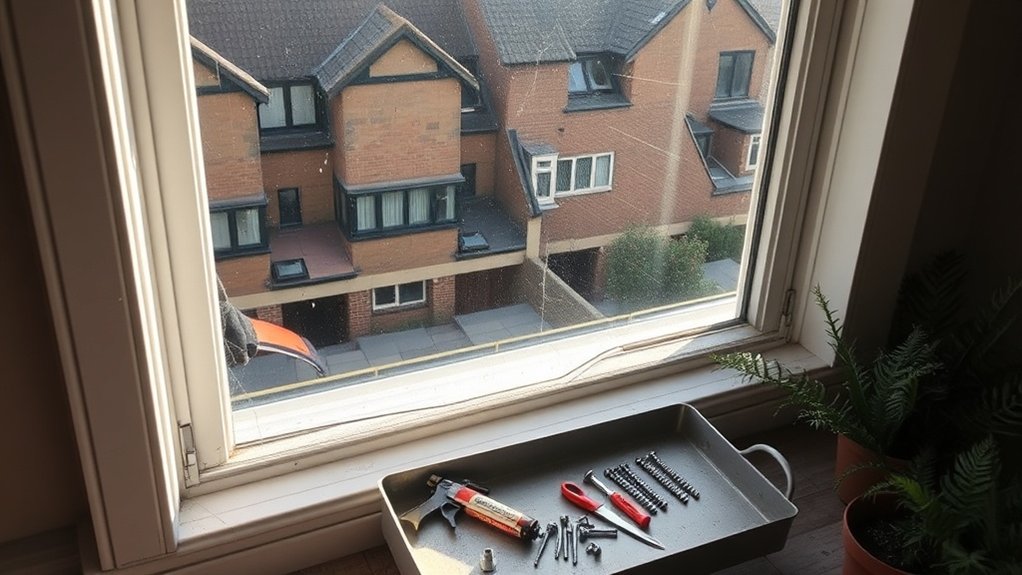
You should repair conservatory windows in London as soon as you spot misting between panes , draughts, leaks, or cracked glass, because the city’s damp, variable climate quickly worsens failed seals and warped frames. A specialist will diagnose issues, reseal gaskets and perimeters, replace failed double-glazed units, and adjust hinges and locks to restore airtightness and thermal performance. Understanding repair options, costs, and when replacement or refurbishment is smarter helps you choose the most efficient solution next.
Key insights
- Identify common issues like misted glass, draughts, leaks, and cracked panes early to avoid more costly conservatory window repairs in London’s damp climate.
- Have frames, seals, and drainage channels professionally inspected to distinguish between simple resealing, glass-unit replacement, or full frame upgrades.
- Repair costs vary by frame material (uPVC, aluminium, timber), glass type, and access difficulty; request itemised quotes for labour, materials, and waste removal.
- Consider upgrading failed or outdated glazing to low‑E, argon‑filled units with warm‑edge spacers for better insulation and reduced heating bills.
- When scaffolding or access equipment is needed, combine minor repairs and seal upgrades in one visit to minimise disruption and overall cost.
Spotting Early Signs Your Conservatory Windows Need Repair
How quickly can minor imperfections in your conservatory glazing turn into costly structural issues? You start by running a systematic visual survey. Inspect each pane for micro-cracks , edge chipping, and delamination around spacer bars. Use a straightedge to detect subtle bowing in frames that can precede seal failure. Check gasket compression; if it’s uneven or brittle, you’re losing performance.
Look for fogging between panes, capillary moisture at bead junctions, and staining behind decorative window treatments that may conceal leaks. Test opening lights for racking by measuring diagonal dimensions. Listen for creaks when you operate vents; they indicate stressed fixings . In historical conservation contexts, compare current sightlines and putty profiles with archive photos to spot movement or unauthorised alterations early.
Common Conservatory Window Problems in London
When you assess common conservatory window faults in London, you should focus on draughts and heat loss, condensation and mould growth, and any cracks, chips, or leaks in the glazing or seals. You’ll need to identify the exact entry points of cold air, the sources of excess moisture, and the locations where the glass or frame has physically failed. By classifying each issue correctly, you can specify precise repair methods, from resealing and replacing gaskets to repairing or changing damaged panes.
Draughts And Heat Loss
Although conservatories are designed as bright, insulated spaces, draughts and heat loss are among the most common performance failures in London installations. You often inherit frames with historical design features or decorative glass panels that weren’t engineered for today’s thermal standards. To diagnose losses, you should map air paths and thermal bridges rather than just “feel for cold spots”.
Focus on:
- Perimeter sealing at frame-to-wall junctions, especially around bay returns and sill interfaces
- Glazing performance , including failed double‑glazed units, edge seals, and spacer technologies
- Opening lights, hinge geometry, and locking compression on casements and roof vents
Upgrade strategies include retrofitting warm‑edge spacers, low‑emissivity coatings, and thermally broken aluminium or composite frames, while preserving visible sightlines so your conservatory gains efficiency without sacrificing character.
Condensation And Mould Growth
In a glazed structure that regularly swings between cold London nights and heated interiors, condensation on conservatory windows isn’t just an irritation; it’s a moisture-loading problem that drives mould growth, frame decay, and seal failure. You need to manage three variables: surface temperature, indoor humidity, and air movement.
First, specify high-performance units with warm-edge spacers and low‑emissivity coatings to keep inner panes warmer. Integrate controllable trickle vents and low-noise mechanical extract to purge humid air at source.
Next, deploy solar shading strategically: external louvres or smart films limit radiant cooling and reduce dew-point contact on glass. Where you use decorative glazing, ensure it’s ventilated behind and fully sealed at edges, because capillary moisture in textured or leaded sections accelerates mould colonisation.
Cracks, Chips And Leaks
Exposed to impact, thermal movement, and wind‑driven rain, conservatory windows in London frequently develop hairline cracks, edge chips , and perimeter leaks that compromise both structural performance and weather‑tightness. You should treat even minor defects as stress concentrators that can propagate under cyclic loading.
Prioritise a structured inspection. Check:
- Glass edges, especially around decorative glazing features.
- Sealant lines at frames, rafters, and cill junctions.
- Drainage channels and weep holes for blockages.
For cracks and chips, specify toughened or laminated replacements, then integrate window tinting to manage thermal gain and reduce future expansion‑related stress. When addressing leaks, remove failed sealant, clean substrates to bare material, and apply a compatible, high‑modulus silicone or hybrid polymer. Always pressure‑test joints with controlled hose‑water to verify watertightness before reinstating trims.
How London’s Climate Affects Conservatory Windows
Because London’s climate combines frequent rainfall, high relative humidity, and fluctuating temperatures, conservatory windows experience accelerated wear that you must manage proactively. Moisture cycles drive seal failure , frame movement, and misted units. You should monitor perimeter seals, drainage channels, and spacer bars for early signs of stress and delamination.
Thermal gradients are another critical factor. Sudden temperature swings between heated interiors and cool, damp exteriors create expansion–contraction fatigue in glass and uPVC or aluminium frames. Specify low-emissivity units and consider window tinting to reduce solar gain, thereby stabilising internal surface temperatures. Decorative glazing isn’t just aesthetic; patterned or laminated options can diffuse light, lower thermal shock risk, and improve structural resilience while still maximising London’s limited natural daylight.
Choosing Whether to Repair or Replace Conservatory Windows
You should first carry out a structured inspection of the existing frames, checking for rot, corrosion, warping, failed seals, and structural movement. Next, you need to prepare a cost-benefit repair analysis that compares labour, materials, expected lifespan extension, and potential future failure risks against the price of full replacement. Finally, factor in energy efficiency by quantifying current heat loss, glazing performance (U-values, G-values), and potential savings from upgraded units before you decide to repair or replace.
Assessing Existing Frame Condition
Before deciding between repair and replacement, start by systematically evaluating the structural integrity of the existing conservatory frames, focusing on load-bearing members , joints, and interfaces with the base and roof. Probe frames with a screwdriver to detect hidden rot or corrosion, and use a spirit level or laser to check for racking or settlement. Inspect drainage paths and seals where frames meet sills and the roof ring beam.
Prioritise:
- Structural performance: deformation, movement, or failed fixings.
- Environmental resistance : moisture ingress, condensation, thermal bridging.
- Future adaptability: suitability for advanced glazing, smart ventilation, or selective glass replacement.
Finally, assess frame aesthetics: surface pitting, UV chalking, discoloration, and profile distortion. If the base frame geometry’s sound, you can often upgrade hardware, seals, and glazing while retaining the existing framework.
Cost-Benefit Repair Analysis
Once you’ve confirmed the frame’s structural condition, start a cost-benefit analysis that compares targeted repairs against full or partial replacement on a lifecycle basis rather than upfront price alone. List all defects, quantify their impact, and obtain line-item costs for hardware, seals, and glazing adjustments versus new units.
Assign a service-life estimate to each option, then calculate annualised cost: total installed cost divided by expected remaining years. Factor disruption to garden aesthetics and interior decor: will a partial upgrade create visual discontinuity in sightlines, frame profiles, or sight-to-planting relationships?
You should also price secondary impacts such as access equipment, internal finishes reinstatement, and future maintenance intervals. If repair costs exceed roughly 60–70% of a high-spec replacement, long-term value typically favours upgrading.
Energy Efficiency Considerations
Although structural integrity determines whether a window can be saved, energy performance often decides whether it’s worth it. You should first quantify thermal losses by checking U‑values, visible drafts, and edge condensation. If double‑glazed units show misting , their insulating cavity’s already compromised, and replacement becomes more efficient than repair.
Use these criteria to guide your decision:
- If frames are sound but solar gain is excessive, specify advanced window tinting or solar control films instead of full unit replacement.
- If you’ve single glazing or early double glazing, upgrading to low‑E, argon‑filled units typically delivers superior payback.
- If thermal imaging reveals cold bridges around frames, prioritise re‑sealing, warm‑edge spacers, and insulated trims before committing to new glass.
Conservatory Window Repair Costs in London
Several key variables determine conservatory window repair costs in London, and understanding them lets you budget accurately and avoid unexpected overruns. You’ll first assess frame material : uPVC repairs usually sit at the lower end, while aluminium and timber demand higher labour time and specialist coatings. Next, calculate glass type and thickness; acoustic or solar-control units aligned with your garden design or interior decorating scheme typically cost more than standard float glass.
Factor in access complexity: upper-level, tight-terrace, or roof-adjacent elevations require additional safety equipment and labour. London’s labour rates vary by postcode and accreditation level, so you should obtain itemised quotations separating materials, labour, and waste disposal. Finally, consider integrating minor upgrades simultaneously to amortise scaffold, access, and call-out fees.
Repairing Misted or Failed Double-Glazed Units
When you see condensation or fogging between the panes of your conservatory’s double glazing, you’re usually dealing with a failed edge seal or compromised spacer bar that’s allowed moisture to penetrate the unit. To address this correctly, you’ll first identify the underlying cause—such as seal degradation, improper drainage, or frame movement—because that will determine whether targeted repair is viable or a full unit replacement is more cost‑effective. Next, you’ll compare options like resealing, replacing the glass unit within the existing frame, or upgrading to higher-spec double glazing, considering U‑values, gas fill, and warranty coverage.
Causes Of Misted Units
Because a misted conservatory unit usually indicates a breakdown in the sealed system, you need to understand exactly how and why that failure occurs before deciding on a repair strategy. Moisture infiltrates the cavity between panes when edge seals or spacer bars lose integrity. UV exposure , thermal cycling, and movement of large roof spans all accelerate degradation, especially in units with decorative glass or window tinting that generate higher surface temperatures.
You’ll typically trace misting to:
- Micro‑cracks or shrinkage in perimeter sealant allowing vapour ingress
- Failure of desiccant within the spacer, which becomes saturated and stops absorbing moisture
- Frame distortion or poor drainage, keeping seals in constant contact with standing water and pollutants, gradually eroding the sealed unit’s barrier function
Repair And Replacement Options
Although a misted conservatory unit often looks like a simple cosmetic issue, you’re really choosing between three distinct routes: restorative repair of the existing sealed unit, partial refurbishment of the glazing assembly (gaskets, beads, drainage), or full replacement of the double‑glazed unit with a new IGU (insulating glass unit).
With restorative repair, a specialist drills micro‑vents, evacuates moist air, injects desiccant or anti‑fog agents, then reseals. This extends life but doesn’t fully restore factory thermal performance.
Refurbishment targets failed perimeters: you’ll upgrade gaskets to low‑compression‑set EPDM, renew glazing beads, and clear drainage channels to stabilise pressure and protect Garden aesthetics and Interior decor.
Full IGU replacement gives the most future‑proof outcome: specify low‑e coatings, warm‑edge spacers, argon or krypton fill, and self‑cleaning outer panes.
Fixing Draughty Conservatory Windows and Cold Spots
Ever noticed a persistent chill around your conservatory windows, or felt a faint breeze even with everything “shut”? You’re likely dealing with pressure-driven draughts and cold bridging. First, map the cold spots with your hand or a thermal camera, paying close attention to joints between decorative window frames and the glazing units, especially in historical conservatory styles where tolerances are looser.
Check for:
- Gaps in perimeter seals , trickle vents, and sash junctions
- Failed double-glazed unit edge seals causing convective loops
- Misaligned hinges or locking points compromising compression
You then re-establish an airtight, thermally efficient envelope: upgrade to continuous EPDM or silicone seals, adjust hardware to increase gasket compression, and retrofit low-conductivity thermal trims. Always preserve original sightlines while discreetly integrating modern sealing technologies.
Dealing With Leaks and Water Ingress Around Conservatory Glazing
You should start by identifying common leak warning signs around the glazing, such as staining on internal frames, misting between panes, or damp patches at sill junctions. Next, you’ll assess likely causes of water ingress , including failed seals, blocked drainage channels, defective lead flashings, or movement in the glazing bars. Once you’ve pinpointed the fault, you can apply effective repair solutions such as re-sealing perimeter joints, reinstating glazing packers, clearing or re-creating drainage paths, and renewing failed gaskets.
Common Leak Warning Signs
When a conservatory in London starts to develop leaks around its glazing , early visual and structural cues usually appear well before major water ingress occurs. You should scan perimeter seals, glazing bars, and cill interfaces during routine window cleaning so you can spot issues before they damage flooring or garden decor. Focus on localised changes that point to moisture tracking along frames or within glazing systems.
Look specifically for:
- Hairline cracks in sealant, failed mastic beads, or gaps at frame junctions.
- Fogging between glass panes , milky patches, or rainbow staining along edges.
- Brown tide marks on plaster, swelling of timber beads, or discolouration on sills.
Also monitor during rainfall: any drips, fine misting at joints, or damp draughts indicate emerging leakage paths needing prompt diagnostic inspection.
Causes Of Water Ingress
Those early leak warning signs usually point back to a limited set of faults within the conservatory’s glazing envelope and frame interfaces. You’re typically dealing with failed perimeter sealants, degraded glazing gaskets, or distorted frames that break the designed drainage path. In London’s historical architecture, movement between old masonry and modern conservatory structures often opens micro-gaps along abutment flashings.
You also see water ingress when glazing bars or pressure plates lose fixity, allowing capillary action to draw water under glass units. Poorly detailed cills, blocked drainage slots, and improperly lapped lead or aluminium flashings let wind-driven rain bypass primary seals. Decorative finishes can mask hairline cracks, trapping moisture behind claddings and trims, where it tracks along fixings and emerges as internal leaks.
Effective Repair Solutions
Although symptoms often appear diffuse, effective leak repair starts with isolating the exact failure points in the glazing system and then reinstating a continuous, drained, and pressure-managed envelope. You begin by water-testing joints, frames, and bar caps, then mapping ingress paths to specific junctions.
Prioritise upgrading seals and interfaces:
- Replace perished gaskets with high-compression EPDM or silicone systems , ensuring uniform contact pressure along mullions, transoms, and roof bars.
- Rebuild glazing bar end-details with thermoformed closures and ventilated drip profiles to decouple rainfall from internal cavities.
- Introduce capillary breaks, breathable tapes, and hidden guttering to manage condensate and driven rain independently.
Finally, align maintenance—especially window cleaning regimes—with seal longevity , and coordinate profiles and finishes with wider garden aesthetics, so performance upgrades integrate seamlessly with the external environment.
Fixing Stuck or Dropped Conservatory Window Mechanisms
Even a slight misalignment in a conservatory window mechanism can cause the sash to stick, drop, or refuse to close fully, so you need to diagnose the fault methodically before forcing anything. Start by removing any clip‑on decorative panels to expose hinges, friction stays, and locking points. Check for fouling against add‑ons like window tinting films at the edges; trim or refit if they drag on seals.
Test the handle and espagnolette: with the sash open, operate the handle and confirm the locking cams travel fully. Tighten loose friction‑stay screws, then adjust hinge alignment screws to lift a dropped sash by millimetres, testing closure after each change. Finish by lubricating moving parts with a silicone‑based spray, avoiding overspray on glass and seals.
Repairing Timber, uPVC, and Aluminium Conservatory Window Frames
Because frame materials behave differently under stress and weathering, you need to identify whether your conservatory windows are timber, uPVC, or aluminium before deciding on a repair method. For timber, probe suspect areas with an awl; if it sinks easily, remove decayed fibres, then splice in treated sections and apply a high-performance epoxy for long-term timber preservation . Prime all exposed end-grain before repainting.
For uPVC, check for warping at the corners, cracked welds, or chalking. You can:
- Measure diagonals to confirm frame distortion
- Reinforce internally with steel or aluminium inserts
- Re-pack glazing units to restore geometry
On aluminium, abrade corrosion to bare metal, treat with etch primer, then apply system-compatible aluminium finishing to seal joints, especially at mitred corners and cill interfaces.
Boosting Conservatory Energy Efficiency With Window Repairs
How do targeted window repairs transform a draughty London conservatory into a more stable, energy‑efficient space without costly replacement? You start by eliminating thermal weak points . Replace failed double‑glazed units where condensation appears between panes; you’re restoring the low‑emissivity barrier that limits conductive heat loss. Upgrade perimeter seals with high‑performance EPDM or silicone gaskets to stop infiltration that undermines both comfort and Roof insulation.
Next, calibrate trickle vents and restrictors so you maintain controlled ventilation without uncontrolled heat loss. Specify warm‑edge spacer bars when reglazing to reduce thermal bridging at glass edges. Finally, align window performance with your Garden decoration strategy: use solar‑control glass in south‑facing bays to cut overheating, enabling plants, fabrics, and finishes to thrive with reduced HVAC demand.
Choosing a Conservatory Window Repair Specialist in London
When you’re choosing a conservatory window repair specialist in London, treat it as a technical procurement decision rather than a simple hire. Prioritise firms that understand how glazing performance interacts with your heating strategy, garden design, and adjacent roofing solutions.
Interrogate their specification process. Ask for U-values, gasket systems, spacer technologies, and sealant data sheets, not just a “like‑for‑like” quote. Insist they survey structural loads at wall plates, frames, and tie‑ins to the main property.
Focus on three evidence points:
- Measured diagnostics (thermal imaging, moisture readings, frame movement checks)
- Proven compatibility with existing frames, roof lanterns, and drainage details
- Documented warranties that cover glass units, hardware, sealants, and workmanship
You’re not just fixing panes; you’re upgrading an integrated envelope system.
What to Expect During a Conservatory Window Repair Visit
After you’ve selected a conservatory window repair specialist in London, the next step is understanding exactly what will happen on-site. The technician will begin with a structured inspection: glass units, seals, frames, ventilation gaps, and drainage channels. They’ll map defects , measure each pane, and photograph junctions where moisture might affect garden plants or interior decor.
Next, they’ll protect flooring, furniture, and planting zones with dust sheets and temporary barriers. Old units are deglazed, frames cleaned , and damaged sealant or gaskets precisely removed. The specialist then installs new glass or hardware, checking alignment, compression of seals, and thermal performance.
Finally, they’ll test for drafts, water ingress, and operational smoothness, then brief you on maintenance, ventilation settings, and cleaning methods.
Permits, Warranties, and Insurance for Conservatory Window Repairs
Surprisingly often, the success of a conservatory window repair in London depends as much on paperwork as on the workmanship itself. You must first confirm whether your property lies in a conservation area or is listed; Historical preservation rules can dictate glazing type, sightlines, and frame profiles. Coordinate with your contractor so any required planning permission or Listed Building Consent is secured before fabrication.
Specify documentation in writing:
- Permit approvals and compliance certificates
- Product and installation warranties (glass units, seals, hardware, coatings)
- Insurance details : public liability, employers’ liability, professional indemnity
Interrogate warranty terms: duration, transferability, exclusions for structural movement, and compatibility with smart-glass or low‑energy systems aimed at aesthetic enhancement. Finally, notify your home insurer; update rebuild values and glazing specifications to maintain full cover.
Simple Conservatory Window Maintenance to Prevent Future Problems
Paperwork and warranties protect a single repair, but day‑to‑day maintenance determines how long your conservatory windows stay clear, watertight, and structurally stable. Inspect frames quarterly for hairline cracks, failed sealant, or oxidised fixings; re‑seal perimeter joints with low‑modulus neutral‑cure silicone before moisture tracks into the cavity. Clean glass with pH‑neutral solution and a squeegee, avoiding abrasive pads that micro‑scratch coatings.
Check drainage slots and trickle vents; clear debris so condensate discharges freely and doesn’t backflow into frames. Lubricate hinges, locks, and sliders annually with a silicone‑based spray to prevent wear and misalignment. When you add decorative accents or window tinting films, use products compatible with insulated glass units and existing low‑E coatings to avoid thermal stress and premature seal failure.
When Full Conservatory Refurbishment Beats Window Repairs
When incremental fixes start chasing recurring leaks, cold spots, or frame distortion, it’s time to assess whether a full conservatory refurbishment delivers better value than repeated window repairs. You’re not just solving failures; you’re re‑engineering the envelope for performance, durability, and future adaptability.
Refurbishment beats piecemeal work when the glazing system, roof interface, and frames all underperform as a whole. Instead of swapping isolated units, you redesign:
- High‑performance glazing to cut U‑values and solar gain while enhancing window aesthetics
- Advanced framing systems with thermal breaks and precision‑engineered seals
- Integrated lighting, heating, and shading that align with contemporary conservatory decor
You gain a coherent, future‑ready structure that reduces maintenance cycles, stabilises temperatures, and maximises usable floor space year‑round.
Frequently Asked Questions
How Can Conservatory Window Repairs Improve My Property’s Resale Value in London?
You boost resale value by upgrading glazing performance, restoring airtight seals, and modernizing frame materials. Buyers see optimized thermal efficiency, which enhances property valuation through lower projected running costs. You also increase market appeal with cleaner sightlines, smoother mechanisms, and improved acoustic insulation. Specify low‑E glass, argon-filled units, and thermally broken frames to signal innovation. Document all upgrades and warranties to support surveyor assessments and strengthen your negotiation position.
Are There Eco-Friendly or Recycled Materials Available for Conservatory Window Repairs?
Yes, you’ll find several Eco friendly materials and Recycled options for conservatory window repairs. As the saying goes, “waste not, want not.” You can specify argon-filled low‑E glass, recycled aluminum spacers, FSC-certified timber beads, and uPVC profiles with high post-consumer content. You should also request warm-edge spacers, non-solvent sealants, and mechanically fixed trims to minimize VOCs while maximizing thermal performance and lifecycle efficiency.
Can I Stay in the Conservatory During Repair Work, or Is It Unsafe?
You generally shouldn’t treat it as a temporary living space during repairs. For safety considerations, assess structural stability, glass removal zones, dust levels, and power-tool use. Stay out when panes are removed, seal the area with plastic sheeting, and guarantee adequate ventilation. Use remote monitoring (sensors, cameras) if you’re tracking progress. Re-enter only after debris removal , negative-pressure systems shut down, and installers confirm the glazing and frames are fully secure.
How Do Conservatory Window Repairs Affect Noise Reduction From Nearby London Traffic?
You’ll kill two birds with one stone: structural integrity and quieter space. When you upgrade or reseal units, guarantee double glazing uses different glass thicknesses to disrupt resonance. Specify larger air gaps and inert gas fills to enhance sound insulation against London traffic. Check frames for airtightness; even minor gaps transmit low-frequency noise. You should also use acoustic-grade sealants and laminates, then test with a decibel app to validate improvements.
What Security Upgrades Can Be Added During Conservatory Window Repair Work?
You can integrate multi-point locking systems, specify laminated or reinforced glass, and embed magnetic or vibration-based security sensors directly into the frames. During repair, you’ll upgrade hinge hardware to anti-lift designs, add internal glazing beads, and seal access points for cabling. You’ll also future‑proof by routing conduits for smart alarms, wireless cameras, and contact sensors, ensuring the conservatory ties into your broader home security and automation ecosystem.
Summary
Now you know how to spot failures, calculate repair vs replacement, and prepare for a visit—but the essential decision’s still ahead. Will you act at the first misted pane, sticky lock, or draught, or wait until structural damage and soaring energy loss force your hand? If you document issues, compare quotes, and schedule proactive maintenance now, your conservatory can stay watertight, efficient, and compliant… but delay, and the next storm may decide for you.