
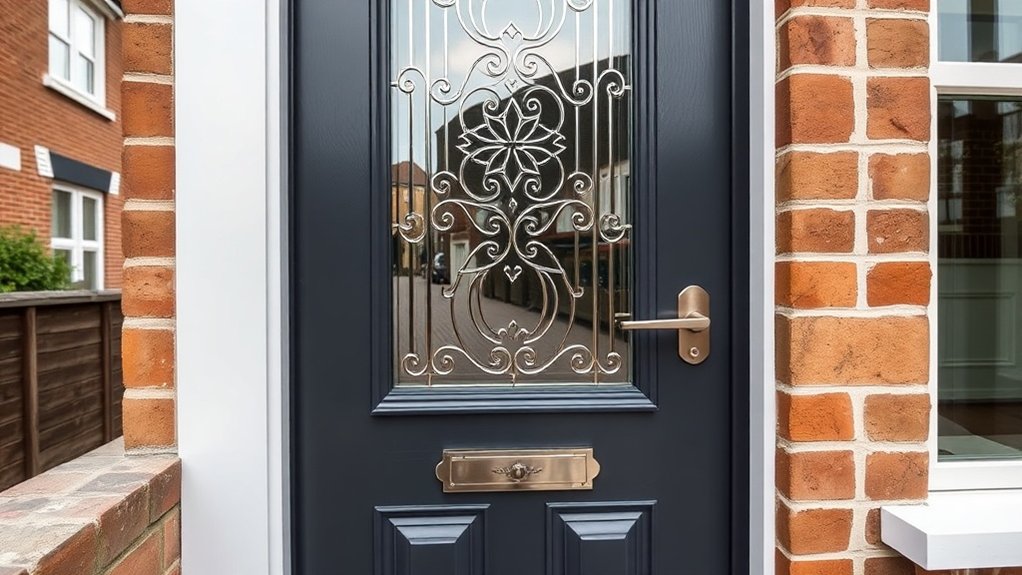
You choose composite door glazing in London to get a secure, energy‑efficient entrance that’s precisely tailored to your property’s architecture and planning rules. High‑performance glass units, low‑E coatings, and laminated or toughened panes improve insulation, noise reduction and security, while styles range from heritage leaded designs to sleek contemporary panels. You’ll also match glazing to door colours, hardware and leasehold requirements, ensuring your new door looks right on the street and performs properly in use.
Key insights
- Composite door glazing in London combines multi-layered, low‑E, argon-filled glass for strong thermal efficiency suited to the city’s climate and energy costs.
- Toughened or laminated, internally beaded glazing helps meet PAS 24 and Secured by Design standards for secure London front doors.
- Designs can be tailored to London’s property styles—Victorian, interwar, or contemporary—using patterned, bevelled, or clear units that match existing architecture.
- Acoustic and asymmetric glass options reduce traffic and urban noise, ideal for homes on busy London streets or near transport links.
- Flexible layouts—top lights, half-glazed, or full-height side panels—balance privacy, daylight, and style while complying with UK Building Regulations.
Composite Door Glazing in London: What It Is
When you talk about composite door glazing in London, you’re referring to the glass units and decorative glass elements built into a composite door’s leaf to deliver light transmission, thermal efficiency , and security without compromising the door’s structural integrity. You’re not just choosing “glass”; you’re specifying multi-layered, often low‑emissivity, sealed units engineered to work with a reinforced GRP or timber‑core slab.
You’ll see how this matters when your entrance must visually align with nearby historical landmarks yet still respond to modern urban landscaping, lighting, and privacy demands. Glazing layouts , sightlines, and obscuration levels are all configurable, so you can treat the door as an optical interface: managing solar gain, daylight distribution, and visual connectivity between street and interior.
Key Benefits of Composite Door Glazing for London Homes
When you upgrade to composite door glazing in London, you’re not just changing the look of your entrance; you’re optimising performance across insulation, security, and comfort. The right glazed unit improves thermal efficiency by limiting heat loss, boosts security performance with robust glass specifications, and reduces external noise intrusion . Let’s examine how each of these benefits translates into measurable value for your home.
Enhanced Thermal Efficiency
How do you keep heat inside your London home without overworking your boiler or sacrificing a sleek entrance design? Composite door glazing gives you high thermal efficiency while respecting Historical architecture and Cultural influences that define many London streetscapes.
You benefit from multi-layered glass units with low‑emissivity coatings, warm‑edge spacers, and argon-filled cavities that dramatically cut heat loss through the door. Advanced GRP door skins bonded to dense polyurethane cores minimise thermal bridging around the glazed section, so you don’t create a weak spot in your building envelope.
Precision-engineered seals and thermally broken frames reduce draughts, helping stabilise internal temperatures and lower energy bills . You gain a contemporary, performance-led entrance solution that aligns with stricter energy standards and long-term sustainability goals.
Improved Security Performance
Beyond aesthetics and insulation, composite door glazing markedly enhances your home’s security performance, which is crucial in busy London streets. You gain a rigid, multi-layered leaf combining GRP skins, dense cores, and laminated or toughened glazing that resists forced entry and impact. High-specified glazing units integrate security films, warm-edge spacers, and internal beading so glass can’t be removed from outside.
You also benefit from advanced multi-point locking, reinforced hinges, and anti-drill, anti-bump cylinders, all designed to work as a unified security system. Contemporary glazing options let you strengthen vulnerable sightlines without compromising historical architecture, helping you satisfy conservation constraints. You can meet or exceed local regulations and Secured by Design guidelines while still specifying slim sightlines and innovative, custom glazing patterns.
Noise Reduction Benefits
Amid London’s constant traffic, flight paths, and late-night activity, composite door glazing gives you a measurable barrier against unwanted noise. Multi-layered glass materials, combined with dense composite skins and engineered seals, disrupt and dissipate sound waves before they enter your hallway.
You can specify laminated acoustic glass , which uses a specialist interlayer to reduce decibel levels while maintaining clarity. Varying glass thicknesses and cavity depths further tune performance across different frequencies, from low-frequency rumble to higher-pitched street noise.
Decorative patterns aren’t just aesthetic; etched or textured surfaces can diffuse sound energy, marginally enhancing acoustic comfort. Precision-installed gaskets and thresholds complete the system, helping you create a quieter, more controlled sound environment without compromising on contemporary design or daylight.
How to Choose Composite Door Glazing in London
When you choose composite door glazing in London, you need to assess performance first, checking U-values, solar gain, and acoustic ratings to match your property’s exposure and noise levels. At the same time, you’ll want to balance privacy and natural light by selecting the right glass type, opacity level, and pattern for each entrance. Finally, you should guarantee the glazing matches your door’s aesthetics, aligning sightlines, frame colours, and detailing with your home’s architectural style.
Assessing Glazing Performance
Although composite doors are often judged by their appearance, you should assess glazing performance in London using clear technical criteria: thermal efficiency, security , acoustic control, and solar gain. Go beyond decorative patterns; interrogate the glass specification, coatings, and spacer technology to guaranteelong‑term weather resistance in London’s variable climate.
-
Thermal efficiency – Check the glazing’s Ug-value, low‑E coatings, and gas fill. Aim for advanced double or triple glazing that cuts heat loss while preventing overheating from solar gain.
-
Security – Specify laminated or toughened glass, secure glazing beads, and PAS 24–compliant systems that resist impact and forced entry.
-
Acoustic control – Use acoustic lamination, asymmetric panes, and optimized cavity widths to attenuate traffic and urban noise without compromising clarity or performance.
Balancing Privacy And Light
Because London homes sit so close to streets, pavements, and neighbours, you need to treat composite door glazing as a precision balance between daylight, outward visibility, and interior privacy. Start by defining privacy zones : full obscuration at eye level, partial diffusion above and below.
Specify glass with controlled light transmission values; frosted, reeded, or micro-patterned laminates scatter sightlines while still admitting useful lux levels into the hallway. You can deploy artistic patterns in the interlayer to break up silhouettes without darkening the entrance.
For flexible control, integrate decorative films on inner panes; they’re easy to update and can introduce gradients—clear at the top, higher opacity at eye level—so you maintain solar gain, visual comfort, and security simultaneously.
Matching Door Aesthetics
As you choose composite door glazing for a London property, treat it as a core design element that must align with the door’s style, colour, and hardware rather than a bolt‑on extra. You’re curating a visual system that connects exterior impact with interior decor and long-term performance.
-
Match form Specify glazing shapes and sightlines that echo the door’s panel layout and frame proportions. Contemporary designs suit linear, sandblasted, or etched units; period doors favour bevels or Georgian bars.
-
Coordinate finish Align cames, spacer bars, and handle finishes. Black or graphite suits minimalist schemes; brass or chrome supports classic elevations.
-
Design for durability Choose easy-clean coatings and obscured patterns that disguise smears. Integrate maintenance tips into your specification so aesthetics remain sharp under London grime and weather.
Glazing Styles for Different London Home Types
While London’s housing stock ranges from Victorian terraces to sleek riverside apartments, the right composite door glazing style should align precisely with the architecture, era, and performance needs of your specific property. For period conversions, you’ll often prioritise slim sightlines, proportional glazing apertures, and decorative patterns that hint at historical significance without compromising thermal performance or security.
For interwar semis or maisonettes, you can specify mid-sized glazed cassettes that maximise daylight while maintaining privacy with etched or micro-textured glass. Contemporary apartments and new-build townhouses benefit from larger, minimalist glazing zones, often using clear or neutral-tinted units with high-performance low‑E coatings. In mixed-use or high-traffic locations, you’ll likely need laminated, toughened, or triple-glazed configurations to meet acoustic and security expectations.
Glass Designs for Period vs Modern London Homes
How do you choose a glass design that respects a London home’s original character yet meets today’s performance standards? You start by aligning aesthetics with glazing performance, frame geometry, and the property’s architectural era .
-
For historical architecture, you’ll typically specify slim sightlines, patterned or bevelled glass, and authentic leading that echoes Victorian styles, while integrating low‑emissivity (Low‑E) coatings and argon-filled units to hit modern U‑value targets.
-
For Edwardian or interwar homes, you might use bolder geometric cames and subtly tinted units, balancing daylight transmission with solar gain control.
-
For contemporary builds, you usually select large-format, clear or satin glass with minimal framing, often using laminated or toughened panes and selective coatings to optimise thermal efficiency , acoustic attenuation, and daylight.
Privacy Glazing Options for London Composite Doors
When you’re planning privacy glazing for a London composite door, you need to understand how different glass types—frosted, etched, satin, laminated, or patterned—control sightlines without blocking essential daylight . We’ll look at how you can fine‑tune the balance between light transmission, obscuration levels, and viewing angles to keep hallways bright while preventing unwanted views from the street. You’ll also see how to match glass patterns and security specifications (such as toughened or laminated options) to your property’s architectural style and your required security performance.
Types Of Privacy Glass
Ever wondered how to let natural light into your London home without sacrificing privacy or security? With composite doors, you can specify advanced privacy glass that respects historical architecture while integrating eco friendly materials and modern performance.
-
Patterned / Obscure Glass You’ll get engineered textures (cotswold, stippolyte, chinchilla) that distort views while keeping daylight levels high. Ideal for period facades that must remain visually sympathetic.
-
Etched or Sandblasted Glass A chemically or mechanically treated surface creates a fine, uniform translucency. It delivers a clean, contemporary aesthetic and supports solar-control coatings and low‑iron substrates.
-
Laminated Privacy Glass Interlayers combine opacity, impact resistance, and acoustic damping. You gain enhanced security, optional tinted effects, and compatibility with low‑E, argon-filled units for thermal efficiency.
Balancing Light And Seclusion
Choosing between patterned, etched, and laminated privacy glass isn’t just a style decision; it’s about setting the right balance between natural light, seclusion, and security for your London home. You’re optimising three variables: light transmission, distortion of sightlines, and glass performance.
Start by defining where you need seclusion most: street‑facing doors usually demand higher obscurity levels, while side or rear entrances can accept clearer options. Patterned and etched glass scatter light, so you’ll enjoy brightness without readable silhouettes inside.
Use decorative patterns and creative framing to fine‑tune outcomes. Tall, narrow glazed sections admit daylight while limiting lateral views. Multi-pane layouts break up direct sightlines. Laminated privacy units also reduce noise, giving you a quiet, light-filled entrance that still feels discreet.
Matching Style And Security
Although privacy is often your starting point, the real value of composite door glazing in London comes from aligning the glass design with the security performance of the door as a whole. You’re not just choosing patterns; you’re specifying impact resistance, laminate structure , and fixing systems that work with multi-point locks and reinforced frames.
- Laminated privacy glass – Use multi-layer laminates with opaque interlayers; even if fractured, panels stay bonded, resisting forced entry.
- Textured and etched units – Select deep-texture or acid-etched glass that obscures views while maintaining thickness and security ratings.
- Decorative, secure cassettes – Integrate artistic inspiration or subtle historical preservation motifs within sealed, through-bolted cassettes that prevent panel removal from outside.
Energy-Efficient Composite Door Glazing for London’s Climate
When you specify energy‑efficient composite door glazing for a London property, you’re really optimising how the door manages heat, light, and air exchange across a relatively small but crucial surface area. You balance low‑U‑value glass units , warm‑edge spacers, and argon or krypton gas fills to minimise conductive and convective heat loss, essential in London’s damp, variable climate.
You also treat solar gain strategically . On south‑facing elevations or where Outdoor landscaping casts shade, you can tune solar control coatings to capture winter warmth without causing summer overheating. In Historical architecture, you retain slim sightlines and period‑correct patterns while embedding high‑performance laminates and low‑emissivity layers. You’re not just upgrading a door; you’re engineering a precise thermal interface for the building envelope.
Noise-Reducing Composite Door Glazing for Busy London Areas
While London’s constant traffic, flight paths, and late‑night activity can quickly erode indoor comfort, well‑specified composite door glazing lets you treat the door as a targeted acoustic barrier rather than a weak point in the façade. By engineering the glazing unit, you cut airborne noise without sacrificing daylight or aesthetics.
-
Acoustic glass build‑ups You can specify laminated acoustic glass with sound‑damping interlayers and asymmetric pane thicknesses to disrupt different noise frequencies.
-
Optimised seals and frames High‑compression gaskets and rigid composite slabs limit flanking sound paths around the glazing.
-
Design-led sound control You still achieve visual impact with etched artistic patterns, textured layers, and decorative motifs that diffuse sound scatter while aligning with contemporary London façade design.
Security and Safety Features in Composite Door Glazing
Beyond controlling noise, the glazing in a composite door also acts as a primary security and safety component, especially in London properties that face the street or shared access routes. You’ll typically specify toughened or laminated safety glass; laminated units use interlayers that hold shards in place, resisting impact and forced entry.
For urban environments and Historical architecture, you can pair multi-point locking systems with PAS 24-compliant, Secured by Design-rated glazing to meet modern security benchmarks. You’ll also want to confirm that glass thickness, edge cover, and beading methods align with Local regulations and insurer requirements.
Fire-rated and obscured glazing options further protect escape routes and privacy while maintaining daylight, giving you a future-ready, performance-led entrance solution.
Popular Glazing Layouts and Sizes for Composite Doors
Although composite doors can support a huge range of bespoke designs , most London installations follow a handful of proven glazing layouts and sizes that balance light, privacy, and security. You’ll usually choose between compact vision panels for discretion, or larger units that maximise daylight while still meeting PAS 24 and Document Q requirements.
-
Top Light / Small Aperture – A slim rectangular pane at eye or head height. It suits narrow hallways, accepts bold decorative patterns, and works well with contrasting color options.
-
Mid-Rail / Half-Glazed – A larger central panel optimised around 28–44mm units, delivering strong thermal performance and modern sightlines.
-
Full-Height Narrow Panel – Vertical glazing running almost the full slab height, engineered with laminated or toughened glass to maintain structural rigidity.
Pairing Glazing With Door Colours and Hardware
Once you’ve settled on a glazing layout, the next step is to coordinate glass, door colour, and hardware so the whole entrance looks intentional rather than pieced together. Start by deciding whether you want contrast or a seamless look. For example, clear or satin glazing with a bold RAL door colour suits minimalist stainless-steel hardware, while patterned or coloured units pair well with darker, architectural handles and hinges.
Specify glass performance too. A subtle decorative film can echo the door colour or hardware finish, creating a unified visual line. Integrating solar control coatings lets you use larger glazed areas without overheating the hallway, particularly on south‑ or west‑facing elevations, while still keeping the colour and hardware specification as your primary design driver.
Planning and Leasehold Rules for Glazed Doors in London
Before you commit to a new glazed composite door in London, you need to check how planning rules and leasehold restrictions apply to your property type and street. Conservation areas , listed buildings, and mansion blocks impose tighter controls, particularly around glazing ratios, sightlines, and colour.
-
Planning status – Confirm if you’re in a conservation area or listed building. Planners may insist the door’s glazing pattern supports Historical preservation, even when you specify Eco friendly materials and high‑performance glass.
-
Leasehold covenants – Review your lease and building regulations pack. Many freeholders require like‑for‑like aesthetics to protect a unified façade.
-
Freeholder and management approval – Submit CAD drawings, U‑values, safety‑glass specs, and acoustic ratings so decision‑makers can see your design enhances performance without compromising the architectural rhythm of the street.
Costs, Value for Money, and Choosing a London Installer
Securing permissions is only half the job; you also need to understand what a glazed composite door should cost in London and how to judge whether you’re getting real value rather than just a low quote.
Expect quality composite door glazing to sit roughly in the mid-to-upper tier of the market, reflecting multi-point locking, laminated safety glass, high-performance seals, and colour-stable skins. Prices rise with bespoke glazing, smart locks, and profiles sensitive to historical architecture or high-end interior design schemes.
When choosing an installer, prioritise FENSA or CERTASS registration , product and labour warranties, documented U-values, and verified fire and security ratings. Ask for a detailed, line-item quotation and London-specific references with similar façades, exposure, and security requirements.
Frequently Asked Questions
Can I Retrofit Glazing Into an Existing Solid Composite Door in London?
You usually can’t safely retrofit glazing into a solid composite door because it compromises door security, structural integrity, and certification. Cutting a glazed aperture can void warranties, reduce energy efficiency, and weaken locking points. Instead, you should specify a new composite door manufactured with integrated glazing units engineered for performance. That way, you’ll maintain tested security ratings, ideal U-values, and a future‑ready aesthetic aligned with innovative building standards.
How Does Composite Door Glazing Impact Home Insurance Premiums in London?
It can lower premiums if you enhance window security and energy efficiency. Insurers love composite glazing that’s tougher than a bank vault, with laminated or toughened units, multi-point locks, and Secured by Design certification. You’ll reduce perceived burglary risk and improve thermal performance, which some insurers reward. Always declare the exact glazing spec, keep installation certificates, and compare quotes—underwriters assess risk per property, so your premium impact will vary.
Are There Maintenance or Cleaning Restrictions for Decorative Glass Finishes?
Yes, you’ll face specific maintenance and cleaning restrictions for decorative glass finishes. You must avoid abrasives, strong solvents, and high-pressure washing to protect decorative patterns and preserve glass durability. Use pH-neutral cleaners, soft microfiber cloths, and lukewarm water. Don’t scrape with blades or scourers; they can micro-scratch coatings. Regularly inspect edges and seals, documenting any crazing or delamination, so you can address issues proactively and maintain long-term optical performance.
Can I Get Smart or Switchable Privacy Glass in a Composite Door?
Yes, you can specify smart or switchable privacy glass in a composite door, though it’s not as common as Victorian Wi‑Fi. Manufacturers integrate Smart glass as an insulated unit, wiring it through the sash for power and control. You’ll choose between film‑based or laminated systems with an internal Privacy coating. Confirm sightline depth, power supply routing, warranty terms, and compatibility with your chosen hardware and security glazing requirements.
What Warranties Apply Specifically to the Glazing Units, Seals, and Coatings?
You’ll typically get separate warranties for glazing units , seals, and coatings. Glazing units often carry 5–10 years, focused on Glass durability against failure or internal condensation. Seal integrity is usually covered for similar periods, protecting you from perimeter seal breakdown and misting. Coatings (low‑E, solar, or smart films) may have shorter, performance-based warranties, tied to clarity, emissivity, and switching reliability, with clear exclusions for misuse or harsh cleaning agents.
Summary
When you choose composite door glazing for your London home, you’re effectively upgrading to the “smartphone” of entrance doors: efficient, secure, and tailored to your property’s character. By aligning glazing type, style, and security spec with your building’s age and local rules, you maximise performance and kerb appeal. Work with a London installer who provides documented U-values, security ratings, and full compliance checks so you get lasting value, not just a pretty pane.