
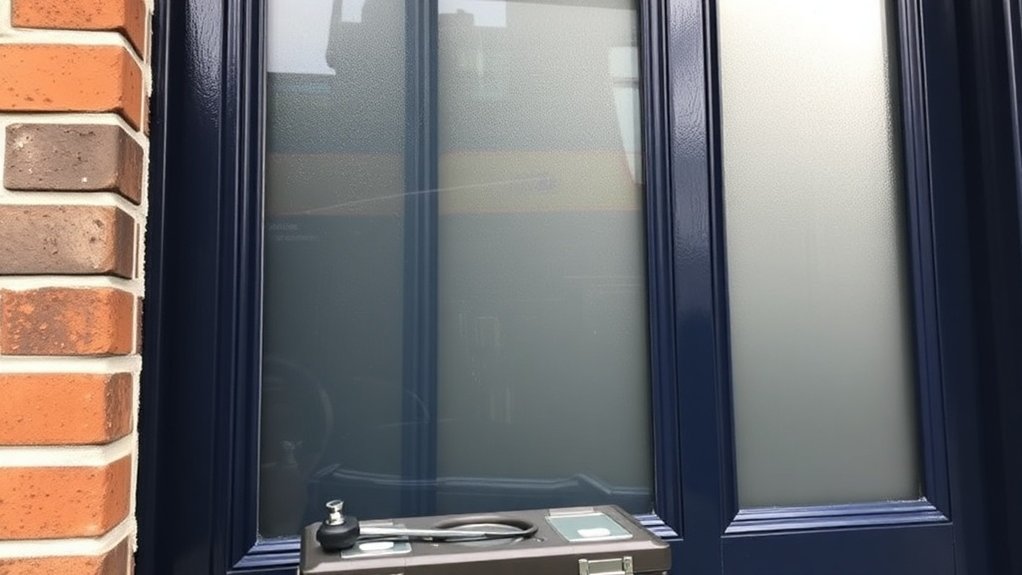
If your front door glass is cracked, misted or draughty, you should consider replacement as a safety, security and energy‑efficiency priority in London’s busy urban environment. You’ll need to choose between toughened or laminated safety glass, and single, double or triple glazing to balance security, noise reduction and heat loss. A certified London glazier can ensure compliance with UK Building Regulations and a neat, secure fit, and you can next explore costs, options and preparation steps.
Key insights
- Front door glass should be replaced promptly if cracked, misted, or draughty to maintain security, safety, and energy efficiency in London homes.
- Choose toughened or laminated safety glass, with double or triple glazing and low‑E coatings, for better insulation, noise reduction, and break‑in resistance.
- Many London glaziers offer same‑day or emergency front door glass replacement, including boarding‑up services while custom units are manufactured.
- Ensure your new front door glass complies with UK Building Regulations for safety glazing and any local conservation or listed building requirements.
- Costs vary by glass type, glazing level, decoration, and frame condition; request itemised quotes covering materials, labour, and waste disposal.
How Urgent Is Front Door Glass Replacement?
When the glass in your front door cracks, chips, or shatters , replacement becomes a matter of safety and security rather than just appearance. You’re dealing with a structural vulnerability in a key entry point, so you should treat it as urgent, not cosmetic.
Even if the pane still holds, micro-fractures weaken its load-bearing capacity and impact resistance, especially in double-glazed or laminated units. In London’s dense urban environment, that translates into higher break-in risk and increased exposure to noise and temperature loss.
You can integrate urgency with innovation by upgrading to toughened or laminated glass, smart-lock compatible units, and secure decorative patterns that don’t compromise privacy. Build ongoing glass maintenance into your routine so minor defects trigger immediate, controlled intervention.
Signs Your Front Door Glass Needs Replacing
When you assess your front door glass, you should look for visible cracks and chips that weaken the pane and increase the risk of sudden failure. You’ll also want to check for cold drafts or noticeable heat loss around the glass, as these indicate compromised seals and poor thermal performance. If you spot persistent condensation or misting between the glass panes, the unit’s insulation has failed and it’s time to plan a safe, professional replacement.
Visible Cracks And Chips
Although a small mark on your front door glass might seem harmless at first, visible cracks and chips indicate the pane’s structural integrity is already compromised and needs prompt attention. Even micro‑fractures can propagate under vibration, temperature fluctuation, or impact, turning a cosmetic defect into a sudden shatter risk.
You should treat any crack—especially one radiating from a corner or hardware point—as a trigger for professional assessment . Chips near locking mechanisms or hinges can weaken security, making forced entry easier and more discreet.
When you replace the glass, you can upgrade to laminated or toughened units, integrating decorative patterns and glass tinting without sacrificing strength. A specialist installer will specify compliant glazing, optimise sightlines, and ensure the unit’s edge protection prevents future stress failures.
Drafts And Heat Loss
Even if the glass in your front door looks intact, persistent drafts, cold spots around the frame , or misting between panes signal that its thermal performance has failed and it’s wasting energy. You’re feeling London’s winter air leaking through micro‑gaps, degraded seals, or outdated single glazing that no longer insulates.
When you notice:
- Floors near the door consistently colder than the rest of the hallway
- Curtains or papers moving slightly when the door is shut
- Heating bills rising despite no change in thermostat settings
- Audible whistling or faint rattling in windy conditions
- A sharp temperature drop as you approach the door
it’s time to specify high‑performance, safety‑rated glazing, with optional glass tinting and decorative patterns that enhance privacy, efficiency, and curb appeal simultaneously.
Condensation Between Glass Panes
Drafts and cold spots aren’t the only warning that your front door glass has failed; persistent condensation between double‑ or triple‑glazed panes is another clear sign the unit needs replacing. That mist isn’t surface moisture ; it means the perimeter seal has broken, the insulating gas has escaped, and moist air is trapped inside the unit.
You can’t wipe this fog away, and it will typically worsen with temperature swings, reducing visibility and solar gain while increasing the risk of hidden frame decay and mould. The safest, most efficient solution is full glass-unit replacement , not temporary de‑fogging kits. When you upgrade, you can specify advanced low‑E coatings, laminated safety glass, and bespoke decorative patterns or frosted finishes that deliver privacy, security, and superior thermal performance.
Front Door Glass: Repair or Replace?
When you’re deciding whether to repair or replace your front door glass, you first need to assess the type, extent, and position of the damage, as these directly affect structural integrity and safety. You’ll then compare the cost of a targeted repair against a full replacement, factoring in labour, materials, and any required upgrades to meet current standards. Finally, you should consider longevity, weighing the short‑term savings of repair against the longer service life, energy efficiency, and security that a new glass unit can provide.
Assessing Glass Damage
Although every damaged pane looks alarming at first, the key is to assess the type and extent of the glass damage before you decide to repair or replace your front door glass. You’ll want to balance structural safety with preserving historical architecture and intricate decorative patterns , especially on London terraces and period townhouses.
Focus on how the glass behaves, not just how it looks:
- Check for hairline cracks that haven’t reached the edge of the pane.
- Identify star-breaks or impact points that compromise safety glass.
- Look for edge damage that weakens the entire sheet under door movement.
- Examine laminated or double-glazed units for misting or interlayer failure.
- Note any distortion affecting visibility, security tech, or smart-lock sensors.
Cost And Longevity
Two factors drive your decision to repair or replace front door glass: what you’ll pay now and how long the solution will stay safe and sound. A basic repair usually costs less upfront , but it may only extend performance for a few years, especially if the pane’s already stressed.
When you replace, you invest in safety glass, upgraded seals, and better thermal performance. You can integrate decorative patterns and glass tinting to enhance privacy, energy efficiency, and UV protection without compromising light levels. Laminated or toughened units cost more but resist impact, forced entry, and weather fatigue far longer.
In London’s climate, a high‑spec replacement typically delivers lower maintenance, improved insulation, and security benefits that amortise the higher initial price over time.
Types of Front Door Glass in London Homes
Front door glass in London homes falls into a few key categories, each with distinct performance and safety characteristics. You’re not just choosing a look; you’re defining how your entrance manages privacy, impact resistance, and visual identity . Modern options let you integrate Decorative patterns and Frosted finishes without compromising structural integrity.
- Toughened safety glass for high-impact resistance and controlled breakage
- Laminated security glass with interlayers that hold fragments in place
- Acoustic glass to reduce urban noise while maintaining a slim profile
- Textured and frosted glass for privacy while still transmitting daylight
- Smart switchable glass that turns from clear to opaque on demand
Choosing Single, Double or Triple Glazing
When you choose between single, double or triple glazing for your front door, you’re really balancing thermal performance , noise reduction, and security. Double and triple glazing can considerably cut heat loss and street noise, but each option carries different costs, weight, and frame requirements that affect long‑term safety and durability. You’ll want to match the glazing level to your property’s exposure, insulation standards, and risk profile so you get a solution that’s efficient, quiet, and secure.
Energy Efficiency Considerations
How do you decide between single, double, or triple glazing for a new front door glass panel in London’s climate? You start by quantifying heat loss, solar gain , and glazing performance, not just aesthetics or decorative patterns.
- Evaluate U‑values: aim for low values to reduce conductive heat loss through the door.
- Specify low‑e coatings and gas fills (argon or krypton) in double or triple units to cut winter heat loss.
- Integrate UV protection to minimise fading of flooring and furnishings while still admitting daylight.
- Balance solar gain with selective coatings so south‑facing entrances don’t overheat.
- Confirm warm‑edge spacers and thermally broken frames to eliminate cold bridging and internal condensation.
This approach lets you align energy performance with visual design and long‑term operating costs.
Noise and Security Tradeoffs
Although energy performance often drives glazing decisions , you also need to weigh how single, double, or triple glazing will affect noise control and resistance to forced entry at your front door. Single glazing offers minimal acoustic dampening and low impact resistance, so it rarely aligns with a modern, security‑led door design.
Double glazing substantially improves noise reduction by separating panes with an insulating cavity, and you can specify different glass thicknesses to disrupt sound frequencies. It also enhances glass durability, especially when combined with laminated inner panes and robust locking hardware.
Triple glazing pushes performance further, but only if your frame, hinges, and threshold are engineered to handle extra weight, maintain airtight seals, and integrate certified security-rated components.
Toughened vs Laminated Front Door Glass
Even before you choose a new front door design, you need to decide whether toughened or laminated glass gives you the right balance of security, safety, and performance . Toughened glass is heat-treated to be several times stronger than standard glass and, if broken, it fragments into small granular pieces to reduce injury risk. Laminated glass sandwiches a clear interlayer between panes, keeping shards bonded and the door panel intact under impact.
You can integrate decorative patterns and colored tints into both options, but performance differs:
- Toughened: impact-resistant , good for exposed doors
- Laminated: superior forced-entry resistance
- Toughened: cost-effective for simple upgrades
- Laminated: better acoustic damping and UV filtering
- For many London homes, a hybrid specification—laminated outer, toughened inner—optimises safety and durability.
Privacy Glass for Street-Facing London Doors
When your door faces a busy London street, you need privacy glass that obscures clear views in while still meeting safety and security standards . You can choose from etched, frosted, patterned, reeded, or tinted glass, each offering a different balance of light transmission, privacy level, and impact resistance. By matching the glass type to your exposure, lighting, and security risks, you maintain natural light without compromising privacy or safety.
Types Of Privacy Glass
For a street-facing front door in London, privacy glass must limit visibility without compromising safety , light levels, or security performance. You’ll choose among engineered glass types that manage sightlines, impact resistance, and aesthetics in one integrated solution.
- Frosted finishes: Acid‑etched or sandblasted surfaces that diffuse views while maintaining a clean, contemporary look.
- Decorative patterns : Laminated or screen‑printed designs that disrupt direct sight lines and enhance architectural character.
- Obscure/textured glass: Ribbed, reeded, or hammered profiles that blur movement and resist fingerprinting.
- Laminated privacy glass: Multi‑layer construction with interlayers that add security, UV control, and acoustic damping.
- Switchable smart glass: Electrically controlled interlayers that toggle from clear to opaque, integrating with access control and automation systems.
Balancing Light And Privacy
How do you keep prying eyes out while still pulling in as much natural light as possible through a street‑facing London front door? You start by specifying privacy glass that diffuses views without blocking daylight, then match it to the door’s exposure and traffic levels.
Frosted, etched, and textured panes use decorative patterns to scatter light, maintaining brightness while preventing clear sightlines into your hallway. For safety, combine these finishes with laminated or toughened units to maximise glass durability and resistance to impact or forced entry.
You can further balance light and privacy by varying opacity: clearer glass at high level, denser patterns at eye level. Consider integrated blinds or smart switchable glass for flexible control when you need extra privacy at night.
Matching Front Door Glass to Period and Modern Styles
Although front door glass is decorative, it also defines the character and safety performance of your entrance, so it must align with both the property’s era and modern standards . You start by reading the building’s architecture, then specifying glass that respects its lines while upgrading performance, material durability, and compliance.
- For Victorian or Edwardian homes, use slim sightlines and etched decorative patterns that echo original glazing.
- In 1930s properties, consider geometric leadwork with laminated units to maintain period rhythm.
- For mid‑century doors, choose minimalist reeded or fluted glass with enhanced impact resistance.
- In contemporary builds, specify large, low‑iron panes for clarity and thermal efficiency.
- For mixed‑era streetscapes, combine subtle patterning with neutral frames to avoid visual conflict.
How Front Door Glass Replacement Improves Security
Once you’ve matched the glass to your door’s style, you need it to perform as a physical barrier, not just a visual upgrade. Modern replacement units use laminated or toughened safety glass, which resists impact and makes forced entry noisier and slower. Multi-layer interlayers hold shards in place, so even if the pane cracks, it stays largely intact and harder to breach.
You also upgrade privacy without sacrificing light. Frosted finishes and Decorative patterns distort sightlines, so opportunistic intruders can’t easily scan your hallway or locks. When combined with secure glazing beads, reinforced frames, and high-spec locking systems, new glass becomes part of an integrated defence strategy, transforming your front door from a weak spot into a controlled security interface.
London Rules and Building Regs for Door Glass
Before you order new front door glass in London, you need to understand the safety and legal standards that apply to it. You’re working within UK Building Regulations (Part K and Part M), London planning rules, and, in many streets, conservation constraints linked to historical architecture.
Key compliance points you must check:
- Use safety‑rated glazing (toughened or laminated) in all critical impact zones for robust glass safety.
- Confirm the glass thickness and fixing method match door size, weight, and usage intensity.
- Verify U‑values and performance data on the glass manufacturer’s documentation.
- Confirm whether your property’s in a conservation area or listed, affecting design and frame profiles.
- Get written sign‑off from an installer registered with a competent person scheme (e.g., FENSA) for certification and resale.
Energy Efficiency of London Front Door Glass
You’ve looked at regulations and safety; now you need front door glass that actually keeps London’s heat in and street noise and cold out. You maximise energy efficiency by combining insulated glazing units with low‑emissivity (Low‑E) coatings and warm‑edge spacers . These components cut conductive and radiant heat loss, delivering measurable energy savings and stabilising indoor temperatures.
Specify argon‑ or krypton‑filled double or triple glazing to improve U‑values while maintaining slim sightlines. For south‑ or west‑facing doors, consider spectrally selective window tinting that reduces solar gain and glare without darkening the entrance excessively or compromising visibility.
Always confirm laminated or toughened glass compatibility with high‑performance coatings, ensuring impact resistance and secure fixing. Properly selected, your door glass works as an active thermal and acoustic barrier.
Front Door Glass Replacement: Step-by-Step
Although every property and door design differs, a safe front door glass replacement in London always follows a clear, controlled sequence: assess the existing door and frame, secure the work area, and remove the damaged or obsolete glass without stressing the surrounding structure. You then introduce the new unit, checking tolerances , glass durability, and security performance.
- Specify laminated or toughened units calibrated for local impact and weather loads
- Integrate decorative patterns without weakening structural edges or sightlines
- Apply high‑performance seals and spacers, maintaining uniform compression
- Refit beads or trims, confirming even pressure and eliminating racking forces
- Test closure, locking, and air‑tightness, then clean and document the installation
Front Door Glass Replacement Costs in London
Once you understand the stages of a safe front door glass replacement, the next step is to quantify what that work will cost in London. Your price typically combines call‑out, materials, labour, and waste disposal. Standard toughened or laminated units start lower, but impact‑rated or acoustic glass , integrated blinds, and decorative patterns increase material costs.
Frame condition also matters. If installers must re‑square timber, upgrade security beading, or replace gaskets and seals, labour time rises. Complex glazing bars or fanlights add further setup and access charges.
Factor in lifecycle costs as well. Higher‑performance glass can reduce heat loss and condensation, lowering long‑term energy and maintenance spend. Specify coatings that simplify glass cleaning, and you’ll cut both future labour and cleaning‑product use.
Choosing a Reliable London Glazier
How do you separate a genuinely competent London glazier from a risky, cut‑price operator when your front door glass has failed? You start by verifying technical competence, safety discipline , and proven results, not just a low quote.
Look for a glazier who can balance performance, aesthetics, and historical preservation while still embracing smart materials and modern security glazing.
- Check FENSA or equivalent accreditation, insurance, and clear guarantees.
- Ask for case studies involving period properties and conservation‑area compliance.
- Confirm expertise in laminated safety glass, secure fixing methods, and Part Q standards .
- Demand precise surveys, digital measurements, and glass customization options (tints, acoustic, smart glass).
- Review independent testimonials focusing on punctuality, cleanliness, and transparent communication.
This way, you choose a partner, not a gamble.
Preparing Your Home for Front Door Glass Work
Before your London glazier arrives, you should prepare the doorway and surrounding area so the work can proceed safely, quickly, and without damage to your home. Clear a 2–3 metre path from the entrance, removing shoes, mats, consoles, and any fragile décor. Protect nearby flooring with non-slip dust sheets or hardboard, especially if you’ve chosen decorative patterns that require precise handling and layout checks.
Unplug and relocate smart doorbells, cameras, and access-control devices that could obstruct the frame. Secure pets and inform other occupants about restricted access during the work window. If possible, provide an indoor workspace for glass cleaning, hardware layout, and sealant preparation. Guarantee adequate lighting and a nearby power outlet so your glazier can use tools efficiently and safely.
Aftercare and How Long New Glass Lasts
With the installation complete and the work area cleared, you need to focus on looking after your new front door glass so it performs safely and lasts as long as possible. Modern insulated units typically deliver 20–30 years of service if you follow structured aftercare and respect the limits of the door design and material durability.
- Clean with non‑abrasive glass cleaner and a soft microfiber cloth; avoid blades and harsh chemicals.
- Inspect seals and gaskets every six months for gaps, cracking, or moisture ingress.
- Check hinges, locks, and closers yearly so frame movement doesn’t stress the glass.
- Maintain exterior paint or sealant around the frame to prevent water penetration.
- Log any impact, chips, or hairline cracks and schedule prompt professional assessment.
Frequently Asked Questions
Can I Change the Design of My Front Door Glass Without Replacing the Whole Door?
Yes, you can change the design of your front door glass without replacing the whole door. You’ll retrofit a new glass unit, selecting decorative patterns that enhance privacy and aesthetics while maintaining structural integrity. Specify laminated or toughened glass for superior glass durability and impact resistance. Make certain of accurate measurements, compatible glazing beads, and certified installation to preserve security, thermal performance, and weather sealing while updating your door’s visual signature.
Will Replacing Front Door Glass Affect My Home Insurance Premium or Coverage?
Replacing your front door glass can affect your home insurance, but it’s not automatic. If you upgrade to laminated or toughened glass , insurers may view your home security as improved, sometimes stabilizing or even reducing premiums. However, if you choose purely aesthetic appeal features, like larger panes, your risk profile might change. Always notify your insurer, document specifications, and confirm written coverage to avoid gaps or claim disputes.
Are There Front Door Glass Options That Reduce Traffic Noise in Busy London Streets?
You can considerably cut traffic noise reduction by choosing laminated, acoustic , or triple-glazed units marketed as noise canceling glass. You’ll rely on asymmetric panes, specialist interlayers, and airtight seals to disrupt sound transmission. Prioritize doors with certified sound reduction ratings (e.g., dB or RW values) and warm-edge spacers. You’ll also enhance thermal performance and security, provided an accredited installer correctly fits and seals the entire frame and threshold.
Can Stained or Decorative Glass Be Made Energy-Efficient and Secure?
Yes, you can make stained or decorative glass both energy‑efficient and secure. You specify laminated or toughened units for impact resistance, then combine the Decorative glass with low‑E coatings , warm‑edge spacers, and argon‑filled double or triple glazing for Energy efficiency. You also position complex patterns to obscure sightlines, pair them with multi‑point locks, and guarantee frames are reinforced, giving you aesthetic innovation without compromising safety or thermal performance.
Do I Need Permission From My Landlord or Freeholder to Replace Front Door Glass?
Yes, you usually need permission. From your landlord for tenancy changes, from your freeholder for structural changes, from your building’s insurer for risk changes. Landlord permissions and Freeholder approval protect your legal position, your deposit, your warranty. You should: check your lease , request written consent, submit specs (glass type, safety rating, security features), and confirm who pays and who maintains. This approach keeps you compliant, safe, and future‑proof.
Summary
When you spot cracks, misting, or draughts, don’t delay front door glass replacement—it’s a safety and security issue as much as a comfort one. For example, a family in Islington upgraded a cracked single-glazed pane to laminated double glazing ; they improved security, cut noise, and reduced heat loss in one visit. By choosing a vetted London glazier and preparing the area properly, you’ll get a safe, efficient installation that’s built to last.