Porch glazing in London lets you cut heat loss, boost security and create a useful buffer space without harming your home’s period character. You’ll need to balance conservation rules , Building Regulations and sightlines to neighbours, especially in terraces and conservation areas. The right glass, frames and seals improve comfort, noise control and kerb appeal while staying compliant with local planning policies. Next you’ll see how to judge costs, permissions, styles and installation quality for your street.
Key insights
- Check if your London home needs planning permission, especially in conservation areas or Article 4 zones, before installing a glazed porch.
- Choose frame materials suited to London’s climate, such as powder-coated aluminium or hybrid timber–aluminium, with durable, low‑maintenance finishes.
- Specify double or triple glazing with good U‑values and quality seals to cut draughts, improve thermal efficiency, and reduce street noise.
- Ensure security with laminated safety glass, multi‑point locking, and robust frames, while balancing visibility and privacy using reeded or satin glass where needed.
- Design the porch to complement your façade’s brickwork, sightlines, and period details so it enhances kerb appeal and adds property value.
Is Porch Glazing Right for Your London Home?
Although porch glazing suits many properties, you’ll want to assess how it fits your specific London home, its architecture, and local constraints before committing. Start with your façade : will frames align with existing sightlines, brick courses, and any retained period detailing? You should confirm whether your street falls within a conservation area or Article 4 Direction zone, as these can restrict visible alterations.
Next, scrutinise porch glazing durability under London’s polluted, moisture‑laden air and frequent impact from grime and debris. Specify systems with proven test data for wind load, thermal movement, and hardware corrosion resistance. Finally, model porch aesthetic enhancement using 3D visualisation or AR tools, testing frame colours, mullion layouts, and glass specifications so the intervention looks intentionally integrated, not retrofitted.
Key Benefits of a Glazed Porch in London
When designed for London’s climate and planning context, a glazed porch delivers a precise mix of thermal efficiency , security, and functional space at your threshold. You stabilise heat loss around the front door, cut draughts from Victorian letterboxes, and create an airlock that improves your home’s overall performance.
You also gain a controlled transition zone : space for parcels, bikes, or buggies, kept dry and visible without compromising privacy. High-spec multi-point locking and laminated units raise security, while modern glass durability – toughened, low‑iron, or self‑cleaning options – lets you specify performance, not just appearance.
Thoughtful porch aesthetics allow you to echo original brickwork, cornices, and fanlights, or introduce a sharper, contemporary line that still respects London streetscapes.
Planning Rules and Permissions for London Porch Glazing
Before you commit to glazing your porch in London, you’ll need to check whether the design fits within national Permitted Development criteria as interpreted by your local borough. You must also account for stricter limits in conservation areas and around listed buildings, where even minor alterations can require full planning consent. Alongside planning status, you’ll need to guarantee the porch glazing meets Building Regulations for structure, safety glass, energy performance, and ventilation, with sign‑off either via Building Control or a competent installer scheme.
Permitted Development Criteria
Because porch glazing in London sits at the intersection of national planning law and local policy, you need to understand how permitted development rights apply before you start work. You’re typically exempt from full planning permission when the porch stays within tight limits for footprint , height, and proximity to the highway, and doesn’t alter the principal roof or structural openings.
You still have scope to innovate—high‑performance glass, slim aluminium frames, and smart controls can transform interior lighting and garden aesthetics without breaching thresholds.
Confirm the following before proceeding:
- Volume and floor area of the enclosed space
- Maximum roof height at eaves and ridge
- Distance from any highway boundary
- Impact on access, step‑free thresholds, and drainage runs
- Compliance with Building Regulations (thermal performance, structure, safety glazing)
Conservation Areas And Limits
Even if your porch would qualify as permitted development elsewhere, London’s conservation areas, Article 4 Directions, and listed‑building controls can remove or sharply restrict those rights for glazing. You must treat the existing façade as a heritage asset: historical preservation drives every planning judgment.
Start by checking your property’s designation on your borough’s online planning map. If you’re in a conservation area or under Article 4, assume you’ll need full planning permission for any enclosure, new frames, or rooflights. For listed buildings, expect stricter scrutiny of profiles, sightlines, and fixing methods.
To succeed, design for discreet innovation: slimline double glazing, muted frame colours, and detailing that prioritises aesthetic integration with original brickwork, joinery rhythms, and neighbouring porches.
Building Control Compliance
While planning rules determine whether you’re allowed to glaze your porch at all, building control sets the technical performance standard your enclosure must meet under the Building Regulations in England. In London, you’ll focus on structure, fire safety, thermal efficiency, and ventilation, often alongside historical preservation constraints .
You’ll typically need calculations, certificates, or on‑site inspections to prove compliance. A forward‑thinking design team will map each element of your porch to a specific Part of the Regulations, especially Parts A, B, F, L, and M.
Key compliance priorities:
- Structural stability and wind loading checks
- Fire‑resistant doors, escape routes, and hardware
- U‑value calculations for glazing and frames
- Controlled ventilation for air quality and condensation
- Proven material durability in London’s urban climate
Porch Glazing Costs and Value in London
Porch glazing costs in London depend on factors like porch size, glazing specification (single, double, or triple), frame material, and whether the property sits in a conservation area or requires planning permission. You’ll typically see higher prices where advanced glass aesthetics and superior material durability are specified, especially with thermally broken aluminium or engineered timber systems.
You should assess cost in terms of lifecycle value, not just installation price. High‑performance units cut heat loss, reduce street noise, and stabilise internal temperatures, lowering energy spend. Quality hardware and seals reduce maintenance and extend service life. In higher‑value London postcodes, well‑detailed porch glazing can also enhance kerb appeal and perceived security, supporting capital value and saleability while delivering daily functional gains.
Porch Glazing Styles for Different London Homes
When you choose a porch glazing style in London, you need to balance planning constraints , existing architecture, and performance criteria like U-values and solar control. Whether you’re matching classic Victorian-inspired glazing in a conservation area, specifying a contemporary minimalist glass porch for a post-war semi, or upgrading glazing on period terraces, the profiles, sightlines, and frame materials must suit the streetscape. By aligning glass specification, frame systems, and detailing with your property type, you guarantee your porch looks authentic, complies with local guidance, and performs efficiently year-round.
Classic Victorian-Inspired Glazing
Although London’s streets showcase every architectural era, Victorian terraces dominate many neighbourhoods, and your porch glazing needs to respect their proportions and detailing. You’re balancing Victorian elegance with performance, regulation, and innovation. Start by mirroring existing sightlines: slim glazing bars, tall vertical panes, and arched fanlights that echo neighbouring properties, supporting historic preservation and planning approval.
Use high-performance double or vacuum glazing within traditionally profiled timber or aluminium-clad frames, colour-matched to local brick and joinery palettes. Etched or sandblasted panels can reference original stained glass without compromising privacy or U‑values.
Key specification checks:
- Mullion and transom thickness
- Glazing bar module and rhythm
- Cill depth and drip detail
- Conservation-grade ironmongery
- Acoustic and thermal performance ratings
Contemporary Minimalist Glass Porches
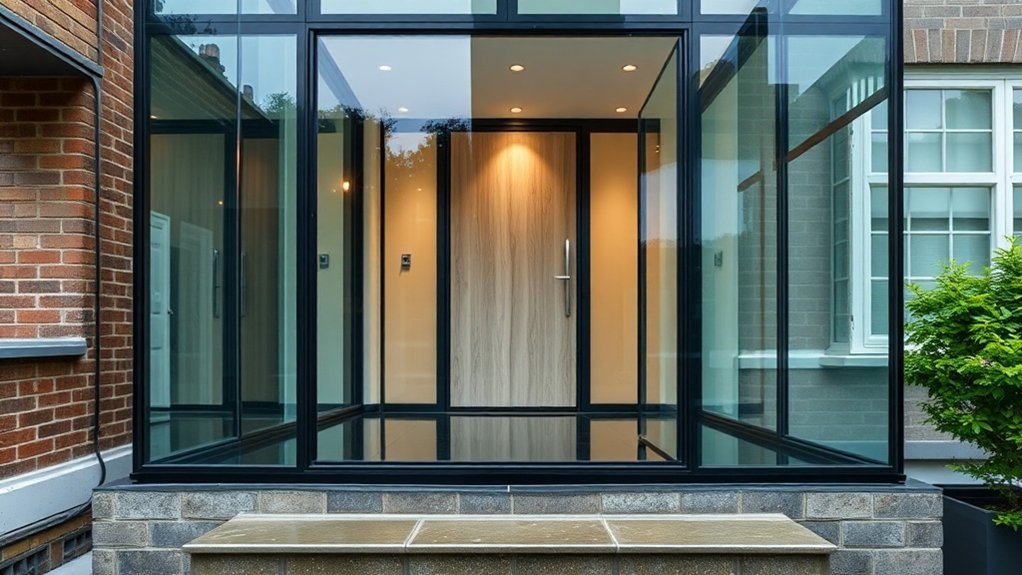
While much of London’s housing stock is historic , many owners want a porch that reads as sharp, modern architecture rather than pastiche, and minimalist glass designs answer that brief. You prioritise clarity, flush lines, and a seamless junction between street, threshold, and interior.
You’ll typically specify full-height structural glazing with slim aluminium or steel profiles, thermally broken to meet London energy standards. Consider glass textures strategically: clear low‑iron glass for transparency, satin or reeded panels to manage privacy on tighter frontages without visual bulk. Coordinate frame finishes with your façade—powder‑coated RAL colours for masonry, anodised tones for contemporary brick or concrete.
Integrate concealed drainage, flush thresholds, and frameless doors to keep the composition rigorously minimal yet robust.
Glazing for Period Terraces
How do you add a glazed porch to a London period terrace without undermining its character or falling foul of planning? You start by treating the original façade as the primary asset. Any porch glazing must read as a light-touch , reversible intervention, not a pastiche extension.
You’ll balance porch aesthetics with performance: slimline thermally broken frames, ultra-clear low‑iron glass, and discreet fixings into existing masonry joints, not bricks. For glass durability and safety, you’ll specify laminated or toughened units, particularly near steps and railings.
Key technical moves:
- Match fanlight proportions and sightlines
- Use muted, heritage‑matched frame colours
- Integrate trickle ventilation to satisfy Building Regulations
- Select low‑profile thresholds for step-free access
- Design frameless or minimal-framed corners to preserve elevation views
Best Frame Materials for London Porch Glazing
Because London’s porches face damp winters , pollution, and frequent temperature swings, choosing the right frame material is just as critical as selecting the glazing itself. Aluminium suits most London streets: it’s slim, structurally rigid, and easily powder‑coated to coordinate with porch lighting and decorative accents. Specify thermally broken profiles and marine‑grade finishes for polluted or coastal corridors like the Thames frontage.
For period terraces, you might prefer engineered timber . It accepts fine detailing, profiles to match original joinery, and high‑performance coatings that resist swelling and paint failure.
If you want low‑maintenance innovation, consider hybrid frames: aluminium externally, timber internally. These systems deliver crisp sightlines to maximise daylight from the street while preserving tactile warmth on the porch side and strong design flexibility.
Insulation, Draught-Proofing and U-Values
Robust frames only perform properly when they work with well‑specified insulation and draught‑proofing, and that’s where porch glazing in London often succeeds or fails. Your aim is to control thermal bridging while keeping the space breathable enough for the city’s variable humidity.
You should base every specification on u value calculations , not guesswork. In London’s climate, target a porch envelope that meaningfully reduces heat loss between hallway and street, so your main façade performs more efficiently.
Focus on:
- High‑performance perimeter seals around doors and sidelights
- Warm‑edge spacers and insulated thresholds to cut thermal bridging
- Continuous cavity insulation where porch walls meet existing masonry
- Low‑conductivity fixings and packers at frame interfaces
- Blower‑door testing to verify that design airtightness is actually achieved
Designing Porch Security and Privacy in London
Why treat porch glazing in London as just an energy upgrade when it can also harden your home’s first line of defence and shield daily life from the street? You start by specifying laminated security glass, multi-point locks and anti-lift hinges that align with Secured by Design principles common to newer London developments.
Next, you control visibility. Use frosted interlayers , micro-perforated screens or switchable smart glass to break direct sightlines from pavement to hallway, while still passing daylight. Integrate porch lighting with PIR sensors and timed scenes, so luminance levels react to movement without broadcasting occupancy patterns.
Finally, treat framing and decorative accents as functional. Deep mullions, integrated letterplates and discreet CCTV housings turn aesthetic decisions into security infrastructure.
Porch Glazing for Small London Spaces
How do you turn a narrow Victorian porch or tight infill entry into usable space without making it feel cramped or overbuilt? You start by treating glazing as a precision tool, not decoration. In London’s tight plots, you’re effectively extending both your hallway and your garden design.
Specify slimline aluminium frames and high-performance low‑iron glass to maximise visible width. Use clear glazing to the street side and more opaque options toward neighbouring boundaries. Prioritise:
- Full‑height glazed panels to stretch sightlines
- Roof materials with high light transmission, like laminated glass
- Integrated drainage details to suit London’s heavy downpours
- Threshold-free floor build-ups for step-free continuity
- Solar-control coatings calibrated to your façade orientation
Align frame colours and junctions with existing brickwork for a seamless, scaled-to-London fit.
Choosing and Working With London Porch Installers
Once you’ve defined the envelope of your glazed porch , the critical decision is who actually builds it in London’s tight planning and construction context. You’ll want an installer with proven London projects, fluent in borough-specific planning nuances and Part L / Part O performance requirements. Ask for thermal models, drainage details, and junction drawings, not just brochures.
Shortlist firms that understand integrated outdoor lighting, smart controls, and year‑round plant care inside a semi-conditioned space. They should specify glazing g‑values, ventilation strategies, and shading systems that protect foliage while limiting overheating.
Check how they coordinate with structural engineers, electricians, and security specialists. Demand itemised quotes, clear warranties on frames, seals, and coatings, and confirm they’re FENSA or CERTASS registered with robust aftercare for adjustments and resealing.
Porch Glazing Installation Timelines and Disruption
After you’ve secured the right London installer, the next variable that shapes your project is the build programme and how it affects day‑to‑day life on site. A typical porch glazing install runs 2–5 days, but lead times for bespoke systems can stretch to several weeks, especially with high‑spec glazing material options like acoustic, solar‑control, or laminated safety glass.
Your installer should phase works to minimise disruption to access, deliveries, and neighbours under London’s tight site constraints.
- Confirm scaffold or tower access windows and street‑parking suspensions
- Sequence noisy works to respect local construction‑hour rules
- Pre‑fabricate frames off‑site to compress on‑site time
- Allow curing time for sealants that protect porch glazing durability
- Build contingencies for weather delays that affect glass handling and sealing
Maintaining and Upgrading London Porch Glazing
Because London porches work hard as thermal buffers, security thresholds, and everyday access points, you need a clear plan for maintaining and upgrading their glazing over time. Start with an annual inspection schedule : check seals, hinges, trickle vents, and drainage channels after winter and again after heavy rainfall.
Monitor glass durability by looking for edge chips, stress cracks near fixings, and haze in double- or triple-glazed units that signals failed seals. When performance drops, upgrade to higher-spec low‑iron or laminated units and refine frame gaskets rather than waiting for full failure.
Use repainting or new profiles to refresh color options that coordinate with Conservation Area guidance while integrating modern multi-point locks and improved threshold detailing.
Future-Proofing Your Glazed Porch for London’s Climate
How do you design a glazed porch that still performs when London’s weather swings from driving winter rain to hotter, sunnier summers? You start by specifying systems that adapt. Use low‑emissivity double or triple glazing with warm-edge spacers, and combine it with thermally broken aluminium frames to limit heat loss and gain. Integrate trickle vents and controllable roof ventilation to purge summer heat without compromising security.
To future‑proof usage, plan for:
- Dynamic shading (external blinds or switchable glass) for solar control
- LED, sensor-based lighting options tuned to seasonal daylight
- Moisture‑resistant finishes and drainage detailing for intense rainfall
- Flexible color schemes that reduce solar absorption but suit conservation streetscapes
- Conduit and wiring routes for later smart controls and environmental sensors
Frequently Asked Questions
Can I Glaze a Listed Building’s Porch in London Without Altering Historic Character?
You can, but only if you align design and materials with the building’s significance and satisfy Historic preservation policy and glazing regulations. You’ll need listed building consent from your borough and early engagement with the conservation officer . Use minimally framed, reversible glazing systems, discreet junctions, and matching colour palettes. Commission a heritage impact statement and performance specs to prove you’re enhancing energy efficiency and usability without eroding historic character.
How Does Porch Glazing Affect Indoor Plants and Natural Light in Adjacent Rooms?
It creates a light buffer zone: you gain stable temperatures but slightly filtered light. You’ll protect plant health by reducing drafts and cold shock, yet glazing can cut sunlight exposure, especially on lower winter sun angles. You should map sun paths , specify high-transmission, low‑iron glass, and avoid heavy tinting. Angle glazing and frame profiles to minimise shading, keeping adjacent rooms bright enough for photosynthetic efficiency and year‑round indoor planting.
Are There Eco-Friendly or Recycled Glazing Materials Suitable for London Porches?
You can specify Eco friendly glazing using recycled materials for your porch. Choose high‑recycled‑content aluminum frames, recycled uPVC, or FSC‑certified timber with low‑VOC finishes. Opt for double or triple glazing with low‑iron, partially recycled glass and warm‑edge spacers. In London’s climate, pair this with low‑E coatings tuned for solar gain control. Confirm suppliers’ BRE Green Guide ratings and Environmental Product Declarations to validate whole‑life carbon performance.
Can I Use My Glazed Porch as a Home Office or Workspace Year-Round?
You can, but you’ll need to engineer it properly. Prioritize high‑performance porch insulation (floor, walls, and roof) and specify advanced glazing options : low‑e argon‑filled units, warm‑edge spacers, and thermally broken frames. Integrate airtight detailing, controlled trickle ventilation, and a split‑unit heat pump for precise temperature control. Also, design for London’s low winter sun: optimize solar gain, add dynamic shading, and guarantee robust condensation management.
How Does Porch Glazing Impact Mobile Signal and Wi‑Fi Reception Inside My Home?
It can weaken mobile reception but sometimes improve Wi‑Fi . Glass and metal frames reflect radio waves, causing wireless interference, a bit like echoes in a hall. Low‑E coatings and laminated glass block signals more. To drive signal enhancement, you’d reposition your router toward the interior, use dual‑band or mesh Wi‑Fi, and, if needed, add a 4G/5G signal booster with an external antenna placed beyond the glazed line.
Summary
In the story of your London home, a glazed porch is like a well‑engineered lock on a busy city gate—controlling light, heat, noise, and drafts with precision. When you match U‑values , ventilation, and security specs to your borough’s planning rules and microclimate, you’re not just adding glass, you’re upgrading infrastructure. Treat this space as a small, high‑performance airlock, and it’ll keep your home resilient, efficient, and future‑ready in London’s shifting weather.