You need damaged door glass in London made safe fast, with proper boarding, compliant safety glass and secure locking zones. A specialist glazier will assess if you can repair a localised crack or need a full toughened or laminated double‑glazed replacement to meet BS EN and Building Regulations. Expect costs from about £120 for simple panels to £650+ for large doors, with emergency call‑outs extra, and there’s more that can optimise security, warmth and noise control.
Key insights
- Emergency glaziers in London can board up and replace shattered or cracked door glass, especially near locks, to restore safety and security quickly.
- Expect typical costs from about £120–£180 for basic panels up to £300–£650 for large patio/French door glass, plus possible £80–£150 call-out.
- Choose safety-rated glass (toughened or laminated) compliant with BS EN 12150/14449 and UK building regulations for doors and low-level glazing.
- Upgrading to double-glazed or laminated units can improve thermal efficiency, noise reduction, and security compared with older single glazing.
- Select a FENSA-registered London glazier with insurance, BS EN-compliant products, and proven experience in door glass, including oversized or decorative units.
When Door Glass Damage Is an Emergency in London
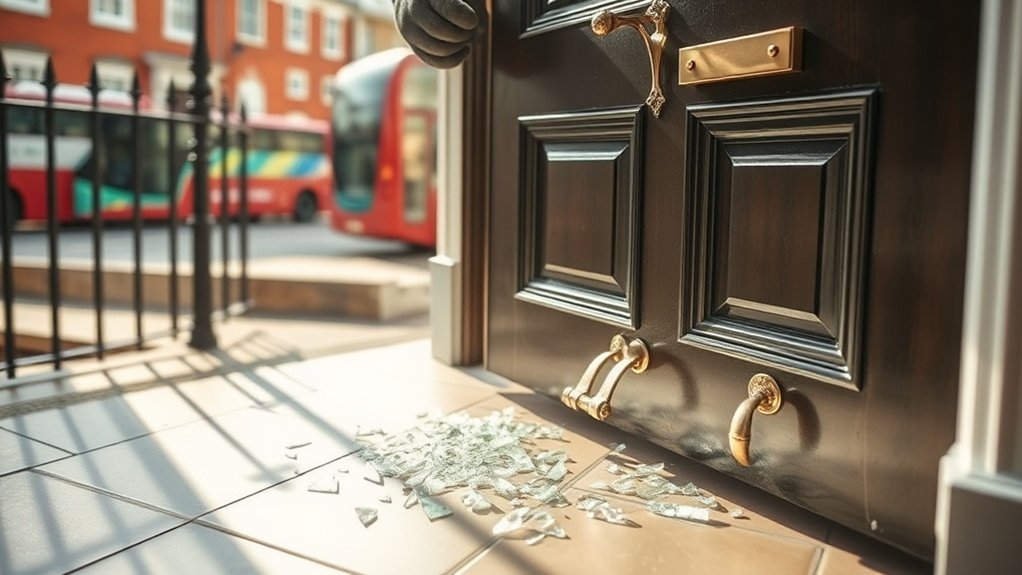
When door glass cracks , shatters, or becomes unstable in London, it’s an emergency when it creates an immediate safety or security risk. You should treat any fracture that compromises the pane’s structural integrity as critical, especially on entry doors, communal entrances, or high-traffic commercial thresholds.
You’re facing an emergency if shards are loose, the opening is accessible from outside, or the damage affects fire-rated, security, or laminated glass. Even doors with decorative patterns or specialist glazing for historical restoration become high-risk once stability’s lost. Prioritise fast isolation of the area, temporary boarding, and immediate professional assessment. For smart homes or access-controlled buildings, any damaged vision panel near locking hardware also demands urgent intervention to prevent forced entry or system tampering.
Repair vs Full Door Glass Replacement: How to Decide
When you’re deciding between repairing damaged door glass and opting for a full replacement, you need to assess the severity and pattern of the damage, from hairline cracks to full panel failure. You’ll also want to compare total lifecycle cost, including energy efficiency losses, repeat call-outs, and potential frame or hardware issues that might make a quick repair a false economy. Above all, you should evaluate how each option affects safety, security, and thermal performance so you restore the door to a reliable and compliant condition.
Assessing Damage Severity
Although all damaged door glass looks urgent, you should first quantify the severity before deciding between a targeted repair and a full replacement. Start by mapping crack length, depth, and spread patterns; star-breaks, edge fractures, and impact points near hinges or locks usually indicate structural risk. Evaluate how the damage compromises design aesthetics and sightlines, especially on bespoke or framed systems.
Next, assess material durability. Toughened, laminated, and smart or coated glass each respond differently to stress; micro-fractures in toughened panels can propagate suddenly, while delamination in laminated units often progresses gradually. Check for flexing in the surrounding frame and hardware, which can amplify loads on weakened areas. Document findings with high-resolution photos so a glazing specialist can model stresses and recommend a precise intervention.
Cost, Safety, And Efficiency
Because glass performs both structural and security functions in a door, your decision to repair or fully replace should balance three factors: cost over the lifecycle of the unit, the safety margin you’re willing to accept, and the operational efficiency of the door in daily use. You shouldn’t look only at the invoice total; evaluate thermal performance, Energy efficiency ratings, and the likelihood of future failures .
Repair makes sense when damage is localised, the existing unit is modern double- or triple-glazing, and safety glass certification remains intact. Full replacement is preferable when seals have failed, the frame’s distorted, or impact resistance’s compromised. At that point, you can upgrade to laminated security glass, improve airtightness, enhance aesthetic appeal, and reduce heating loads in London’s variable climate.
Typical Costs of Door Glass Replacement in London
Typical costs for door glass replacement in London vary primarily by glass type, door configuration, safety requirements , and call‑out urgency. For a basic single glazed panel in a timber door, you’ll typically spend £120–£180 supplied and fitted. Higher‑spec laminated safety glass in a standard residential door tends to fall between £180–£280.
If you prioritise door aesthetics and advanced glass color options, expect £220–£350, depending on panel size and complexity of the glazing bars or cassettes. Large patio or French door panes often range from £300–£650 per leaf, particularly where toughened or laminated units are mandatory for compliance.
Emergency 24/7 call‑outs usually add £80–£150, while difficult access, heritage frames, or bespoke shapes can push costs above £700.
Common Door Glass Types in London (And Their Pros)
When you plan a door glass replacement in London, you’ll usually choose between toughened (tempered) glass, laminated safety glass , double‑glazed units, decorative/obscure glass, and, in some cases, wired or fire‑rated glass. Toughened glass offers high impact resistance and breaks into small granular pieces, reducing injury risk. Laminated glass sandwiches a clear interlayer, so shards adhere, boosting security and acoustic control.
Double‑glazed door units improve thermal efficiency and reduce condensation while still accepting advanced coatings or tints. Decorative or obscure glass gives privacy without sacrificing daylight, using textures, decorative patterns, or etched designs that can echo historical styles in period London properties. Wired and fire‑rated glass add containment of flames and smoke while maintaining visibility and light transmission.
Safety Rules and Building Regulations for Door Glass in London
After you’ve chosen a glass type, you must check that the replacement meets UK safety and building regulations , which are actively enforced in London by local Building Control. You’ll work mainly with Building Regulations Approved Document K (protection from impact) and Part L (energy efficiency). Any glass within “critical locations” – usually within 1,500mm of floor level or near doors – must be safety glass, correctly marked to BS EN 12150 or BS EN 14449.
You can still specify advanced aesthetics such as glass tinting or decorative etching, but these can’t compromise impact resistance , visible markings, or light‑transmission requirements. Always confirm that modified glass retains its safety rating. For new or considerably altered doors, obtain Building Control sign‑off or use a registered Competent Person installer.
Security-Focused Door Glass Options for London Properties
When you’re upgrading door glass in London, you need to balance laminated security glass specifications with required levels of privacy and tested impact resistance. You should understand how interlayer thickness, glass composition, and framing systems work together to resist forced entry and retain glass in the frame under impact. By selecting configurations that meet or exceed relevant security and impact standards while limiting visibility into your property, you considerably reduce vulnerability at one of your building’s most exposed points.
Laminated Security Glass
Although it looks similar to standard glazing, laminated security glass radically improves a London door’s resistance to forced entry, impact, and vandalism by bonding two or more glass panes with a tough interlayer, typically PVB (polyvinyl butyral) or SGP (ionoplast). You’re not just upgrading glass; you’re engineering a controlled failure mode that maintains integrity under attack.
By choosing Laminated Security solutions, you maximise Glass Durability , delay intrusion, and guarantee shards stay adhered to the interlayer, reducing injury risk.
- Interlayer engineering – Specify thickness and material (PVB vs SGP) to tune stiffness, edge stability, and post-break performance.
- System integration – Pair laminated units with reinforced frames, secure glazing beads, and certified locking hardware.
- Standards compliance – Verify EN 356 and PAS 24 test ratings to align protection with your threat profile .
Privacy and Impact Resistance
Because front doors in London often sit close to the pavement and busy communal areas, your glazing choice must balance privacy with high impact resistance and controlled breakage. You can achieve this by specifying laminated safety glass with a surface treatment that delivers frosted privacy without sacrificing optical clarity from inside.
For security-focused doors, you should target glass constructions tested to BS EN 356 for impact resistance, ideally P2A–P4A ratings in residential settings. Combine this with multi-layer interlayers that hold shards in place under attack and reduce spall. You can also upgrade to acoustic interlayers to dampen forced-entry noise. Specify toughened-laminated units for doors exposed to heavy pedestrian traffic or potential vandalism, ensuring the glass fails safely while maintaining a robust security envelope.
Door Glass Upgrades for Better Warmth and Less Noise
Even before glass breaks or mists up, upgrading the pane in your door can dramatically improve thermal efficiency and noise control . By specifying high‑performance insulated glass units, you boost energy efficiency, cut draughts, and stabilise indoor temperatures. Acoustic interlayers and asymmetric laminates disrupt sound waves, reducing traffic and street noise without compromising safety or light.
You can also integrate aesthetic enhancement through patterned, tinted, or low‑iron glass while maintaining compliant sightlines and impact resistance. For London properties, you’ll want glazing that meets current Building Regulations and balances performance with weight and frame capacity.
- Specify low‑E coatings and warm‑edge spacers for superior U‑values.
- Choose gas fills (argon/krpton) to enhance insulation.
- Combine acoustic laminate with secure fixing methods.
Door Glass Replacement in London: Step-by-Step Process
Once you’ve decided to replace the glass in a door, a structured, safety‑led process guarantees the new unit performs correctly and complies with regulations. You start by surveying the opening, identifying load‑bearing elements, and mapping sightlines, especially in London properties with historical architecture. You then specify glass type, thickness, and safety rating, prioritising laminated or toughened units and eco friendly materials with low‑emissivity coatings.
Next, you isolate the work zone, depressurise any glazed units, and remove beads, gaskets, and existing glass using controlled, low‑impact methods. You prepare the frame , checking tolerances, squareness, and moisture paths. Then you bed the new unit on packers, align it, refit secure beads, and seal per manufacturer data. Finally, you document conformity and thermal performance.
Choosing a Reliable London Door Glazier
When you’re choosing a door glazier in London, you’re not just hiring a tradesperson, you’re appointing someone to work on a structural safety component of your property. You need a specialist who understands modern door design , load paths, and impact-resistance, not just aesthetics.
Look for a glazier who can integrate laminated or toughened safety glass with advanced locking hardware, sensors, and smart-access systems without compromising the frame’s tolerances.
- Credentials & compliance – Verify FENSA or equivalent registration, insurance, and documented adherence to BS EN glazing standards.
- Technical capability – Assess experience with oversized panels, acoustic glazing, and complex door design geometries.
- Detail & finish quality – Review case studies showing custom finishes, precise sightlines, airtight seals, and thermally broken thresholds that enhance performance and security.
Preventing Damage and Maintaining Your New Door Glass
To keep your new door glass performing safely and looking sharp, you’ll need consistent daily care, effective impact protection, and a structured seasonal maintenance routine . You’ll inspect and clean the glass with the right products, manage risks from slamming, misuse, or nearby objects, and monitor seals, hinges, and frames as weather changes. By following a clear checklist, you reduce the chance of chips, cracks, and premature failure while preserving the glass’s structural integrity.
Daily Care Best Practices
Although modern door glass is engineered for durability, it still requires consistent , careful maintenance to stay safe, functional, and visually clear. You should treat the surface as a precision component, especially if it includes decorative patterns or advanced UV coatings that can degrade with harsh chemicals.
- Use a pH‑neutral, non‑abrasive glass cleaner and a microfiber cloth; avoid ammonia and powdered agents that can etch coatings or scratch textured designs.
- Inspect edges, seals, and gaskets weekly for micro‑gaps or moisture ingress; early detection prevents frame distortion, draughts, and safety failures .
- Clean hardware interfaces—hinges, handles, locking keeps—so dust and grit don’t transfer to the glass under load, and verify that operation remains smooth, aligned, and vibration‑free.
Protecting Glass From Impacts
Properly protecting your new door glass from impacts starts with understanding how force actually transfers through the pane, frame, and hardware. You’re not just shielding glass; you’re managing load paths. Specify laminated or toughened units where risk is highest, and confirm the frame system can absorb and redistribute point loads without racking.
Apply optically clear impact-protection films that don’t distort decorative patterns or compromise energy efficiency coatings. Position security bars, balustrades, or bollards so they intercept moving objects before they contact the glass. If you use smart locks or heavy closers, calibrate closing speed and latch pressure to prevent slam shocks. Finally, guarantee hinges, keep plates, and fixing screws are correctly rated so hardware, not glass edges , takes the brunt.
Seasonal Maintenance Checklist
Even the best-installed door glass will deteriorate prematurely if you don’t follow a structured, seasonal maintenance routine that targets common failure points . In London’s shifting climate, you need a precise, repeatable checklist that protects both performance glazing and panels chosen for decorative patterns or historical authenticity.
-
Inspect seals and frames quarterly. Check for micro-gaps, perished seals, and frame distortion; reseal immediately to prevent moisture ingress, delamination, and thermal stress fractures.
-
Clean glass with pH-neutral solutions each season. Avoid abrasives that can etch coated surfaces or fine leadwork in heritage units. Verify drainage channels stay unobstructed.
-
Test hardware and safety features biannually. Lubricate hinges and locks, confirm secure fixing of glazed units, and verify toughened or laminated safety glass remains undamaged and compliant.
Frequently Asked Questions
Can I Get Same-Day Decorative or Patterned Replacement Glass to Match Existing Style?
Yes, you can often get same-day decorative or patterned replacement glass, but exact matching depends on stock profiles and your existing decorative patterns. You’ll need a precise survey of glass thickness, safety rating, and edge tolerances. Technicians typically prioritise glass durability, using toughened or laminated units to meet safety regulations. If your pattern’s uncommon, they may fit a secure temporary panel, then custom-manufacture a perfect visual and structural match.
How Does Listed Building Status Affect My Door Glass Replacement Options?
Listed status turns your glass choices into a thousand-piece regulatory puzzle . You must align with historic regulations, so you’ll likely need like-for-like glass, traditional sightlines, and approved safety laminates. Preservation challenges limit modern-looking units, but you can still integrate high‑performance glazing behind heritage‑style panes. Always secure listed building consent, document U‑values, impact ratings, and fixing methods, and work with specialists who balance innovation, compliance, and structural safety.
Will Replacing Door Glass Increase My Property’s Resale Value in London?
Yes, it can, especially if you specify high‑performance glazing. You’ll boost buyer appeal by integrating laminated glass for Security upgrades, toughened safety glass, and acoustic interlayers. Add privacy solutions such as frosted or switchable smart glass to protect interiors while still maximizing daylight. Guarantee compliance with Part L and Part Q , use certified installers, and document U‑values and security ratings to evidence performance—this technical data directly supports higher resale valuations.
Can I Coordinate Door Glass Replacement With a Full Door Frame Upgrade?
You can absolutely coordinate glass replacement with a full door frame upgrade, and you should. Specify a compatible glazing system, reinforced frame profiles, and multi-point locking to maximize security enhancements. Select insulated or low‑E units to boost energy efficiency and meet current performance standards. Confirm the installer assesses structural tolerances, fire‑rating requirements, and sealing interfaces so the frame, hardware, and glass operate as an integrated, future‑proofed access system.
Are Eco-Friendly or Recycled Glass Options Available for London Door Replacements?
Yes, you can specify Recycled glass and other Eco friendly materials for London door replacements. You’ll typically choose from recycled-content laminated units, low‑iron or low‑E high‑performance glass, and thermally enhanced glazing with warm‑edge spacers. Verify U‑values, g‑values, and acoustic ratings, plus compliance with Part L and Part Q. Confirm manufacturers provide documented recycled content, impact‑resistance certification, and installation methods that maintain airtightness and safety glazing standards.
Summary
When you replace damaged door glass quickly, you’re not just restoring appearance—you’re restoring a safety barrier and thermal envelope. Statistically, around 30% of a home’s heat loss occurs through doors and windows, so high‑performance glazing isn’t a luxury, it’s a safety and efficiency upgrade. By choosing certified glass, competent London glaziers, and regular maintenance, you’ll cut risks, improve insulation, and guarantee your new door glass performs reliably in every season.