
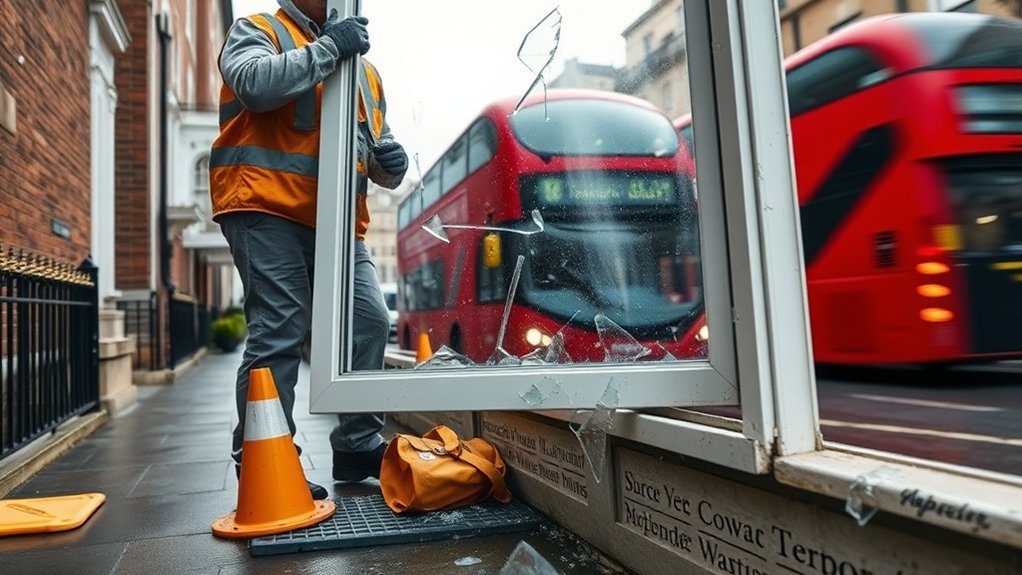
If you’ve got broken glass in London, act fast to secure the area , prevent injury, and protect against weather and intrusion. Isolate the space, switch off nearby electrics, and avoid handling shards without PPE. Call an emergency glazier who can board up safely, assess frame integrity, match the correct safety glass type, and meet BS/EN standards and insurance requirements. Next, you’ll see how to choose the right solution, control costs, and avoid future failures.
Key insights
- 24/7 emergency glass replacement and boarding-up services across London to secure broken windows, doors, or shopfronts quickly.
- Glaziers identify glass type (annealed, toughened, laminated, patterned) and replace like-for-like or upgrade to safer, more secure glazing.
- Services include safe glass removal, waste disposal, temporary weatherproofing, and compliance with UK safety standards (e.g., BS 6206 / EN 12600).
- Detailed quotations factor in glass specification, access, building type, and insurance requirements, with written warranties and documentation for claims.
- Reputable London glaziers are GGF/FENSA-registered, fully insured, and offer options for security laminates, acoustic glazing, and energy-efficient units.
When You Need Emergency Glass Replacement in London
When a window, door panel, or shopfront shatters unexpectedly, you need to treat it as a safety and security incident that requires immediate action and, in many cases, emergency glass replacement in London. You need rapid response when breakage compromises weatherproofing, visibility, or security boundaries, especially on street-facing or access-critical elevations.
You should also prioritise emergency glass replacement when impact damage leaves cracks propagating across toughened or laminated units, since latent failure can occur without warning. From an emergency preparedness standpoint, any glazing failure near public footfall, stairwells, or operational machinery warrants immediate intervention.
You’ll additionally require urgent service when compliant glass disposal, documentation for insurance, and swift reinstatement of safety-rated or energy‑efficient glazing are operational or regulatory priorities.
First Steps to Make Your Property Safe and Secure
Before you address the broken glazing itself, you should stabilise the immediate area to eliminate hazards and prevent unauthorised access. Start by isolating the zone: shut doors, deploy temporary barriers, and, if possible, restrict foot traffic with clear signage. Switch off nearby electrical circuits where glass and moisture might interact.
Next, conduct a visual assessment : identify loose shards, compromised frames, and any impact to decorative glass or elements awaiting antique restoration. Wear cut‑resistant gloves and eye protection before handling fragments. Carefully collect large pieces into rigid containers; use a HEPA‑filter vacuum only on hard surfaces, never on soft furnishings.
Finally, secure the aperture with robust temporary sheeting, ensuring tight edge seals to deter intrusion and weather ingress.
Emergency Boarding vs Full Glass Replacement
When a pane shatters, you must decide whether to secure the opening with emergency boarding or proceed directly to full glass replacement. You’ll base this decision on risk factors like exposure to weather, access for intruders, structural stability of the frame, and the type of glazing originally installed. By understanding when boarding is essential and when it’s safe and cost‑effective to install new glass immediately, you reduce hazards and restore proper protection to your property.
When Boarding Is Essential
Although full glass replacement is the long‑term solution, there are situations where emergency boarding is the only safe immediate response. You need boarding when the opening compromises structural integrity, weather resistance, or security, and it’s unsafe to handle remaining shards. Impact‑damaged shopfronts, shattered doors in high‑traffic areas, or fractured decorative glazing panels all warrant immediate containment.
You also deploy boarding when you must preserve high‑value glass aesthetics. Temporary panels protect frames, manifests, and hardware from further stress, allowing you to specify innovative laminated or smart‑glass replacements without time pressure. In multi‑storey properties, boarding becomes essential whenever falling fragments could endanger pedestrians or vehicles below. Properly fixed boards, sealed and anchored to standards, stabilise the envelope until precision‑engineered glass can be installed.
Choosing Full Replacement
Once the opening is stabilised with secure boarding, you should evaluate whether full glass replacement is necessary based on structural performance , safety compliance, and operational risk. Temporary boarding mitigates immediate exposure, but it doesn’t restore visibility, acoustic control, or thermal efficiency.
You should specify replacement when impact damage , edge chipping, or frame distortion compromises Glass durability or invalidates certification. Assess whether the original unit meets current Replacement regulations, including BS EN safety glass standards, containment requirements, and energy performance targets.
For high‑traffic or high‑risk zones, you should prioritise laminated or toughened systems, sometimes with smart coatings or integrated sensors to enable predictive maintenance. Full replacement also lets you recalibrate hardware, seals, and framing, ensuring the entire assembly operates as a compliant, resilient façade component.
Broken Glass Types and the Replacements You’ll Need
Because different glass failures pose different hazards, you first need to identify the type of broken glass before choosing a replacement. You’re not just restoring a view; you’re managing impact resistance, fragmentation behavior, and long‑term performance while preserving glass craftsmanship and any decorative panels.
Typical breakages indicate specific replacement strategies:
- Annealed window glass – shards with razor edges; you’ll specify upgraded variants or improved thickness.
- Tempered safety glass – granular cubes; you’ll match thickness, edge finish, and heat‑treatment certification.
- Laminated glass – cracked but still bonded; you’ll select interlayer type for UV control and acoustic performance.
- Patterned or decorative panels – fractured textures or inserts; you’ll commission like‑for‑like patterns or modern high‑fidelity equivalents.
Choosing Safe, Secure Glazing for London Properties
Identifying the failed glass type is only the first step; you now need to specify replacement glazing that actively improves safety, security, and compliance for a London property. You’ll assess three core factors: impact resistance , containment on breakage, and vulnerability to forced entry.
Prioritise laminated safety glass for doors, sidelights, low-level glazing, and street-facing windows; its interlayer retains fragments and resists attack. For higher-risk sites, specify certified security laminates tested to relevant EN standards.
In historical buildings, you can pair slim-profile laminated units with heritage sightlines, or place a protective laminate on the internal pane while retaining original decorative glass externally. For upper floors, consider toughened or heat-soaked toughened glass to mitigate spontaneous breakage. Always confirm U-values, acoustic ratings, and frame compatibility.
How Glass Replacement Works in London (Step by Step)
After you’ve stabilised the area and chosen the correct specification, glass replacement in London follows a controlled sequence designed to manage risk, protect the building fabric, and guarantee regulatory compliance. Your installer first isolates the work zone, uses PPE, and performs a structural check on frames, fixings, and surrounding substrates.
They then deglaze: remove beads, sealant, and existing units, documenting any Glass art or stained glass that must be replicated. Next, they position the new unit, verify edge clearances , packers, and ventilation paths, then secure with compatible sealants and fire‑ or security‑rated components where required.
- Site safety setup and risk assessment
- Precision deglazing and substrate inspection
- Installation, sealing, and tolerance verification
- Final cleaning, compliance sign‑off, and digital records
Glass Replacement Costs in London
When you assess glass replacement costs in London, you need a clear pricing breakdown covering materials, labour, disposal, and emergency surcharges. You’ll also want to understand how glass type, glazing thickness, frame condition, access issues, and safety requirements (such as toughened or laminated glass) influence the quote. By knowing these cost drivers in advance, you can compare contractors accurately and guarantee the specification still meets all relevant safety standards.
Typical Pricing Breakdown
Because broken glazing poses both safety and security risks, you need a clear view of typical glass replacement costs in London before you commit to any work. You’ll generally see itemised pricing so you can benchmark safety performance, durability, and glass aesthetics against cost.
A typical breakdown looks like this:
- Site attendance & emergency make-safe: call‑out, risk assessment, temporary boarding or film.
- Glass unit cost: standard float, safety glass, or decorative panels, priced per m², including edge finishing.
- Fabrication & processing: cutting, toughening/laminating, polishing, and any acoustic or solar-control interlayers.
- Installation & compliance: labour, access equipment, sealants, fixings, removal of broken glass, and certification.
Structured quotes let you compare solutions and prioritise safety-critical elements without overspending.
Factors Affecting Quotes
Understanding the line items is only part of budgeting; you also need to know what drives those figures up or down on a London project. Your quote varies with glass specification (laminated, toughened, low‑E coatings), pane thickness, and required Glass safety rating, especially in high-occupancy or public-facing buildings.
Access constraints—height, street closures, out-of-hours work—raise labour and equipment costs. Listed façades and conservation zones add compliance steps and permit fees.
You’ll also see price shifts based on replacement technology: precision surveying, digital templating, and unitised glazing systems reduce installation time but may increase material cost. Integration with smart sensors or electrochromic glass adds premium components. Finally, lead time, emergency response, and waste-handling standards all influence the final figure.
Who Pays? Insurance, Landlords and the Council
Although replacing broken glass in London often feels urgent, you shouldn’t proceed until you’ve confirmed exactly who’s liable for the cost: you, your insurer, your landlord, or in limited cases the local council. First, interrogate your policy’s Insurance coverage: is accidental damage, vandalism, or emergency boarding included, and are there excesses that exceed the quote?
In rented properties, landlord responsibilities usually extend to structural glazing, while you may fund damage caused by misuse or negligence. Social housing and council-owned stock follow their own repair protocols , often with safety-first triage.
Use this checklist before authorising work:
- Review policy documents and exclusions
- Verify tenancy agreement and repairing clauses
- Confirm council policies for vulnerable occupants
- Obtain written confirmation of who’s paying
Finding a Reliable Local Glazier in London
Once you know who’s paying, you need to select a glazier who’s competent, properly vetted, and equipped to work safely on your specific type of glazing. In London, start by checking GGF or FENSA membership , public liability insurance, and DBS checks for residential access. Ask for written RAMS (risk assessments and method statements) for higher floors or commercial units.
Review their portfolio for evidence of local craftsmanship and familiarity with current glass design trends such as high‑performance coatings, acoustic laminates, and smart-glass integrations. Verify they can source certified safety glass to BS 6206/EN 12600 where required. Demand itemised quotes, with lead times, emergency call‑out protocols, and warranties clearly defined. Finally, confirm they handle waste glass disposal via licensed carriers.
Preventing Future Damage With Tougher, Safer Glazing in London
Why replace like‑for‑like when you can use the breakage as an opportunity to upgrade to tougher, safer glazing that’s better suited to London’s risks and regulations? You can specify laminated or toughened systems that resist impact, forced entry, and thermal stress , while still aligning with planning constraints and modern glass design.
Focus on engineered products that integrate security, energy performance, and aesthetics:
- Laminated safety glass with PVB or ionoplast interlayers for anti‑shatter performance
- Toughened/heat‑soaked panels to minimise spontaneous breakage in high‑rise applications
- Decorative glazing with ceramic frits or embedded films that add privacy and solar control
- Framing, fixings, and sealants tested as a complete system to BS EN standards
Frequently Asked Questions
Can I Stay in My Property During the Glass Replacement Work?
You can usually stay in your property, but you must isolate the work zone. Keep clear of the area until technicians remove shards, install new glazing, and clean all debris. If they apply window tinting or security film, avoid contact until curing finishes. Wear footwear in adjacent rooms, keep children and pets away, and verify installers use dust control, safe glass handling, and proper PPE to minimize risk.
How Does Broken Glass Replacement Affect My Home’s Energy Efficiency Rating?
It can substantially improve your home’s energy efficiency rating if you upgrade the glass specification. When you replace broken panes with modern double or triple glazing , you enhance window insulation, reduce thermal bridging, and minimise air leakage. This yields measurable energy savings, stabilises internal temperatures, and lowers HVAC load. Specify low‑emissivity coatings, warm‑edge spacers, and gas fills to optimise performance while maintaining safety, compliance, and long-term durability.
Are There Eco-Friendly or Recycled Glass Options Available for Replacements?
Yes, you’ve got Eco friendly options, so you don’t need to worship the sacred landfill anymore. You can specify Recycled glass units with low‑iron content, argon-filled cavities, and low‑E coatings that maintain structural integrity and U-values. Make sure suppliers provide conformity to EN 1279 and toughening/lamination standards for impact safety. You’ll reduce raw-material demand, lower embodied carbon, and still achieve high optical clarity and thermal performance.
Will Replacing Broken Glass Increase My Property’s Resale or Rental Value?
Yes, it typically will. When you replace broken glass with modern, high‑performance units, you enhance glass safety through tougher materials, better impact resistance, and compliant glazing systems. You also deliver aesthetic improvements: cleaner sightlines, consistent finishes, and optimized light transmission. Prospective buyers or tenants perceive upgraded glazing as lower‑risk, lower‑maintenance, and more energy‑efficient, which can justify higher resale pricing and support premium rental positioning.
What Warranties or Guarantees Do Glaziers Typically Offer on New Glass Installations?
You typically receive two layers of protection: a workmanship warranty and a glass/material guarantee . You’ll see coverage for seal failure, stress cracks, and defects, provided glass safety and installation standards are met. Many glaziers offer 5–10 years on double glazing units, 1–3 years on workmanship. They may exclude impact damage or misuse, so you’ll need written terms detailing duration, conditions, and any performance metrics like U‑values or acoustic ratings.
Summary
When glass shatters in your London property, you can’t leave safety to chance. Act fast: make the area secure, arrange emergency boarding, then specify compliant, impact‑resistant glazing that meets British Standards. Assess costs, clarify who pays, and use reputable, accredited glaziers only. Treat every broken pane like an exposed electrical wire—harmless if managed correctly, dangerous if ignored. By upgrading to tougher, safer glazing, you’ll reduce risks, enhance security, and protect your property long‑term.