Sash window repair in London restores your original timber windows while upgrading performance, security, and comfort. A specialist will diagnose decay, draught paths, and mechanical faults, then splice in new hardwood, overhaul pulleys and cords, rebalance weights, and add discreet brush seals or slimline double glazing. Typical costs range from around £120 for minor adjustments to £1,200+ for full refurbishment per window. You’ll see how to decide between repair or replacement and what standards to expect next.
Key insights
- Specialist London sash repair services survey windows, diagnose decay, draughts and mechanical faults, then recommend targeted repairs or full refurbishment.
- Typical costs range from £120 for basic adjustments to £1,200+ per window for full refurbishment with glazing and draught-proofing.
- Common issues include rotten timber, sticking or dropping sashes, rattling panes, draughts, and poor noise or thermal performance.
- Upgrades can include discreet draught sealing, slimline or acoustic double glazing, and improved ironmongery while preserving original period character.
- Conservation-area and listed-building experience is essential to meet heritage requirements while improving comfort, security and energy efficiency.
What Does Sash Window Repair Involve in London?
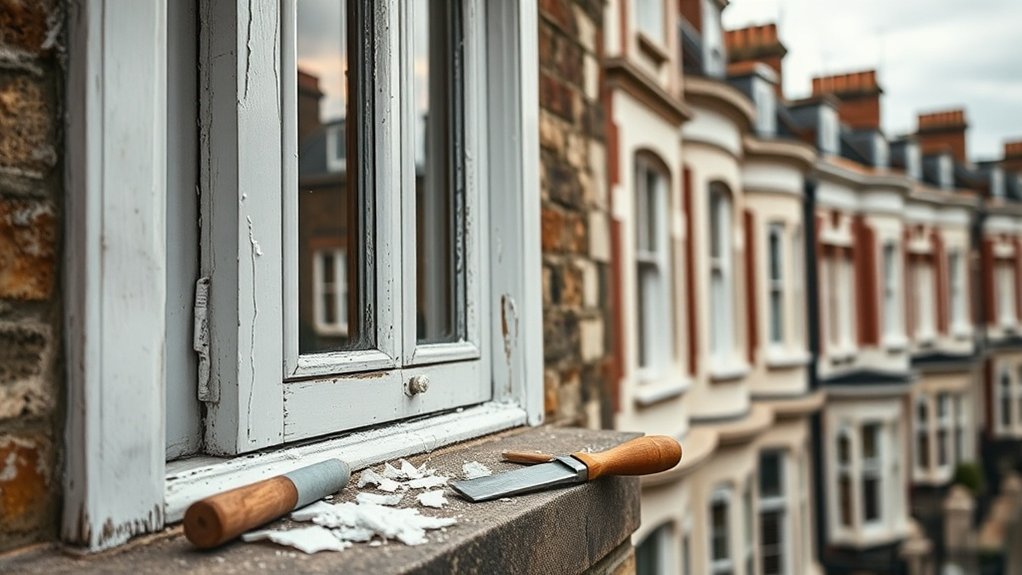
When you arrange sash window repair in London, a specialist first carries out a detailed survey to diagnose structural, mechanical, and thermal issues in the box frame, sashes, and glazing. They map timber decay , paint failure, draught pathways, and cord or pulley wear, then specify targeted sash window restoration rather than generic replacement.
Next, they carefully dismantle the sashes, retain sound timber, and splice in matching hardwood using techniques aligned with historical craftsmanship. You’ll see upgraded parting beads, staff beads, and brush seals integrated to improve airtightness while preserving original sightlines.
They overhaul pulleys, rebalance weights, and replace cords with high-tensile, low-stretch options . Finally, they reglaze where needed, apply microporous coatings, and fine-tune operation for smooth, low-friction travel.
Signs Your Sash Windows Need Professional Repair
Although sash windows can tolerate decades of use, specific visual and performance changes indicate they now need professional repair rather than casual maintenance. You’re looking for issues that compromise sash window aesthetics, performance, and historical significance rather than just comfort.
-
Sticking or dropping sashes – If sashes jam, drift open, or won’t stay up, the cords, pulleys, or balance systems are failing and need calibrated adjustment or replacement.
-
Visible timber decay – Soft, flaking, or dark-stained wood around sills, joints, or glazing bars signals active rot requiring spliced repairs, not filler.
-
Drafts and acoustic leakage – Noticeable cold spots or street noise indicate distorted frames, worn parting beads, or failed seals .
-
Distorted glazing lines – Rattling panes, failing putty , or warped meeting rails undermine both structural integrity and original sightlines.
Repair or Replace? What’s Best for Your Sash Windows?
Once sash windows start underperforming, the essential decision isn’t simply repair versus replacement , but which option preserves more of the original fabric while restoring full functionality. You first diagnose: are defects confined to cords, beads, putty, and isolated timber decay, or do you see frame distortion, pervasive rot, and failed junctions?
If more than 60–70% of the box frame and sashes remain sound, a skilled overhaul usually outperforms replacement, retaining authentic profiles and Sash window aesthetics grounded in original joinery. Repair also safeguards Sash window history by keeping historic glass , mouldings, and hand-cut joints in service.
You’d typically consider full replacement only when structural integrity is compromised or prior inappropriate alterations make accurate restoration uneconomical.
Balancing Period Sash Window Character and Modern Comfort
Despite their age, well-executed sash window repairs let you reconcile original period detailing with contemporary expectations for warmth, security, and acoustic control. You don’t have to sacrifice historical design to gain performance; you just need a precise, component-led strategy that respects the fabric of the frame and sashes.
You balance comfort and aesthetic preservation by integrating discreet modern upgrades into the existing joinery:
- Specify slimline, heritage-appropriate double or vacuum glazing set into existing or replica glazing bars.
- Install concealed brush or pile seals to reduce air leakage while retaining traditional sightlines.
- Upgrade ironmongery with high-security locking systems in finishes that match the period hardware.
- Improve performance of sash cords, pulleys, and weights to ensure smooth, airtight closure without altering external appearance.
Common Sash Window Problems in London Homes
When you assess sash windows in London properties, you’ll usually encounter two primary issues: persistent draughts with associated heat loss, and sashes that stick or jam in the frames. Both problems typically originate from worn or distorted timber, degraded putty and glazing seals, failed sash cords, and historic movement in the box frame. Understanding exactly how these defects affect air-tightness and sash travel lets you plan precise remedial work rather than relying on temporary fixes.
Draughts And Heat Loss
Although original sash windows were ingeniously designed for ventilation, age, poor maintenance , and unsympathetic alterations often turn them into major sources of draughts and heat loss in London homes. You typically lose warmth through unsealed meeting rails, distorted staff beads, and inadequately fitted parting beads, not just the glass itself. Targeted upgrades let you retain heritage character while achieving contemporary energy performance.
- Rebuild putty lines and carry out glass restoration to improve edge-sealing around historic panes and decorative glazing.
- Install concealed brush seals to close perimeter gaps without altering sightlines.
- Micro‑rout sash boxes and fit low‑friction, compressible seals for airtight yet smooth movement.
- Combine slimline heritage double glazing or vacuum units with ventilated glazing rebates to reduce U‑values while preventing condensation and timber decay.
Sticking Or Jamming Sashes
Improving thermal performance often exposes another recurring issue in London sash windows: sashes that stick, scrape, or jam in the box frame. You’re usually dealing with cumulative paint build-up , swollen timber, distorted staff beads, or failing sash cords altering the sash’s alignment and clearance.
Begin by measuring the sash channels and checking for parallel, consistent gaps. Carefully de-nib paint from the running surfaces, then fine-sand and wax or graphite-lubricate the pulleys and parting beads. Where timber has swollen or twisted, you may need to plane fractions of a millimetre from the stile edges, protecting sash window aesthetics by preserving original profiles.
Always prioritise historical preservation: retain original glass, cords, and ironmongery where viable, upgrading discreetly with low-friction beads and hidden brush seals.
How Sash Window Repair Cuts Heat Loss and Bills
Because original timber sashes are often the thinnest point in a property’s thermal envelope , targeted sash window repair can dramatically reduce conductive, convective, and draught-related heat loss, cutting your energy bills without full replacement. You optimise thermal performance while retaining sash window aesthetics and meeting strict historical preservation requirements across London’s conservation areas.
You’re not just patching timber; you’re engineering a more efficient glazing interface:
- Rebuilding decayed glazing rebates to ensure tight glass-to-putty-to-timber contact, limiting conductive bridging.
- Upgrading to slimline double glazing (where permitted), improving U‑values without altering sightlines.
- Refining meeting rail and parting bead tolerances, minimising convective air pathways within the sash box.
- Integrating modern perimeter seals discreetly, preserving original profiles while dramatically reducing uncontrolled heat loss.
How to Fix Draughts and Rattles in London Sash Windows
To cure draughts and rattles in your London sash windows, you first need to pinpoint exactly where air is entering and which components are moving excessively. You’ll then seal gaps with appropriate restoration-grade materials—such as brush pile carriers, parting beads, staff beads, and traditional draught-proofing systems—matched to the window’s age and timber condition. Finally, you’ll eliminate rattling by correcting sash clearances, tightening fixings, and adjusting cords, pulleys, and weights so the sashes run smoothly but without play.
Identifying Draught Sources
Where exactly is that cold air getting in around your London sash windows? You’ll diagnose draught paths before you touch a seal. Work methodically so you protect window aesthetics while preparing for modern ventilation solutions.
- Perimeter joints – Run your hand and a smoke pencil along staff beads, parting beads, and box frame junctions; watch for turbulence and temperature shift.
- Sash-to-frame contact – Check meeting rails and stiles for daylight using a torch from outside at night; note any uneven contact points.
- Glazing interface – Inspect putty lines, glazing bars, and rebate corners for hairline gaps or failed compound.
- Ancillary components – Examine sash cords, pulley stiles, and latch keeps; poorly fitted ironmongery and cord exits often become concealed draught channels .
Sealing Gaps Effectively
Once you’ve mapped the draught paths, you can start sealing gaps in a way that calms rattles without compromising the character or operation of the sash. Prioritise the meeting rails, parting beads, and staff beads, where micro-gaps often occur. You’ll achieve the best balance of performance and window aesthetics by using low-friction brush or fin seals set into precision-routed grooves.
Work with the original sash design, not against it. Machine or chisel grooves to a controlled depth, maintaining timber strength and paint edges. Use compressible seals at the head and bottom rail, where tolerances are larger, and slimmer brushes on the verticals to retain slim sightlines. Always dry-fit components and test sash travel before final fixing and finishing.
Eliminating Sash Rattling
Although draught sealing goes a long way, you only stop sash rattling when every moving component is properly supported, aligned, and tensioned . You’re engineering stability while honouring sash window history and preserving window aesthetics.
-
Inspect parting beads and staff beads. Replace loose or warped sections with precision-machined timber or low-friction composite beads that maintain tight, linear clearances.
-
Fit concealed brush or tubular seals in the parting beads and meeting rails to decouple timber-to-timber contact and damp micro-vibrations.
-
Rebalance the sashes by weighing each leaf, then matching or recalibrating counterweights and cords to achieve neutral, rattle-free travel.
-
Introduce discreet sash lifts, restrictors, and security locks that clamp the sashes under light preload, eliminating play without compromising period sightlines.
Sash Window Upgrades for Better Noise Insulation
Because traditional box sashes were never designed for modern traffic and aircraft noise, effective sound insulation starts with upgrading the window’s weakest acoustic paths: the single glazing, loose sashes, and air gaps in the box frame. You begin by specifying acoustic or laminate glass tailored to your sash design, varying pane thickness to disrupt sound frequencies while preserving slim sightlines and window aesthetics.
Next, you commission precision-machined staff and parting beads with integrated brush or compression seals, eliminating perimeter leaks without visually heavy profiles. You can introduce discreet secondary glazing within the reveal, using low-iron glass and minimal aluminium sections to maintain historic proportions. Finally, you re-bed and seal glazing with modern elastic putties, ensuring airtight, flexible joints that absorb vibration and prevent whistling draughts.
Improve Sash Window Security Without Losing Charm
While original Georgian and Victorian sashes were never designed with modern security standards in mind, you can considerably harden a window without compromising its period detailing. You upgrade the locking strategy, not the character.
-
Install face-fitted locking fasteners in solid brass or bronze. Specify key-lockable versions that clamp the meeting rails tightly, improving both security and air‑seal.
-
Add frame‑to‑sash security bolts at the head and cill. These discreet pins resist levering without disturbing window aesthetics.
-
Integrate laminated glass in the lower sash only, retaining original glass above. You gain anti-shatter performance while preserving sightlines.
-
Choose high-spec decorative hardware with hidden fixings and through-bolted installation. This resists force while visually matching traditional profiles, ensuring security enhancements read as deliberate craftsmanship.
Sash Window Repair in Listed and Conservation Areas
When your sash windows sit within a listed building or conservation area, you must treat every repair as both a technical operation and a heritage intervention . You’ll need to navigate planning and heritage consent carefully, ensuring proposals respect original profiles, sightlines, and glazing patterns. At the same time, you must specify sympathetic materials and methods—matching timber species, traditional putties, and repair techniques—so the work preserves authenticity while meeting regulatory expectations.
Planning And Heritage Consent
Even on straightforward sash window repair projects, listed building status or a conservation area designation fundamentally changes what you can and can’t do. You must align every intervention with Heritage regulations and secure the correct planning permissions before work starts, especially where profiles, glazing patterns, or opening mechanisms may alter external appearance.
You’ll move faster if you structure the consent process methodically:
- Audit the existing windows: document sections, mouldings, and decay with scaled photos and drawings.
- Confirm statutory status: check listing grade, conservation area boundaries, and any Article 4 Directions.
- Prepare a targeted heritage statement : justify each repair, referencing significance, reversibility, and visual impact.
- Engage planners early: use pre‑application discussions to refine your proposal and de‑risk formal submissions.
Sympathetic Materials And Methods
Because sash windows are often integral to a building’s historic significance , you must select materials and techniques that replicate original performance as closely as possible, not just the visual effect. You start by auditing existing sash window materials: timber species, growth ring density, glass type, putty composition, and ironmongery. You then specify compatible replacements—typically slow‑grown softwood or hardwood with similar moisture movement, traditional linseed putty, and slender-profile restoration glass.
You retain historical craftsmanship where feasible, splicing in new timber rather than wholesale replacement, and using hot-melt or epoxy consolidants only where they don’t impede breathability. You can integrate concealed brush seals, capillary draught-proofing, and slimline double glazing in historic rebates, provided you respect sightlines, jointing patterns, and original mechanical behaviour.
The Sash Window Repair Process Step by Step
Although every property is unique, a thorough sash window repair in London typically follows a clear, methodical sequence that guarantees both structural integrity and heritage accuracy . You prioritise historical preservation while engineering modern energy efficiency, using diagnostics and precision tooling rather than guesswork.
-
Survey and diagnosis You map frame distortion, decay, paint build-up, and hardware failure, photographing joints and profiles for reference.
-
Careful dismantling You remove staff beads, sashes, weights, and cords in sequence, labelling each component to preserve original geometry.
-
Component restoration You splice decayed timber, consolidate fibres, true up meeting rails, overhaul pulleys, and upgrade draught seals and glazing where appropriate.
-
Reassembly and calibration You rebalance weights, tension cords, fine‑tune clearances, and test airtightness and smooth travel before final finishing.
How Much Does Sash Window Repair Cost in London?
When you budget for sash window repair in London, you need to understand the typical price ranges for common tasks such as cord replacement, splicing decayed timber, and full sash overhauls. You’ll find that costs vary considerably depending on window size, extent of decay, glazing type, access constraints, and whether the property is listed or in a conservation area . By breaking these elements down, you can assess quotations more accurately and prioritise repairs that offer the best preservation value.
Typical Repair Price Ranges
In London, sash window repair costs vary widely, but you can usually predict a realistic range once you understand the scope of work and the window’s condition. Most specialists quote per window , scaling with complexity and the need to preserve historical significance while integrating modern performance upgrades.
- Basic service and adjustment – £120–£220 per window for freeing stuck sashes, minor draught-proofing, and fine-tuning ironmongery.
- Timber repairs and splicing – £250–£450 where localized decay is cut out and resin or hardwood splices are installed.
- Glazing and painting techniques – £350–£650 for new slimline double glazing, putty work, and system-based repainting.
- Comprehensive refurbishment – £700–£1,200+ including full strip-down, cord replacement, rebalancing, and performance-focused upgrades.
Factors Influencing Repair Costs
Those price bands only become meaningful once you understand what actually pushes a sash window repair towards the top or bottom of the range. You’re paying for three primary variables : condition, specification, and access. Severe timber decay, failed joints, or distorted sashes demand more splicing, resin consolidation, and bespoke machining.
Historical accuracy also drives cost: matching period mouldings, crown-style glass, traditional putty lines, and heritage ironmongery requires specialist tooling and slower, craft-led processes. By contrast, Modern adaptations —slimline double glazing, acoustic laminates, brush seals, and concealed trickle vents—add material cost but can be integrated efficiently when sashes are already dismantled.
Scaffolding, restricted inner-city access, and conservation-area approvals further influence labour time, preliminaries, and consequently your final invoice.
Choosing a Reliable Sash Window Repair Specialist in London
Although London’s market is crowded with tradespeople advertising sash window services, you need a specialist who understands traditional joinery, period detailing , and the performance requirements of historic glazing. You’re not just buying a repair; you’re commissioning precise work that balances Historical preservation with Modern integration—thin double glazing, discreet draught-proofing, and upgraded ironmongery that won’t compromise heritage fabric.
- Credentials & focus – Choose firms dedicated to sash windows, with conservation training and membership in recognised trade bodies.
- Technical methodology – Ask how they splice-repair, consolidate timber, and manage moisture, paint build-up, and sash weights.
- Portfolio & references – Inspect similar London period properties they’ve restored.
- Specification & warranty – Demand written specifications, performance targets, and guarantees on materials and workmanship.
How to Prepare Your Home for Sash Window Repair
Once you’ve appointed a competent sash window specialist, preparation of the interior and exterior environment determines how efficiently they can work and how well your fabric stays protected. You start by clearing a minimum one‑metre zone around each window, relocating furniture, textiles, and electronics to prevent dust and impact damage.
Protect floors and retained furnishings with taped-down, impermeable sheeting, anticipating debris from material restoration such as putty, paint, and timber fragments. Remove blinds, curtains, poles, and shutters so the joiner can fully expose boxes, weights, and pulleys.
Externally, create safe ladder access, trim obstructive vegetation, and identify any fragile masonry or detailing with historical significance. Photograph existing conditions to document profiles, glazing patterns, and ironmongery before any disassembly or upgrading work proceeds.
Aftercare and Maintenance Tips After Sash Window Repair
When the repaired sashes are back in service, disciplined aftercare protects the fresh workmanship and preserves performance gains. You’ll extend service life, stabilise timber , and keep air‑tightness optimised.
-
Inspect and clean quarterly Check sash cords, beads, and joints; remove dust with a soft brush. Use pH‑neutral cleaners on glass and decorative finishes to avoid micro‑scratching or chemical etching .
-
Lubricate moving interfaces Apply dry PTFE or silicone spray to pulleys, parting beads, and staff beads—never oil that attracts grit and accelerates wear.
-
Control moisture and ventilation Monitor condensation; use trickle vents and targeted extraction so timber doesn’t cycle between saturation and overdrying, crucial in historic restorations.
-
Maintain coatings proactively Lightly abrade and touch up paint or clear systems at first hairline cracks, preventing water ingress and substrate failure.
Frequently Asked Questions
Can I Stay in My Home During Extensive Sash Window Repair Projects?
You can usually stay in your home, but you’ll need a phased, room‑by‑room schedule. Contractors should isolate work zones with dust barriers and negative air extraction to protect occupied areas. During stripping, splice repairs, and glazing upgrades, you can evaluate advanced window insulation films and integrated soundproofing solutions. Plan temporary relocations within the house when frames are removed, and insist on daily clean‑downs and secure overnight boarding.
How Does Sash Window Repair Affect My Home’s Resale Value in London?
You can boost resale value markedly because buyers know you’ve already done the hard yards. By restoring instead of replacing, you retain historical authenticity while integrating slimline double glazing, security locks, and draught-proofing. You improve thermal performance , acoustic comfort, and aesthetic enhancement in one move. Detailed joinery repairs, resin splices, and precision balances demonstrate high-spec workmanship, reassuring innovative buyers that the building’s fabric and performance align with modern expectations.
Are Eco-Friendly Paints and Finishes Available for Restored Sash Windows?
You can absolutely specify eco-friendly paints and finishes for restored sash windows. You’ll typically use low-VOC eco paints based on waterborne alkyd or acrylic systems, giving durable, flexible films that move with the timber. Pair them with sustainable finishes like plant-based oils, linseed paint, or breathable micro-porous coatings. These systems reduce off-gassing, extend maintenance cycles, and integrate well with high-performance glazing and draught-proofing upgrades.
Will Repairing Sash Windows Help Reduce Outside Pollution and Dust Ingress?
Yes, it will. By renewing putties, rebating meeting rails, and installing modern brush seals, you greatly cut outdoor air infiltration and enhance dust prevention . Refurbished parting and staff beads create tighter interfaces, while overhauling pulleys ensures consistent sash compression against upgraded weatherstrips. When you integrate discreet secondary glazing and precision-machined timber repairs, you achieve a high-performance envelope that notably reduces particulate ingress and urban pollutants without sacrificing traditional sightlines.
Can Sash Window Repair Be Combined With Other Renovation Work to Save Costs?
You can absolutely combine sash window repair with other works to create cost effective solutions. With smart renovation planning, you align scaffold use, access equipment, and trades, reducing duplicated labour and site set‑up costs. You’ll synchronise joinery restoration with façade repairs, insulation upgrades, and glazing enhancements, minimising disruption. This integrated approach lets you specify innovative hardware, advanced seal systems, and high‑performance coatings in one coordinated programme, maximising lifespan and efficiency.
Summary
When you repair your sash windows rather than ignore or replace them, you protect original timber, improve performance, and preserve your home’s period fabric. You’ve seen how to spot defects, weigh repair vs replacement, and choose a specialist who respects heritage details. Now it’s your turn to plan: specify the work, prepare the room, then maintain joints, paint films, and seals. Treat your windows like instruments, and they’ll keep performing in tune for decades.