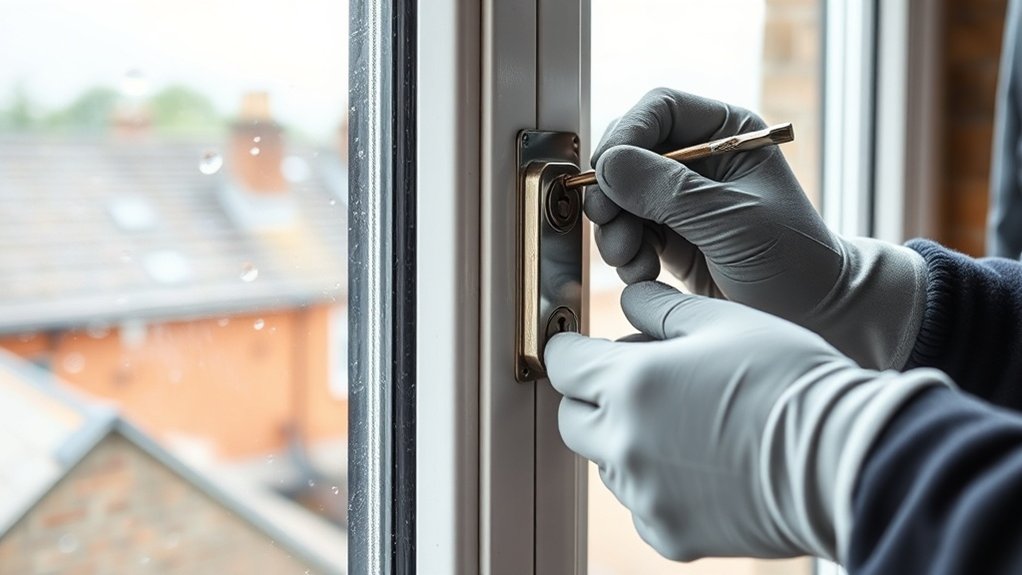
If a window lock fails in your London home, you need a prompt, precise repair to restore security and stop draughts. A specialist will diagnose whether the issue is the key, mechanism or frame alignment and then adjust, repair or replace components like espagnolette gearboxes, keeps or sash fasteners. Correct calibration improves security, insulation and noise reduction without harming original frames. Explore how different lock types, repair options and costs affect the best solution for you.
Key insights
- Emergency and same‑day window lock repair across London for uPVC, timber, and aluminium windows, including espagnolette, multipoint, and traditional sash locks.
- Engineers diagnose issues like misalignment, worn gearboxes, seized shootbolts, and damaged keeps, then repair or replace components to restore full security.
- Repairs follow detailed inspection of frames, hinges, and seals to improve both burglary resistance and energy efficiency by eliminating draughts and gaps.
- Services cover both modern and period properties, with hardware options that preserve heritage aesthetics while meeting current security and insurance standards.
- Transparent pricing typically depends on lock type, access difficulty, and urgency, with clear quotations provided before work begins.
What To Do When a Window Lock Fails in London
When a window lock fails in your London property, you should first secure the area , then methodically assess whether the issue is with the key, the locking mechanism, or the frame alignment. Isolate the window, close internal doors, and verify other access points are locked.
Next, inspect the lock body and keep: look for metal fatigue, loose fixings, or misaligned strike plates. In homes with historical architecture, pay close attention to aging timber and paint build‑up that can distort tolerances while still preserving window aesthetics. Test the handle operation with measured force; don’t over‑torque it.
Document what you find with clear photos and short notes. This evidence accelerates accurate diagnosis and lets a specialist specify precise, minimally invasive repair options.
Common Window Lock Problems in London Homes and Flats
Once you’ve stabilised a failed window lock and gathered evidence, it helps to understand the faults that appear most often in London homes and flats. You’ll typically see worn espagnolette mechanisms, failed gearboxes, and seized shootbolts on uPVC and aluminium windows, usually caused by misalignment from building movement or poor installation.
In period properties and historical architecture, traditional sash fasteners often suffer from stripped screws, warped timber, and corroded keeps, making them feel secure when they’re not fully engaged. Modern retrofit locks can also bind if they’re not calibrated to the original frames.
Across all property types, you may face key cylinders that spin , shear, or jam through wear, contamination, or incorrect keys. Here, locksmith licensing matters; a qualified locksmith can diagnose precisely and specify modern, secure replacements.
Signs Your Window Lock Needs Urgent Repair
Even a small change in the way a window closes can signal that its locking system needs urgent attention. If the handle feels loose, grinds, or sticks at any point, the internal mechanism may be wearing or misaligned. Don’t ignore play in the sash; movement when the window’s “locked” weakens security and can stress hinges and seals.
Drafts, rattling in high winds, or visible gaps around the frame show the lock isn’t pulling the sash tight. Corrosion, hairline cracks, or bent components are critical red flags, especially on upper floors exposed to weather. You’ll also notice declining window aesthetics: misaligned hardware disrupts clean lines and your planned window styling. Addressing these signs early prevents failures, forced entry risks, and costly frame damage.
Types of Window Locks in London Properties
Spotting early warning signs is only half the job; you also need to know which type of lock you’re dealing with to repair it correctly and maintain security. In London, you’ll typically encounter three broad categories: traditional keyed locks, modern multipoint systems, and specialist security upgrades.
On period windows within historical architecture, you’ll often see surface-mounted espagnolette bolts , fanlight catches, and locking fasteners that must integrate with existing decorative fittings. These demand precise, minimally invasive work to preserve the façade.
Newer aluminium and uPVC frames usually use espagnolette or shootbolt mechanisms driven by a handle, sometimes with key-locking and child-safety features. High-spec properties may add smart-compatible locks or laminated security stays, giving you stronger resistance to forced entry without compromising aesthetics.
Repairs for Sash, Casement and uPVC Window Locks
Although each window style has its own locking method , the repair process always starts with identifying how the sash, casement or uPVC mechanism is supposed to operate, then isolating where it’s failing. You’re typically dealing with one of three core issues: misalignment, worn components, or failed locking gear.
With sash windows, you’ll often see stretched cords, warped timber, or seized fasteners, especially in historical architecture where you must preserve original decorative hardware. Casement repairs usually target bent stays, tired friction hinges, or locking wedges that no longer engage reliably.
On uPVC windows, problems tend to arise in the espagnolette strip, mushroom cams, or gearbox. Here, you can upgrade to high-security, multi-point hardware that improves resistance to forced entry without changing your window’s appearance.
How Window Lock Repairs Are Done in London Homes
When a lock starts sticking , misaligning, or failing to latch, you need a structured repair approach that pinpoints the exact fault before anyone reaches for tools. You’ll see how a professional works through a step‑by‑step process—testing operation, checking alignment, stripping the mechanism, then repairing or replacing only what’s necessary. You’ll also understand how to choose the right replacement components so your window meets current security standards and keeps working smoothly for years.
Common Window Lock Issues
Because London homes use a mix of old timber frames, modern uPVC, and aluminium systems, window lock problems tend to fall into a few predictable categories that a locksmith can diagnose quickly. In period properties with historical architecture, you’ll often see worn sash fasteners, distorted frames, or misaligned catches—especially where decorative hardware was added later and never properly calibrated.
On uPVC and aluminium units, the typical failures are stiff or slipping handles , worn espagnolette gearboxes, and multi‑point locks that don’t fully engage. You might notice keys spinning, handles dropping, or windows that only lock if you lift or push the sash.
You’re usually dealing with wear, misalignment, or obsolete components—issues that a specialist can resolve with targeted, modernised parts.
Step-By-Step Repair Process
Instead of guessing what’s wrong and swapping parts at random, a good London locksmith follows a structured window lock repair process that starts with a visual inspection and functional test of the sash, frame, and hardware. They check alignment, engagement of the keep, and any stress points that could threaten window aesthetics or security.
Next, they remove the handle or locking mechanism, map wear patterns, and test operation off the frame to isolate resistance. Precision lock lubrication follows, using graphite or specialist PTFE products rather than general-purpose oils that attract dirt.
They then recalibrate keeps , adjust hinge compression, and fine‑tune closing pressure so the lock bites cleanly. Finally, they retest under realistic force, confirming smooth operation, tight sealing, and a discreet visual profile.
Choosing Replacement Components
Only once the fault’s clear does a good London locksmith choose replacement components, matching the exact profile, backset, spindle size, and fixing points so the new lock integrates seamlessly with your existing window system. They’ll assess sash material, glazing type, and security rating, then specify gearboxes, espags, or shootbolts that align with current British Standards .
If you want Smart lock integration, they’ll verify torque loads, power requirements, and wireless protocols so sensors and actuators operate reliably on slim frames. In period homes, Historical lock restoration means sourcing heritage-compatible hardware while discreetly upgrading cylinders and keeps for anti-snap, anti-drill resistance . Throughout, your locksmith documents model numbers and finishes, ensuring future repairs stay straightforward and your windows remain both secure and future-ready.
How London Window Lock Specialists Find the Fault
When a London window lock specialist arrives, they’ll start by confirming the exact symptoms you’ve noticed—stiff handles, misaligned frames, key issues, or a lock that won’t latch. They’ll then carry out systematic diagnostics , checking the mechanism, frame, keeps, and hardware with feeler gauges, alignment tools, and sometimes borescopes or lubricity tests. This methodical approach lets them pinpoint the fault accurately, so they can recommend a precise, cost‑effective repair rather than unnecessary replacements.
Common Window Lock Symptoms
Although every property and window type can behave differently, most failing window locks show a set of clear, mechanical warning signs that a specialist can diagnose quickly. You might notice the handle becoming stiff , requiring extra force, or conversely turning too loosely with no positive “click” as it engages.
Windows in historical architecture or Art Deco designs often show early symptoms as misaligned sashes: the lock no longer lines up cleanly, so you have to lift, push, or “wiggle” the window to secure it. You may hear grinding, scraping, or feel resistance as internal components wear or corrode.
Other red flags include partial locking , where the window appears shut but the shootbolts or espags don’t fully throw or retract.
Diagnostic Methods And Tools
So how do specialists turn vague symptoms into a precise diagnosis of your window lock fault? They start with a structured inspection: checking alignment, sash movement, frame integrity, and hardware wear. Using feeler gauges, laser levels , and torque drivers, they measure tolerances instead of guessing.
Next, they assess how your locks interact with glazing, seals, and hinges, especially in London’s historical architecture where frames may be distorted yet must remain protected. Digital moisture meters reveal hidden swelling; borescopes expose internal corrosion or failed mechanisms without dismantling the whole unit.
Specialists also evaluate air leakage around the lock zone, using smoke pencils or pressure tests, so any repair improves both security and energy efficiency while preserving the window’s original character.
Repair vs Replacement for Window Locks in London
Choosing between repairing or replacing a faulty window lock in London hinges on three core factors: the lock’s condition, the type and age of the window system, and the level of security you need. You’ll usually repair when mechanisms are worn but structurally sound, or when you must preserve historical architecture and original window design. Replacement becomes smarter when hardware is obsolete, corroded, or incompatible with upgraded glazing and smart-security ecosystems.
Consider how each option impacts performance and future-proofing :
- Repair to retain listed-building character while upgrading internal components
- Replace when sash or frame movement keeps defeating lock alignment
- Repair if parts are readily available and standards-compliant
- Replace to integrate child-safety features and multi-point locking
- Repair when disturbance to finishes and décor must be minimal
DIY Window Lock Fixes vs Hiring a London Locksmith
When you’re weighing up DIY window lock fixes against calling a London locksmith, you need to balance direct repair costs with the hidden price of mistakes. You’ll also want to assess the safety and security risks of working on the lock yourself, especially in upper-floor or easily accessible windows. By comparing the time, tools, and skill required for each option, you can choose a repair route that’s efficient, secure, and cost-effective.
Cost Comparison For Repairs
Cost inevitably drives how you decide to repair a faulty window lock, and understanding the real numbers helps you avoid false economy. When you DIY, your headline savings come from labour , but you still pay for parts, tools, and your own time. In London, professional rates look higher at first glance, yet they often compress diagnostics, lock replacement, and key duplication into a single, predictable visit.
- Upfront tool purchase vs one-off call‑out fee
- Online hardware costs vs trade‑grade lock components
- Your trial‑and‑error time vs a locksmith’s calibrated workflow
- Single‑window repair vs multi‑window optimisation in one visit
- Short‑term patching vs long‑term, warrantied performance
When you benchmark these factors, you can model total lifecycle cost, not just today’s invoice.
Safety And Security Risks
How safely your window lock actually performs depends on more than whether it “seems to work” after a DIY tweak. A misaligned cam , shallow screw bite, or hairline crack in the keep can leave a lock that looks secure but fails under a basic levering attempt.
When you experiment on period sash or casement units, you may also weaken frames that are already stressed by age and London’s climate. Historical architecture often hides brittle timber, distorted frames, and legacy ironmongery; combine that with modern window design and you get complex load paths and force points that aren’t obvious.
A qualified London locksmith tests resistance, reinforces weak substrates, and selects components that integrate with alarms and smart sensors, so your upgrade genuinely improves security.
Time, Tools, And Skill
Although a stiff handle or loose latch can look like a quick DIY win, effective window lock repair in London actually hinges on having the right tools, accurate measurements, and a practiced hand. You’re not just tightening screws; you’re aligning mechanisms with millimetre precision so they interact cleanly with your existing window design and security hardware.
DIY can work for minor adjustments, but once you’re drilling, chiselling, or replacing gearboxes, the risk of misalignment, frame damage, or compromised lock aesthetics increases fast. A specialist London locksmith optimises for durability, security ratings, and visual finish in one visit.
- Diagnose hidden mechanism faults
- Match locks to modern window design
- Use pro‑grade measuring and cutting tools
- Calibrate closing pressure and alignment
- Preserve or upgrade lock aesthetics and finish
How Much Does Window Lock Repair Cost in London?
When you’re budgeting for window lock repair in London, you’ll typically see prices vary based on lock type, window material, access difficulty, and whether you need an emergency call-out . For a standard repair on a uPVC or timber window, you’re usually looking at £65–£120, including labour and basic parts. Emergency evening or weekend visits can rise to £120–£220.
Those ranges reflect historical trends in labour rates, insurance costs, and compliance with evolving legal regulations, especially around security and child-safety standards. If you want a more future-focused solution, such as upgrading to insurance-approved or smart-compatible locks during the repair, expect totals of £140–£260. A transparent engineer will give you a fixed, itemised quotation in advance, so you can benchmark value quickly and avoid surprises.
What Affects Window Lock Repair Prices in London
Key cost drivers include:
- Lock type & mechanism complexity – espagnolette, sash, or multipoint systems need different skills and parts.
- Window material – uPVC, timber, or aluminium frames demand specific tooling and fixing methods.
- Historical architecture constraints – listed buildings require non-invasive, reversible interventions.
- Decorative finishes – colour-matched hardware and bespoke trims raise hardware and labour costs.
- Access and site conditions – upper floors, fragile glazing, or restricted access increase setup and safety time.
Security Benefits of Fixing Faulty Window Locks Quickly
By repairing faulty window locks promptly, you close off one of the most common and easily exploited access points for burglars in London homes and commercial premises. A compromised sash catch , espagnolette, or multi-point mechanism can often be forced silently in seconds; a correctly calibrated lock resists levering, slipping, and manipulation with basic tools.
You also protect vulnerable properties with historical architecture, where original sightlines and decorative fixtures need careful, non-invasive upgrades. Modern high-security locking inserts, anti-lift devices, and reinforced keeps can usually be integrated discreetly into existing frames, giving you contemporary resistance levels without degrading heritage value. Fast remediation reduces your exposure window, aligns with insurer requirements, and ensures every opening on your perimeter operates as a controlled, verifiable security node .
How Window Lock Repairs Reduce Draughts and Improve Efficiency
When your window locks work correctly, they pull the sash tightly into the frame, sealing gaps that cause draughts and heat loss. By restoring this precise closure and compression, you improve the window’s thermal performance and reduce the workload on your heating system. At the same time, a properly locked and aligned window limits noise transmission and cuts down the amount of dust entering your home.
Sealing Gaps Around Frames
Although it’s easy to blame old glass or worn hinges for cold spots, gaps around the frame and faulty locks are often the real source of draughts and heat loss. When the lock doesn’t pull the sash tight to the window frame, micro‑gaps open up. You feel this as cold streaks, but it’s actually uncontrolled air exchange.
A specialist will:
- Inspect the full perimeter for light leaks and pressure points
- Realign keeps and strikers so locks compress seals evenly
- Replace tired gaskets with high‑performance weatherstripping
- Use precision sealant application to close hairline frame‑to‑masonry gaps
- Test closing pressure to balance security, airtightness, and ease of use
Enhancing Thermal Performance
A correctly adjusted window lock does far more than keep intruders out; it actively improves your home’s thermal performance by tightening the seal between sash and frame. When the locking points engage correctly, they pull the window evenly into the gaskets, restoring ideal thermal insulation and closing off micro-gaps that feed cold draughts.
Reducing Noise And Dust
Beyond heat loss, a poorly engaging window lock also lets in street noise and fine dust that should never get past the frame. When the sash doesn’t pull tight into the seals, you create micro-gaps that transmit vibration and carry particulates. By recalibrating or upgrading the locking mechanism, you restore uniform pressure along the gasket line, a foundation for modern soundproofing strategies and dust prevention methods.
With a precise lock repair, you can:
- Compress existing seals to block acoustic leaks
- Add high-performance gaskets aligned to the renewed locking points
- Stabilise sashes to reduce rattling and low-frequency noise transfer
- Minimise dust ingress that settles on furniture and electronics
- Prepare frames for advanced acoustic films or secondary glazing integrations
Simple Maintenance Tips for London Window Locks
Why let minor wear turn into a costly repair when a few simple checks keep your London window locks working smoothly and secure? Start by inspecting strike plates , keeps, and espagnolette rods for misalignment; even a 1–2 mm shift affects engagement. Tighten loose screws carefully, especially on sash frames within historical architecture, to avoid damaging original timber or stone surrounds.
Clean mechanisms quarterly: vacuum dust from rebates, then apply a dry PTFE or silicone spray to moving parts—never heavy oil, which attracts grit. Check handles and decorative fittings for hairline cracks or corrosion and replace them before failure.
Finally, test every lock monthly: the key or handle should move without grinding. Any stiffness signals the need for early adjustment, not later emergency repair.
Frequently Asked Questions
Are Repaired Window Locks Compatible With London Insurance and Landlord Safety Requirements?
Yes, repaired window locks can meet London insurance and landlord safety requirements if you use certified components and document the work. You’ll guarantee compliance by matching lock specifications to insurer standards and local regulations, then testing operation and key control. Incorporate security upgrades for improved resistance to forced entry and verify modern compatibility with smart sensors or integrated security systems. Always keep invoices, certification, and before/after evidence for inspections and claims.
Do London Councils Offer Grants or Help Toward Window Lock Repair Costs?
Yes, some London councils may help, but it’s patchy. Picture scanning council sites: you’ll find occasional Government funding via home‑improvement or disabled‑facilities schemes, rarely for standard window lock repair. You’ll usually self‑fund, using cost‑efficient, innovative hardware and selective professional labour. Councils sometimes offer advice, safety checks , or refer you to charities. You can handle minor DIY repair, then reserve specialists for compliance‑critical locks and documentation.
Can New Window Lock Hardware Match Period or Conservation-Area Property Aesthetics?
Yes, you can match new window lock hardware to period or conservation-area aesthetics. You specify period appropriate hardware in materials like brass or bronze, then pair it with concealed high-security mechanisms. Conservation style fittings can be custom-finished, 3D-scanned, or CNC-machined to replicate original profiles while integrating modern multi-point locking . You retain authentic sightlines, satisfy conservation officers, and still gain enhanced security, durability, and smart-home upgrade potential.
How Quickly Can a London Locksmith Attend for Emergency Window Lock Issues?
You’ll typically get a locksmith within 30–60 minutes for emergency window lock issues. Speed meets precision: rapid arrival, yet methodical Emergency lock repair procedures. Engineers use real-time dispatch, GPS routing, and triage to optimise Locksmith response times. On-site, they’ll secure the opening first, then diagnose mechanisms, test alignment, and, if needed, fit high-spec replacement hardware . You stay protected, while the solution stays compatible with smart, future-ready security ecosystems.
Are Repaired Window Locks Covered by Warranty, and for How Long in London?
Yes, repaired window locks are usually covered by warranty, but terms vary. You’ll typically get 12–24 months on labour and replacement locking mechanisms, with longer coverage on premium hardware or security upgrades. Reputable engineers document the warranty on your invoice, outlining what’s covered: parts failure, poor alignment, or malfunction under normal use. Always confirm duration, call‑out charges , and whether future smart or high-spec upgrades remain within warranty conditions.
Summary
It’s no coincidence you’re thinking about window lock repair just as London’s weather and security risks seem to be rising. You’ve seen how failed sash, casement, and uPVC locks affect safety, draughts, and energy use. Now you know the technical options, cost factors, and quick fixes a specialist can provide. Act on those warning signs, schedule a professional repair, and you’ll restore secure, efficient windows—and peace of mind—far sooner than most people do.