
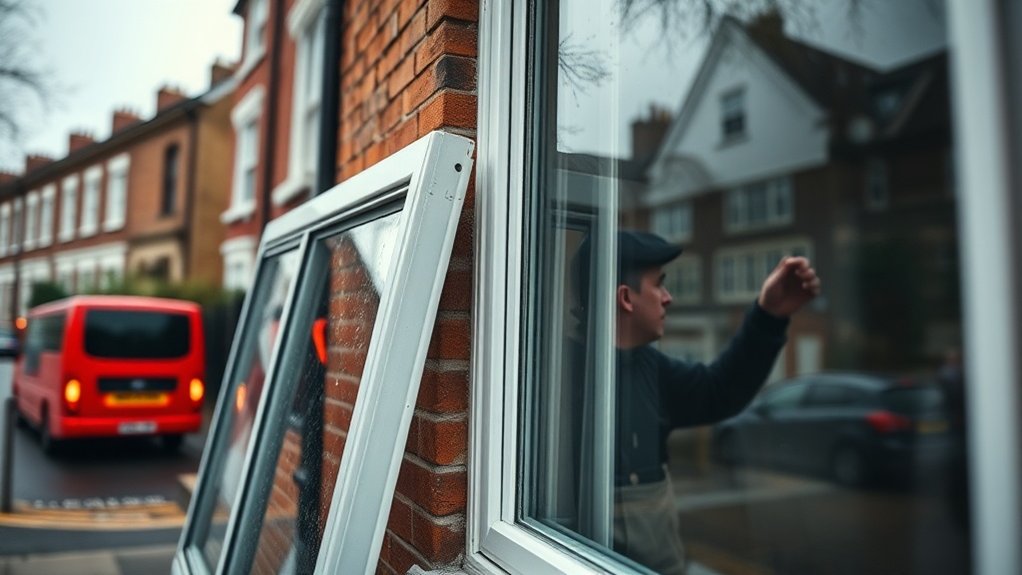
You replace double glazed units in London when panes mist, seals fail or heat loss and noise become obvious. A glazier removes the failed sealed unit from your existing frame, precisely measures, and fits a new factory-made IGU matched to your glass spec, gas fill and coatings. It’s usually cheaper and less disruptive than full window replacement while restoring thermal and acoustic performance. Next you’ll see how to spot failure, compare costs and choose the right specification.
Key insights
- Double glazed unit replacement in London usually means swapping misted or failed sealed units into existing uPVC, timber, or aluminium frames, not changing whole windows.
- Expect typical London prices per replacement unit of about £120–£400, rising to £550+ for large or high‑spec acoustic, laminated, or triple‑glazed glass.
- Signs you need replacement include fogging between panes, draughts at glass edges, poorer sound insulation, and persistent internal condensation on the sealed unit.
- Costs vary with glass spec (low‑E, argon, acoustic, security), size, access needs (scaffolding, permits), and whether frames are sound or need full window replacement.
- To save money, keep existing frames, standardise glass specs, prioritise high‑performance units on noisiest or coldest elevations, and phase replacements over maintenance cycles.
What Double Glazed Unit Replacement Actually Involves
When you replace a double glazed unit in London, you’re not swapping the whole window frame, but removing the failed sealed glass unit and installing a new, factory-made insulated glass unit (IGU) into the existing frame. You start by deglazing: carefully removing beads, gaskets, and packers without stressing the window frame.
Next, you measure the aperture to the millimetre, specifying glass thickness, cavity width, gas fill, and low‑e coatings to optimise U‑values and solar control. You can also re‑specify decorative patterns or acoustic laminates at this stage.
The new IGU arrives edge‑sealed, desiccant‑charged, and certified. You then re-pack for drainage and load-bearing, re-fit gaskets and beads, and verify airtightness and sightline alignment for a precise, future-ready upgrade.
Signs Your London Double Glazing Has Failed
- Visible fogging between panes that doesn’t respond to ventilation.
- Draughts at the glass edge despite modern seals and advanced frame styles.
- Distinct temperature gradients across the pane, detectable by touch or IR thermometer.
- Degraded sound insulation, even with premium color options and otherwise high-spec frames.
What to Do About Misted or Cloudy Double Glazed Units
Although misted or cloudy double glazed units are common across London’s housing stock, they’re not a purely cosmetic issue and you shouldn’t ignore them. Internal condensation signals a compromised edge seal or desiccant saturation, meaning moisture’s circulating between the panes and thermal performance is degrading.
You should first document where and when the clouding appears, then inspect perimeter seals, drainage channels , and trickle vents for blockages or physical damage. Note existing frame materials and color options, as these will constrain compatible replacement units and sightline tolerances. Check for cold bridging around the frame with a thermal camera, if available, to understand how far moisture ingress has spread. Finally, consult installers who can pressure‑test units and assess spacer-bar integrity before proposing a targeted, data-led intervention.
Repair or Replace? Double Glazed Units in London
When a double glazed unit fails in London’s climate, you need to decide if a targeted repair will restore performance or if full replacement is the only reliable option. You’ll assess visible symptoms, frame integrity, seal condition, and thermal performance to judge whether the existing unit still has usable life. Next, you’ll see how to distinguish cases where re-sealing, hardware fixes, or gasket renewal are sufficient from situations where a new glass unit is essential for safety, efficiency, and compliance.
Signs Repair Is Enough
Sometimes the clearest sign you can repair rather than replace a double glazed unit is that its core performance remains intact : the glass sits firmly in the frame, there’s no visible misting between panes, and draughts or cold spots are localised around seals or hardware rather than across the whole window. In these cases, targeted upgrades often outperform full replacement on cost, disruption, and sustainability.
- You only need new gaskets, hinges, or handles; the sash and frame remain structurally sound.
- Draughts disappear when you apply temporary sealant or tape, indicating perimeter failures.
- You want to integrate new decorative finishes or smart window accessories without altering the glass.
- Acoustic or thermal comfort improves noticeably after minor adjustments or rebalancing.
When Replacement Is Essential
If a double glazed unit in your London property has lost structural integrity or core performance , replacement stops being optional and becomes a necessity. You’ve reached that point when the sealed unit has failed beyond recovery: chronic internal condensation, shattered or delaminated glass, distorted frames causing air leakage, or argon loss verified by thermal imaging.
You should also replace when the existing unit can’t support advanced specifications you now require: low‑E coatings, acoustic laminates, security glass, or integrated sensors. If you’re upgrading to high-performance decorative finishes or smart window tinting for solar control and privacy, retrofitting old units usually compromises efficiency and durability. In these cases, a new, precision‑engineered double glazed unit delivers predictable U‑values, tighter tolerances, and long‑term lifecycle value.
When to Replace the Whole Window, Not Just the Unit
Although replacing just the failed double glazed unit is often the most economical fix, certain conditions mean the entire window should be renewed. You should evaluate the frame, hardware, and performance holistically, especially if you’re integrating modern solutions like window tinting or decorative films.
- Structural failure – Warped, rotten, or corroded frames can’t hold a new unit reliably, risking air leakage and movement.
- Thermal underperformance – Outdated frames with poor thermal breaks waste the benefit of advanced glass specifications.
- Air and water infiltration – Persistent draughts or leaks usually indicate failed seals, drainage paths, or distorted sashes.
- Future-proofing and aesthetics – If you’re redesigning facades, upgrading security, or standardising sightlines, a full window replacement gives you a cleaner, integrated, longer‑term solution.
How Much Does Double Glazed Unit Replacement Cost in London?
When you budget for double glazed unit replacement in London, you need to understand typical price ranges per unit and per square metre so you can benchmark quotes accurately. You’ll also want to factor in key cost drivers like glass specification (standard vs. low‑E or acoustic), unit size, frame access, and labour complexity, as these can shift costs notably. With a clear picture of these elements, you can then apply practical strategies to reduce your spend, from batching replacements to optimising specifications without compromising performance.
Typical Price Ranges
So what should you realistically expect to pay to replace double glazed units in London? You’ll navigate several cost considerations, but you can still benchmark typical ranges and budget with precision. Pricing reflects glass spec, thermal performance, and frame integration, along with innovative material options that optimise lifespan and energy savings.
Here’s a concise breakdown of typical price bands (supply and fit, per unit):
- Small bathroom/box room units – £120–£180
- Standard casement/tilt-and-turn units – £150–£250
- Large picture windows or bay segments – £220–£400
- High-spec acoustic, solar-control, or laminated units – £280–£550
These ranges help you benchmark quotes, prioritise performance upgrades, and phase replacements strategically across your property.
Key Cost Factors
While headline price bands give you a starting point, the real cost of replacing double glazed units in London hinges on a tight cluster of technical variables : glass specification (thickness, coating, low-e performance), cavity type and gas fill, unit size and shape, frame material and condition, installation complexity, and the compliance requirements of your property (e.g. conservation rules or fire-escape standards).
You’ll pay more for laminated, acoustic, solar-control, or triple glazing, and for argon or krypton gas fills that push U-values lower. Non-rectangular or oversized units require specialist manufacture and access solutions. Frame materials matter: aluminium (especially thermally broken) typically costs more than uPVC, with engineered timber often higher still. Advanced Color options, foiled finishes, and dual-color frames also lift the unit cost.
Ways To Save
Understanding those cost drivers puts you in a strong position to control the final bill , and there are several levers you can pull without compromising performance or compliance. You can engineer savings by standardising specifications where possible, then reserving premium features only for priority elevations or sensitive zones.
-
Optimise glass specs Use low‑E coatings and argon selectively; you don’t need the most advanced unit on every façade.
-
Retain frames where viable Specify replacement sealed units into sound existing frames, especially in historical preservation contexts.
-
Standardise modules Choose repeatable sizes and minimise complex curves ; keep true bespoke artistic design to feature windows only.
-
Phase the project Replace units in planned stages, aligning with maintenance cycles to reduce access, scaffolding, and labour duplication.
What Affects Double Glazing Prices in London Homes?
Although double glazing is often marketed with simple “from £X per window” offers, actual prices for London homes depend on a precise mix of technical and site-specific factors. Frame material, sash design, and opening mechanisms directly affect fabrication complexity and hardware specification. Large-span units facing modern garden design schemes or complex roofing options often require thicker glass, stronger spacer bars, and upgraded reinforcement.
Your property’s access constraints matter too: scaffold, street permits, and restricted rear access all add labour and logistics costs. Existing aperture condition drives extra spend on making-good, structural trims, or load transfer. Heritage façades, conservation rules, and acoustic targets can also push you toward higher-spec frames and seals, influencing overall cost before you even consider aesthetic upgrades.
Choosing the Right Glass Spec for London Homes
When you choose a new glass spec for your London home, you need to match the unit’s performance to your energy efficiency targets, local noise levels, and security requirements. You’ll consider factors like low‑E coatings, gas fills, and spacer types alongside acoustic laminates and pane thickness to optimise both thermal and acoustic performance. At the same time, you must specify the right safety and security glass—such as toughened or laminated options—to meet building regs, protect occupants, and resist forced entry.
Energy Efficiency Priorities
For London homes, choosing the right glass specification for a replacement double glazed unit means balancing strict energy-efficiency targets (U‑values and g‑values), local climate demands, and practical issues like condensation control and daylight levels . You’re optimising a system: glass type, cavity fill, spacer, frame materials, and even color options all influence thermal performance and solar gain.
-
Target U‑value first – Specify low‑E coatings plus argon or krypton fill to push whole-window U‑values well below Building Regulations, reducing heat loss.
-
Control solar gain (g‑value) – On south and west elevations, use selective coatings that admit light but limit unwanted summer gains.
-
Specify warm‑edge spacers – Reduce perimeter condensation and improve edge-of-glass temperatures.
-
Integrate with frames – Match high-performance IGUs with insulated, thermally broken frames for consistent efficiency.
Noise Reduction Considerations
Thermal performance isn’t the only parameter that should drive your double glazed unit replacement in London; noise control often dictates the glass specification just as strongly, especially near main roads, rail lines, or under flight paths. You’ll want to look beyond generic dB figures and interrogate the Rw andCtr ratings, focusing on mid‑ to low‑frequency attenuation from traffic and aircraft.
You can boost acoustic performance by combining different glass thicknesses, using acoustic laminate interlayers, and specifying wider or asymmetric cavities. Argon fill helps energy ratings, but cavity width and glass mass dominate sound reduction. Specify units that align with your interior design strategy: quieter spaces allow bolder open‑plan layouts, harder floor finishes, and minimalist soft furnishings without sacrificing acoustic comfort.
Safety And Security Choices
Although comfort and energy efficiency often drive your double glazed unit replacement in London, you also need to engineer the glass specification around defined safety and security risks: impact resistance, containment , forced entry, and even accidental falls. You’re not just swapping panes; you’re designing a controlled barrier system.
- Laminated security glass – Use multi-layer PVB or ionoplast interlayers to resist manual attack, keep shards bonded, and maintain containment after fracture.
- Toughened safety glass – Specify for critical locations to avoid dangerous break patterns and comply with fall-protection zones.
- Glass + frame integration – Match glass strength to frame materials, locking points, and hardware to avoid weak links.
- Privacy and detection – Combine tints, Color options, and low-iron or switchable glass with sensor-ready frames for future smart-security upgrades.
Energy Efficiency Gains From Replacement Double Glazing
Ever wondered how much energy you’re wasting through ageing or failed double glazing ? When seals break, argon escapes and moisture enters, your U‑values climb and heat loss accelerates. By replacing just the glass units with modern low‑E, argon‑filled, warm‑edge constructions, you cut conductive and radiant losses while keeping existing frames for historical preservation and aesthetic enhancement.
You gain measurable reductions in kWh consumption because upgraded units reflect long‑wave heat back into the room and minimise edge‑of‑glass thermal bridging. In London’s climate, that means lower boiler runtimes and more stable internal temperatures. You can also specify solar control coatings to fine‑tune g‑values, preventing summer overheating without sacrificing visible light, so you enhance comfort while driving down operational energy costs.
Reducing Traffic Noise With Upgraded Double Glazed Units
While upgraded double glazed units cut heat loss, they also offer a significant acoustic upgrade, which matters if you live on a busy London street or near transport corridors. You’re not just adding glass; you’re engineering a controlled sound barrier that targets specific noise frequencies from buses, sirens, and trains.
- Asymmetric glazing – Use different pane thicknesses to disrupt sound resonance and reduce low‑frequency traffic rumble.
- Larger air or gas cavities – Optimise cavity depth to maximise decibel reduction without compromising thermal performance or Rain protection.
- Acoustic laminated glass – Integrate specialist interlayers that damp vibration and enhance security simultaneously.
- High‑performance seals and frames – Specify airtight gaskets and rigid frames to prevent flanking noise while maintaining sharp Window aesthetics and slim, contemporary sightlines.
Replacement Units for Period and Conservation Homes
When you upgrade double glazed units in a period or conservation home, you must balance thermal performance with strict visual and regulatory constraints . You’ll need units that replicate original sightlines, glazing bar profiles, putty lines and glass reflection while still using modern low‑iron, low‑emissivity, and gas‑filled cavities. By coordinating early with conservation officers and selecting certified heritage‑compatible systems, you can meet planning conditions while achieving measurable gains in energy efficiency and comfort.
Respecting Historic Aesthetics
Although you may want to improve thermal performance as quickly as possible, replacing double glazed units in London’s period or conservation homes demands precise attention to historic detailing so you don’t fall foul of planning rules or spoil the building’s character. You’re not just upgrading glass; you’re managing Historic preservation and aesthetic harmony while integrating modern performance.
To keep interventions visually “invisible” yet technically advanced, focus on:
- Specify slimline double glazing that mimics original single-glazed sightlines.
- Match glazing bar profiles, putty lines, and timber sections using precision CNC or bespoke joinery.
- Select low-iron, low-reflectance glass with appropriate tint and distortion to echo historic glass.
- Align hardware, paint finishes, and sealant colors with existing fabric so new units visually recede.
Meeting Conservation Regulations
Because London’s conservation rules are tightly enforced and highly specific to each borough, you need to treat double glazed unit replacement in period homes as a regulatory exercise as much as a technical upgrade. You start by interrogating the original window specification: sightlines, glazing bar dimensions, putty profiles, and historical Color options approved in your street or terrace.
Next, you align modern performance with heritage constraints. You’ll compare Frame materials such as slimline timber, composite, or thermally broken aluminium that can visually replicate originals while achieving low U-values. You then prepare drawings, section details, and sample frames for pre-application discussions . By demonstrating reversibility, minimal visual change, and documented acoustic and thermal gains, you turn conservation officers into collaborators, not gatekeepers.
How Glaziers Replace Double Glazed Units (Step by Step)
Before a glazier even touches your window frame, they follow a clear, methodical sequence to remove the failed double glazed unit and install the new one correctly. This isn’t generic glass repair; it’s a calibrated process that protects your window frames, vapour seals , and thermal performance.
- Survey & Measurement – They identify failure points (misting, cracks, blown seals), verify frame tolerances, and laser-measure sightlines and rebates.
- De-glazing – They remove beads, gaskets, and packers in a set order, preventing torsion or racking to the frame.
- Unit Installation – They insert the new IGU, position load-bearing packers, and align for optimal compression and drainage.
- Sealing & Quality Check – They refit beads, apply perimeter sealants, and test for air leakage, movement, and visual defects.
Timeframes and Disruption for Double Glazed Unit Replacement
Once your new unit’s manufactured and on the van , the actual replacement is typically fast and tightly controlled, with most standard double glazed units swapped within 30–90 minutes per window and minimal disruption to the room. You can usually keep power on and adjacent rooms in use; noise is limited to brief drilling or beading removal.
On-site time scales vary with aperture size, access (scaffolding vs. ladder), and existing frame materials. Slim aluminium or uPVC frames often allow faster de‑glazing than deep timber sections with historic putty. If you’re upgrading Color options or changing spacer specifications, factor in extra survey and fabrication time, not more disruption on the day. Installers typically protect floors, decant furniture strategically, and remove all glass waste immediately.
How to Choose a Reliable Glazier in London
Selecting a reliable glazier in London starts with verifying technical competence, not just a polished website or low quote. You’re looking for precise measurement, correct spacer and gas selection, and clean installation that preserves thermal performance and aesthetics, especially if you’re integrating decorative glass or advanced coatings.
-
Check specialist capability Confirm they regularly replace double glazed units, not just single panes or general repairs.
-
Interrogate technical detail Ask about U-values, warm-edge spacers, and sealant systems; a skilled glazier explains choices clearly.
-
Inspect portfolio and reviews Look for before/after examples, including decorative glass and complex frame types.
-
Assess aftercare mindset Ensure they brief you on ventilation, glass cleaning methods, and maintenance that protect the new units’ lifespan.
Warranties, Building Regulations and Legal Rules for Double Glazing in London
Although swapping out a misted unit can feel like a simple repair, double glazing in London still sits inside a web of warranties, Building Regulations and legal obligations you can’t ignore. You must guarantee any replacement retains at least the original U‑value and complies with Part L (conservation of fuel and power) and Part K (safety glazing in critical locations).
You’ll normally receive a product warranty from the unit manufacturer and an installation warranty from the glazier; insist on written terms covering seal failure, gas loss and hardware performance. For large‑scale refurbishments, Art installation frontages or glazing integrated with garden landscaping, you may need planning consent and must evidence compliance via FENSA, CERTASS or building control sign‑off to protect resale value and insurance validity.
Maintenance Tips to Extend the Life of New Double Glazed Units
Even the highest‑spec replacement units in London will underperform or fail early if you don’t maintain the frames, seals and drainage paths that keep the glazing system dry and stable. Strategic maintenance protects performance, supports historical preservation goals, and maximises material durability in harsh urban conditions.
-
Inspect perimeter seals quarterly; look for micro‑cracking, displacement, or algae. Reseal early with compatible, low‑modulus silicone to prevent moisture ingress.
-
Clear frame drainage slots every season; use a plastic probe, never metal, to avoid damaging thermal breaks or coatings.
-
Clean glass and frames with pH‑neutral solutions; avoid abrasives that compromise low‑E coatings and gaskets.
-
Monitor hardware torque and sash alignment annually; recalibrate hinges and friction stays to keep compression seals uniformly loaded.
Frequently Asked Questions
Can I Replace Double Glazed Units in Listed Buildings Without Altering Their Appearance?
Yes, you usually can, but you must preserve visual detail to protect Historical preservation and Architectural integrity. You’ll need slimline double-glazed units that match sightlines, glazing bar profiles, putty lines, and external reflections. You should specify low-iron glass, warm-edge spacers in heritage colours, and gas-filled cavities optimized for narrow gaps. Always coordinate with conservation officers and provide detailed drawings, samples, and performance data to secure consent.
Are There Eco-Friendly or Recyclable Options for Old Double Glazed Units Removed?
You can use eco friendly materials and specialist Recycling programs to handle old units sustainably. You’ll usually separate components: glass to flat-glass recyclers, aluminium or steel spacers to metal recovery, and uPVC frames to polymer reprocessors. Many processors upcycle glass into insulation or new glazing substrates. Specify take-back schemes in your contractor’s brief and request documentation on material streams to guarantee closed-loop, verifiable, high-performance outcomes.
Will Replacing Double Glazed Units Affect My Home Insurance or Premiums?
You might see insurance implications , but replacing units doesn’t automatically change premiums. Insurers treat upgrades like a tuning fork for risk: precise, not dramatic. If you improve security (toughened glass, certified locks), you could justify premium adjustments downward. If specifications change fire safety or escape routes, they’ll reassess. Always notify your insurer, document product certifications (BS/EN standards), and request written confirmation so your cover aligns with the upgraded glazing performance.
Can I Upgrade to Laminated or Security Glass During a Simple Unit Replacement?
Yes, you can upgrade to laminated or security glass during a simple unit replacement. You specify laminated units with the correct thickness and interlayer for enhanced glass security, while matching spacer bars, gas fill, and low‑E coatings. Your installer recalculates unit weight, hinge loads, and compliance with BS EN standards. You also consider window aesthetics—edge seals, tint, and reflection—so performance improves without compromising your frame profile’s visual continuity.
How Do Replacement Double Glazed Units Impact My Property’s Resale Value in London?
You boost resale value because buyers treat fresh units like a “new battery” in a high‑end device—hidden, but essential. When you quantify double glazing costs, you show payback via lower bills and better EPC ratings. If you specify low‑iron, warm‑edge spacers and argon fill, and document the installation process with FENSA certification and warranties, you signal precision, longevity, and performance—exactly what innovation‑driven London buyers pay a premium for.
Summary
Now you know that “just swapping the glass” is actually a precise process of diagnosis, specification, and compliant installation. You’ll inspect seals, compare U‑values, quiz glaziers on toughened vs. laminated units, and even think about Part L and FENSA —exactly how you imagined spending your evenings. But by treating double glazed unit replacement as a technical project, you’ll cut heat loss, condensation, and long‑term costs, while your old draughts quietly retire.