You spot London wooden window problems when paint flakes, sills feel soft, sashes rattle, or condensation appears between panes. A specialist surveys moisture levels, splices out rotten timber, upgrades cords, draught seals and glazing, then recoats with microporous paints suited to London’s damp, polluted climate. In conservation areas and listed buildings you’ll also need someone fluent in local planning and “like-for-like” rules. From costs to listed consent and upgrade options, there’s more that can guide your next step.
Key insights
- Inspect wooden windows regularly for soft, spongey timber, flaking paint, or rattling sashes, which indicate decay and the need for repair.
- Professional London specialists can splice in new timber, repair putty, upgrade cords and pulleys, and draught-proof without losing period character.
- Many period and listed properties in London require like-for-like repairs; double glazing or profile changes often need Listed Building Consent.
- Repairing original timber windows is usually cheaper and more sustainable long-term than full replacement, while improving thermal and acoustic performance.
- Choose a repair firm experienced with London’s heritage housing, with relevant certifications and proven methods for moisture control, slimline double glazing, and low-VOC coatings.
How to Tell Your Wooden Windows Need Repair
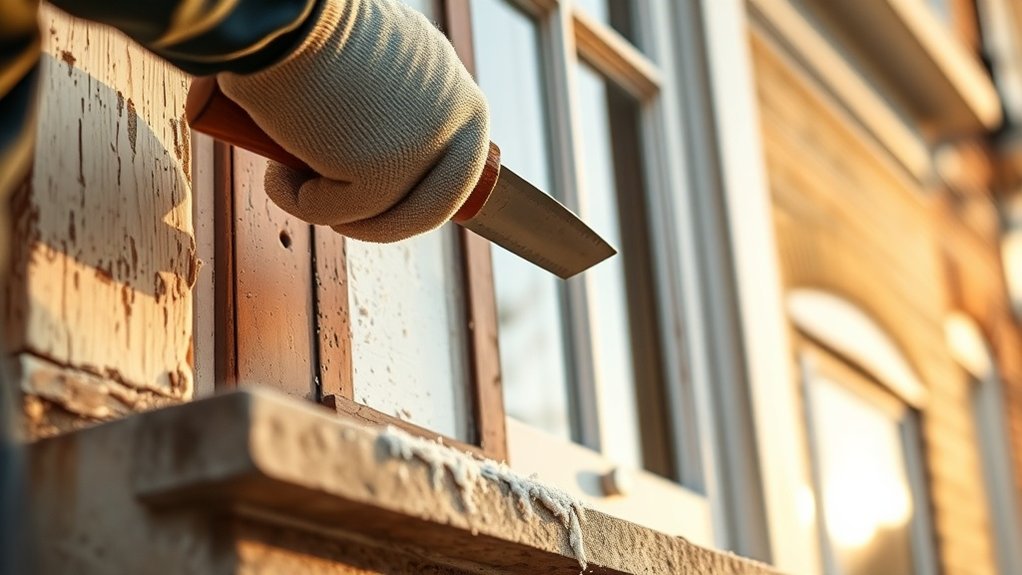
Although traditional timber windows can last for decades in London’s climate, specific visual and functional changes signal they need repair rather than routine maintenance. You first assess wood durability: probe sills and lower rails with a small screwdriver; if it sinks easily or the timber feels spongey, moisture ingress and decay are underway. Check for flaking paint exposing grey, fibrous wood, a classic sign of UV degradation.
Next, evaluate window aesthetics and performance together. Inconsistent gloss levels, staining around joints, or black spotting near putty lines indicate failed seals. Test operation: sashes that rattle in high winds, stick at specific points, or won’t stay open suggest distorted timber or worn cords. Finally, look for condensation between panes in retrofitted double‑glazed sashes.
What Professional Wooden Window Repair Involves
Once you’ve identified that your timber sashes or casements need more than light maintenance, a professional repair service in London typically starts with a full condition survey of each window: timber moisture readings, paint film thickness checks, and inspection of glazing putty, joints, and ironmongery.
Next, the technician isolates decayed sections, carries out splice repairs using matching hardwood , and applies advanced wood preservation systems—often epoxy consolidants and micro-porous primers suited to London’s damp, polluted air. You’ll see cords, pulleys, and draught seals upgraded to low-friction, discreet modern systems. Where panes are cracked, misted, or inefficient, precise glass replacement follows, using slimline double glazing or acoustic glass where conservation rules allow. Finally, they re-balance sashes, fine-tune operation, then apply high-performance, spray-grade finishing coats.
Repair or Replace? Choosing the Best Option in London
When you’re weighing up repair versus full replacement of wooden windows in London, you need to assess more than just how tired they look. You’ll balance structural integrity, glazing performance , and compliance with local planning guidance, especially in conservation areas and listed buildings.
You should choose repair when original joinery is mostly sound and you value historical accuracy and material preservation. Targeted splicing , resin repairs, and slimline double glazing can radically upgrade performance while retaining period fabric.
Replacement suits windows with extensive decay, distortion, or previous poor alterations. In that case, insist on bespoke timber sections that replicate original profiles, sustainable hardwood or modified softwood, and high-performance coatings. Always compare lifecycle cost, thermal data (U‑values), and acoustic gains before deciding.
Common Wooden Window Problems in Period London Homes
In practice, deciding between repair and replacement starts with recognising the specific defects that typically affect London’s period timber windows. You’re dealing with moisture cycling, airborne soot, and traffic vibration that stress every joint and glazing line.
You’ll often see paint peeling along bottom rails and cills, exposing vulnerable end-grain where the wood grain acts like capillary tubing, drawing in water. Putty lines crack , allowing micro-leaks around single glazing. Sash boxes distort, so meeting rails no longer align, and cords drag within worn, racked pulleys.
Historic softwoods, often Baltic pine, can suffer compression damage at bearing points, while earlier “repairs” using incompatible hardwoods or cement fillers create rigid interfaces that concentrate movement and accelerate surface checking and localised decay.
How to Fix Rot, Draughts and Noise in London Sash Windows
Why do so many original sash windows in London feel cold, noisy and half-rotten yet still worth saving? You start by probing timber with an awl, cutting out decayed sections to sound wood, then splicing in matching hardwood using traditional scarf joints . You stabilise remaining fibres with epoxy consolidant and rebuild profiles with resin, preserving wooden window aesthetics.
To eliminate draughts, you rout discreet channels for brush or pile seals along staff and parting beads, then true the sashes so they close on an even air-tight line. For noise, you retrofit slimline acoustic laminated panes into existing boxes, or add secondary glazing with minimal visual impact. Throughout, you balance historical restoration techniques with modern membranes, micro-porous coatings, and breathable sealants tuned to London’s damp, polluted microclimate.
Wooden Window Repair Costs in London
Restoring rotten, draughty London sash windows to that standard of performance and authenticity naturally raises the question of cost. In London, pricing reflects not just labour rates but the precision of wooden craftsmanship and the need to retain historical authenticity while integrating advanced performance upgrades.
You’ll usually see costs structured around:
- Survey and diagnostics – moisture mapping , timber density checks, ironmongery assessment.
- Timber repairs – spliced hardwood sections, epoxy consolidation, resin detailing to minimise future movement.
- Performance upgrades – slimline double glazing, brush seals, low‑E coatings, acoustic laminate for high‑traffic streets.
- Finishing and optimisation – microporous paint systems, smart-vent trickle solutions, and fine-tuning of balances and pulleys.
London Conservation Rules for Wooden Windows and Listed Buildings
When you’re dealing with timber windows in a listed building or within a London conservation area, you can’t treat them as a standard repair job. You must work within strict listed building window regulations that control profiles, glazing, joinery details, and even paint finishes to preserve the building’s historic character. Before you change frames, upgrade to double glazing, or alter openings, you’ll usually need planning permission or listed building consent from your local borough, and getting this wrong can lead to enforcement action.
Listed Building Window Regulations
Although timber windows are often the most visible heritage feature on a façade, you can’t alter them on a listed building in London without understanding the legal framework that protects them. Listed Building Window Regulations balance Historical preservation with Modern adaptations, and you’re expected to evidence both.
-
Significance assessment – You must understand the window’s contribution to the building’s listing: age, joinery profiles, glazing type, and historic glass.
-
“Like-for-like” principle – Repairs should retain original sections, joints, and hardware; replacements must replicate profiles and sightlines.
-
Performance upgrades – Councils typically accept slimline double glazing, seals, and discreet secondary glazing where they don’t harm character.
-
Local policy alignment – Each borough’s Conservation Area Appraisal and Design Guide interprets national policy differently, so your design details must follow local precedents.
Planning Permission Requirements
Precisely how far can you go with wooden window repairs in London before you trigger formal planning controls ? You can usually undertake like‑for‑like repairs—splicing in new timber, easing sashes, replacing cords—without planning permission, provided you don’t alter profiles, sightlines, or opening methods. Once you change glazing patterns, frame dimensions, or external appearance, you’re in planning territory.
In conservation areas , local Historic preservation policies and Article 4 Directions often remove “permitted development” rights, so even subtle changes may need consent. For listed buildings, repair is allowed only when it’s strictly like‑for‑like; any upgrade—double glazing, different timber species, altered putty lines—normally requires Listed Building Consent. Always cross‑check proposals against local Building regulations, conservation area appraisals, and your council’s design guides before commissioning work.
How to Choose a London Wooden Window Repair Specialist
Because London’s housing stock ranges from listed Georgian terraces to post-war estates, choosing the right wooden window repair specialist means filtering out generalists and focusing on firms that understand local architecture , planning constraints, and timber performance in the city’s damp, polluted climate. You’re looking for someone who can optimise Energy efficiency without compromising Historical authenticity or breaching conservation rules.
- Credentials & Compliance – Check FENSA/Certass membership, heritage-body affiliations, and experience with conservation officers in your borough.
- Technical Methodology – Ask about moisture diagnostics, timber species selection, splicing techniques, and low-VOC coatings.
- Performance Upgrades – Prioritise retrofit double glazing , draught-proofing, and acoustic control tailored to London traffic and air quality.
- Digital Workflow – Favour firms using detailed surveys, CAD details, and photo-documented repairs for transparent, future-proof records.
Maintenance Tips for London Wooden Windows
Even with expert repairs, London’s wooden windows need disciplined maintenance to withstand the city’s driving rain, airborne pollutants, and frequent temperature swings. Inspect frames quarterly, focusing on lower rails and cills where standing water and soot accumulate. Probe suspect areas with a sharp awl to detect early softening.
Clean paintwork and wood finish with a mild, non-alkaline detergent to avoid stripping protective films. In polluted zones near main roads or rail lines, increase cleaning frequency to prevent acidic deposits from etching putty lines and glazing.
Recoat exposed timber every 3–5 years, using microporous systems that let moisture escape while blocking liquid water. After any glass replacement, verify perimeter seal integrity and ensure drainage routes in glazing rebates remain unobstructed.
Frequently Asked Questions
Can I Stay in My Home While Wooden Window Repairs Are Carried Out?
Yes, you can usually stay in your home during repairs, provided you zone off active work areas . You’ll need to coordinate a phased schedule so installers secure each opening the same day, maintaining home security overnight. Protect interior decor by removing window dressings, covering furniture, and using dust barriers. Ask for low-VOC fillers and sealants, HEPA extraction, and temporary security fixings to combine safety, comfort, and innovative performance.
How Long Does a Typical Wooden Window Repair Project in London Take?
You’ll usually see a wooden window repair project take 1–3 days per window, depending on damage. Minor window frame decay and paint peeling can be stripped, resin-filled, sanded, and repainted within a day using rapid-cure systems . More advanced repairs involving spliced timber sections, glazing upgrades, or hardware innovation can extend to a week for multiple windows, especially when factoring in drying times, site access, and London’s planning or conservation constraints.
Are Eco-Friendly Paints and Finishes Available for Restored Wooden Windows?
Yes, you can specify eco-friendly options. You’ll find low-VOC eco paints and water-based sustainable finishes that comply with UK and EU regulations and suit London’s damp, traffic-heavy environment. Ask your contractor about microporous systems that let timber breathe while resisting pollution and UV. You can also request plant-based oils or waxes for sashes, ensuring durability, easy maintenance, and compatibility with conservation-area requirements while keeping your restoration genuinely green.
Will Repairing My Wooden Windows Improve My Home’s Energy Efficiency Rating?
Yes, repairing your wooden windows can improve your home’s energy efficiency rating. By eliminating draughts, upgrading seals, and restoring sash alignment, you’ll get measurable insulation improvement and tangible energy savings. In London’s climate, refurbished timber frames with modern brush seals and low‑E or slimline double glazing can substantially reduce heat loss. You’ll also improve airtightness values on EPC assessments, supporting smarter heating controls and more future‑proof, low‑carbon performance.
Do London Councils Offer Any Grants or Subsidies for Wooden Window Restoration?
You won’t find London-wide grants specifically for wooden window restoration, but you can tap related government grants and subsidy programs via your borough. Check council-administered ECO4 , Great British Insulation Scheme, and conservation-area repair funds, which sometimes cover timber window upgrades if they improve U-values or preserve heritage fabric. You’ll need SAP data, detailed joinery specs, and quotes; align proposals with Part L compliance and local conservation officer guidance.
Summary
When you stay ahead of rot, draughts and peeling paint, your London wooden windows become workhorses, not headaches. You’ve seen how to spot trouble, what professional repairs involve, and when replacement or conservation‑grade restoration makes sense in the capital’s strict planning landscape. Now it’s your move: choose a specialist who understands sash balances, putty glazing and listed‑building rules, then commit to regular maintenance so your windows stand firm against London’s weather and time.